
Grass does not grow all year round in most parts of the world. For a basic explanation, see does grass grow naturally. Whether yours keeps growing depends almost entirely on which grass species you have, where you live, and what the soil temperature is doing right now. See why grass grow on their own for more on how species, climate, and soil temperature determine whether your lawn keeps growing. Cool-season grasses like tall fescue and perennial ryegrass peak in spring and fall, slow down in summer heat, and can stay green through mild winters. Warm-season grasses like bermudagrass go dormant and turn straw-brown once temperatures drop below roughly 50–55°F. If you live somewhere with year-round mild temperatures (think coastal Southern California, parts of Florida, or similar climates), a well-chosen cool-season grass can stay active most of the year. Everywhere else, you are managing a grass that stops and starts based on season. For more detail on whether grass grows year-round and the factors involved, see does grass grow.
Does Grass Grow All Year Round: When, Why, and How to Extend
What actually controls whether grass grows
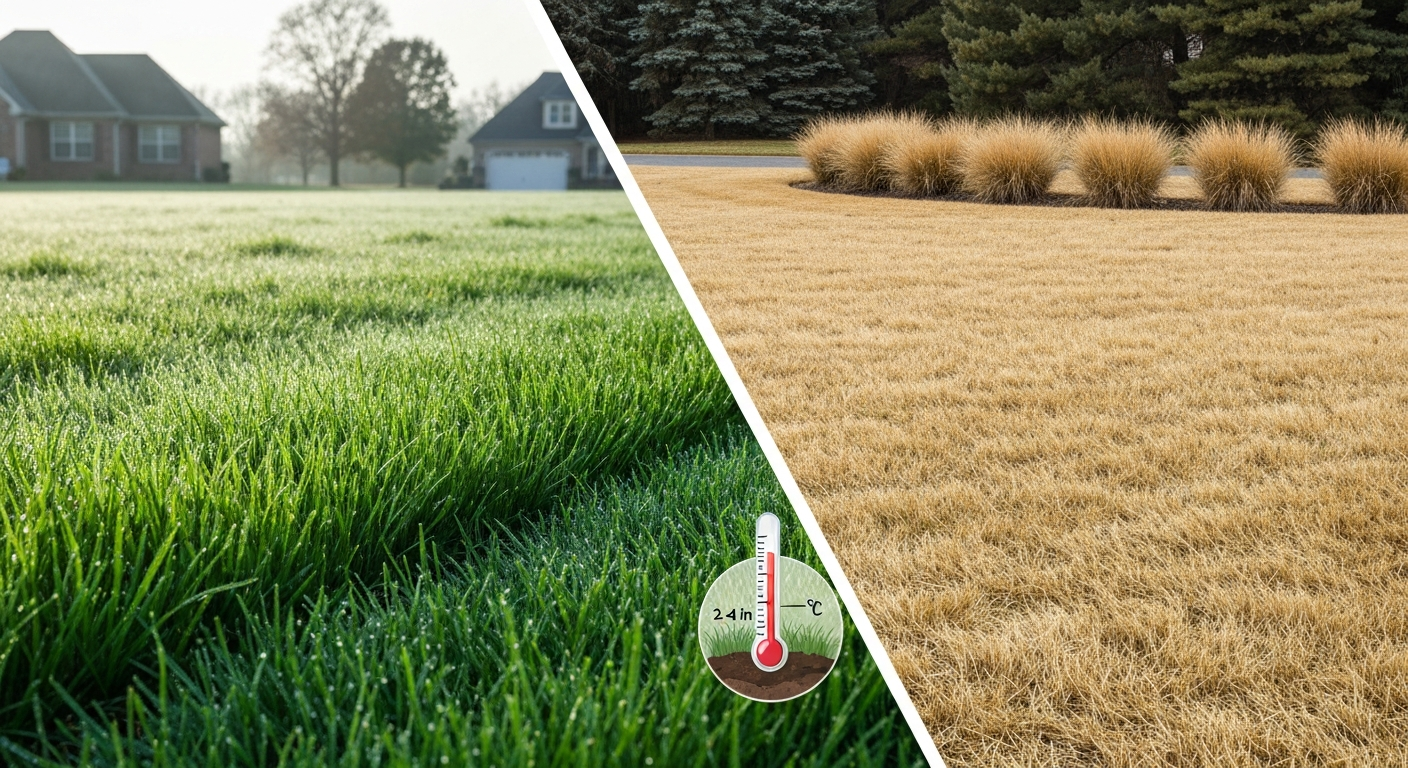
Three things drive grass growth: soil temperature, available moisture, and day length. For a deeper explanation of why does grass grow and how soil temperature, moisture, and day length interact to control turf growth, see why does grass grow. Of these, soil temperature at a 2–4 inch depth is the most reliable indicator, and it often lags several weeks behind air temperature. Cool-season grasses do their best root and shoot work when that 2–4 inch reading sits between 50°F and 65°F (10–18°C). Below 50°F, root activity slows sharply. Above 75°F, shoot growth on cool-season species struggles even if you water them well. Warm-season grasses flip that window: they want soil temps of 75–90°F to push meaningful shoot and root growth, and they stall out once soil dips below 55°F.
Moisture availability is the second lever. Even at perfect temperatures, grass can't grow if the soil is bone dry. Established lawns need roughly 1.0–1.5 inches of water per week from rain and irrigation combined. That figure comes directly from evapotranspiration (ET) research and is widely used in university extension scheduling guides. Applying that water in two or three deeper soaks per week beats daily light spraying because deeper moisture encourages roots to go down rather than stay near the surface where they dry out fast. University of Idaho Extension's Lawn and Turf guidance recommends established lawns generally need about 1.0–1.5 inches of water per week (rain + irrigation), applied in deeper, less‑frequent soakings rather than daily light sprays, see Lawn and Turf (University of Idaho Extension), how much/when to water lawns Lawn and Turf (University of Idaho Extension) — how much/when to water lawns.
Day length matters too, though it gets less attention than temperature. Photoperiod cues trigger flowering and seed-set in many grass species, and some research suggests shortening days in late summer signal cool-season grasses to push carbohydrate reserves into roots ahead of winter. This is one reason fall is such a productive time to fertilize and overseed cool-season turf: the grass is biologically primed to take up nutrients and establish quickly.
Dormant or dead? How to tell the difference
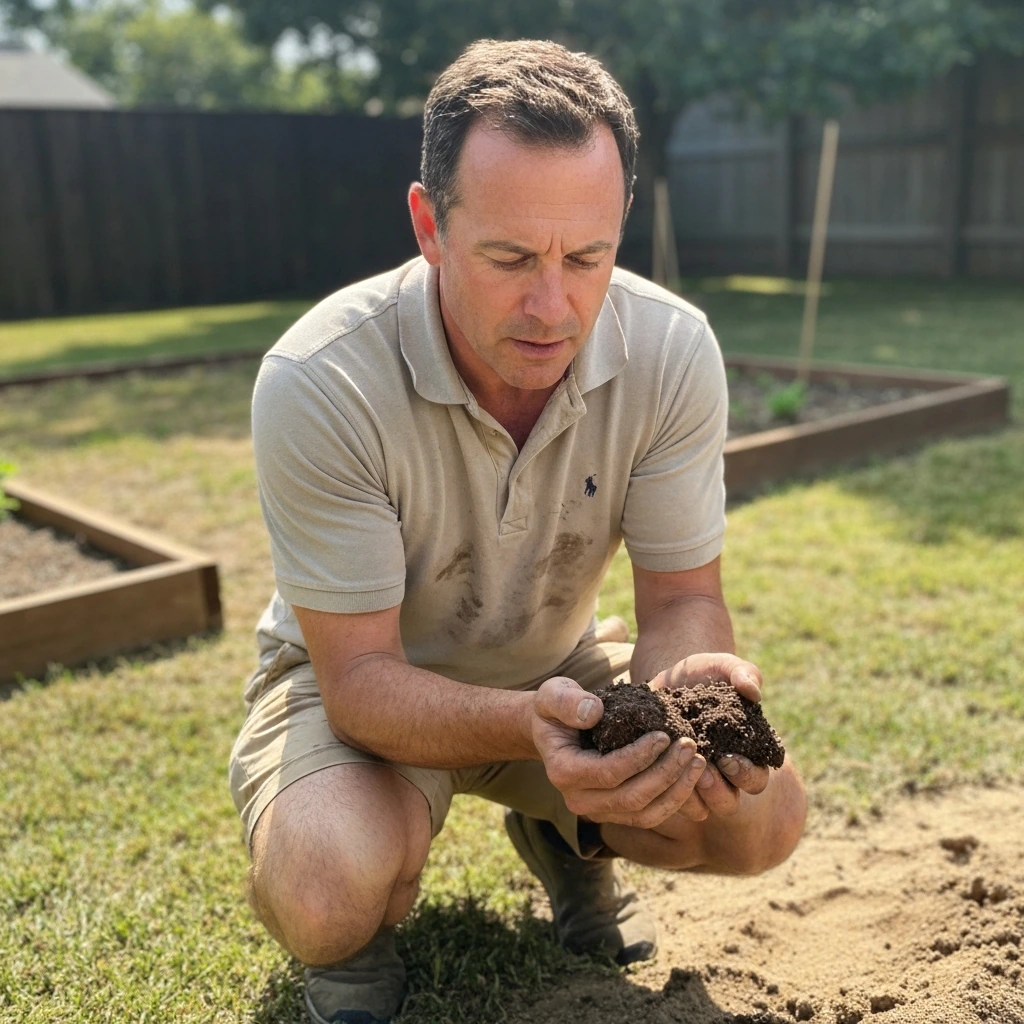
This is the question I get most often from homeowners who panic in late November when their lawn turns beige. Dormancy is a survival strategy, not death. Warm-season grasses pull carbohydrates down into their crowns and root systems when temperatures fall, essentially powering down above-ground growth to protect the plant. Cool-season grasses can do the same thing in a summer drought or a hard freeze. The crown, that dense growing point right at soil level, stays alive even when every visible blade looks brown and dead.
To tell dormancy from actual death, do a tug test. Grab a clump of brown grass and pull. A dormant plant resists and keeps its root attachment. A dead plant pulls out easily with little or no resistance and often comes away with black, rotted roots. You can also scratch the crown with a fingernail. Dormant crowns are firm and show a faint greenish-white tissue inside. Dead crowns are dark, mushy, or completely desiccated. If your lawn looks brown in February and passes the tug test, wait. It almost certainly greens up when temperatures recover.
Cool-season vs warm-season grasses: who grows when
The clearest way to understand year-round growth potential is to compare these two categories side by side. The species you have, more than anything else, determines your realistic growth calendar.
| Attribute | Cool-Season Grasses | Warm-Season Grasses |
|---|---|---|
| Common species | Kentucky bluegrass, perennial ryegrass, tall fescue, fine fescue | Bermudagrass, zoysiagrass, St. Augustinegrass, centipedegrass |
| Peak growth periods | Spring and fall | Late spring through early fall |
| Best soil temp for roots (2–4 in) | 50–65°F (10–18°C) | 75–90°F (24–32°C) |
| Summer behavior | Slow growth or semi-dormancy in heat/drought | Peak active growth |
| Winter behavior | Can remain active in mild winters; dormant in hard freezes | Dormant below ~50–55°F air/soil average; visibly brown |
| Overseeding for winter color | Not needed (already cool-adapted) | Common practice in transition zones: ryegrass over dormant bermuda |
| Year-round green potential | High in mild climates (USDA zones 5–7) | Only in frost-free climates (zones 9–11) |
| Shade tolerance | Moderate (fine fescue best) | Low for bermuda (6–8+ hrs sun needed); St. Augustine/zoysia moderate |
Perennial ryegrass has one extra quirk worth noting. Growing-degree-day (GDD) models for ryegrass use a base temperature of 32°F (0°C), which means it can accumulate meaningful growth even in fairly cool conditions. This is exactly why it works so well as a winter overseed grass over dormant bermudagrass in the transition zone. It keeps ticking when bermuda has completely shut down.
When turf typically stops and starts by region
Regional growth patterns vary a lot, and the honest answer is that your local soil temperature data is more useful than any generalized calendar. That said, here are realistic patterns for the most common climate zones in the US and comparable temperate climates worldwide.
| Climate Zone | Grass Type | Active Growth Window | Dormancy Period | Year-Round Green? |
|---|---|---|---|---|
| Pacific Northwest / Mild maritime (UK, NW Europe) | Cool-season (ryegrass, fescue) | Feb/Mar–Nov/Dec | Short or none in mild winters | Often yes, in practice |
| Northern US / Northern continental (e.g., Minnesota, Michigan) | Cool-season only viable | Apr–Jun, Sep–Oct | Jul–Aug (heat stress), Nov–Mar (frozen) | No |
| Transition zone (Virginia, Kansas, NC, Tennessee) | Cool-season or overseeded warm-season | Mar–Jun, Sep–Nov | Jul–Aug heat slump; Dec–Feb cold | No, but overseeding extends color |
| Southern US / Gulf Coast (Texas, Florida, Georgia) | Warm-season (bermuda, zoysia, St. Augustine) | Apr–Oct | Nov–Mar (brown dormancy) | No unless overseeded with ryegrass |
| Deep South / South Florida, parts of Hawaii | Warm-season | Year-round in frost-free zones | Minimal or none | Yes, in frost-free areas |
| Mediterranean (Southern CA, parts of AZ) | Cool-season or warm-season depending on elevation | Oct–May cool-season; May–Oct warm-season | Varies by elevation and species | Possible with smart species selection |
What stops grass growing: the main triggers
Understanding why grass stops is more useful than just knowing when. Once you identify the trigger, you can often address it directly rather than waiting it out.
- Frost and freezing soil: a single light frost slows warm-season grasses; repeated hard freezes push both grass types into dormancy. Soil temperature at 2–4 inches dropping below 50°F is the clearest signal.
- Summer heat stress: cool-season grasses dramatically slow shoot growth above air temperatures of about 85–90°F and suffer root damage above 75–80°F soil temperature. This is why Kentucky bluegrass looks thin and patchy in August even with irrigation.
- Drought and water deficit: grass stops growing and shunts water to crown survival before it dies. A lawn can survive 4–6 weeks of drought dormancy in most cases, but sustained water deficit beyond that threshold kills plants outright.
- Photoperiod shift: shortening days in late summer trigger seed head production and signal cool-season plants to prepare for winter. Mowing too infrequently in this window lets seed heads develop at the expense of leaf growth.
- Soil compaction: compacted soil restricts root penetration and oxygen exchange. Roots stay shallow, making the plant far more sensitive to both heat and drought. I've seen compacted clay lawns look drought-stressed in June with an inch of weekly rain because the roots simply couldn't access deeper moisture.
- Nutrient depletion: nitrogen is the primary driver of shoot growth. A lawn running on empty soil produces thin, slow-growing turf that yellows under stress. Testing pH matters too—if soil pH is outside the 6.0–7.0 window for most turf species, nutrients bind to soil particles and become unavailable even if they're present.
- Shade: bermudagrass needs 6–8+ hours of direct sun per day to stay dense. Once shade coverage increases (as trees mature), bermuda thins out and eventually dies. Zoysiagrass and St. Augustinegrass tolerate moderate shade better, performing acceptably on 4–6 hours per day or filtered light.
How grass flowers, spreads, and why weeds fill the gaps
Grass is not just a static ground cover. It's an actively reproducing plant that flowers, sets seed, and spreads through underground and above-ground stems. Want the full answer about whether and how grass produces flowers? See our guide on does grass grow flowers. Understanding this helps you manage it better and explains why weeds like crabgrass appear so predictably.
Seed heads and flowering
Most turfgrasses produce seed heads in response to temperature and day-length cues, typically in late spring or early summer for cool-season species. You'll notice tall flowering stems rising above the mowed canopy. The grass is investing energy in reproduction rather than leaf growth during this window. Regular mowing removes seed heads before they mature, which keeps the lawn looking tidy and redirects energy back into lateral and root growth. If you skip mowing during a seed-head flush, the lawn can look thin and patchy because resources are going upward rather than outward.
Stolons, rhizomes, and natural spread
Grasses spread laterally through stolons (above-ground stems that root at nodes, used by bermudagrass, St. Augustinegrass, and centipedegrass) and rhizomes (below-ground stems that push new shoots up, used by Kentucky bluegrass and zoysiagrass). This spread is how a thin lawn fills in over time without reseeding, and it's also why bermudagrass invades flower beds. Knowing which mechanism your grass uses tells you a lot about how to encourage density: rhizomatous grasses fill in from below and benefit from aeration and topdressing; stoloniferous grasses spread outward and can be encouraged with edge trimming that frees up growing room.
Why crabgrass and other weeds exploit dormancy gaps
Any gap in your turf canopy is an opportunity for an opportunistic plant to move in. Crabgrass is a warm-season annual that germinates when soil temperatures at 2–4 inches consistently hit 55–60°F in spring, which often coincides with exactly the moment cool-season lawns are recovering from winter and before they've fully closed the canopy. Read more on why does crabgrass grow and how to prevent it, including timing and control strategies. Thin turf, bare patches after disease, or areas of poor soil that slow grass recovery give crabgrass a window to establish. It grows fast and aggressively during summer heat, which is exactly when cool-season grasses are weakest. The best defense against crabgrass is a dense, actively growing turf that shades the soil and crowds out germinating weed seeds. Pre-emergence herbicides can help, but read timing guidance carefully: some products have 4–10 month plant-back intervals that will prevent overseeding if you apply them too close to your intended seed date. See Integrated Weed Management / Turfgrass, UC Statewide IPM Program for guidance on pre‑emergent herbicide plant‑back intervals and overseeding restrictions blank" rel="noopener noreferrer">Integrated Weed Management / Turfgrass — UC Statewide IPM Program.
Diagnosing your lawn: what the symptoms are telling you
Before you apply anything or do anything, spend ten minutes actually looking at your lawn and doing a few quick tests. Most lawn problems have a pattern that points to the cause if you look carefully.
| Symptom | Likely Cause(s) | Quick Test |
|---|---|---|
| Uniform brown in winter/late fall | Normal seasonal dormancy | Tug test: resists = dormant, pulls easy = dead |
| Brown patches in summer with cool-season grass | Heat and drought stress, or soil compaction limiting root depth | Push a screwdriver 6 in into soil: easy = fine, hard = compacted |
| Thin, sparse turf despite watering | Compaction, low fertility, wrong species for shade/sun conditions | Soil test for pH and nutrients; observe sun hours per day |
| Yellow blades with green veins | Iron or nitrogen deficiency, often linked to high soil pH (>7.0) | Soil pH test with inexpensive kit or send to lab |
| Patchy recovery after winter | Crown damage from disease (e.g., snow mold), ice sheets, or pest damage | Check crowns: firm/white = alive; black/mushy = dead from disease |
| Wet, boggy areas that stay thin | Poor drainage or hardpan below surface | Dig down 8–10 inches: look for impermeable clay layer or high water table |
| Bare patches near trees | Shade, root competition, or allelopathic effects from tree litter | Count direct sun hours; check for surface roots competing for water |
| Rapid weed invasion in spring | Thin canopy, low soil fertility, or pre-emergence herbicide wear-off | Identify weeds by type (broadleaf vs grassy); look for bare soil exposure |
Step-by-step fixes for the most common problems
Once you've matched your symptom to a likely cause, here's how to address each one in order of what's most effective for the money and effort involved.
- Soil compaction: Core aerate in the growing season appropriate to your grass type (fall for cool-season, late spring for warm-season). Remove cores and topdress with a quarter-inch of compost or sharp sand worked into the holes. Repeat annually on heavily trafficked areas. Aeration alone can visibly improve turf density within one growing season.
- Poor soil fertility or wrong pH: Get a soil test first (university extension labs run them for $15–25 and give you specific amendment rates). If pH is below 6.0, apply limestone at the lab-recommended rate. If above 7.0 and causing iron deficiency, sulfur or iron sulfate applications help. For nitrogen deficiency, use a slow-release lawn fertilizer timed to your grass's active growth period: spring and fall for cool-season, late spring through summer for warm-season.
- Drought stress and poor water retention: Improve soil organic matter with compost incorporation (1–2 inches tilled in before reseeding, or topdressed into existing turf over time). Schedule irrigation to deliver 1.0–1.5 inches per week in two or three sessions rather than daily light sprints. Water in the early morning to reduce evaporative losses. Sandy soils may need more frequent irrigation; heavy clay needs slower application rates to prevent runoff.
- Shade problems: Prune lower limbs to increase light penetration before spending money on reseeding. Switch to a shade-tolerant species if you have fewer than 4–6 hours of direct sun. Fine fescues (hard fescue, creeping red fescue) are the most shade-tolerant cool-season options. In the South, St. Augustinegrass and some zoysia cultivars tolerate moderate shade better than bermudagrass. If shade is too deep (under 3–4 hours of direct sun), accept that turf grass will fail and consider groundcovers, mulch, or shade-tolerant perennials instead.
- Drainage problems: For minor drainage issues, core aeration and organic matter addition help over time. For chronic wet spots, you may need to install a French drain or grade the area to redirect water. A perforated pipe buried 12–18 inches deep and connected to a daylight outlet or dry well can solve persistent low spots. Without fixing underlying drainage, no grass will establish permanently in those areas.
- Pest damage (grubs, armyworms, chinch bugs): Identify the pest before treating. Pull back a square foot of sod in a damaged area and count insects. More than 5–8 grubs per square foot typically justifies treatment. Use an appropriate insecticide for the pest and timing, and follow up with reseeding or sodding once the pest pressure is resolved. Biological options (milky spore for grubs, beneficial nematodes) work more slowly but have fewer side effects on the broader lawn ecosystem.
- Overseeding thin or bare areas: Prepare the seedbed by removing dead material, loosening the top inch of soil with a hard rake, and applying a starter fertilizer. Spread seed at the appropriate rate for your species. For perennial ryegrass overseeding of dormant bermuda, broadcast at 4–10 lb per 1,000 sq ft. Keep the seedbed consistently moist for 2–3 weeks until germination. Hold off on pre-emergence herbicide applications for at least the season prior if you plan to overseed.
How to extend your active growing season
If you want to push grass growth as far into the cool months as possible, your two biggest levers are species selection and irrigation. A well-irrigated, disease-resistant tall fescue blend on a south-facing slope with good drainage will stay noticeably greener 3–4 weeks longer in fall than an unirrigated Kentucky bluegrass lawn on a shaded north-facing slope in the same town. The details matter.
Overseeding dormant warm-season turf with perennial ryegrass is the most popular way to get winter color in the transition zone and South. Time it to when bermudagrass is beginning to go dormant but before the first hard frost, typically when average daytime soil temps are dropping through 65–70°F at the surface. Texas A&M AgriLife Extension and similar programs suggest coordinating overseed timing carefully to avoid stressing the warm-season turf and to plan for spring transition when the ryegrass needs to be removed or die off to allow bermuda to reclaim its space. Note that if you used a pre-emergent herbicide earlier in the season, you may face a plant-back restriction of 4–10 months depending on the product.
Fall fertilization of cool-season turf is another highly effective extension tactic. Applying a nitrogen-focused fertilizer in September and October fuels root development and root carbohydrate storage, which directly extends the period of active photosynthesis and green color into late fall. Most university extension fertilizer calendars for cool-season lawns call for the heaviest nitrogen application of the year in fall for exactly this reason.
When year-round grass just isn't realistic: better alternatives
I'll be straight with you: in many situations, fighting to keep grass growing year-round is more expensive and frustrating than the outcome justifies. If your site has deep shade, heavy clay with chronic drainage issues, extreme cold with minimal snow cover, or sandy soil with no irrigation system, the honest answer is that year-round turf is probably not your best option.
Groundcovers like creeping thyme, pachysandra, ajuga, and clover (particularly white clover) can provide dense, low-maintenance coverage in areas where grass consistently fails. Clover, in particular, fixes atmospheric nitrogen and stays green in conditions that would turn fescue brown. Native groundcovers suited to your region are often the most resilient and lowest-cost option over a multi-year horizon.
Artificial turf has improved significantly and is a practical choice for high-traffic areas, rooftop gardens, or spots where soil conditions make natural turf growth unrealistic. Modern products drain well, stay cooler than early-generation materials, and last 15–20 years with basic maintenance. The upfront cost is high, but the lifetime maintenance cost compared to repeated failed seeding attempts often makes it competitive. For anyone in a region where growing grass naturally is genuinely difficult, the question of whether grass will grow at all is worth answering honestly before committing to a living turf approach.
Seasonal maintenance checklist
Here's how I think about the year-round lawn calendar, built around the biological realities of what grass is doing each season rather than calendar dates.
| Season | Cool-Season Grass Actions | Warm-Season Grass Actions |
|---|---|---|
| Early spring (soil 45–55°F) | Begin light fertilization; overseed bare spots; hold mowing until 3–4 in height | Wait: grass is still dormant. No fertilizer. Check for winter damage. |
| Late spring (soil 55–70°F) | Core aerate if compacted; apply pre-emergent for crabgrass if not overseeding; adjust irrigation | Apply first nitrogen fertilizer after green-up (soil >60°F consistently). Core aerate. |
| Summer (soil 70°F+) | Raise mowing height to 3.5–4 in; reduce fertilizer; irrigate to 1–1.5 in/week; expect growth slowdown | Peak growing season: fertilize monthly; irrigate consistently; mow regularly at species-appropriate height |
| Early fall (soil 65–50°F) | Prime overseeding window; apply heaviest N fertilization of the year; dethatch if needed | Transition zone: overseed dormant bermuda with ryegrass at 4–10 lb/1000 sq ft when soil temps drop below 70°F |
| Late fall / winter (soil <50°F) | Final mow at 2.5 in; apply slow-release winterizer fertilizer in mild climates; avoid heavy foot traffic on frozen turf | Grass enters dormancy; tug-test brown areas to confirm dormancy vs death; no fertilizer until spring green-up |
The bottom line on year-round grass growth
Most lawns in temperate climates grow actively for somewhere between 6 and 9 months of the year. True year-round growth without dormancy is realistic only in genuinely mild climates, and even then it depends on matching the right species to the site. The key insight that changes how you manage a lawn is this: grass doesn't fail because of bad luck or lack of effort. It stops growing when soil temperature, moisture, or light fall outside a narrow biological window. Once you know which window your grass needs, most problems become predictable and fixable. Focus on soil health first, choose species that match your actual conditions, and use dormancy periods productively for soil work, planning, and preparing for the next active season.
FAQ
Short answer: can grass grow year‑round?
Generally no for a single species in most climates. Some warm‑season grasses stay active longest in warm, frost‑free regions and some cool‑season grasses remain semi‑active in mild winters, but most turfgrass species have clear active and dormant periods controlled by temperature and daylight. With irrigation, fertilization and species choice you can extend active green cover, but true biological year‑round growth without dormancy is only possible in very mild climates (coastal/marine or frost‑free subtropics). (Sources: Penn State Extension; UC IPM; UF/IFAS.)
What biological and environmental factors control whether turf grows or goes dormant?
Key controls: soil and air temperature, daylength (photoperiod), and water availability. Soil temperature at 2–4 in depth is a better indicator of root and shoot activity than air temperature. Low temperatures and short days trigger dormancy/slow growth; heat plus drought can also slow or induce summer dormancy. Nutrient availability, soil oxygen/structure and pest or disease stress modulate responses. (See: soil temperature germination guidance; Penn State; UC IPM.)
How do cool‑season and warm‑season grasses differ in timing of activity?
Cool‑season species (Kentucky bluegrass, perennial ryegrass, tall fescue) peak in spring and fall; they prefer soil temps ~50–65°F for root growth and slow in hot, dry midsummer. Warm‑season species (bermudagrass, zoysia, St. Augustine) activate in late spring/summer, often at soil temps above ~59–75°F and go brown or dormant when soil/air temps fall below ~50–55°F. Choice determines when turf will be actively growing in your region. (Sources: Penn State; UF/IFAS; UC ANR.)
Which turf species can remain active the longest in borderline climates?
In warm temperate/transition zones: zoysiagrass and some St. Augustine cultivars tolerate cooler winters better than bermuda and can maintain green longer into cool seasons. Perennial ryegrass provides winter green when overseeded into dormant warm‑season turf. In mild maritime climates, cool‑season grasses may rarely fully dormancy. Actual performance depends on cultivar and local microclimate (shade, wind, soil).
Practical actions to extend active growth — irrigation
Use deep, infrequent irrigation to meet evapotranspiration needs (established lawns typically ~1.0–1.5 in/week rain+irrigation). Monitor local reference ET and adjust with turf Kc (~0.8–0.95). Water early morning, avoid light daily sprays, and increase frequency during heat to reduce summer dormancy risk. (FAO‑56; Univ. of Idaho Extension; USGS ET guidance.)
Practical actions — fertilization and nutrition
Follow species‑specific calendars: cool‑season lawns concentrate N in spring and fall; warm‑season lawns concentrate N after spring green‑up into summer. Avoid heavy late‑fall N on warm‑season grass that you want to harden off for winter. Base rates on soil tests. Overfertilization increases disease and thatch; slow‑release N reduces stress. (Univ. of Maryland Extension.)

Why grass appears on its own: causes, prevention, fixes, seed, soil, timing, and step-by-step homeowner actions.
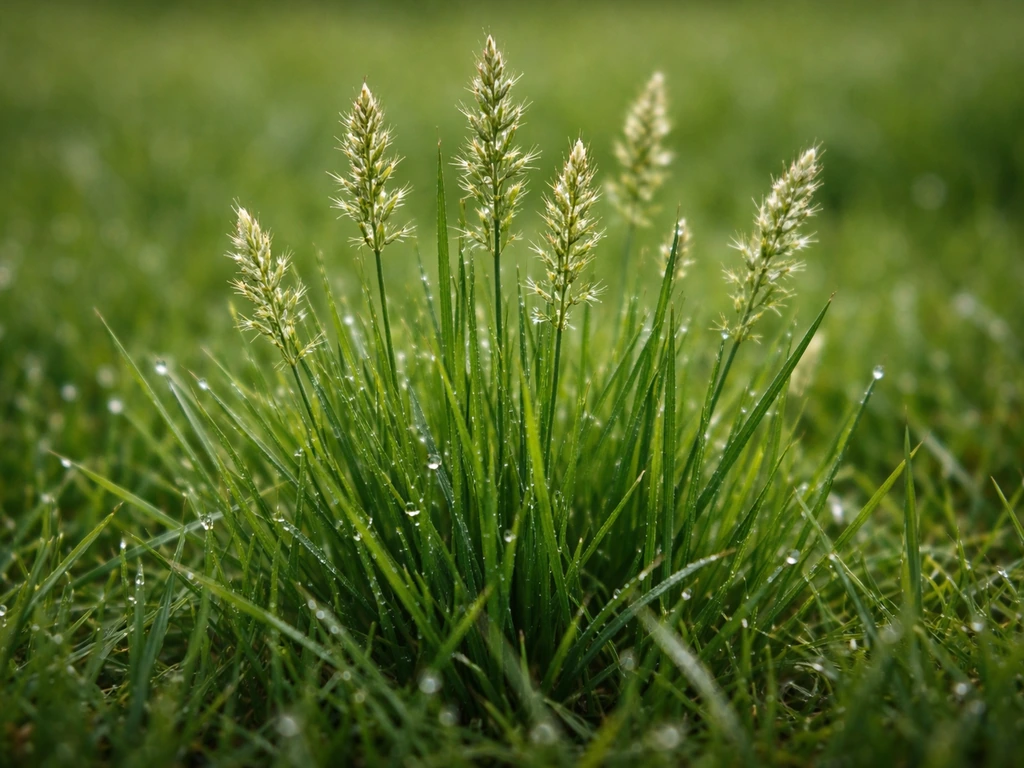
Learn when grass flowers and how to spot seed heads versus weeds, plus lawn care steps for flowers or fewer blooms.
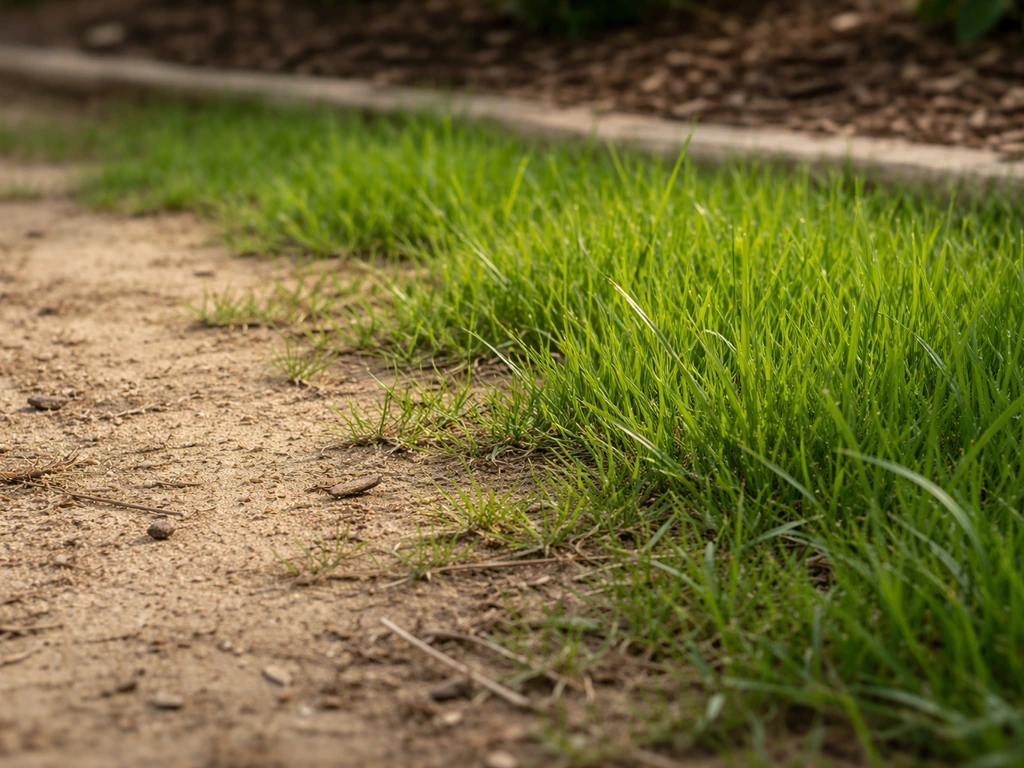
Learn if grass grows naturally and how to get it established in shade, poor soil, sand, or tough timing.