
Yes, grass absolutely grows flowers. If you're wondering why grass grows in the first place, it comes down to how grasses photosynthesize and reproduce under the right conditions why does grass grow. Every grass species produces flowering structures called seed heads, and if you've noticed feathery or spiky tops on your lawn grass, that's exactly what you're looking at. It's not a weed (usually), it's not a sign your lawn is dying, and it's not random.
Does Grass Grow Flowers? How to Tell Blooms From Weeds
Marcus Volkmann
11 Jun 2026
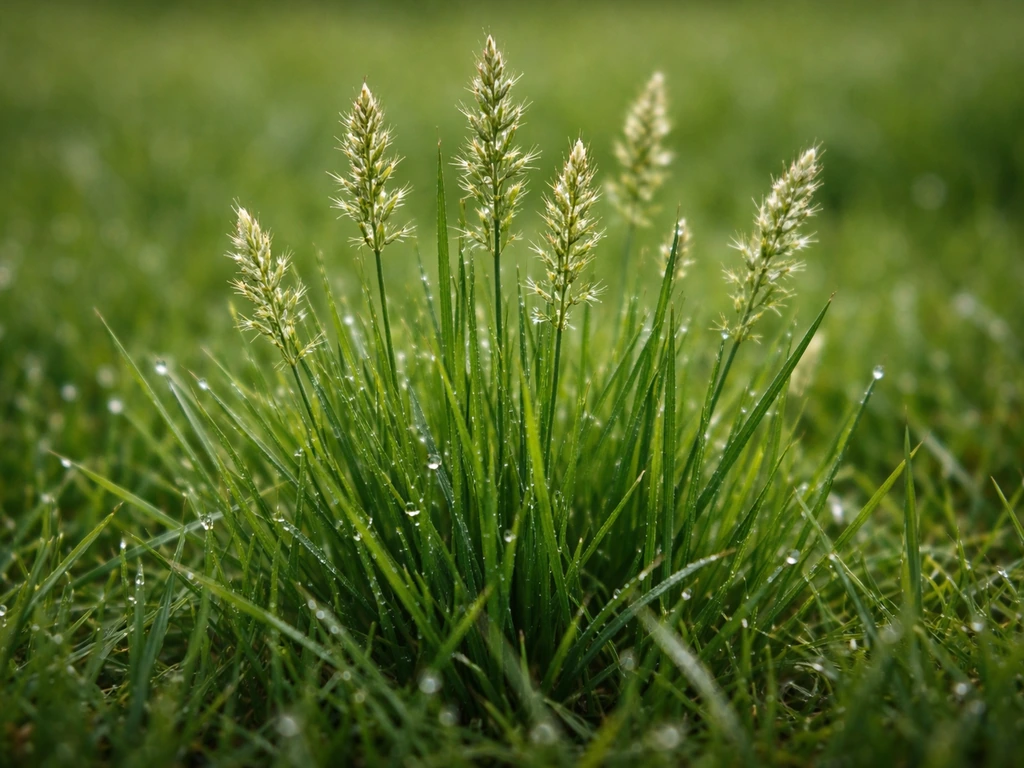
Grass flowers on a biological schedule, and a handful of lawn management decisions you're already making, like how often you mow and how much nitrogen you apply, determine whether those seed heads ever get a chance to show up. If you want the deeper answer to why grass grow on their own, it comes down to the grass reaching conditions where it can shift from leafy growth to seed production.
Yes, grass really does produce flowers
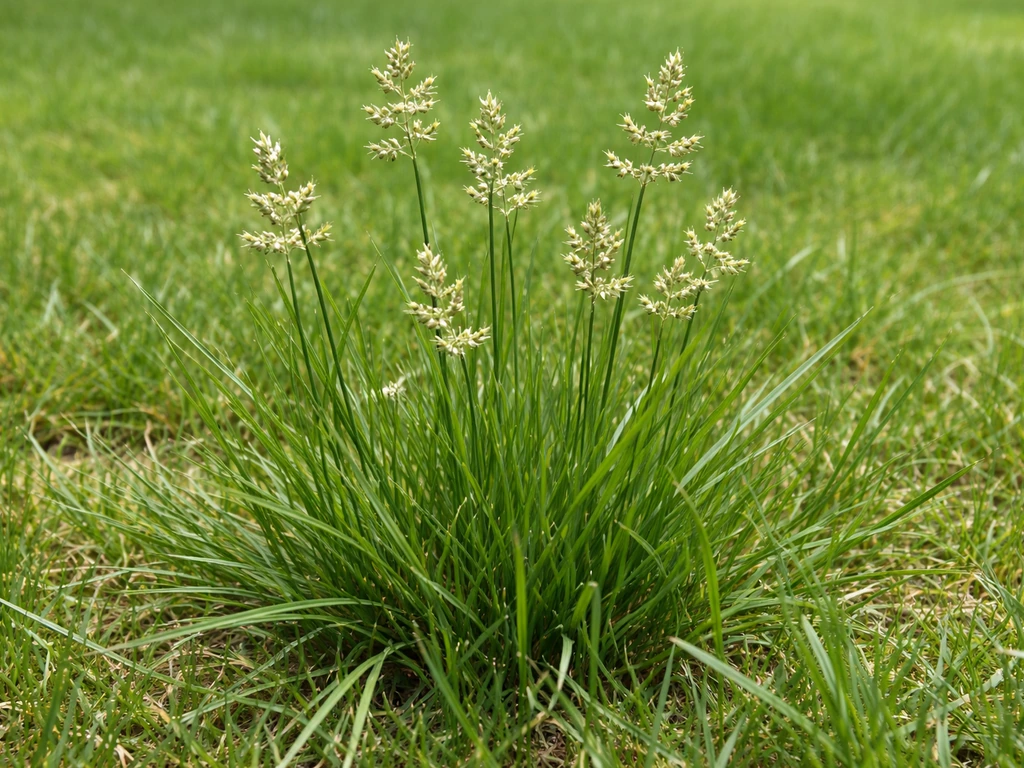
Grasses are flowering plants, technically in the family Poaceae, and every species in that family reproduces by producing flowers that develop into seeds. In a lawn setting, those flowers are bundled into structures called seed heads or panicles, which look nothing like a rose or daisy but are real flowers all the same. Kentucky bluegrass produces an [open, spreading pyramidal panicle that runs about 2 to 8 inches long, with branches arranged in whorled groups of 3 to 5](https://extension. usu.
edu/rangeplants/grasses-and-grasslikes/kentucky-bluegrass) and small spikelets that each contain 3 to 5 florets. Perennial ryegrass produces a flatter, more upright seedhead with a greenish-white color. Tall fescue and bermudagrass have their own distinct forms. The point is: every common lawn grass will try to flower if conditions allow it.
Most homeowners never see it happen because regular mowing clips the seed heads off before they fully develop. That's actually by design. Lawn care culture has been built around keeping grass in a vegetative (leafy) state rather than a reproductive one. But skip a few mowings, hit a dry stretch in late spring, or let a section of lawn grow a little tall, and the seed heads appear almost overnight.
When grass flowers: timing, maturity, and stress triggers
Grass flowering is mostly driven by season, plant maturity, and stress. For cool-season grasses like Kentucky bluegrass, tall fescue, and perennial ryegrass, the primary flowering window is late spring, typically April through June in most of the U.S. That aligns with the natural cool, moist conditions these grasses evolved in. Warm-season grasses like bermudagrass and zoysia typically flower in summer, peaking mid to late summer when day length and heat hit the right combination.
Plant maturity matters too. Newly seeded lawns rarely flower in their first season because the plants haven't gone through a full vernalization cycle (a cold period that triggers reproductive readiness). Established lawns, especially those with grasses that have been in the ground for two or more years, are far more likely to bolt into seed head production when conditions are right.
Stress is a major trigger. Drought, heat, low nitrogen, and soil compaction can all push grass into reproductive mode earlier and more aggressively than well-maintained turf. The plant essentially senses it may not survive and shifts energy toward making seeds before it dies. If you see sudden, heavy seed head production in a lawn that looked fine a few weeks ago and you haven't changed your mowing routine, check whether drought stress or a drop in fertility is the real culprit.
How to tell grass flowers apart from weeds and clover
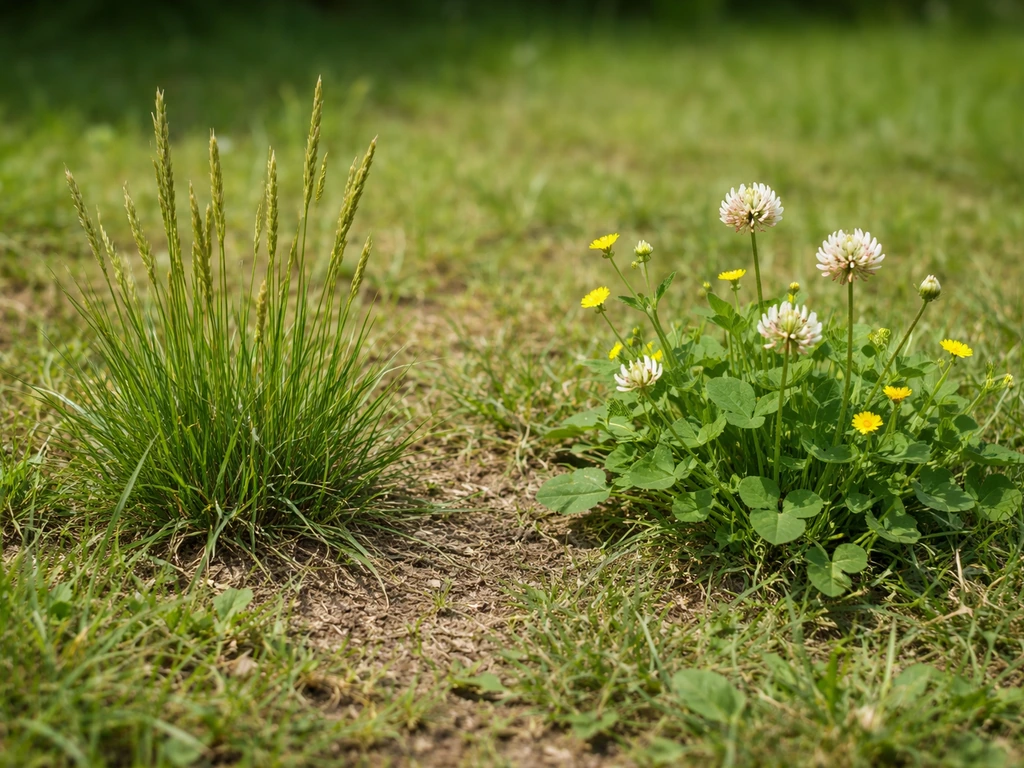
This is where people get confused, and honestly it's a reasonable thing to mix up. Grass seed heads, clover flowers, and broadleaf weed flowers can all appear at roughly the same time in spring. Here's how to sort them out quickly.
Grass seed heads grow on narrow, upright stems directly from the grass plant itself. The structure is spikelet-based, meaning small florets are arranged along a central axis or branching panicle. There are no broad petals, no round pom-pom shape, and the whole thing looks almost like a scaled-down grain crop (because it is one, botanically). Kentucky bluegrass panicles are loose and airy. Bermudagrass has finger-like spikes radiating from a single point. Ryegrass seed heads are slender and flat. All of them are green when young and turn tan or straw-colored as they mature and dry out.
White clover, on the other hand, produces round, globe-shaped white (or occasionally pink) flower heads on stems that are clearly separate from the surrounding grass blades. The leaves are trifoliate (three rounded leaflets, often with a lighter chevron marking), which is a dead giveaway. Clover is a broadleaf plant, and its flowers look like tiny flowers, not like grain. Dandelions, plantain, and other broadleaf weeds also produce distinctly non-grass-like flowering structures: yellow ray flowers, spiky seed stalks, and wide flat leaves that don't belong to a grass plant at all.
The practical test: pull the plant and look at the base. Grass plants have narrow, parallel-veined blades that wrap around a round or flat stem. Broadleaf weeds and clover have wider leaves with branching veins and stems that look nothing like grass. If you're not sure, a grass ID app (several free ones exist as of 2026) can identify from a photo in seconds.
| Plant | Flower/Seed Head Shape | Leaf Type | Time of Year |
|---|---|---|---|
| Kentucky Bluegrass | Open pyramidal panicle, 2-8 inches, airy | Narrow, boat-tipped blade | Late spring (Apr-Jun) |
| Perennial Ryegrass | Flat, upright spike, greenish-white | Narrow, glossy blade | Late spring (Apr-Jun) |
| Bermudagrass | Finger-like spikes from single point | Narrow, short blade | Summer (Jun-Aug) |
| White Clover | Round globe, white/pink | Trifoliate, broad, chevron mark | Spring through fall |
| Dandelion | Yellow ray flower, then round puffball | Broad, lobed, basal rosette | Spring and fall |
| Plantain (weed) | Narrow spiky stalk from rosette | Wide, ribbed, oval | Spring through fall |
What makes grass flower more or less
Mowing height and frequency
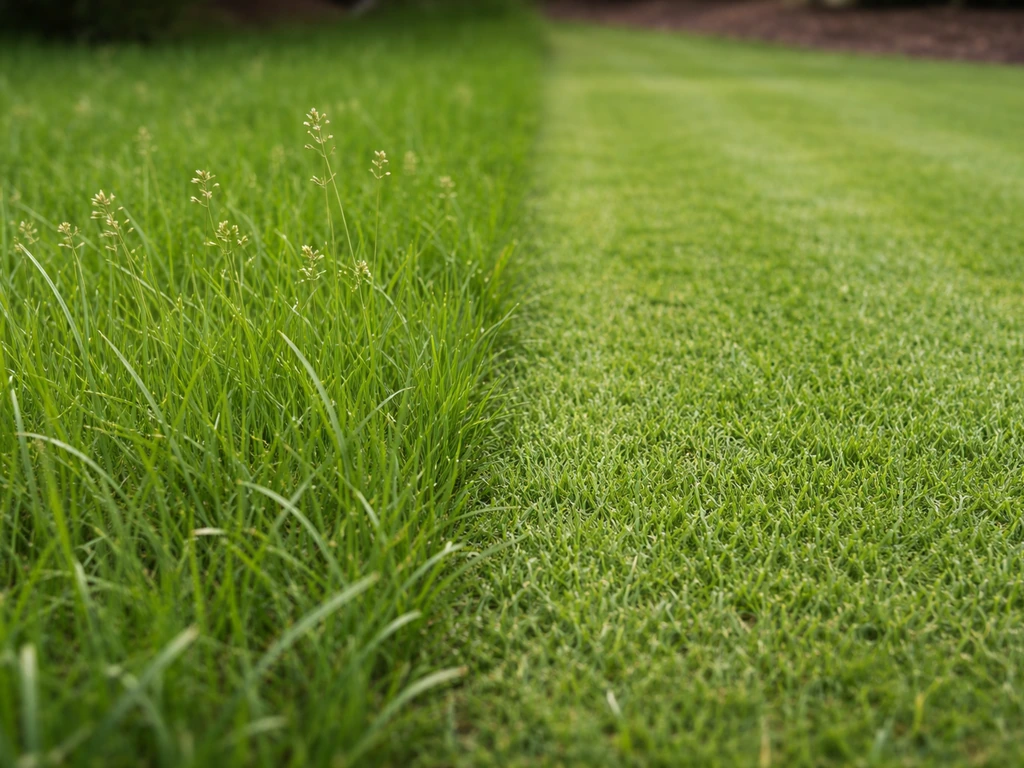
Mowing is the single biggest lever you have. Grass can only produce seed heads on stems tall enough to support them. Mow regularly at the correct height for your grass type and you'll clip off most seed heads before they ever develop. For Kentucky bluegrass, that's 2.5 to 3.5 inches; for tall fescue, 3 to 4 inches; for bermudagrass, 0.5 to 1.5 inches depending on the variety. Skip two or three mowings in late spring, and seed heads will shoot up fast. If you want to reduce or eliminate flowering, consistent mowing is your most reliable tool.
Nitrogen fertilization
High nitrogen availability keeps grass in vegetative growth mode, producing lush leafy tissue rather than reproductive structures. Well-fertilized lawns tend to produce fewer seed heads because the plants are growing leaves, not seeds. On the flip side, nitrogen-depleted soil is a known trigger for early, heavy seed head production. If you've gone a season or two without fertilizing and suddenly notice a lot of seed heads, low fertility may be part of the story. A basic soil test will confirm whether nitrogen (and other nutrients) are actually the limiting factor.
Light and shade
Full sun encourages more vigorous growth overall, including reproductive growth. Shaded lawns tend to produce fewer seed heads, partly because the plants are already stressed by low light and partly because many shade-tolerant grass varieties simply aren't as aggressive reproducers. However, if a shaded lawn also has poor nutrition and drought stress layered on top, you can still get stress-triggered seed head production even in low light.
Drought and heat stress
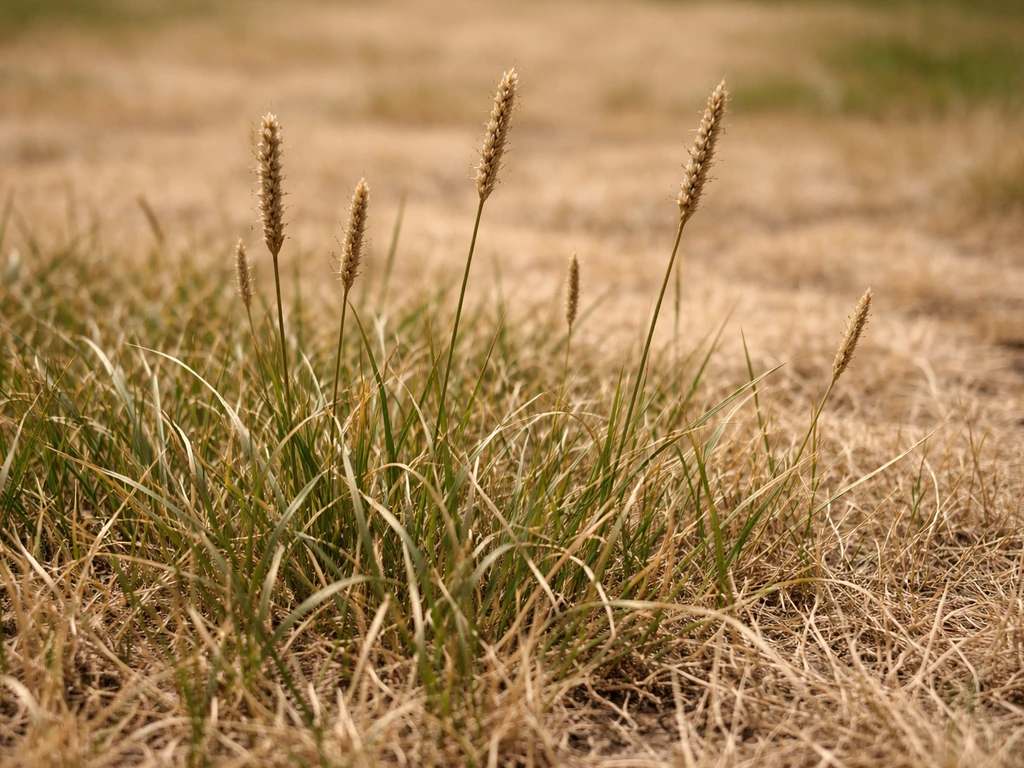
Drought stress during the natural flowering window, especially late spring for cool-season grasses, accelerates and intensifies seed head production. The grass is essentially trying to reproduce before it goes dormant or dies. This is why you often see the heaviest seed head outbreaks during a dry May or early June. Watering consistently during the spring flowering window won't eliminate seed heads, but it reduces the stress-driven component of the response.
Does it mean your lawn is healthy or struggling?
The honest answer is: it depends on the timing and the context. But whether you see seed heads every month depends on the season and the type of grass does grass grow all year round. Some seed head production in late spring is completely normal, even in a well-maintained lawn. That's just the grass following its biological calendar. If you are asking whether grass grows naturally, the answer is yes, but it will only flower under the right conditions. You're not doing anything wrong, and the lawn isn't in trouble. So yes, grass does grow, and under the right conditions it can also form seed heads Does grass grow?.
Where seed head production signals a problem is when it's early, heavy, and happening outside the normal seasonal window, especially if accompanied by thin turf, yellow patches, or slow recovery after mowing. In those cases, the flowering is a stress response, and the underlying causes (drought, low fertility, compacted soil, pest damage) need to be addressed. Kentucky bluegrass in particular is worth watching here: when KBG puts significant energy into seed production, it draws resources away from leaf and root growth, which can actually weaken the stand over time if the stress triggers aren't resolved.
Another way to read it: a lawn with occasional, seasonal seed heads that recovers quickly after mowing and stays thick and green overall is healthy. A lawn with persistent, heavy seed head production and thin or patchy areas is telling you something is off.
What to do based on your actual goal
If you want more flowers and seed heads
This is a legitimate goal, especially if you're growing native grasses, trying to collect seed, or want a more naturalistic lawn or meadow look. The path is straightforward: let the grass grow past its normal mowing height in late spring. For most cool-season grasses, this means allowing the lawn to reach 6 to 12 inches before cutting. Reduce nitrogen applications in early spring to avoid suppressing the reproductive response. If you're specifically growing a patch for seed collection, hold off on mowing until the seed heads are fully mature and tan-colored. Then you can harvest seed by hand or let it drop naturally.
If you want a more permanent meadow-style setup, that's a different project that involves transitioning away from traditional turf grasses toward native bunch grasses or wildflower mixes. That's beyond the scope of a standard lawn, but it's worth knowing that your current lawn grass can be a starting point.
If you want fewer seed heads and a cleaner lawn
Most homeowners fall into this camp, and the fix is mostly just getting consistent with mowing during the spring window. Don't let the lawn get ahead of you in April and May. If you're seeing lots of seed heads and wondering, "does grass grow" even when it looks like it should be staying leafy, the answer is yes, and consistent mowing during the spring window is usually the easiest way to keep flowering from taking over.
Mow every 5 to 7 days at the right height for your grass type. If you've already got a flush of seed heads, mow them off promptly. One pass usually removes the current crop. For lawns that seem to re-seed aggressively every year, also consider these steps in order:
- Get a soil test and address any nitrogen deficiency with a balanced spring fertilizer, since low fertility is a major seed-head trigger.
- Check your mowing height. Going too low stresses the grass and paradoxically encourages more reproductive growth. Raise the deck if you've been scalping.
- Water consistently during the spring flowering window to reduce drought stress.
- Overseed thin patches in fall to improve turf density. Thick, healthy turf naturally suppresses weed seed heads and reduces bare spots that make any lawn look worse.
- If clover or other broadleaf weeds are mixing in and adding to the visual clutter, a post-emergent broadleaf herbicide applied in spring or fall will handle those without harming grass.
When the usual approach isn't working: shade, sand, and poor soil
Shade, sandy substrates, and poor or compacted soil all change the flowering equation in ways that standard mowing-and-fertilizing advice doesn't fully account for. These are exactly the kinds of situations where I've seen homeowners get frustrated following generic lawn care instructions.
In heavy shade, grass stays thin and stressed year-round, which means it's always partially in survival mode. You may see seed heads on and off throughout the growing season rather than just in the normal spring window. The fix here isn't mowing harder. It's choosing a shade-tolerant grass variety in the first place (fine fescues are the standard recommendation), improving light penetration where you can by pruning tree canopy, and accepting that very deep shade (less than 3 hours of direct sun per day) may not support traditional turf at all. Ground covers or mulched beds are more practical in those spots.
Sandy soil drains fast and holds almost no nutrients, so grasses in sandy conditions are constantly nitrogen-depleted and drought-stressed. This is a recipe for aggressive seed head production. If you're also dealing with crabgrass in the lawn, understanding why does crabgrass grow can help you target the same stress and soil conditions that push certain grasses into reproductive mode.
The solution is amending the soil with organic matter (compost worked into the top 4 to 6 inches at planting, or top-dressed annually at about a quarter inch per application), using slow-release fertilizers that don't leach out in the first heavy rain, and irrigating more frequently than you would on heavier soil. Tall fescue and zoysia both handle sandy conditions better than Kentucky bluegrass.
Poor clay or compacted soil creates similar stress patterns through different mechanisms: waterlogging, root restriction, and poor nutrient availability. Core aeration once or twice a year, followed by overseeding and a compost top-dress, is the standard starting point. Until the soil structure improves, expect more stress-triggered seed head production than in a well-aerated, fertile lawn. That's normal and expected, not a sign that you're doing something fundamentally wrong.
Timing issues also play a role in challenging environments. A lawn that gets seeded too late in fall or too early in a wet spring may not establish well enough to maintain consistent vegetative growth, leaving immature plants more vulnerable to flowering triggered by stress in their first season. Stick to recommended seeding windows: late summer to early fall for cool-season grasses, late spring for warm-season types. That gives plants the best chance to establish before their first flowering season arrives.
The big-picture takeaway: grass flowering is normal, manageable, and informative. The seed heads themselves aren't a problem. What matters is reading why they're there and responding to the actual cause, whether that's seasonal biology you can simply mow through, or stress signals from soil, water, or fertility problems that need a real fix.
FAQ
If I don’t mow, will the seed heads keep coming back forever?
They usually surge once when conditions trigger seed production, then slow down after the seed heads mature and dry. However, if the lawn stays tall for weeks and the weather stays dry or nitrogen-poor, new flowering stems can reappear. For a clean stop, return to the correct mowing height within a few cut cycles rather than letting the lawn stay long-term overgrown.
Do grass seed heads mean my lawn is unhealthy?
Not necessarily. A normal seasonal flush (often late spring for cool-season grasses) with thick recovery after mowing is usually just routine reproductive timing. Red flags are early, heavy flowering outside the expected window plus thinning, yellow patches, or slow regrowth after cutting, which suggests stress like drought, low fertility, compaction, or pest damage.
Are grass seed heads harmful to pets, allergies, or grass health?
Seed heads are not dangerous to most pets, but they can be dusty when mature and some people notice more allergy symptoms when anything releases pollen and seed materials. For grass health, seed production temporarily diverts energy from roots and leaf growth, so repeated stress-driven flowering in a weak stand can worsen thinning over time.
How do I tell whether I’m seeing grass seed heads or a weed like crabgrass?
Seed heads from lawn grasses are typically green then straw-colored, and they rise from the grass base as part of the plant’s normal growth. Crabgrass and many summer annual weeds also make spikes, but they often appear with a different growth habit (finer, more upright blades, and a different color), and they spread by seed and rooting nodes. Pulling the plant and checking whether the blades are narrow and parallel-veined versus broad or irregular is often faster than guessing.
Will watering at the wrong time make seed heads worse?
Watering can help by reducing drought stress during the natural flowering window, but it can’t instantly erase seed already initiated. Also, watering too infrequently still encourages the plant’s stress response, while watering too late in the day can increase disease pressure. A practical approach is deep watering on a schedule during late spring, then returning to normal irrigation once stress eases.
Does too much fertilizer cause more flowers?
Often, it causes fewer seed heads because higher nitrogen supports leafy growth. But there are exceptions: if fertilizer is applied at the wrong rate or schedule, the lawn can still get stressed by drought, heat, or compaction, and flowering can still occur. If you see heavy seed heads alongside thinning, check soil compaction and irrigation rather than assuming more feeding will solve it.
Can I prevent seed heads without mowing as often?
You can reduce flowering by using the correct mowing height and not letting the grass get ahead in April and May, but avoiding regular cutting entirely usually increases seed stems. If mowing frequency is difficult, consider raising your mower setting within the recommended range and maintaining a consistent schedule, because occasional long delays are what allow seed heads to develop.
When should I mow seed heads off if my goal is a cleaner look?
Mow as soon as you notice the stems are rising, ideally before the seed heads fully tan and dry. One pass usually removes the current crop of stems, but if conditions remain favorable for reproduction, you may need another cut within about a week to catch new growth.
I want to collect grass seed, how do I know when it’s actually mature?
Maturity usually matches the color shift from green to tan or straw and the seed heads feeling dry and brittle rather than soft. Wait until most of the head is dry, not just the outer branches. If you harvest too early, germination rates usually drop.
Why do I see seed heads in shade more than expected?
Deep shade keeps grass stressed and thin, so it can stay closer to a survival mode where flowering happens intermittently rather than in one clean seasonal window. In heavy shade, improving light (pruning canopy, reducing competition) and choosing shade-adapted grasses like fine fescues is more effective than simply mowing more or adding nitrogen.
Is it normal for seed heads to appear the first year after seeding or sodding?
Yes, it can happen, especially for cool-season grasses if establishment is uneven. Newly seeded areas may not complete the same reproductive readiness cycle, but stress from poor establishment, wet spring conditions, or low fertility can still push some plants toward seed earlier than you expect. Consistent watering and staying within recommended seeding and fertilization timing helps reduce this.
Next Articles
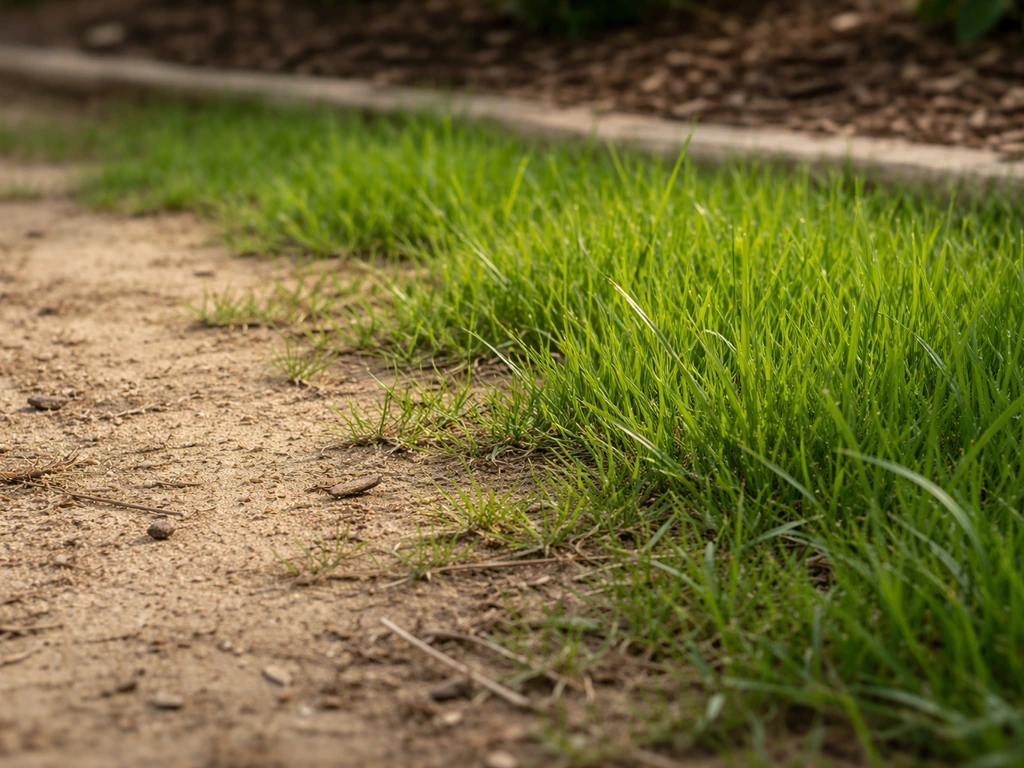
Does Grass Grow Naturally? How It Starts and How to Help It
Learn if grass grows naturally and how to get it established in shade, poor soil, sand, or tough timing.
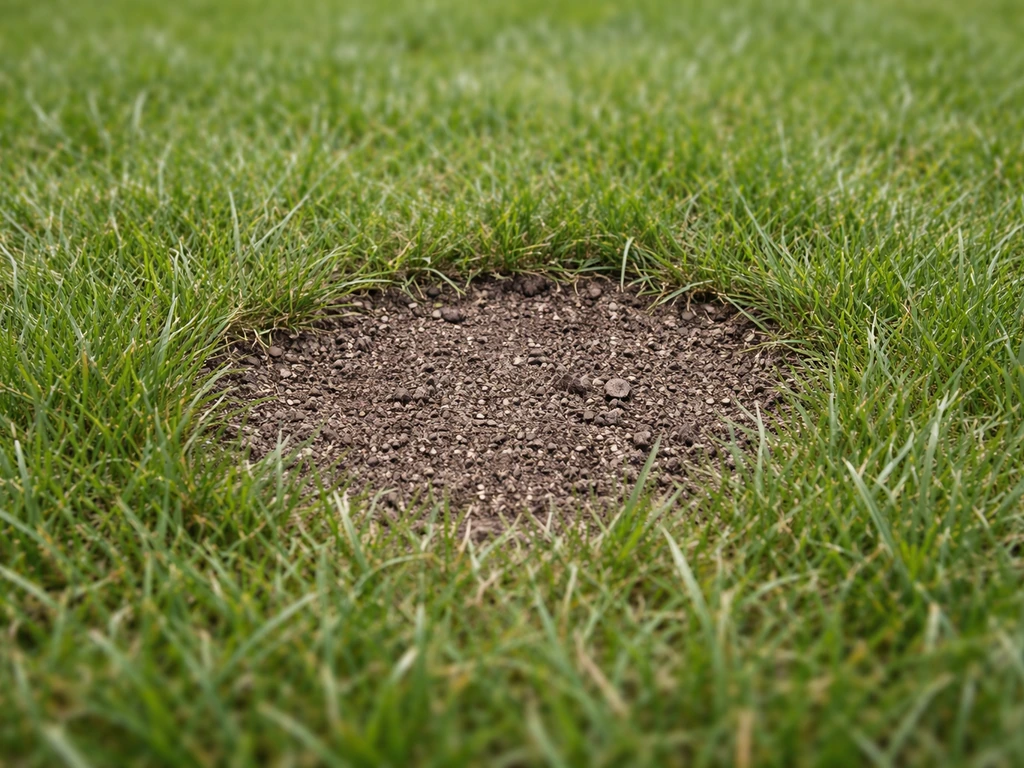
Does Grass Grow? How to Fix Dead or Bare Spots
Learn why grass stops growing or regrowing, how to diagnose bare spots, and when to reseed, resod, or switch groundcover
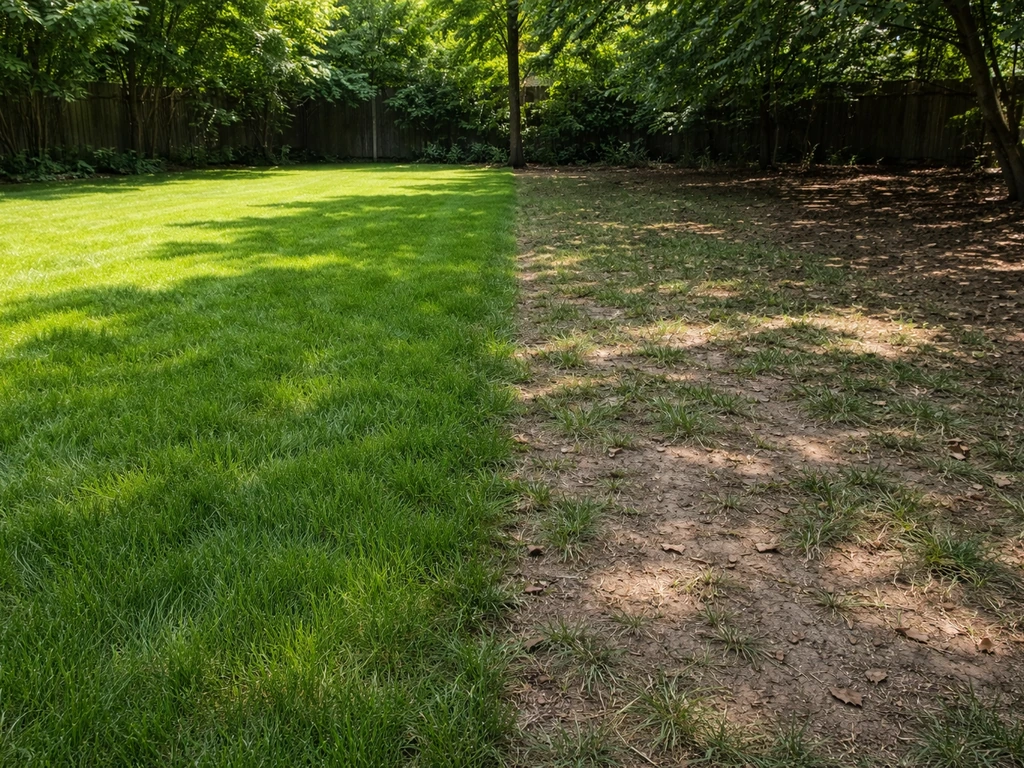
Why Does Grass Grow Everywhere and Fail in Some Spots
Why grass grows and why it fails in shade, bad soil, drainage or moisture issues, compaction, and wrong timing, with fix