
Grass grows when four conditions line up: enough light to drive photosynthesis, soil temperatures in the right range for the species, consistent moisture at the seed or root zone, and soil that lets air and water move through it. If you also want to know whether grass can grow flowers, the key is whether the light, moisture, and soil conditions also suit the flowering species you’re trying to add enough light to drive photosynthesis.
Why Does Grass Grow Everywhere and Fail in Some Spots
Marcus Volkmann
7 May 2026
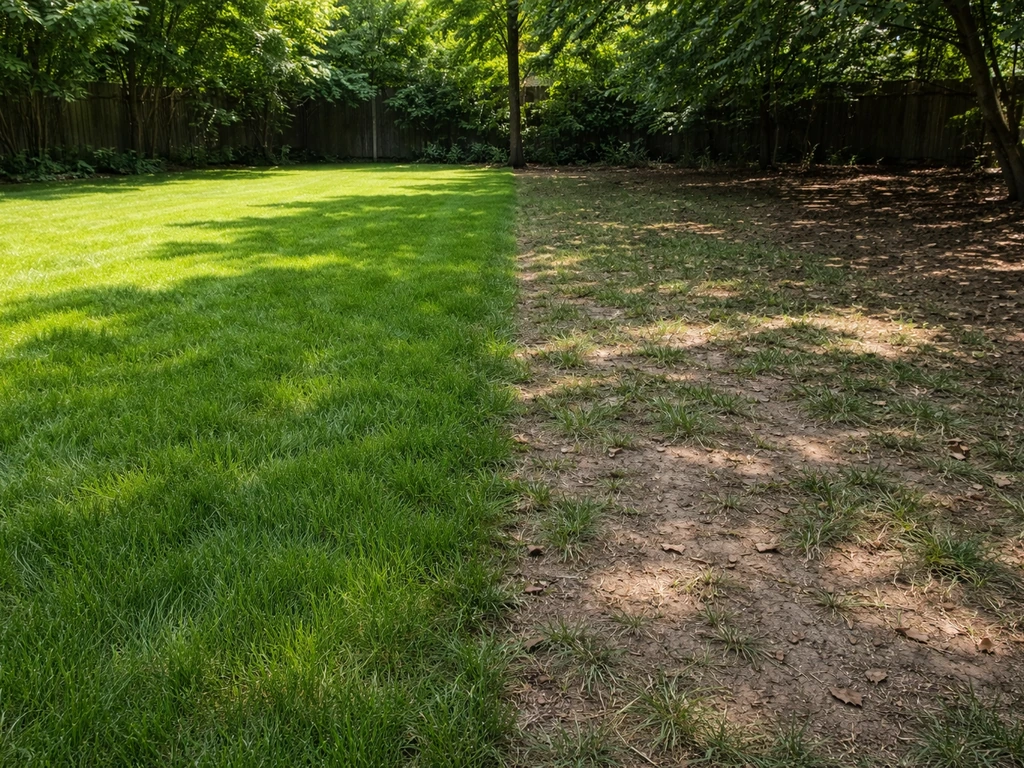
When all four are present, grass germinates fast and spreads aggressively. When even one is missing or out of balance, you get bare patches, thin stands, or nothing at all. Most lawn problems come down to diagnosing which condition is off and fixing that one thing first.
Why grass grows: the biology and conditions it needs
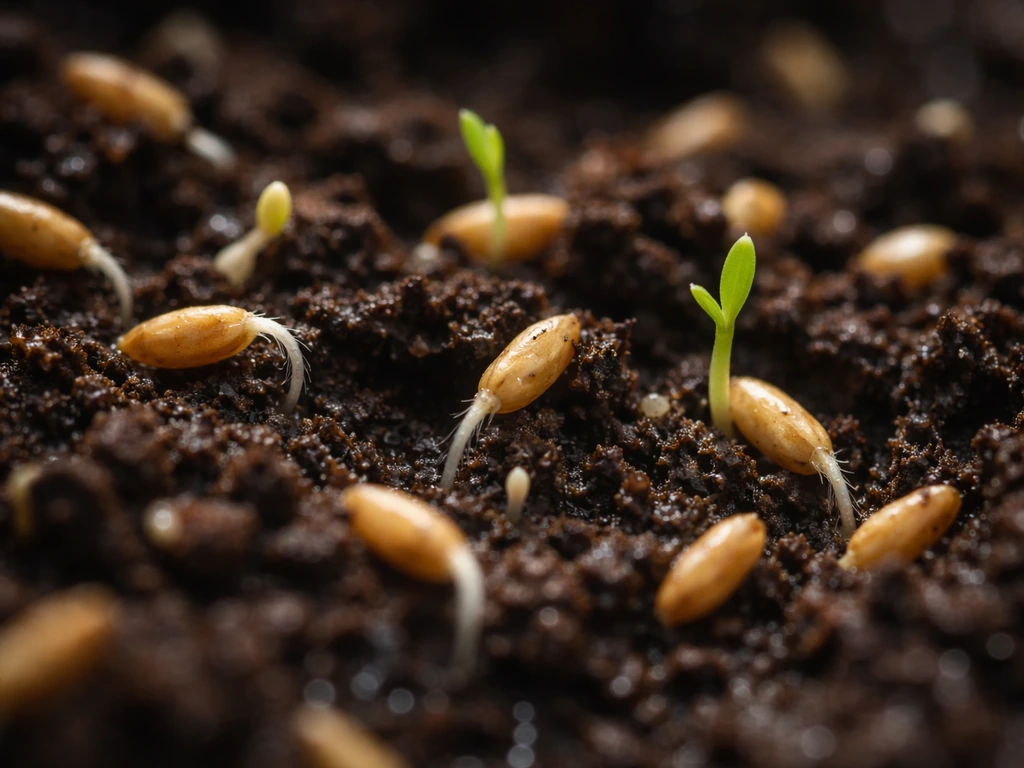
Grass is a plant with a straightforward survival strategy. It germinates from seed when moisture, temperature, and oxygen are all present at the same time. Penn State Extension identifies those three as the non-negotiable basics for turfgrass seed germination. Miss any one of them and the seed just sits there, or rots. Once a seedling establishes, root growth is then driven mainly by soil temperature, moisture, and oxygen in the soil profile. That's the whole system in three variables.
Temperature targets differ by grass type. Cool-season grasses (Kentucky bluegrass, fescues, perennial ryegrass) germinate fastest when soil temperatures sit between 60°F and 85°F. Perennial ryegrass, for example, has a germination range of about 68 to 86°F. Warm-season grasses like bermudagrass need warmer conditions, typically 70°F to 90°F soil temperature, and they really hit their stride in summer air temperatures of roughly 80 to 95°F. Plant the wrong type of grass for your climate or season and you're fighting the biology from day one.
Sunlight is the engine that powers everything after germination. Grass uses light to produce carbohydrates through photosynthesis. Less light means fewer carbohydrates, which means slower growth, weaker roots, and a lawn that can't recover from stress or foot traffic. That's not an opinion, it's the mechanism. Understanding it explains nearly every difficult lawn situation you'll encounter.
Grass also spreads in ways beyond seed. Warm-season grasses like bermudagrass creep aggressively by both rhizomes (underground stems) and stolons (above-ground runners), which is why they colonize areas so effectively without anyone planting them. This vegetative spreading is a major reason warm-season grasses show up where you didn't put them.
Why grass grows everywhere: fast germination, resilience, and common environments
Grass is genuinely one of the most resilient plant families on earth, and its ability to turn up seemingly everywhere has real biological explanations. Fast-germinating species like annual ryegrass can go from seed to visible seedling in as few as 5 to 10 days under good conditions. Hard fescue takes 7 to 14 days. Perennial ryegrass is even quicker in warm, moist soil.
Seeds are light, blow in the wind, travel in bird droppings, and get tracked in on shoes and equipment. The germination threshold is also relatively low: once soil temperatures climb above 50 to 55°F and moisture is present, germination happens. That combination of easy dispersal and a low activation threshold is why grass appears in sidewalk cracks, gravel paths, and neglected corners without anyone planting it.
Warm-season grasses add vegetative spread on top of that. Bermudagrass, for instance, pushes out rhizomes and stolons in all directions during the growing season, colonizing new ground continuously. This is also why crabgrass and other opportunistic grasses show up in bare patches so reliably: bare soil with light and moisture is an open invitation. The grasses that seem to grow everywhere are usually the ones best matched to your local conditions, which is exactly the clue to use when choosing what to plant deliberately.
Why grass doesn't grow in your yard: quick diagnosis checklist
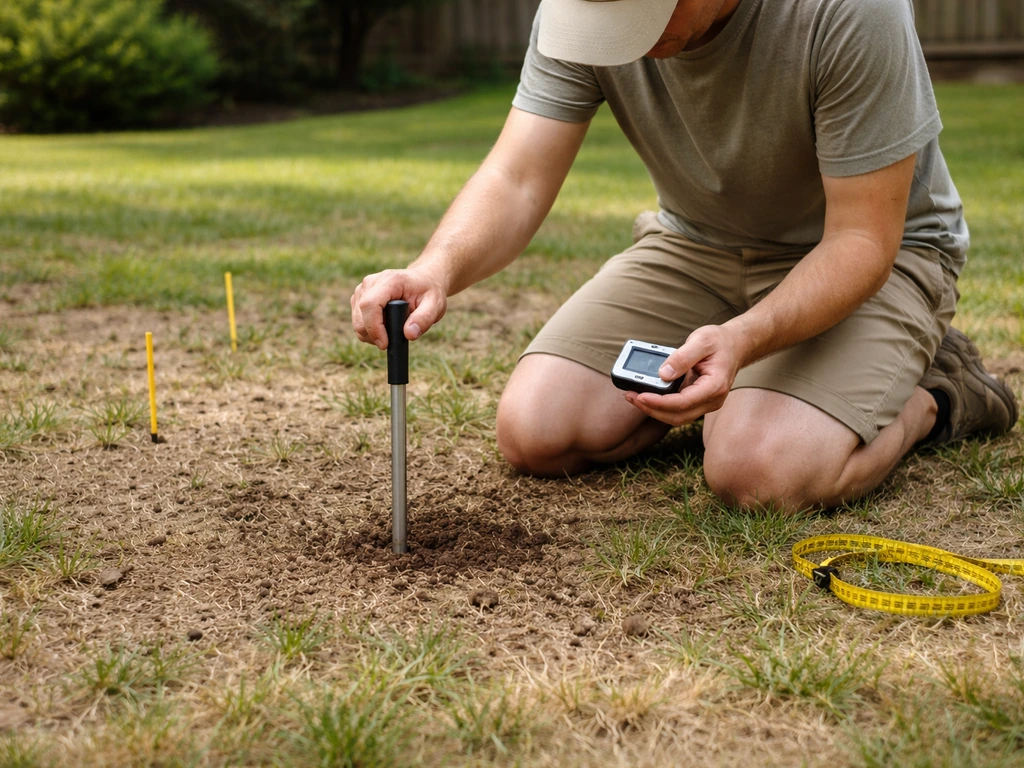
Before you buy seed or soil amendments, spend ten minutes diagnosing what's actually wrong. Most bare patches have one primary cause. Walking through these questions in order will usually identify it.
- How much direct sunlight does the bare spot get? Count actual hours of unobstructed sun on a clear day. Less than 2 hours means almost nothing will grow there. 2 to 4 hours is marginal even for shade-tolerant grasses. At least 6 hours is what most grasses really need.
- What does the soil feel like after rain? If it stays wet and puddles for hours, you have drainage or compaction problems. If it dries out bone-dry within a day, you may have sandy or hydrophobic soil.
- Has the area been tested for pH? Grass struggles outside a narrow pH window. Kentucky bluegrass wants 6.5 to 7.2. Fescues and ryegrass tolerate down to about 5.5 to 6.0. Outside those ranges, nutrients lock up and grass starves even in good soil.
- Is there heavy foot traffic, a dog run, or vehicle parking in the spot? Compaction destroys the macropores grass roots need for air and water. The soil will look fine on the surface but be brick-like below.
- Are there tree roots or heavy canopy overhead? Trees compete for water and nutrients at the root zone and block light from above simultaneously. Leaf litter adds organic matter that can further suppress grass.
- When did you last seed, and what was the soil temperature at the time? Seeding when soil is too cold (below 50°F for cool-season types) means the seed sits dormant or rots before germinating.
- Have you been watering the right amount at the right stage? New seed needs frequent light moisture. Established grass needs deep, infrequent watering. Mixing those up kills seedlings or stresses mature turf.
Sunlight and shade: tree roots, coverage, and how to respond
Shade from trees is the single most common reason grass fails in residential yards, and it's harder to fix than most people expect. The problem is two-layered. First, trees reduce the quantity of sunlight reaching the turf. Second, the quality of light changes under a canopy: filtered light has less of the wavelengths grass uses for photosynthesis, which further reduces carbohydrate production even if some light is getting through. Less energy means slower growth, thinner grass, and a stand that can't handle any additional stress.
The hard minimum is about 2 hours of direct sun daily, and even that only supports the most shade-tolerant species in marginal condition. For a genuinely good-looking lawn, you're looking at a minimum of 6 hours of direct sunlight. Most lawns under mature tree canopy get nowhere near that. Add in the tree roots drawing water and nutrients from the same soil zone, and the leaf litter that can accumulate and smother seedlings, and you have three compounding problems happening at once.
If you're in the 2 to 4 hour range, your best move is to choose a fine fescue blend specifically labeled for shade (creeping red fescue, chewings fescue, or hard fescue are your top picks), raise your mowing height to 3. Penn State Extension recommends fine fescues, such as creeping red fescue, Chewings fescue, sheep fescue, and hard fescue, as some of the most shade-tolerant common options for lawns fine fescue blend specifically labeled for shade.
5 to 4 inches to maximize the leaf surface available for photosynthesis, and reduce foot traffic in the area to give the weaker root system a break. For fine fescue lawns in shade, UMN Extension recommends mowing shaded areas slightly higher than full sun [raise your mowing height to 3. ](https://extension. umn.
edu/lawns-and-landscapes/planting-and-maintaining-fine-fescue-lawn). Prune lower tree limbs to get more light down to the ground where you can. If the spot is getting less than 2 hours of direct sun, grass almost certainly won't work there. Consider ground covers like pachysandra, liriope, or hostas, or convert to a mulched bed under the tree.
Pushing grass into a genuinely no-sun area just costs you time and money in repeat failure.
Soil and drainage: compaction, nutrients, pH, and sand/grit fixes
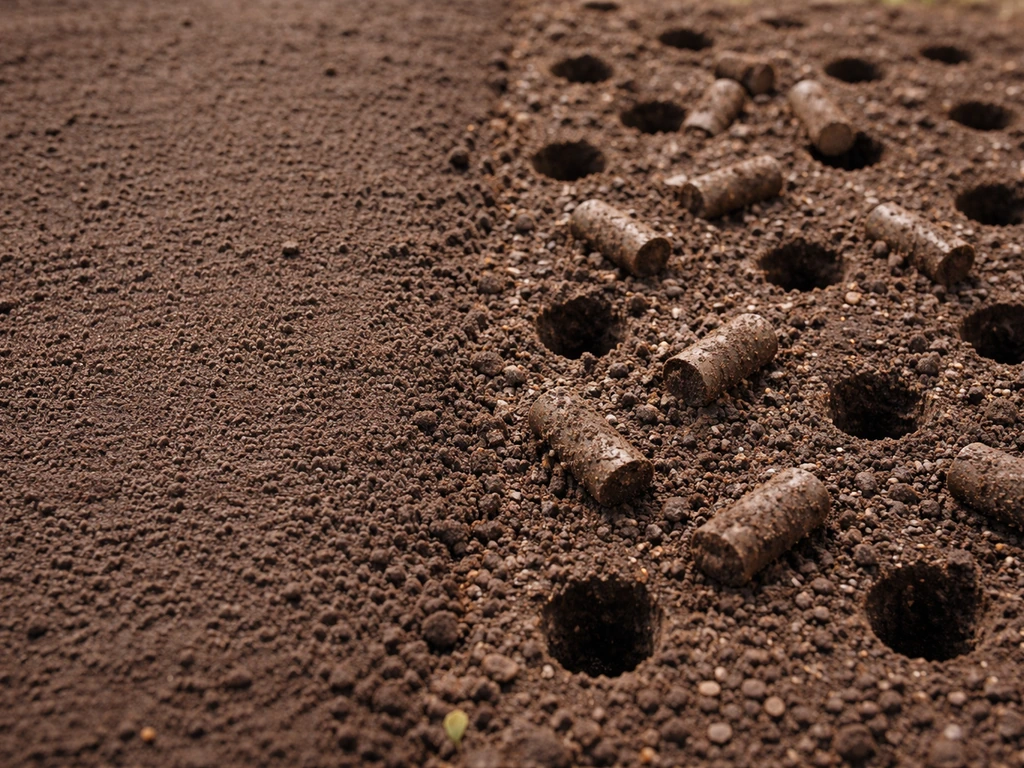
Soil compaction is a quiet killer. It reduces the large pores (macropores) in the soil that water and air move through. When those pores collapse, water sits on the surface or runs off, roots can't penetrate deeply, and gas exchange shuts down. Penn State research shows compacted soils also slow the uptake of nutrients like phosphorus and potassium, and increase nitrogen losses when the soil stays saturated too long. So compaction doesn't just suffocate roots physically, it also starves the grass nutritionally.
For small, localized compacted areas, Cornell Turfgrass Program recommends using hand tools to loosen the soil to a depth of 6 to 8 inches. For larger areas, core aeration is the standard fix: a machine pulls plugs from the soil, opening channels for air, water, and root growth. Do this in fall for cool-season grasses or late spring for warm-season types when the grass is actively growing and can recover fast. After aeration, top-dress with compost and overseed immediately.
pH is the other soil issue that trips people up. Grass can't take up nutrients efficiently outside a fairly specific pH window, no matter how much fertilizer you apply. Test your soil before you do anything else (most cooperative extension offices and garden centers offer cheap test kits). For Kentucky bluegrass, target 6.5 to 7.2. Fescues and perennial ryegrass tolerate slightly more acidic conditions, down to about 5.5. If you're below the target, apply lime to raise pH. If you're above it, sulfur brings it down. Give amendments time to work: pH changes happen over weeks, not days.
Sandy or grit-heavy soil drains so fast it becomes drought-prone almost immediately. The fix is organic matter: work in compost at 3 to 4 inches deep before seeding. Compost improves water retention without destroying drainage, which is exactly what sandy substrates need. It also feeds soil biology that supports root health. Don't skip this step if you're trying to establish grass in sandy soil, because the seed will germinate and then the seedlings will fry in the first dry spell.
| Soil Problem | Main Effect on Grass | Primary Fix |
|---|---|---|
| Compaction | Blocks air, water, and root penetration | Core aeration + compost top-dress |
| Low pH (too acidic) | Nutrients lock up, especially phosphorus | Apply lime, retest after 4–6 weeks |
| High pH (too alkaline) | Iron and manganese become unavailable | Apply sulfur, retest after 4–6 weeks |
| Sandy/gritty soil | Water and nutrients drain too fast | Work in 3–4 inches of compost before seeding |
| Poor drainage/clay | Roots suffocate, disease pressure rises | Aerate, add organic matter, consider grading |
Water and temperature: watering schedule, drought/overwatering, and timing
The watering rules change completely depending on whether you're germinating new seed or maintaining established turf. New seed needs the seed bed kept consistently moist, which usually means light, frequent watering, sometimes two or three times a day in hot or windy weather. Let it dry out even once during germination and you can lose the entire seeding effort. Penn State Extension is direct on this: newly seeded areas must be kept moist during germination and early establishment, not on the normal adult-turf schedule.
Once grass is established, the approach flips. You want deep, infrequent watering that pushes moisture down through the root zone and encourages roots to follow it downward. Shallow, frequent watering on established grass keeps roots near the surface, which makes the lawn far more vulnerable to drought and heat stress. Penn State notes that once the soil profile is fully wet through the root zone, additional water mainly fills large pores and becomes excess, so there's a real ceiling on how much is useful. Overwatering established turf encourages disease, root rot, and weed pressure.
Temperature timing matters for seeding and for active growth. If you're seeding cool-season grass, wait until soil temperatures are reliably above 50°F, and ideally in the 60 to 85°F range. Purdue Extension emphasizes that once soil hits 50 to 55°F and germination begins, you need to keep the area irrigated consistently or you'll lose seedlings.
Fall is generally the best window for cool-season grass seeding in most of the country: soil is warm from summer, air temperatures are cooling down, and rainfall tends to be more reliable. Spring seeding works but competes with weed germination. For warm-season grasses, seed or lay sod in late spring through early summer when soil is consistently warm and the grass has a full growing season ahead of it.
What to do today: step-by-step troubleshooting and options when grass won't work
Here's how to move from diagnosis to action right now, in the right order. Don't skip to a fix before you've confirmed the cause, because you'll just waste the season.
- Test your soil pH first. If you haven't done this, do it before buying anything else. A $15 test from a garden center or a free service through your local extension office will tell you exactly what you're working with. Adjusting pH before seeding or fertilizing makes everything else more effective.
- Check soil temperature before you seed. Use a soil thermometer 2 inches deep in the morning. If it reads below 50°F for cool-season grass or below 65°F for warm-season types, wait. Seeding into cold soil is mostly wasted effort.
- Assess the sunlight honestly. Stand in the problem area at mid-morning and mid-afternoon and count hours of direct sun with no shade. If you're below 4 hours, your grass choices are severely limited. Below 2 hours, plan for an alternative ground cover.
- Probe the soil for compaction. Push a screwdriver into dry soil. If it won't go in easily past 2 inches, you have compaction. Rent a core aerator or use hand tools to loosen small areas to 6 to 8 inches before doing anything else.
- If the area has good light and loose soil but grass still won't establish, look at drainage. Dig a hole 12 inches deep, fill it with water, and see how long it takes to drain. More than 4 hours means drainage is a serious problem that requires grading, organic matter additions, or both.
- Choose the right grass species for your conditions. Not all grass is the same. Fine fescues for shade, turf-type tall fescue for drought tolerance and sandy soil, perennial ryegrass for fast establishment. Matching species to conditions is the single highest-leverage decision you can make.
- Water correctly for the stage. New seed: light and frequent, keep the surface moist until you see consistent germination and seedlings reach 1 inch tall. Established turf: deep and infrequent, typically 1 inch per week split into two sessions.
- If grass genuinely can't work in the spot (dense shade, heavy tree root competition, extreme drainage failure), stop fighting it. Mulch the area under the tree, plant shade-tolerant ground covers, or use hardscaping. Repeated failed seedings are expensive and demoralizing. The right call sometimes is accepting that grass isn't the answer for that specific spot.
One thing worth knowing: the grasses that seem to grow effortlessly on their own in your area (sometimes called volunteer grasses) are the ones best adapted to your local conditions. That's useful information. If you're fighting your soil and climate to grow a species that doesn't want to be there, consider switching to whatever is thriving naturally nearby and work with the conditions rather than against them.
If you're fighting your soil and climate to grow a species that doesn't want to be there, consider switching to whatever is thriving naturally nearby and work with the conditions rather than against them does grass grow naturally. Whether grass grows at all, and whether it grows year-round in your region, both come back to that same core idea: match the plant to the place.
FAQ
How can I tell whether my problem is light, water, or soil oxygen without guessing?
Run a quick “same-day” check: look at the exact patch boundary, if it coincides with tree shade or a wall overhang it is likely light. For moisture and oxygen, press a screwdriver or probe 6 to 8 inches down, if it is hard and water beads or runs off quickly after watering, compaction or poor infiltration is likely. If the soil stays soggy for days, oxygen is limited, and seed will stall or rot even if it stays wet.
Why does grass germinate in one spot but fail in a neighboring spot with the same watering?
Microclimates are real. Small changes in sun angle, a buried root zone under a tree, or a slightly different soil texture can shift temperature or aeration enough to matter. Also check for “missed coverage,” if sprinkler patterns overlap unevenly, one area may dry out for a few hours during the germination window.
Should I fertilize right away when grass won’t grow?
Not as a first step. If the limiting factor is shade, wrong grass type, compaction, or the seedbed drying out, fertilizer mostly wastes money and can encourage weeds. In general, test soil pH first, then correct pH and compaction before you apply significant nutrients, and wait to fertilize seedings until they are established and actively growing.
What is the biggest mistake people make when watering newly seeded areas?
Letting the surface dry even once during germination. With seed, you usually need short, frequent cycles to keep the top layer consistently moist, not a deep soaking that then dries out. If you see a crust forming, reduce irrigation intensity and increase frequency so moisture gets into the seedbed.
How do I choose between overseeding and starting over when there are bare patches?
Overseed when the existing turf has reasonable coverage and the bare spots are caused by a fixable issue like thinness from traffic or minor nutrient imbalance. Consider starting over when the ground is severely compacted, the pH is far off, drainage is consistently poor, or the area is chronically under-lighted, because new seed will keep failing under the same constraint.
If my lawn looks thin, how can I tell whether it is under-watered or just under-lit?
Under-lit turf usually grows slowly with a persistent pale or weak look and thinning directly under the light limitation, often under trees or fences. Under-watered turf typically shows dryness stress patterns more broadly, and footprints or mowing tracks recover poorly after drying. A practical test is to measure direct sun hours at ground level for a week, then compare to how the thinning aligns spatially.
Why does grass come in weeds and volunteer grasses in bare areas?
Bare soil plus available light and periodic moisture creates a free “germination opportunity,” and many volunteer grasses have low germination thresholds and fast growth. If you want to control this, the fastest win is to remove the limiting condition first, then seed or sod promptly so the target turf captures the space before opportunistic species establish.
Can I grow grass year-round in my region?
Usually only warm-season turf can stay green in mild winters, and even then growth slows. Cool-season grasses can look green longer but often still enter dormancy or slow growth depending on temperature. The practical question is whether your region’s winters and summers match the grass type’s active growth season and soil temperature range for establishment.
What should I do if my soil is sandy and my seedlings keep dying?
Improve water-holding capacity before and during seeding by mixing in compost at the depth you will seed into, not just a thin surface layer. Also adjust irrigation to keep the top layer moist, because sandy soils can dry out quickly and fry young seedlings even when deeper moisture might still exist.
How often should I aerate, and will it help if grass still won’t fill in?
Aeration helps when compaction is the limiter, it is less helpful when shade or water exclusion is the main cause. If the patch stays soft and drains well but still won’t thicken, focus on light and grass type instead. When you do aerate, top-dress and overseed immediately so the new seed has contact with workable soil and open channels for air and water.
Next Articles
Why Does Crabgrass Grow? Causes and Fixes for Your Yard
Learn why crabgrass grows and how it establishes, then use a checklist to fix bare soil, mowing, light and timing.
Can You Grow Grass Over Gravel? How to Do It Right
Learn when you can grow grass over gravel and follow a step-by-step method for soil depth, drainage, seeding or sod, and
Do Wood Chips Help Grass Grow? When They Work and When Not
Learn when wood chips help grass grow, when they steal nitrogen, and step-by-step how much to apply and seed options.