
Letting grass grow too long causes a cascade of real problems: matting, reduced airflow at the soil surface, weed takeover, thatch buildup, and a painful mowing recovery that risks blank" rel="noopener noreferrer">scalping your lawn. The longer you wait, the harder it is to fix without stressing the turf. But if you're dealing with an overgrown lawn right now, the good news is that a gradual, staged mowing approach can bring it back without causing serious damage. If you're wondering, "is it good to let your lawn grow," the main takeaway is that only letting it grow slightly too long is manageable, but sustained overgrowth quickly stresses the turf.
What Happens If You Let Grass Grow Too Long? Fix It Now
Marcus Volkmann
12 Jun 2026
Yes, it's genuinely bad, here's why
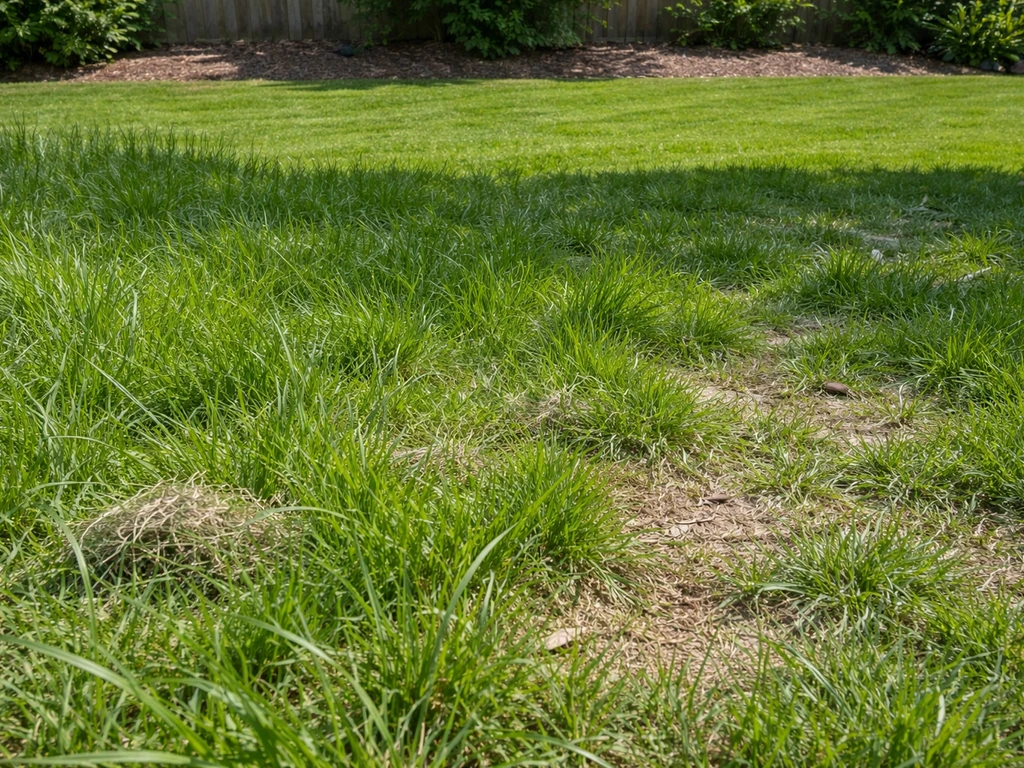
There's a popular idea that letting grass grow long is always beneficial, and to be fair, there are situations where slightly longer grass helps roots and improves drought tolerance. But there's a clear tipping point. Once grass goes well past its recommended height, the problems start stacking up fast. The blade canopy closes off light and airflow to the lower stems, the lawn loses density, weeds move in to fill gaps, and when you finally do mow, you're at serious risk of scalping, cutting deep into the brown, leafless stem tissue that can't photosynthesize. That's not a small setback. It can kill sections of turf outright.
What actually goes wrong with overgrown grass
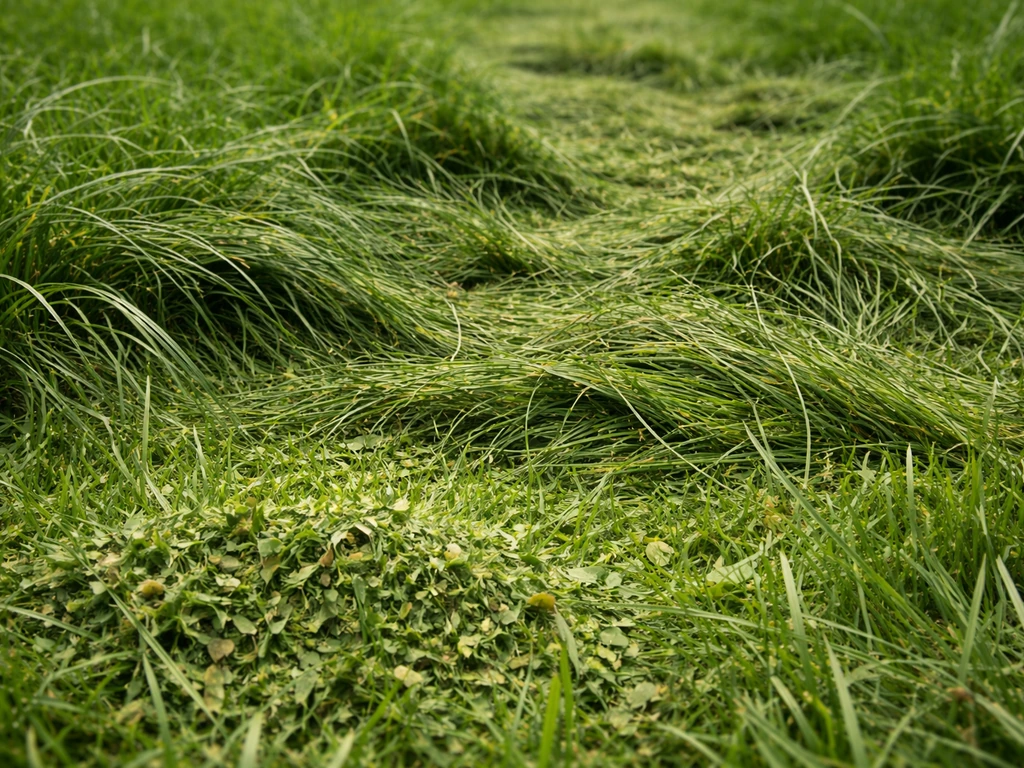
Here are the specific problems that show up when grass gets away from you, roughly in the order you'll notice them:
- Matting and clumping: Long blades flop over and mat together, blocking light from reaching lower growth. When you mow, the clippings pile up in thick clumps that smother whatever is underneath.
- Poor airflow and moisture buildup: A dense, matted canopy traps humidity at the soil surface, creating ideal conditions for fungal disease.
- Weed advantage: Tall grass that's starting to thin or mat gives weeds exactly the light and space they need at ground level. Crabgrass in particular loves areas where the turf canopy has broken down.
- Thatch acceleration: Overgrown grass produces more stem material than the soil can break down quickly. Penn State Extension notes that thatch becomes a problem when it exceeds about one inch — and overgrown, infrequently mowed lawns are a major contributor to that buildup.
- Scalping risk on recovery mow: This is the big one. If you let grass grow to six inches and then cut it to two inches in one pass, you'll scalp it — removing all the green leaf tissue and exposing brown stem. Oregon State research notes that scalping stops growth, depletes carbohydrate reserves, and leaves turf wide open to environmental stress.
- Drought stress: Counterintuitively, very long grass that mats and blocks airflow can suffer more during heat and drought than properly maintained turf. The root system isn't necessarily deeper just because the blades are longer.
- Uneven regrowth and patchiness: Once overgrown grass is mowed back hard, it tends to regrow unevenly, leaving thin, patchy areas that are slow to recover.
How long is too long, the actual numbers
The standard recommendation across virtually every university extension service is the one-third rule: never remove more than one-third of the blade height in a single mowing. That rule also tells you when you've crossed into 'too long' territory. If your target mowing height is three inches, you should be mowing before grass reaches 4.5 inches. If you're targeting two inches, mow again at three inches. The moment grass passes that 50% overgrowth threshold above your target height, you're setting yourself up for a stressful recovery.
In visual terms, look for these warning signs that your lawn has crossed the line:
- Blades are flopping over and matting flat rather than standing upright
- Color is uneven — some patches are yellow or pale green at the base where light isn't reaching
- You can see visible clumping or layering when you push a foot through the grass
- There are scattered bare or thin patches starting to appear
- The lawn feels spongy and dense at the base when you walk on it
If you're seeing these signs, you're past 'a little long' and into territory that needs a deliberate recovery plan, not just a quick mow.
How to mow it safely right now
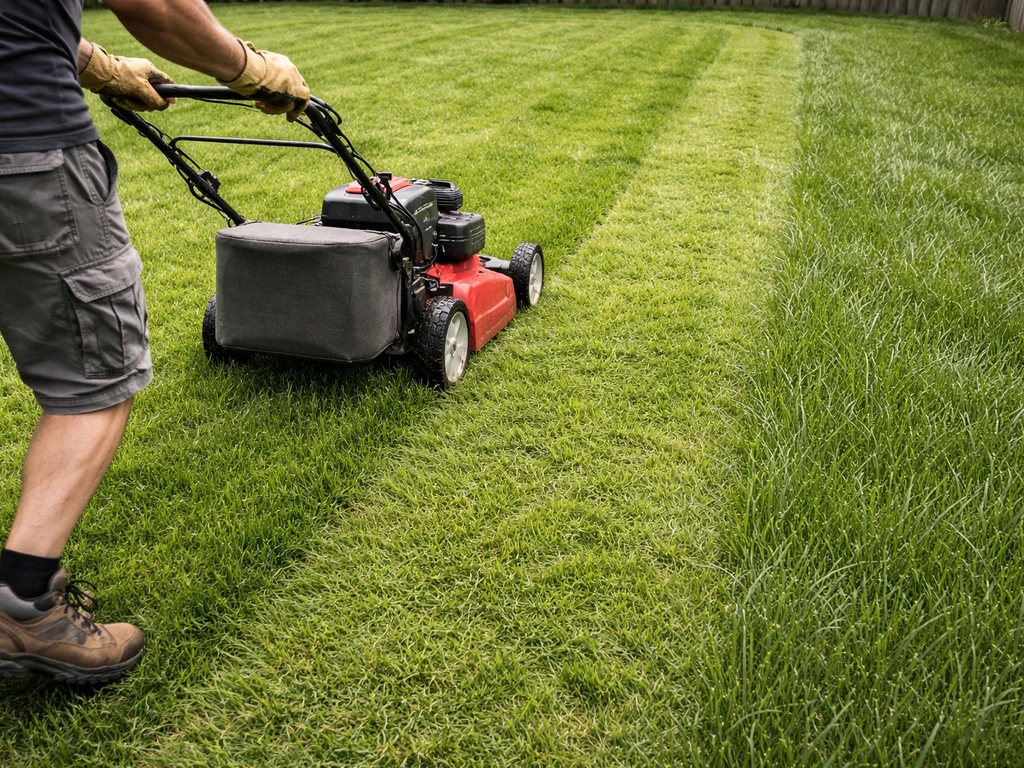
The key rule: don't try to cut it all back in one session. If you're wondering whether it is better to let grass grow long before cutting, the one-third rule and staged mowing approach give you a safer way to avoid major stress on the turf is it better to let grass grow long before cutting.
K-State Extension is explicit about this, if your lawn is overgrown and needs more than one-third removed, you need to do it gradually with a few days between each mowing. benefits of letting grass grow long. If you were hoping to can you let grass grow to seed, that still depends on timing and mowing discipline so you do not sacrifice the lawn’s recovery mow it all back in one session. Here's the practical step-by-step:
- Set your mower higher than usual — raise the deck to remove only the top third of the current height. If the grass is six inches tall, cut to four inches on the first pass.
- Wait two to three days before mowing again, then take another third off. Repeat until you reach your target height.
- Use sharp mower blades. Dull blades tear rather than cut, which opens the door to disease and slows recovery.
- Deal with clippings: after an overgrown mow, you'll almost certainly have excessive clippings that won't filter down on their own. Rake or bag them. If you leave thick clumps sitting on the lawn they'll smother the grass underneath and make things worse. Once you're back to regular maintenance mowing, clippings under about an inch in length can stay on the lawn and will break down quickly without issue.
- Don't mow during peak heat. If you're doing this in summer, mow in the morning or evening when the lawn is under less heat stress.
If your grass is genuinely extreme, knee-high or taller from total neglect, you may need to use a string trimmer or even a brush mower for the first pass before switching to a regular lawn mower. The staged approach still applies.
Preventing this going forward
Mowing height guidelines by season
The right mowing height depends on your grass type and the season, but the general rule for cool-season grasses (fescue, bluegrass, ryegrass) is to stay in the 2.5 to 4 inch range. Warm-season grasses like Bermuda or Zoysia can handle shorter cuts, typically 1 to 2.5 inches. In summer, both Virginia Cooperative Extension and University of Maryland Extension recommend raising your cut height by half an inch to a full inch above your normal setting. Taller summer grass shades the soil better, retains moisture, and is more resistant to heat stress and drought. Iowa State Extension is clear that you should never mow cool-season grass below two inches, especially when the lawn is already under stress.
| Grass Type | Standard Height Range | Summer/Stress Height |
|---|---|---|
| Cool-season (fescue, bluegrass, ryegrass) | 2.5 – 3.5 inches | 3.5 – 4+ inches |
| Bermudagrass | 1 – 1.5 inches | 1.5 – 2 inches |
| Zoysiagrass | 1 – 2 inches | 2 – 2.5 inches |
| Tall Fescue (shade/stress situations) | 3 – 4 inches | 4+ inches |
How often you actually need to mow
Frequency should be driven by growth rate, not the calendar. In spring, cool-season grasses can grow fast enough that once a week isn't enough, University of Maryland Extension notes that during peak spring growth you may need to mow twice a week to stay within the one-third rule. University of Maryland Extension also warns that [excessive thatch, defined as 1 inch or more](https://extension. umd.
edu/resource/excess-thatch-lawns), can cause lawn problems and that cultural practices can increase the rate of thatch buildup. In spring, letting cool-season grass grow too long can push it past the one-third rule and turn a normal mowing into a stressful recovery letting grass grow long in spring. In summer, growth often slows and you might get away with every ten days. In fall, frequency tapers again.
The mistake most people make is locking in a rigid weekly schedule that doesn't account for seasonal variation, and then suddenly the grass is four inches past target and they're back in recovery mode.
Mowing in challenging conditions
If you're dealing with shade from trees, poor soil, or sandy substrate, the kinds of conditions this site covers a lot, the rules shift slightly. In shaded areas especially, you want to mow at the higher end of your grass type's range, or even a touch above it. University of Kentucky Extension notes that mowing too short in shaded areas compounds stress significantly, since the grass has less photosynthetic surface to work with under already reduced light.
Penn State Extension similarly connects mowing strategy, including mowing height, with weed pressure outcomes, noting that weed responses differ by temperature and season mowing too short in shaded areas compounds stress significantly. In sandy or poor soil conditions, the same logic applies: a taller canopy means deeper, more established roots that can better access water and nutrients from a limited soil profile.
Keeping grass taller can help reduce stress and support healthier root growth, especially in tough conditions. Don't let these areas get overgrown, but do keep them a half inch to a full inch longer than you'd keep a well-resourced, full-sun section of lawn.
When to worry: dead patches, pests, and re-seeding
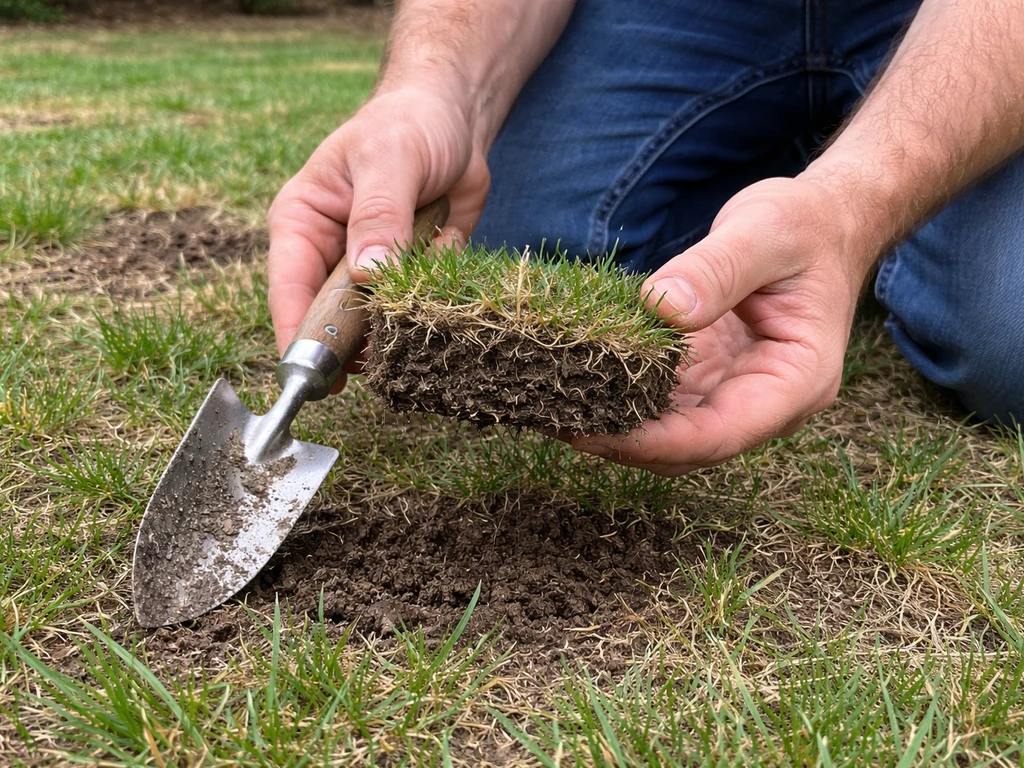
If after your staged recovery mowing you're still seeing dead or thinning patches two to three weeks later, the overgrowth has likely done lasting damage to those areas. This is when you need to assess whether the problem is just scalping or something more. A few things to check:
- Thatch depth: Pull up a small plug of soil and grass. If the layer of spongy brown material between the green blades and soil is more than about an inch thick, you have a thatch problem that's smothering roots and blocking water and nutrients. You'll need to dethatch (rake vigorously or rent a power dethatcher) before overseeding will take.
- Pest activity: Matted, overgrown lawns are ideal habitat for grubs, chinch bugs, and other pests that work at the soil surface. If you see irregular dead patches and the grass pulls up easily with no roots attached, check for grub damage.
- Fungal disease: If dead patches are roughly circular with a distinct border, or if you see discoloration patterns that look almost like rings, fungal disease from the moisture buildup is likely.
- Weed pressure: After overgrowth damage, weeds often move into thin spots faster than the grass can recover. Address the soil and turf density before assuming herbicide will fix it.
For dead or very thin patches that aren't recovering on their own, overseeding is the right move. Late summer to early fall is the best window for overseeding cool-season grasses, typically late August through September depending on your region. Spring overseeding works too but competes with weed germination. Before you seed, loosen the soil surface, remove dead material, and consider a light topdressing of compost if soil quality is poor. This is especially worth doing if you're dealing with sandy or depleted soil that contributed to the thinning in the first place.
If the same spots keep failing even after overseeding, especially under trees or in compacted, low-nutrient areas, it's worth asking whether traditional turf grass is actually the right plant for that spot. A grass alternative, shade-tolerant ground cover, or a soil amendment program to address underlying deficiencies might be a better long-term investment than repeatedly fighting the same battle. The point isn't a perfect lawn on paper; it's a lawn that actually works given the conditions you have.
FAQ
How long can I leave grass before it becomes “too long” to mow safely?
A good rule is tied to your target height, not the calendar. If you let grass reach more than about 50% above your normal cut height, you are likely past the one-third rule threshold and should switch to staged mowing (multiple cuts with a few days between) rather than one big trim.
Should I mow right after rain if my grass is overgrown?
Avoid mowing when the lawn is very wet, especially if it is already matted or flattened. Wet blades tear and drag, which worsens scalping risk and delays recovery. Wait until the grass springs up and the soil surface is firm enough to prevent deep tire tracks.
What should the mower deck height be on the first pass for an extremely overgrown lawn?
Do not start at your final desired height. Start at a safe, higher setting and remove only up to the one-third limit on that first pass. If the lawn is very tall or heavy, you may need a higher first cut, then step down gradually on subsequent days.
Can I bag clippings when the grass is too long, or should I mulch?
If the lawn is overgrown and clippings end up in thick clumps, bagging is usually safer to prevent smothering and extra thatch. If you are only removing a small amount in each staged pass, mulching can work, but make sure clippings are not accumulating in mats.
Is it okay to use a weed trimmer to fix overgrowth instead of a mower?
A trimmer can help with edges and uneven spots, but it cannot lower the main canopy evenly like a mower. If the lawn is knee-high or heavily matted, a string trimmer or brush mower can be used for the first rough reduction, then follow with staged mowing using a regular mower.
Will mowing too long cause permanent damage immediately, or does it take weeks to show up?
Often, the stress shows up later. If you see dead or thinning patches two to three weeks after the staged recovery, that usually indicates lasting damage rather than just a temporary “bad haircut.”
When should I fertilize after I fix an overgrown lawn?
Wait until the lawn shows active recovery, usually after you can resume normal mowing frequency without further scalping stress. Fertilizing too soon on a stressed lawn can push weak growth and worsen stress, especially in heat or drought.
Should I overseed immediately after the overgrowth, or only if it fails to recover?
Seed sooner if you have clear bare or dead areas, but if the rest of the lawn is still recovering, many homeowners do better timing overseeding to late summer or early fall. If spots are thinning but not fully dead, overseeding can be scheduled while the turf is stabilizing rather than waiting for complete failure.
How do shade, sandy soil, and heat change the mowing plan for an overgrown lawn?
In shade and poor soil, mowing at the higher end of the grass’s recommended range reduces additional stress because plants have less light or limited water access. In summer heat, raising the cut height (even slightly above normal) helps maintain canopy cover and reduces drought and temperature stress.
Next Articles
Is It Good to Let Grass Grow Long? Lawn Guide
When long grass helps or hurts: weed control, density, moisture, disease, and step-by-step mowing height targets.
Benefits of Letting Grass Grow Long: How to Do It Safely
Learn safe mowing heights for longer grass to boost roots, drought tolerance, soil cooling, and reduce weeds without sca
Can You Grow Grass Over Gravel? How to Do It Right
Learn when you can grow grass over gravel and follow a step-by-step method for soil depth, drainage, seeding or sod, and