
Letting your grass grow long means raising your mowing height to the upper end of your grass species' recommended range and mowing just often enough to stay within the one-third rule. For most cool-season lawns like tall fescue or Kentucky bluegrass, that puts you somewhere between 3 and 4 inches. For warm-season grasses like Bermuda or zoysia, the sweet spot is lower but the same principle applies. Done right, you get deeper roots, better drought resilience, cooler soil, and fewer weeds pushing through. Done carelessly, you end up with thatch, disease, and a scalping nightmare. Here's how to make it work.
Benefits of Letting Grass Grow Long: How to Do It Safely

Marcus Volkmann
28 Apr 2026
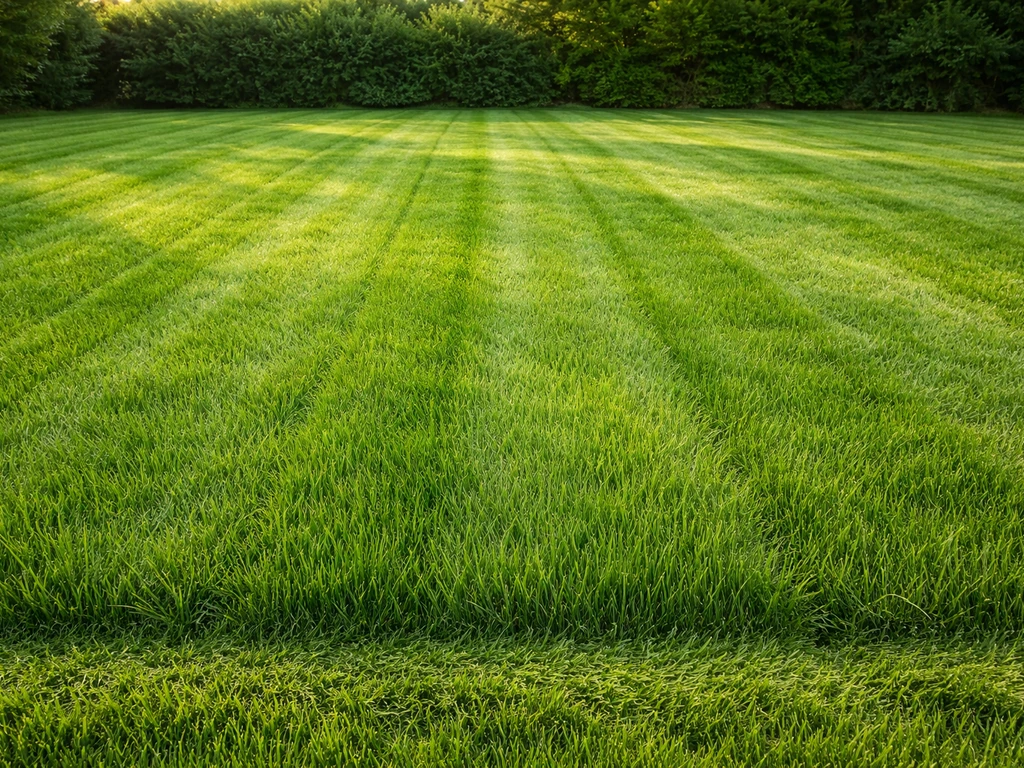
What 'letting grass grow long' actually means in practice
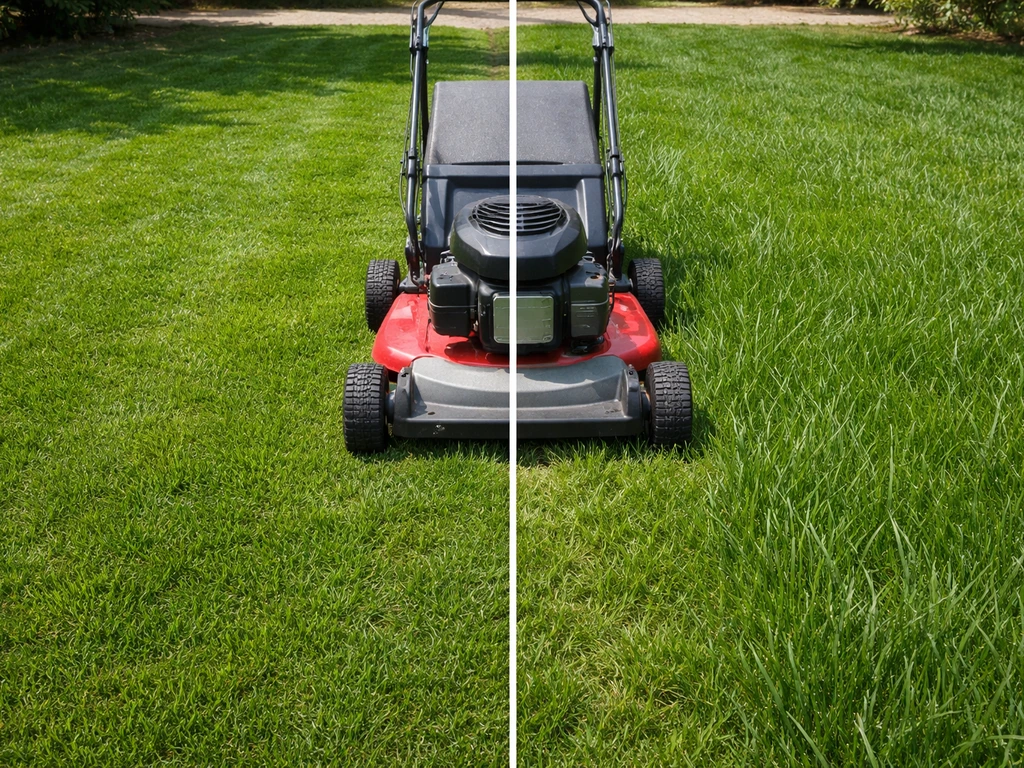
There's a big difference between letting your lawn grow long on purpose and just skipping mows until the yard looks like a meadow. The practical definition here is intentional: you're raising your mowing height to the top of what your grass type tolerates, and then you're mowing often enough to stay within that range without removing more than one-third of the blade at any single mowing.
Purdue University's turfgrass research puts this clearly: mowing height and frequency are directly linked. If your desired height is 3 inches, you need to mow before the grass hits 4.5 inches. That's the one-third rule, and it's the single most important number to keep in mind. University of Minnesota Extension frames it the same way: if your target is 3 inches, cut when it reaches no more than 4.5 inches tall. What this means practically is that 'letting it grow long' doesn't mean mowing less often in terms of weeks on the calendar. It just means you're mowing at a higher setting, and the grass gets a little more time between cuts because it's growing into a taller range.
Here are the realistic 'tall' target heights for common grass types, pulling from university extension guidance. These are the upper-end mowing heights you'd aim for when trying to get benefits from longer growth:
| Grass Type | Standard Mowing Height | Recommended 'Tall' Height | Notes |
|---|---|---|---|
| Tall Fescue | 2.0–3.0 in | 2.5–3.5 in (hot/dry) | Go taller in summer heat |
| Kentucky Bluegrass | 2.0–3.5 in | 2.25–3.0 in (hot/dry) | Lower tolerance in extreme heat |
| St. Augustinegrass | 3.5–4.0 in | 3.5–4.0 in | Already at optimum at the high end |
| Common Bermudagrass | 1.0–2.0 in | 1.75–3.0 in (hot/dry) | Can push higher in summer stress |
| Zoysiagrass | 1.5 in typical | Up to 2.0–2.5 in | Below 1 in requires reel mower |
The key takeaway: 'long' is relative to the grass you're working with. A 4-inch Bermuda lawn is a problem. A 4-inch St. Augustine lawn is exactly right. Know your species before you raise that mowing deck.
The real benefits you're actually getting
Deeper, stronger roots
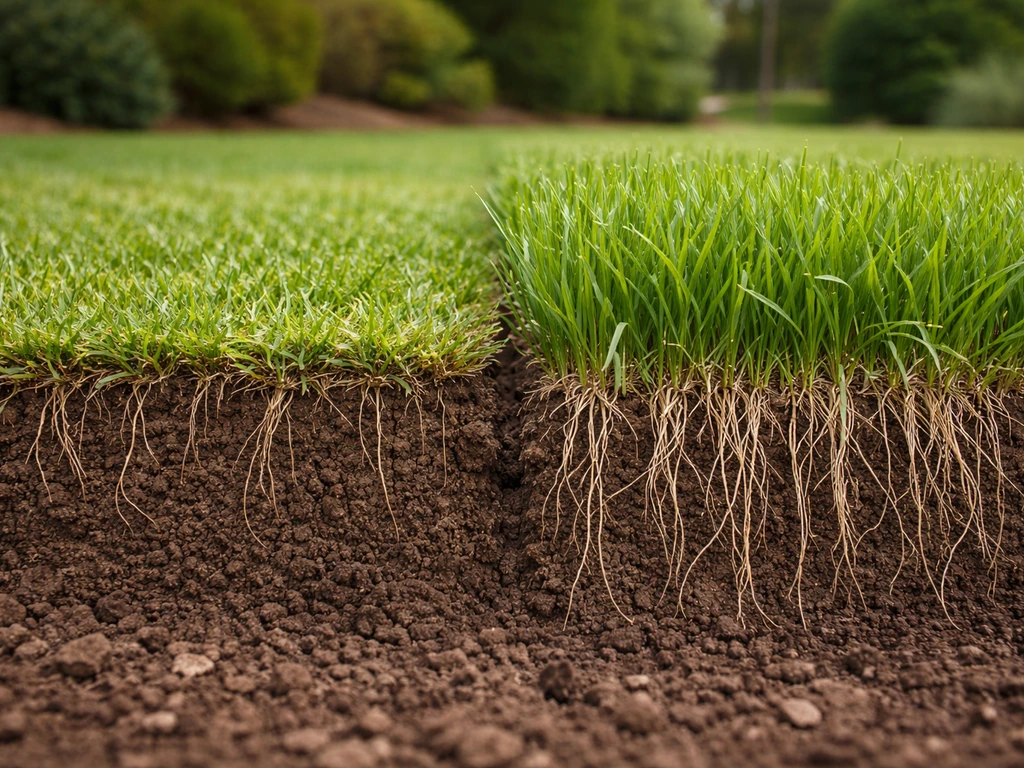
The higher you mow, the deeper the roots grow. Purdue University's turfgrass science team states this directly, and a greenhouse study on TifTuf bermudagrass published in MDPI backed it up experimentally, finding higher root dry weights at taller mowing heights even under deficit irrigation. The reason is straightforward: more leaf blade means more photosynthesis, which means more energy available to push roots deeper into the soil. Missouri Extension makes the same point from the other direction, noting that mowing too closely reduces leaf area and may reduce plant vigor and root growth. Shallow roots are the primary reason lawns struggle in summer. Taller grass is your best low-cost fix.
Drought tolerance
Deeper roots access moisture further down in the soil profile, which is why taller grass tends to hold up better in dry stretches. The canopy itself also acts as a light shade cover over the soil surface, slowing evaporation at the root zone. This is similar to what Colorado State and Oklahoma State University extensions describe when explaining how mulches regulate soil temperature and reduce moisture loss. Your grass blades, when left taller, are doing the same job. That said, there's an important caveat covered further down in the drought and timing section.
Soil protection and temperature regulation
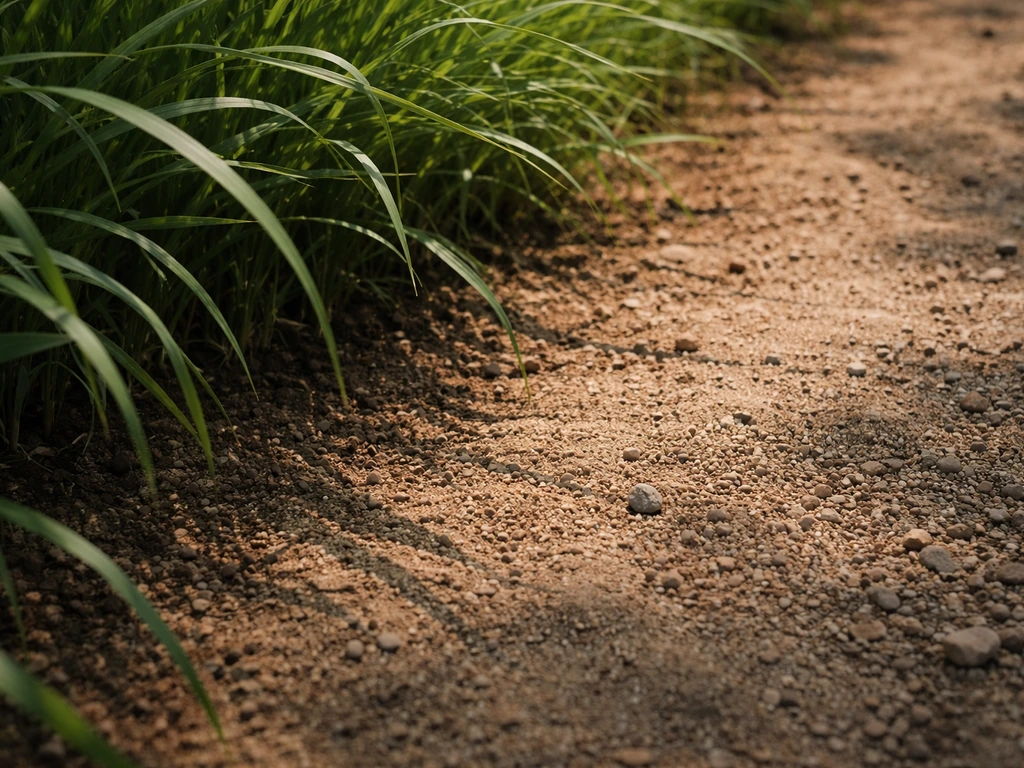
A taller grass canopy shades the soil surface, keeping it cooler during heat waves and reducing runoff on slopes. This is especially valuable on sandy or poor soils where there's little organic matter to retain moisture. University of California cooperative extension research on mulch effects notes that surface shading from organic material directly reduces soil surface temperature and improves moisture retention. A thick stand of tall grass does the same thing, and in sandy soils where water drains fast, this kind of surface protection makes a meaningful difference.
Weed suppression through canopy shading
This one is well-documented and genuinely impressive in practice. NC State's Extension conducted mowing-height trials at heights of 1, 2, 3, and 4 inches and tracked crabgrass incidence through the growing season. Taller mowing heights consistently reduced weed establishment. MSU Extension puts it plainly: raising mowing height shades the soil surface, which cuts off the light that weed seeds need to germinate. University of Maryland Extension gives a specific number: mowing to the proper height can reduce weeds and diseases by 50% to 80% in tall fescue. That's a significant return for doing nothing more than adjusting your mowing deck.
When long grass backfires
None of this is without trade-offs. There are a few specific situations where letting grass grow long makes things worse, and if you're going to do this effectively, you need to know what to watch for. If you wonder whether it is good to let grass grow long, keep these trade-offs in mind so you do not overdo height past what your grass type can handle. There are a few specific situations where letting grass grow long makes things worse, and if you're going to do this effectively, you need to know what to watch for letting your lawn grow long. If you let grass grow too long, the trade-offs can show up fast, especially when you go beyond your one-third rule or ignore your grass type what happens if you let grass grow too long.
- Thatch buildup: University of Wisconsin Horticulture sets the threshold at half an inch of thatch. Beyond that, pest and disease pressure increases and roots struggle. Thatch tends to accumulate when you mow infrequently and remove too much blade at once, breaking the one-third rule. Long grass managed correctly won't cause this; long grass neglected will.
- Disease pressure: Dense, tall canopies trap moisture and reduce airflow. University of Maryland Extension notes that excessive thatch creates conditions favorable to disease fungi, billbugs, chinch bugs, and sod webworm larvae. If your lawn is already prone to fungal issues, going taller adds risk unless airflow is managed.
- Scalping risk when you finally do mow: If you let the grass get well above your target height and then try to bring it back down in one pass, you'll scalp it. Penn State Extension is direct about this: rapid reductions in mowing height result in scalping. UMass Amherst is equally clear that if a lawn grows excessively high, you need to reduce mowing height gradually over several mowings, not all at once.
- Drought backfire for cool-season grasses: This is the counterintuitive one. Purdue University Turfgrass Science specifically warns against raising mowing height during drought unless you have ample water available. Cool-season grass roots largely stop growing during mid-summer. If you raise the mowing height without enough water, the plant has to support more leaf area with a root system that can't expand to meet the demand, which actually increases water stress rather than reducing it.
How to actually do it without wrecking your lawn
Step 1: Raise the deck gradually
Do not jump from 2 inches to 4 inches in one mow. Raise your mowing height by no more than half an inch per mowing session until you hit your target. If you've been mowing at 2 inches and want to get to 3.5 inches, plan on three or four mowing sessions to get there. This gives the grass time to adjust and avoids the sudden leaf-area shock that stresses the plant.
Step 2: Stay on the one-third schedule
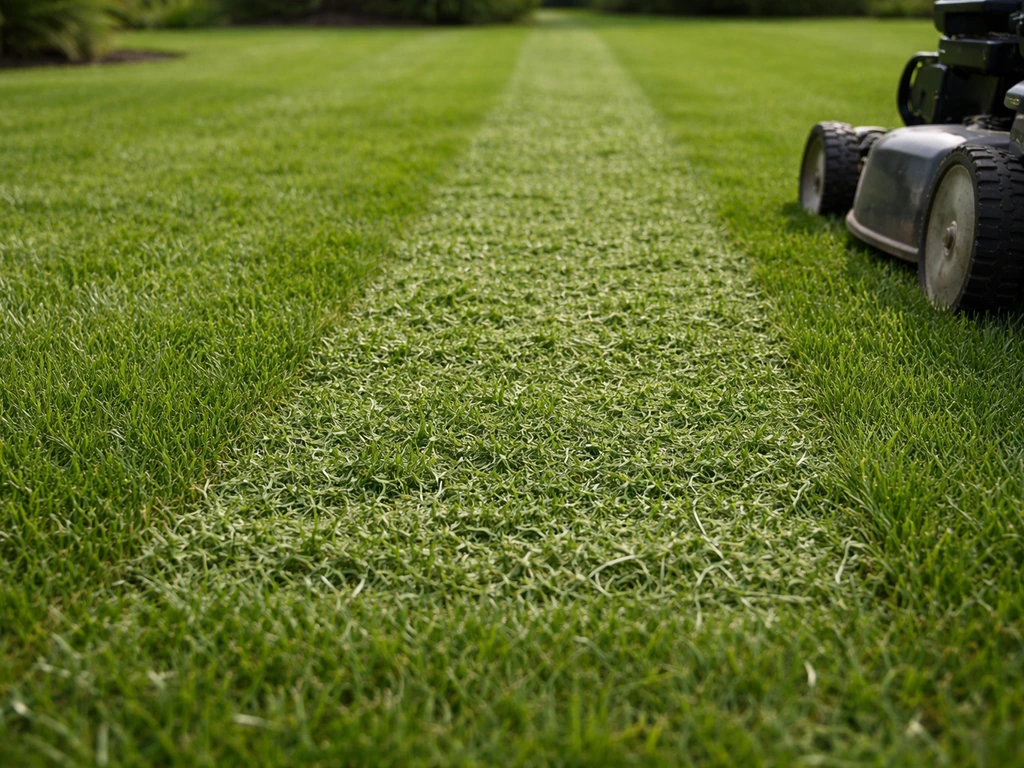
Once you're at your target height, the rule is simple: never remove more than one-third of the blade in a single mow. University of Minnesota, UMass Amherst, Wisconsin Horticulture, and Arizona Extension all frame their mowing guidance around this same principle. If your target is 3 inches, mow when the grass reaches 4. North Dakota State University Extension’s one-third rule example shows that if you keep a lawn at 3 inches, you mow when it is no more than 4.5 inches tall 3 inches, mow when it is no more than 4.5 inches tall. 5 inches. If your target is 3.5 inches, mow at 5.25 inches. Set a reminder on your phone if needed. During spring and fall growth surges, this might mean mowing every 5 to 6 days. During slower summer growth, once a week or even every 10 days might be fine. If you're wondering whether you should let grass grow longer in summer, keep the one-third rule first and adjust mowing frequency to match slower summer growth should you let grass grow longer in summer.
Step 3: Handle clippings smartly
If you're following the one-third rule and your clippings are under an inch long, leave them on the lawn. Missouri Extension's 'Don't Bag It' guidance says clippings under one inch decompose quickly, return nutrients to the soil, and won't build thatch. If you've fallen behind and your clippings are long and clumped, rake or bag them to prevent smothering and disease. Don't make a habit of it, but don't leave thick wet clumps sitting on the grass either.
Step 4: Keep blades sharp
Wisconsin Horticulture and Arizona Extension both flag dull mower blades as a stress factor, especially when cutting taller grass. Dull blades tear rather than cut, leaving ragged tips that brown and invite disease. Sharpen or replace mower blades at least once per season, and more often if you're mowing a large property.
How long to keep the grass tall, by grass type and season
The timing of when you go tall matters as much as the height itself. If your goal is to let grass go all the way to seed, you can still use the same “how long to keep the grass tall” logic, just plan for the change in mowing and timing can you let grass grow to seed. The question of whether you should let grass grow longer in spring or summer is genuinely different depending on what type of grass you have and what conditions you're dealing with. A common question is whether it's better to let grass grow long before cutting, and the answer depends on your grass type and season whether you should let grass grow longer in spring.
For cool-season grasses (tall fescue, Kentucky bluegrass, perennial ryegrass): go taller in late spring before heat sets in, and maintain that taller height through summer. Tennessee Extension recommends taller heights specifically for hot and dry conditions. The catch from Purdue is that if you're going into a genuine drought without irrigation, don't raise the height mid-summer. Do it earlier, in late April or May, so the roots have already deepened before water stress arrives. Keep the taller height through September, then you can drop back toward the lower end of the range in fall when root growth resumes.
For warm-season grasses (Bermuda, St. Augustine, zoysia): these grasses grow and root actively in summer heat, so raising the mowing height in late spring through summer is both safe and beneficial. St. Augustine should be kept at the upper end of its range, around 3.5 to 4 inches, through the entire growing season when using a rotary mower. Common Bermuda can go from the standard 1 to 2 inches up to 1.75 to 3 inches in hot, dry periods. Zoysia works best around 1.5 inches for most cultivars but can go a little higher during peak heat. Drop back to standard heights in early fall as these grasses approach dormancy.
Troubleshooting for specific tough situations
Shaded lawns under trees
In shade, taller grass is almost always better. Blades need more surface area to capture limited light, and keeping the lawn at the upper end of the height range compensates for reduced photosynthesis. The risk in shade is disease from poor airflow, not the height itself. Prune lower limbs where possible to improve light and airflow, stick to the one-third rule, and avoid overwatering. Shaded lawns also typically grow more slowly, so your mowing intervals will naturally stretch out.
Poor soil and sandy substrates
On sandy or nutrient-poor soil, the soil-shading and moisture-retention benefits of taller grass are magnified. Sandy soils drain fast and heat up quickly at the surface. A taller canopy slows both. That said, taller grass on poor soil still needs roots to sustain it. Pair taller mowing heights with organic matter amendments to build soil structure over time. Going tall alone on sand without feeding the soil is a short-term fix. It helps, but it won't fix the underlying problem on its own.
Mixed lawns with multiple grass types
If your lawn has both warm-season and cool-season grasses, or a blend of fine and coarse species, target your mowing height to the most dominant grass type and the one most likely to struggle in your current season. In summer, that usually means prioritizing cool-season grass survival by going taller. In spring and fall, you have more flexibility. Avoid trying to satisfy the lowest common denominator by cutting everything short to accommodate a grass type that tolerates close mowing. The cost to the rest of the lawn isn't worth it.
Extreme heat and drought timing
As noted, don't raise the mowing height mid-drought on cool-season grass without irrigation. If you're heading into a heat stretch and you haven't raised the height yet, it's better to hold your current height and water consistently than to suddenly raise the deck and force the plant to support more blade than its summer-stressed roots can handle. Plan ahead: raise the height in spring before summer stress arrives, and maintain it.
Slopes and erosion-prone areas
Taller grass on slopes is genuinely useful. The canopy intercepts rainfall, slowing the impact on bare soil, and deeper roots stabilize the slope better than a tightly mowed, shallow-rooted lawn. Oklahoma State University Extension notes that mulches reduce runoff and soil erosion, and a taller grass stand provides similar protection. Be cautious about mowing frequency on slopes, since mowing a wet slope is both dangerous and damaging to the turf. Let it grow a little taller between cuts rather than forcing a mow on difficult terrain in marginal conditions.
The bottom line is this: taller grass genuinely works, but only if you manage it actively rather than passively. It's not about mowing less, it's about mowing smarter. Raise the height gradually, stay on the one-third schedule, keep the blades sharp, and understand your specific grass type's limits. Do that consistently through the season and you'll see the root depth, drought resilience, and weed reduction benefits that make this one of the most practical no-cost lawn improvements available.
FAQ
How do I figure out my lawn’s grass type before changing my mowing height?
Check your local extension site for photos of cool-season versus warm-season grasses, look for how the lawn greens up in spring (cool-season usually earlier), and if it’s a mixed lawn, measure which blade texture dominates your yard. Choose the mowing height based on the grass that will struggle most in your current season, not the one you like best aesthetically.
Can I “let it grow long” by mowing less often, even if I keep the height the same?
Not safely. The key control is how much blade you remove per mowing, not the calendar. If you skip so long that the grass exceeds the one-third rule threshold, you’ll have to cut more at once, which increases stress and can lead to scalping or clumps.
What should I do if it rains and my grass shoots up above the one-third limit?
If you already exceeded the one-third rule, don’t cut straight back to your target. Mow at the highest setting that keeps the removed amount within the limit, then repeat on the next suitable growth day to step down gradually. This avoids shocking the plant with a large leaf-area drop.
Will taller grass make my lawn look messy or promote bugs?
It can look wilder if the height is set too high for your grass type or if mowing frequency is too infrequent. Taller grass generally helps drought stress and can reduce some weed issues, but tall unmanaged growth can also increase hiding cover for pests, especially if clippings are left in thick mats. Keep the one-third rule and avoid leaving wet clumps.
Do I need to bag clippings when I mow higher?
Usually no. If clippings stay short and fine (not long and matted), they can break down and return nutrients. Bag or rake only when clippings are clumped or thick enough to smother the turf, particularly after you fell behind and the grass got too tall between cuts.
How often should I sharpen or replace the mower blade when I’m cutting taller grass?
At least once per season, but expect more frequent service if you’re mowing higher, cutting in tough growth bursts, or hitting lots of grit. Dull blades tear taller blades more easily, increasing ragged tips that brown and raise disease risk.
Is “one-third” always the right rule, including during extreme heat or cold?
Use it as the ceiling in normal conditions, then adjust for stress. During hot dry spells on cool-season lawns without irrigation, it’s safer to hold height steady rather than raise it suddenly. During periods of slow growth, you may be able to wait longer, but you still must prevent cutting more than one-third at a time.
What’s the best way to raise my deck if I’ve already let the lawn get too long?
Step up gradually with multiple mowing sessions rather than one large cut. For example, if you’re at 2 inches and want 3.5, plan three or four mowings, each time staying within the one-third removal limit, until you reach your target height.
Should I change how tall I go based on whether my lawn has shade?
Yes, but not by ignoring the one-third rule. Shade usually means slower photosynthesis and less airflow, so you should keep mowing at the upper end of your grass’s tolerance while also improving airflow (for example, pruning nearby branches) and avoiding overwatering, which is where disease risk rises.
Does letting grass grow long help on sandy soil, or will it just make things worse?
It usually helps short-term because the taller canopy reduces surface heat and slows moisture loss, which is especially valuable on fast-draining sand. However, it’s not a complete fix if the soil is nutrient-poor, pair taller mowing with soil amendments (such as compost over time) to improve structure and water-holding capacity.
My yard is on a slope, is taller grass still recommended?
Yes, taller turf can reduce runoff and improve slope stability because deeper roots hold soil better. The safety priority is mowing conditions, avoid mowing when slopes are wet, and let the grass recover between cuts so you can stay within the one-third rule without forcing risky mowing.
What if my lawn is a warm-season and cool-season mix, how do I set one mowing height?
Pick a height that supports the dominant grass while covering the grass most likely to suffer in the current season. In summer, many mixed lawns benefit from prioritizing cool-season survival by mowing higher. In spring and fall, you typically have more flexibility, but avoid cutting everything down to satisfy a grass that prefers close mowing.
Next Articles
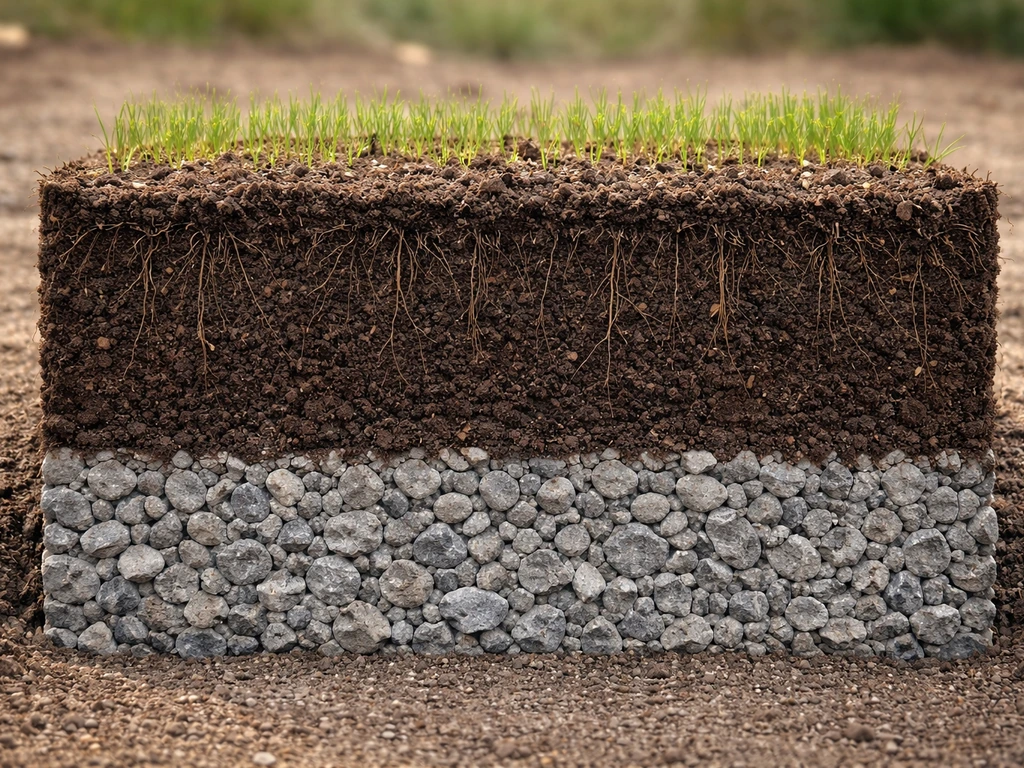
Can You Grow Grass Over Gravel? How to Do It Right
Learn when you can grow grass over gravel and follow a step-by-step method for soil depth, drainage, seeding or sod, and
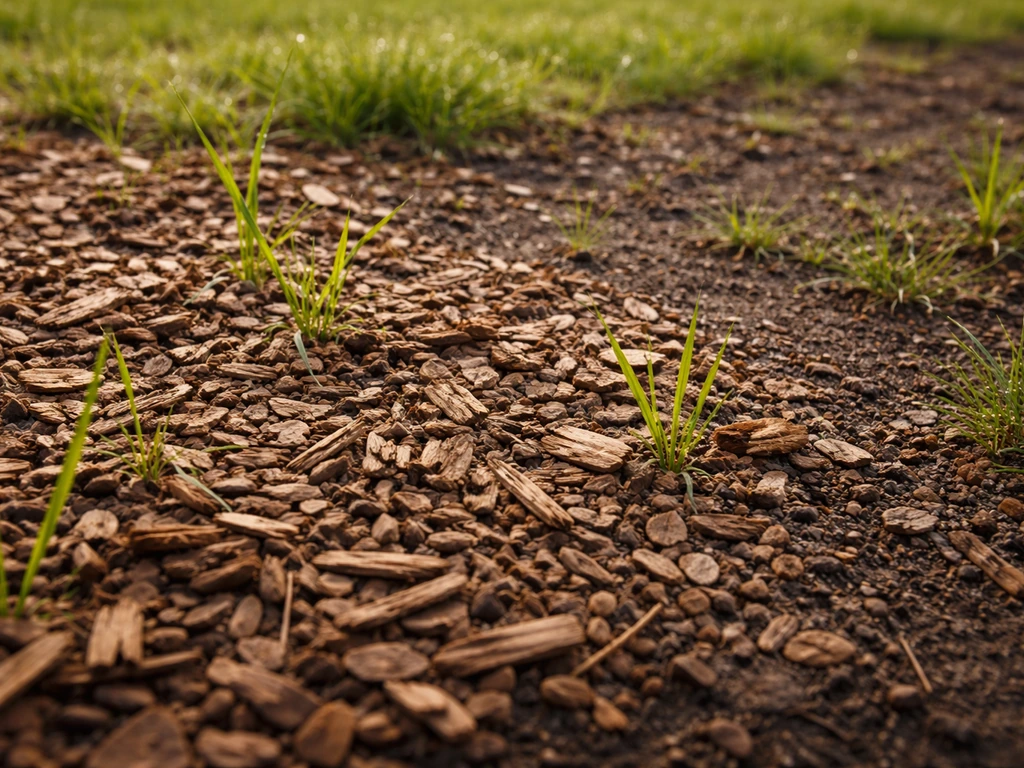
Do Wood Chips Help Grass Grow? When They Work and When Not
Learn when wood chips help grass grow, when they steal nitrogen, and step-by-step how much to apply and seed options.

Will Potting Soil Help Grass Grow? What Works and What Fails
When potting soil helps grass grow, when it fails, and how to prep, apply, seed, water, and troubleshoot bare spots.