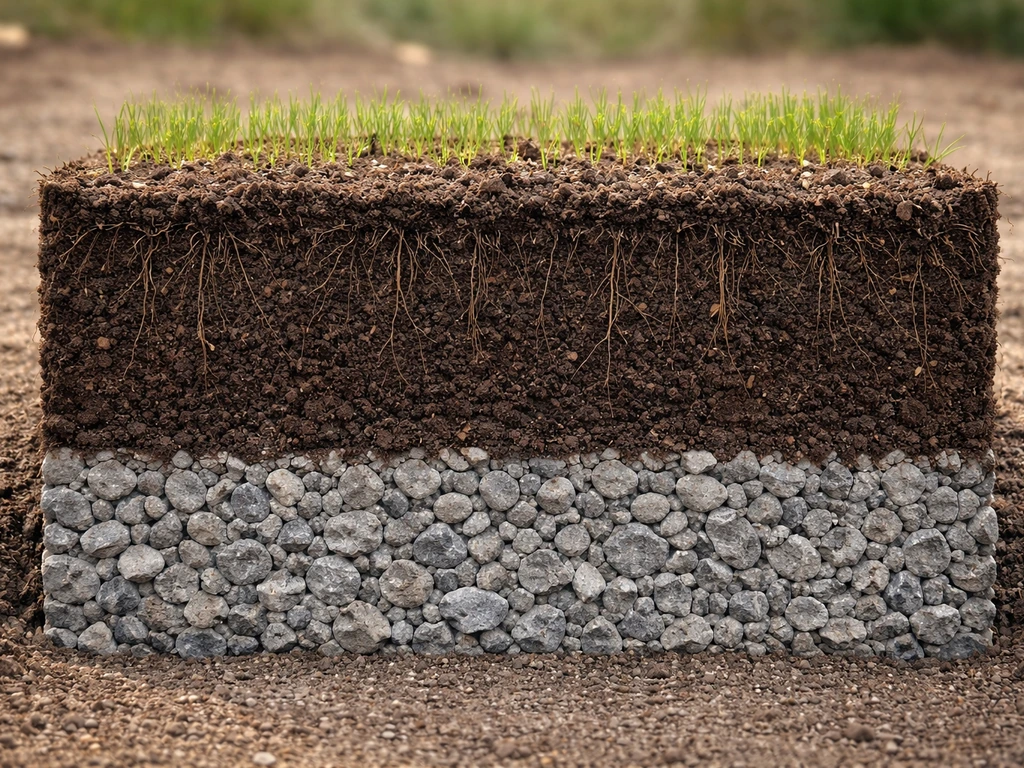
Yes, you can grow grass over gravel, but not by just throwing seed on bare rock. The grass needs real soil contact and a minimum of 4 to 6 inches of good topsoil to root into. You can also use the same general approach on asphalt, but you typically need to replace or cap it with enough topsoil for roots to anchor grow grass over asphalt. That means you're not really growing grass "over" gravel so much as building a proper soil layer on top of it. In the same way, you can grow grass only if you build up real soil, not if you try to grow it directly on top of existing grass without proper depth and contact grow grass on top of grass. Do that right, and you'll get a lawn that actually holds. Skip that step, and you'll get patchy germination, shallow roots, and grass that dies the first dry week.
Can You Grow Grass Over Gravel? How to Do It Right
What "growing grass over gravel" actually means
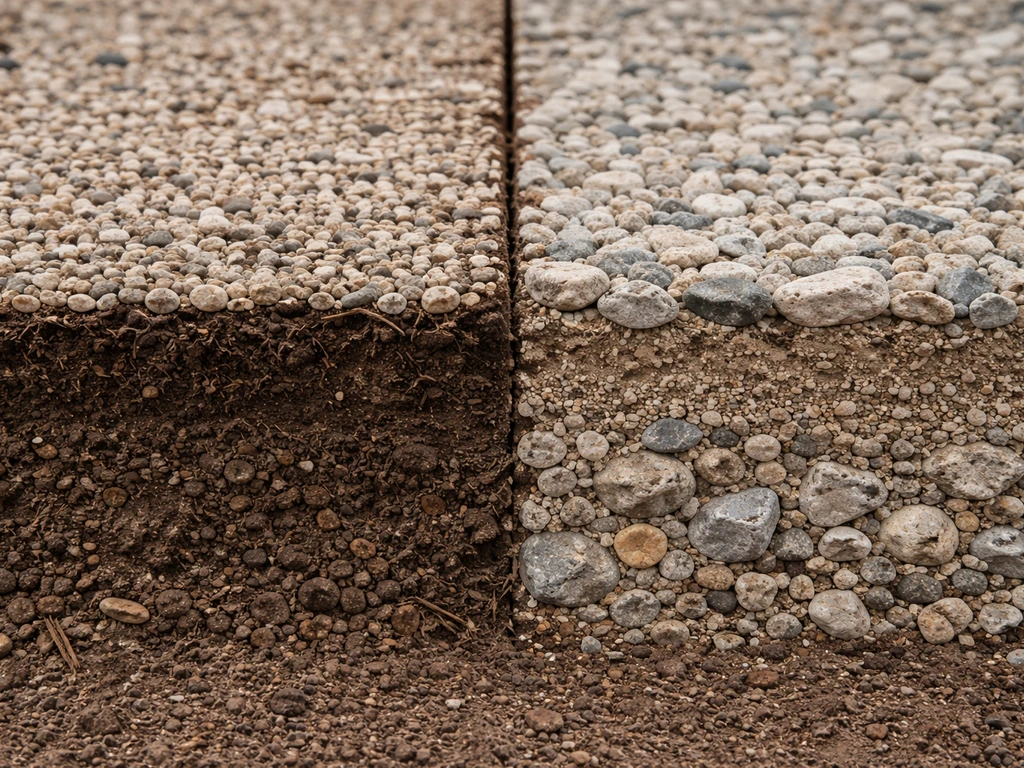
Before you start, it helps to be clear about what you're dealing with, because "gravel" covers a few very different situations. You might have a thin decorative gravel mulch layer over decent soil underneath. If you are seeing grass push up through paving or asphalt, the same idea applies: roots need a pathway and a pocket of soil or moisture to get started thin decorative gravel mulch layer over decent soil. You might have a deep compacted gravel driveway base with no soil at all. Or you might have a gravel bed where soil has washed out over time and gravel is now the dominant material. Each of these needs a slightly different approach, but the core principle is the same: grass roots need oxygen, moisture, and soil contact. Gravel alone provides none of those things reliably.
If you're just dealing with a shallow gravel layer (say, 1 to 2 inches) sitting on top of actual soil, your job is relatively easy. Texas Cooperative Extension recommends removing rocks and gravel from the upper 2 inches of soil to create a uniform seedbed. You can rake out the surface gravel, loosen what's underneath, and amend from there. If you're working on a full gravel driveway or a deep compacted base, you're essentially building a soil profile from scratch on top of a sub-base, which takes more material and more planning. If you are asking about will grass grow on road base, it comes down to whether you can add enough topsoil depth and get seed-to-soil contact, similar to the gravel-over-soil cases above full gravel driveway or a deep compacted base.
The real requirements: depth, drainage, and soil contact
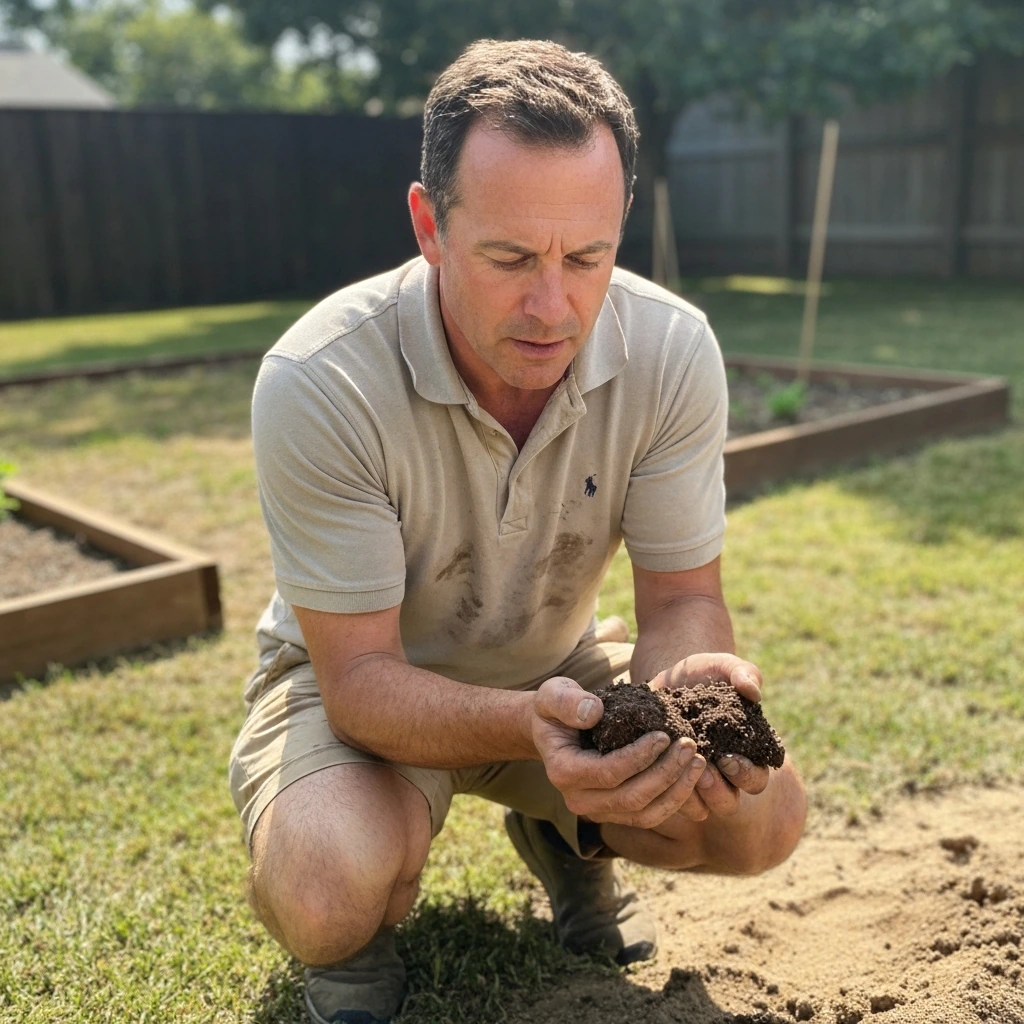
Grass is not as forgiving as people assume. Penn State Extension recommends a minimum of 4 to 6 inches of quality topsoil (firmed and settled) for good turf establishment. Texas Cooperative Extension puts the same baseline at 4 inches minimum, with 6 to 8 inches being ideal for a quality lawn. Cool-season grasses like tall fescue or Kentucky bluegrass typically root between 2 and 6 inches deep, so they need that depth available and accessible. The UCR Turfgrass Culture resource notes that rooting depth varies from a few inches and emphasizes how soil moisture characteristics relate to rooting depth blank" rel="noopener noreferrer">root between 2 and 6 inches deep. Warm-season grasses like bermuda or zoysia tend toward shallower rooting but still need something to root into beyond loose gravel.
Drainage is where gravel actually helps you. A gravel base drains fast, which prevents waterlogging at the root zone. But that same drainage can work against you during establishment because the soil layer you add on top will dry out quickly. That means irrigation is non-negotiable until the grass roots down through the full depth of your topsoil layer. Utah State University Extension warns that compaction limits water movement and reduces soil oxygen, both of which kill root development fast. If you compact the soil layer as you add it, you lose both aeration and the drainage advantage the gravel was giving you.
Seed-to-soil contact is the other piece people get wrong. Rutgers turfgrass establishment guidelines emphasize this point clearly: seed placed on loose gravel or rock won't establish because there's no moisture retention or physical anchoring. Creeping thyme is a groundcover that still needs reliable soil contact, so it will struggle if you try to establish it directly over loose gravel seed placed on loose gravel or rock won't establish. Every seed needs to be in contact with moist soil particles to germinate and send down a radicle. That means your topsoil layer can't just sit loosely on top of the gravel; it needs to be firmed and leveled before seeding.
Step-by-step: how to install grass over gravel
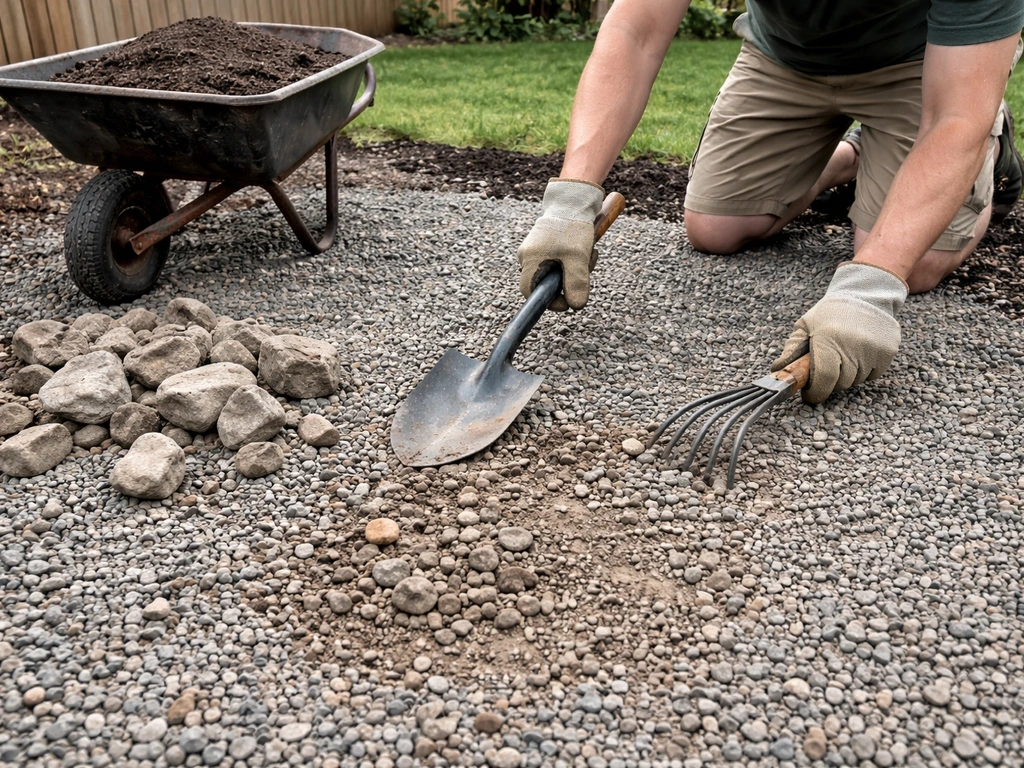
- Clear the surface. Remove any large gravel pieces or debris. Penn State Extension says stones larger than 2 inches should come out of the upper rooting zone entirely. If you have deep decorative gravel, rake it aside or haul it off the area you're converting.
- Scarify or loosen the existing surface. If there's a hardpan or compacted sub-layer beneath the gravel, break it up. Texas DOT vegetation establishment guidance recommends scarifying the existing surface to a depth of 4 inches before placing topsoil or compost. Use a tiller, a landscape rake, or even a fork on smaller areas.
- Add topsoil to reach your minimum depth. You need at least 4 inches of settled topsoil. For a quality result, aim for 6 inches. Use a quality blended topsoil or a topsoil-compost mix. Texas A&M AgriLife Extension cautions against adding more than a 4-inch layer of pure organic material at once, so if you're going deeper than 4 inches, blend topsoil with compost rather than going all-organic. Calculate your cubic yards: a 4-inch layer over 100 square feet takes roughly 1.25 cubic yards of material.
- Grade and firm the soil. Rake it level and tamp it down lightly. You want it firm but not compacted. Oregon State University Extension suggests loosening to 6 to 8 inches when renovating, so don't pack it so hard that you lose the pore space you just created.
- Apply starter fertilizer. Utah State University Extension recommends applying starter fertilizer to the soil surface at seeding time rather than tilling it in. This puts phosphorus right where seedling roots are developing.
- Choose your grass. Match the seed or sod to your conditions: sun exposure, climate, expected foot traffic, and water availability. Penn State Extension notes that choosing adapted grass mixtures for the specific site is part of successful establishment. For driveways or high-traffic areas, consider a turf-type tall fescue or a wear-tolerant bermuda blend.
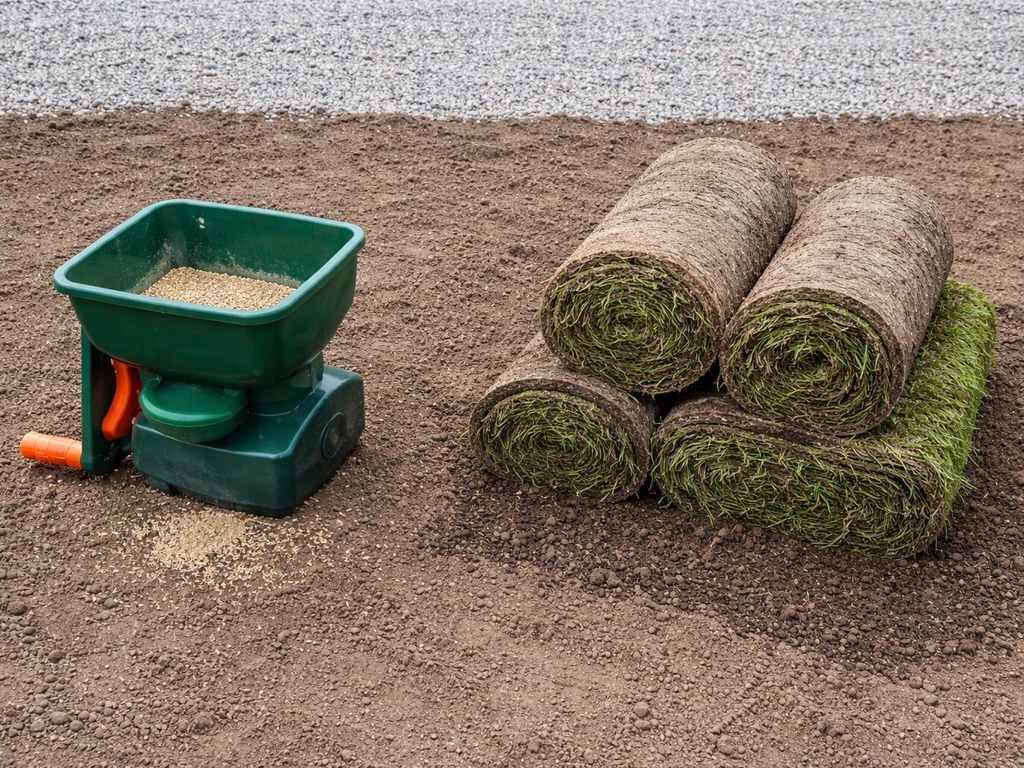
- Seed or lay sod. For seed, use a drop or broadcast spreader and rake lightly to press seed into the surface. For sod, lay it immediately after grading and press it firmly into the soil layer below. Sod establishes faster and reduces erosion risk, which matters a lot when you're working over a gravel base.
- Protect and water. Lay straw or an erosion control blanket over seeded areas. University of Minnesota Extension recommends watering seeded lawns to a depth of 4 to 6 inches and then switching to light, frequent watering (up to 3 to 4 times per day) during germination. This is critical over a gravel base where the topsoil layer dries out faster than normal.
Growing grass on a gravel driveway: traction, wear, and durability
A gravel driveway is a harder conversion than a garden bed, and you need to be realistic about what's achievable. If vehicles will still use the space, standard grass won't hold up long-term without some structural support. The soil layer you add will shift, rut, and wash out under tire pressure unless you stabilize it.
The most effective approach for a driveway-style surface is to use a turf reinforcement mat (TRM) before adding your topsoil layer. The Minnesota Stormwater Manual describes TRMs as erosion protection systems that permanently armor the soil while allowing turf to establish through them. The install sequence for a TRM is: grade and firm the gravel base, lay the mat flat and stake it down, then add no more than about half an inch to three-quarters of an inch of fine soil or compost on top to fill the mat voids, then seed directly into that surface. The mat holds the soil and roots in place even under heavy rain or light vehicle traffic.
If you don't use a TRM, you need to at minimum add edging or borders around the driveway grass area to contain the topsoil layer and prevent it from migrating. Bender board, steel edging, or landscape timbers all work. Plan your edges before you add soil because it's much harder to retrofit containment after the fact.
For traction specifically, the grass itself provides decent grip once established, but a gravel driveway conversion will always be softer underfoot than a paved surface. In wet conditions, the turf can rut if the soil beneath is saturated. Consider limiting vehicle access during wet periods, especially in the first growing season while the roots are still developing.
Soil preparation and amendments that actually matter
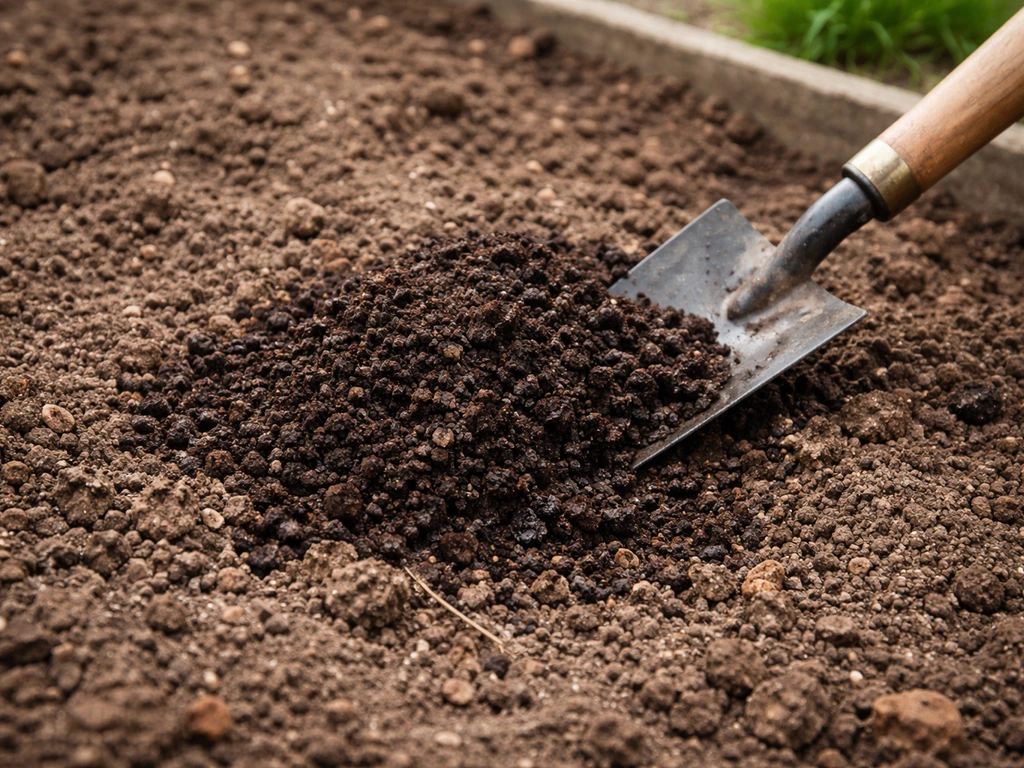
The quality of the topsoil you bring in or mix matters more than almost anything else. Cheap fill dirt with high clay content will compact, drain poorly, and choke out roots. You want a loamy mix with some organic matter, ideally 3 to 5 percent organic content. NMSU Extension is direct about this: when minimum soil depth can't be achieved naturally, add topsoil and soil amendments to hit the target. Don't try to amend your way around low depth.
Compost is your best amendment here. It improves water retention in the topsoil layer (which will otherwise dry out fast over gravel), improves aeration, and feeds soil biology that supports root development. Mix compost at roughly a 20 to 30 percent ratio into your topsoil rather than applying it as a pure layer. UGA Extension notes that soil texture and organic matter directly affect how deep roots can develop, and shallow organic layers don't compensate for inadequate soil depth below them.
Check your pH before you seed. Grass generally wants a pH between 6.0 and 7.0. Gravel beds can be slightly alkaline depending on the stone type, and the topsoil you bring in may be acidic or alkaline depending on its source. A basic soil test from your county extension office costs a few dollars and tells you exactly what lime or sulfur you need before you waste seed on a hostile pH. Getting this wrong is one of the most common reasons grass fails in amended beds.
Keeping it alive: maintenance and troubleshooting
Mowing and fertilizing
Wait until the grass reaches at least 3 to 4 inches before the first mow, and never cut more than one-third of the blade height at once. New grass over a shallow soil layer is especially vulnerable to stress. Mowing too early or too low sets back root development right when it needs momentum. For fertilizing after establishment, use a balanced slow-release fertilizer and follow your grass type's schedule. Avoid heavy nitrogen applications in hot weather, which push top growth at the expense of roots.
Dealing with thin spots and washout
Thin spots are almost guaranteed in the first season, especially where the topsoil layer is shallower or where water channels across the surface. Topdress thin areas with a light layer of compost (no more than a quarter to half inch at a time) and overseed. Press seed in with a roller or your feet. The Tallgrass Prairie Center's erosion control guidance warns that in concentrated flow areas, the topsoil layer will wash away unless it's protected by straw or erosion control blankets. If you see channels forming, redirect surface drainage before reseeding. Adding a few inches of topsoil to the low points and regrading will do more than repeated reseeding without addressing the flow. If you’re trying to grow grass over a French drain, plan for how water is meant to move so your topsoil layer stays stable and doesn’t wash out can you grow grass over a french drain.
Weed pressure
Gravel beds are notorious weed magnets, and covering them with fresh topsoil doesn't change that. Weeds will come up through your new seedbed, sometimes faster than the grass. Penn State Extension recommends early weed control using herbicides that won't leave residual that interferes with germination. Before you seed, if weeds are already present, apply a non-selective herbicide (glyphosate), wait the recommended period, then prep and seed. Once the grass is established, you can use selective herbicides to control broadleaf weeds without harming the turf.
When to change strategies
If you've done everything right and the grass is still failing, the most likely culprits are insufficient soil depth, compaction in the topsoil layer, drainage issues, or too much shade. University of Idaho Master Gardener guidance flags that root restrictions caused by barriers like landscape fabric, rocks, and gravel are a common and overlooked failure point. If your soil layer is compacting down to less than 3 inches in hotspots, add more topsoil or consider whether the site is viable for turf at all.
In some spots, especially on steep slopes, driveways with heavy vehicle use, or areas with deep shade, traditional grass simply won't give you a durable result. Creeping thyme over gravel is one low-maintenance alternative worth considering for areas that get light foot traffic and full sun. It handles shallow soil and drought far better than turf. For high-traffic gravel areas that need permanent armoring, a TRM with a wear-tolerant grass blend is usually the most durable system you can build.
Quick comparison: seeding vs. sod over gravel
| Factor | Seeding | Sod |
|---|---|---|
| Cost | Lower (seed is cheap) | Higher (sod plus delivery) |
| Time to establishment | 4 to 8 weeks for cool-season grass | 2 to 3 weeks root contact |
| Erosion risk before establishment | High (bare soil exposed for weeks) | Low (sod covers soil immediately) |
| Soil contact requirement | Seed must touch moist soil to germinate | Sod must be pressed firmly into soil layer |
| Best use case | Large areas, budget projects, spring or fall timing | Driveway conversions, slopes, fast results |
| Failure risk over gravel base | Higher if irrigation is inconsistent | Lower if soil depth is adequate and sod is pressed in |
For most gravel-to-grass conversions, sod is the better choice if the budget allows. The immediate coverage reduces erosion of your new topsoil layer and cuts establishment time nearly in half. If you're seeding, do it in early fall for cool-season grasses or late spring for warm-season types, when temperatures favor germination and rain is more reliable. Timing matters more over a gravel base because the topsoil layer is thinner and dries out faster than a native soil lawn.
FAQ
Can I grow grass over gravel if I only have 1 to 2 inches of topsoil available?
Usually not successfully for a full turf lawn. With less than about 4 inches, roots struggle to anchor and stay hydrated between irrigations, especially over fast-draining gravel. If you cannot add depth, consider a low-water groundcover (like creeping thyme) or a reinforced system (TRM plus a thin stabilized soil layer) instead of standard grass.
Do I need to remove all the gravel before seeding?
If the gravel layer is shallow and sits on real soil, you can rake and remove the top 1 to 2 inches of stones to create a uniform seedbed. If the gravel is the dominant material (compacted base or washed-out gravel bed), you will typically need either substantial soil import or a TRM-type approach to create reliable soil contact.
What’s the best way to firm the topsoil on gravel so seed-to-soil contact is good?
Firm the soil after grading and leveling, but avoid over-compacting to the point that it blocks oxygen and water movement. A roller or light plate compactor works for small areas, then seed promptly while the surface still holds moisture. If the surface turns dusty and dry quickly, it’s not firmed or watered correctly.
How much irrigation do I need right after seeding over gravel?
Plan on frequent watering to keep the topsoil layer constantly moist until roots establish through the full soil depth. Gravel and a thin cap dry out fast, so long, occasional soakings can fail even if the schedule looks generous. Use short cycles, and verify moisture a few inches down, not just at the surface.
Will grass grow through landscape fabric or weed barrier placed over gravel?
In most cases, no, or not well. Root growth and moisture movement can be severely restricted, and many fabrics also shed fines or create an artificial layer that prevents good rooting. If you must use a barrier for weeds, use it only if it is designed for turf establishment and you still provide enough usable soil depth above it.
Can I use mulch on top of gravel before seeding?
Use mulch carefully. Heavy mulch layers can keep seed too wet in some spots and too dry in others, and they can prevent seed from physically touching soil particles. If you do use mulch, keep it light and consistent, and avoid smothering the topsoil surface you just prepared.
What’s the pH risk when growing grass over gravel?
The risk is that your topsoil and the gravel base can create a higher or lower pH than your grass tolerates, which reduces germination and causes slow, weak growth. Test before seeding, and if you need amendments, apply and mix them thoroughly into the soil you will actually plant into rather than adding them on top.
Will weeds still grow if I cover gravel with topsoil and seed?
Yes, weed pressure often stays strong because weed seeds can already be present in the gravel, soil fines, or windblown debris. Control early to reduce competition during germination, and be cautious with residual herbicides that can interfere with seed establishment. Plan weed management around the seeding timeline.
How do I prevent topsoil from washing away on a gravel base during rain?
You need to manage surface flow, not just add soil. Redirect concentrated water with regrading, install erosion control blankets or straw in runoff channels, and use edging or containment so the soil layer stays put. On driveway-style areas, a TRM helps permanently armor the soil while turf establishes.
Is sod always better than seeding over gravel?
Sod is often the faster, more reliable option because it stabilizes the soil immediately and reduces erosion during establishment. However, sod still requires proper soil depth and firming underneath, and it can still fail if the cap dries out too quickly or the base is compacted. If you choose sod, prioritize root-zone readiness and consistent watering for the first few weeks.
What grass type works best over gravel for low maintenance or drought tolerance?
For light foot traffic and full sun with limited soil depth, drought-tolerant groundcovers can outperform turf. If you need traditional turf durability, choose a grass and blend that matches your sun exposure and region, and still meet the root-zone depth target. Avoid choosing based on appearance only, depth and moisture needs are the real constraints over gravel.
When can I drive or park on a newly grassed gravel-to-soil conversion?
Limit vehicle access during the first growing season, especially while roots are still developing. Even if the top looks established, the soil layer can rut or shift if the base is saturated or if topsoil was not stabilized. If vehicle use is unavoidable, the TRM approach with contained edges is usually the safer path.
If the grass fails, what’s the most common cause over gravel?
Insufficient usable soil depth or a compacted cap that blocks oxygen and slows water movement is a frequent culprit. Other common failures include poor seed-to-soil contact and drying out too quickly before roots establish. Start troubleshooting by checking moisture penetration and measuring soil depth in the worst hotspots.
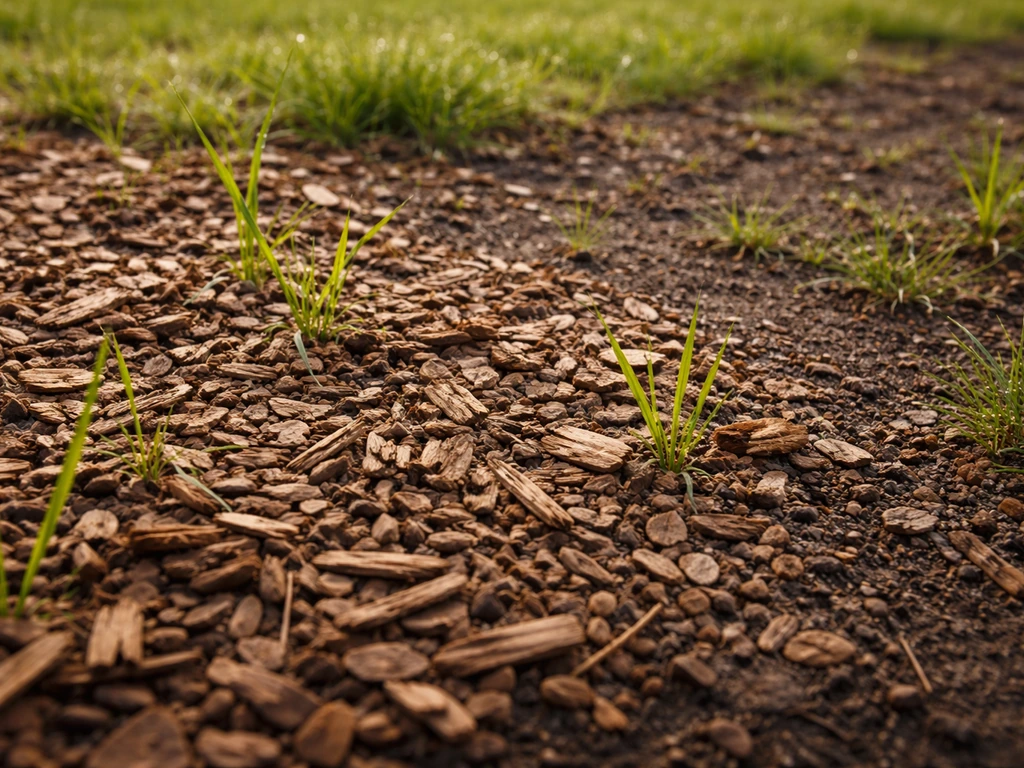
Learn when wood chips help grass grow, when they steal nitrogen, and step-by-step how much to apply and seed options.

When potting soil helps grass grow, when it fails, and how to prep, apply, seed, water, and troubleshoot bare spots.
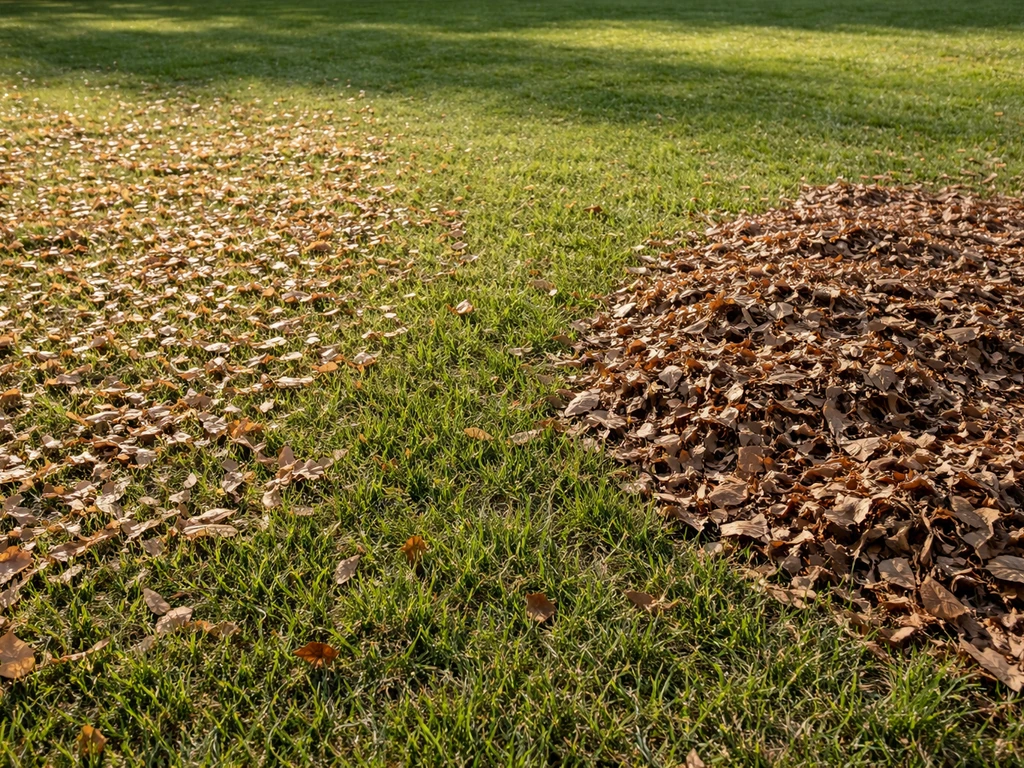
Do leaves help grass grow? Learn when they help or harm, plus how thick to manage, remove, shred, and fix bare spots.