
Yes, letting your lawn grow longer is genuinely beneficial in most situations, but only up to a point, and only for the right species at the right time of year. For a concise, practical recommendation, see our internal guide titled "is it better to let grass grow long before cutting.". Raising your mowing height encourages deeper roots, shades out weeds, and improves drought resilience. Letting grass go to seed is a different story: it can work in low-traffic patches, but it diverts energy from leaf growth and can look rough for weeks. Below, I'll walk you through exactly when longer grass helps, when it hurts, how to raise height safely without stressing your turf, and how to let grass set seed without creating a weed or pest problem. If you want a quick answer to the common question 'is it good to let grass grow long', this guide explains the benefits and risks so you can decide for your lawn type and season. See our guide on the benefits of letting grass grow long for a concise summary.
Is it Good to Let Your Lawn Grow, Verdict and Guide for Yards
When letting grass grow is actually a good idea
There are real situations where backing off the mower is one of the smartest things you can do for your lawn. Here are the cases where longer grass consistently outperforms a close-cropped turf.
Drought and heat stress
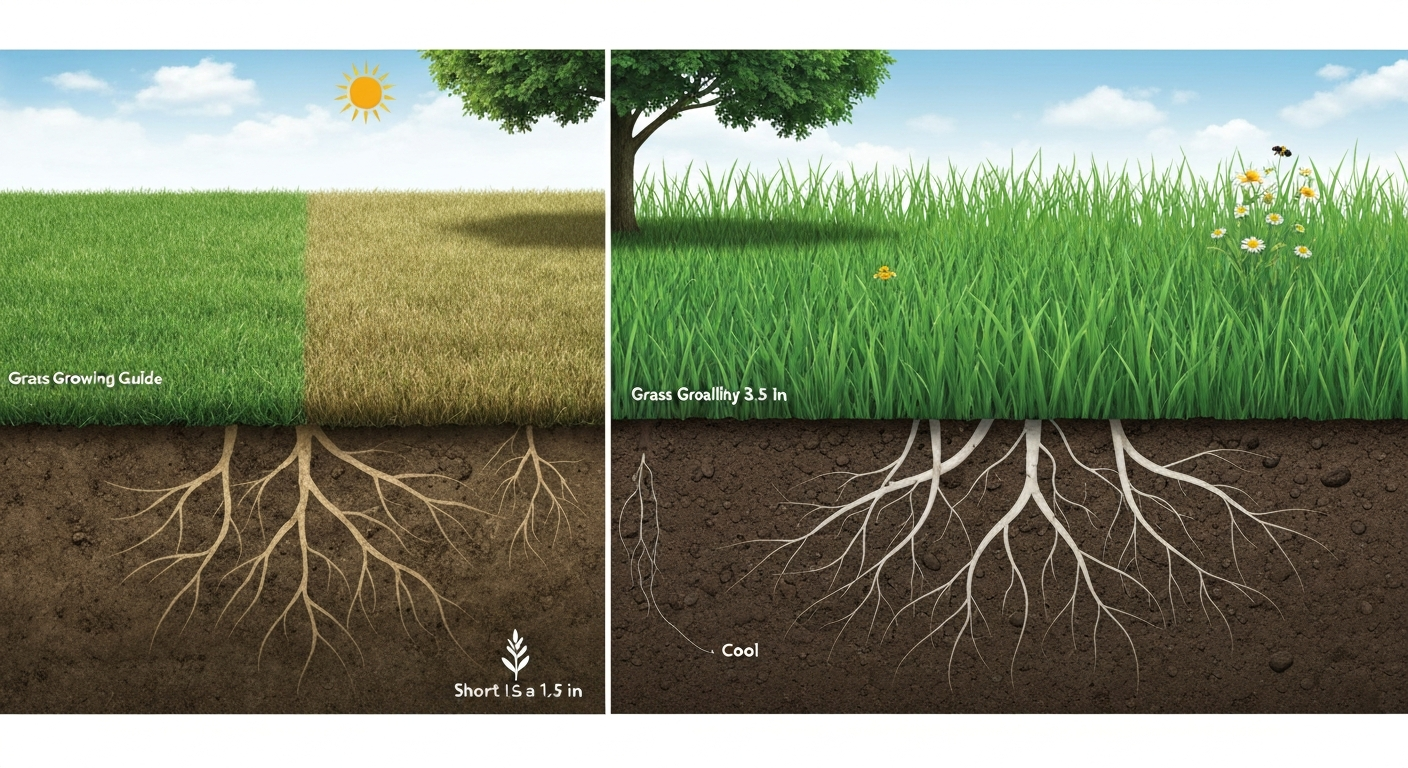
Raising your mowing height during summer is the single easiest drought-management move available to you. Virginia Cooperative Extension research confirms that taller leaf blades shade the soil surface, slow moisture evaporation, and support deeper root systems that can access water further down the profile. I've seen this play out in my own yard during dry July stretches: the sections I let grow to 3.5 inches stayed green a full week longer than the areas I kept at 2 inches before reaching for the hose.
Shade under trees
In shaded areas, longer grass captures more of the limited light available. Extension guidance consistently recommends raising cutting height by at least half an inch to one inch under tree canopies compared to your open-lawn setting. The extra leaf surface area compensates for the reduced light intensity. Mowing shade grass too short starves it of the photosynthetic capacity it desperately needs.
Lawn recovery and poor soil
If your lawn is recovering from damage, whether from grubs, drought, heavy traffic, or a soil problem like compaction or excessive sand content, letting it grow a bit longer gives the plants more energy to rebuild root mass and carbohydrate reserves. Frequent low mowing during recovery actively works against you by constantly depleting those reserves before they can accumulate.
Erosion control on slopes
On slopes and banks, taller grass holds soil more effectively. The larger root system anchored by taller blades, plus the physical barrier the foliage creates against runoff, significantly reduces erosion risk during heavy rain events. If you're battling a sloped area with thin or sandy soil, the last thing you want is a closely mown surface with shallow roots.
Supporting pollinators
Reduced mowing programs like 'No Mow May' have solid ecological backing. A 2022 study published in Ecological Solutions and Evidence found that reduced-mowing amenity grasslands showed measurable increases in floral resource abundance and pollinator richness. If you have a low-traffic corner of your yard, letting it grow for even four to six weeks in spring creates real habitat value. The trade-off is that weed cover typically increases and turf quality takes a short-term hit, so this strategy works better as a deliberate managed patch than as a whole-lawn approach.
Weed suppression through canopy shading
Penn State Extension trials show that taller cool-season lawns reduce pressure from annual weeds by shading the soil surface and blocking light that weed seeds need to germinate. Crabgrass in particular relies on light reaching bare soil. Keeping your lawn at the higher end of its recommended height range is one of the cheapest and most effective preventive weed control strategies available.
When letting grass grow causes real problems
Longer grass is not a universal good. There are several situations where backing off mowing creates problems that are harder to fix than the original issue.
Disease pressure from dense, wet canopies
An overly tall, dense sward traps moisture against leaf blades and creates the extended leaf-wetness periods that fungal diseases love. UF/IFAS disease management guidance specifically flags that excessively tall canopies can promote foliar diseases in warm, humid conditions. Brown patch, gray leaf spot, and dollar spot all thrive when moisture sits on foliage overnight. If you're in a humid climate and your lawn is already prone to disease, going significantly taller than the recommended range makes things worse, not better.
Pest and tick habitat
UMass Amherst Extension is direct about this: tall grass and adjacent unmown vegetation create favorable habitat for voles, meadow mice, and ticks. If your lawn borders wooded areas or you live in a region with high tick populations, keeping high-traffic areas and lawn edges shorter is a genuine public health consideration, not just an aesthetic one. Extension guidance (see 'Mole and Vole Damage to Lawns | UMass Amherst Extension') recommends keeping high‑use lawn areas and borders short to reduce vole runs and tick habitat. Reserve longer-grass strategies for low-use zones away from seating areas, play spaces, and pathways.
Thatch problems
Thatch is not directly caused by clippings from regular mowing, but it is driven by an imbalance between organic matter production and decomposition. Vigorous, heavily fertilized, tall-growing turf produces more organic material than soil biology can break down, especially in species like Kentucky bluegrass and zoysiagrass that are already prone to thatch. University of Minnesota Extension is clear that excessive thatch impairs water infiltration and can worsen disease. If your lawn already has more than half an inch of thatch, letting it grow longer without addressing that underlying issue compounds the problem.
Weed seed and bare patches
If your lawn already has weeds in it, letting the grass grow long enough for those weeds to flower and set seed deposits thousands of weed seeds directly into your soil. This is especially damaging in thin or bare-patched lawns where there is little competition to prevent germination. Before you raise mowing height, get existing weeds under control.
Species that simply don't suit taller heights
Not every grass thrives when you let it grow. Bermudagrass is a prime example: it's genetically adapted to low, frequent cuts and becomes stemmy, open, and prone to thatch when grown tall. Centipedegrass is another. A 2024 study in Crop, Forage and Turfgrass Management found that increasing mowing height did not measurably improve summer drought tolerance in centipedegrass under humid subtropical conditions. If your grass is a warm-season type that naturally suits a lower cut, pushing it taller is not a reliable drought strategy.
Species and season: what works for your grass type
The recommended mowing height for your species is the most important number in your lawn management plan. Going above it slightly during stress periods is smart. Going well above it or ignoring the species range entirely causes the problems described above. Here are the key species-specific guidelines, drawn from UF/IFAS and Penn State extension sources.
| Grass Species | Recommended Height Range | Stress/Shade Adjustment | Notes |
|---|---|---|---|
| Kentucky Bluegrass | 2.5–3.5 in | Raise to 3.5 in in summer/shade | Cool-season; benefits clearly from taller summer heights |
| Perennial Ryegrass | 2.5–3.5 in | Raise toward 3.5 in in heat | Cool-season; seedheads common in spring |
| Tall Fescue | 3.0–3.5 in | Raise to 4.0 in in summer/shade | Cool-season; most drought-tolerant cool-season type |
| Fine Fescues | 2.5–3.5 in | Raise toward 3.5 in | Cool-season; excellent shade tolerance at taller heights |
| Bermudagrass | 0.5–1.5 in | Minor raise to 1.5 in max | Warm-season; does not benefit from significant height increase |
| Zoysiagrass (coarse) | 2.0–2.5 in | Raise to 2.5 in in stress | Warm-season; some shade tolerance at upper height range |
| St. Augustine (standard) | 3.5–4.0 in | Maintain at upper range in shade | Warm-season; one of few warm-season grasses that suits taller heights |
| Centipedegrass | 1.0–2.0 in | Minimal benefit from raising | 2024 research shows limited drought benefit from height increase |
Spring vs summer: timing matters
Spring is active growing season for cool-season grasses, so you can mow at the lower end of the species range and the turf will handle it fine. The temptation to let grass grow long in spring is understandable, but spring is also when annual weeds germinate and cool-season grasses produce seedheads. Virginia Cooperative Extension notes that seedhead production in spring can create a stemmy, lower-quality appearance and actually diverts energy from leaf and shoot growth. Mowing through the seedhead flush at normal frequency is better than letting it go. By contrast, summer is exactly when you should raise the deck. The heat stress reduction from that extra half inch to full inch of leaf blade is measurable and real. If you're wondering whether you should let grass grow longer in summer, see the short decision guide that explains when and how to raise your mowing height safely should you let grass grow longer in summer. Reducing mowing frequency slightly in summer also helps, because every cut removes some carbohydrate reserves, and roots need those reserves most during heat stress.
How longer grass affects roots and turf health
The root-depth connection is one of the better-supported findings in turfgrass science. Taller leaf blades mean more photosynthetic surface area, which produces more carbohydrates, which the plant invests partly in deeper roots. Those deeper roots reach moisture and nutrients further down the soil profile, improving drought resilience and overall plant health. For more detail on this connection, see does letting grass grow long help roots. Research published in the International Turfgrass Society Research Journal confirms that severe or frequent defoliation reduces root biomass and carbohydrate reserves, which is the mechanistic explanation for why the one-third rule exists. It's not arbitrary: cutting off too much leaf at once drains the plant's energy bank at exactly the moment it needs to regrow.
That said, the benefits are not unlimited. There is a species-appropriate ceiling above which longer grass no longer adds root depth and instead just creates a tangled, moisture-retaining canopy that causes more problems than it solves. For most cool-season lawns, that ceiling is around 4 inches. For warm-season grasses, it is considerably lower. Above those thresholds, you are not helping roots, you are just growing a mess.
What happens when grass gets too long
If you've ever come back from a two-week vacation to a lawn that looks like a hayfield, you know the panic. Letting grass get significantly overgrown creates a cascade of problems. For a concise summary of risks and consequences, see what happens if you let grass grow too long. The lower portions of the leaf blades lose light and turn yellow or brown, a condition called etiolation. When you then mow, you're forced to cut into that pale, weak tissue, which scalps the lawn and leaves it looking brown and stressed for weeks. NC State Extension is explicit about this: do not attempt to bring an overgrown lawn back to target height in one cut. You will scorch it.
Beyond the immediate mowing damage, prolonged overgrowth encourages voles and other small mammals to create runs and nesting sites in the thatch layer, promotes tick habitat, and allows weeds that were previously suppressed by mowing to flower and set seed. If your lawn includes any problematic warm-season weeds or invasive grasses, a few weeks of unchecked growth can set back weed management by a full season.
How to safely raise your lawn's height step by step
Transitioning your lawn from a lower cut to a taller one without causing stress requires patience. The one-third rule governs this process: at each mowing, you remove no more than one-third of the current blade length. Here is the practical method.
- Measure your current average grass height before you start. If your grass is currently 2 inches and you want to reach 3.5 inches, you have a transition ahead of you, not a one-mow fix.
- Raise your mower deck by one notch (typically half an inch) and mow at your normal interval. Do not try to skip mowings to 'let it grow faster' — irregular mowing leads to uneven, clumpy growth.
- After two or three mowings at the new height, if the turf looks healthy and uniform, raise the deck by another half inch if needed.
- Maintain your new target height consistently. Mowing more frequently at the correct height is always better than mowing infrequently at a height that forces you to remove too much at once.
- In summer, mow slightly less frequently — for cool-season lawns, moving from every five days to every seven to ten days during peak heat is reasonable — but keep the one-third rule in place.
- Mulch your clippings rather than bagging them. Penn State Extension research shows that clippings return meaningful nitrogen to the lawn and do not cause thatch buildup under normal mowing frequency.
- Use a sharp mower blade. A dull blade tears grass rather than cutting it cleanly, and torn ends brown off and create entry points for disease, especially when you're managing a taller canopy.
- If your lawn is on sandy or poor soil and is slow to fill in, pair the height increase with core aeration and a light topdressing of compost to improve the root zone while the taller canopy is doing its job above ground.
How to let grass set seed safely
Letting grass go to seed is not the same as just letting the lawn grow long. For a focused guide on whether and how you can let grass grow to seed, see can you let grass grow to seed. It is a deliberate management decision with specific timing requirements, real trade-offs, and situations where it flat-out is not recommended. Done thoughtfully in the right spot, it can provide free seed for thin patches and support a more naturalistic lawn section. Done carelessly, it introduces weed seeds, looks unkempt for weeks, and can spread disease.
When seed-setting makes sense
Cool-season grasses like Kentucky bluegrass, perennial ryegrass, and fine fescues naturally produce seedheads in spring, typically late April through June depending on your region. Virginia Cooperative Extension notes that cool‑season grasses (Kentucky bluegrass, perennial ryegrass, tall fescue, fine fescues) commonly produce spring and early‑summer seedheads, which divert energy from leaf and shoot growth and can reduce turf quality while seedheads are present Virginia Cooperative Extension: cool-season grasses produce spring and early‑summer seedheads. If you have a low-traffic patch of a quality turf cultivar that you want to thicken up naturally, you can allow seedheads to mature and drop seed into the soil. This works best in thin areas where bare soil is exposed and seed-to-soil contact is possible.
Step-by-step method for seed-setting
- Select a specific patch for seed-setting, ideally a low-traffic, slightly thin area of your lawn where natural reseeding would be beneficial. Avoid high-use areas where long grass creates a tripping hazard or tick risk.
- Stop mowing that patch when seedheads first appear, typically when plants reach about 4 to 6 inches. Do not stop mowing until you are ready to commit — mowing once then stopping again disrupts the process.
- Allow seedheads to mature fully. For most cool-season grasses this takes three to four weeks from seedhead emergence to seed drop. The lawn will look rough during this period — set expectations accordingly.
- If you or household members have grass pollen allergies, this is the period to weigh carefully. Grass pollen is a common allergen and a yard full of mature seedheads will elevate exposure significantly.
- Check the patch regularly for weed species that have taken advantage of the unmown period. If you see broadleaf weeds flowering, remove them by hand before they set seed of their own.
- Once the majority of seeds have dropped and stems have dried (typically mid to late June for cool-season grasses in northern regions), mow the patch back down, following the one-third rule over two or three cuts.
- After cutting, lightly rake the area to break up any clumping and improve seed-to-soil contact for seeds that have dropped. Watering lightly for a week or two after will improve germination rates.
- Avoid collecting seed yourself from hybrid turf cultivars — most modern turf-type cultivars do not produce seed true to type and the resulting seedlings may not match your existing lawn's performance or appearance.
When seed-setting is not recommended
Do not let grass go to seed if your lawn has significant weed coverage, you will spread weed seed far more effectively than grass seed. Warm-season grasses like bermudagrass and centipedegrass are not candidates for this approach as their seeding behavior differs entirely from cool-season types, and many improved cultivars of warm-season grasses are sterile hybrids anyway. Michigan State University turfgrass notes also point out that many modern turf-type cultivars were specifically bred to minimize seedhead formation, so if yours rarely produces seedheads, trying to force seed production by withholding mowing will just give you a messy lawn rather than a productive seeding event.
Troubleshooting common problems when you let grass grow
Uneven, clumpy growth
Uneven growth after a longer-than-normal interval usually means you've violated the one-third rule and left cut clippings in clumps on the surface. Run the mower over the lawn again without lowering the deck to disperse clippings, or use a leaf blower or light raking to spread them. If clumping is severe, bag this pass to avoid smothering the grass underneath.
Disease appearing in a taller lawn
If you raise mowing height and start seeing circular brown patches or gray mycelium, you have created the dense canopy and leaf-wetness conditions that fungal pathogens love. Improve air circulation by not watering in the evening, core aerate to reduce compaction and improve drainage, and consider temporarily reducing height slightly until the disease is under control. Do not apply excess nitrogen while trying to manage a disease outbreak, lush growth feeds the problem.
Thatch buildup
If you probe the base of your lawn and find more than half an inch of spongy brown material above the soil line, you have a thatch problem. Address it with core aeration (which pulls plugs and allows decomposition) or power raking, then address the cause: reduce nitrogen inputs, improve mowing frequency, and ensure soil biology is healthy. A top-dressing of compost after aeration adds microbial activity that breaks down thatch organically over time.
When the lawn just won't cooperate
Sometimes the honest answer is that traditional turf is the wrong choice for the space. Deep shade under dense tree canopies, slopes with pure sand substrate, and heavily compacted clay areas are all places where no amount of height management will produce a satisfactory lawn. In those spots, groundcovers like creeping phlox or pachysandra, wood chip mulch under trees, or even a small hardscape area are more practical long-term solutions than trying to nurse a struggling lawn with height adjustments alone.
FAQ
Core verdict — is it a good idea to let your lawn grow longer or go to seed?
Short answer: It depends. Generally, raising mowing height within species‑appropriate ranges is beneficial for drought tolerance, root growth and weed suppression; letting grass grow moderately longer for short periods (e.g., No‑Mow events, summer height increases) can help in poor soil, shade or drought. However, letting turf get excessively tall, unmanaged, or go to seed for long periods can reduce aesthetic quality, invite pests/diseases, create rodent/tick habitat, and weaken some species. Make the choice based on species, season, site use and a clear maintenance plan.
When is letting grass grow longer beneficial?
Benefits: - During heat/drought or shade, raise cutting height to improve root depth, soil shading and moisture retention. - When trying to reduce mowing frequency temporarily (vacation, No‑Mow May) to boost pollinators/flower resources. - On poor or sandy soils, a taller canopy reduces evaporative stress while you amend soil or establish deeper roots. - For low‑traffic areas where habitat or reduced maintenance is the goal. Apply species‑appropriate limits and a plan to return to maintenance.
When is letting grass grow harmful?
Answer: Harmful situations include: - Letting turf grow excessively long without staged reductions (can cause scalping, root loss and smothering). - Allowing cool‑season lawns to produce persistent seedheads during peak seasons if appearance matters. - Extended tall, dense swards in warm, humid climates can promote foliar diseases. - Overgrown edges that harbor rodents/ticks in high‑use landscapes. - Sites slated for overseeding or renovation (delays germination and establishment).
Species- and season-specific guidance (cool‑season vs warm‑season; spring vs summer)
Guidance: - Cool‑season grasses (Kentucky bluegrass, perennial ryegrass, fine fescues, tall fescue): typical turf heights ~2.5–3.5 in (adjust higher for heat/stress). Seedheads are common in spring/early summer; allow only short windows to go to seed if appearance matters. - Warm‑season grasses (bermudagrass, zoysia, St. Augustine, centipede): follow species tables — many perform better with lower summer heights but benefit from modest increases during drought/shade. Note: some species (e.g., centipede) may not gain drought tolerance from higher mowing height in certain conditions; check local trials. - Seasonally: raise heights going into summer and during drought; lower slightly for peak visual quality in spring and early fall when growth is vigorous.
How does letting grass grow affect roots and overall turf health?
Effects: Properly increased mowing height (within recommended ranges) typically increases root depth and root biomass, improving drought resilience and recovery. Severe or frequent defoliation (cutting too low or removing >1/3 of blade) reduces root growth and carbohydrate reserves, weakening turf. Excessively tall, unmanaged swards can reduce light to lower leaves, create thatch and favor disease; controlled taller height supports roots without those downsides if managed.
Consequences of letting grass get too long (what can go wrong)
Answer: Potential problems include: scalping and shock when finally cut too low; increased thatch/undergrowth and uneven turf; more seedheads and stemmy appearance (cool‑season grasses); greater rodent/tick habitat and weeds; higher leaf‑wetness promoting some diseases; mower clogging and mechanical strain; difficulty overseeding and repair. Long‑term neglect may require renovation.
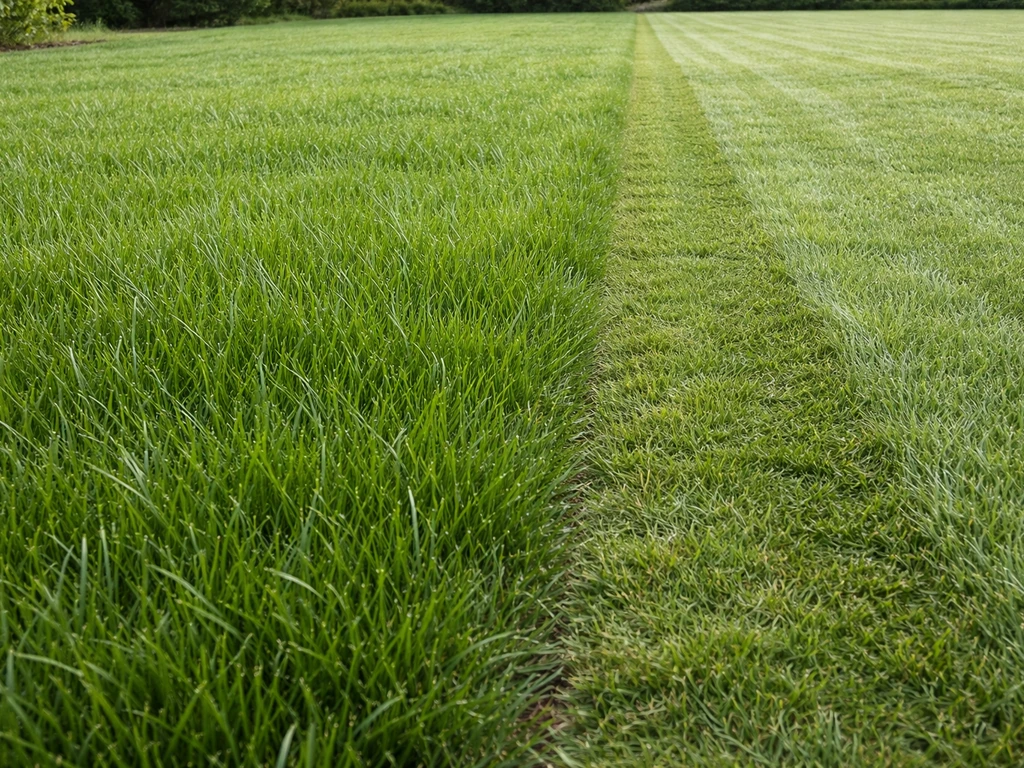
When and how to let spring grass grow longer, with mowing heights, first-cut timing, and fixes for shade, soil, and patc
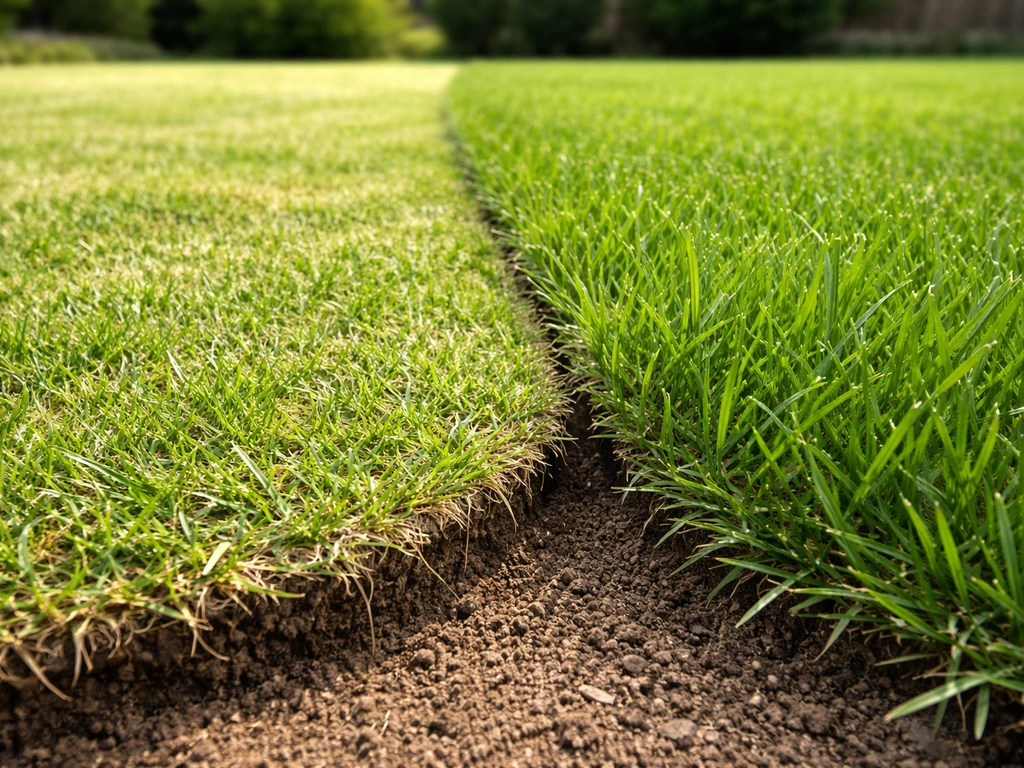
Find out if letting grass grow long boosts root depth, with heights by turf type, schedule steps, and pitfalls to avoid.
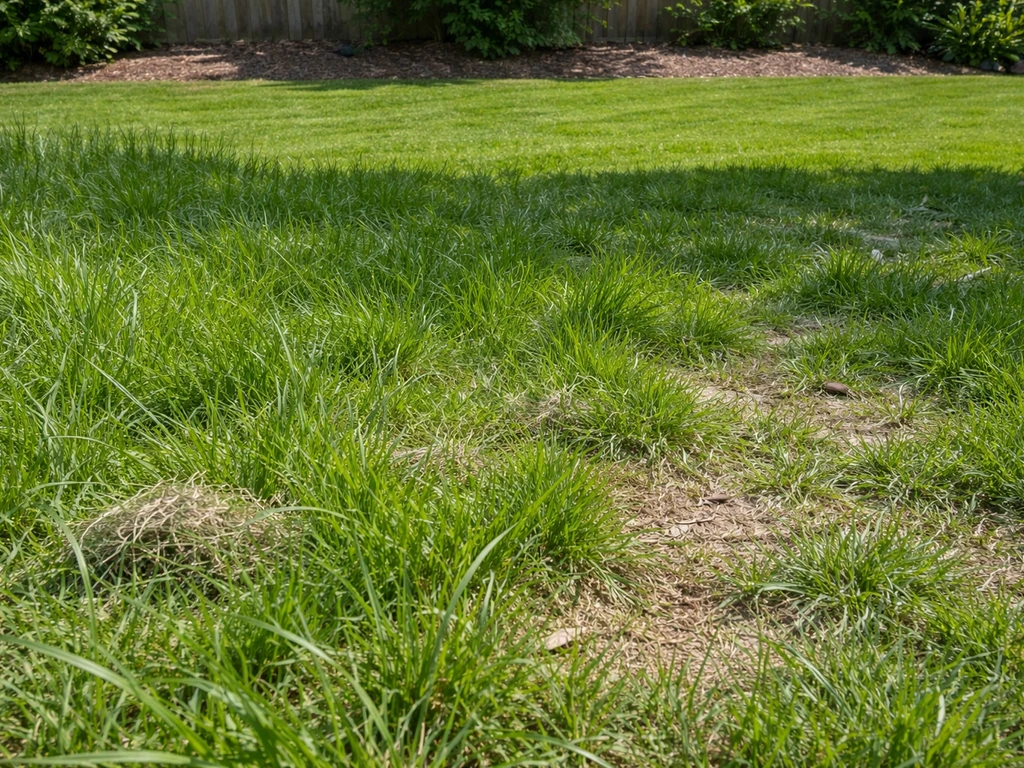
Learn what happens when grass gets too long, how to fix it today safely, and prevent clumping, weeds, and thinning.