
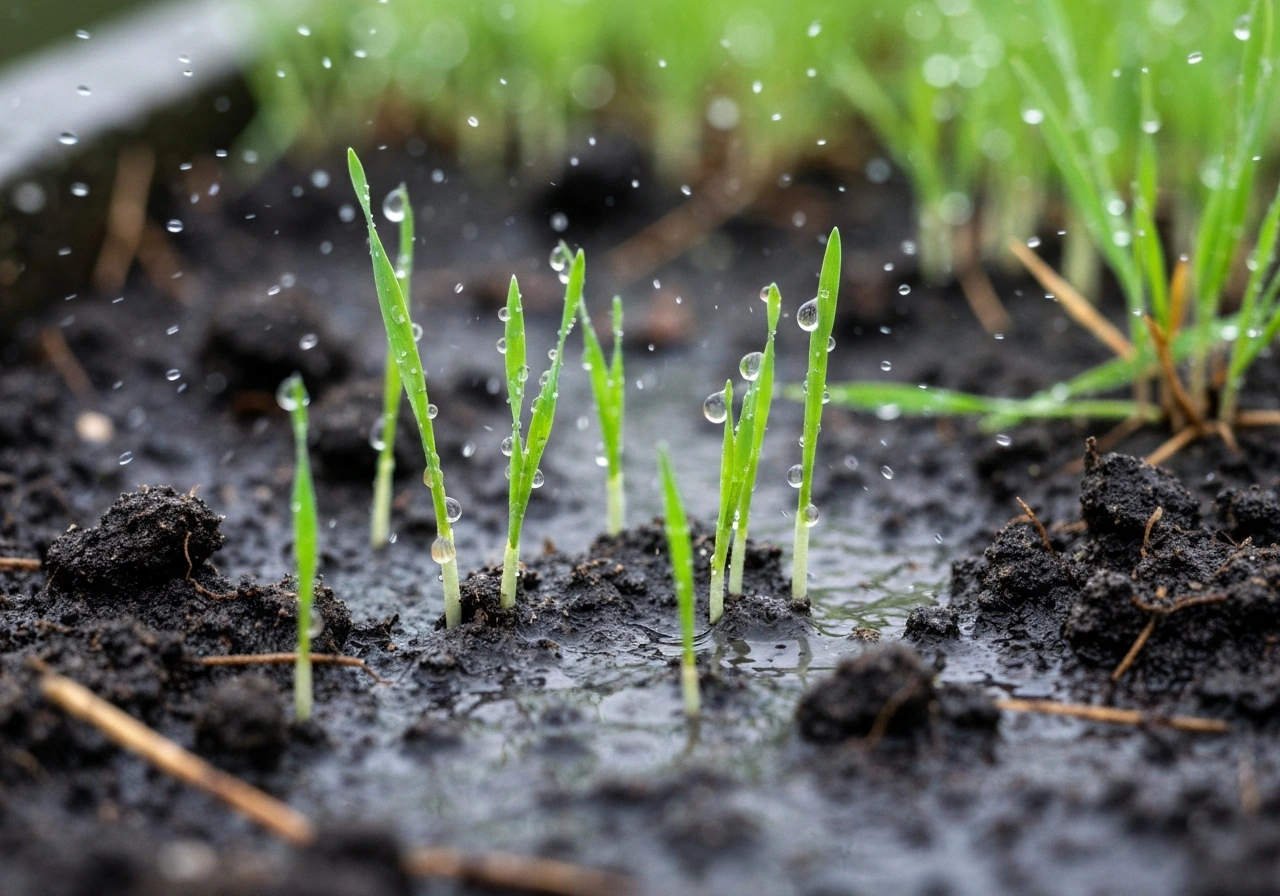
Yes, grass grows when it rains, and it often grows noticeably faster after a good soaking than it does with irrigation alone. For a more detailed explanation, see our guide titled "Does rain help grass grow.". For a detailed explanation of whether rain makes grass grow faster, see does rain make grass grow faster. Rain delivers water directly to the root zone, raises soil moisture potential, opens stomata so leaves can photosynthesize more efficiently, and carries small amounts of dissolved nutrients into the soil. The result is a measurable boost in biomass production that most homeowners can see within 24 to 48 hours of a steady rainfall event. That said, not all rain is helpful, and the type of soil under your lawn, the intensity of the storm, and the timing relative to seeding or fertilizing can flip a benefit into a problem fast.
Does Grass Grow When It Rains? Evidence-Based Guide for Homeowners & Gardeners
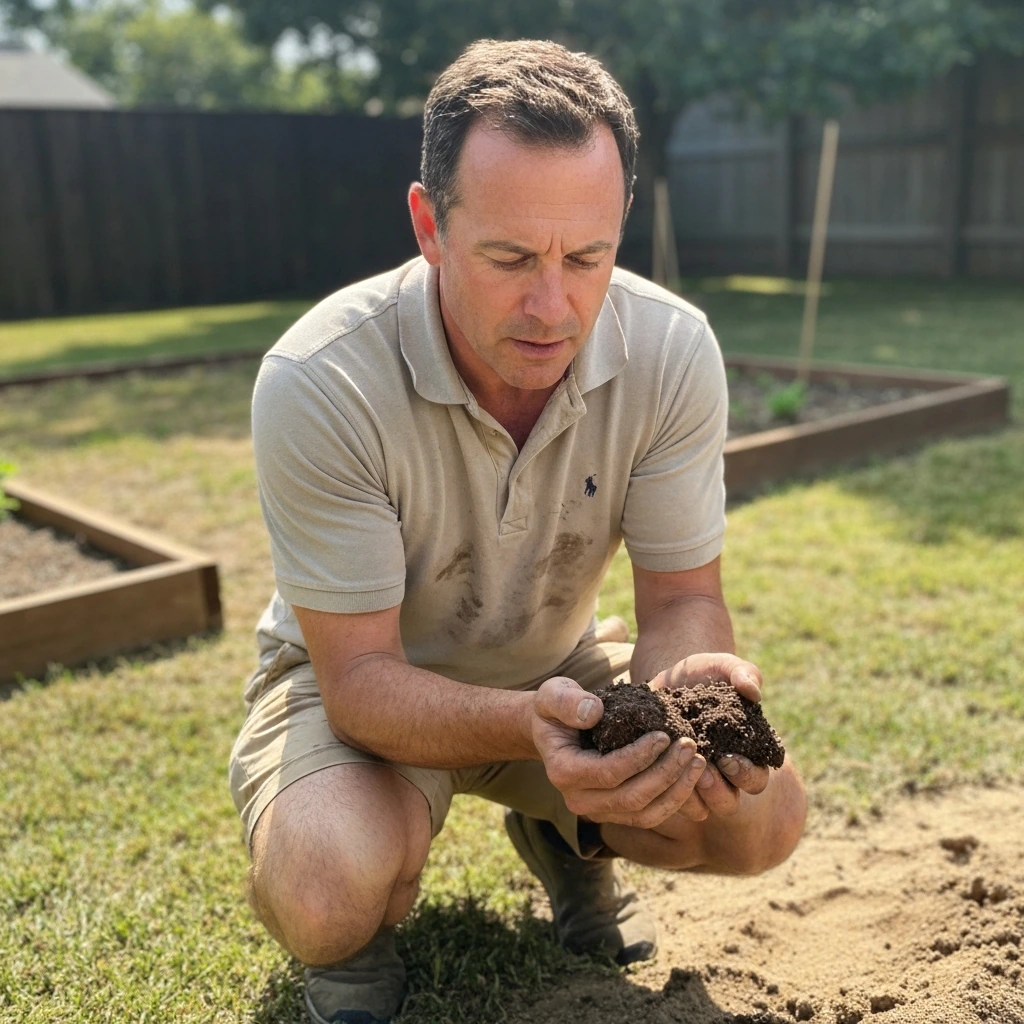
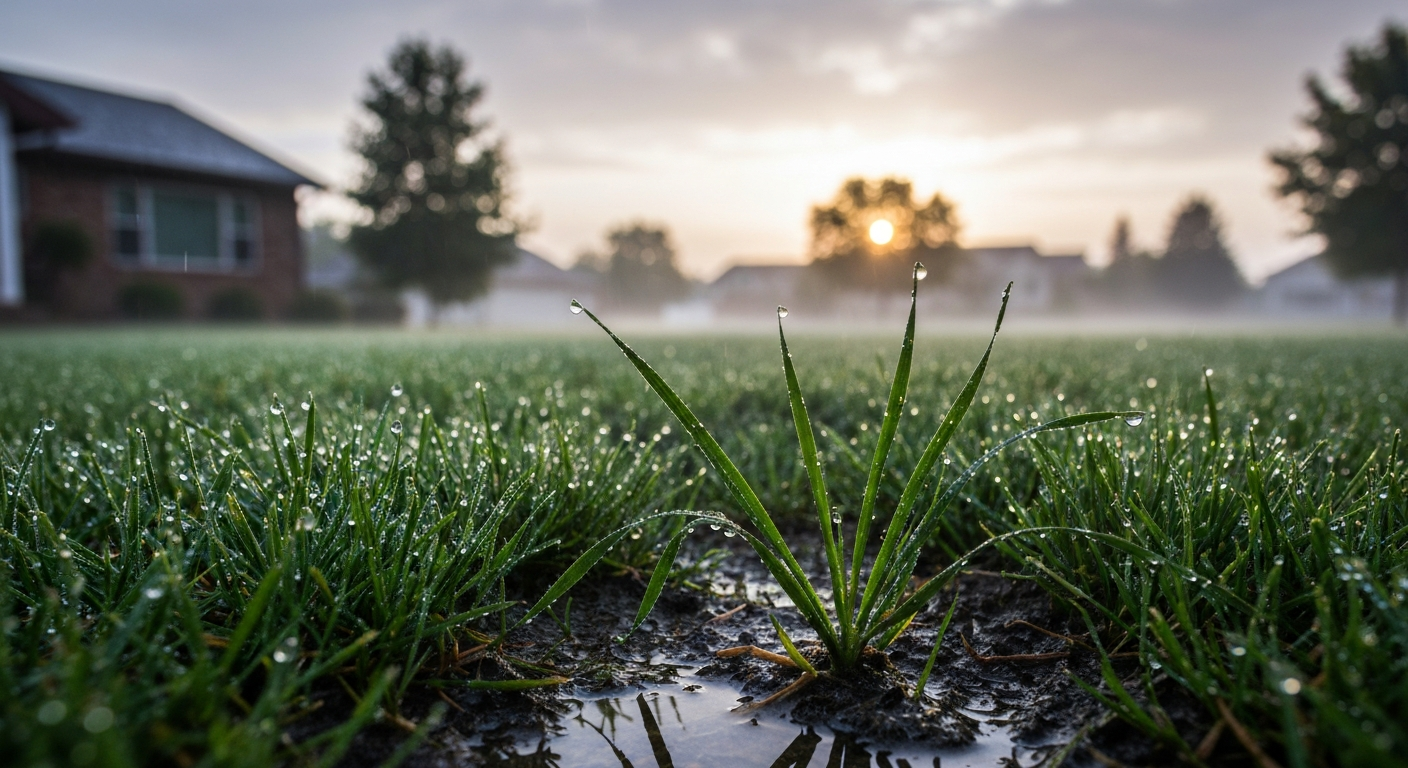
How rain actually enables grass to grow
At the most basic level, grass needs liquid water in the soil to do anything useful. Water moves into root cells through osmosis, builds cell turgor pressure, and keeps the stomata (the tiny pores on leaf blades) open. When stomata are open, carbon dioxide gets in and photosynthesis runs at full speed. Research on perennial ryegrass is particularly clear on this: as soil water potential drops, stomatal conductance falls, net photosynthesis drops with it, and dry-matter production slows down. Rain reverses that sequence. Rewetting the soil restores stomatal conductance and photosynthesis within hours, which is why you literally see the lawn green up and stand up after rain even before it has had time to grow new tissue.
Rain also handles germination. Seeds need the soil matric potential around them to be substantially less negative than about -0.5 MPa before they will reliably absorb enough water to sprout. In plain terms, that means the top inch or two of soil needs to stay consistently moist, not just damp. Light, frequent rain does this naturally, which is why a week of gentle spring showers will push a freshly seeded lawn to sprout faster than one dry week followed by a single heavy irrigation. Nutrient uptake is another piece: dissolved minerals move through the soil water to root surfaces, so a well-watered lawn is also a better-fed one, assuming the nutrients are there to begin with.
Rain intensity, timing and frequency: the details that change everything
Gentle, steady rain is about as good as it gets for grass. Half an inch spread over several hours gives the soil time to absorb the water, keeps the seedbed surface moist without washing seed around, and doesn't displace the mulch or straw you've laid down. A slow quarter-inch rain on a warm spring night will do more for germinating fescue or ryegrass than a fast three-quarter-inch thunderstorm.
Heavy, intense rain is a different story. Clay soils have infiltration rates as low as 0.1 to 0.4 inches per hour. Once a storm exceeds that rate, water sheets off the surface, taking loose seed and fertilizer with it. Even loam soils max out around 0.25 to 0.75 inches per hour under saturated conditions. If you've just seeded and a storm is forecast to dump an inch in an hour, cover that seedbed with straw mulch or erosion-control hydromulch before it hits. I've lost more than one freshly seeded slope because I skipped that step and assumed the forecast was exaggerated.
Frequency and spacing matter too. Sporadic rain, say one heavy event every two weeks, doesn't keep a seedbed moist enough for reliable germination. Most university extension programs recommend maintaining consistent surface moisture with two to five light waterings per day during the first seven to fourteen days after seeding. If natural rain isn't filling that role, you need to supplement it, not wait and hope. Once turf is established, sporadic rain is less critical because roots are deeper and the plant can coast through short dry spells.
Seasonality shapes how much rain-driven growth you actually see. Cool-season grasses (Kentucky bluegrass, tall fescue, perennial ryegrass) grow most actively when soil temperatures are in the 50 to 65 degree Fahrenheit range, which typically means spring and fall. Rain during those windows produces vigorous visible growth. The same rain falling in August when soil temps are in the upper 80s will keep the grass alive but won't produce the same flush of new growth, and it will raise disease risk considerably.
Germination timelines to set realistic expectations
| Grass Species | Typical Germination Time | Surface Moisture Requirement |
|---|---|---|
| Perennial ryegrass | 5 to 10 days | Consistently moist top 1 inch |
| Tall fescue | 7 to 12 days | Consistently moist top 1 inch |
| Seeded bermudagrass | 10 to 30 days | Warm soil, consistent moisture |
| Kentucky bluegrass | 14 to 30 days | Consistently moist, patience required |
Cloudy days and humidity: growing without direct sun
Rainy days are usually cloudy days, and reduced light does slow grass growth. Grass photosynthesis responds to the amount of light hitting the leaf (photosynthetically active radiation), and under heavy overcast that number drops significantly. Cool-season grasses (C3 species) have lower light compensation points than warm-season C4 grasses, meaning they can run a net positive photosynthesis at lower light levels. Leaf-level rapid-light-curve studies show species and cultivar differences in light compensation and saturation points, and under reduced irradiance Amax and growth decline, warm-season C4 grasses typically have higher light compensation points than cool-season C3 species (Use of rapid light curves to evaluate photosynthetic changes in turfgrasses exposed to low‑light conditions, Jespersen et al.) blank" rel="noopener noreferrer">Use of rapid light curves to evaluate photosynthetic changes in turfgrasses exposed to low‑light conditions (International Turfgrass Soc Res J., Jespersen et al.). That's one reason tall fescue and perennial ryegrass are better choices for shaded or frequently overcast climates than bermudagrass or zoysia, which need more direct sun to thrive.
High humidity, which often accompanies rainy stretches, keeps leaf surfaces from drying out and reduces the vapor pressure deficit between the leaf interior and the air outside. For more detail on the link between humidity and turf growth, see does humidity make grass grow faster. That means stomata don't have to work as hard to stay open, which is slightly favorable for photosynthesis. The flip side is that prolonged leaf wetness combined with warm nights creates exactly the conditions that drive turf diseases. Brown patch (Rhizoctonia) becomes a serious risk when leaf wetness persists for around 10 hours with nighttime temperatures above 60 to 70°F and daytime highs in the 70 to 90°F range. Pythium blight hits when relative humidity stays at or above 90% for 12 to 14 or more hours with minimum temperatures around 68°F. Dollar spot follows warm days, cool nights, humidity above roughly 85%, and prolonged wetness. The growth benefit from moisture can be erased quickly if disease takes hold.
Lightning, urine and other unusual growth influences
There's a long-standing belief that thunderstorms make grass greener because of lightning, and there's actually real science behind it. Lightning causes atmospheric nitrogen (N2) and oxygen to combine, forming nitrogen oxides that dissolve in rain as dilute nitric acid and fall to the ground as a weak nitrogen fertilizer. The effect is real but small, contributing maybe 5 to 10 pounds of nitrogen per acre per year in active storm regions. It's not going to replace your fertilizer program, but it does mean that post-storm greenness isn't purely from water alone.
Urine is a more divisive topic. For more detail on the effects of urine on turf, see does urine make grass grow (internal link). Undiluted dog or human urine contains enough concentrated urea and salts to burn grass, creating those yellow or brown patches most dog owners know well. Heavily diluted urine, however, delivers a dose of nitrogen that can actually stimulate growth. The practical guidance here is that occasional diluted urine on an established lawn is unlikely to cause permanent damage and may even provide a minor nitrogen bump, but repeated concentrated applications in the same spot will kill the grass. If you're managing a dog-traffic area, flushing the spots with water immediately after urination limits the damage.
One safety note worth making: never seed or work on a lawn during a thunderstorm. The lightning benefit to your soil doesn't require you to be outside during the strike.
How your soil type changes rain's impact
The same rain event can produce lush growth in one yard and waterlogged misery twenty feet away, and the difference is almost always soil. Sandy soils drain fast, sometimes too fast. Their infiltration rates exceed one inch per hour, which means water moves through the root zone quickly and doesn't stick around for roots to use. Sandy lawns under intermittent rain may still experience moisture stress between events. Clay soils are the opposite problem: low infiltration rates (as little as 0.1 inches per hour when saturated) mean water pools on the surface, air gets pushed out of the soil, and roots suffocate. Grass growing in heavy clay under frequent rain is almost as likely to struggle as grass in a drought.
Compaction makes everything worse. Compacted soil has a reduced pore space, so infiltration drops even further, runoff increases, and roots can't penetrate to reach whatever moisture is deeper in the profile. If your lawn has high foot traffic, clay soil, or both, rain may be running off rather than soaking in. A simple test: push a screwdriver or rod into the soil after rain. If it stops within a few inches, compaction is limiting water infiltration and root depth. Core aeration fixes this, but do it when the soil is moist and friable, not waterlogged. Aerating saturated soil smears the pores shut instead of opening them.
Slope matters too. Even moderate grades increase runoff velocity, especially on clay. If you're trying to establish grass on a slope, the combination of straw mulch, erosion netting, and a hydroseed mix isn't just cosmetic, it's what keeps the seed in contact with moist soil long enough to germinate instead of washing to the bottom of the yard.
Rain and drainage: a quick reference by soil type
| Soil Type | Infiltration Rate (approx.) | Rain Risk | Recommended Fix |
|---|---|---|---|
| Coarse sand | Over 1.0 in/hr | Dries out too fast between events | Topdress with compost, increase irrigation frequency |
| Sandy loam | 0.5 to 1.0 in/hr | Generally good drainage | Minimal intervention needed |
| Loam / silt loam | 0.25 to 0.75 in/hr | Moderate runoff in heavy storms | Mulch seed, avoid traffic after rain |
| Clay / clay loam | 0.1 to 0.4 in/hr | Pooling, runoff, root suffocation | Core aerate, improve drainage, topdress sand |
Soil pH, lime and getting rain to work harder for you
Rain does the delivery work, but soil pH determines whether the nutrients it carries actually reach the grass plant. Most turf species perform best in a pH range of 6.0 to 7.0. Outside that window, certain nutrients get locked into chemical forms roots can't absorb, even if rainfall is moving those nutrients through the soil. Acidic soils below pH 5.5 tend to have high aluminum and manganese levels that are toxic to roots, while phosphorus and calcium availability drop off. This is where lime comes in: agricultural lime (calcium carbonate) raises pH in acidic soils and improves the overall nutrient environment so that rain-delivered nutrients are actually usable.
Lime needs moisture to work, which creates a useful synergy with rain. Liming before a rainy stretch lets the product dissolve and begin acting on soil pH faster than it would in dry conditions. That said, lime is not a fertilizer and won't feed your grass directly. If your soil test shows correct pH but growth is still poor after rain, look at nitrogen, phosphorus and potassium levels before reaching for the lime bag again.
Fertilizer timing around rain requires some care. Applying quick-release soluble nitrogen right before a heavy storm is a reliable way to waste money and potentially pollute nearby waterways. Research is consistent here: water-soluble nitrogen sources leach and run off at significantly higher rates than polymer-coated or sulfur-coated slow-release products. The practical rule is to apply soluble fertilizer when you can follow it with about a quarter to half an inch of light rain or irrigation to move granules into the root zone, but avoid doing it within 24 to 48 hours of a heavy storm forecast. Slow-release formulations give you much more flexibility and substantially reduce leaching losses.
Which grass varieties actually handle rain and low light best
Not every grass species responds equally to wet, overcast conditions. Cool-season C3 grasses are generally better suited to climates with frequent rain and cloud cover because their lower light compensation points allow them to maintain positive net photosynthesis even when the sky is gray. Warm-season C4 grasses need more intense light and heat to fire up their more efficient carbon-fixing pathway, so extended rainy, cloudy periods slow them more noticeably.
| Grass Species | Type | Rain Tolerance | Shade/Low-Light Tolerance | Best Use Case |
|---|---|---|---|---|
| Tall fescue | Cool-season (C3) | High; handles wet periods well | Moderate to good | Transition zone, partial shade, clay soils |
| Perennial ryegrass | Cool-season (C3) | High; responds quickly to rewetting | Moderate | Overseeding, quick establishment, cool climates |
| Kentucky bluegrass | Cool-season (C3) | Good once established; slow to germinate | Low to moderate | Northern lawns, full sun to light shade |
| Fine fescue (creeping red, chewings) | Cool-season (C3) | Good; tolerates moist shade | High | Shaded lawns, low-maintenance areas |
| Bermudagrass | Warm-season (C4) | Moderate; dislikes prolonged wet + cool | Low | Full sun, southern lawns, drought-prone areas |
| Zoysia | Warm-season (C4) | Moderate; good drought recovery | Low to moderate | Transition zone, full sun |
| St. Augustinegrass | Warm-season (C4) | Good; handles heat and humidity | Moderate | Humid southern lawns, partial shade |
If your lawn sits under tree canopy and gets frequent rain, fine fescues are genuinely hard to beat. They have among the lowest light compensation points of any common turf species and handle the competition from tree roots reasonably well. Tall fescue is the workhorse choice for most homeowners in the transition zone: it germinates relatively quickly (7 to 12 days with consistent moisture), tolerates clay soils and periodic wet stretches, and stands up to moderate shade better than bluegrass.
Rain-related risks worth watching for
- Brown patch: watch for it when nights stay above 60 to 70°F and leaf wetness persists for 10 or more hours, especially on ryegrass and tall fescue in late spring and summer.
- Pythium blight: highest risk when relative humidity is at or above 90% for 12 to 14-plus hours with warm night temperatures around 68°F or higher; spreads rapidly in wet conditions.
- Dollar spot: favored by warm days, cool nights, high humidity above roughly 85%, and prolonged leaf wetness; shows up as silver-dollar-sized bleached patches.
- Nutrient leaching: soluble nitrogen moves through sandy soils fast after heavy rain; use slow-release fertilizer formulations and time applications to avoid major storm events.
- Seed washout: on slopes or bare soil, rain intensity above the soil's infiltration rate will move loose seed; use straw mulch or erosion netting before any storm.
- Soil compaction and smearing: working on or aerating saturated soil closes pores rather than opening them; wait until the lawn drains to a friable state.
A practical decision checklist for your lawn
Before you rely on rain to do the work for you, run through these checkpoints. They'll tell you whether the rain you're getting is an asset or a problem.
- Check your soil type: sandy soils need more frequent moisture between rain events; clay soils need drainage improvements before heavy rain becomes useful rather than damaging.
- Test your pH: if it's below 6.0, apply lime before the rainy season and let the moisture work it into the soil over several weeks.
- Time your seeding: aim for gentle rain forecasts with soil temps in the right range for your species, and protect fresh seed with straw mulch if any heavy rain is expected within the first two weeks.
- Choose the right species: if your lawn gets frequent rain and partial shade, lean toward tall fescue or fine fescue rather than warm-season varieties that need more light to compensate.
- Schedule fertilizer carefully: use slow-release formulations and apply when you can get a light quarter- to half-inch watering in without a heavy storm following in the next 24 to 48 hours.
- Aerate before rainy seasons if your lawn is compacted: do it when soil is moist but not waterlogged so cores pull cleanly and pores stay open.
- Watch leaf wetness duration in summer: if nights are warm and rain is frequent, look at your lawn every few days for early signs of brown patch or dollar spot so you can act before an outbreak spreads.
Rain is one of the best things that can happen to a lawn, but it works best when the soil underneath is in good shape, the grass variety is matched to your climate, and you're not fighting compaction, wrong pH, or disease pressure at the same time. Fix those underlying conditions and rain will reliably do exactly what you want it to do. For more on this topic, see does grass grow without rain.
FAQ
Does grass grow when it rains?
Yes. Rain supplies soil moisture that restores root water uptake, raises leaf turgor and stomatal conductance, and thereby increases photosynthesis and aboveground growth. The magnitude and speed of growth depend on species, temperature, light, soil conditions and how much/ how often it rains.
How quickly will seeded grass germinate after rain?
Germination timing depends on species and consistent surface moisture: perennial ryegrass 5–10 days, tall fescue 7–12 days, Kentucky bluegrass 14–30 days, and seeded bermudagrass roughly 10–30 days. Seed needs a moist but not waterlogged seedbed through the full germination window.
Does more rain always make grass grow faster?
No. Moderate, regular rainfall that keeps soil moisture in a favourable range speeds growth. Excessive rain (saturation, flooding, or heavy storms causing runoff) can reduce oxygen in the root zone, wash seed or nutrients away, increase disease risk, and slow growth.
Can grass grow without rain?
Yes—if irrigation supplies adequate water. Infrequent or light irrigation can maintain green-up for some species, but prolonged dry soil reduces stomatal conductance, photosynthesis and growth. Drought‑tolerant species (e.g., certain tall fescues, bunchgrasses, or warm‑season grasses) survive and grow better with less water.
Does grass grow on cloudy or rainy days when sunlight is low?
Growth (net photosynthesis) is reduced on consistently cloudy/rainy days because irradiance is lower. Cool‑season grasses tolerate lower light better than many warm‑season (C4) species, but periodic cloudy days after rain still improve growth vs. dry soils because water availability is often the larger short‑term limiter.
How does rain intensity and soil type affect outcomes?
If rainfall intensity exceeds the soil's infiltration rate (coarse sand > ~25 mm/hr, sandy loam ~12–25 mm/hr, silt loam/loam ~6–19 mm/hr, clay ~2.5–10 mm/hr), runoff, erosion and seed washout occur. Heavy storms on low‑infiltration soils increase compaction, runoff and nutrient loss; light steady rain is best for soil recharge and seed germination.
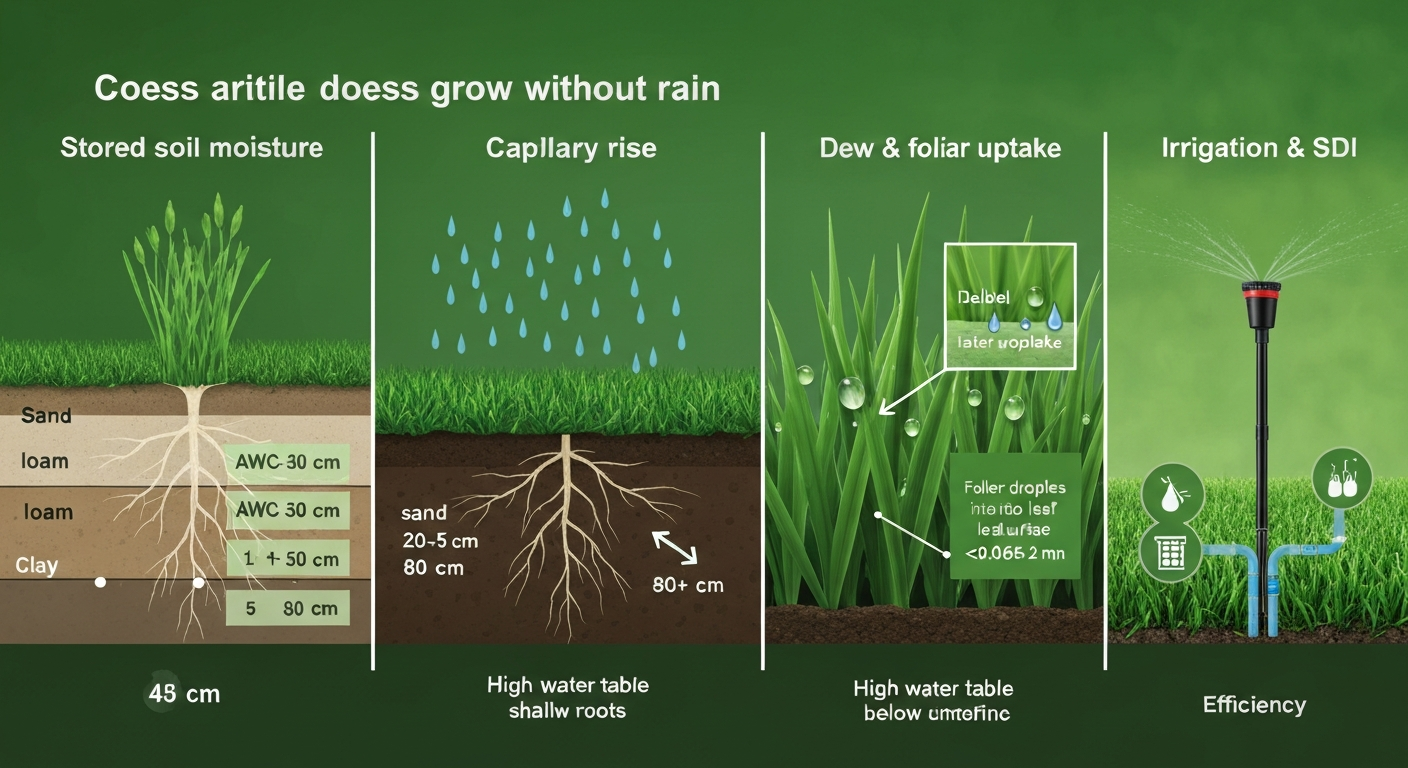
Can grass grow without rain? Causes, signs, irrigation alternatives, drought‑tolerant fixes and quick yard repairs.
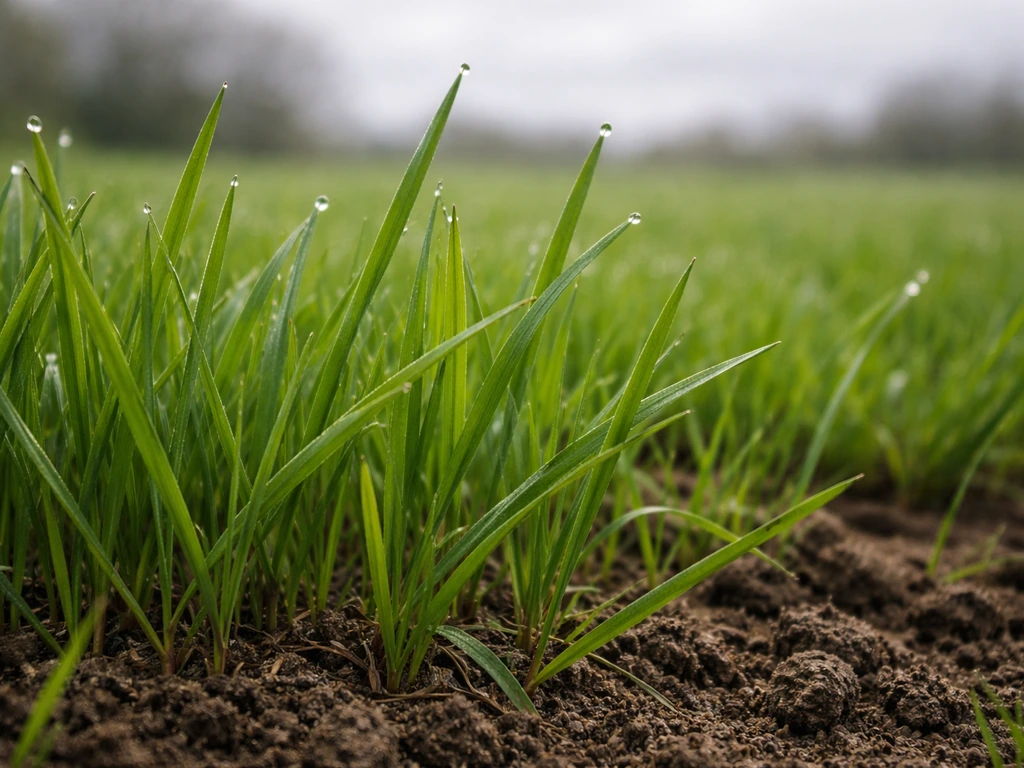
Yes, grass grows on cloudy days but slower. Learn how light, soil, water, mowing, and grass type affect growth.
How rain and irrigation affect grass seed germination and early growth, plus actionable timing and troubleshooting tips.