
Dead grass does not help new grass grow. A thin layer of organic matter at the soil surface (technically called thatch) can hold a little moisture and buffer soil temperature, but once that dead layer gets past about half an inch thick, it starts working against you. Snow can add moisture and slightly moderate soil temperatures, but the grass still needs proper light, watering, and healthy soil conditions to actually grow buffer soil temperature.
Does Dead Grass Help Grass Grow? What to Do Now
Marcus Volkmann
30 May 2026
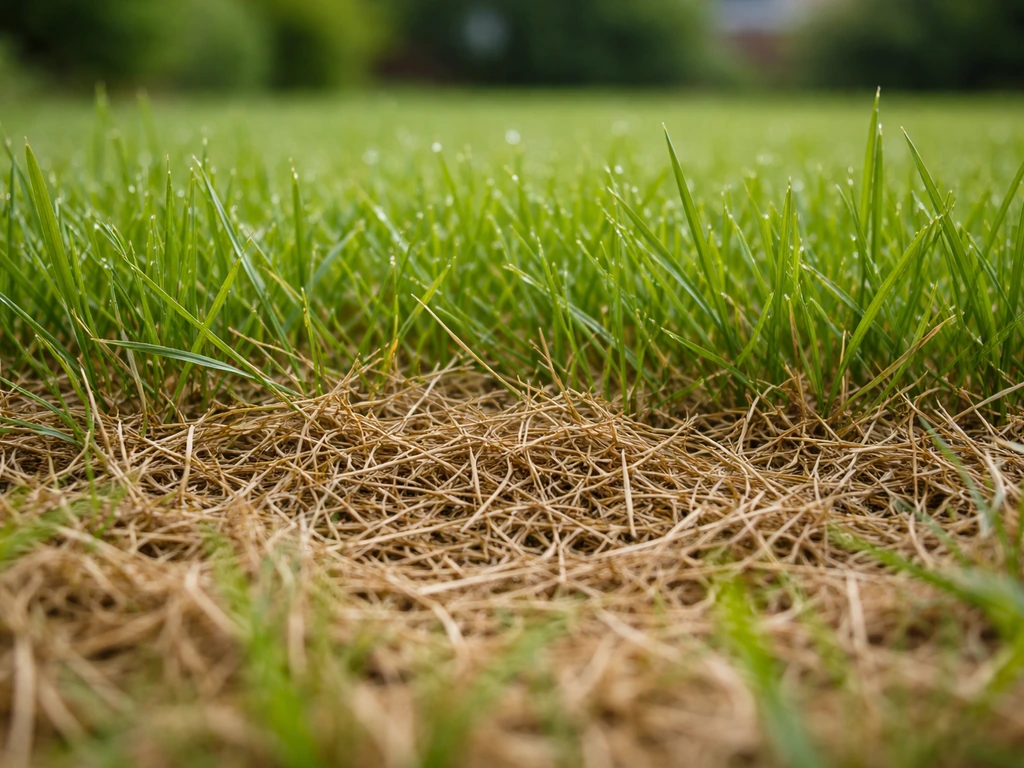
It blocks light, repels water, harbors disease, and prevents new seedlings from ever reaching the soil. If you're wondering whether spreading hay can help, the answer depends on how it affects light and moisture, but it does not replace proper thatch removal and soil contact does spreading hay grow grass. If you have dead patches or a spongy, brownish mat under your lawn right now, removing it is almost always the right first move.
Dead grass vs. new growth: the real relationship
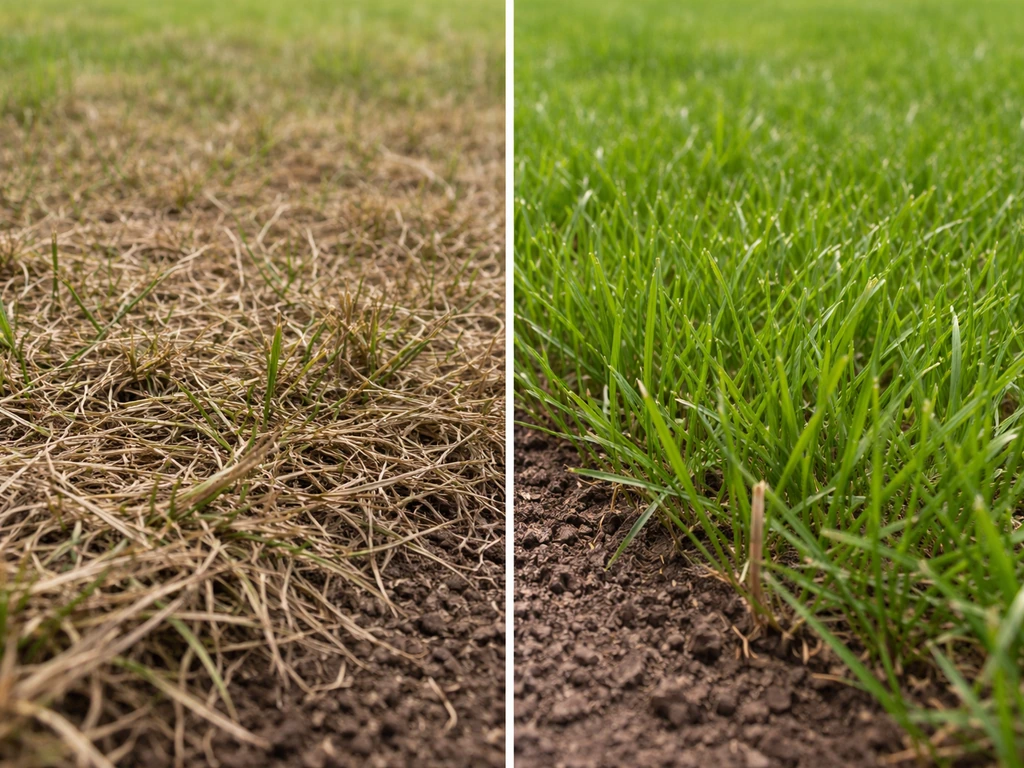
It helps to understand what we're actually talking about when dead grass builds up. Thatch is the layer of undecomposed or partially decomposed organic matter that sits right at the soil surface, below the green blades and above the dirt. It's made up of stems, roots, and crowns, not primarily grass clippings (properly mowed clippings actually break down fast and don't drive thatch). When this layer is thin, under about half an inch, it's genuinely fine. Clemson's turfgrass researchers note that a shallow thatch layer helps retain moisture and stabilizes soil temperature. That's the version of 'dead grass helping' that has some truth to it.
Past that threshold, the benefits flip. A thick thatch layer becomes hydrophobic, meaning water beads off instead of soaking in. It creates a spongy, unstable surface where roots stay shallow because they're growing into the thatch instead of into the soil below. Oklahoma State Extension points out that a lawn can look perfectly healthy in spring and then collapse in summer heat precisely because thick thatch makes the turf far more drought-susceptible than it appears. NDSU puts the danger zone at around one inch of thatch thickness, where roots become significantly more vulnerable to drought, disease, and rot.
Should you remove it? How to measure and decide
Before you grab a rake or rent a dethatcher, actually measure what you have. UC ANR gives a straightforward method: cut out a small square of turf to about 3 inches deep and look at the cross-section. The brown, spongy layer between the green blades and the actual soil is your thatch. Measure it with a ruler.
| Thatch Thickness | What It Means | What to Do |
|---|---|---|
| Less than 1/2 inch | Normal and mildly beneficial | Leave it alone; adjust cultural practices if it's growing |
| 1/2 to 1 inch | Borderline; watch it | Light raking or power raking in the right season; consider core aeration |
| More than 1 inch | Actively hurting your lawn | Dethatch or scarify; follow up with aeration and overseeding |
For cool-season grasses like fescue, bluegrass, and ryegrass, Oklahoma State Extension puts the threshold even lower, recommending you act when thatch exceeds one-third of an inch. For warm-season grasses, the half-inch to one-inch range is more commonly cited. The point is: measure it, don't guess. A lawn that feels spongy underfoot and sheds water after rain is showing you classic signs of thatch overload even before you dig.
One more sign worth checking: press your foot into the lawn and lift it. If your footprint stays visible for more than a minute, the grass is under drought or heat stress, and that matters because dethatching a stressed lawn will make things worse, not better. Timing your intervention correctly is just as important as doing it at all.
When to rake or dethatch, and when to leave it
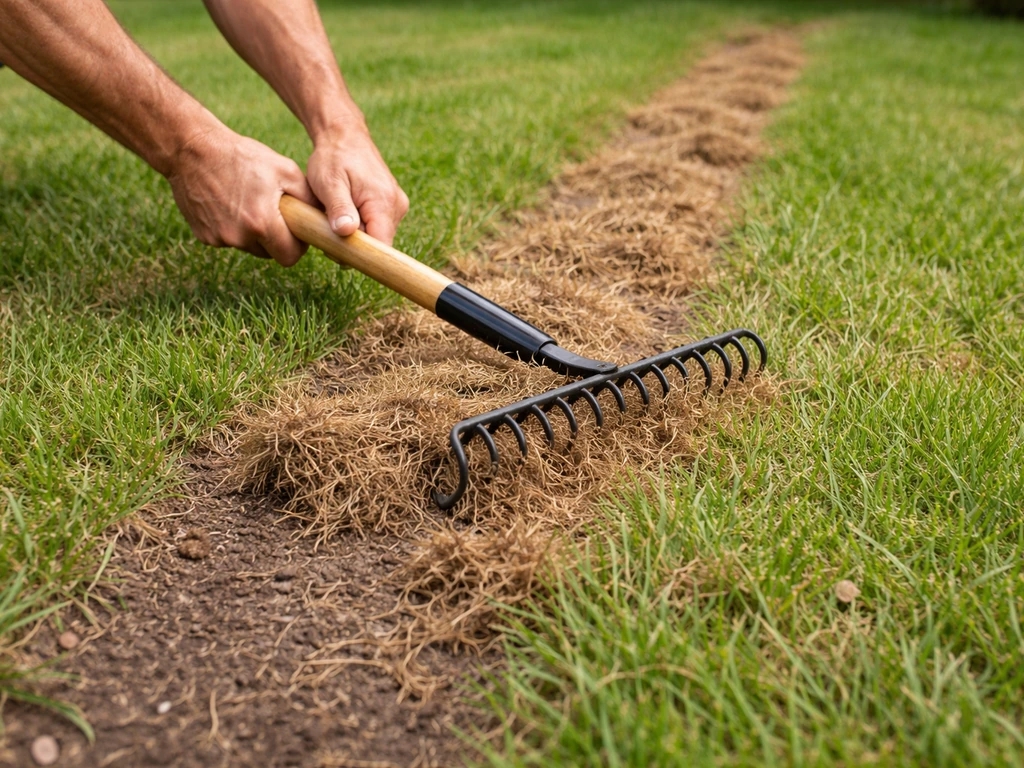
The best timing for dethatching is mid-to-late spring or early fall, according to UC ANR, and that applies to both cool- and warm-season grasses. For cool-season lawns specifically, UMN Extension favors fall vertical mowing. For warm-season grasses like zoysia, University of Maryland Extension recommends late spring to early summer. The common thread: dethatch when the grass is actively growing so it can recover, and never when the soil is wet or the lawn is already stressed.
Since today is late May, you're actually in a reasonable window for many warm-season grasses, and possibly just past ideal for cool-season lawns in northern climates (though early fall is the safer bet for those). If you're in the South with bermuda or zoysia, now through June is workable. If you have Kentucky bluegrass or tall fescue in the Midwest or Northeast, you may want to plan for late August to mid-September, which UMN Extension calls the preferred renovation window.
Two rules you should not break regardless of timing: don't try to remove the entire thatch layer in one pass, and don't dethatch when the soil is wet. UMass Extension is emphatic about both. Trying to strip everything at once causes unnecessary stress and can destroy more turf than the thatch was. Leave the remaining debris as a light mulch. UMass actually recommends removing no more than 50% of the dead debris during a single dethatching session, because the rest provides erosion control and helps protect new seed from displacement.
Also be skeptical of the power rake attachment that goes on a rotary mower. UMN Extension specifically warns that these attachments are not effective at removing thatch and can actually be destructive. Rent a dedicated vertical mower (also called a verticutter or dethatching machine) or use a stiff-tined thatch rake for smaller areas.
What actually gets grass growing again: the practical steps
Removing dead buildup is the clearing step. These are the recovery steps that actually drive new growth.
Mowing height
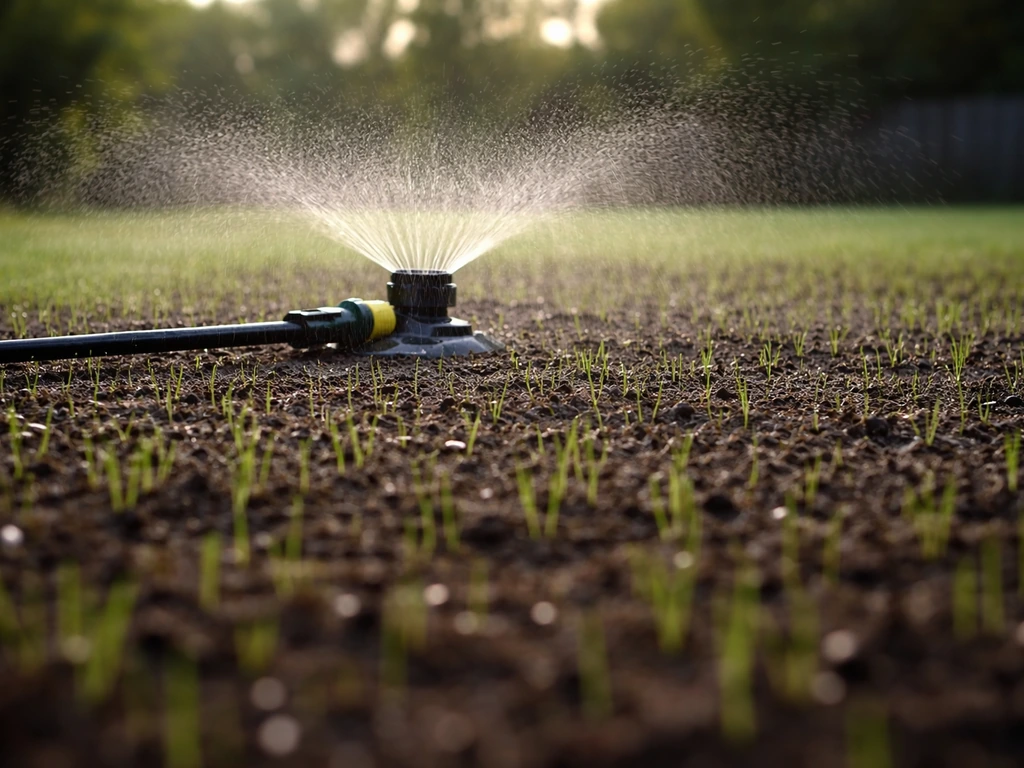
If you're planning to overseed or renovate, UMass Extension recommends mowing the entire area low, around half to three-quarters of an inch, before you start the process. This gives new seed the best chance at light and soil contact. During normal maintenance, though, don't mow too low. Scalping stresses roots and makes the lawn more vulnerable to the same drought and heat problems that kill turf in summer.
Watering schedule
After dethatching and seeding, water frequently but shallowly. UNH Extension recommends watering twice daily for the first two to three weeks after seeding. Once you see green shoots over most of the area, Oregon State Extension advises scaling back from four waterings per day to two, and by the end of the second week, reducing to once per day. New seed needs consistent moisture at the surface, not deep saturation.
Aeration
Core aeration is worth doing alongside or instead of aggressive dethatching when your thatch is in the borderline range. University of Maryland Extension notes that a compacted layer as thin as a quarter inch can impede water infiltration and gas exchange. Core aeration punches through compaction and thatch, improves air and water movement to roots, and causes far less surface disruption than dethatching. For cool-season lawns, aerate in fall. For warm-season lawns, June and July are better according to UMD. Aeration and overseeding together is one of the most effective one-two punches you can run on a struggling lawn.
Fertilizing
Heavy nitrogen fertilization actually drives thatch buildup by pushing top growth faster than the organic matter below can decompose. If thatch has been a recurring problem, dial back your nitrogen inputs. After dethatching and seeding, a starter fertilizer (high in phosphorus to support root establishment) is appropriate, but avoid heavy nitrogen applications until the new grass is established.
Handling heavy dead grass buildup: dethatching, scarifying, and soil fixes
For thatch over an inch thick, a vertical mower (verticutter) run in two directions across the lawn is the standard approach. The machine has vertical spinning blades that slice through the thatch layer and pull debris to the surface. Expect it to look rough afterward, which is normal. After the machine pass, rake up the debris and check your thatch depth again. You're aiming to get below that half-inch threshold, not to hit bare dirt.
Scarifying is a more aggressive version of the same idea, typically used on severely matted or compacted turf. The blades penetrate deeper and also help break up surface compaction. After either process, UMass Extension recommends cultivating to about a quarter inch of depth so the surface has enough exposed soil for seed-to-soil contact. Without that contact, new seed just sits in debris and fails to germinate reliably.
If your soil itself is the problem, no amount of dethatching will fix it alone. Sandy soils drain too fast and don't hold the nutrients new seedlings need. Compacted clay soils choke roots and pool water. In both cases, topdressing with a thin layer (a quarter inch) of compost after dethatching and aeration gives soil biology a significant boost and improves seed germination rates. This is especially useful in spots where dead patches keep coming back in the same place year after year.
Figuring out why your grass died in the first place
Here's where most homeowners skip a step: they remove the dead grass and reseed without knowing what killed it. Then it dies again. Before you invest in renovation, diagnose the cause.
Drought and heat stress
Symptoms: footprints that don't spring back, a dull gray-green color before browning, and patches that follow sun exposure patterns. University of Maryland Extension specifically flags the footprint test as a reliable drought stress indicator. If this matches your situation, the fix is watering plus thatch reduction (since thick thatch makes drought stress worse, not better).
Shade
Symptoms: thin, elongated grass blades under trees or on north-facing slopes, dead patches that mirror shaded areas. No amount of dethatching fixes a shade problem. You need a shade-tolerant grass species (fine fescues are the go-to for cool-season climates) or an alternative ground cover.
Compaction
Symptoms: water pooling on the surface after rain, extremely hard soil that's difficult to push a screwdriver into, dead strips that follow foot traffic patterns. Core aeration is the primary fix. Dethatching won't help much if the underlying problem is compacted soil.
Disease and pests
Symptoms: circular dead patches with distinct edges, patches that spread in a pattern, brown spots with a ring of darker grass at the perimeter, or areas where you can easily pull up turf like loose carpet (grub damage). Fungal diseases like dollar spot, brown patch, and pythium often look like drought stress until you check more carefully. Grub damage shows up as turf that lifts away from the soil with no root attachment. If you suspect disease or grubs, treating the underlying problem before reseeding is essential. Seeding into active disease pressure or an active grub infestation will just produce more dead grass.
Poor soil and thatch itself
Symptoms: a spongy surface, water that sits on top or runs off even on level ground, infiltration that's visibly slow. UMass Extension identifies a spongy surface and poor water infiltration as the classic signs that excess thatch is the primary culprit. This is the scenario where dethatching directly addresses the cause.
It's also worth noting that applying certain materials to problem areas, like salt on icy driveways near lawn edges, can cause die-off that mimics disease. Similarly, wood ash spread too heavily can alter soil pH in ways that suppress growth. The same applies to ashes from burned wood or yard waste: used in the wrong amount they can suppress growth, even though a small, controlled amount of ash can sometimes be beneficial for soil chemistry wood ash spread too heavily can alter soil pH. If you've tried any amendments or de-icers near the problem area, factor that into your diagnosis before assuming the cause is purely environmental.
When to reseed or sod, and how to choose
If dead patches cover more than 50% of your lawn area, full renovation makes more sense than spot treatment. For smaller dead areas under that threshold, overseeding after dethatching is usually sufficient. Oregon State Extension's practical rule of thumb: make sure you have at least 6 to 8 weeks of good growing weather after seeding. In most of the country right now (late May), that window exists for warm-season grasses. Cool-season grass seeding in the North is better pushed to mid-August through mid-September, which UMN Extension confirms as the ideal renovation window.
Germination timing matters for managing expectations. Kentucky bluegrass takes 2 to 3 weeks to germinate, and UNH Extension notes that some seed mixes can take three weeks or longer before you see consistent green. Don't give up after ten days.
Seed vs. sod: the honest trade-off
Seed is cheaper and gives you the widest species selection, but it requires the watering discipline described above and at least six to eight weeks to establish. Sod is faster, more forgiving on slopes (where seed washes), and gives you an instant surface, but it costs significantly more and still needs consistent watering for the first few weeks while roots establish. For most homeowners dealing with dead patches from compaction, thatch, or drought stress, overseeding after dethatching and aeration is the right call. Sod makes more sense if you have erosion concerns, need the area usable quickly, or if large-scale renovation is already underway.
If it still isn't working after 6 weeks
If you've dethatched, aerated, seeded with appropriate timing, and watered correctly, but still have bare or thinning areas after six weeks, go back to your diagnosis. Shade that you underestimated, soil pH outside the optimal range (most grasses want 6.0 to 7.0), compaction you didn't fully address, or recurring disease pressure are the most common reasons renovation fails. A soil test at that point costs very little and tells you exactly what you're working with. It's almost always worth doing before you reseed a second time, rather than guessing.
FAQ
If I rake up dead grass, will my lawn grow back on its own without reseeding?
No. Dead grass or thatch left in place usually slows recovery because it blocks light and can repel water, especially once it builds beyond a thin layer. If you suspect a thatch problem, measure the depth first, then dethatch only enough to get back under your target (often about half an inch for many lawns), and follow with overseeding or renovation if needed.
What if my lawn feels spongy and my footprints stay visible, can I dethatch right away?
You can harm a stressed lawn. The article notes the footprint test, which indicates drought or heat stress, and UMass/UMN-style cautions against dethatching when the soil is wet. If the lawn is still under stress, wait for active growth and better conditions, then dethatch in a controlled way (for example, removing no more than about half the debris in one pass) before seeding.
Will spreading hay on dead grass patches help grass grow faster?
Yes, but not by itself. Spreading hay can sometimes temporarily shade the surface and influence moisture, yet it can also cover grass and reduce light needed for seedlings. The key is that seedlings still must reach soil, so if you use any mulch-like material, it should not replace proper thatch removal and seed-to-soil contact.
How much thatch should I remove in one day or one dethatching session?
It depends on how thick the thatch layer is and how much you remove. The article emphasizes that fully stripping everything at once is a mistake, and recommends leaving some debris as light mulch, typically not more than about 50% removed in a single session. For thick thatch, plan on multiple seasonal interventions rather than one aggressive cleanup.
Is a power rake attachment on a regular mower enough to fix thatch?
Use the mower type as your deciding factor. Rotary power-rake attachments often do not remove thatch effectively and may damage turf. For thatch-driven problems, a dedicated vertical mower, also called a verticutter, or a stiff-tined thatch rake for small areas is the practical choice.
My lawn has dead patches, but the soil is hard, should I dethatch or aerate?
In many cases, no. If the underlying issue is compacted soil or poor infiltration, dethatching may not solve it and can even worsen stress by disturbing roots. Core aeration (sometimes paired with overseeding) targets compaction directly, including when infiltration is visibly slow or the soil is hard.
I removed some dead grass, but the problem keeps returning, how do I know whether it is thatch or something else?
Avoid assuming it is “thatch overload” if the pattern matches other causes. The article highlights several diagnostic patterns like shade-related thinning, disease-looking rings and spread patterns, and grub damage where turf lifts without root attachment. If the diagnosis points to disease or pests, treat the cause before reseeding, or you may repeat the same failure.
Could driveway de-icers or wood ash near the lawn cause dead patches that look like disease?
It can. The article notes that de-icers near lawn edges (like salt) and excessive wood ash can cause die-off that mimics disease or turf failure. If your dead patches occur near driveways, sidewalks, or spots where ash was applied, factor those inputs into your diagnosis before dethatching and reseeding.
Can core aeration replace dethatching for thick-looking thatch?
Yes, but only in specific situations. Core aeration can help when compaction is present and can also improve gas exchange when thatch is borderline. If your thatch is truly excessive, dethatching may still be needed, but aeration alongside or instead is often a less disruptive first step than aggressive dethatching.
How long should I wait after overseeding before I decide it failed?
The article gives a key expectation, overseeding and germination take time. Kentucky bluegrass often takes 2 to 3 weeks (some mixes longer), so it is normal not to see consistent green immediately. Generally, do not judge results after only 10 days, then reassess after the recommended growing window has passed.
If I did everything right, why would my lawn still be bare after six weeks, and when should I get a soil test?
A soil test can prevent repeated reseeding failures. If you have already dethatched, aerated, seeded, and watered correctly and still have bare or thinning areas after about six weeks, the article points to common misses like soil pH out of range (roughly 6.0 to 7.0 for most grasses) and untreated compaction or recurring disease pressure. Testing tells you what to correct instead of guessing.
Next Articles
Do Ashes Help Grass Grow? When to Use and When Not
Do ashes help grass grow? Learn when to apply wood ash safely, avoid burns, test pH, and fix failing lawns.
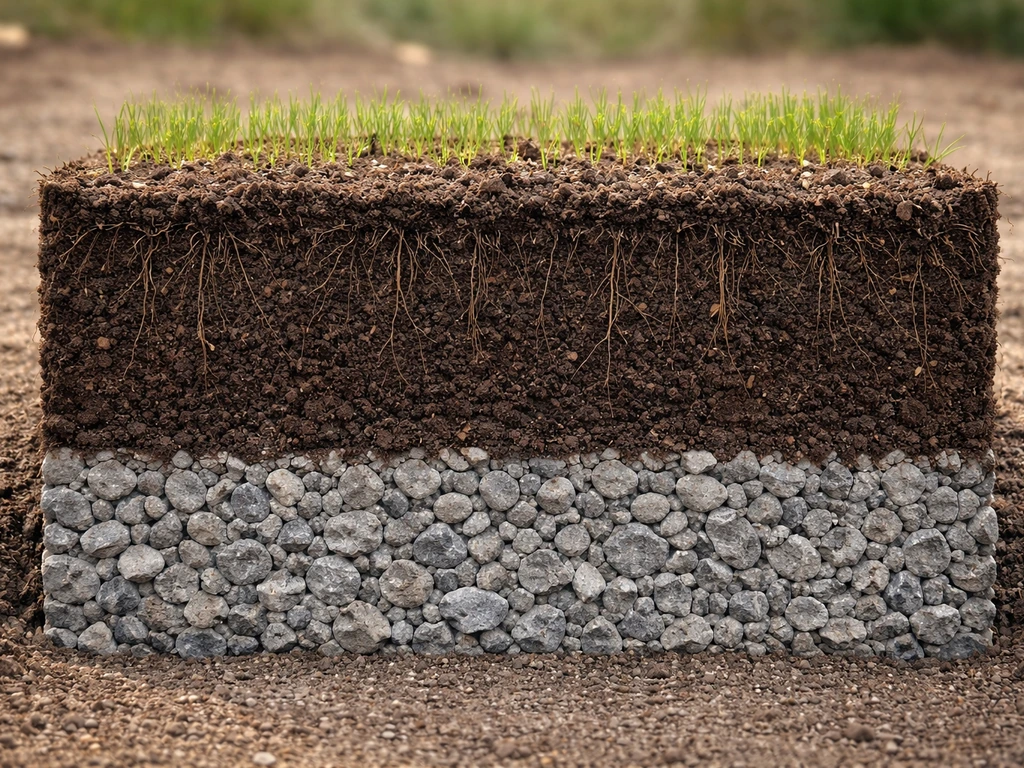
Can You Grow Grass Over Gravel? How to Do It Right
Learn when you can grow grass over gravel and follow a step-by-step method for soil depth, drainage, seeding or sod, and
Do Wood Chips Help Grass Grow? When They Work and When Not
Learn when wood chips help grass grow, when they steal nitrogen, and step-by-step how much to apply and seed options.