
Sawdust generally does more harm than good when it comes to growing grass, especially if you mix it into the soil. While sawdust can affect nitrogen and moisture, salt is usually not a good way to help grass grow, because it can damage roots and stunt growth does salt help grass grow. The core problem is nitrogen tie-up: the microbes that break down sawdust consume huge amounts of soil nitrogen in the process, leaving your grass starved and yellow before it even gets started. That said, there are specific situations where sawdust can play a supporting role without wrecking your lawn, and knowing the difference will save you a lot of frustration.
Does Sawdust Help Grass Grow? When It Works and How
Marcus Volkmann
3 Jun 2026
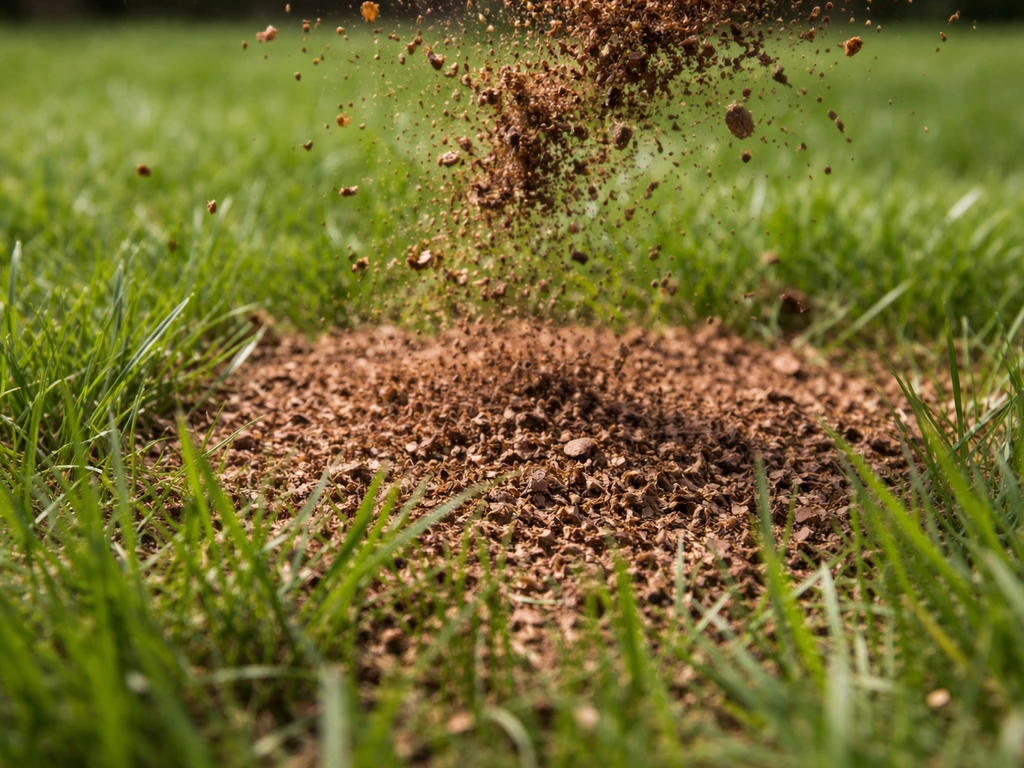
Does sawdust help or hurt grass? The direct answer
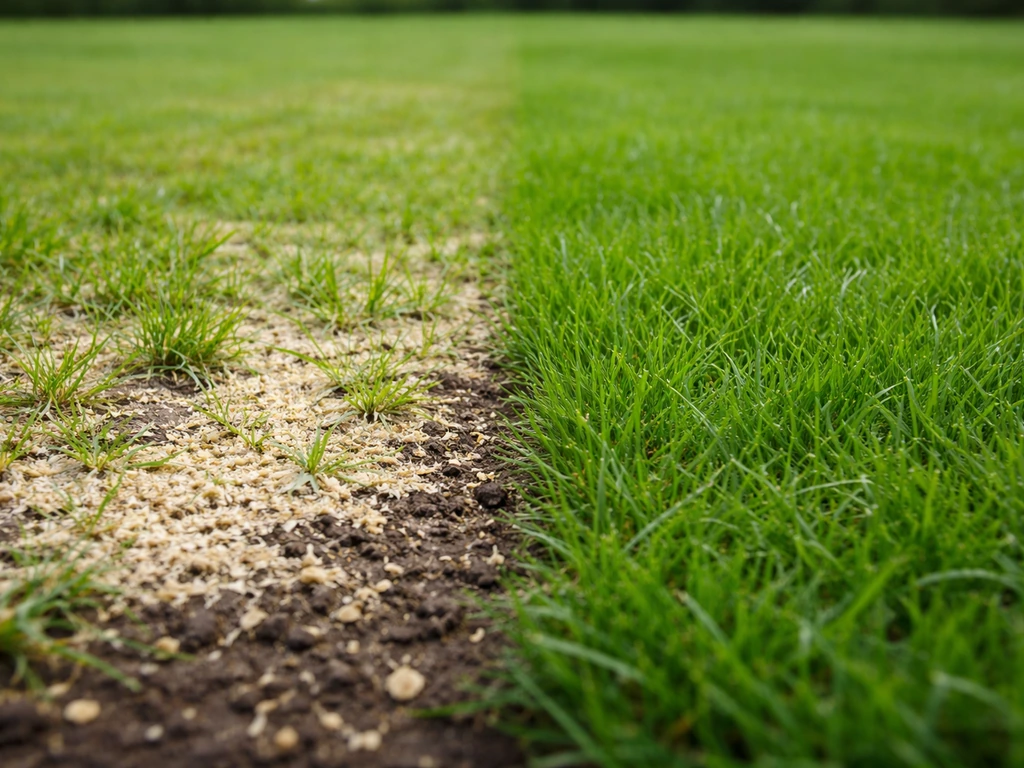
In most lawn scenarios, fresh sawdust hurts more than it helps. When you till or mix it into soil, it creates what extension researchers call 'extended nitrogen starvation. ' Sawdust has an extremely high carbon-to-nitrogen ratio, around 200:1 according to UVM extension research. Soil microbes need to balance that ratio as they decompose the sawdust, so they pull nitrogen straight out of the soil.
Your grass seed or turf ends up competing with billions of microbes for the nitrogen it needs to germinate and green up, and the microbes win every time. Used as a thin surface mulch without incorporation, the risk drops significantly, but it is still not the ideal amendment for turf.
If your goal is growing grass, not suppressing it, there are better tools for the job.
What sawdust actually does to your soil
Understanding the mechanism helps you make smarter decisions, so here is what actually happens below the surface when sawdust enters the picture.
Nitrogen tie-up: the biggest problem
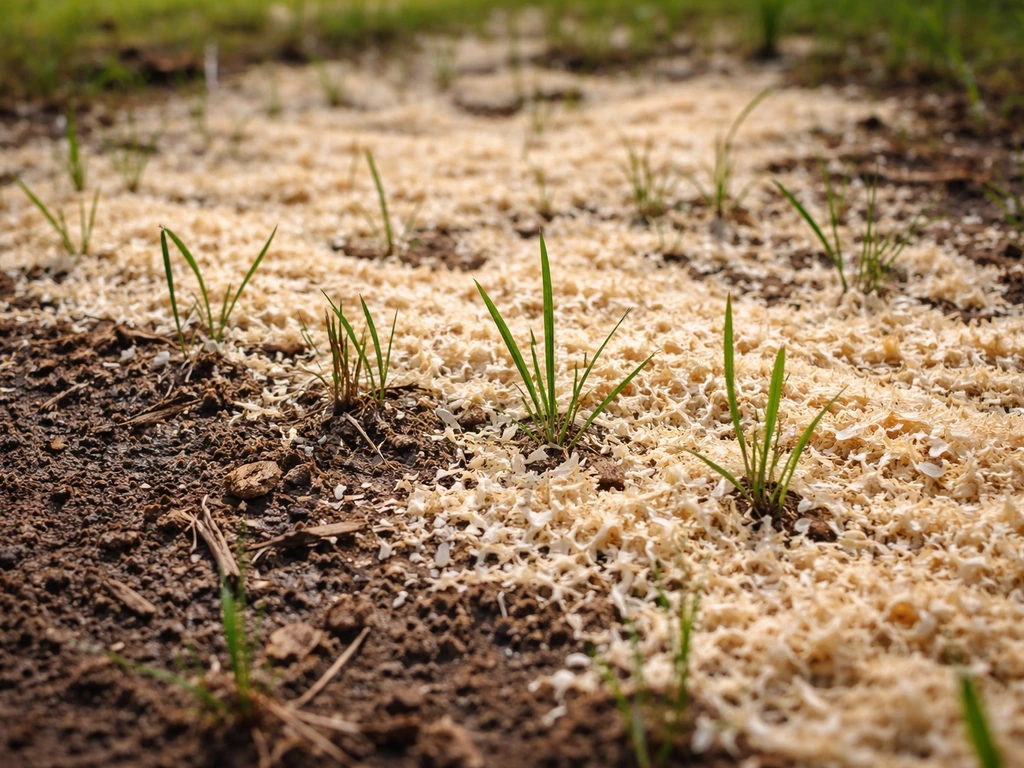
This is the issue that derails most people who try sawdust in their lawn. When carbon-rich materials like sawdust decompose, soil bacteria and fungi consume available nitrogen to fuel the process. The University of Maryland Extension puts it bluntly: sawdust depletes soil nitrogen if worked into the soil. The University of New Hampshire Extension echoes this, noting that carbon-rich mulches mixed into garden soil cause microbes to 'temporarily steal nitrogen,' resulting in nitrogen-starved plants.
University of Missouri Extension calls the result 'extended nitrogen starvation' and says it requires multiple corrective nitrogen applications just to recover. The key word is incorporated: according to both OSU Extension and Colorado State University Extension, this effect is much worse when sawdust is mixed into the soil versus left on the surface.
Moisture retention and aeration
Sawdust does hold moisture, which sounds useful for dry or sandy soils. On the surface, it can slow evaporation and keep the seedbed from drying out too fast. The problem is that when it gets wet and then packs down, it can form a crust that actually limits water penetration and air movement into the soil. Fine sawdust particles also have enormous surface area, which means they interact aggressively with both water and nutrients in ways that larger organic materials like wood chips do not.
Compaction risk
Fresh sawdust layered too thickly can compact over time as it settles and gets wet, creating a mat that is difficult for grass roots to penetrate. This is especially true of very fine sawdust from softwoods. Over time, composted sawdust breaks down and improves structure, but fresh material applied in thick layers can make a bad compaction problem worse, not better.
When sawdust might actually be useful for grass
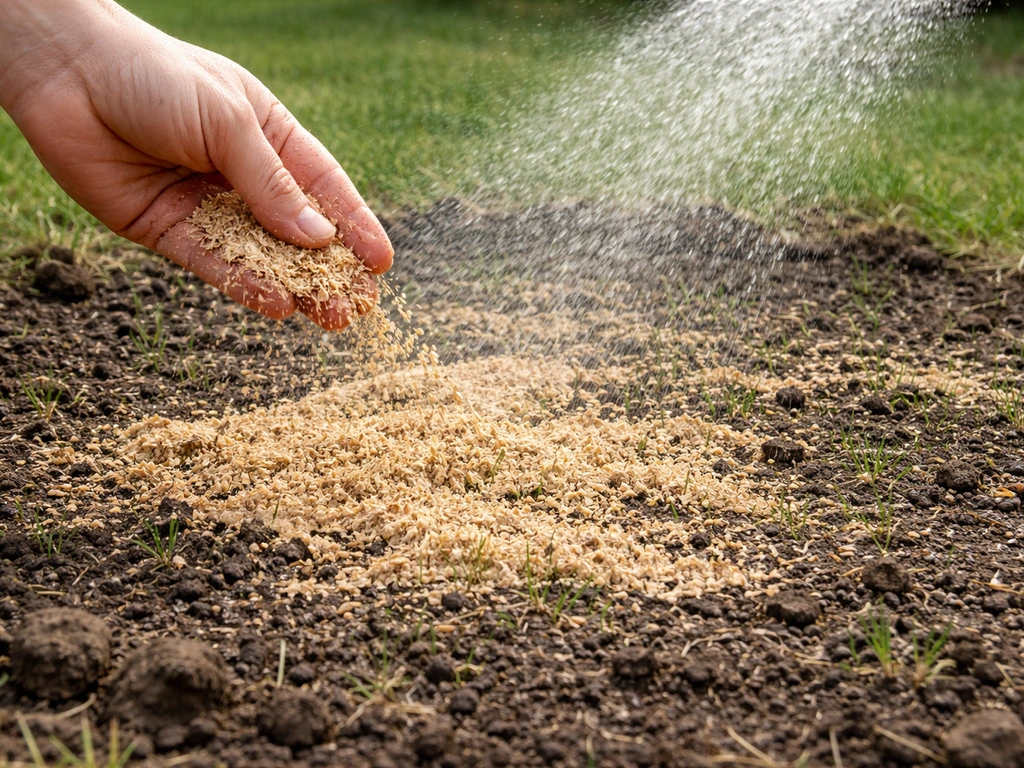
There are a handful of situations where sawdust is not a terrible idea, as long as you apply it correctly and compensate for the nitrogen issue.
- Very sandy or fast-draining soil: A thin layer of well-aged or composted sawdust worked in can improve moisture retention and add some organic matter where there is almost none to start with.
- Topdressing an established lawn to even out the surface: Mississippi State University Extension defines topdressing as spreading a thin layer of organic material over turf to smooth the surface and support microbial activity. Aged sawdust in a very thin application can serve this function.
- Suppressing weeds in pathways around grass areas: As a surface mulch in borders or bare areas you are not trying to grow turf through, sawdust does a decent job.
- Improving heavy clay soil over multiple seasons: When blended with compost and paired with consistent nitrogen management over time, aged sawdust adds carbon and slowly improves structure. This is a long-game approach, not a quick fix.
Notice that fresh sawdust is absent from that list. Aged or composted sawdust is almost always the better choice when sawdust has to be part of the plan at all.
How to apply sawdust without killing your lawn
Fresh vs. aged sawdust: which to use
Aged or composted sawdust is dramatically safer for turf than fresh sawdust. Fresh sawdust has the full 200:1 carbon-to-nitrogen ratio intact and will cause nitrogen tie-up almost immediately on contact with moist soil. Composted sawdust has already gone through much of the decomposition process, so the microbial feeding frenzy is mostly over.
If someone is offering you a pile of fresh sawdust for free, it is worth either composting it yourself for 6 to 12 months before use, or adding nitrogen to it before application. If you must use fresh material, Oklahoma State University Extension recommends mixing in 1 pound of actual nitrogen per 5 bushels of sawdust before application, which works out to about 3 pounds of ammonium nitrate or 5 pounds of ammonium sulfate per 5 bushels.
Depth and application rules
Keep applications thin. Penn State Extension recommends no more than about 1/4 inch for organic amendment topdressing on turf, and that guidance applies here. A thick sawdust layer, say 1 inch or more incorporated into the soil, is where the worst problems start. If you are topdressing established grass to smooth the surface or add organic matter, stay at or under 1/4 inch and do not bury it. If you are working sawdust into bare soil before seeding, never go above a very light incorporation and always pair it with nitrogen.
Nitrogen management when using sawdust
This step is non-negotiable with fresh or lightly aged sawdust. University of Missouri Extension recommends an initial nitrogen application at incorporation, followed by two or three more small nitrogen applications at 3 to 5 week intervals during spring and summer to combat extended nitrogen starvation. For a practical number: MU Extension gives 27 pounds of ammonium nitrate (34-0-0) per 1,000 square feet for a 1-inch sawdust layer. You can scale that down proportionally if you are applying a thinner layer. Splitting that nitrogen into multiple smaller doses, rather than dumping it all at once, is the smarter move and reduces burn risk.
Timing and watering
Apply sawdust amendments in spring or early fall when soil temperatures support active microbial activity, which helps decomposition move along faster. Water thoroughly after any application and nitrogen addition. Consistent moisture keeps decomposition moving and reduces the risk of the sawdust forming a dry, water-repellent crust on the surface. Do not apply sawdust right before overseeding or new seeding without completing the nitrogen correction step first, or you risk stalling germination entirely.
Better alternatives for improving grass growth
If your goal is to grow healthier, thicker grass rather than to use up a pile of sawdust you happen to have, most of these options will get you there faster and with fewer risks.
| Amendment / Method | Best For | Nitrogen Risk | Ease of Use |
|---|---|---|---|
| Compost (1/4 inch topdress) | Most soil types, overseeding, established turf | None (slowly releases N) | Easy |
| Quality topsoil | Bare patches, leveling, new establishment | None | Easy |
| Core aeration | Compacted soil, thatch buildup | None (pairs with fertilizer) | Moderate |
| Balanced fertilizer (starter) | New seeding, poor soil | Adds N rather than removing | Easy |
| Aged/composted sawdust (thin) | Sandy soil moisture retention, long-term organic matter | Low if composted | Moderate |
| Fresh sawdust | General lawn improvement | High (requires N correction) | Difficult |
Compost is almost always the smarter choice over sawdust for turf improvement. Penn State Extension specifically recommends thin compost topdressing, about 1/4 inch, worked lightly into turf for improved performance. Unlike sawdust, compost has already passed through decomposition, so its nitrogen is in an organic form that releases slowly and steadily to the grass rather than being consumed by microbes.
Core aeration is another tool that is underrated for poor soils: University of Minnesota Extension recommends core aerification for compacted or thatch-heavy lawns, paired with light nitrogen (1/2 to 3/4 pounds of actual N per 1,000 square feet) and regular watering to speed recovery.
If you are dealing with tough conditions like heavy shade or a sand-heavy substrate, check out some of the related approaches on this site, including whether spreading hay can help with new grass establishment or what ash does to soil chemistry. Ash is a different soil amendment than sawdust, so you can judge whether it affects grass growth by looking at its composition and how it changes soil chemistry what ash does to soil chemistry.
Spreading hay is sometimes used to protect seed and improve establishment, so it can be worth comparing it to sawdust if you are trying to get new grass to take spreading hay can help with new grass establishment. Ashes are often used as a soil amendment, but they can raise pH and affect nutrient availability, so you may wonder whether they actually help grass grow what ash does to soil chemistry.
Grass not greening up after sawdust? Here is how to fix it
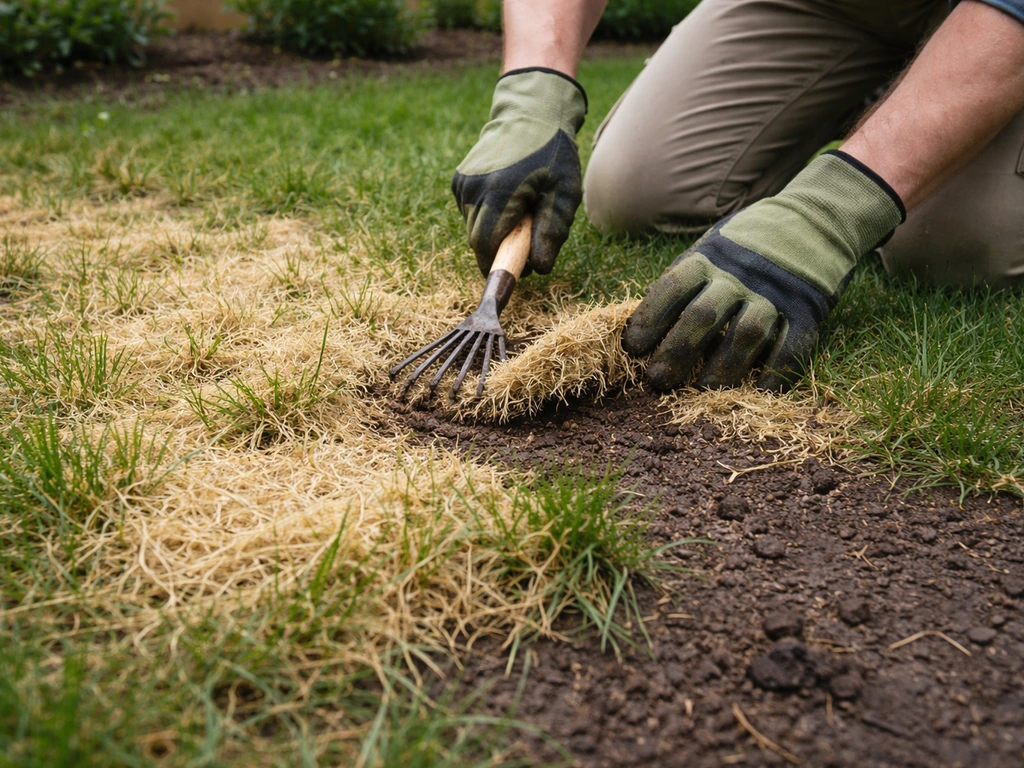
If your lawn looks yellow, thin, or stalled after a sawdust application, nitrogen starvation is almost certainly the culprit. Here is how to diagnose the specific issue and get things moving again.
Step 1: Confirm it is a nitrogen problem
Yellow or pale green grass that does not respond to watering, combined with a recent sawdust application, is the textbook sign of nitrogen tie-up. The University of New Hampshire Extension describes this as microbes 'temporarily stealing nitrogen,' and University of Maryland Extension confirms that worked-in sawdust is one of the most reliable ways to trigger it. If only some patches are yellow (the thickest sawdust spots), that confirms the pattern. A basic soil test will also reveal low available nitrogen if you want to be certain.
Step 2: Add nitrogen immediately
Apply a quick-release nitrogen fertilizer right away. A balanced starter fertilizer or straight nitrogen like ammonium sulfate works well here. Do not over-apply in one shot, because the grass roots may already be stressed. Instead, follow the MU Extension approach: apply a moderate initial dose, then follow up with two or three smaller applications at 3 to 5 week intervals over the next few months. Aim for about 1/2 pound of actual nitrogen per 1,000 square feet per application during recovery.
Step 3: Check for surface compaction or crusting
If the sawdust has formed a mat or crust on the surface, you may also have a physical barrier blocking water and air movement. Gently rake or break up any compacted sawdust layer. If the soil underneath is also compacted, consider core aeration after you have addressed the nitrogen issue. University of Minnesota Extension ties core aeration directly to recovery speed, especially when amendments have created a thatch or compaction layer.
Step 4: Water consistently and be patient
Nitrogen tie-up is temporary. Once you correct it and the sawdust starts to break down further, the microbes will eventually release the nitrogen they captured. Dead grass does not directly help grass grow, but it can be removed to reduce shading and improve access to water and nutrients. Keep the soil consistently moist to support decomposition and root activity.
This matters because snowmelt can add temporary water, but it does not replace the nutrients and nitrogen balance grass needs to grow. Most lawns showing nitrogen starvation from sawdust will start to recover within two to four weeks of the first nitrogen application if watering is adequate. If there is no improvement after six weeks and multiple nitrogen applications, consider whether overseeding or reseeding the affected area makes more sense than continuing to treat.
When to cut your losses and reseed
If sawdust was applied thickly before seeding and germination failed entirely, you may have a dormancy or seedling inhibition problem rather than just a nitrogen issue. Penn State Extension research shows that thick or poorly matched organic amendments can inhibit seedling establishment outright. In that case, the most practical fix is to rake off as much of the remaining sawdust as possible, apply compost and a starter fertilizer instead, and reseed. It is faster and less frustrating than trying to nurse stalled seeds through a compromised growing medium.
FAQ
I have a small amount of sawdust mixed into my lawn, should I remove it or just wait?
If it was only lightly worked in, you can usually correct nitrogen and keep watering consistently. If you applied thick layers, you see a crust or mat, or grass has barely grown at all for weeks, raking and breaking up the layer helps water and air reach the soil faster.
Will grass still grow if I used fresh sawdust but I already seeded or overseeded?
Fresh sawdust can stall germination because microbes can outcompete the seedling for nitrogen. If seeding already occurred, focus on finishing the nitrogen correction plan before assuming the seed is failing, and avoid burying more sawdust that can extend the nitrogen tie-up.
How can I tell if yellowing is nitrogen starvation from sawdust versus something else?
Nitrogen tie-up from sawdust usually appears as pale yellow or patchy discoloration soon after application, and it often follows the thickest sawdust areas. If watering does not change the color and new growth stays weak, nitrogen is the most likely cause, but a soil test is worth it if symptoms persist after multiple nitrogen doses.
Is there a safe amount of sawdust to topdress established grass without harming it?
Keep it very thin, around 1/4 inch or less, and do not bury it. Thinner applications reduce compaction and nitrogen demand, especially if the lawn is already dense and you are just smoothing the surface.
If aged or composted sawdust is safer, do I still need to add nitrogen?
You may need less, but it is not always zero. Composting reduces the carbon-to-nitrogen imbalance but does not guarantee a neutral result for every batch, so if the lawn is showing slow growth or pale color, adding a moderate nitrogen top-up and monitoring is a safer approach than assuming none is needed.
What nitrogen type should I use when correcting sawdust nitrogen tie-up?
Fast-acting, readily available nitrogen works best for recovery, such as ammonium sulfate or ammonium nitrate. Match the dose to the thickness you applied and split into smaller applications to reduce burn risk rather than using a single heavy application.
Can I mix sawdust with grass seed to help cover the seed?
It is risky, especially with fresh sawdust, because it can both limit seedling access to nutrients and interfere with moisture movement if it packs. If you want a covering layer, use compost instead, or use sawdust only in a very light, already-aged form and still pair it with a nitrogen correction plan.
How long does it usually take for grass to recover after nitrogen correction?
Many lawns begin improving within about 2 to 4 weeks after the first appropriate nitrogen application when watering is adequate. If you see no meaningful improvement after around 6 weeks and several follow-up nitrogen doses, reassess whether the issue is compaction, crusting, disease, or seeding failure.
Will watering too much make sawdust problems worse?
Excess water that is followed by compaction or crusting can worsen the physical barrier issue, limiting air and water penetration. The goal is steady moisture after application, then avoid heavy saturation that turns a thin layer into a packed mat, especially with fine sawdust.
Does sawdust help sand-heavy soil or droughty areas?
It can help on the surface by slowing evaporation, but fine sawdust can still form crusts and mat layers that block penetration. In sand or drought-prone spots, compost topdressing or controlled organic amendments usually improve water holding with less risk than fresh sawdust.
I put down sawdust in fall, will it still cause nitrogen tie-up in spring?
Yes, nitrogen tie-up can persist as microbes finish breaking down carbon. If you applied a thick layer late in the season, plan on monitoring color in spring and be ready to apply nitrogen early rather than assuming winter stops the process.
Should I aerate if I used sawdust and the lawn seems compacted?
If you suspect compaction or a thatch or mat barrier, core aeration speeds recovery by restoring airflow and water movement. Do aeration after you address the nitrogen issue rather than using it to replace nitrogen correction.
Next Articles
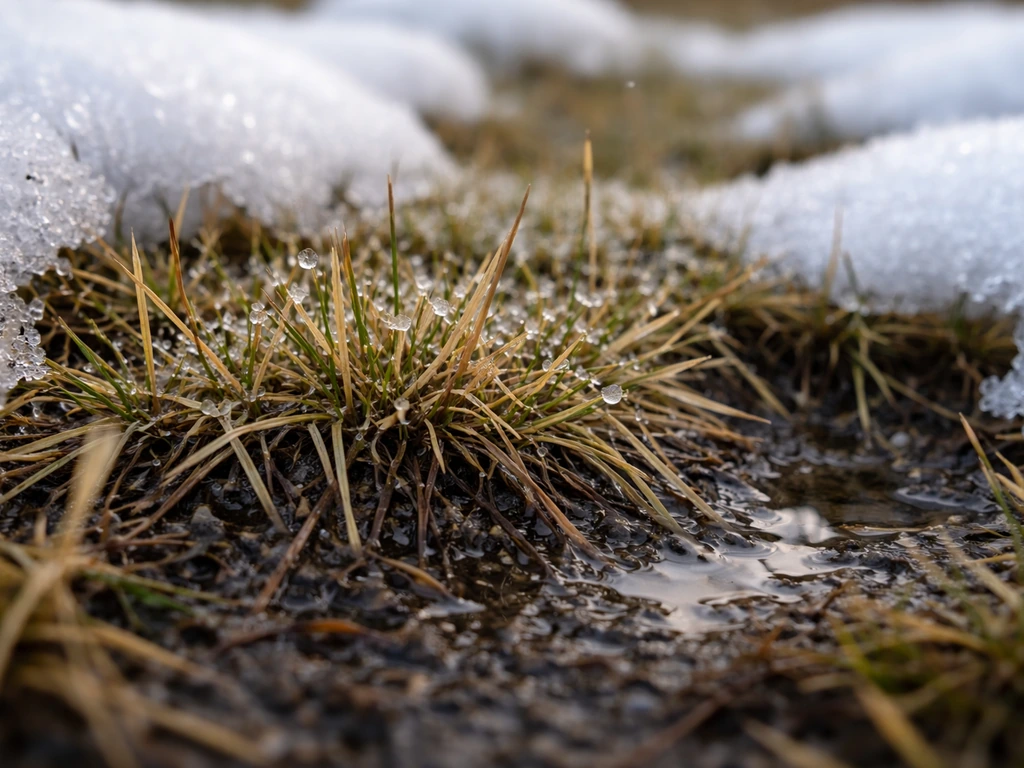
Does Snow Help Grass Grow? What to Do After Thaw
Yes, snow can protect grass by insulating crowns, but wet melt can harm. Learn what to do after thaw to recover.
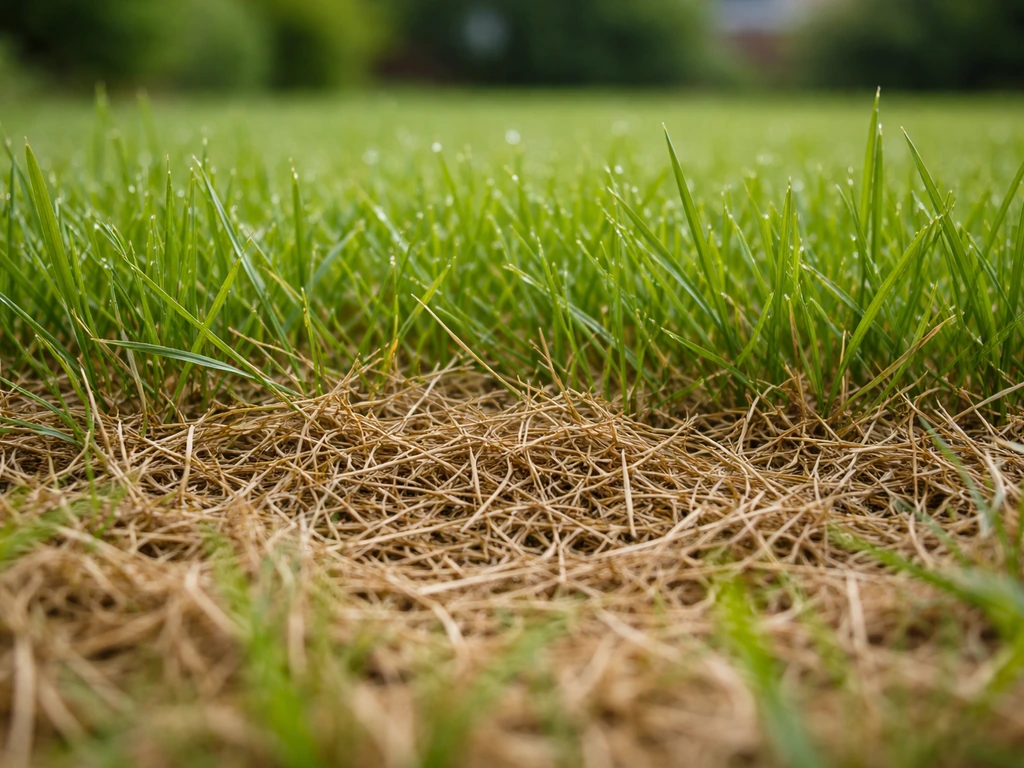
Does Dead Grass Help Grass Grow? What to Do Now
Get a clear answer on dead grass: when to rake dethatch, fix causes, and revive patches with mowing, watering, aeration.
Do Ashes Help Grass Grow? When to Use and When Not
Do ashes help grass grow? Learn when to apply wood ash safely, avoid burns, test pH, and fix failing lawns.