Yes, wood ash can help grass grow, but only under specific conditions. If your soil is acidic (pH below 6.0), you're using clean wood ash from untreated lumber, and you apply it at the right rate and time, it can act like a mild liming agent and give your lawn a modest boost. But it can just as easily hurt your grass if you use the wrong type, overdo it, or apply it to soil that's already neutral or alkaline. The short version: test your soil first, know your ash source, and treat it like a supplement, not a fix-all.
Do Ashes Help Grass Grow? When to Use and When Not
Marcus Volkmann
7 Apr 2026
Not all ash is created equal
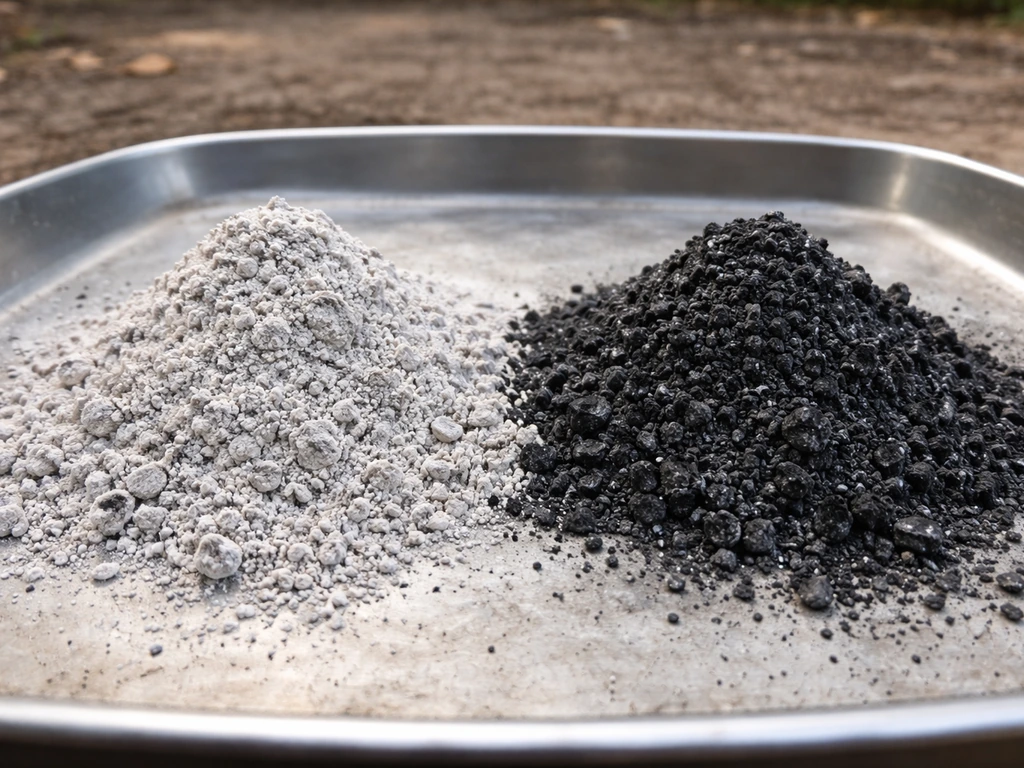
The type of ash you're spreading matters more than most people realize. Clean wood ash from a fireplace, campfire, or fire pit that burned untreated hardwood is the only type you should be considering for your lawn. That ash contains calcium, potassium (around 6% available K2O), and trace minerals that your grass can actually use. It also has an alkalizing effect that makes it work similarly to limestone when your soil is too acidic.
Coal ash is a completely different animal. It can contain heavy metals like arsenic, lead, mercury, and selenium at concentrations that are genuinely harmful to plants, soil biology, and potentially to you. Don't use it on your lawn, ever. The same goes for ash from pressure-treated or painted lumber. Pressure-treated wood historically used chromated copper arsenate, and even newer formulations contain copper-based preservatives that concentrate in the ash when burned. Spreading that on your yard is introducing contaminants you don't want anywhere near your grass or your soil.
If you're not 100% sure what was burned, don't use the ash. Unknown ash from burn piles, construction debris, or composite materials falls into the same "skip it" category. Even with clean wood ash, extension programs like NCASI and UNH Extension flag that trace heavy metals can be present in most wood ash, so knowing your source matters before you spread anything.
What ash actually does to your soil
Wood ash's primary effect on your lawn is raising soil pH. It does this fast, much faster than agricultural lime, because about 80 to 90% of its minerals are water-soluble. That's both the benefit and the risk. On one hand, if your soil is sitting at pH 5.5, bringing it up toward the 6.0 to 7.0 range that most lawn grasses prefer can genuinely improve nutrient availability and grass health. On the other hand, because ash acts so quickly, it's easy to overshoot.
Alabama Cooperative Extension has flagged that burning wood can raise soil pH above 9.0 in extreme cases, which would be catastrophic for grass. Even moderate over-application can push pH into the 7.2 to 7.4 range and higher, as seen in published soil studies measuring high-ash treatments. At those levels, nutrients like iron and manganese become less available, grass starts yellowing, and growth stalls.
Beyond pH, ash carries a significant soluble salt load. OSU Extension measures ash at roughly 22% total soluble salts. Those salts, when concentrated near roots or seedlings, pull water out of plant tissue and cause what's essentially chemical burn. This is why you should never apply ash directly to green plants or seedlings, and why timing and dilution with water are non-negotiable if you go this route. Just like you'd want to understand whether salt helps grass grow before reaching for it as a soil amendment, the same scrutiny applies to ash.
How to apply ash correctly if you decide to try it
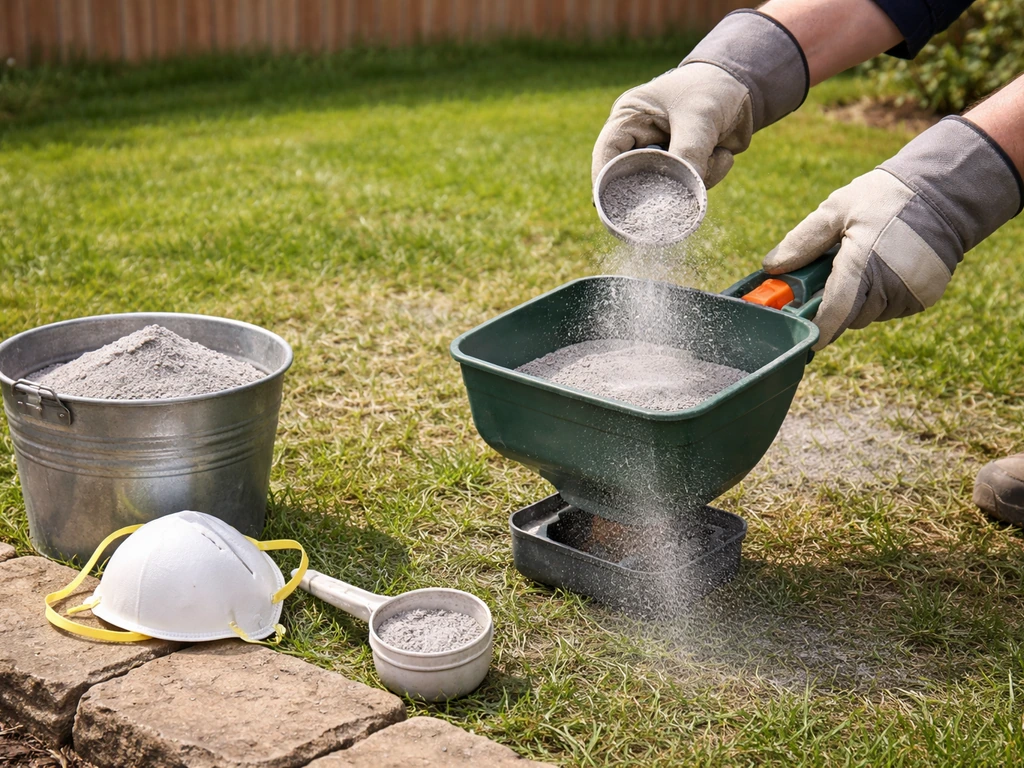
First rule: get a soil test before you apply anything. There's no responsible way to use ash without knowing your starting pH. Your county extension office can run a full test for around $10 to $20, and it'll tell you pH, nutrient levels, and sometimes soluble salts. Only apply ash if your soil pH is below 6.5, and stop well before 7.0. Iowa State Extension is clear that if your soil is already above pH 7.0, you should not be adding wood ash at all. UC ANR cautions that adding wood ash can aggravate nutrient availability and advises against using it around multiple acid-loving plant types, including blueberries.
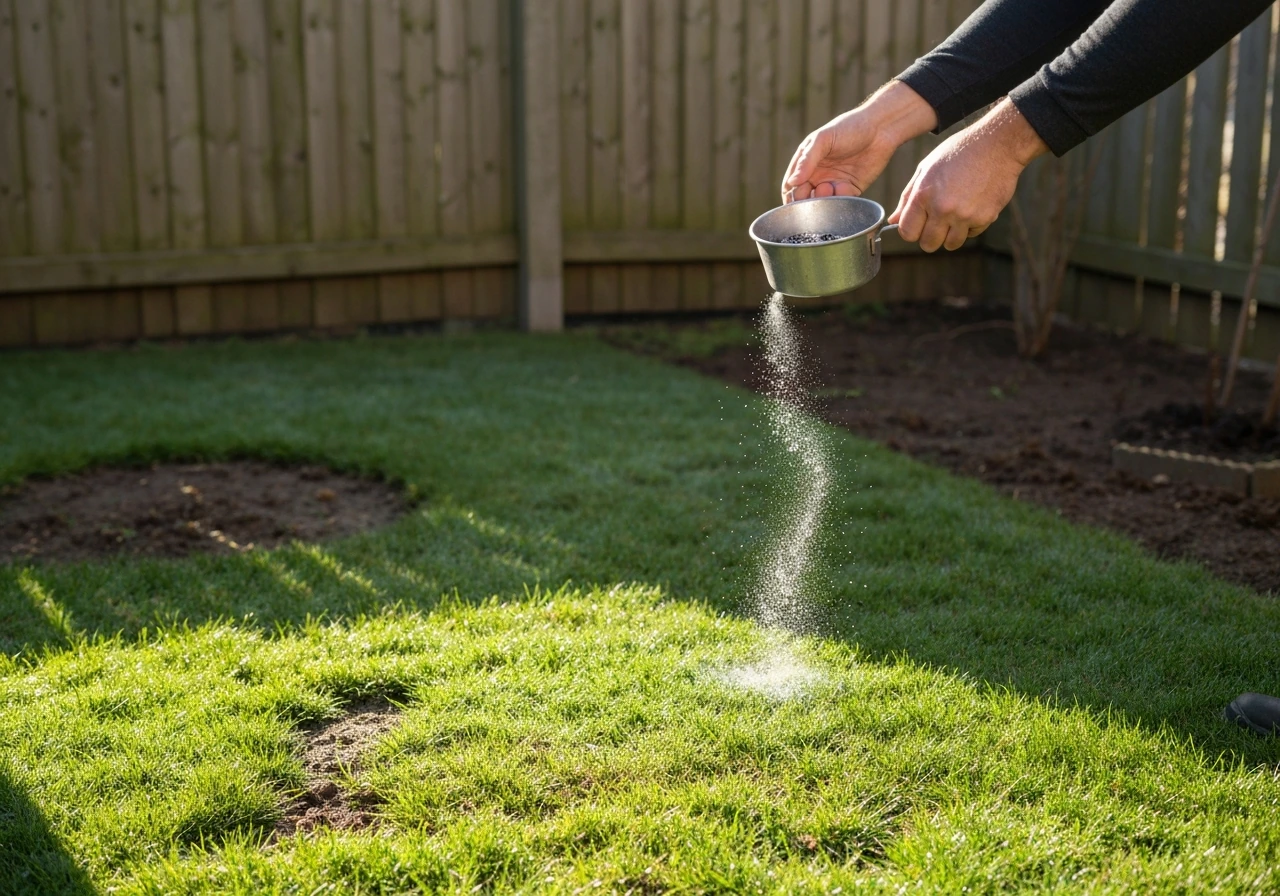
Once you've confirmed your soil can benefit, here's how to do it right. The recommended rate from multiple extension programs lands between 10 and 20 pounds of wood ash per 1,000 square feet per year. Think of it as roughly one five-gallon bucket spread over a 1,000 sq ft area. UVM Extension and Iowa State both use that bucket-per-thousand-feet benchmark as an easy mental reference. Don't exceed it and don't apply more than once a year.
- Test your soil pH first. Only apply if pH is below 6.5.
- Use clean wood ash only (hardwood, untreated, no painted or pressure-treated lumber).
- Apply in winter or early spring, well before any reseeding. UC ANR recommends applying at least 3 to 4 weeks before planting.
- Spread 10 to 20 pounds per 1,000 square feet using a drop spreader or by hand with gloves and a dust mask. Ash is caustic and fine particles irritate lungs.
- Work it lightly into the top inch of soil with a rake if the area is bare, or water it in thoroughly on established lawns.
- Water the area well after application to dilute salts and start moving the ash into the soil profile.
- Avoid applying on windy days (the dust disperses and irritates everything it touches) and never apply directly on top of seedlings or actively growing grass crowns.
- Wait at least one season before applying again, and re-test soil before doing so.
When you should skip the ash entirely
There's a longer list of "don't do it" scenarios than most people expect. If any of these apply to your situation, ash isn't your answer.
- Soil pH is already at 6.5 or above. Adding ash pushes you into alkaline territory where grass nutrient uptake suffers.
- You're overseeding or reseeding bare patches. The high salt content in ash can prevent germination. This is a hard stop.
- You're working with new sod or plugs. Same salt/pH burn risk applies during establishment.
- You're using ash from treated wood, painted wood, coal, or any unknown burn pile. Contaminants including arsenic and heavy metals can accumulate in your soil.
- Your soil already has high salt levels (common in arid regions or near roads treated with de-icing salt). Adding more soluble salts worsens the problem.
- You live in an area with naturally alkaline or clay-heavy soils. Many Midwestern and Western soils run above neutral pH already, making ash the last thing you need.
- Children or pets regularly use the area. Fresh ash is caustic (pH can exceed 12 in solution) and fine particles are a respiratory and contact irritant.
It's also worth comparing ash to something like whether sawdust helps grass grow. Sawdust has the opposite pH effect, pulling nitrogen from the soil as it breaks down, but at least it doesn't carry the burn or contamination risks of ash. Both are byproducts people have on hand and want to put to use, and both require understanding what they actually do before spreading them around.
What actually works better for most grass-growth problems
For most homeowners struggling to grow grass, ash isn't the answer because pH isn't usually their main problem. The more common culprits are compaction, poor drainage, low organic matter, shade, or just the wrong grass variety for the conditions. Here's what actually moves the needle for each of those.
| Problem | Better Fix Than Ash | Notes |
|---|---|---|
| Acidic soil (pH below 6.0) | Agricultural lime (calcitic or dolomitic) | More controlled, slower-acting, no salt risk. Dolomitic adds magnesium too. |
| Alkaline soil (pH above 7.5) | Elemental sulfur | Lowers pH over time. Test again after 2 to 3 months. |
| Low organic matter / poor structure | Compost (2 to 3 inches worked in) | Improves drainage, water retention, and feeds soil biology. Hard to overdo. |
| Bare patches that won't fill in | Overseed with appropriate variety + starter fertilizer | Match seed to sun/shade conditions and water consistently. |
| Sandy soil that won't hold moisture | Compost + topdressing | Adds cation exchange capacity so nutrients and water stay available to roots. |
| Heavy shade under trees | Shade-tolerant grass mix or groundcover alternative | Even the best soil amendments won't fix inadequate light. |
| Compacted soil | Core aeration + topdressing with compost | Addresses root-zone oxygen and drainage at the source. |
People sometimes wonder if unconventional materials like ash can substitute for proper soil prep. But I've seen more lawns hurt by well-meaning amendments than by neglect. If you're curious how other common materials stack up, you might also look at whether spreading hay helps grow grass, which is a better-supported method for protecting seed during establishment, especially on slopes or bare areas.
If your grass is dying back in large patches rather than just thin or slow-growing, whether dead grass helps new grass grow is worth understanding, since thatch and decomposing material have their own soil dynamics. And if you're dealing with winter dormancy and wondering what's going on under the surface, whether snow helps grass grow is actually a more interesting question than it sounds, with some real implications for spring green-up and soil moisture.
Testing your soil and knowing when it worked
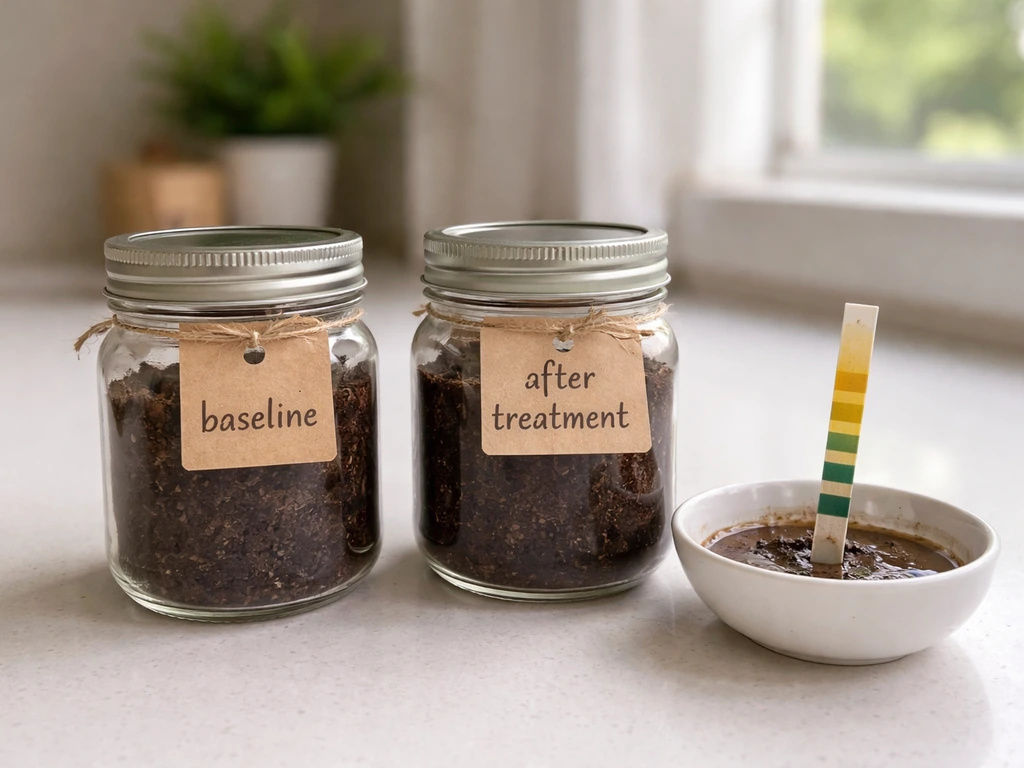
If you've already applied ash, or you're planning to, soil testing is the only way to know whether it's helping or creating a new problem. Don't guess based on how your grass looks. By the time visible damage shows up from high pH or salt burn, you're already behind.
For a baseline test before applying ash, use your county extension office's lab service. They measure pH, macro-nutrients (N, P, K), and often offer optional tests for soluble salts and heavy metals. K-State Extension notes that soil tests can include parameters like salt and alkali levels, lead, arsenic, cadmium, and chromium, which becomes especially relevant if you're unsure of your ash source. A basic pH and nutrient panel usually costs $10 to $25 and gives you what you need.
For home testing between lab tests, a quality pH meter or liquid test kit from a garden center gives you a directional reading. Cornell Cooperative Extension recommends sampling at the same time of year each time and pulling from multiple spots in the lawn at 2 to 4 inch depth to get a representative average. Don't just test one corner.
After applying ash, wait at least 6 to 8 weeks before re-testing pH. The alkalizing effect doesn't peak immediately, and re-testing too soon gives you a misleading picture. If pH has moved from 5.8 up to 6.2 to 6.5, that's a success. If it's climbed to 7.0 or above, stop applying ash and consider adding elemental sulfur to start correcting in the other direction. You should also check for signs of salt injury: yellowing or browning at grass tips, uneven green patches, or stunted growth in areas where ash was heaviest.
If grass still isn't growing well 4 to 6 weeks after ash application and pH looks fine, the problem almost certainly isn't pH. That's when you dig deeper into compaction, drainage, seed viability, or shade. An ash application only solves one narrow problem. If it didn't help, that problem probably wasn't yours to begin with, and you should shift your focus to physical soil improvement or reseeding with a better-matched variety.
One last note: if you're trying to establish new grass in an area where you've applied ash, treat that area the same way you'd treat a seeded lawn, with patience and proper watering. Whether grass will actually grow in ash-heavy areas depends heavily on whether the soil has been properly conditioned first, salts have been watered down, and the pH is back in an acceptable range before the seed goes down.
FAQ
Can I spread wood ashes on the lawn and then seed right away?
Yes, but only if you first confirm the ash is safe and the soil pH is in the right window. Because wood ash raises pH quickly and adds soluble salts, apply it only to established turf, then wait at least 6 to 8 weeks before seeding so you can recheck pH and reduce salt risk through normal watering.
How will I know if I used too much ash before it damages my grass?
Don’t rely on visual cues like greener patches to decide you got the rate right. Yellowing, patchy growth, or tip burn can show up after salts and pH shift, often after the alkalizing effect has already progressed. The practical approach is soil test first, apply within the annual rate range, then re-test after 6 to 8 weeks.
What if my soil test already shows my pH is near neutral?
Use caution because ash effectiveness depends on the chemistry of your soil, not just the lawn condition. If your pH is above about 7.0, additional wood ash can push it further and reduce availability of iron and manganese, which can cause chlorosis even if nutrients look “okay.”
If my pH rises after ash, what should I do next?
Yes, but only as a targeted response if pH is already high. If your re-test after applying ash shows pH at or above 7.0, stop using ash and correct the direction using elemental sulfur (then re-test on schedule). Adding more ash in that situation usually worsens nutrient lockout rather than restoring growth.
Is there an environmental or runoff risk when using wood ash?
Avoid spreading ash anywhere runoff can enter storm drains or nearby waterways, especially after rain. The soluble salts and fine particles can move with water, creating localized damage off target. A safer practice is to apply on a calm, dry day, keep it off hard surfaces, and water the lawn lightly afterward only if the label or your local guidance supports it.
My grass is thinning, will ash fix it?
If grass is stressed, don’t “patch it” with ash unless a soil test shows pH is the limiting factor. Ash does not fix common causes like compaction, poor drainage, low organic matter, shade, or dead or dying turf from pests or disease. In those cases, you will often get better results from aeration, improving drainage, overseeding with the right variety, or addressing irrigation.
Can I use a home pH test instead of a lab soil test before applying ash?
You can use a directional home pH meter or liquid kit for trend monitoring, but it is not a replacement for a lab test when you are about to apply ash. Home tests can be thrown off by soil texture and measurement technique, so use them only to guide timing and decide whether you need the lab to confirm.
Can I split the ash application into multiple smaller doses during the year?
Yes, but do it conservatively. Since the primary benefit is pH adjustment and the risk is salts plus overshooting, limit the total yearly amount even if you prefer smaller applications. Splitting into multiple small treatments can still raise pH too fast, so follow the annual rate guidance and keep track by square footage.
What’s the safest schedule for reapplying wood ash?
As a rule, more frequent application increases the odds of overshooting pH and salt stress. The article’s safe practice is one application per year at the recommended rate range, then re-test. If conditions change, rely on soil testing rather than increasing frequency.
Next Articles
Can You Grow Grass Over Gravel? How to Do It Right
Learn when you can grow grass over gravel and follow a step-by-step method for soil depth, drainage, seeding or sod, and
Do Wood Chips Help Grass Grow? When They Work and When Not
Learn when wood chips help grass grow, when they steal nitrogen, and step-by-step how much to apply and seed options.

Will Potting Soil Help Grass Grow? What Works and What Fails
When potting soil helps grass grow, when it fails, and how to prep, apply, seed, water, and troubleshoot bare spots.