
Wood chips can help grass grow, but only under very specific conditions. Aged or composted chips applied in a thin layer (half an inch to one inch) can improve soil moisture retention, moderate soil temperature, and slowly add organic matter that benefits grass roots over time. Fresh chips spread thickly over existing grass or bare seed? That will kill or stunt your lawn almost every time. The difference between a helpful mulch and a grass-smothering mistake comes down to chip age, layer thickness, and where exactly you're putting them.
Do Wood Chips Help Grass Grow? When They Work and When Not
Marcus Volkmann
14 Jun 2026
How wood chips actually affect grass growth (the real pros and cons)
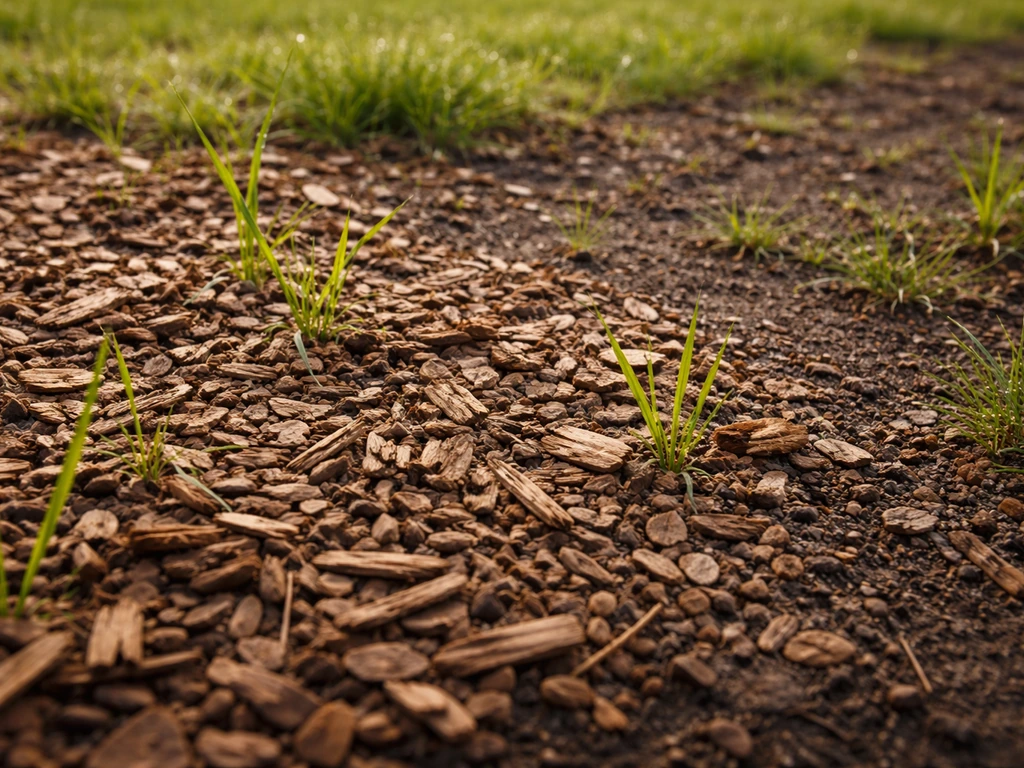
When used correctly, wood chips do a few genuinely useful things for a lawn area. They hold moisture in the top layer of soil, which matters enormously during summer dry spells. blank" rel="noopener noreferrer">MSU Extension documented this in real terms: a 3-inch layer of wood-chip mulch dropped midday soil temperature by 18°F. That's not a rounding error. Cooler, moister soil means grass roots stay active longer and seedlings don't fry before they establish. SDSU Extension also found that soil under a thick wood-chip layer showed meaningfully higher moisture availability during drought, which is exactly the condition that kills new grass.
But here's what most articles skip over: wood chips actively pull nitrogen out of the soil as they decompose. Soil microbes breaking down all that carbon-heavy wood material need nitrogen to do their job, and they take it from the soil before your grass roots can. This nitrogen draw-down is the number-one reason fresh wood chips can stunt or yellow grass instead of helping it. It's not permanent, but it's real, and if you're seeding or trying to green up patchy turf, it will set you back weeks or months.
There's also a physical problem: thick wood chips block light and prevent seed-to-soil contact. Grass seed needs to touch soil to germinate, not sit on top of a pile of wood. A heavy layer acts more like a weed-suppressing ground cover than a lawn aid, which might be exactly what you want in a pathway or under a tree, but not in an area you're trying to grow turf.
| Factor | Benefit | Risk |
|---|---|---|
| Moisture retention | Keeps soil moist between waterings | Can encourage fungal disease if too wet |
| Temperature buffering | Reduces soil temp swings by up to 18°F | Slows soil warming in spring if too thick |
| Organic matter | Breaks down into humus over 1-3 years | Nitrogen drawdown during active decomposition |
| Weed suppression | 4-inch layer suppresses most weeds well | Also suppresses grass seed and new growth |
| Soil structure | Improves drainage and biology long-term | Short-term compaction if chips mat together |
Fresh vs aged wood chips: this difference matters more than anything else
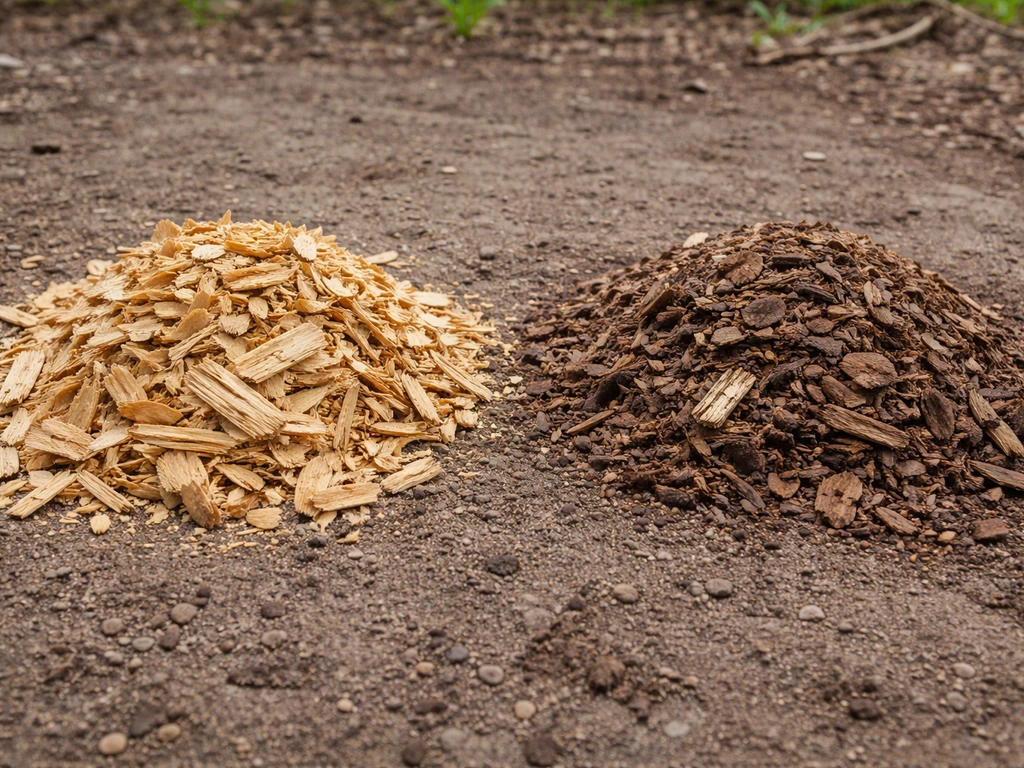
Fresh wood chips are the ones you'd get straight from a tree trimmer or a chipper. They're high in carbon, often still moist, and actively decomposing. Spreading these directly over grass or seed is asking for trouble. The nitrogen drawdown is at its worst with fresh chips, the material can mat together and block air circulation, and you may introduce fungal issues if the pile heats up and then cools in contact with your turf.
Aged wood chips are a different story. Chips that have been sitting in a pile for at least six months (and ideally 12 to 18 months) have already burned through most of their active decomposition phase. The nitrogen drawdown is largely finished, and the material is starting to look more like rough compost. Fully composted wood chips, sometimes sold as wood compost or aged bark mulch, have essentially completed that process and are close to a neutral soil amendment.
These are safe to use around grass, and in thin applications, they genuinely improve soil structure. If you're comparing this approach to something like peat moss or traditional mulch, composted chips offer similar moisture-retention benefits with the added bonus of being free or very cheap if you source them locally. If you are looking for an amendment specifically to help grass establish, peat moss is often discussed as an option for improving moisture and seedbed conditions.
A simple rule of thumb: if the chips still smell strongly of fresh wood or sap, they're too fresh for lawn use. If they smell earthy and look partially broken down, you're in business.
Using wood chips on existing grass vs starting from seed
On established grass
If you have established grass and you want to top-dress with aged chips, keep the layer very thin, no more than half an inch to one inch. This lets the chips break down and filter into the soil without smothering the turf. Thicker than that and you're blocking sunlight from the grass blades and creating conditions that favor fungi and disease over turf growth. Think of it less like mulching a garden bed and more like a light top-dressing, similar to how you'd use compost to improve a lawn without burying it.
On bare soil or starting from seed
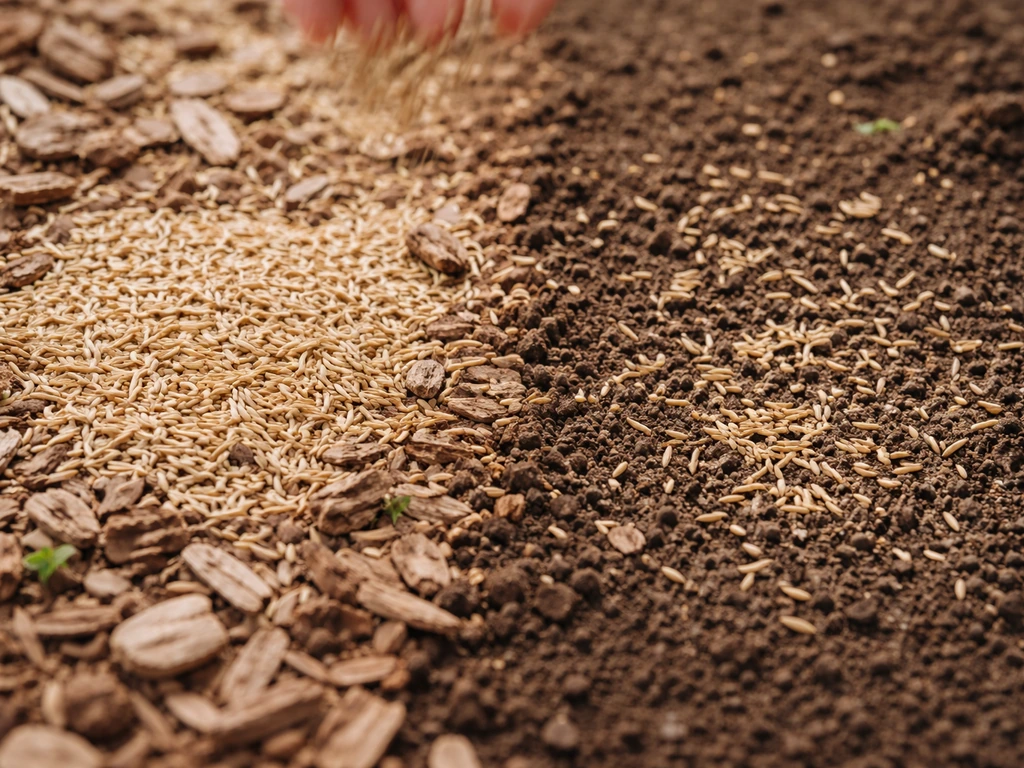
This is where most people go wrong. Grass seed needs soil contact to germinate. If you put down a layer of wood chips and then scatter seed on top, the seed won't touch soil and most of it won't sprout. If you mix chips into the top inch of soil, you create an uneven seedbed and trigger nitrogen drawdown right at germination time when seedlings are most vulnerable.
The correct approach for seeding over a problem area is to improve the soil first (see the section below on soil prep), then seed directly onto that improved soil with nothing more than a very light, straw-based erosion control cover if needed. Will potting soil help grass grow? It can support germination and early roots, but it needs the right seeding method and real soil contact. Wood chips come later, once the turf is established, if at all.
Sod is more forgiving than seed, but not by much. Sod laid over a bed of chips won't root well because the chips compress and shift, creating an unstable, low-nutrient layer between the sod and the actual soil. Always remove chips, add proper topsoil or compost, and then sod.
Best-practice application: thickness, placement, and soil prep
Colorado State University Extension pegs 4 inches as the effective depth for weed suppression in landscape beds. That's useful to know, because it means anything under 4 inches in a bare-soil area will let weeds through while still causing nitrogen problems for your grass. The practical takeaway is that wood chips don't exist in a sweet spot for active lawn areas. They're either thick enough to suppress weeds (and grass) or thin enough to allow grass growth (but not effective at suppression).
Here's how to apply them correctly when you're using them adjacent to or lightly over a lawn area:
- Use only aged or composted chips. If sourcing fresh chips, pile them and wait at least 6-12 months before use near turf.
- Apply no more than 1 inch thickness over established grass areas. Keep chips pulled back a few inches from the base of grass crowns.
- For border areas or pathways adjacent to lawn, you can go up to 3-4 inches but keep a clear physical edge (a metal or plastic border works well) to prevent chips from migrating onto the turf.
- Before applying chips anywhere you want grass to grow, loosen the top 2-3 inches of soil and work in compost or aged manure to improve structure and add organic matter.
- Avoid applying wood chips in areas with poor drainage. They'll hold excess moisture and encourage fungal disease instead of helping the grass.
- Never pile chips against grass crowns or around the base of newly seeded areas. Leave a buffer zone.
Managing nitrogen when wood chips are in the picture
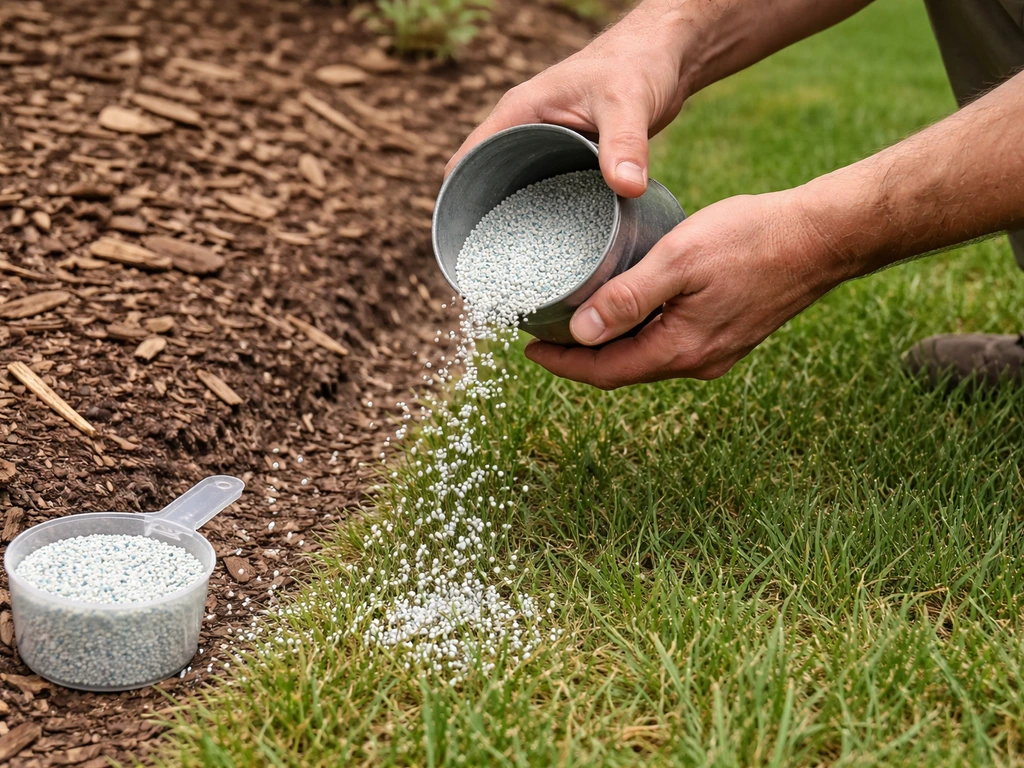
Nitrogen management is the piece most people skip and then wonder why their grass looks yellow. If you've spread fresh or partially aged chips near your lawn, you need to compensate for the nitrogen that's being pulled into the decomposition process. The good news is this isn't complicated.
For established lawns near wood chip areas, apply a nitrogen-heavy fertilizer (look for a high first number on the NPK label, something like 30-0-4 or a slow-release 24-0-11) in spring and again in early fall. This replaces what the decomposing chips are borrowing from your soil. If you prefer organic approaches, aged compost or well-rotted manure worked into the soil before seeding will buffer the nitrogen drawdown. Rabbit manure, for example, is a high-nitrogen organic option that some gardeners use specifically to counteract this effect.
If you're seeding into an area that previously had wood chips, test the soil first if you can. A simple NPK test kit from a hardware store will tell you if nitrogen is genuinely depleted. If it is, work in a balanced starter fertilizer at seeding time and follow up with a nitrogen application 4-6 weeks after germination. Don't skip that second application: new grass is still building root systems and can't compete well for whatever limited nitrogen is available while chips are still breaking down.
One thing that helps: if you're layering thin aged chips over an established lawn as a soil amendment, use a slow-release nitrogen fertilizer at the same time. This feeds the decomposition process and your grass simultaneously, so you don't end up in a competition between microbes and roots.
When wood chips won't work: alternatives for shade, sand, and tough conditions
Honestly, there are spots in almost every yard where wood chips are the wrong tool and grass isn't the right answer either. Here's how to read those situations:
Heavy shade under trees
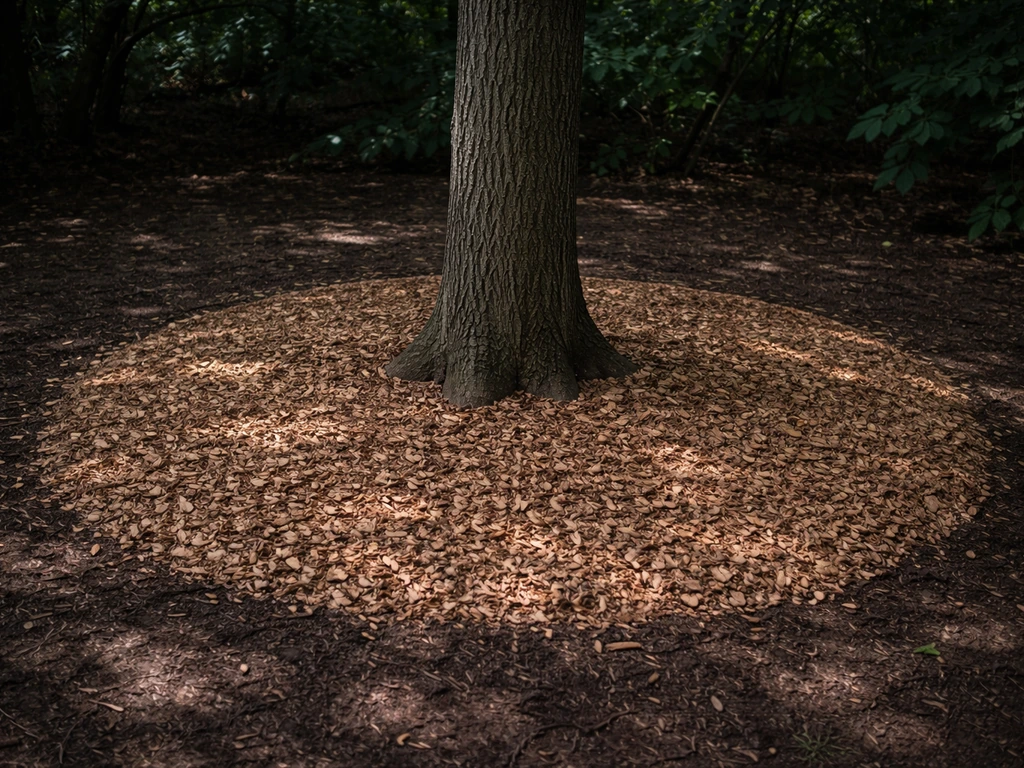
Under a dense tree canopy, wood chips are often better used as a permanent ground cover (the 'wood chip mulch ring' approach that OSU Extension recommends for trees and shrubs) rather than as a grass aid. OSU Extension similarly frames wood chips as a mulch ring approach for trees and shrubs, not as a turf establishment substitute rather than as a grass aid.
If you want turf under a tree, the chips aren't your problem: the shade is. Try a shade-tolerant grass variety first (fine fescues are the gold standard for shade), improve soil drainage, and keep the canopy thinned. If grass still won't establish after two honest attempts, switch to a shade-tolerant groundcover like pachysandra or sweet woodruff. Trying to force grass under 80% shade coverage with wood chip amendments is fighting physics.
Sandy or compacted soil
Sandy soil drains so fast that even the moisture-retention benefits of wood chips are largely wasted, because the chips dry out from the top while water still escapes rapidly from below. For sandy lawns, the better amendment is compost worked directly into the top 4-6 inches of soil, not surface-applied chips. Compacted soil has the opposite problem: it doesn't drain well enough, and adding chips on top makes pooling and anaerobic conditions worse. Core aeration followed by compost top-dressing is a much better fix for compacted areas than any surface mulch.
Bare soil weed suppression
If your goal is to suppress weeds in a non-grass area while you figure out your next move, wood chips at 4 inches deep are excellent. Just know you're also suppressing any grass you might want to grow there later. Use them as a temporary or permanent groundcover in non-turf zones, not as a prep step for seeding.
Patchy or thin turf in problem areas
If you're trying to fill in thin spots, wood chips won't help directly. Pulling weeds first, aerating, adding compost or a quality topsoil, and then overseeding is a much more reliable repair strategy. Pulling weeds helps grass by removing competition and opening up space for new growth, but it does not replace proper soil prep and correct chip use.
Some gardeners have had luck using leaves as a light protective cover over newly seeded patches, similar to how you'd use straw. That same idea can help if you are wondering do leaves help grass grow, since thin leaf cover can protect new seed while still allowing light and airflow leaves as a protective cover. Wood chips are too heavy and chunky for this role.
Troubleshooting timeline: how to tell if your plan is working
If you've applied aged chips lightly over an existing lawn or adjacent to a newly seeded area, here's what a healthy timeline looks like and what warning signs to watch for:
| Timeframe | What you should see | Warning signs to act on |
|---|---|---|
| Week 1-2 | Soil under chips stays moist, no visible yellowing of adjacent grass | Grass yellowing or browning near chip edges — add nitrogen fertilizer immediately |
| Week 3-6 (seeded areas) | Germination in seeded zones, thin green fuzz visible | No germination — check seed-to-soil contact, chip layer may be too thick |
| Month 2-3 | Established seedlings thickening, chips beginning to break down visibly | Fungal patches (gray or white fuzz on chips or grass) — improve airflow, reduce chip depth |
| Month 4-6 | Chips partially composted, lawn integrating well, improved soil texture | Persistent thin or yellow turf — test soil nitrogen, consider supplemental fertilizer |
| Year 1+ | Organic matter increase noticeable, improved drainage or moisture retention | Turf still struggling — evaluate shade, drainage, or soil pH as the real underlying issue |
The most common failure mode is applying too much too fast. If your grass is yellowing after chip application, don't panic: a quick dose of nitrogen fertilizer usually reverses it within two weeks. Adding nitrogen can also help grass recover from stress, but raking moss is usually a better step only if the moss is crowding out healthy turf. If you're seeing no germination in seeded areas, gently pull back the chips to check whether the seed is sitting on wood instead of soil. These are fixable problems.
If after a full growing season the grass still looks worse than before you added chips, stop adding chips and reassess the fundamentals: soil pH, drainage, shade level, and compaction. Wood chips are a supporting amendment, not a fix for structural lawn problems. In those cases, addressing the root cause (literally) will get you further than any surface material.
FAQ
How long should I wait after spreading aged or composted wood chips before I seed or lay sod?
If the chips are truly aged (at least 6 months) and applied lightly, you can seed right away only if you ensure seed has direct contact with soil. For sod, wait until all chips are removed from the footprint area, then add topsoil or compost so roots contact stable soil, not a layer of chips that can shift.
Can I use fresh wood chips if I add nitrogen fertilizer?
You can sometimes reduce yellowing by adding a nitrogen-rich fertilizer, but fresh chips are still risky because the nitrogen drawdown happens alongside physical issues (matting, blocked seed-soil contact, reduced airflow). If you care about successful germination or quick greening, age the chips first rather than relying only on fertilizer.
What nitrogen rate should I use when chips are pulling nitrogen from the soil?
Use the fertilizer label to calculate a real application rate, and target higher-nitrogen products as described in the article. A practical decision aid: if you see widespread yellowing within 1 to 2 weeks of chip application, plan a follow-up nitrogen feeding rather than increasing chip thickness again.
Will wood chips change my soil pH or make it too acidic for grass?
Composted or aged chips are closer to a neutral amendment, so they are less likely to cause major pH swings. Fresh chips can vary by source and decomposition stage. If your lawn struggles already, test pH before applying and re-test after you’ve had time for decomposition.
Do wood chips attract termites or pests to my lawn?
Any wood-based mulch can create habitat for some insects, but the larger concern for lawns is keeping chips off the areas you want grass to root and preventing thick, continuously wet layers. If you notice persistent soft spots or insect activity near foundations, keep mulch away from structures and consider switching to a different amendment.
Can I mix wood chips into the topsoil to improve the lawn, instead of top-dressing?
Mixing can backfire when the chips are not well aged because decomposition can lock up nitrogen right where seedlings are developing. If you do incorporate chips, keep them well aged, mix only into a limited depth, and be ready to use an appropriate starter fertilizer and a follow-up nitrogen application.
Are wood chips safe to use on a lawn that already has moss or lichens?
Thin-aged chips can sometimes help by improving moisture stability, but thick layers tend to reduce light and can worsen moss-dominant conditions. If moss is crowding turf, focus on correcting the cause first, then use chips only as a light top-dressing where grass can still grow through.
Will wood chips stop weeds in my yard if I still want grass underneath?
They can suppress weeds only when applied thick enough, and that same thickness also smothers grass or seed. If weed control while maintaining turf is the goal, use non-mulch approaches (spot removal, aeration, overseeding) and reserve chips for narrow pathways or clearly non-turf zones.
What’s the best way to fix a seeded area where chips got put down too thick?
Gently pull back or remove the chips so seed touches soil, then re-seed on the improved surface. If you can’t remove all chips, at minimum loosen the top layer where seed sits, apply a starter fertilizer at seeding, and plan a second nitrogen feeding 4 to 6 weeks after germination.
Can I use shredded bark or wood chips interchangeably for lawns?
Not always. Bark tends to be more uniform and often more aged when sold as mulch, so it is less likely to cause severe nitrogen drawdown than truly fresh chips. Still, the same rules apply: only thin, well-aged material should touch an area you want grass to establish.
Next Articles

Will Potting Soil Help Grass Grow? What Works and What Fails
When potting soil helps grass grow, when it fails, and how to prep, apply, seed, water, and troubleshoot bare spots.
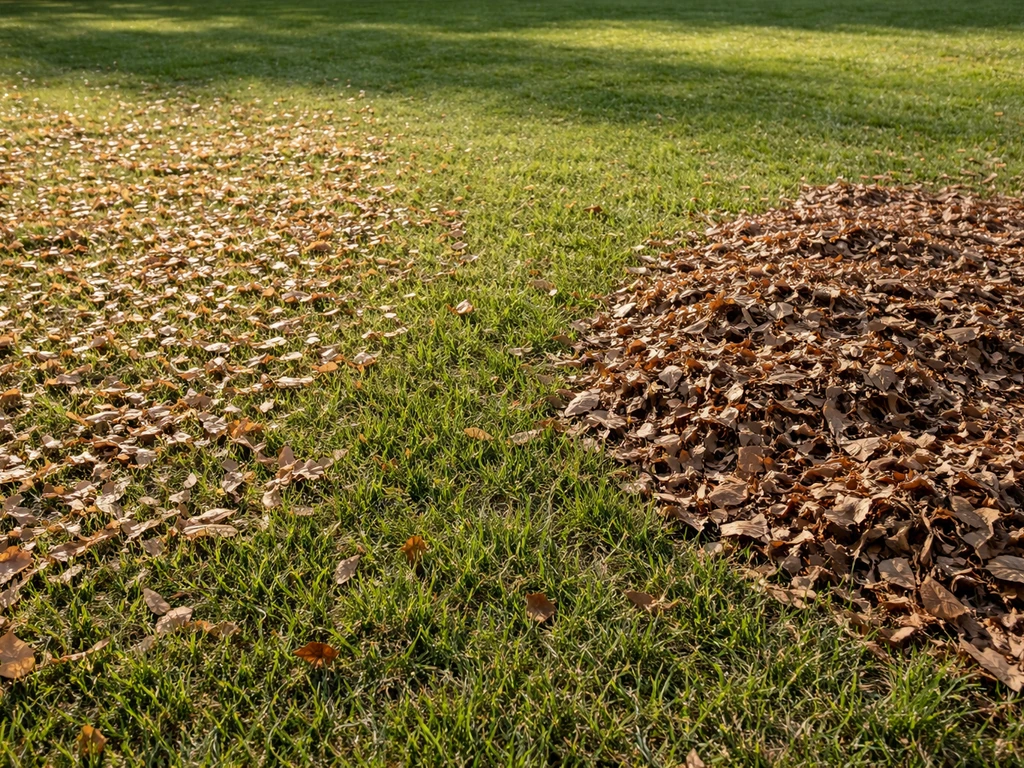
Do Leaves Help Grass Grow Yes When to Remove Them
Do leaves help grass grow? Learn when they help or harm, plus how thick to manage, remove, shred, and fix bare spots.
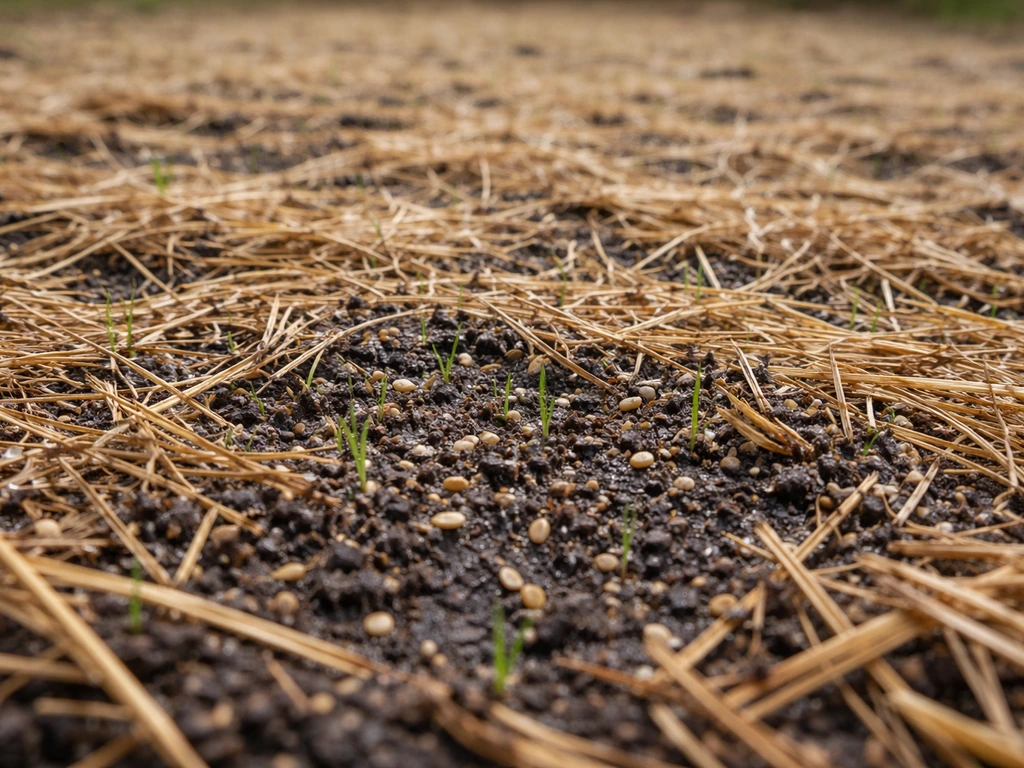
Does Mulch Help Grass Grow Faster? Benefits and How-To
Learn if mulch helps grass grow, which types work, how thick to apply, and when it speeds or stunts growth.