Bermuda grass will grow under trees, but only when it receives at least 6 hours of direct sun per day or a Daily Light Integral (DLI) above roughly 26 mol·m⁻²·d⁻¹. Below that threshold, it thins out, goes dormant, or simply dies off entirely. In moderate shade around 30%, shade-tolerant cultivars like TifGrand and Celebration can hold on, but under dense canopies from redwoods, large oaks, or black walnuts, your odds drop fast. If your tree is blocking most of the sky, you're likely looking at a mulch ring or groundcover rather than a Bermuda lawn.
Will Bermuda Grass Grow Under Trees? Shade, Roots & Fixes
Marcus Volkmann
7 Aug 2026
How Bermuda grass actually uses light
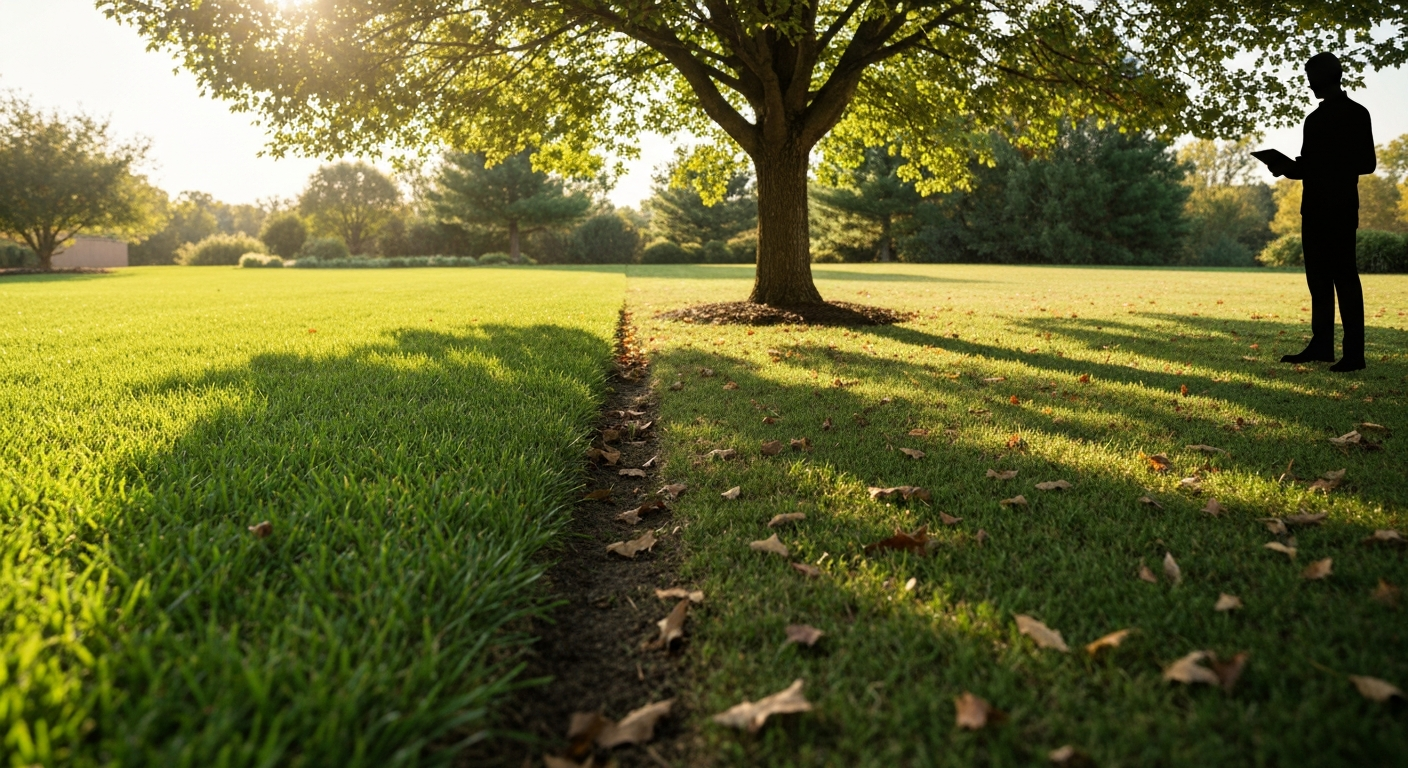
Bermuda is a full-sun grass. It evolved in open, high-intensity environments and its photosynthetic machinery is built to handle it. Turf researchers measure light availability using Daily Light Integral, which captures how much photosynthetically active radiation the grass collects over an entire day. A DLI of 26 mol·m⁻²·d⁻¹ is roughly the floor for non-overseeded bermudagrass to persist in field trials. For reference, a wide-open lawn on a summer day in the South might see DLI values of 45 to 60 mol·m⁻²·d⁻¹. Under a moderate tree canopy, you might be down to 15 to 20, and under a dense evergreen canopy, it can drop below 10.
You can estimate DLI yourself if you have a quantum sensor (PAR meter) or even a good smartphone light meter app. The formula is straightforward: take your average PPFD reading in micromoles per square meter per second and multiply it by 0.0864. A reading of 300 µmol·m⁻²·s⁻¹ on average through the day gives you a DLI of about 25.9, which is right at the edge of acceptable for Bermuda. Anything consistently below 200 µmol·m⁻²·s⁻¹ average through the photoperiod and you're going to struggle no matter what cultivar you plant.
Beyond raw light quantity, shade changes light quality too. Under a canopy, the ratio of far-red to red light shifts, which affects how Bermuda's photoreceptors trigger growth responses. This is partly why shaded Bermuda stretches out, produces weak lateral shoots, and becomes thin and easily damaged. It's not just starving for photons. It's also getting a physiological signal that it's being outcompeted.
The real obstacles under trees (shade is just one of them)
Shade gets most of the blame, but after working with dozens of problem lawn spots over the years, I'd say root competition is just as damaging and a lot less obvious. Most people don't realize that a tree's fine absorptive roots are concentrated in the top 2 to 12 inches of soil, which is exactly where turfgrass roots live. Those lateral roots commonly extend to the dripline and often 1.5 to 3 times beyond it. So even if the outer edge of your canopy only shades half the lawn, the roots may be robbing moisture and nutrients from a much larger area.
Shade intensity
Light under a canopy isn't uniform. The edges of the shade zone might see enough sun for marginal Bermuda survival, while the area directly under the trunk might see almost none. A 30% canopy shade is roughly manageable for the toughest Bermuda cultivars at normal mowing heights. A forest experiment removing eastern hemlock reported a mean ~27.5% increase in global site factor (GSF) after canopy removal, illustrating how canopy thinning can substantially increase understory light A forest experiment removing eastern hemlock reported a mean ~27.5% increase in global site factor (GSF) after canopy removal, illustrating how canopy thinning can substantially increase understory light.. At 50% or more, all Bermuda cultivars underperform significantly, and even the best shade-tolerant warm-season grasses start to fail.
Root competition
Tree roots and turfgrass roots are competing for the same water, oxygen, and nutrients in the same soil layer. This competition is most intense during dry periods and especially in compacted urban soils where rooting depth is already restricted. Bermuda under trees will often show drought stress symptoms well before open-lawn areas do, even on the same irrigation schedule, because the tree is taking a disproportionate share of available water.
Soil compaction
Foot traffic, surface root mats, and years of compressed organic matter all compact the soil under trees. Penetrometer readings above 2.0 to 2.5 MPa (measured near field capacity) restrict root growth for both trees and turf. Bulk density above about 1.60 g·cm⁻³ creates similar problems. Hollow-tine core aeration helps reduce surface compaction and thatch, and it's a tool worth using, but it won't fix severe subsoil compaction caused by large surface roots.
Moisture and leaf litter
Leaf litter is underestimated. A thick mat of leaves blocks light, traps moisture against the crown, and creates anaerobic conditions that invite disease. Decomposing leaves also alter soil pH and organic matter content. Interestingly, shade actually reduces water use under a canopy by roughly 20% at 30% shade, but that benefit is often more than offset by the tree roots drinking deeply. You'll still need to adjust your irrigation timing and depth to push water down into the root zone rather than just wetting the surface.
How the tree species changes everything
Not all trees are equally hard on grass. The combination of canopy density, root architecture, and any chemical effects in the soil determines how realistic a Bermuda planting is. Here's a quick breakdown of common problem trees.
| Tree Type | Canopy Shade Intensity | Root Competition Zone | Special Concerns | Bermuda Viability |
|---|---|---|---|---|
| Large Oak | Heavy (often 60–80%) | Extends well beyond dripline, shallow | Dense leaf litter, pH changes | Very difficult to impossible |
| Coast Redwood | Heavy, persistent (evergreen) | Wide, shallow lateral system | Deep shade year-round | Not realistic |
| Crepe Myrtle | Light to moderate (deciduous) | Shallower, more contained | Less persistent shade in winter | Possible with right cultivar |
| Black Walnut | Moderate to heavy | Extends well beyond canopy | Juglone toxicity to sensitive plants | Difficult, juglone adds extra risk |
| Pine | Moderate to heavy | Deep taproot but shallow laterals | Needle litter acidifies soil | Marginal at best |
| Dogwood / Redbud | Light to moderate | Relatively compact root system | Few chemical concerns | Often feasible at canopy edges |
Crepe myrtle is actually one of the better situations for Bermuda. Its deciduous canopy lets sun through in fall and winter when warm-season grass is dormant anyway, and its root system is relatively well-behaved. I've seen Bermuda hold decent coverage under mature crepe myrtles as long as the canopy isn't packed too tightly or the trees aren't overplanted. For a focused look at whether grass will grow under crepe myrtle, see will grass grow under crepe myrtle. Redwood is the opposite end of the spectrum. For more detail on this, see can grass grow under redwood trees. That persistent evergreen canopy combined with a wide, shallow root system makes it nearly impossible to establish any turf reliably, Bermuda or otherwise.
Black walnut adds a layer of complexity because it produces juglone, a chemical compound that can inhibit certain sensitive plants in the rhizosphere. Bermuda grass itself has some tolerance, but the combination of walnut shade, root competition, and juglone makes it a tough environment. If you're dealing with a black walnut, the broader question of what grass or plants can grow under it is worth its own evaluation.
Why shrubs and bushes sometimes succeed where grass fails
This is a question I get a lot, and the answer comes down to physiology and root architecture. For more detail on this topic, see our piece on why can't bushes and shrubs grow before grass. Grasses like Bermuda are essentially competing with trees for the same horizontal layer of soil. They need light from the top and moisture from the same shallow zone where tree roots dominate. Shrubs and groundcovers have a different relationship with their environment. Many shade-tolerant shrubs, like azaleas, hostas, or pachysandra, are adapted to low-light environments and have evolved to photosynthesize efficiently under canopy conditions. Their light compensation point (the minimum light needed for net positive photosynthesis) is much lower than Bermuda's.
Additionally, established shrubs have deeper or more fibrous root systems that can access water and nutrients from different soil layers than fine turfgrass roots. They're not necessarily out-competing the tree, but they're better at coexisting with it. A lawn grass needs to produce dense, continuous surface cover and withstand foot traffic and mowing, which demands a level of vigor that simply isn't sustainable under heavy canopy. A sprawling groundcover like liriope or ajuga just needs to survive and spread slowly, which is a much more achievable goal in low-light, root-competitive conditions.
Site assessment checklist before you plant anything
Before you buy sod or seed, spend an hour doing a real assessment. I've saved a lot of people money by doing this first rather than after a failed planting. Here's exactly what to measure and record. Record DBH (measure at 4.5 ft / 1.37 m) following US Forest Service DBH measurement protocol Record DBH (measure at 4.5 ft / 1.37 m) following US Forest Service DBH measurement protocol..
- Count direct sun hours: stand at the spot you want to plant and count how many hours of unobstructed direct sun it receives between 9 a.m. and 5 p.m. Do this on a clear day in summer. Less than 4 hours is a serious red flag for Bermuda.
- Measure or estimate DLI: use a PAR meter, or a lux meter and conversion (1,000 lux ≈ 18–20 µmol·m⁻²·s⁻¹ for sunlight), take 3 readings across the day and calculate DLI using the formula PPFD × 0.0864. Target above 26 mol·m⁻²·d⁻¹ for realistic Bermuda establishment.
- Estimate canopy cover percentage: look straight up from multiple points in the area and estimate what fraction of the sky is blocked by leaves and branches. Smartphone apps using hemispherical photography can help. Over 50% is problematic.
- Map the root zone: locate the dripline (the outermost edge of the canopy), then add 1.5 times that radius as the high-competition root zone. Anywhere inside this zone will face significant root competition.
- Measure DBH (diameter at breast height): measure the trunk diameter at 4.5 feet above the ground. Larger DBH means older tree, wider canopy, and more extensive root system. This helps you size the expected root competition zone.
- Do a soil compaction test: push a thin screwdriver or soil probe into the wet soil. If you can't push it in 6 inches without significant force, you likely have compaction. Ideally use a penetrometer and flag spots reading above 2.0 MPa.
- Run a soil test: collect samples from 3 to 4 spots under the canopy and send to your local extension lab. Check pH (Bermuda prefers 6.0–6.5), organic matter, and nutrient levels. Tree litter often acidifies soil over time.
- Check soil temperature at 1 to 2 inch depth: use a soil thermometer. Bermuda needs at least 65°F to germinate and establishes best at 75–95°F. If you're planning to seed or sprig, don't start until that threshold is consistently met.
- Note year-round sun variation: deciduous trees lose their leaves in fall and winter, which may allow enough light for dormant Bermuda survival even if summer shade is limiting. Evergreen canopies create year-round shade with no seasonal relief.
What your assessment actually tells you: thresholds and realistic scenarios
Once you have your numbers, here's how to interpret them honestly. I've laid out three realistic scenarios below based on the thresholds that actually matter.
| Scenario | Sun Hours | Estimated DLI | Canopy Cover | Root Competition | Verdict |
|---|---|---|---|---|---|
| Favorable | 5–6+ hours direct | Above 26 mol·m⁻²·d⁻¹ | Under 30% | Moderate (near dripline) | Bermuda feasible with best cultivar, active management |
| Marginal | 3–5 hours direct | 15–26 mol·m⁻²·d⁻¹ | 30–50% | High (inside dripline) | Shade-tolerant Bermuda possible but expect thin cover; consider zoysia or St. Augustine |
| Not Viable | Under 3 hours direct | Below 15 mol·m⁻²·d⁻¹ | Over 50% | Very high (dense surface roots) | Bermuda will fail; use mulch, groundcover, or hardscape instead |
If your site falls into the 'Favorable' category, you're not guaranteed success but you have a real shot. The 'Marginal' zone is where most people are, and it's where cultivar choice and management intensity matter most. In the 'Not Viable' zone, I'd skip Bermuda entirely and save yourself the frustration. The broader question of what to do when grass simply won't grow under trees is worth exploring separately, because there are genuinely attractive non-turf solutions that look better than patchy, dying grass anyway. See what to do when grass won't grow under trees for practical alternatives. If you need ideas, see our guide on what to put under trees where grass won't grow for attractive, low-maintenance alternatives.
Choosing the right Bermuda cultivar (and when to look elsewhere)
Best Bermuda cultivars for shade tolerance
Cultivar selection genuinely matters under shade stress. In multi-site trials, TifGrand achieved about 44.3% green cover under 30% shade compared to only 30.7% for Tifway (419) at the same shade level and mowing height. Celebration performed similarly to TifGrand at about 44.4% in the same trial. Newer releases like TifTuf and Tahoma 31 have also shown solid shade persistence relative to older standards. That said, all Bermuda cultivars perform worse than zoysiagrass and St. Augustine at 50% shade or more. Don't let cultivar marketing convince you that any Bermuda variety is truly shade-tolerant in the way that zoysia or St. Augustine can be.
| Cultivar | Relative Shade Performance | Best Use Case | Establishment Method |
|---|---|---|---|
| TifGrand | Best among common bermudas | Moderate shade (under 30–40%) | Sod or sprigs |
| Celebration | Very good | Moderate shade, warm coastal climates | Sod or sprigs |
| TifTuf | Good, also drought-tolerant | Marginal shade with drought stress | Sod or sprigs |
| Tahoma 31 | Good, cold-hardy | Transition zone with moderate shade | Sod or sprigs |
| Tifway (419) | Below average for shade | Open sun, high-traffic areas | Sod, sprigs, or plugs |
| Common Bermuda (seeded) | Poor shade tolerance | Open sun only | Seed (cheapest option) |
When Bermuda isn't the answer
If your site assessment puts you in the marginal or not-viable zone, here are the realistic alternatives ranked roughly by how well they handle low-light, root-competitive environments.
- Zoysiagrass (especially Zeon or Palisades): handles 50% shade better than any Bermuda cultivar, and its slow growth rate means it's not trying to out-compete the tree as aggressively
- St. Augustine (Floratam, Raleigh, Palmetto): the most shade-tolerant warm-season turf option, workable in USDA zones 8–10, but it's a high-water and high-input grass
- Tall fescue (for transition zone or cooler climates): cool-season, fine with moderate shade, but goes dormant in summer heat and requires overseeding annually in warm climates
- Liriope or monkey grass: extremely tough, handles deep shade and root competition, spreads reliably, looks intentional rather than like a lawn failure
- Pachysandra: low-growing, dense, thrives in heavy shade, good under large oaks and maples
- Native groundcovers (wild ginger, green-and-gold, creeping phlox): matched to your region, these work with the tree's natural ecology rather than against it
- Organic mulch ring: a 3 to 4 inch deep ring of shredded hardwood or pine bark from the trunk to the dripline (keeping mulch away from the trunk itself) eliminates the competition problem entirely, improves tree health, and looks clean
How to actually establish Bermuda grass under trees (when conditions allow)
If your site assessment shows you're in the viable or borderline-viable range, here's the sequence I'd follow. Timing and prep matter more here than they do on an open lawn because you have less margin for error.
- Prune the canopy first: hire a certified arborist to selectively thin and raise the crown before you plant anything. Crown thinning removes roughly 20–25% of leaf area without harming the tree. Even moderate canopy removal can increase light penetration significantly. This alone can push a marginal site into a workable range.
- Core aerate the area: run a hollow-tine aerator over the area at least twice in perpendicular passes, especially where you see hard, compacted soil or surface root mats. This improves water infiltration and air exchange, and it opens channels for new Bermuda roots to establish.
- Amend the soil based on your test results: if pH is low (below 6.0), add lime at the rate recommended by your soil test. If organic matter is very low, a thin topdress of compost (no more than 1/4 inch) worked into aeration holes helps. Don't overapply organic material, as it can create a perched water table over compacted soil.
- Wait for soil temperature: do not seed, sprig, or lay sod until your 1 to 2 inch soil temperature reads at least 65°F. For best results, target 75°F or above. In most of the South this means late April through June is your planting window.
- Choose the right establishment method: sod gives you the fastest cover and best odds of success under shade stress, but it's the most expensive. Sprigging and plugging cost less but take 45 to 90 days to fill in and are more vulnerable during that establishment window. Seeding is cheapest but slowest and most sensitive to shade and weed competition.
- Set irrigation for depth, not frequency: water deeply and infrequently to push moisture below the tree root competition zone. Shallow frequent irrigation encourages both turf roots and tree roots to stay near the surface, intensifying competition. Aim for 6 to 8 inch wetting depth per cycle.
- Fertilize at reduced rates initially: new Bermuda under trees doesn't need heavy nitrogen, which will push lush shoot growth the canopy can't sustain. A light starter fertilizer at planting, then a maintenance rate once established, is the right approach. Confirm phosphorus and potassium levels from your soil test before adding those.
- Raise mowing height slightly: shade-grown Bermuda benefits from a slightly higher cut than open-lawn Bermuda. This leaves more leaf area for photosynthesis. A height of 1.5 to 2 inches is a reasonable target rather than the 0.5 to 1 inch often recommended for full-sun Bermuda.
- Remove leaf litter promptly: don't let fallen leaves mat down over the turf. A thick leaf mat will kill Bermuda through light exclusion and disease pressure within weeks. Blow or rake leaves as they fall.
Ongoing maintenance and knowing when to change course
Even when you get Bermuda established under a tree, it needs more attention than open-lawn areas. Here's a simple seasonal maintenance structure that works for marginal shade situations.
| Season | Priority Tasks |
|---|---|
| Spring (soil temp reaches 65°F) | Core aerate, overseed thin areas, light fertilization, adjust irrigation to deep-cycle schedule |
| Summer (active growth) | Mow at raised height, maintain deep irrigation, monitor for thinning and disease, remove leaf debris weekly |
| Fall (deciduous trees dropping leaves) | Rake leaves consistently, reduce irrigation as temps drop, apply winterizer fertilizer if needed |
| Winter (dormant season) | Assess damage from previous season, plan any canopy pruning work with arborist, review soil test if needed |
The honest truth is that Bermuda under trees is a managed compromise, not a set-it-and-forget-it situation. If you're doing everything right and still seeing more than 50% thinning by midsummer, that's your answer. The site isn't viable for Bermuda, and continuing to fight it costs you time and money without a real payoff. At that point, pulling back to a mulch ring or transitioning to a more shade-tolerant option is the smarter move, and it'll look better than a patchy, struggling lawn. If the broader challenge is figuring out what grows under a specific tough tree or what to do with the bare spots that remain despite your best efforts, those questions lead naturally into groundcover and alternative planting strategies that are worth considering on their own terms. If you want a quick answer to 'can grass grow under trees', the short version is: sometimes, but only under specific light, root-competition, and soil conditions described above. For practical, step‑by‑step advice on how to get grass to grow under trees, see our dedicated guide.
FAQ
Quick answer: Will Bermuda grass grow under trees?
Short answer: Sometimes — but only if light, roots and soil conditions meet minimum thresholds. Bermuda is a sun‑loving warm‑season turf that usually needs mid‑to‑high light (DLI in the mid‑20s mol·m⁻²·d⁻¹ for reliable persistence in many trials). In practical terms, if measured below‑canopy Daily Light Integral (DLI) is above ~20–26 mol·m⁻²·d⁻¹ and soil temperature, moisture and compaction are favorable, certain shade‑tolerant cultivars (e.g., TifTuf/TifGrand/Celebration) can establish and persist. If DLI is consistently in the low double digits (or <~15–18 mol·m⁻²·d⁻¹), or if heavy root competition, deep compaction, allelopathic species or dense evergreen canopy exist, Bermuda is unlikely to provide a durable lawn and alternatives should be used.
What is DLI and why is it the right threshold to use instead of ‘hours of sun’ or percent shade?
DLI (Daily Light Integral) measures total photosynthetic light over a day in mol·m⁻²·d⁻¹ and integrates intensity and duration, so it correlates directly with turf photosynthesis and growth. Hours of sun or percent shade are crude proxies; different canopies alter light quality and distribution, so DLI gives an evidence‑based threshold for bermudagrass persistence. Use a quantum sensor or hemispherical photo analysis to estimate below‑canopy DLI and compare to cultivar‑specific minimums (~20–26 mol·m⁻²·d⁻¹ for many bermuda trials).
What limiting factors besides light determine whether Bermuda will grow under a tree?
Key non‑light limits: (1) Tree root competition for water, nutrients and oxygen (fine roots concentrated in upper 2–12 in); (2) Soil compaction and high soil strength that restrict turf rooting; (3) Low soil temperatures (bermuda needs soil ≥65°F for germination/establishment); (4) Heavy leaf litter or mulch that blocks light and seed contact; (5) Allelopathy from some species (e.g., black walnut) or acidic/organic‑rich surface soils under some canopies; (6) Microclimate: persistently wet or water‑deficit soils, poor drainage, or cooler shade microclimates reduce success.
How to do a practical site‑assessment — checklist and measurements to decide if planting Bermuda is realistic
Site‑assessment checklist: (1) Measure below‑canopy DLI (or instantaneous PPFD converted to DLI). Record average DLI across target area for representative sunny and cloudy days. (2) Measure soil temperature at 1–2 in depth during planting window — target ≥65°F for establishment. (3) Map canopy radius, DBH and distance to dripline to estimate root competition and where turf will grow. (4) Probe soil with a penetrometer or dig to check compaction and top 6–12 in root density. (5) Perform a soil test (pH, nutrients, organic matter, texture). (6) Note tree species (evergreen vs deciduous, allelopathic potential like black walnut or eucalyptus) and leaf‑drop/leaf litter timing. (7) Observe moisture patterns and drainage. Decision thresholds: if DLI ≥20–26 mol·m⁻²·d⁻¹, soil temp ≥65°F in growing season, limited surface root dominance and moderate compaction (penetrometer <2.0–2.5 MPa), bermuda establishment is practical with management; if DLI <~15–18, heavy roots and severe compaction, choose alternatives.
Which bermudagrass cultivars or species perform best in shade?
Some modern cultivars tolerate low light better than older ones: TifTuf, TifGrand, Celebration and Tahoma‑31 generally show superior shade persistence compared with older Tifway (419) in extension and NTEP data. However, cultivar differences help but do not overcome chronic low DLI (<~15–18) — zoysia or St. Augustine often outperform Bermuda in deeper shade. Select the most shade‑tolerant bermuda available for marginal sites and adjust management (mowing height, fertilization) accordingly.
Step‑by‑step establishment and care to get bermuda to grow under trees
Establishment steps: 1) Do the site assessment (DLI, soil test, temp, compaction). 2) Increase light where feasible: selective crown thinning or pruning to remove 15–25% leaf area (hire an arborist to protect tree health). 3) Correct soil issues: core‑aerate (hollow tine), add topdressing or organic matter as indicated by soil test, correct pH and nutrients. 4) Choose method: sod for fastest cover, sprigs/plugs for cost savings, seed only if a seedable cultivar is suitable. 5) Time planting when soil temps ≥65°F and forecast warm stable period (typically late spring/early summer). 6) Irrigate carefully: establish with frequent light irrigation initially for germination/sprig take, then shift to deeper, less frequent cycles to encourage rooting; avoid overwatering that favors tree root competition. 7) Mow at a slightly higher height for shade (raise mower 0.25–0.5 in above standard) to increase leaf area, but follow cultivar recommendations. 8) Fertilize based on soil test — moderate N to support growth but avoid excess that benefits tree root competition. 9) Repeat aeration every 1–2 years and monitor thatch and compaction. Expect slower spread and patchy cover under marginal light; plan for maintenance and possible corrective pruning or partial replacement with shade‑tolerant alternatives if coverage declines.
Next Articles
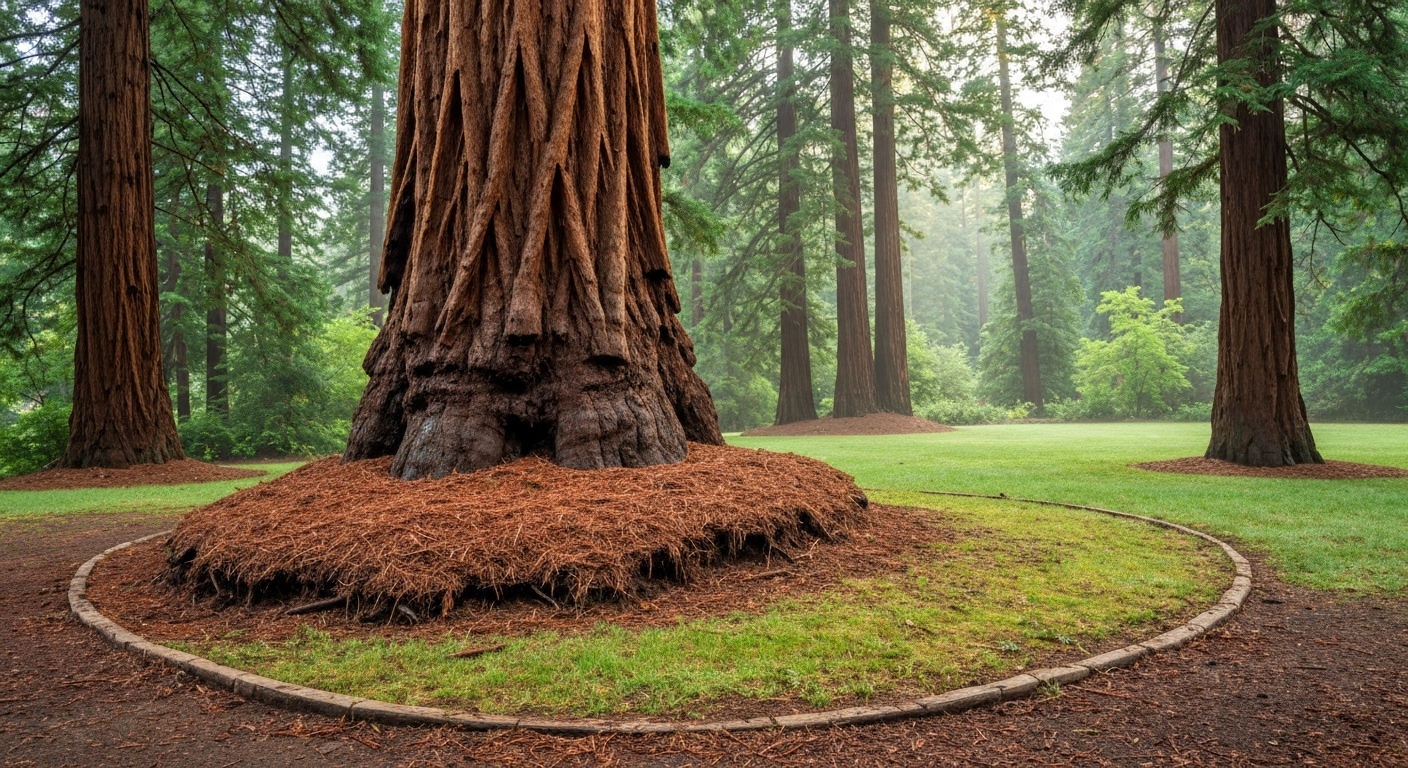
Can Grass Grow Under Redwood Trees? Practical Guide for Homeowners & Gardeners
Can grass grow under redwood trees? Practical, evidence-based answers, species picks, step-by-step establishment plan.
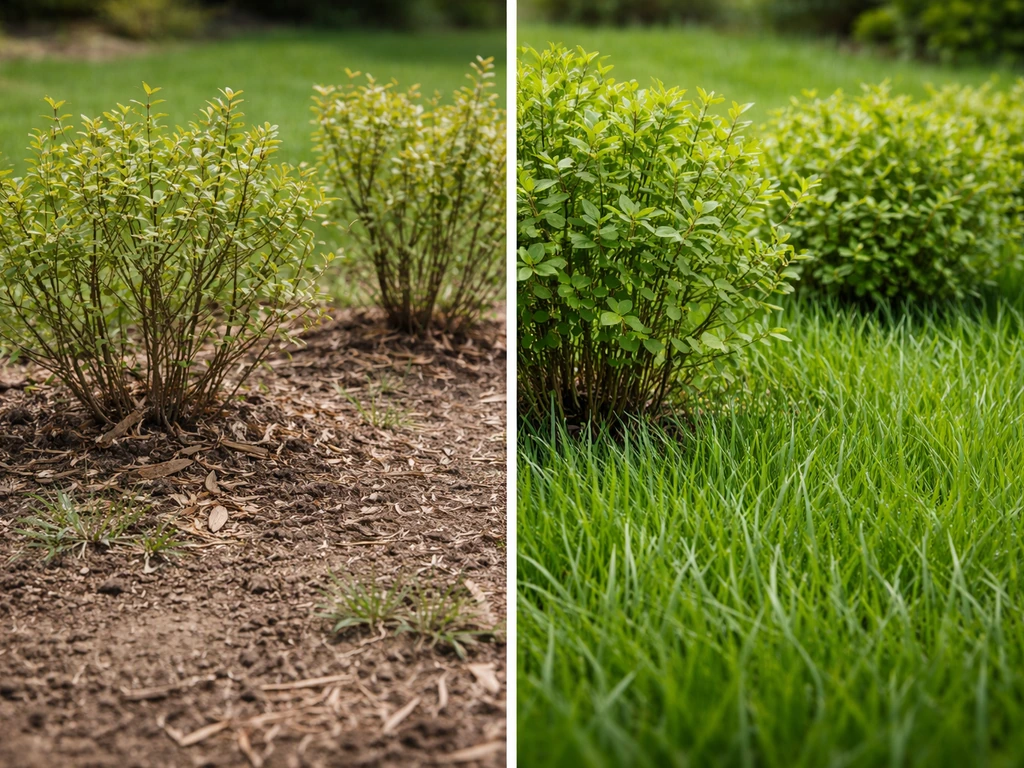
Why Can’t Bushes and Shrubs Grow Before Grass
Learn why shrubs lag behind grass, then fix light, soil, spacing, and timing for lasting shrub growth.
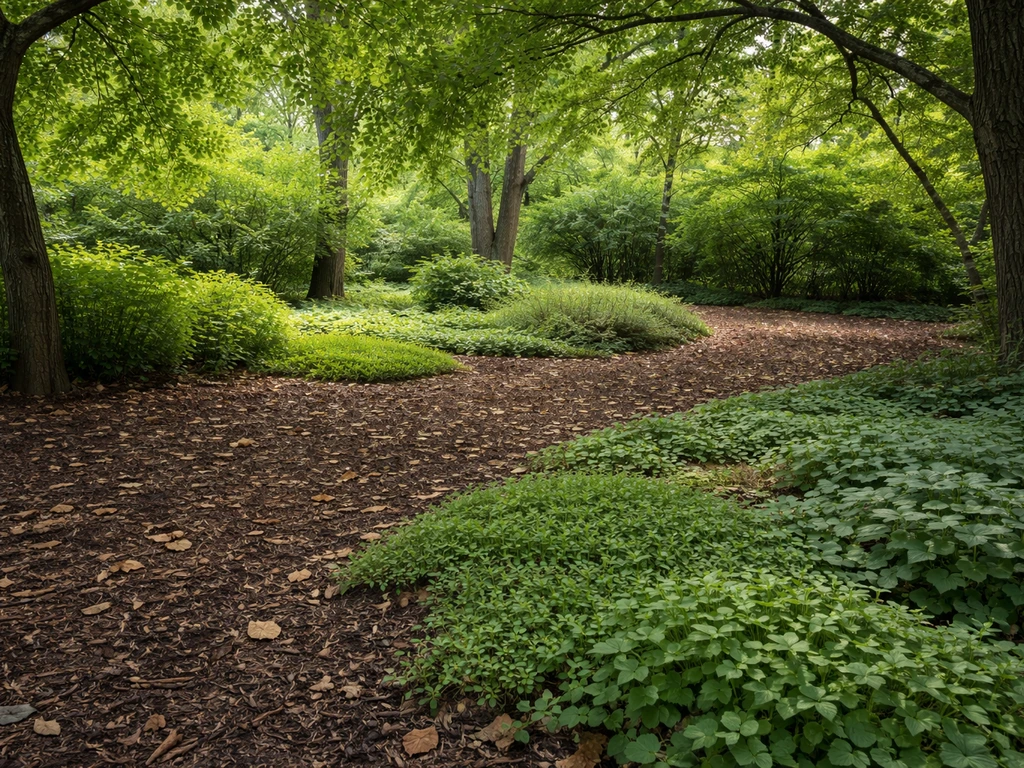
What to Put Under Trees Where Grass Won’t Grow
Step-by-step ideas for what to put under trees so grass fails less, with shade and moisture tolerant groundcovers.