
When grass won't grow under a tree, the fix depends entirely on what's actually killing it. Usually it's one of three things working alone or together: too little light, root competition stealing water and nutrients, or compacted soil that's essentially suffocating anything you try to grow. Figure out which problem you're dealing with before you touch a seed bag or a shovel, because the wrong fix wastes your whole growing season.
What to Do When Grass Wont Grow Under Trees
Marcus Volkmann
6 May 2026
Why grass fails under trees in the first place
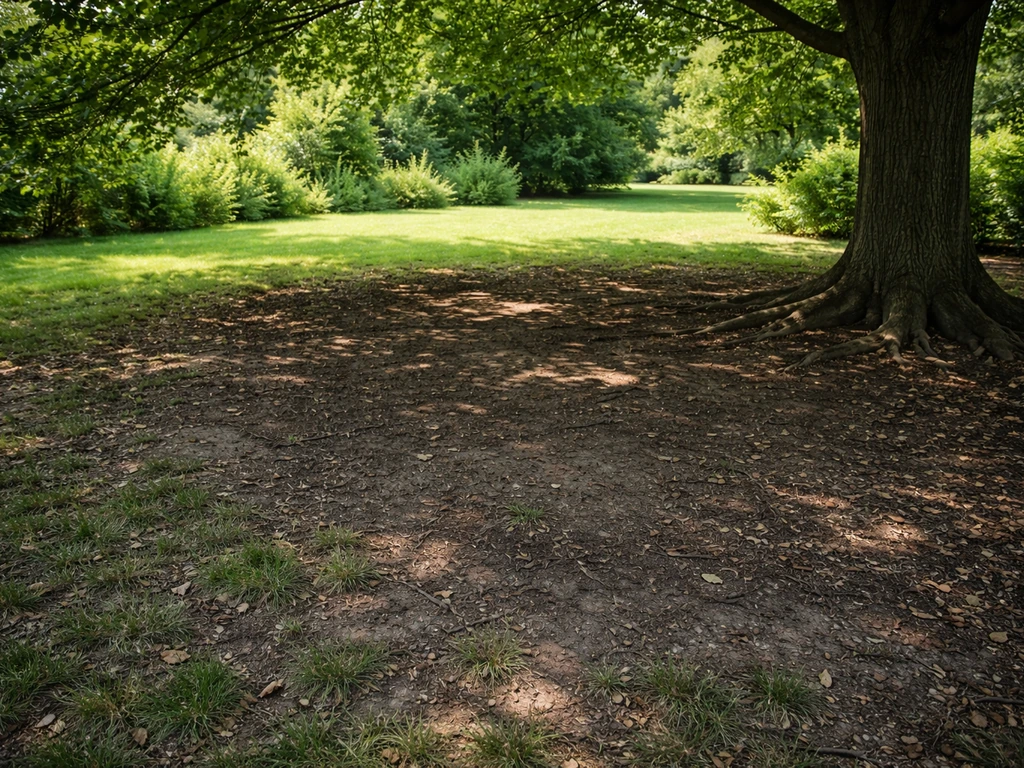
Shade is the obvious culprit, but it's rarely the only one. Turfgrass under a dense canopy has to fight for water, nutrients, and light all at once. When it's losing on all three fronts, you get the classic symptoms: thin, spindly shoots that stretch upward looking for light, shallow roots, and patches that just refuse to fill in no matter how many times you reseed.
Root competition is sneaky because you can't see it. Most shade tree feeder roots sit in the top 8 inches of soil, which is exactly where turfgrass roots want to grow. The tree almost always wins that fight. This is especially brutal with shallow-rooted trees like maples, where the root mat can be so dense that soil under the canopy is perpetually dry even after a good rain.
Soil compaction is the third piece of the puzzle. High foot traffic around trees, combined with the natural density of a root-packed zone, drives oxygen out of the soil. Colorado State University Extension research notes that low soil oxygen from compaction can lead to anaerobic conditions that essentially poison roots from the inside out. Grass in that environment doesn't just struggle, it gives up entirely.
Then there's allelopathy, which gets more attention than it probably deserves. Black walnut trees are the real exception here. The UW, Madison Extension explains that black walnut trees produce juglone, which inhibits growth and occurs throughout the tree, especially in buds, nut hulls, and roots Black walnut trees are the real exception here.. They release juglone through their roots, buds, and nut hulls, and it genuinely inhibits growth in sensitive plants. Interestingly, research suggests that very little juglone actually moves into the bulk soil beyond the immediate root zone, so the effect is often most severe right under the tree and in areas where decomposing leaves and hulls pile up. For most other tree species, allelopathy isn't your primary problem. Shade and competition are.
Quick diagnostics you can run today
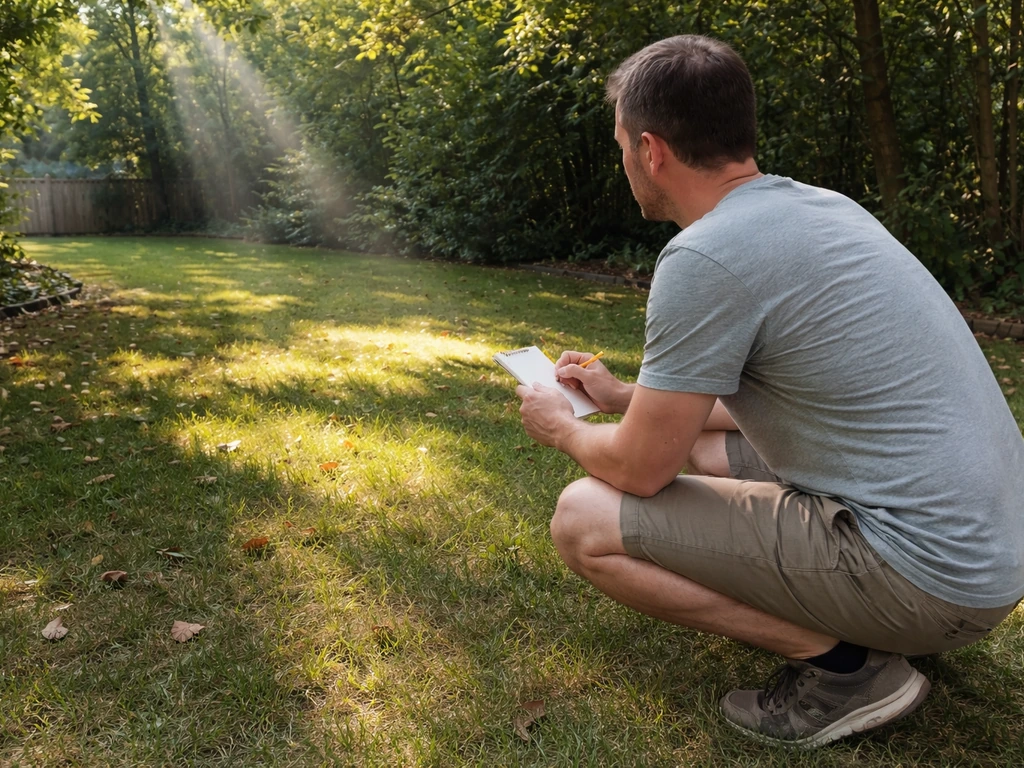
Before you spend money on seed or amendments, spend one day watching the problem area. Here's what to check.
Light hours
Walk out every hour or two and note whether the area is in sun or shade. Do this on a clear day and count the actual hours of direct sunlight the spot receives. Mississippi State University Extension recommends exactly this method, and the numbers really matter for choosing your next step. If you're getting 8 or more hours of direct sun, bermudagrass can work. Six hours is the threshold for zoysiagrass. Below 6 hours, you're in tall fescue territory at best. Below 4 hours of direct sun or full-day filtered light, even the most shade-tolerant grasses struggle and you should seriously consider groundcovers instead.
Soil compaction and drainage
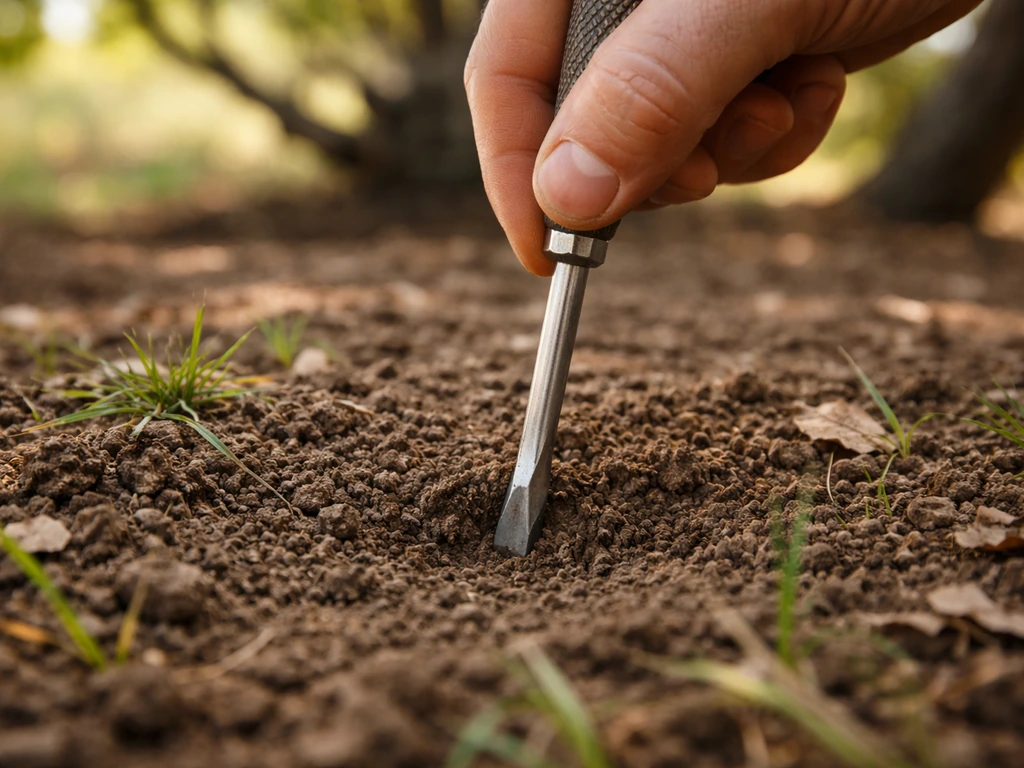
Push a screwdriver into the soil under the tree. If you can't get it in 2 to 3 inches without serious effort, compaction is a major factor. For drainage, dig a small hole about 12 inches deep, fill it with water, let it drain, then refill it and time how fast the water drops. Less than 1 inch per hour means poor drainage, and that limits your options significantly since waterlogged, low-oxygen soil will kill grass roots even when shade isn't the problem.
Root density
Dig a few inches into the soil in several spots under the canopy. If you're hitting a thick mat of surface roots almost immediately, you have a serious competition problem. In those spots, even shade-tolerant grass will struggle to establish because the roots physically crowd out any seedling trying to develop. This is the situation where alternatives to grass often make the most sense.
Identify the tree species
If you have a black walnut, the juglone issue is real and you need to take it seriously. Plants listed as sensitive (azaleas, certain vegetables, some ornamentals) will fail near the dripline regardless of your soil prep. For other species, knowing the tree helps you anticipate root behavior and canopy density, which shapes every decision below.
Soil prep that actually works under trees
Here's where most people make the mistake of either doing too much or too little. You can't do a full soil renovation under a mature tree without damaging roots you can't see. But you also can't just throw seed on compacted, nutrient-poor soil and hope for the best.
Core aeration first
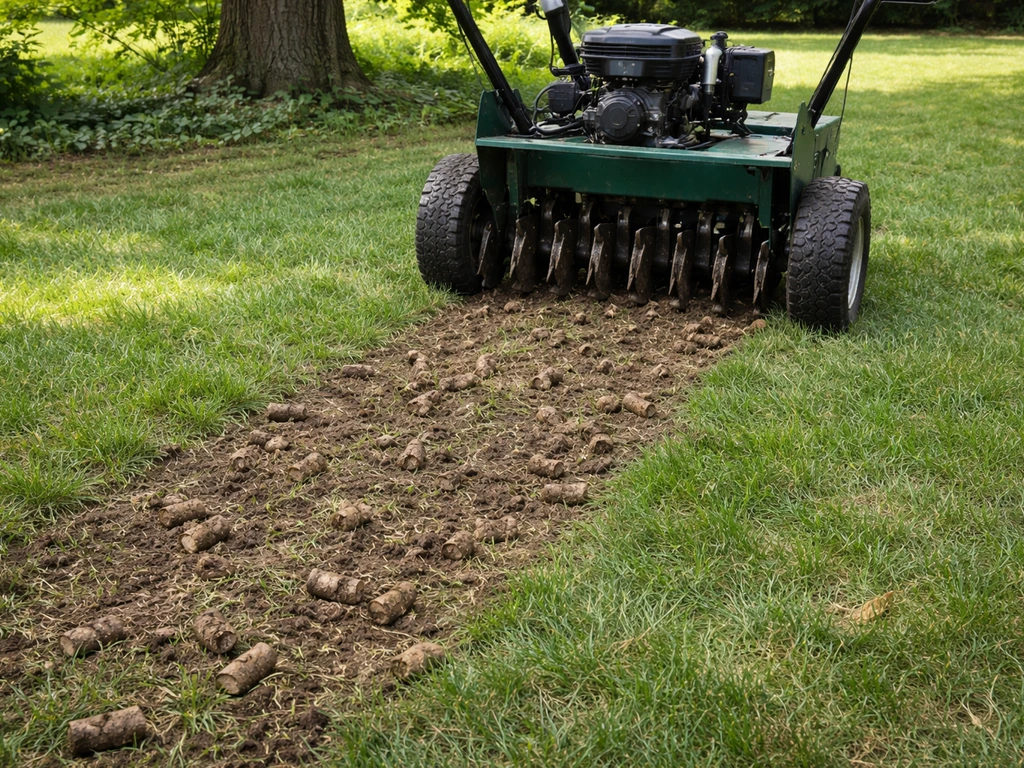
If compaction is a factor (and it usually is), mechanical core aeration is your most impactful first step. A core aerator pulls plugs about 2 to 3 inches deep at roughly 2-inch intervals, which opens up channels for oxygen, water, and seed to reach the root zone. University of Maryland Extension notes that core aeration encourages root growth by increasing oxygen availability and lets seed, lime, and fertilizer actually get into the soil instead of sitting on the surface. Never aerate when the turf is dormant, and avoid going too deep where you know surface roots are dense.
Topdressing vs. full renovation
Under a tree, topdressing is almost always the right call over full renovation. Full renovation means tilling or deeply disturbing the soil, and that damages tree roots. Topdressing means applying a thin layer of compost over the existing soil. The key word is thin: Clemson's Home and Garden Information Center recommends no more than half an inch of material at a time, and the US Composting Council suggests a quarter to half inch for lawn applications. Iowa State University Extension recommends aerating first, then using a drag mat to break up the plugs and mix in compost, which gets the organic matter into the soil profile without major disturbance. Some lawncare discussions on r/lawncare echo this aerate-then-topdress sequencing, including advice about what to do with the aeration plugs before applying compost and establishing seed aerating first, then breaking up the plugs and mixing compost.
Avoid adding straight topsoil to an under-tree area unless you're trying to level a depression. For improving soil quality, compost is the better choice. It improves water retention in sandy soil, loosens clay, adds microbial activity, and gives newly seeded grass something to establish in.
Grade carefully
Never raise the grade under a tree by more than an inch or two, and never up against the trunk. Adding significant soil depth over existing tree roots cuts off their oxygen supply and can kill a mature tree over a few years. If your goal is to get grass growing and keep the tree healthy, work with what's there.
Choosing the right grass or groundcover for tree shade
The single biggest reason grass fails under trees is that people plant the wrong grass. Here's a practical guide to matching your light conditions to the right species.
| Sunlight Available | Best Grass Option | Notes |
|---|---|---|
| 8+ hours direct sun | Bermudagrass | Requires full sun; won't tolerate heavy shade at all |
| 6–8 hours direct sun | Zoysiagrass | Good shade tolerance for a warm-season grass |
| 4–6 hours direct sun | Tall fescue, St. Augustinegrass | Tall fescue is the go-to cool-season choice; St. Augustine needs ~4 hrs or filtered light all day |
| 3–4 hours direct sun | Fine fescues (hard, creeping red, sheep) | Best shade performers among cool-season grasses; CSU rates them good to very good for shade |
| Under 3 hours direct sun | Groundcovers or mulch | Grass is not a realistic option; shift to alternatives |
Fine fescues are worth calling out specifically. Hard fescue, creeping red fescue, sheep fescue, and chewings fescue all outperform other cool-season grasses in shade and low-fertility conditions. An OSU Turfgrass Research and Education field day shade trial also reports differences in shade tolerance among hard fescue, strong creeping red fescue, and Chewings fescue cultivars under tree shade. They're also lower maintenance and need less water once established, which matters a lot when you're planting in a root-competitive zone. They won't survive heavy traffic, but for a lightly used shaded area they're the best turf option you have.
If you're dealing with a particularly challenging tree, like a dense maple or a crepe myrtle casting significant shade, the honest answer is that grass under those canopies is always going to be a fight. If you’re wondering will grass grow under crepe myrtle, the answer is that it’s usually a difficult challenge due to dense shade and competing roots. Similarly, if you're wondering whether bermuda grass will ever work under a dense tree canopy, the answer is almost certainly no. Bermuda grass needs too much sun to be a realistic solution in most under-tree situations. Can grass grow under redwood trees, and what conditions make it possible?
Dealing with roots and moisture competition
Timing your seeding
Cool-season grass seed under trees does best when seeded in late summer to early fall. The canopy is still providing some protection from heat, but the trees are pulling less water as they head toward dormancy. Germination and establishment happen before hard frost, and by spring the grass has a root system deep enough to compete better. Spring seeding under trees is a harder battle because you're fighting peak root competition and summer heat simultaneously.
Watering strategies in a competitive root zone
The soil under a tree dries out faster than open lawn areas because tree roots are actively pulling moisture. Missouri Extension recommends watering enough to prevent drought stress in shaded turf, with early morning irrigation being the ideal timing. Morning watering lets the grass dry through the day, which reduces fungal disease risk in areas that already have higher disease pressure due to shade. Deep, infrequent watering encourages grass roots to go deeper rather than staying shallow where they compete directly with surface tree roots. Aim for about an inch per week, delivered in one or two applications rather than daily light sprinkles.
Root barriers for allelopathy situations
If you're dealing with a black walnut, physical root barriers have been studied as a way to limit juglone spread into a planting area. The concept is to install a barrier that prevents walnut roots from growing into the zone where you want other plants to grow. It's a labor-intensive solution and works best as a preventive measure when you're establishing a new planting area, not a retrofit for an existing problem area.
Safe amendments and how to apply them
Compost
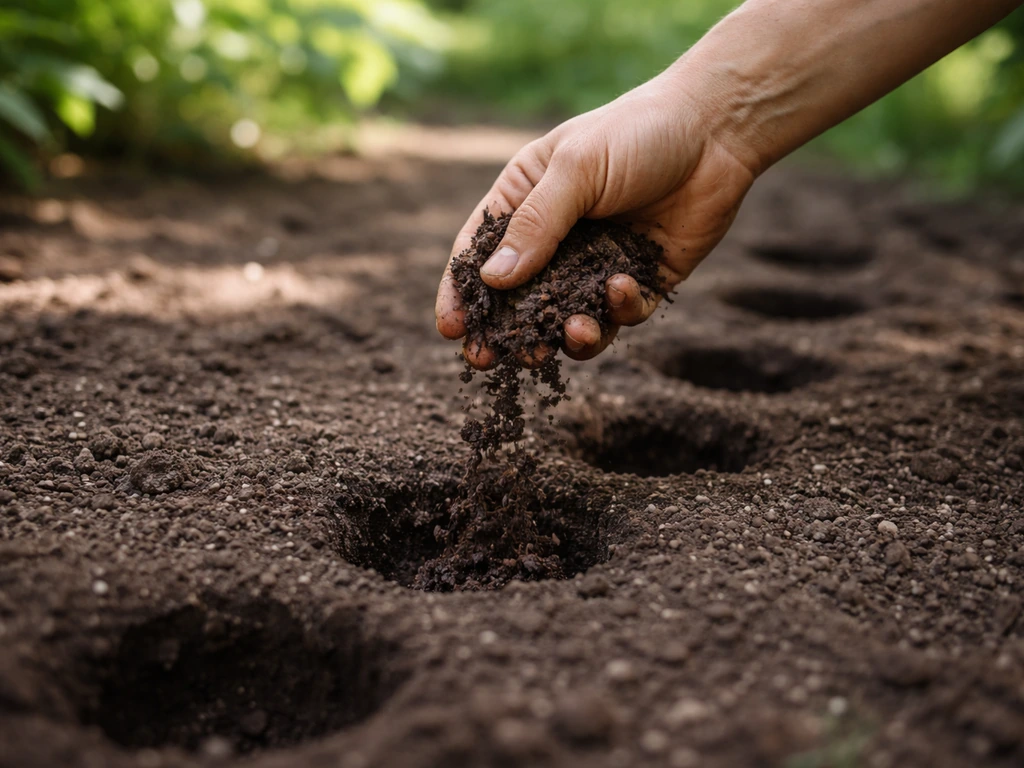
Compost is your most versatile tool here. A quarter to half inch of finished compost worked into aeration holes improves soil structure, adds organic matter, and feeds soil biology without the risk of fertilizer burn. NDSU Extension consistently recommends compost, composted manure, and organic matter additions for improving soil under challenging conditions. Use it every year if your soil is poor, not just once.
Soil pH
Get a soil test before adding anything else. Under dense tree canopies, soil pH can drift in either direction depending on the tree species and organic matter accumulation. Most turf does best between 6.0 and 7.0. Lime raises pH in acidic soils and is most effective when applied after aeration so it reaches the root zone. Sulfur lowers pH in alkaline soils. Don't guess: a $15 to $20 soil test from your local extension lab gives you specific rates to apply.
Fertilizer
Shaded grass actually needs less nitrogen than grass in full sun. Overfertilizing shaded turf pushes lush, weak top growth that's more susceptible to disease and doesn't improve the underlying root system. Fine fescues in particular prefer low-fertility conditions. Apply fertilizer based on your soil test results, use a slow-release nitrogen source, and keep rates conservative under trees. When spreading granular fertilizer, apply it when leaves are dry to avoid leaf burn, and don't pile it against the trunk or root flare.
Mulch management
Mulch around trees is genuinely helpful for moisture retention and weed suppression, but the way most people apply it causes more problems than it solves. Iowa State University Extension recommends a 3 to 4 inch layer of wood chips or shredded bark, extended out toward the dripline, with at least 6 inches of clear space around the trunk. Never build a mulch volcano (a cone-shaped pile against the trunk), which traps moisture against the bark, invites fungal diseases and rot, and can kill a healthy tree over time. If you're transitioning a struggling grass area to mulch, pull the mulch away from the trunk, keep the layer at 3 to 4 inches, and you'll have a low-maintenance, tree-friendly solution.
When grass simply isn't the answer
There's a point where persistence stops being determination and starts being stubbornness. If you have less than 3 to 4 hours of direct sunlight, a dense surface root mat, and soil that's perpetually dry or compacted despite your best efforts, grass is not going to give you satisfying results. That's not failure; it's just an honest reading of the conditions.
Shade-tolerant groundcovers are genuinely lower maintenance than struggling grass in these spots, and they actually look better. NC State Extension specifically recommends English ivy, ajuga, liriope, and pachysandra for heavily shaded areas under trees where turf won't perform. Wisconsin Extension points out that groundcovers outcompete weeds, reduce erosion, and spread to fill the area with relatively little ongoing effort. Iowa State Extension adds that you should prioritize groundcover species that tolerate both shade and the dry conditions that are common under trees, since that combination eliminates a lot of options that look good on paper but fail in practice.
Mulch alone is also a completely respectable solution. A properly applied ring of wood chips or shredded bark from the trunk out to the dripline eliminates the grass problem entirely, protects tree roots, improves soil moisture and biology underneath, and looks intentional and clean. Many landscape professionals consider it the best-practice approach for mature trees regardless of shade levels.
If you want some green without the maintenance of grass, consider a patching strategy: use grass where you genuinely have 4 or more hours of sun at the outer edges of the canopy, and transition to groundcover or mulch as you move in toward the trunk where conditions get worse. That edge approach lets you preserve some lawn feel while being realistic about what each zone can actually support. The topic of what to put under trees where grass won't grow is worth exploring further if you're leaning toward this route, since there are more options than most people realize. If you are asking why bushes and shrubs struggle before grass can get established, the answer usually comes down to the same light, root competition, and soil issues under trees groundcovers. If grass won't grow under your trees, focus on the best groundcover or mulch choices for your specific shade, soil, and moisture conditions what to put under trees where grass won't grow.
Your step-by-step action plan
- Count your actual sunlight hours today. Stand outside and observe hourly. This single number determines most of what follows.
- Do the screwdriver test and a simple drainage/percolation test to assess compaction and water movement.
- Dig a few spots under the canopy to assess root density. If you hit a solid mat immediately, plan for groundcovers or mulch in those spots.
- Identify your tree species. Black walnut requires special consideration; most others are primarily a shade and competition problem.
- Get a soil test from your local extension lab before spending money on amendments.
- If grass is viable based on your light hours, core aerate the area, apply a quarter to half inch of compost, and seed with the appropriate species for your light level and climate.
- Water deeply and infrequently in early morning. Target about an inch per week during establishment.
- Apply fertilizer conservatively and only based on soil test results. Shaded grass needs less nitrogen, not more.
- For any areas with under 4 hours of sun or dense surface roots, install groundcovers or apply a proper 3 to 4 inch mulch ring instead of continuing to fight for grass.
- Manage mulch correctly: keep it 6 inches away from the trunk, stay at 3 to 4 inches depth, and avoid the mulch volcano.
FAQ
How long should I wait after reseeding before I decide it’s not working?
If you spread seed but see no improvement within 6 to 8 weeks (or the area keeps thinning out after sprouting), stop assuming it was “bad seed.” Recheck light and moisture first, then recheck whether soil is staying compacted or staying too wet. A simple test is whether a screwdriver still resists penetration after aerating, and whether water from a small hole drains in under an hour (fast enough to avoid anaerobic conditions).
When is the best time to seed grass under trees?
It depends on the season, but under-tree timing matters most. Late summer to early fall is usually the best window because the canopy offers some heat protection and trees pull back on aggressive root water demand as they head toward dormancy. Spring can work, but establishment is often worse because you are fighting peak summer root competition and heat at the same time.
Is it ever pointless to keep trying to seed grass under a tree?
Yes, and it’s a common reason for failure. If the area is shaded and you seed anyway, you can end up “wasting” the first flush because thin, weak seedlings cannot compete with tree feeder roots and low oxygen from compaction. In practice, you should seed only after you’ve at least addressed aeration (if soil is hard) and picked a shade-tolerant grass matched to your actual direct sun hours.
Can I use mulch to help grass seed under trees germinate?
Mulch can help even if you plan to keep grass, but don’t use a thick layer over seed or you will smother germinating seedlings and reduce light. If you’re topdressing for turf, apply compost in thin layers (not thick bark), and if you’re moving toward a no-grass solution, keep the mulch ring consistent and extend it toward the dripline with clear space near the trunk.
How should I water under-tree turf differently than a normal lawn?
Yes. Many under-tree areas fail because watering is too light or too frequent. Follow a deep, infrequent schedule (about 1 inch per week total) delivered early in the morning so the top dries during the day. If the soil stays soggy when you dig a test hole, reduce watering and focus on drainage and aeration, because waterlogged soil limits oxygen to roots.
Is it okay to add topsoil to level the area under the tree so grass can grow?
Avoid raising grade as a “quick fix.” Even an inch or two added over surface roots can reduce oxygen exchange and stress the tree over time. If you need to level a low spot, use compost and keep changes minimal, then allow the area to settle rather than building up a layer against the root zone or near the trunk.
Will more fertilizer make grass grow better under trees?
Over the long term, you should not rely on nitrogen alone under trees. Shaded turf generally needs less nitrogen than full sun lawns, and heavy feeding can promote weak growth that diseases take advantage of, while the real limiting factors (light, tree roots, soil oxygen) remain unchanged. Use fertilizer based on a soil test and keep rates conservative.
What’s the correct order, aerate first or apply compost and seed first?
A core aerator is usually the best first step because it creates pathways for oxygen and water and gives seed and compost a route into the root zone. After aerating, break up plugs with a drag mat and blend in a thin compost topdressing rather than trying to rototill, which can damage roots you cannot see.
How deep should I aerate under trees without harming roots?
Not usually. If you already have surface roots packed near the top, “deep” aeration can hit dense roots and increase disruption without solving oxygen or compaction at the right depth. The safer approach is to core aerate at the standard depth, then topdress thinly, and only adjust depth if your soil tests or penetration tests clearly indicate the limiting layer is deeper.
Why does my seeded area under the tree get fungal patches or stays damp?
If leaves and organic debris keep forming a mat under the canopy, it can trap moisture and slow drying, encouraging fungal problems and reducing seed-soil contact. Instead of removing everything with aggressive raking, use gentle cleanup and mix debris into compost during topdressing, or remove thicker piles so the soil surface can breathe.
What should I do differently if my tree is a black walnut?
If your spot is a black walnut zone, you may need to design around juglone rather than just “fix the soil.” For sensitive plants, the problem is often greatest right under the canopy and near decomposing hulls. A practical decision aid is to switch the planting plan to tolerant species, or if you’re establishing new beds, consider physical root management as a preventive approach rather than trying to remediate after years of exposure.
How can I keep a lawn-like look while accepting that grass won’t grow near the trunk?
If you still want some lawn look, use a transition strategy instead of forcing one solution everywhere. Keep turf only where the outer edges of the canopy get enough direct sun, then change to groundcover or mulch as you move toward the trunk where light drops and root competition intensifies. This usually produces a more reliable, lower-maintenance result than trying to push grass all the way in.
Next Articles
How to Get Grass to Grow Under Trees Step by Step
Step-by-step plan to grow shade grass under trees, fix soil, pick seed, water right, and maintain a lasting lawn.
Can You Grow Grass Over Gravel? How to Do It Right
Learn when you can grow grass over gravel and follow a step-by-step method for soil depth, drainage, seeding or sod, and
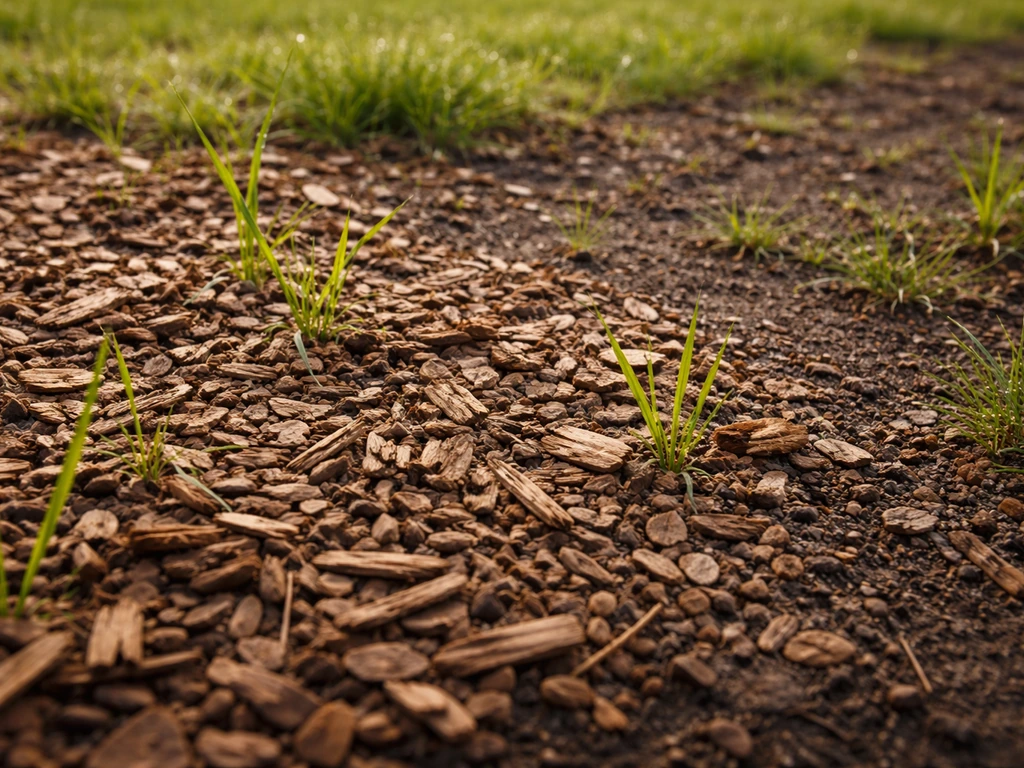
Do Wood Chips Help Grass Grow? When They Work and When Not
Learn when wood chips help grass grow, when they steal nitrogen, and step-by-step how much to apply and seed options.