If grass refuses to grow in a shady spot, the most practical move is to first check whether you have at least 3 hours of direct sun per day. If you do, shade-tolerant fine fescues or turf-type tall fescue can often fill in with the right soil prep. If you don't, stop fighting the shade and replace grass with groundcovers, mulch beds, pavers, or moss. That one decision saves you years of frustration and wasted seed.
Ideas for Shady Areas Where Grass Won’t Grow: Solutions
Marcus Volkmann
16 Jul 2026
Why this problem is worth solving correctly the first time
Shady patches are the most common grass-growing complaint I hear from homeowners, and they're almost always handled backwards. People overseed first, watch it fail, overseed again, and eventually just give up on the spot entirely. The real issue is that shade isn't just one problem. It's usually three or four layered problems at once: not enough light, compacted soil from tree roots, altered drainage, and sometimes dog traffic or urine on top of everything else. This guide walks you through diagnosing your specific situation, deciding whether improving conditions for grass makes sense, and choosing a tested alternative if it doesn't. By the end, you'll have a clear plan rather than another bag of seed sitting in your garage.
Quick decision guide: try to grow grass, or go with an alternative?
Run through these questions in order before you buy anything. Each one narrows your options quickly.
- Count direct sun hours: stand at the problem spot and watch it across a full day. Does it get at least 3 hours of unfiltered direct sun? If yes, move to step 2. If no, skip to alternatives.
- Check the soil: can you push a screwdriver 6 inches into the ground with moderate hand pressure? If it's rock-hard, you have compaction and it needs fixing before any grass will establish. If you can push it in easily, move to step 3.
- Check drainage: after a 1-inch rain, does water pool and sit for more than 30 minutes? Persistent standing water prevents healthy turf root development.
- Consider root competition: are mature tree roots visible near the surface? Heavy surface roots mean the trees are already competing hard for water and nutrients — grass rarely wins that fight.
- Consider use: will dogs, kids, or heavy foot traffic be on this area? If yes, note that shaded turf is already weakened and high wear will destroy it faster than sun-exposed turf.
- Consider budget and maintenance: are you willing to aerate, overseed, and adjust fertilization annually? Shaded turf needs more management than full-sun turf, not less.
- If you passed all six checks, improving the site for shade-tolerant grass is realistic. If you failed two or more, choose a grass alternative.
Why grass actually fails in the shade
Light is the first and most obvious cause. Grass is a sun plant. When incident light under a mature tree canopy drops to 3 to 30 percent of full sunlight, photosynthesis can't keep up with the energy the plant uses just to stay alive. No turfgrass will persist in complete shade, full stop. But light is rarely the only factor.
Soil under trees is often compacted from root growth and foot traffic that converges there over years. Compacted soil restricts oxygen exchange and root penetration, and even a shade-tolerant fescue can't root properly when bulk density exceeds roughly 1.47 g/cm³ for fine-textured soils. Tree roots also outcompete turf roots for water and nutrients, essentially starving the grass from below while the canopy starves it from above.
Drainage patterns change under trees too. Canopies intercept rainfall, so shaded soil sometimes stays dry even after rain. Other times, impermeable clay beneath the surface holds water and creates anaerobic conditions that rot grass crowns. Both scenarios are common, and they feel like opposite problems but come from the same compaction and drainage neglect.
Pests and disease finish off whatever the other factors weaken. Shaded turf is perpetually damp in the morning, which creates ideal conditions for dollar spot, brown patch, and powdery mildew. Slugs, grubs, and chinch bugs also tend to concentrate in these spots. If you've got dogs using the area too, urine compounds the nitrogen burn and wear damage on already-stressed turf.
How to actually measure your shade and test your site
Light measurement
You don't need a light meter. Walk out at 9 a.m., noon, and 3 p.m. and note whether the spot is in direct sun or shade. Count your direct sun hours across the day. Under 3 hours means the area is effectively a no-go for turf. Between 3 and 6 hours is partial shade territory where the best shade-tolerant grasses can potentially work. Over 6 hours and you likely have a different problem, possibly soil or drainage, rather than a shade problem per se.
Soil pH and nutrient testing
Send a sample to your county extension or a university soil lab before you do anything else. The results cost between $15 and $30 and tell you pH, phosphorus, potassium, and organic matter. Cool-season grasses want a pH of about 6. Liming Turfgrass Areas, Penn State Extension recommends an optimum soil pH for cool‑season turf of about 6.0–7.2 (many species do best 6.0–7.0; Kentucky bluegrass often 6.5–7.2) and advises liming only according to a lab soil test Liming Turfgrass Areas — Penn State Extension. 0 to 7.2, with most performing best between 6.0 and 7.0. If your pH is off, lime or sulfur applications need to happen weeks before you seed, not the same day.
Compaction and drainage checks
Use a simple screwdriver push test or a cone penetrometer if you have access to one. A reading above 300 psi on a cone penetrometer is a widely cited threshold at which root extension becomes severely limited. For drainage, dig a 12-inch hole, fill it with water, and watch how quickly it drains. If water is still sitting after an hour, drainage is a real problem that amendments alone won't fix.
When it's actually worth trying to grow grass in shade
I've replanted shady spots successfully more times than I've given up on them, but only when the conditions were improvable. Here's what makes a shady area a realistic candidate for turf rather than an alternative: it gets at least 3 hours of direct sun daily, the soil isn't completely hardpan, drainage is workable, and whoever uses the yard is willing to manage it with a bit more attention than a full-sun lawn. If dogs are the main users of the spot, check out strategies specifically for high-traffic and urine-affected areas, because the management approach shifts considerably.
Species selection is where most people go wrong. Kentucky bluegrass and perennial ryegrass both have poor shade tolerance under sustained canopy shade. Minimal light requirements and performance under reduced PPFD of transformed and conventional Kentucky bluegrass, Crop Science (trial evidence) supports that Kentucky bluegrass has higher minimal light needs and reduced turf quality under low PPFD compared with more shade-tolerant fine fescues Trial evidence indicates Kentucky bluegrass shows reduced performance under low PPFD compared with fine fescues.. Long-term shade trials consistently show fine fescues (creeping red, chewings, and hard) and turf-type tall fescue maintaining significantly higher turf quality and cover under mature tree shade than either of those species. For warm-season lawns in the South, St. Augustine and some zoysia varieties hold up better in partial shade than bermudagrass, though none of the warm-season grasses handle deep shade well.
| Grass Species | Shade Tolerance | Climate | Notes |
|---|---|---|---|
| Creeping red fescue | Best | Cool-season (North) | Top pick for dense shade; fine texture |
| Chewings fescue | Best | Cool-season (North) | Good in drier shaded soils |
| Hard fescue | Best | Cool-season (North) | Low maintenance; drought-tolerant |
| Turf-type tall fescue | Good | Cool-season / Transition | Better wear tolerance than fine fescues |
| Kentucky bluegrass | Poor | Cool-season (North) | Avoid in heavy shade; spreads by rhizome |
| Perennial ryegrass | Poor | Cool-season (North) | Quick to establish, fails long-term in shade |
| St. Augustine | Moderate | Warm-season (South) | Best warm-season shade option |
| Zoysia (selected cultivars) | Moderate | Warm-season / Transition | Slower to establish; dense once in |
| Bermudagrass | Poor | Warm-season (South) | Needs high light; thins rapidly in shade |
Improve light and the microclimate before you seed
The single highest-return action I've taken with shady turf is calling an arborist to raise canopy and thin the tree. Raising the lower limbs of a deciduous tree by 8 to 10 feet and removing 15 to 20 percent of interior crown density can push a 2-hour sun spot closer to 4 hours without harming the tree. That shift can make the difference between a viable turf site and a groundcover site. Always use a certified arborist for structural pruning, amateur pruning usually makes canopy problems worse.
Reflective surfaces help in narrow spaces, particularly the side of a house or a fence line where a light-colored wall bounces ambient light into the strip below. It won't substitute for direct sun, but it can push a marginal area over the threshold for fine fescues. For narrow side-yard strips specifically, where walls and fences dominate, this reflective effect plus a shade-tolerant mix is sometimes enough to get decent turf coverage where bare soil otherwise prevails.
Fix the soil before you even think about seed
Seeding into poor soil under shade is how most attempts fail. If compaction is confirmed, core aeration is the evidence-based fix. Pull 3-inch plugs across the area in two perpendicular passes, then let the cores break down on the surface. For severely compacted spots under trees, do this in early fall and again the following spring before overseeding. The open channels created by the tines allow roots to penetrate and let oxygen reach the root zone.
After aerating, topdress with a quarter-inch layer of compost or a compost-sand blend to improve organic matter and drainage simultaneously. If your soil test flagged a pH problem, apply lime or sulfur at this stage per the lab's exact recommendation, not a generic bag-rate guess. Then let the amendments settle for 2 to 4 weeks before overseeding.
Seeding rates matter in shaded areas. For fine fescues as a new seeding, target 3 to 5 lb per 1,000 sq ft. For overseeding into existing thin turf, use about half that rate. Turf-type tall fescue at 4 to 6 lb per 1,000 sq ft for new areas is appropriate. The best timing for cool-season overseeding is late summer to early fall, when soil is warm enough to germinate seed but cooler air reduces heat stress and disease pressure. Avoid spring overseeding in shade if you can, the narrow window before summer heat arrives rarely lets a weak shaded lawn establish properly.
Once turf is growing, raise your mowing height by 0.5 to 1 inch above the normal recommended height for the species. Taller leaf blades capture more of the limited light and support deeper root systems. Cut back on nitrogen: shaded turf needs roughly half the annual N that full-sun turf gets. About 2 to 3 lb of actual N per 1,000 sq ft per year maximum for most shaded cool-season lawns, applied in smaller increments of around 0.5 lb per 1,000 sq ft per application, reduces the risk of disease flare-ups from excess lush growth.
Irrigation and moisture management for shaded turf
Shaded turf needs less water than full-sun turf overall, but it's more sensitive to watering mistakes. Morning irrigation is non-negotiable. If you water in the evening, leaf surfaces stay wet all night and fungal diseases take hold fast. Water deeply and infrequently rather than lightly every day. Deep watering encourages roots to chase moisture downward, which is exactly what you want in a compacted zone you're trying to rehabilitate.
Check soil moisture manually before irrigating rather than running on a timer. Shaded soil under a dense canopy may stay moist for several days after rain while the rest of your lawn dries out. Overwatering a shaded area is just as damaging as underwatering it. If your irrigation system runs on zones, put shaded areas on a separate zone with reduced run time.
Keep an eye on airflow. Poor air circulation is the main reason shaded turf develops chronic disease problems. Thin dense shrubs around the perimeter of problem areas to let air move through. If you're managing a shaded lawn patch that repeatedly develops brown patch or dollar spot, that's almost always an airflow-plus-moisture management issue, not just a shade issue.
The best alternatives when grass just won't work
When the site fails the decision checklist above, moving away from turf is the practical choice, not the giving-up choice. These alternatives are proven, low-input, and in many cases better-looking than a thin, struggling lawn. For detailed, step-by-step ideas on how to landscape areas where grass won't grow, see the full guide to durable, low-maintenance alternatives and layouts. For a quick list of alternatives, see what to grow instead of grass. For more ideas for areas where grass won't grow, see our guide on ideas for areas where grass won't grow. For more inspiration on backyard ideas where grass won't grow, see our gallery of practical shade-friendly solutions.
Groundcovers
Low-growing perennial groundcovers are the most popular grass replacement for shaded beds and strips. Creeping Jenny, sweet woodruff, pachysandra, and native wild ginger all tolerate heavy shade. Ajuga (bugleweed) handles moderate foot traffic better than most groundcovers. Creeping phlox and vinca (periwinkle) work well in partial shade and spread to fill gaps over two to three seasons without replanting. For areas where dogs are an issue, the tougher, woodier groundcovers like pachysandra hold up to occasional trampling better than finer-textured species.
Moss lawns
Moss thrives in exactly the conditions that kill grass: shade, acidic soil, and poor drainage. If your soil test comes back with a pH below 5.5 and you've got heavy shade, moss may already be trying to establish naturally. You can encourage it by removing grass, pressing existing moss patches firm against bare soil, and keeping the area moist for the first few weeks. A moss lawn needs no fertilizer, no mowing, and virtually no maintenance once established. The trade-off is that it doesn't handle foot traffic well, so it's better for ornamental areas than functional paths.
Clover and mixed low-maintenance lawns
White clover tolerates partial shade better than most turfgrasses and fixes its own nitrogen, meaning you can essentially stop fertilizing that area. Mixed clover-and-fine-fescue lawns are increasingly common as a low-input solution for dappled shade spots where you still want some traffic tolerance. Clover does attract pollinators, which is worth mentioning if kids or dogs use the area barefoot.
Mulch beds and ornamental plantings
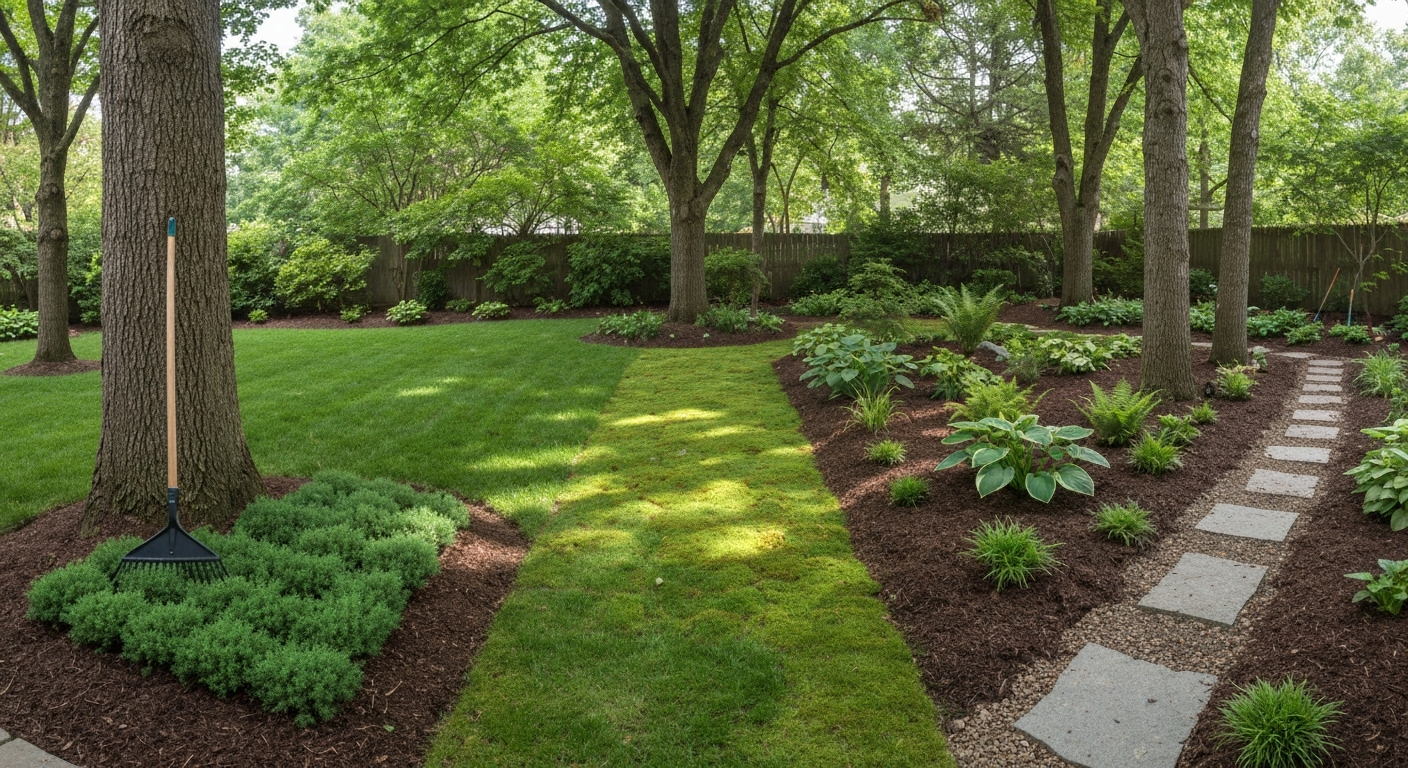
Under trees, converting the drip zone to a mulched planting bed is often the best structural solution. Use 2 to 3 inches of shredded hardwood or bark mulch and plant shade-tolerant shrubs or perennials like hostas, ferns, astilbe, or hellebores. Keep mulch 3 to 4 inches away from tree trunks to prevent rot and bark beetle issues. This approach also protects the tree's surface roots from mower damage, which is a common and underappreciated problem in maintained landscapes.
Gravel, pavers, and hardscaping
For high-traffic shaded areas, side yards, paths between the house and fence line, and areas where dogs run regularly, permeable gravel or stepping stones are the most durable solutions. Decomposed granite compacts into a firm surface, handles drainage well, and stays cool in shade. Flagstone or concrete pavers work for side-of-house strips where you need a clean, low-maintenance surface. Lay landscape fabric underneath gravel only if you're prepared to replace it in 5 to 7 years as it degrades and weeds push through anyway; some landscapers now prefer a 4-inch compacted gravel base without fabric for better long-term performance.
Artificial turf
Artificial turf is the realistic long-term solution for spots that combine heavy shade, dog traffic, and compacted soil under trees where no plant-based solution is practical. Modern synthetic turf drains well if installed over a proper crushed-stone base, handles urine odors with regular rinsing, and looks reasonable in residential settings. The upfront cost is high (typically $8 to $20 per sq ft installed), but the ongoing cost is essentially zero. It's a particularly practical choice for small, contained areas like narrow side yards or under a deck where aesthetics matter but natural growth is impossible.
Comparing the main alternatives at a glance
| Option | Shade Level | Foot Traffic | Maintenance | Relative Cost | Best For |
|---|---|---|---|---|---|
| Fine fescue / tall fescue turf | Partial (3+ hrs sun) | Moderate | Medium-high | Low (seed) | Improvable sites with 3-6 hrs sun |
| Perennial groundcovers | Full to partial | Low to moderate | Low | Low-medium | Ornamental beds, borders |
| Moss lawn | Full shade | Very low | Very low | Low | Acidic, damp, decorative areas |
| Clover mix | Partial | Moderate | Low | Low | Dappled shade, low-input lawns |
| Mulch + shade plantings | Full to partial | None | Low | Low-medium | Under trees, tree drip zones |
| Gravel / decomposed granite | Any | High | Very low | Medium | Side yards, dog runs, paths |
| Flagstone / pavers | Any | High | Very low | Medium-high | Side-of-house strips, patios |
| Artificial turf | Any | High | Very low | High (install) | Dog areas, small shaded strips |
Installation checklist for switching from grass to an alternative
- Kill or remove existing grass and weeds: smother with cardboard and mulch (no-dig method, takes 4 to 8 weeks) or use a non-selective herbicide per label directions and wait 2 weeks before planting.
- Collect a soil test if you haven't already: results guide pH and fertility corrections needed before planting.
- Correct drainage if needed: grade the area to direct water away from the planting zone, or install a French drain for persistently wet spots.
- Amend soil for plant-based alternatives: work 2 to 3 inches of compost into the top 6 inches for groundcovers and ornamental beds.
- For hardscaping, excavate 4 to 6 inches and install compacted crushed stone base before laying pavers or spreading decomposed granite.
- Install your chosen groundcover, mulch, or hardscape material.
- Water plant-based alternatives thoroughly at installation and keep consistently moist for the first 4 to 6 weeks until established.
- Apply a 2 to 3 inch mulch layer around (not touching) plant stems and trunks to retain moisture and suppress weeds.
Simple maintenance schedule once you've made your choice
| Solution | Spring | Summer | Fall | Winter |
|---|---|---|---|---|
| Shade-tolerant turf | Aerate + light fertilize (0.5 lb N/1000 ft²) | Mow high, water mornings, watch for disease | Overseed thin areas; fertilize lightly | Leave dormant; avoid heavy traffic |
| Groundcovers | Cut back winter dieback; divide overcrowded clumps | Water during dry spells | Apply fresh mulch layer | No action needed |
| Moss | Remove leaf litter gently; water if dry | Keep moist; avoid foot traffic | Remove fallen leaves promptly | No action needed |
| Mulch bed + plantings | Refresh mulch; prune winter damage | Spot-weed; water new plantings | Plant spring bulbs if desired; top-dress mulch | No action needed |
| Gravel / pavers | Rake debris; top up gravel if settled | Spot-weed edges; rinse if dog area | Blow out leaf debris | No action needed |
| Artificial turf | Rinse thoroughly; brush fibers upright | Rinse after dog use; check drainage | Remove leaf debris | No action needed |
Special cases: under trees, narrow strips, and dogs
Planting under established trees is one of the harder landscape problems to handle well. The surface roots, canopy drip, and allelopathic compounds some trees release (black walnut is the most notorious) create multiple simultaneous obstacles. My default recommendation for the drip zone of any mature deciduous tree is a mulched planting bed rather than turf. It protects the roots, looks intentional, and performs reliably. If you want plants in there, hostas, ferns, and hellebores are genuinely low-maintenance and thrive in these conditions.
Narrow side-yard strips between a house and fence are a different category of shady problem. The combination of reflected heat, limited airflow, and low light makes grass a poor candidate in most of these. Decomposed granite, stepping stones, or a simple hardwood mulch path with a few shade-tolerant shrubs anchoring the ends is cleaner and lower-maintenance than fighting to keep a thin turf strip alive. For practical layout and material suggestions for a narrow side of house where grass won't grow, see ideas for side of house where grass won't grow. For wider side yards getting 3 or more hours of sun, a shade-tolerant fine fescue mix is worth trying.
When dogs are in the picture, durability of the surface becomes the main criterion. Shaded turf weakened by low light cannot recover from the urine burn and compaction that concentrated dog activity creates. Decomposed granite or pea gravel dog runs, or a dedicated artificial turf zone, let you maintain a clean area without a constant replanting cycle. If keeping some natural turf is important in the yard overall, training dogs to use a designated spot and rinsing it regularly gives the turf the best possible chance. For practical fixes and training strategies, see the article on grass won't grow where dog urinates. The broader challenges of growing grass where dogs are active are worth understanding in detail as a separate topic, especially if the shade and dog traffic overlap in the same area. For step-by-step tips on how to grow grass in shade with dogs, see our detailed guide. For step-by-step strategies on managing urine damage and keeping turf alive in heavy-dog-use areas, see a dedicated guide on how to grow grass where dogs pee.
FAQ
Why won’t grass grow in my shady area — what should I diagnose first?
Start with light: measure or observe hours of direct sun (rule of thumb: <3 hours direct sun = poor for most turf; 3–6 hours = partial shade). Then test soil: get a lab test for pH, P, K and organic matter and check for compaction (core bulk‑density or cone penetrometer; severe root restriction often near or above USDA/NRCS thresholds). Also inspect irrigation/drainage, thatch, root competition from trees, and evidence of pets or chronic traffic. Correct diagnosis guides whether you can improve conditions for shade‑tolerant turf or should choose an alternative.
Can shade be fixed so grass will grow, or do I need alternatives?
It depends. If the area gets 3–6 hours of direct sun or moderate reflected light, improving soil (organic matter, correct pH), aerating compacted soil, raising mowing height, adjusting irrigation and overseeding with shade‑tolerant species can often succeed. If light is <3 hours direct and under a dense canopy (only 3–30% of full sun), turf usually won’t persist long term and alternatives (groundcovers, mulched beds, paving) are more reliable.
Which turfgrass species tolerate shade best?
For cool‑season regions, fine fescues (creeping red, chewings, hard) are most shade‑tolerant, followed by turf‑type tall fescue. Kentucky bluegrass and perennial ryegrass perform poorly under prolonged canopy shade. In warm climates, St. Augustine and some zoysiagrasses tolerate more shade than bermudagrass but still thin under deep shade. Use recent regional cultivar (NTEP) trial recommendations for specific seed/variety choices.
What cultural practices improve shaded turf success?
Key practices: core aeration to reduce compaction and improve rooting, raise mowing height by ~0.5–1.0 inch to increase leaf area and rooting, reduce nitrogen rates (shaded turf needs roughly half the N used in full sun with lighter, more frequent applications), correct soil pH per test (liming only as recommended), and overseed in the best establishment window (cool‑season: late summer/early fall).
When and how should I overseed a thin shaded lawn?
Overseed cool‑season lawns in late summer to early fall for best germination and rooting. Use a shade‑tolerant seed mix (fine fescues + turf‑type tall fescue where appropriate). Apply at roughly 50% of new‑lawn seeding rates (see local extension rates), ensure good seed‑to‑soil contact, water lightly and frequently until established, and avoid heavy nitrogen early—use starter fertility per soil test guidance.
How do I test for compaction and what fixes work?
Measure with a cone penetrometer or take bulk‑density cores (target bulk densities <1.4 g/cm³ for fine soils). Field threshold of ~300 psi cone resistance often marks severe restriction. Fixes: core aeration (remove plugs) is primary; for very compacted soils, vertical slicing or mechanical subsoiling may be needed before rebuilding topsoil or overseeding. Add organic matter and topdress after aeration to improve structure over time.
Next Articles
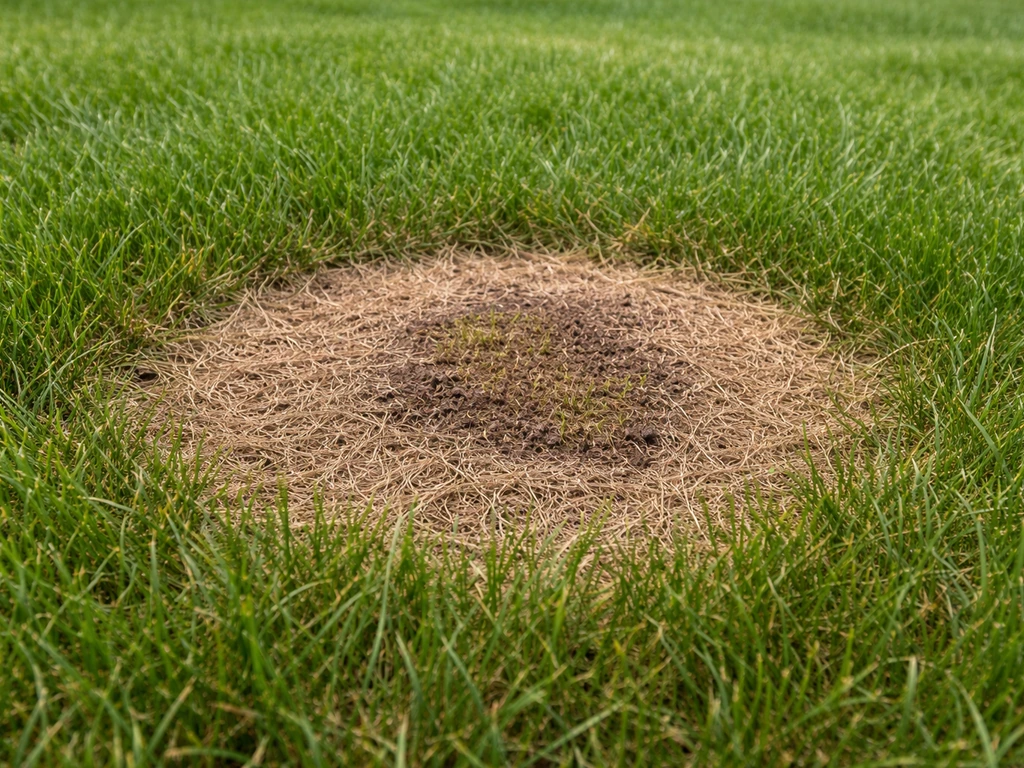
Grass Won’t Grow Where Dog Urinates: Fix Fast and Prevent It
Learn why dog urine burns grass and follow step-by-step fixes and prevention to stop dead patches and re-grow.
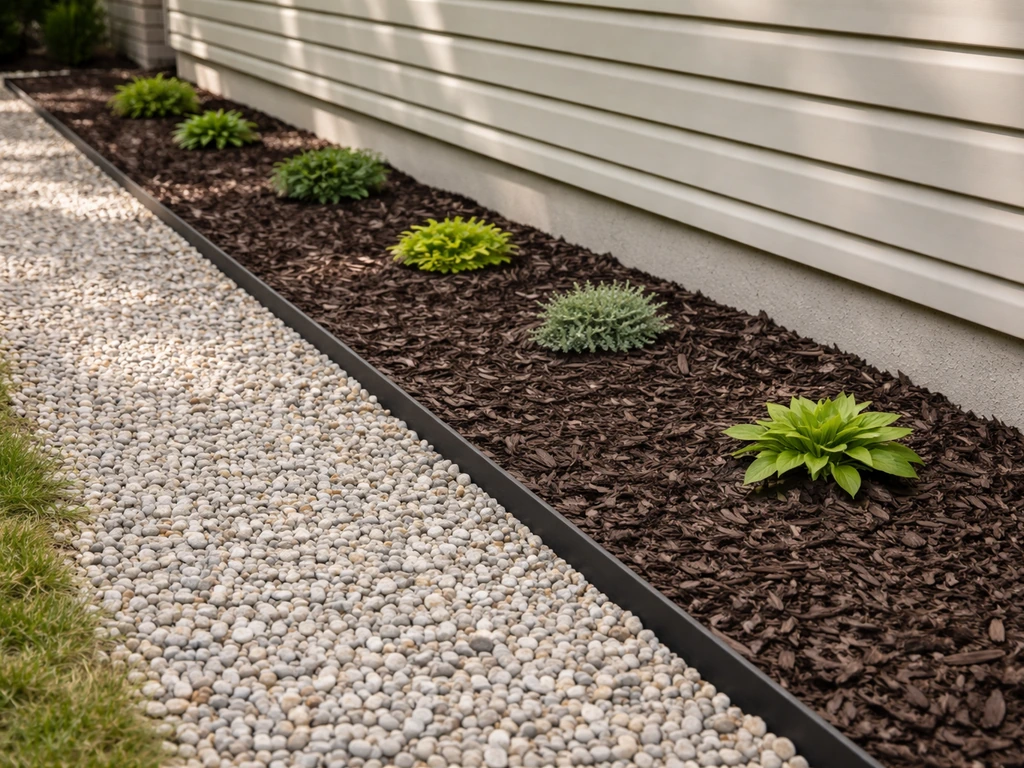
Ideas for Side of House Where Grass Won’t Grow
Fix side-yard grass: learn why it fails, then install gravel, mulch, pavers, groundcovers, or turf with proper prep and
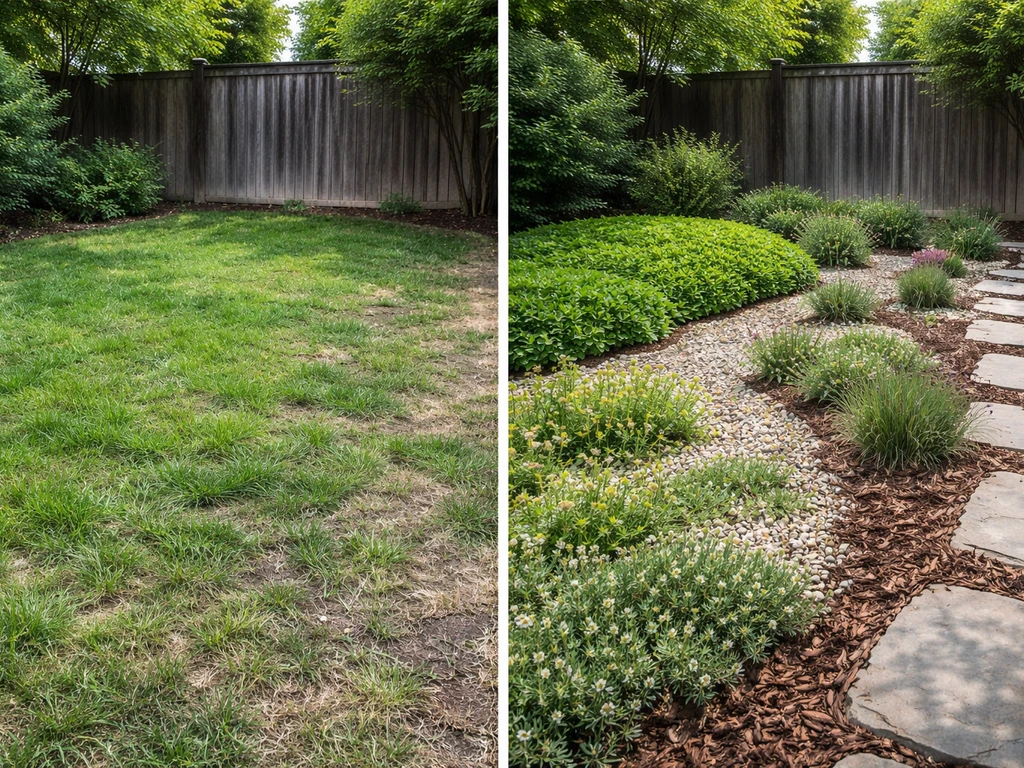
What to Grow Instead of Grass: Plant Options by Yard Conditions
Find the best plants to replace grass by your yard conditions, with groundcover picks, setup steps, and care plans.