
Yes, grass can grow back where your dog pees, but it won't happen on its own if the spot is already dead. If this spot keeps failing even after repair, you may want to switch to backyard ideas where grass won't grow instead of trying to force turf to come back. You need to act: flush the area, clear out the dead material, fix the soil, and replant. The good news is that most dog pee spots are small enough to repair in an afternoon, and with the right seed or sod you can have green turf growing back in two to three weeks. Here is exactly how to do it.
How to Grow Grass Where Dogs Pee: Repair and Prevent
Marcus Volkmann
18 Apr 2026
What dog urine actually does to your grass
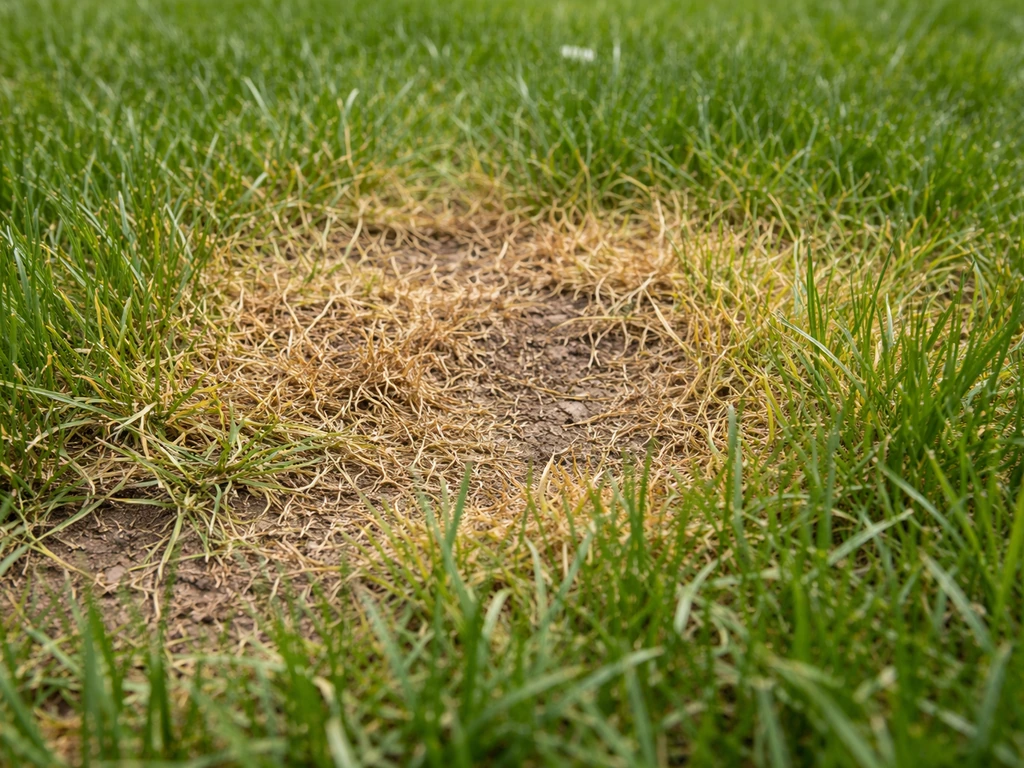
The burn is not about acidity the way most people think. Dog urine has a pH that ranges roughly 6.0 to 8.0 depending on the dog's diet and health, but that pH range alone is not what kills grass. The real culprits are nitrogen compounds, urea, and associated salts delivered in high concentration to a very small patch of soil. Think of it like a fertilizer overdose: a little nitrogen is great for grass, but a concentrated dump of it in one spot scorches the roots the same way over-fertilizing does.
Research has also identified lactic acid as a meaningful contributor to injury in cool-season grasses, causing phytotoxic damage that looks similar to the classic burned patch. The result is that classic straw-colored or brown circle, sometimes ringed by a band of unusually dark green grass where the urine concentration was lower and acted more like a light fertilizer dose. If you see that dark green halo around a dead center, dog urine is almost certainly the cause. Without that context it can look a lot like dollar spot, brown patch, or fairy ring, so before you start reseeding it is worth confirming what you're dealing with.
Will grass grow back on its own? Fresh spots vs. old ones
Fresh spots, meaning the pee happened in the last day or two and the grass is just starting to discolor, can sometimes recover if you get water on them quickly. The grass is stressed but not necessarily dead all the way to the roots. Lightly scorched turf with living crowns and roots will green back up over several weeks if the urine is diluted fast and the dog is kept off the area.
Old spots are a different story. Once the grass crowns are truly dead (you can tug the straw-colored blades and they pull right out with no resistance), they are not coming back on their own. The damage from dog urine can persist and keep a patch looking dead for weeks to months without active repair. If a spot has been brown for more than two or three weeks and does not respond to watering, assume the grass is dead and plan to replant. Waiting and hoping rarely works on established dead patches.
What to do today: rinse it out and clear the dead turf
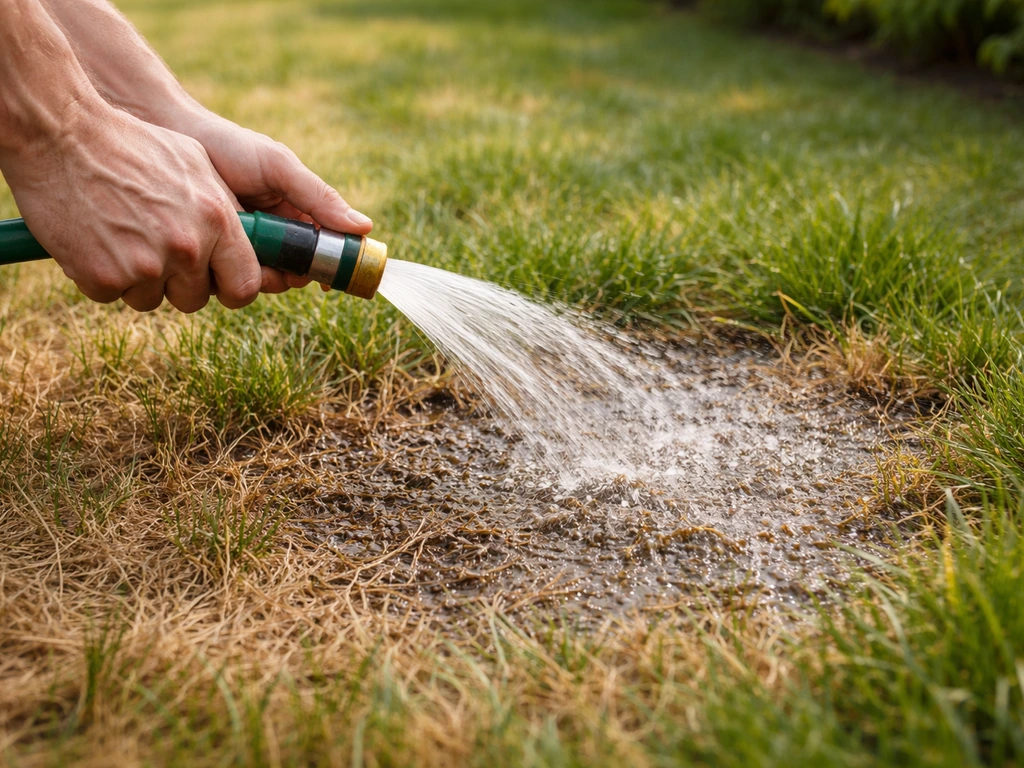
If the pee just happened, your first move is a thorough soak. Flood the spot with water right away, and keep flooding it. You are trying to push the nitrogen, salts, and urea down below the root zone so the grass roots are no longer sitting in a concentrated solution.
Purdue Extension (AY-327-W) explains that urine nitrogen can be a key driver of lawn burn, and that dilution with additional water helps reduce injury by lowering urine’s nitrogen concentration [push the nitrogen, salts, and urea down below the root zone](https://www. extension. purdue. edu/extmedia/ay/ay-327-w.
pdf). University of Maryland Extension is direct about this: heavy irrigation as soon as possible after a dog visit is the single most effective way to reduce damage.
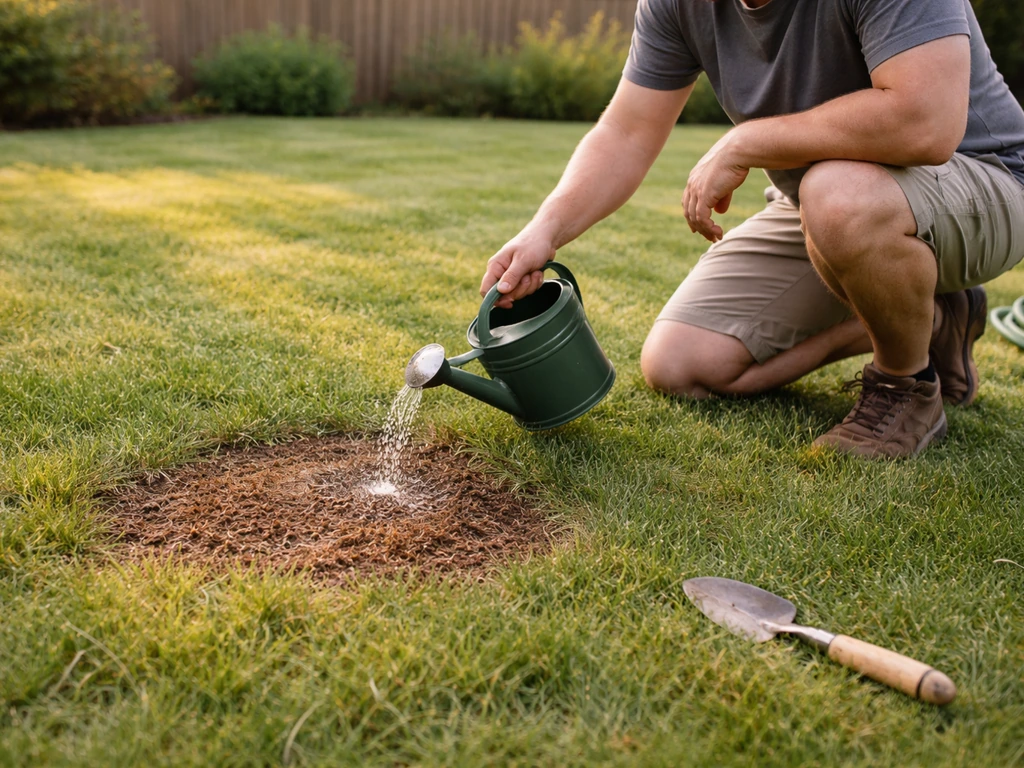
A quick spritz is not enough. Grab a hose and let it run on the spot for a full minute or two.
One thing to skip: do not reach for baking soda, gypsum, or any home remedy that claims to neutralize the urine. Both baking soda and gypsum are themselves salts, and adding more salts to a spot that is already suffering from salt overload is counterproductive. NC State Extension specifically advises against these approaches, and Colorado State University Extension agrees. Water is the right tool. More water, not household chemicals.
For spots that are already dead, start by removing the dead material today. Use a hand rake or a stiff-tined garden rake to scratch out all the brown grass, thatch, and debris until you expose bare soil. You want clean, loose soil to work with, not a mat of dead organic matter that will block seed contact and promote disease. Pull it all out and compost it or bag it.
Fixing the soil before you plant anything
Should you test the soil?
For a single small spot, a formal soil test is optional but useful if you have recurring problems across multiple areas. What matters more practically is recognizing that the soil in a heavily urinated spot may be compacted, salt-laden, and low in organic matter. A quick inexpensive pH and nutrient test from a garden center can confirm where things stand, but even without one you can follow a standard repair protocol and get good results.
Loosen, amend, and reset
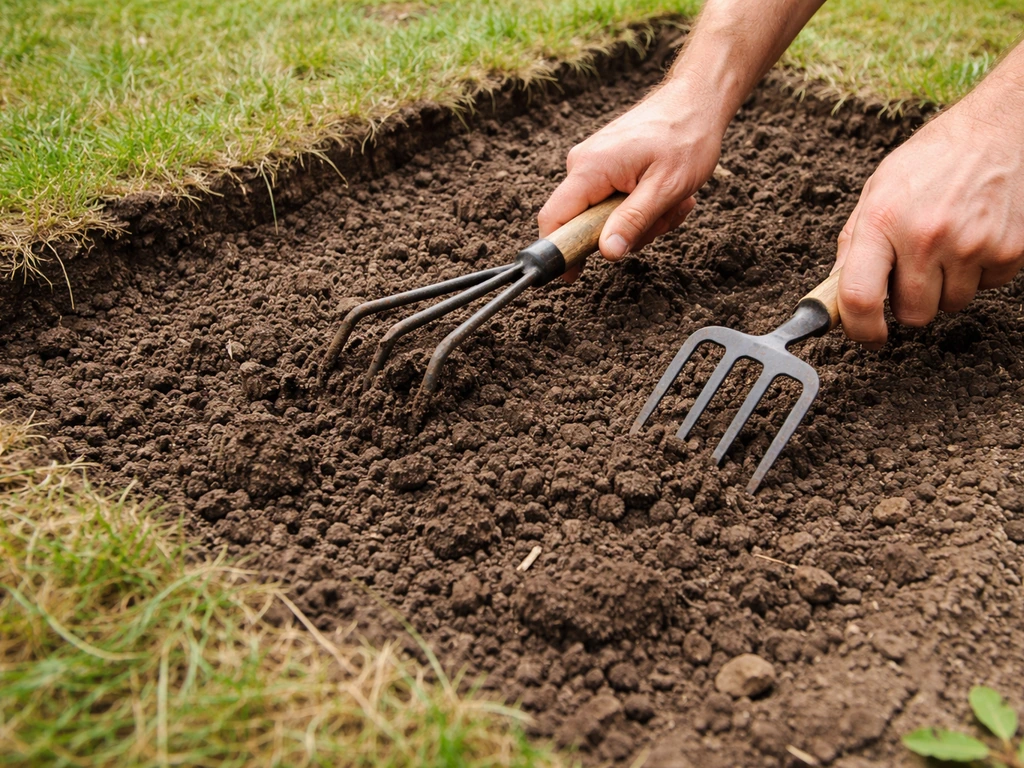
After you have cleared the dead grass, loosen the soil in the patch to a depth of 2 to 3 inches using a hand cultivator or garden fork. Compacted, crusty soil will not let seed establish well. Once it is loosened, work in a thin layer of finished compost or quality topsoil, roughly a quarter to half an inch mixed into the top couple inches of soil. This improves organic matter content, helps buffer excess salts, and gives new roots something to grow into. Do not use synthetic fertilizer at this stage because you already have a salt/nitrogen problem in the soil. Organic matter and a good flush of water are what the spot needs most.
If soil pH really is off (confirmed by a test), a small amount of lime can raise a very acidic soil, but the research is clear that pH is not the primary problem with dog urine damage, so do not over-engineer the pH correction. Fix the salt and organic matter issue first. Water the amended area well before planting so the soil is moist but not waterlogged.
Choosing the right grass for dog spot repair
Not all grasses recover equally well or replant as easily. Shade changes what grass needs to recover, so if you are also dealing with dogs, you will need shade-friendly seeding and extra recovery time how to grow grass in shade with dogs. Here is how the main options compare:
| Grass Type | Best For | Repair Method | Notes |
|---|---|---|---|
| Perennial Ryegrass | Cool-season lawns (most regions) | Seeding | Germinates in 5–10 days, most reliable for quick spot repair per CSU Extension |
| Turf-Type Tall Fescue | Cool-season and transition zone lawns | Seeding | Seeding rate ~6–8 lb per 1,000 sq ft; good wear and salt tolerance; widely available as dog-spot seed mixes |
| Kentucky Bluegrass | Cool-season lawns | Seeding | Slow to germinate; CSU Extension calls spot-seeding marginally effective; mix with ryegrass for faster results |
| Bermudagrass | Warm-season lawns (South, Southwest) | Sod patch or plugs | Does not establish reliably from seed in small spots; patch with sod from a sod farm or transplant from a nearby area |
| Zoysiagrass | Warm-season lawns | Sod patch or plugs | Slow-growing; sod patching is the practical repair method for dog spots |
For most homeowners in cool-season grass regions, perennial ryegrass or a tall fescue blend is the fastest and most dependable repair choice. Perennial ryegrass germinates so quickly it is almost always the better option for urgent repairs. If your lawn is tall fescue and you want a seamless match, use a tall fescue dog-spot seed product. For warm-season lawns, skip seed and go straight to sod plugs or patches cut from an out-of-the-way corner of your yard.
How to plant and water for actual results
Timing the repair
For cool-season grasses, the sweet spot is when soil temperatures are consistently between 55°F and 70°F and air temperatures are in the 60°F to 80°F range. That means early fall (late August through October) is ideal, with spring (April through May) as a solid second option. Fall seeding usually outperforms spring seeding because the young grass gets a full cool season to root before summer heat arrives. If you are doing this repair in April, get it done now before soil temps climb above 70°F.
For warm-season grasses like bermuda and zoysia, wait until soil temperatures are reliably above 65°F, which typically means late spring to early summer in most warm-climate regions. Sod patches placed too early in cool soil will sulk and root slowly.
Planting step by step
- Clear dead grass and thatch down to bare soil, as described above.
- Loosen the top 2 to 3 inches of soil with a fork or hand cultivator.
- Mix in a thin layer of compost or quality topsoil and water the area lightly.
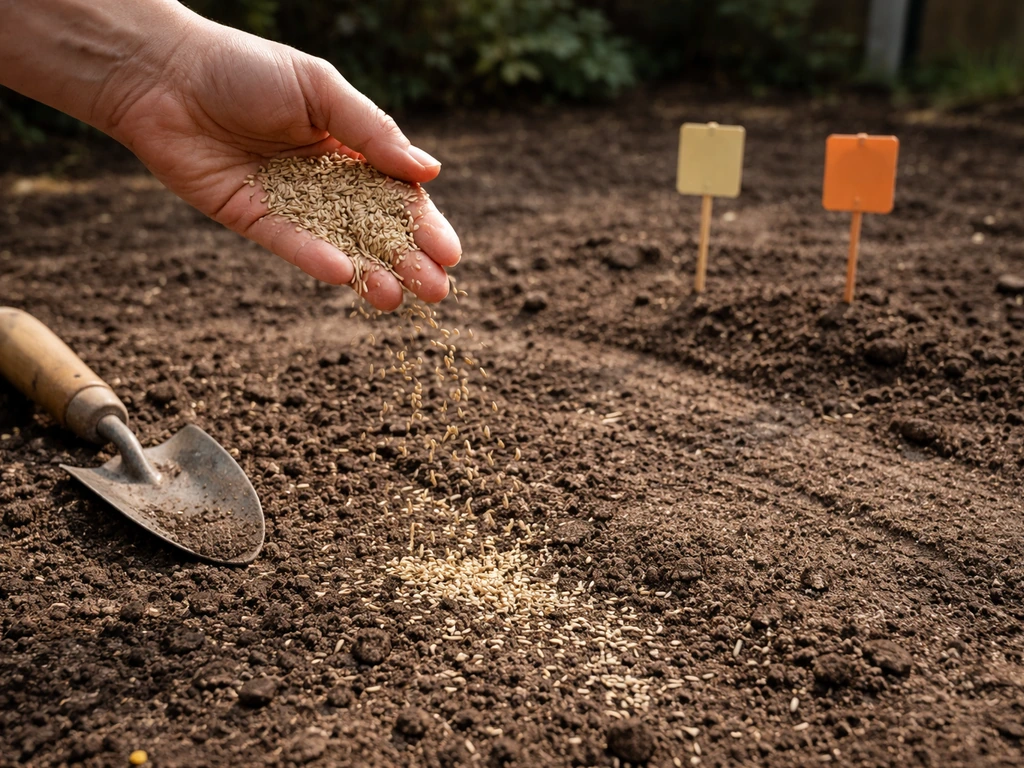
- Scatter seed over the loosened soil at the rate appropriate for your grass type (tall fescue at roughly 6 to 8 lb per 1,000 sq ft scaled down to your patch size; ryegrass slightly higher).
- Rake the seed gently into the top quarter inch of soil so seed makes good contact rather than sitting on top.
- Cover the seeded area with a thin layer of straw mulch or peat moss to retain moisture and protect seed from birds.
- For sod patches: cut a clean piece of sod to fit the patch, press it firmly into the prepared soil so there are no air gaps underneath, and tamp it down.
- Water immediately and keep the top inch of soil consistently moist until germination or sod rooting is complete.
Watering schedule until the grass is established
The first two weeks are critical. You need to keep the top inch of soil moist at all times without waterlogging it. That usually means light watering twice a day (morning and late afternoon) for the first 10 to 14 days. Once you see consistent germination with sprouts reaching about a half inch, you can taper to once daily. After the new grass reaches mowing height (roughly 3 inches for most cool-season grasses), shift to a deep, less frequent watering schedule matching the rest of your lawn. Keep foot traffic and dog access off the repaired patch for at least three to four weeks, or until the new turf is firmly rooted and you cannot easily pull it up.
Stopping new pee burns before they start
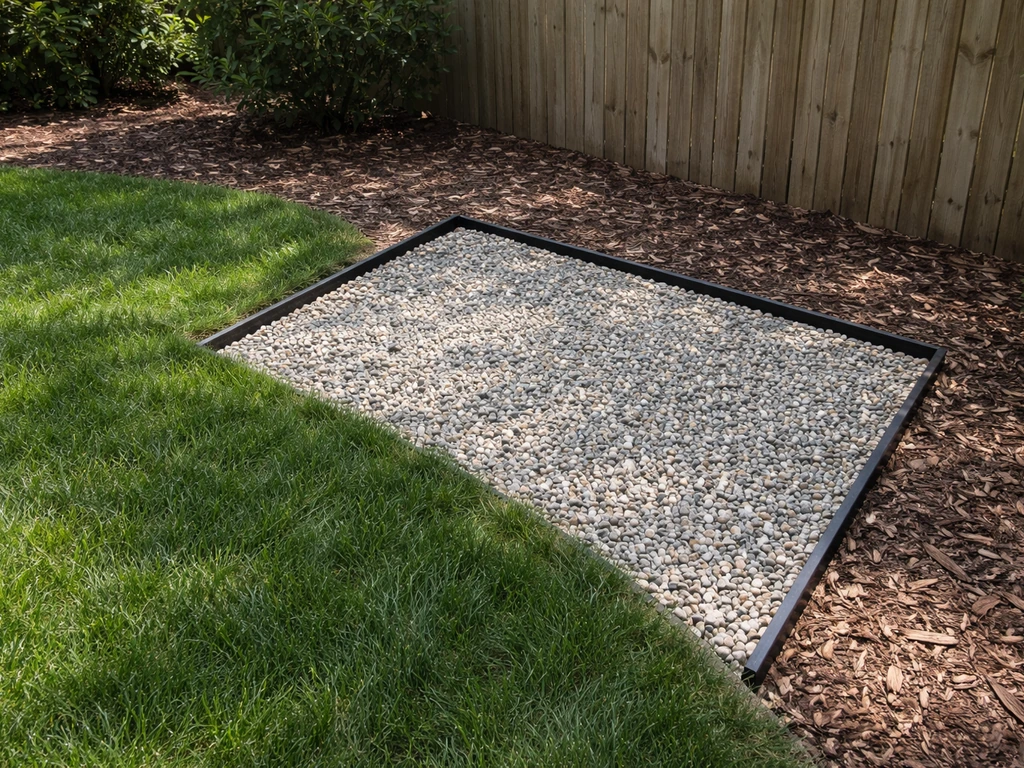
Repairing a spot only to have the dog pee on it again next week is frustrating, and honestly it is the most common reason these repairs fail repeatedly. The most effective long-term solution is redirecting where your dog pees, not trying to make your lawn tougher than concentrated nitrogen. Here are the practical approaches that actually work: If you want ideas for how to landscape areas where grass won't grow, focus on low-maintenance groundcovers, mulch, and durable hardscaping instead of reseeding.
- Train your dog to use a designated potty area: a mulched corner, a gravel patch, or a section of the yard you do not mind sacrificing. Consistency and positive reinforcement over two to four weeks is usually enough to redirect even habitual dogs.
- Flush any spot your dog pees on immediately: keep a watering can near the back door, or run a hose for 60 to 90 seconds over the spot right after you see it happen. This alone dramatically reduces burn severity.
- Make sure your dog is well hydrated: more water intake means more dilute urine, which causes less concentrated damage. This is simple and worth trying.
- Consider a designated dog-friendly ground cover in high-traffic zones: pea gravel, mulch, or stepping stones in areas where the dog repeatedly gravitates. These spots will never hold grass well with a dog using them daily, and alternatives are more realistic. You might look at ideas for areas where grass won't grow if you have a chronic trouble spot that keeps failing regardless of repairs.
- Skip dietary supplements that claim to change urine pH without talking to your vet first: some products are marketed for this but Colorado State University Extension cautions against them, and research confirms urine pH is not the main driver of grass damage anyway.
- Avoid over-fertilizing the lawn near dog areas: a lawn already running high on nitrogen has less buffer against additional nitrogen hits from urine. Keep fertilization moderate in zones your dog uses heavily.
Kansas State University is blunt about one reality: the only guaranteed way to prevent all urine damage is to keep the dog off the lawn entirely. Most of us are not willing to do that, so the goal becomes managing the damage to a level you can live with, not eliminating it perfectly. If you are trying to prevent repeat burn, remember that grass won't grow where dog urinates, so redirecting and using a designated pee spot can help designated spot. A combination of prompt rinsing, redirecting to a designated spot, and keeping a basic repair kit on hand (a bag of perennial ryegrass or tall fescue seed, some compost, and a small rake) means you can fix any new spots before they become a persistent eyesore.
When standard grass repair just won't hold
If you have one or two spots that you have reseeded three or more times and they keep dying back, the honest answer is that standard turf is probably not the right material for that location. Dogs that use the same corner of the yard every single day without fail will always outpace your repair efforts. ideas for areas where grass won't grow.
In that case, converting the zone to a non-grass surface is the practical move, not a failure. If you are dealing with a stubborn trouble zone where grass keeps failing, converting to what to grow instead of grass is often the practical move. If you want to plan a full low-maintenance zone, these landscaping ideas can help you design areas where grass won't grow areas where grass won't grow (non-grass surface).
If you want ideas for side of house where grass won't grow, think about non-grass edging like gravel, pavers, or mulch beds that still look clean and intentional. Gravel, bark mulch, pavers, or a purpose-built dog run keeps the area clean, durable, and low-maintenance.
If you have persistent trouble zones beyond just urine damage, exploring backyard landscaping ideas for areas where grass won't grow can give you creative options that hold up under real dog traffic instead of fighting a losing battle every season. If you are dealing with a stubborn trouble zone where grass keeps failing, these ideas for areas where grass won't grow can help you switch to something that stays attractive and practical.
If you have persistent trouble zones beyond just urine damage, exploring backyard landscaping ideas for areas where grass won't grow can give you creative options that hold up under real dog traffic instead of fighting a losing battle every season. If you want a longer-term plan, look at what to grow instead of grass for spots that keep getting damaged areas where grass won't grow. If you want more options for trouble zones like this, see our ideas for areas where grass won't grow.
FAQ
How long after a dog pees should I water to prevent dead spots?
Water as soon as possible, ideally within 30 to 60 minutes. If it is already been a few hours, heavy irrigation can still help, but you may not fully prevent root burn, so plan to inspect for dead crowns and be ready to reseed if the area browns and does not respond after a week.
Does the amount of urine matter, or is it just acidity?
Amount and concentration matter more than pH. Large volumes in a small area deliver more nitrogen and salts at once, which is what scorches roots. That means a puddle or a repeated marking in the same spot is usually worse than one small pee, even if pH values seem similar.
Will rinsing the spot wash the urine deeper into the soil and make it worse?
If you use a thorough flood, you are diluting and moving the concentrated salts and urea away from the roots, not just spreading them around. The key is enough water volume and time, not occasional spritzing. Also avoid overdoing drainage that turns the yard into runoff, especially on slopes.
How can I tell if grass is truly dead at the crown before I reseed?
Do a simple tug test once the spot has had time to dry back (often within 1 to 2 weeks). If the straw-colored blades pull out easily and the crown lifts with little resistance, the roots are not intact. If you feel resistance and see some green at the base, you can often nurse it back with watering and keep debris off the area.
Is it better to overseed immediately after a pee or wait until the area is repaired?
If the pee is fresh and the crown still has life, wait a few days to confirm whether it greens up. Reseeding a spot that is still actively stressed can waste seed. For established dead patches that have not improved after about 2 to 3 weeks, start removal and reseeding right away.
What is the best way to keep dogs from re-soiling the same patch during recovery?
Use a physical barrier for at least 3 to 4 weeks, even if the grass looks better sooner. Options include temporary fencing, a “garden gate” panel, or movable dog play pen around the repair area. Leash walking away from the spot during potty breaks also helps prevent repeated nitrogen dumps.
Should I use compost only, or can I mix in fertilizer when reseeding dog-pee spots?
Skip synthetic fertilizer for this repair phase. The salts and nitrogen already pose a risk, and added fertilizer can worsen burn. Use finished compost or quality topsoil only (a thin layer), then rely on consistent moisture for germination.
What mowing and foot traffic rules apply to repaired patches?
Avoid mowing until the new turf reaches about 3 inches, and do not allow dogs or heavy foot traffic on the patch during the first 2 to 4 weeks. Early traffic can tear seedlings before they root deeply, causing re-burn-like bare areas even if the urine issue is solved.
Can I use sod instead of seed on dog-pee spots, and will it survive better?
Sod can work well, especially for warm-season lawns or when you need faster visual coverage. However, sod only succeeds if the dead zone is properly excavated and the soil is loosened and amended. If the urine spot is repeatedly marked, sod can still fail because the new roots get hit again.
If my lawn keeps failing in the same corner, do I need a full soil test?
A full soil test is not always necessary, but it is useful when you have recurring failures across seasons or multiple urine spots. At minimum, do a quick garden-center pH and nutrient check to rule out other issues like extreme pH, chronic compaction, or low fertility that can slow recovery.
Is there any safe “spot neutralizer” product I can use instead of just water?
In general, avoid DIY salt-based neutralizers like baking soda or gypsum. Many commercial “enzyme” products are marketed as solutions, but they vary widely, and they do not replace the most reliable step, dilution by deep watering. If you use any product, treat it as an add-on to the rinse, not a substitute for it.
How do I repair a dog-pee spot in heavy shade?
Shade slows germination and keeps soil cooler and wetter, which can reduce recovery speed. Choose shade-tolerant seed matched to your grass type and expect a longer rooting period. If the area stays damp, reduce watering frequency while keeping the top layer moist, and watch for thinning that may require extra overseeding later.
Will sterilizing the patch or removing all soil help prevent future damage?
Complete soil removal is usually unnecessary and can create a new problem with drainage and compaction. Better results come from removing dead plant material, loosening the top 2 to 3 inches, amending with a thin compost/topsoil layer, and then preventing repeat urine contact with barriers and redirection.
What should I keep in my “dog-spot repair kit” to be ready next time?
Have the essentials ready: a small rake for debris removal, a hand cultivator or fork for loosening, finished compost, and the correct seed type for your lawn (perennial ryegrass or tall fescue blend for cool-season repairs). Add a way to deliver a deep rinse quickly (a hose with good reach) so you can flood fresh spots immediately.
Next Articles
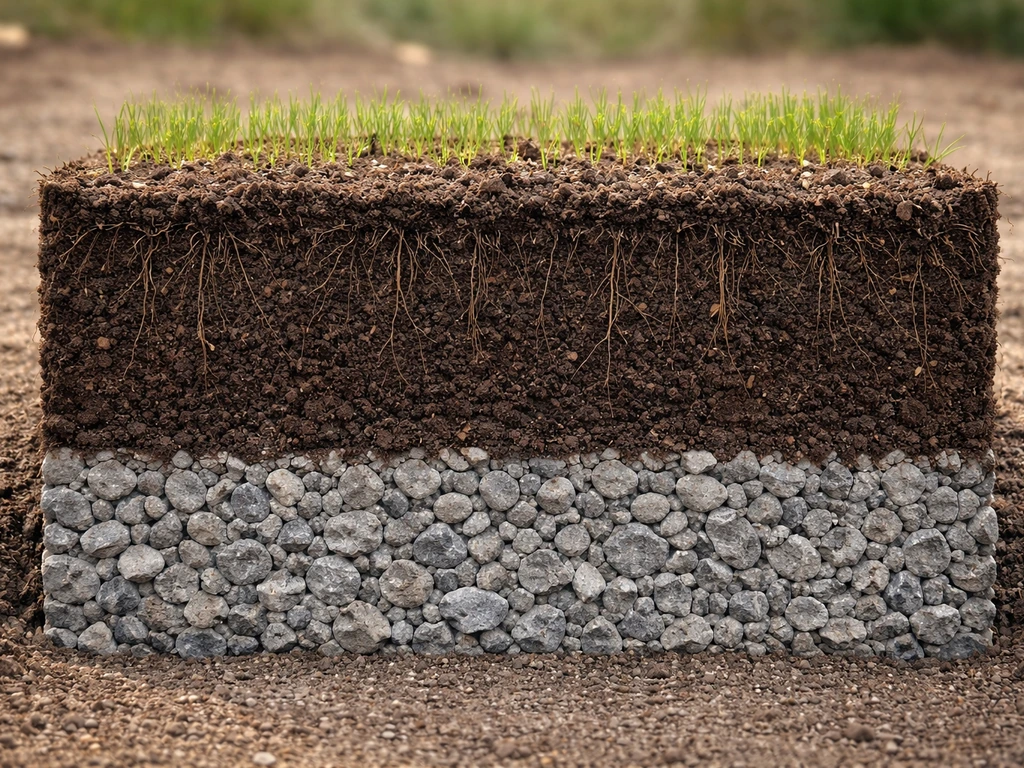
Can You Grow Grass Over Gravel? How to Do It Right
Learn when you can grow grass over gravel and follow a step-by-step method for soil depth, drainage, seeding or sod, and
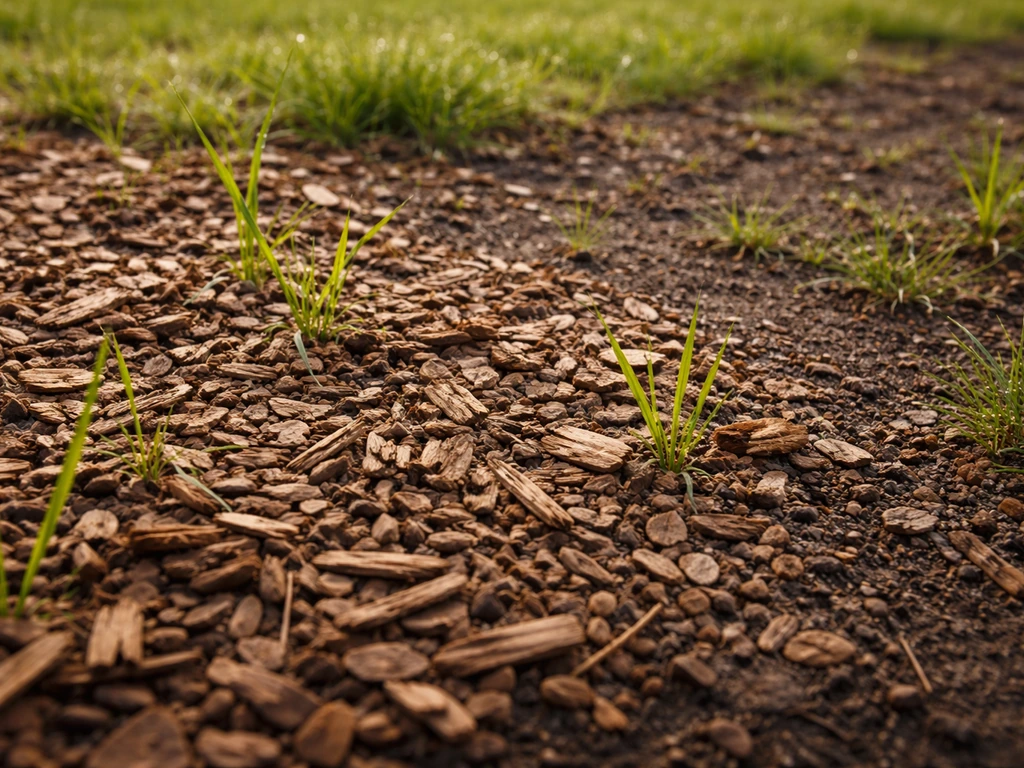
Do Wood Chips Help Grass Grow? When They Work and When Not
Learn when wood chips help grass grow, when they steal nitrogen, and step-by-step how much to apply and seed options.

Will Potting Soil Help Grass Grow? What Works and What Fails
When potting soil helps grass grow, when it fails, and how to prep, apply, seed, water, and troubleshoot bare spots.