Spreading hay over bare or thin spots will not reliably grow grass on its own. Hay is cut forage, mostly dried grasses and legumes bundled for animal feed, and while it may contain some grass seeds, those seeds are often from weed or pasture species you don't want in your lawn.
Does Spreading Hay Grow Grass? What to Do Instead
Marcus Volkmann
27 Jun 2026
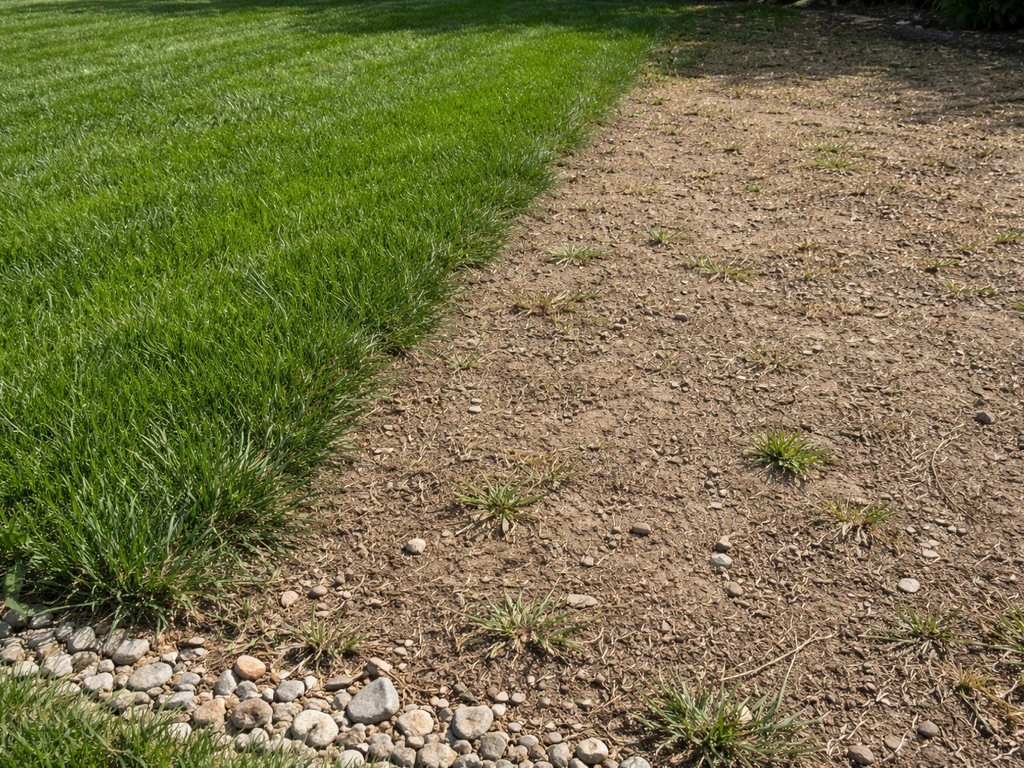
The bigger issue is that simply throwing hay down does nothing to address what actually makes grass establish: seed-to-soil contact, the right seed species, adequate moisture, and good growing conditions. If you’re trying to make grass grow, the answer is that dead grass (thatch) usually does not help unless you manage it by raking, improving airflow, and then seeding or fertilizing appropriately seed-to-soil contact. If you want grass, you need to seed intentionally.
Hay, at best, plays a supporting role as a light mulch cover, and even then, straw does that job better.
Why hay usually fails at growing grass
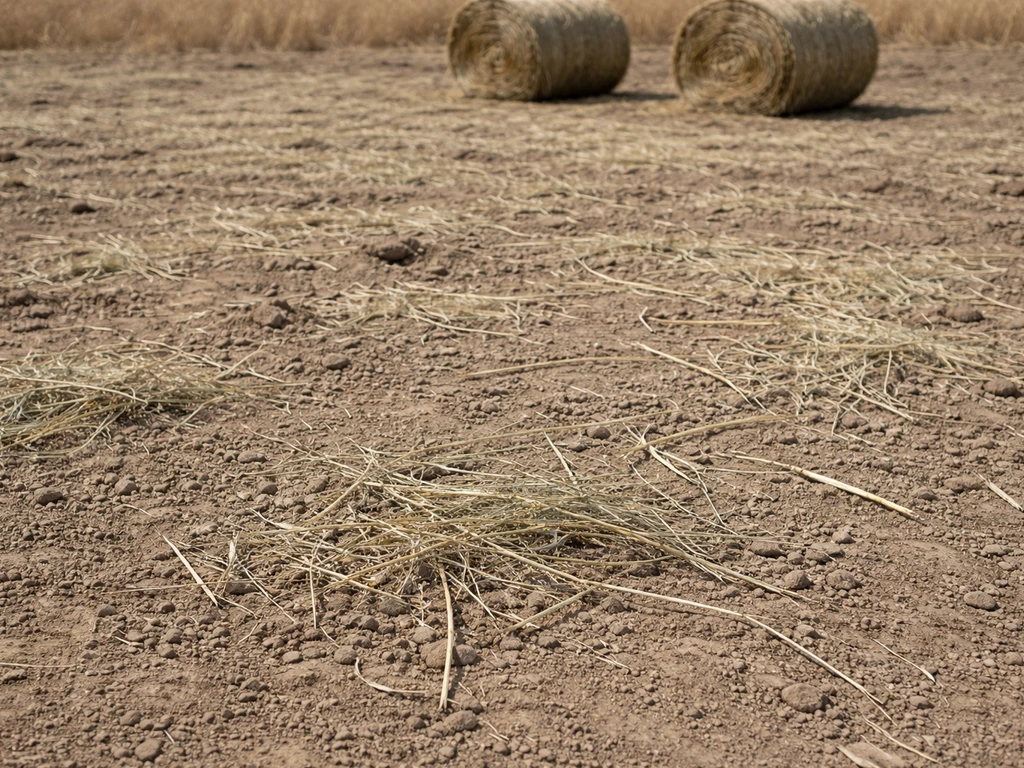
The biggest misconception is that hay equals grass seed. It doesn't. Hay is harvested for feed, not for seed production, so it's typically cut before seeds fully mature and ripen. Even when seeds are present, they're often from fescues, clovers, or ryegrasses bred for pasture use, not the turf-type cultivars you'd want in a home lawn. What you'll more likely get is a patchy mess of weedy pasture grasses that look out of place and compete aggressively with any decent lawn grass you're trying to establish.
Then there's the weed problem. University of Nevada extension research is pretty blunt about this: hay has a high probability of containing weed seeds. University of Maryland extension echoes the same warning, specifically cautioning homeowners not to confuse hay with straw because of that seed contamination risk. I've seen this play out firsthand, someone spreads a bale of cheap hay hoping for a lush lawn and ends up with a crop of thistles, pigweed, and broadleaf weeds by midsummer.
Hay also isn't fertilizer. A lot of people assume spreading organic material feeds the soil and that somehow leads to grass growth. Hay does break down eventually and adds some organic matter, but it's a slow, inefficient way to improve soil nutrition and it doesn't replace what grass seedlings actually need: available nitrogen, phosphorus, and a loose seedbed with good structure. Piling hay onto poor soil doesn't fix the soil. If you’re wondering whether sawdust helps grass grow, it usually acts more like a rough mulch and can cause nitrogen loss or uneven moisture unless it’s properly aged and amended does sawdust help grass grow.
Finally, if you spread too much, you smother everything underneath. Grass seed needs light to germinate, University of Maryland extension puts the limit at about 1/4-inch of straw coverage. A thick layer of hay blocks sunlight, traps excess moisture against the soil surface, and creates a mat that seedlings physically can't push through. Too much of any mulch material kills germination before it starts.
When hay can actually help
There are two narrow situations where hay is genuinely useful for grass establishment. The first is when the hay still contains viable, mature seed heads from desirable grass species. This is uncommon with commercially baled hay, but if you're sourcing hay locally and you can see intact seed heads from species like tall fescue or perennial ryegrass, those seeds have a real shot at germinating. You'd still need to scratch up the soil and establish good seed-to-soil contact, but the hay essentially doubles as a seed and light mulch in one application. Inspect the bales before you buy if this is your plan.
The second situation is composted or well-aged hay. Old hay that's been sitting in a pile for a season or two breaks down significantly, and much of the weed seed viability drops as the material heats up in the composting process. At that stage, it behaves more like a rough compost topdressing than a weed seed bomb. It can add organic matter to poor or sandy soil and improve moisture retention, both of which support grass establishment when combined with proper seeding. Think of it as a low-grade soil amendment rather than a mulch or seed source.
How to use hay correctly if you want grass to grow
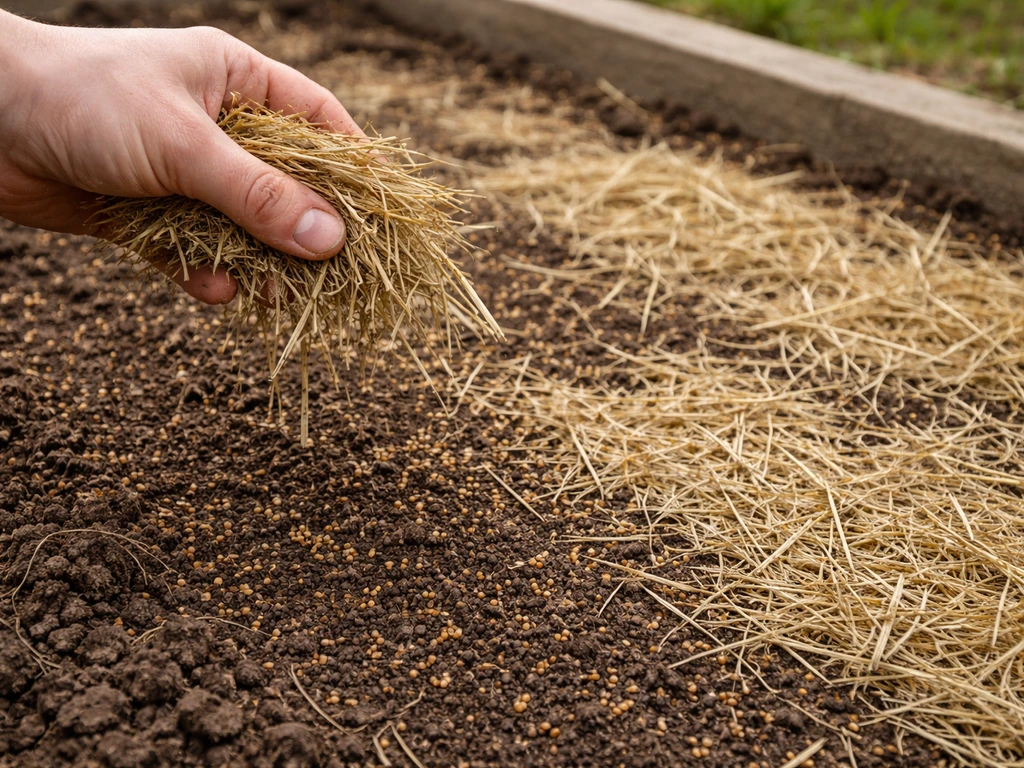
If you're committed to using hay, here's how to do it without sabotaging your results. The key is treating hay as a mulch-only layer applied after seeding, not as a substitute for seeding itself. If you are wondering whether will grass grow in ash, the same idea applies: use the right material thickness and focus on proper seed-to-soil contact instead of hoping ash will act like seed or mulch hay as a mulch-only layer.
- Inspect your hay first. Look for visible seed heads. If the hay is thick with mature weed seed heads (dandelion-like fluff, thistle spines, broadleaf pod clusters), don't use it. Find a better source or switch to straw.
- Prepare the soil before anything else. Rake, loosen, or slice the top 1/4 to 1/2 inch of soil. Grass seed germinates best when it has direct contact with the soil surface — not sitting on top of compacted ground or thatch.
- Seed first, hay second. Spread your chosen grass seed at label-recommended rates for your species (cool-season types like tall fescue or Kentucky bluegrass in fall; warm-season types like Bermuda or zoysia in late spring). Penn State extension recommends a slit-seeder approach to press seed into shallow 1/4-inch grooves for best contact.
- Apply hay lightly — aim for 1/4 inch or less of coverage. You should still be able to see the soil through the hay. This is a moisture-retention layer, not insulation.
- Water consistently. Keep the seedbed moist (not waterlogged) for the first two to three weeks. This means light, frequent watering — once or twice daily in dry conditions — until seedlings are established.
- Time it right. Cool-season grasses establish best in late summer to early fall (late August through October in most of the U.S.). Warm-season grasses need soil temps above 65°F, typically late May through June. Hay applied during the wrong season provides no benefit and increases mold and matting risk.
Assess your lawn conditions before you do anything
Before you grab a bale of anything, spend ten minutes actually looking at the problem area. The reason hay gets tried in the first place is usually because grass failed there once already, and that means there's an underlying condition worth diagnosing. Throwing mulch at a symptom without addressing the cause just delays the same failure.
| Condition | What to Look For | What It Means for Your Approach |
|---|---|---|
| Soil quality | Compacted, sandy, or clay-heavy soil; water puddles or runs off immediately | Amend with compost before seeding; topdress won't fix deep compaction alone |
| Sunlight | Dense shade from trees or structures; less than 4 hours of direct sun | Standard grass species won't thrive; choose shade-tolerant fescues or consider ground cover |
| Moisture | Consistently dry, slopes that drain fast, or chronically wet low spots | Adjust irrigation, improve drainage, or select species suited to the moisture level |
| Substrate | Sandy base, gravel fill, construction debris beneath surface soil | May need 4+ inches of quality topsoil before any seeding will take hold |
| Existing thatch | More than 1/2 inch of compacted dead material at soil surface | Dethatch or core aerate before seeding — hay on top of thick thatch accomplishes nothing |
Poor soil is one of the most common reasons grass fails in problem areas. If you're dealing with sandy substrate or heavily compacted ground, you're in the same boat as someone dealing with shade or poor drainage, no amount of hay or seed will fix it until the soil issue is addressed first. If you fix the soil first and then choose the right seed, you avoid the same kind of “will it work” uncertainty readers ask about in questions like does salt help grass grow. This is where a soil test (available through most county extension offices for under $20) saves you a lot of time and money by telling you exactly what's deficient.
Better alternatives that actually outperform hay
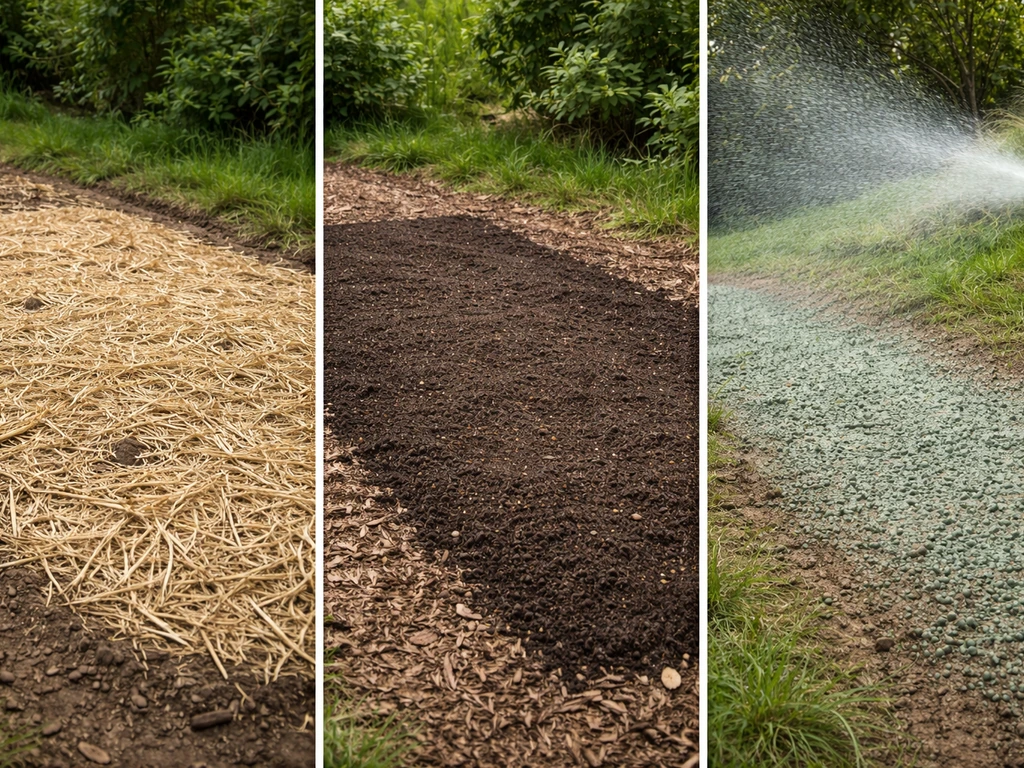
If your goal is to get grass established in a bare or struggling area, these approaches consistently outperform spreading hay. They're ranked roughly from most practical and affordable to more intensive.
Straw mulch over seeded areas
If you want a mulch layer over freshly seeded areas, use straw, not hay. Penn State extension calls it the most widely used and least expensive mulch for lawn establishment. Straw is the stem of grain crops (wheat, oat, barley) after the seeds have been harvested, so it has virtually no seed content compared to hay. It provides the same moisture retention and soil temperature benefits without the weed seed problem. One bale covers roughly 1,000 square feet at the right application depth.
Compost topdressing
A 1/4-inch layer of finished compost worked into the seedbed before seeding does more for grass establishment than any mulch layer. It improves soil structure, adds organic matter, helps sandy soil retain moisture, and loosens compacted clay enough for roots to penetrate. For thin or weak existing lawns, a compost topdress in fall combined with overseeding is one of the most reliable renovation methods available.
It's worth noting that ashes and other organic materials are sometimes suggested for soil improvement, but compost is the most consistent performer for general soil health. Ashes can sometimes be used as a soil amendment, but they are not a reliable way to help grass grow compared with proper seeding and compost ashes and other organic materials.
Proper seeding with the right grass species
Selecting the right grass seed for your specific conditions is often the single biggest factor in whether grass establishes at all. Shade-tolerant fine fescues for low-light areas, drought-tolerant tall fescues for dry slopes, and warm-season Bermuda or zoysia for hot southern climates all outperform generic seed mixes in the conditions they're designed for. Match the seed to your site, not to what's cheapest at the hardware store.
Sod
For problem areas where seeding has failed multiple times, sod is worth the extra cost. It gives you an instant surface, eliminates the germination window where bare soil erodes or dries out, and works well in spots where establishment timing is tricky (like slopes or high-traffic areas). It's more expensive per square foot than seed, but you're paying for a nearly guaranteed result rather than another shot in the dark.
Hydroseeding
Hydroseeding, where seed is mixed with water, fertilizer, and a tackifier slurry and sprayed onto the soil, is worth considering for large bare areas or erosion-prone slopes where conventional seeding is difficult. OSU turfgrass research notes that mulch material choice significantly affects germination uniformity, and hydroseeding's slurry effectively solves both the seed-to-soil contact problem and the moisture retention problem simultaneously. It's typically a contractor service, but costs less than sod for large areas.
What to do right now
If it's late spring or early summer (like right now in late June), your best move for cool-season grasses is to assess and prepare, loosen the soil, amend with compost if needed, and get ready to seed in late August or early September when soil temps cool and germination success jumps dramatically. In winter climates, snow cover can also play a role by insulating the soil and reducing temperature swings does snow help grass grow. For warm-season grasses in southern regions, you're still in the seeding window, so prepare the seedbed now, seed with the appropriate warm-season species, and use a light straw cover rather than hay. Either way, skip the hay bale unless you've confirmed it's seed-free and you need a quick, light moisture mulch for already-seeded ground.
FAQ
If my hay is weed-free, will spreading it grow grass better?
It helps only in the narrow case where the hay truly contains mature, viable seed heads from the grass you want. Most “weed-free” hay is still cut as forage before seed fully ripens, so seed viability is usually low. If you cannot visually confirm intact seed heads, treat hay strictly as mulch at a very light layer after seeding (or skip it).
How much hay is too much if I still want to use it as mulch?
Use a thin, light cover, not a bedding layer. A good practical rule is to keep it around a quarter inch or less, because thicker coverage blocks light needed for germination and can mat the soil surface so seedlings cannot emerge. If you see clumping or a felt-like layer forming, remove some material and reapply lightly or switch to straw.
Can I spread hay and then just water it until it takes?
Watering alone will not compensate for missing seed-to-soil contact, and it will often worsen problems if hay thickness blocks light. For best results, prepare the seedbed (loosen and grade), seed correctly for your conditions, then apply a thin straw or compost layer while keeping consistent moisture until germination.
What if I already spread hay, can I fix it?
Yes. If the hay is thick or you notice a dense mat, rake it off or pull it back so light can reach the soil. Then seed (if grass is not established), and cover lightly with straw or a thin compost topdress rather than adding more hay.
Will hay help established grass or only bare soil?
Hay can smother or shade young seedlings, and on existing lawns it can interfere with airflow and mowing by creating a mat. If you want to improve an existing lawn, prioritize core aeration and compost topdressing instead, then oversee with seed only where thin spots exist.
Does hay increase nitrogen for lawn growth?
Not reliably. Even though hay breaks down eventually, it is slow and usually not balanced for what grass seedlings need right when they germinate. If your soil test shows nitrogen deficiency, use appropriate fertilizer timing, or rely on compost incorporated into the seedbed rather than expect hay to feed seedlings.
Is straw the safe alternative to hay for covering new seed?
Yes, straw is usually the better choice because it has far less seed content than hay. Still apply a light layer so seeds can get light, and avoid using thick straw bales that can form a barrier over the surface.
Can composted hay work like compost to improve soil?
Often, yes, if it is truly well-aged and heated (like a managed compost). At that point it acts more like rough topdressing, with much lower weed seed risk. Even then, it works best when combined with proper seeding and soil preparation, not as a replacement for seed.
How do I avoid bringing in weed seeds if I buy hay?
Inspect the bales and source locally if you are attempting the rare “viable grass seed” scenario. For typical lawn establishment, avoid relying on hay altogether. If you use any bale, assume it can contain weed seed, and keep the layer thin so you can still manage weeds early rather than allowing a full weed canopy to establish.
Which is better, compost topdressing or mulch from hay/straw?
For most lawns, compost worked into the top of the seedbed gives the most consistent benefit because it improves structure and moisture retention while supporting seed-to-soil contact. Mulch (straw or very light cover) mainly protects the surface during germination, it does not replace soil improvement or correct seeding.
When should I seed instead of trying hay for a patch?
Seed success depends on your grass type and local soil temperatures. For cool-season lawns, many regions see best results in late summer to early fall; for warm-season lawns, seed in the active growth window. If you are outside the right window, hay will not “buy time” effectively, soil prep and timing matter more.
Next Articles
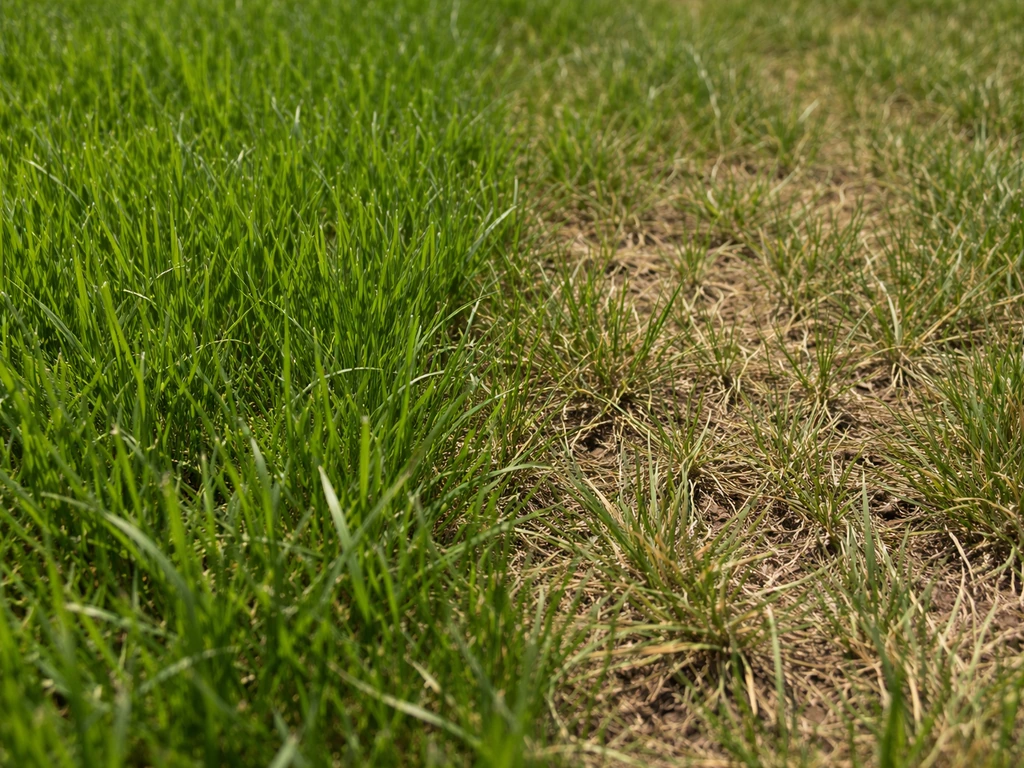
Does Salt Help Grass Grow? Effects, Risks, and Fixes
Learn if salt helps grass grow, how it damages soil and roots, and safer steps to restore and reseed lawns.
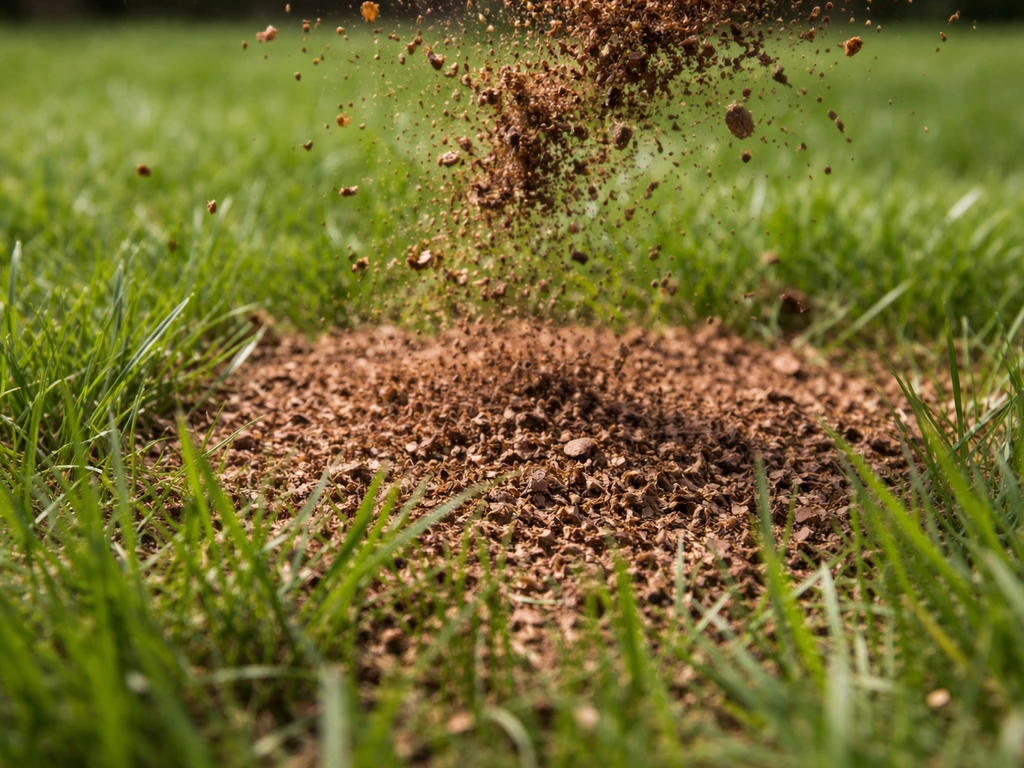
Does Sawdust Help Grass Grow? When It Works and How
Learn when sawdust boosts grass via moisture and aeration, and how to avoid nitrogen lockup and stalled growth.
Does Snow Help Grass Grow? What to Do After Thaw
Yes, snow can protect grass by insulating crowns, but wet melt can harm. Learn what to do after thaw to recover.