Sod will not grow directly on bare gravel. The roots need actual soil to anchor into, pull moisture from, and find nutrients. Gravel alone gives them none of that. But here's the thing: if you build a proper soil layer on top of the gravel first, sod can absolutely establish and thrive. The gravel doesn't have to go anywhere. You just need at least 4 inches of good topsoil covering it before you ever unroll a single piece of sod.
Will Sod Grow on Gravel? How to Make It Work or Choose Alternatives
Marcus Volkmann
18 Jun 2026
Why gravel is such a problem for sod
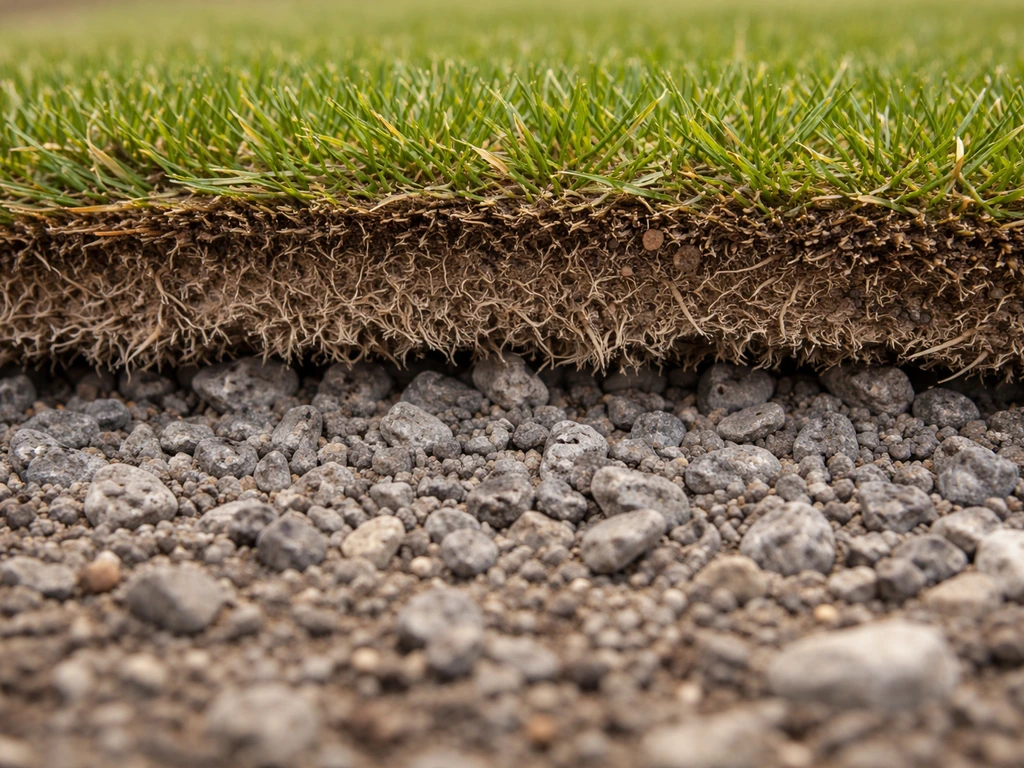
Sod comes with a thin layer of existing soil attached to the roots, usually about an inch or so. That existing layer is not enough to sustain the grass on its own. The roots need to push down into the ground beneath the sod within the first 10 to 14 days, or the grass starts dying. If you are dealing with hard ground instead of a gravel base, the same logic applies: sod needs enough soil depth to root, so you should check that it can establish before expecting it to thrive can sod grow on hard ground. On gravel, those roots hit a dead end almost immediately.
There are three specific problems gravel creates. First, there's no usable soil depth. Grass roots need to reach 4 to 6 inches of soil to access nutrients and moisture. PlantAnswers recommends removing rocks and gravel from the upper 2 inches of soil just to provide a uniform growth medium. On a gravel substrate, you're starting from zero. Second, drainage is extreme. Gravel drains so fast that the sod dries out before roots can establish. Good turfgrass needs consistent internal drainage, but not instant drainage. That balance is impossible on bare gravel. Third, there's no anchoring. Without soil particles for roots to grip, the sod sits loose, dries from the bottom up, and eventually curls, lifts, and dies.
Weed pressure makes it worse. Disturbing or covering gravel often exposes dormant weed seeds, and without a well-rooted turf to compete, weeds move in fast. This is one of the scenarios where putting sod on top of grass or on hard ground creates similar challenges, though gravel is arguably the most hostile base of all. If you’re wondering whether you can sod grow on top of grass, the main idea is the same: sod needs real soil contact to root and thrive.
When it can actually work
Sod over a gravel base can work well if you treat the gravel as a drainage layer and build a real soil profile on top of it. This is actually a legitimate setup in areas with poor drainage or clay-heavy yards, where gravel beneath topsoil helps prevent waterlogging. The key requirements are consistent grading, a proper soil depth, and no gravel migrating up into the root zone.
The minimum soil layer is 4 inches, and 6 inches is better. Virginia Tech Cooperative Extension recommends distributing replaced topsoil at a uniform 4-inch depth before grassing, and their soil testing guidance examines the 4- to 6-inch depth range specifically because that's where roots do their primary work. Anything less than 4 inches and you'll get patchy establishment, especially in summer heat or dry spells.
Grading matters just as much as depth. The surface needs to slope away from structures at roughly 1 to 2 percent to prevent pooling, and there can't be low spots where water sits. Tifton Turf's installation guidance specifically calls out rough grading before sod to prevent drainage problems. On gravel, this step is even more important because water moves quickly through the base, and any surface depression becomes a soggy, rotting mess.
One more thing worth checking: if the gravel area is surrounded by pavers, a driveway, or a hard border, confirm that water has somewhere to go. A gravel bed surrounded on all sides by concrete can actually trap water at the soil-gravel interface, which is just as damaging as drought.
How to do it right: prep and installation steps
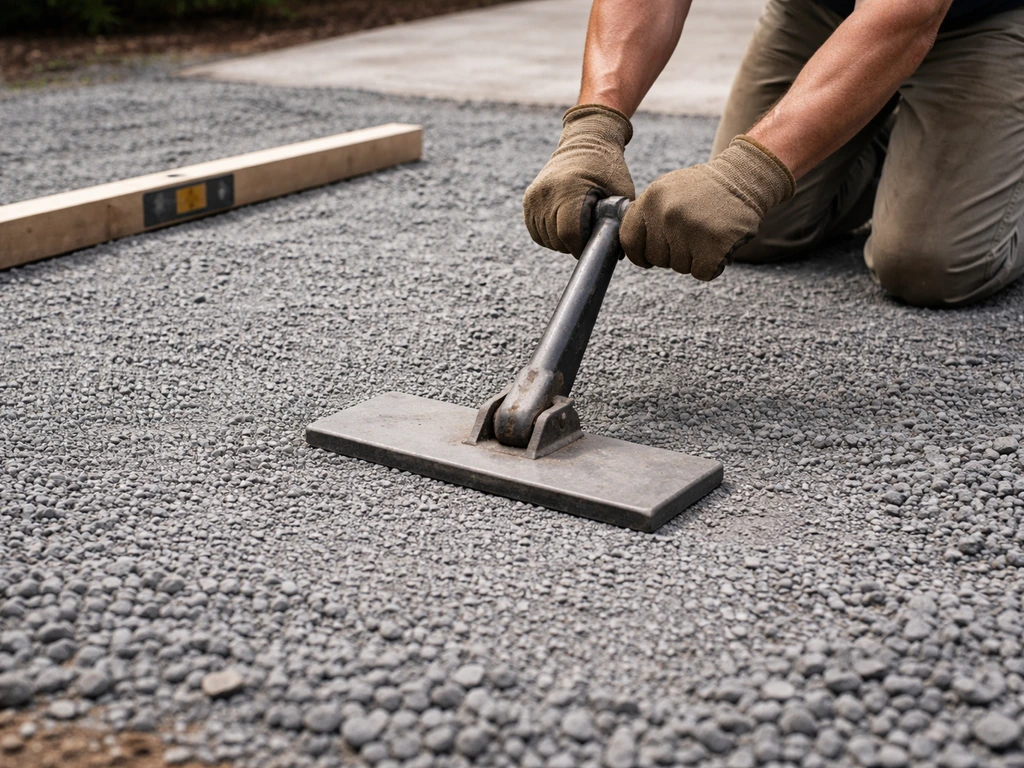
Step 1: Grade and compact the gravel base
Start by raking the existing gravel smooth and establishing your drainage slope. Use a long board or a laser level to check the grade. If the gravel is loose and deep, compact it with a plate compactor so it won't shift when you add topsoil on top. You want a stable, firm base, not a spongy layer that will settle unevenly after the sod goes down.
Step 2: Consider a geotextile separator
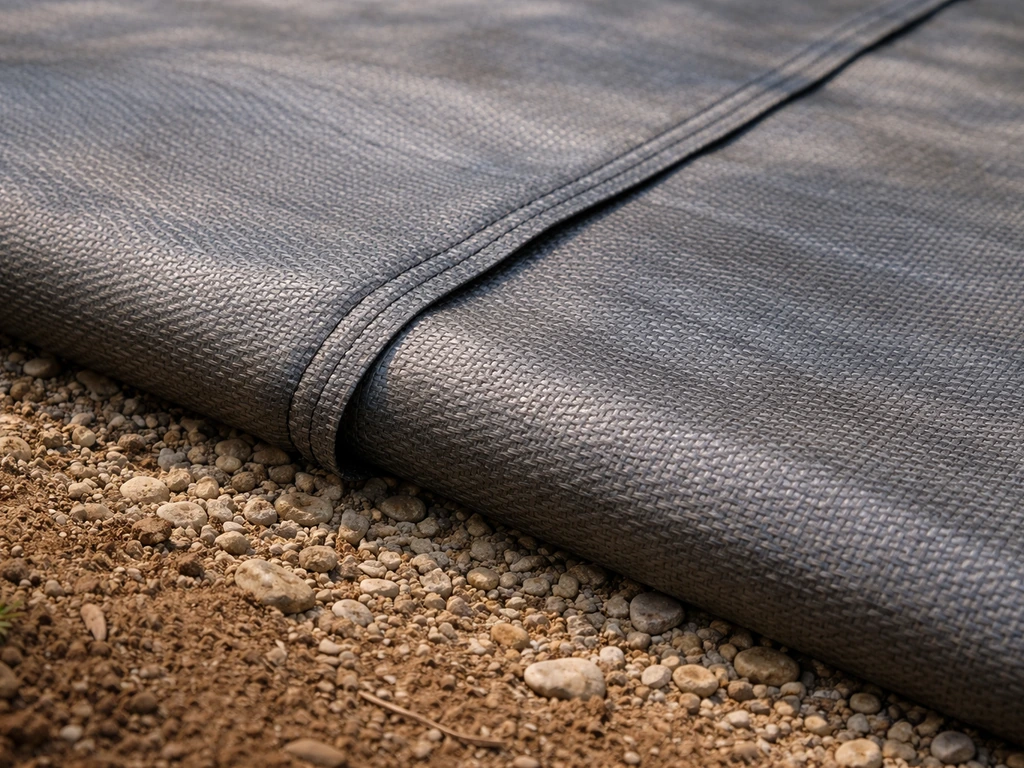
This step is optional but often worth doing. Laying a permeable geotextile fabric over the gravel before adding topsoil prevents two problems: gravel migrating up into the soil layer over time, and soil washing down into the gravel and ruining its drainage function. Use a woven geotextile with good permeability, not a solid landscape fabric that would trap water. Staple it down and overlap seams by at least 6 inches.
Step 3: Add and level your topsoil layer
Bring in a quality loam or topsoil-compost blend. A common mix is roughly 70 percent topsoil and 30 percent compost, which gives you good water retention without compacting into a hard layer. Spread it to a minimum 4-inch depth, 6 inches if you can. Rake it level, following your drainage grade. Do a soil test if you're unsure of pH and nutrient levels since Virginia Tech's guidance specifically ties pre-installation soil amendments to test results from that 4- to 6-inch depth. Adjust pH to the 6.0 to 7.0 range most turf grasses prefer.
Step 4: Set edging before the sod goes down
Install any plastic, aluminum, or steel edging along beds, driveways, or walkways before laying sod. This is much easier now than trying to cut and tuck edges after the sod is down. Edging also keeps the soil layer from migrating outward and helps the sod hold a clean line.
Step 5: Pre-emergent weed control
Fresh topsoil almost always brings weed seeds to the surface. Tifton Turf's sod installation guidance recommends pre-emergent weed control when soil disturbance is likely to bring up weeds. However, timing matters: many pre-emergents interfere with sod rooting, so either apply them 4 to 6 weeks before installation or skip them and plan to hand-pull the first flush of weeds after the sod establishes. Talk to your local extension office or sod supplier about compatible products for your turf type.
Step 6: Lay the sod
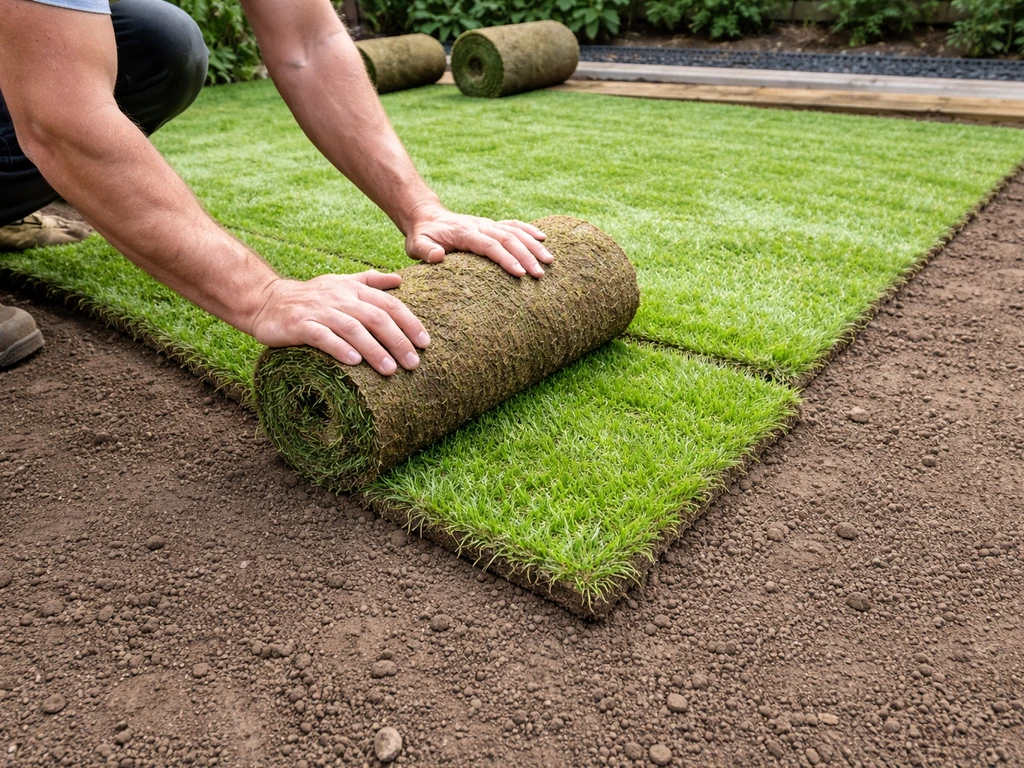
Lay sod in a brick-like staggered pattern with seams offset. Butt the pieces tightly together without overlapping or leaving gaps. Work from a straight edge (a sidewalk or string line) and use a sharp knife to cut pieces around curves and edges. Most importantly, press each piece firmly into contact with the soil beneath. Air pockets between the sod and the soil layer are one of the top causes of failure. University of Tennessee extension materials specifically cite sod-to-soil contact as the key variable for root penetration. After laying each section, walk on it or use a lawn roller to press it down.
Step 7: Roll and water immediately
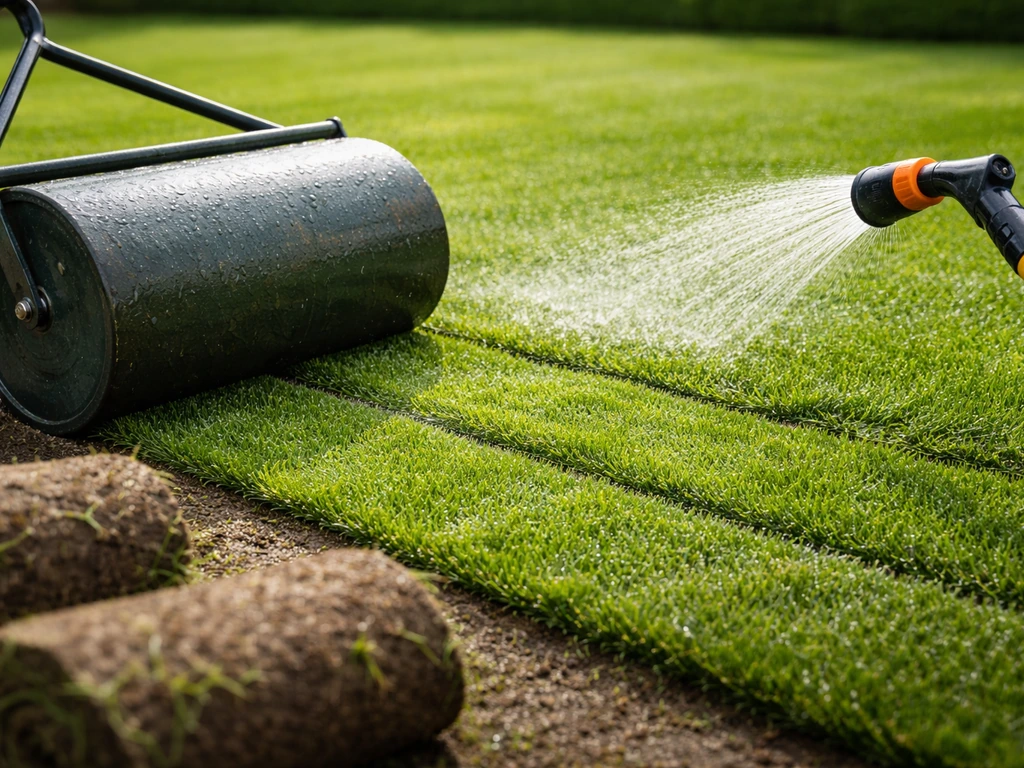
Once the sod is down, roll the entire area with a water-filled lawn roller to eliminate any remaining air gaps. Then water thoroughly right away. UC IPM guidance recommends keeping sod moist until it's well rooted, which takes roughly 10 to 14 days. Get water down to 6 inches deep on that first watering to wet both the sod layer and the new soil beneath.
Keeping it alive: the first few weeks
The first 4 to 8 weeks are make-or-break for new sod. Penn State Extension identifies this window as critical for new turf survival. On a gravel-based substrate, you're working with a shallower water reservoir than a normal native soil setup, so the sod can dry out faster than you'd expect, especially in summer.
Water once or twice daily for the first two weeks, enough to keep the sod and the top 2 inches of your new soil layer consistently moist but not waterlogged. Rutgers extension specifically warns that over-watering newly laid sod slows establishment and can cause failure, so you're aiming for consistent moisture, not saturation. After two weeks, scale back to every other day, then to a deep weekly watering as roots develop.
Around day 14, do the tug test: grab a corner of the sod and give it a firm but gentle pull. If it resists and doesn't lift, the roots have anchored into your soil layer. Washington State University Extension specifically recommends this tug test at about 14 days to confirm rooting. If it pulls up easily like a loose mat, give it more time and keep watering before walking on it or mowing.
Hold off on mowing until the grass blades are about one-third taller than the target mowing height, and never mow until the tug test confirms the sod is rooted. Mowing too early on loose sod can pull the pieces right out of the ground. When you do mow, keep the mower blade sharp and avoid turning sharply on new sod corners.
What to do when sod over gravel just won't take
Sometimes the site constraints make sod unrealistic. If you're working with a small area surrounded by impervious surfaces that traps drainage, or a spot that gets intense afternoon heat that dries out a thin soil layer before roots can establish, it's worth considering other options. If you are dealing with a small area boxed in by hard surfaces, you may also want to consider whether can sod grow on concrete instead of relying on a gravel-based workaround.
| Option | Best for | Rough cost | Notes |
|---|---|---|---|
| Build up soil properly (4-6 in.) and re-sod | Any gravel area with adequate drainage and space | Moderate | Best long-term result if drainage works; do the prep right |
| Groundcover plants (creeping thyme, clover, sedums) | Low-traffic decorative areas or slopes | Low to moderate | Lower maintenance, drought-tolerant, less prep needed |
| Decomposed granite or gravel with pavers | High-traffic utility areas, patios, side yards | Moderate to high | Zero establishment period; permanent solution |
| Raised bed turf (built-up frame with topsoil) | Small areas where grading is not possible | Moderate | Works well for contained patches; requires edging or frame |
| Artificial turf | High-traffic areas, pet zones, shaded spots | High upfront | No watering or mowing; good over compacted gravel base |
If sod is truly the goal, the fix is almost always a soil depth problem. Bring in more topsoil, improve the grade, and try again. A well-prepared 4- to 6-inch soil layer over gravel is a legitimate base for a healthy lawn. Skipping that step is what causes failure, not the gravel underneath.
Troubleshooting common failures
Sod is lifting or pulling away at the edges
This usually means rooting didn't happen because there wasn't enough sod-to-soil contact or the soil layer was too thin. Press the sod back down and water deeply. If large sections keep lifting, you may need to pull them up, add more topsoil beneath, and re-lay. Gravel migrating up through the soil layer can also prevent rooting, which is why the geotextile separator is a good investment.
Thin or patchy areas that won't fill in
Persistent thin spots over a gravel base are often soil depth issues in specific locations. Check whether the gravel is higher in that spot, reducing your effective soil layer. Use a soil probe to measure actual depth at the thin spots. Top-dress those areas with a compost-soil mix and overseed or patch with new sod pieces.
Sod drying out fast despite regular watering
This is the classic gravel-substrate problem. Water drains through gravel so quickly that even with daily watering, the thin soil layer above can't hold moisture long enough. Missouri Extension recommends watering to a 6-inch depth when daily watering isn't possible. If the soil layer is only 4 inches and sits on fast-draining gravel, you're fighting physics. The fixes are either increasing the soil depth, adding organic matter to improve water retention, or watering more frequently in short cycles rather than one long soak.
Sod rotting or turning yellow in low spots
If there are depressions where water collects between the soil and gravel, the roots get waterlogged and the sod rots. This looks like soggy, yellow-to-brown patches that don't recover with reduced watering. The fix is to remove the affected sod, correct the grade in that area to restore drainage slope, and re-lay. This is why grading before adding soil is so important and not a step you can skip.
The honest bottom line: sod over gravel is a soil depth and prep problem, not a grass variety problem. Get the base right and the sod will grow. Rush the prep or skimp on soil depth and you'll be pulling dead sod off the ground in three weeks.
FAQ
Will sod grow on gravel if I leave the gravel visible under the sod?
Yes, but only after you fix the base. If the soil layer over the gravel is under 4 inches, the sod typically cannot anchor before it dries out, so overseeding will struggle. If you already have 4 to 6 inches of soil, overseeding can work, just keep the new seed consistently moist and plan light top-dressing that does not bury crowns too deeply.
What should I do if gravel migrates up after the sod is installed?
If you see gravel creeping up into the topsoil or sod roots, treat it as a base-failure signal, not a cosmetic issue. Stop adding water, check the soil depth at the problem spots, and consider adding a geotextile separator or re-laying after removing the affected sod, then restore the full 4 to 6 inches of topsoil over the gravel.
How can I tell if my gravel base will trap water under the sod?
If drainage is trapped by pavers or concrete on all sides, you can get waterlogged conditions at the soil-gravel interface even though the gravel itself drains fast. To test it, run a slow hose flow for 30 to 60 minutes in a corner and observe where water goes. If it pools at the boundary, you will likely need a routed outlet, a different edge design, or a redesigned slope before laying sod.
Can I fix poor sod establishment by adding compost on top of the existing soil?
Topping up with compost without checking depth often makes problems worse because it can create a thin, uneven mat that dries quickly at the surface. Instead, measure actual soil depth with a soil probe, then add material only to restore a uniform 4 to 6 inches. Keep it level to your drainage grade, and compact lightly only if the base is loose, since over-compaction reduces root penetration.
How often should I water sod on gravel during hot, windy weather?
Sod laid over gravel is more sensitive to heat and wind because the base stores less moisture. In practice, that usually means shorter watering cycles early on (to keep the top layer consistently moist) and more frequent monitoring during summer. Use a screwdriver or soil probe to confirm moisture 4 to 6 inches down, not just that the surface looks wet.
Why do I keep getting dead or thin patches on my gravel-based sod?
Yes, and the symptoms are usually patchiness that correlates with low spots and uneven grading, not with sun exposure alone. Use straightedge and level checks after watering, mark any depressions, then correct grade before re-laying. If you already have sod down, lifting and re-creating the slope is often the only reliable fix, because roots will keep re-growing into an uneven, pooling interface.
Do I always need geotextile fabric under sod on gravel?
The geotextile layer is most helpful when you expect one of two things, gravel migrating upward or soil washing downward into the gravel. If your gravel is clean and already stable, and you can build a thick, uniform topsoil layer, it may be optional. If the area is prone to settling, erosion, or mixed materials, geotextile becomes more worth it.
Can I use pre-emergent weed control when installing sod over gravel?
Yes, if you use a pre-emergent at the wrong time. Many common products can slow root establishment, so the safer approach is to apply a compatible pre-emergent 4 to 6 weeks before installation, then water and install sod once the waiting period is met. If you already installed, plan for hand-pulling the first flush and switch to spot treatments only after rooting is confirmed.
What if the sod fails the 14-day tug test on a gravel base?
If the tug test shows easy lifting before you correct anything, watering alone often will not solve it. Press the sod back down, re-check sod-to-soil contact along seams and edges, and confirm you truly have 4 to 6 inches of soil at the lifted spots. If gravel is high in those areas, you may need to remove the loose sections, add soil to restore depth, and re-lay.
When is it safe to mow sod on gravel, especially near edges and curves?
Be extra careful about mowing height and timing if you used a thin topsoil layer. Wait until the grass is about one-third taller than your target height and rooting is confirmed, then mow with sharp blades and avoid turning on corners. If you must trim edges, cut small amounts and avoid dragging the mower over areas that still feel loose.
Next Articles
Does Sod Grow? How Sod Grass Takes Root and Establishes
Learn how sod grass roots and grows after install, timelines, watering and mowing, plus fixes for shade, sand, and poor
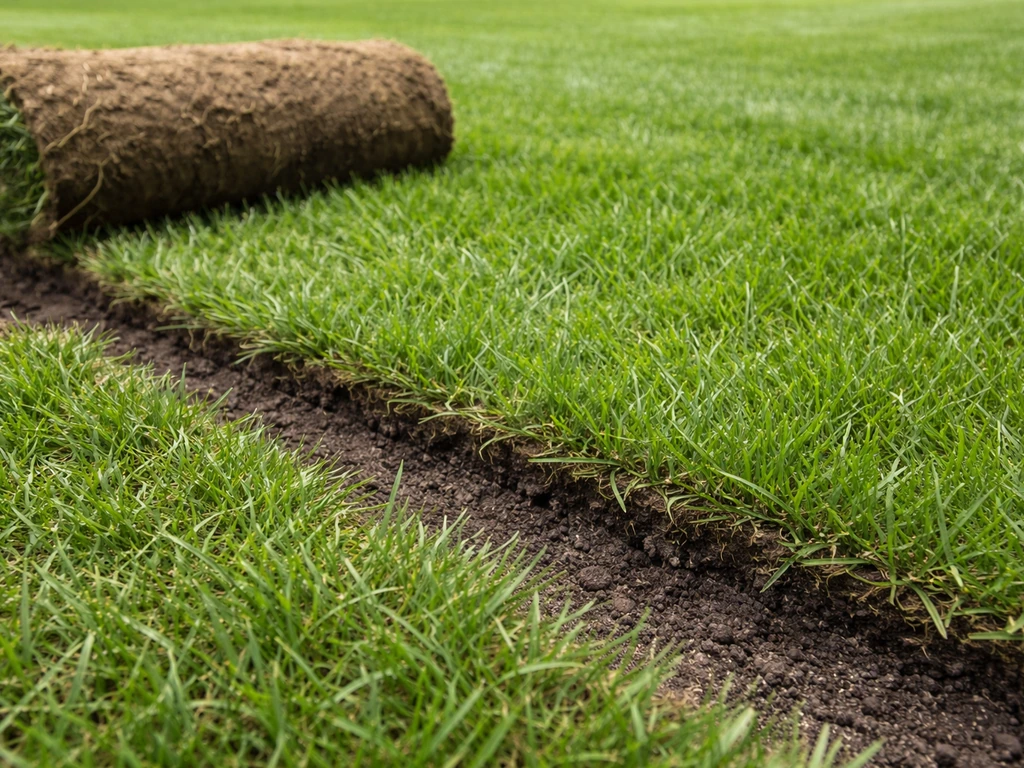
Can Sod Grow on Top of Grass? What to Do for Success
Find out if sod can grow over existing grass and get step-by-step prep, when to avoid it, and best alternatives.
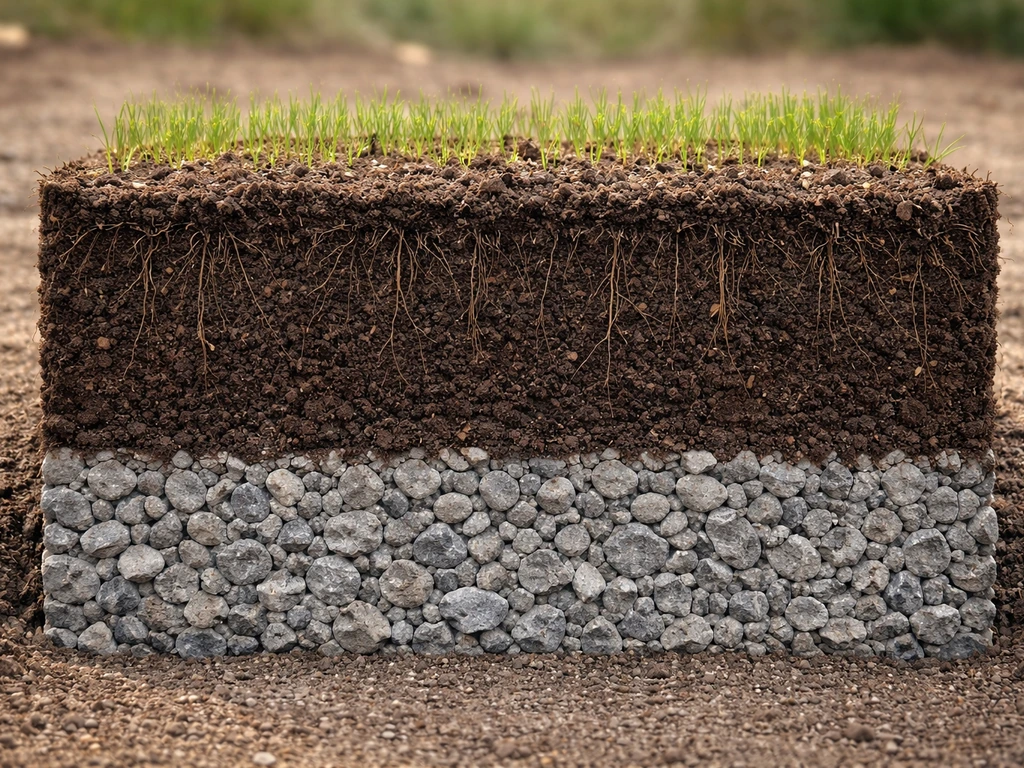
Can You Grow Grass Over Gravel? How to Do It Right
Learn when you can grow grass over gravel and follow a step-by-step method for soil depth, drainage, seeding or sod, and