
Growing grass is not inherently hard, but it fails constantly because a few specific things go wrong. Seeding is genuinely easy when your site has decent soil, good sun, consistent moisture, and the right seed for the conditions. It gets difficult fast when any of those variables are off, and most homeowners don't realize which one is working against them until they're staring at a bare patch of dirt three weeks later. The good news: almost every common failure point is preventable once you know what to look for.
Is It Hard to Grow Grass From Seed? Easy Steps and Fixes
Marcus Volkmann
24 May 2026
Easy or hard? The honest verdict
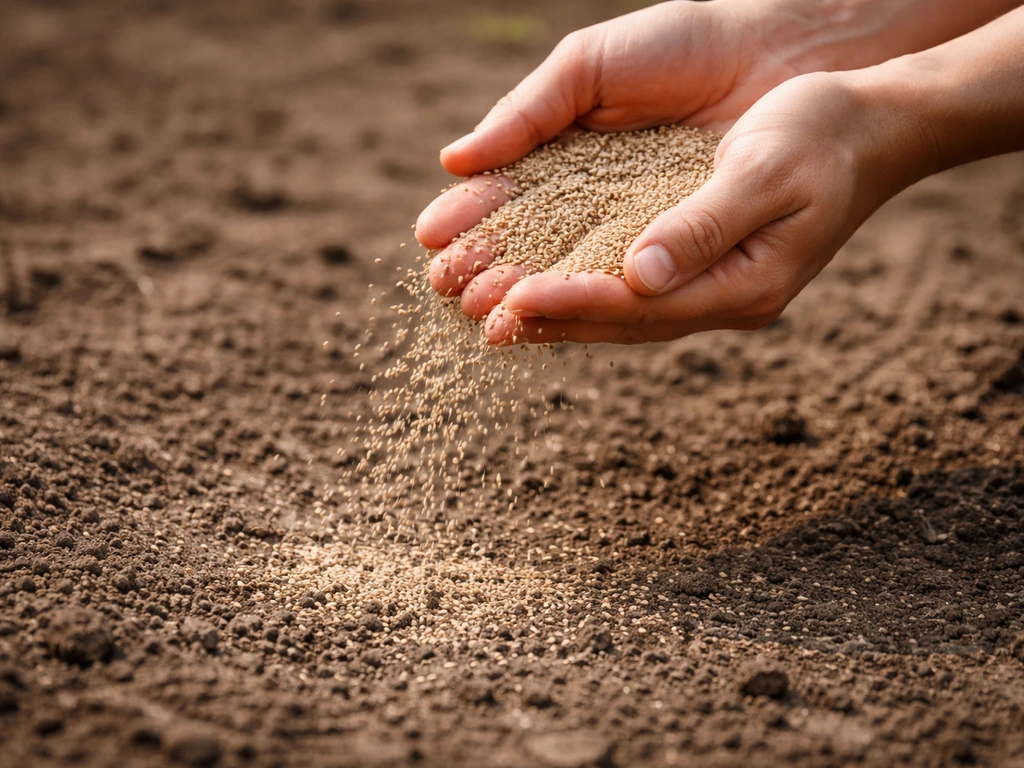
Grass seed is not finicky in the way that, say, vegetable seedlings can be. The seed itself is pretty resilient. What's unforgiving is the process around it: seedbed prep, seeding depth, timing, and keeping the surface moist long enough for the seed to root. Clemson Home and Garden Information Center recommends keeping the seedbed moist but not saturated until seedlings develop sufficient root systems, since letting the seedbed dry after swelling and before roots form can kill many seedlings keep the surface moist long enough for the seed to root. Get those right and grass practically grows itself. Skip any one of them and you'll get patchy results or total failure, even with expensive seed.
The difficulty scales directly with your site. A sunny, loamy backyard with reasonable drainage and good topsoil? You can seed that in an afternoon and get a thick stand with basic care. A shaded yard under maple trees, with compacted clay or pure sand, in the wrong season? That's a genuinely hard project that requires the right seed, amended soil, adjusted watering, and realistic expectations. Plenty of spots exist where traditional grass simply won't perform well no matter what you do, and knowing that upfront saves a lot of frustration. Grass also struggles in places like “where grass don't grow,” so check shade, drainage, and soil pH before you commit to seeding.
How hard is it to grow grass from seed: the real success factors
Grass germination takes anywhere from about 6 to 30 days depending on species, soil temperature, and moisture consistency. Kentucky bluegrass sits at the slow end of that range, sometimes taking up to 30 days to show any green. Tall fescue and perennial ryegrass are much faster. That window is where most people lose the battle, because keeping a seedbed consistently moist for 2 to 4 weeks without washing the seed away or letting it dry out once takes real commitment and some planning.
The three most common reasons grass seeding fails, according to WSU Extension, are poor seedbed preparation, seeding too deeply, and seeding at the wrong time of year. All three are completely avoidable. Poor seedbed prep is the biggest one because it creates a cascade of other problems: loose, fluffy soil dries out at the surface, seeds end up at inconsistent depths, and there's no firm contact between seed and soil for moisture transfer.
Seeding depth is one that surprises people. Grass seed should never be buried more than 1/4 inch deep. The sweet spot is 1/16 to 1/8 inch. If you rake seed in too aggressively or topdress too heavily, you bury it too deep and it germinates underground but can't push through the soil surface before it runs out of energy. This is especially common with USDA NRCS noting that soil crust can prevent emergence even when the seed has already germinated beneath it.
Read your site before you do anything else
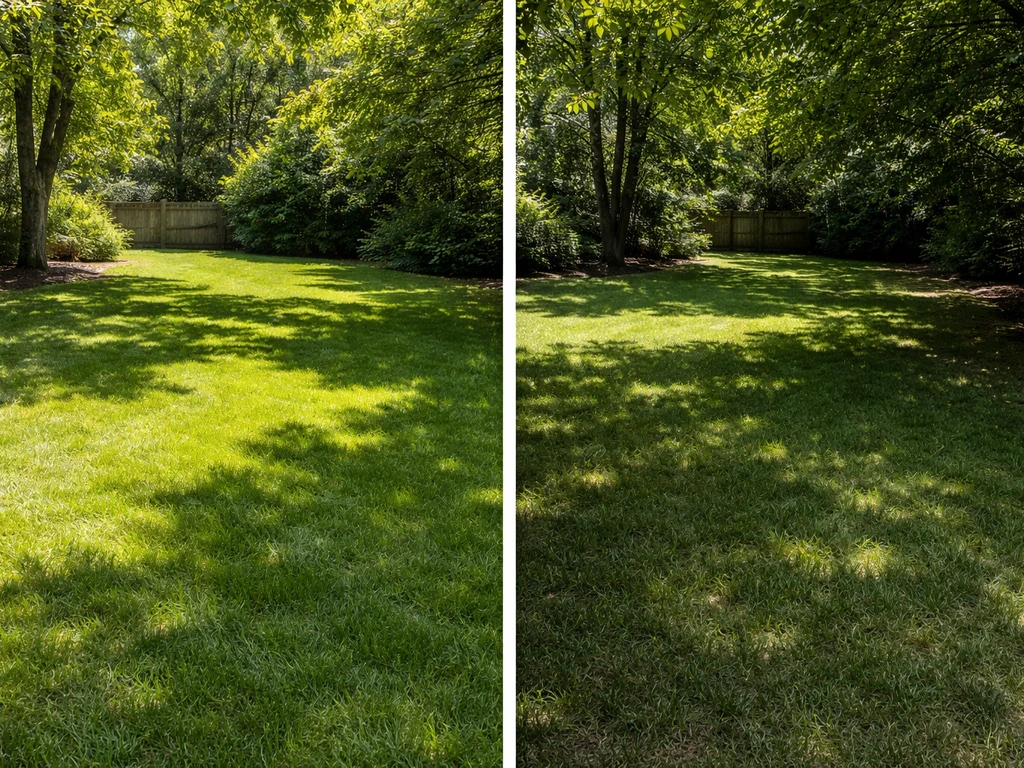
Before you buy a single bag of seed, spend 20 minutes actually assessing your yard. I know that sounds basic, but it's where most projects go sideways. You need to know four things: how much direct sun the area gets, what your soil is like, whether water drains away or pools up, and whether there are microclimates at play (areas under eaves, near concrete, under dense tree canopies). Each one changes your approach.
- Sun: Count hours of direct sunlight. Six or more hours is full sun and most grass types will work. Four to six hours is partial shade and limits your options. Under four hours is deep shade and only a few fine fescue varieties have any shot.
- Soil type: Grab a handful and squeeze it. Clay soil holds a ball shape and feels sticky. Sandy soil falls apart immediately. Loam crumbles gently and holds loose shape. Each type has different watering and amendment needs.
- Drainage: After a rain or a good soaking, check if water pools for more than a few minutes in one spot. Poor drainage suffocates grass roots and promotes disease. If it puddles badly, you'll need to address that before seeding.
- Microclimates: Under trees isn't just about shade—root competition and pH changes from leaf litter matter too. Near south-facing walls or pavement, soil dries out faster and surface temperatures spike. These spots need tailored approaches.
Seedbed prep: the step most people rush
Good seedbed prep is the single biggest lever you have over germination success. Purdue Extension is clear that poor soil preparation is a primary reason new lawns fail, and they recommend tilling to about 3 to 4 inches deep before raking to final grade. For smaller patch repairs, you don't need a tiller, but you do need to loosen, level, and then firm the soil back down.
The firmness test from WSU Extension is the most practical guide I've used: walk across your prepared seedbed and your footprints should sink no more than about 1 inch deep. If you're sinking in 2 to 3 inches, the soil is too loose, moisture will escape from the surface too quickly, and your seeds will end up at wildly different depths. If the soil is rock hard and you can't make a footprint at all, you likely have compaction issues that need to be addressed first.
Soil amendments worth doing before you seed
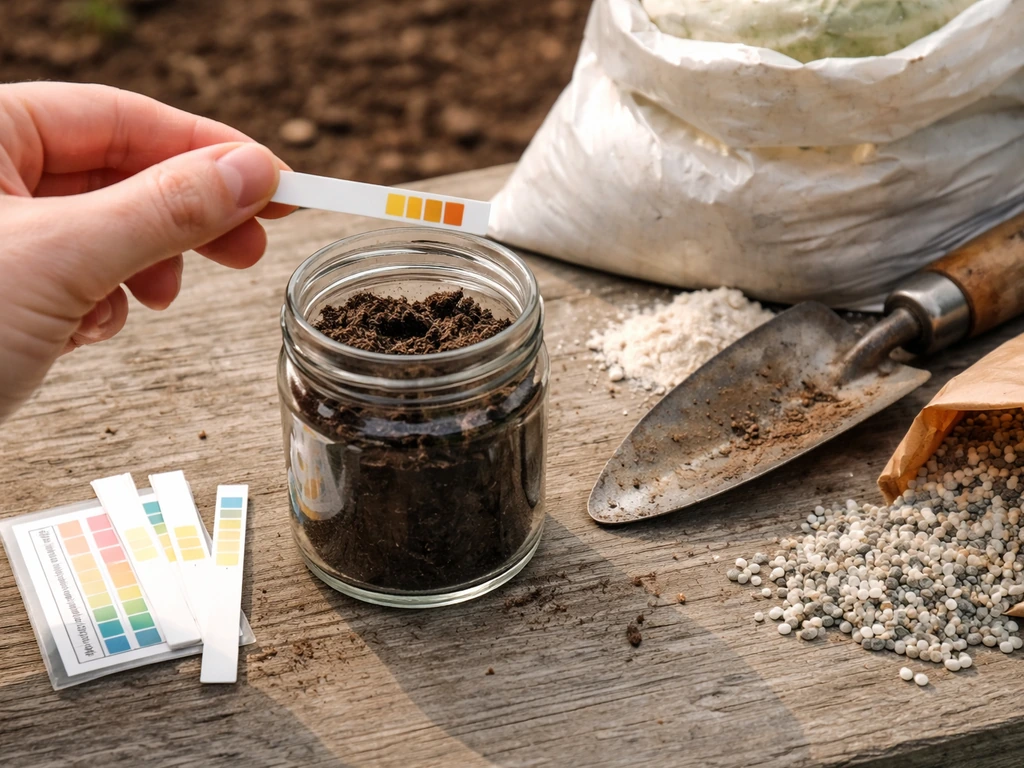
If your soil pH is below 5.5 and a soil test confirms low calcium, lime is worth adding before you seed. WSU Extension recommends working lime into the soil when it's needed, with larger amounts (sometimes over 100 lb per 1,000 sq ft based on test results) worked in during prep. For established lawns you're overseeding, don't apply more than 35 lb per 1,000 sq ft per application or you risk creating lime layers in the thatch.
For starter fertilizer, if your soil test shows nitrogen is the only deficiency, apply about 1 lb of nitrogen per 1,000 sq ft immediately after seeding. On sandy soils specifically, split that into two half-pound applications about two weeks apart to avoid the nitrogen leaching away before the roots can use it.
For clay soil, working in compost before seeding improves drainage and creates better seed-to-soil contact. For sandy soil, compost helps hold moisture longer. Neither fix is instant, but even a single pass of organic matter worked 3 to 4 inches in makes a measurable difference in your first-year results.
Timing, watering, and keeping the seedbed alive
Timing matters more than most people realize. WSU Extension specifically calls out seeding too late in spring or too early in fall as major failure points. For cool-season grasses (Kentucky bluegrass, fescues, ryegrass), late summer to early fall is ideal in most of the country. Soil is still warm enough to germinate seed quickly but air temperatures are cooling down, which reduces evaporation stress on seedlings. Spring seeding works but competes with weed pressure and increasingly hot temperatures. For warm-season grasses (bermuda, zoysia, St. Augustine), late spring to early summer when soil temps are consistently above 65 to 70°F is the target window.
Germination temperature matters a lot. Tall fescue, for example, germinates best cycling between about 68°F for 16 hours and 86°F for 8 hours across the day. If your soil temperature is well below 50°F or consistently above 90°F at the surface, germination stalls or the seed fails entirely. A cheap soil thermometer is one of the most useful tools you can have before seeding.
During germination, the objective is simple: keep the seed wet. University of Maryland Extension recommends daily watering during dry periods to keep the top soil layer moist but not saturated. Oregon State University adds a useful failure signal: if water puddles and stays that way for more than a few minutes after you water, you're applying too much at once. Light, frequent watering (two to three times a day in hot or windy conditions) is better than one heavy soak that runs off or pushes seed around.
Once seedlings are up and have developed a bit of root system, transition your watering to deeper, less frequent sessions that wet the top 4 to 6 inches of soil. This pushes roots downward and builds drought tolerance. Staying on the shallow, frequent watering schedule too long creates a lawn that's dependent on constant irrigation and never develops real root depth.
Picking the right seed for difficult conditions
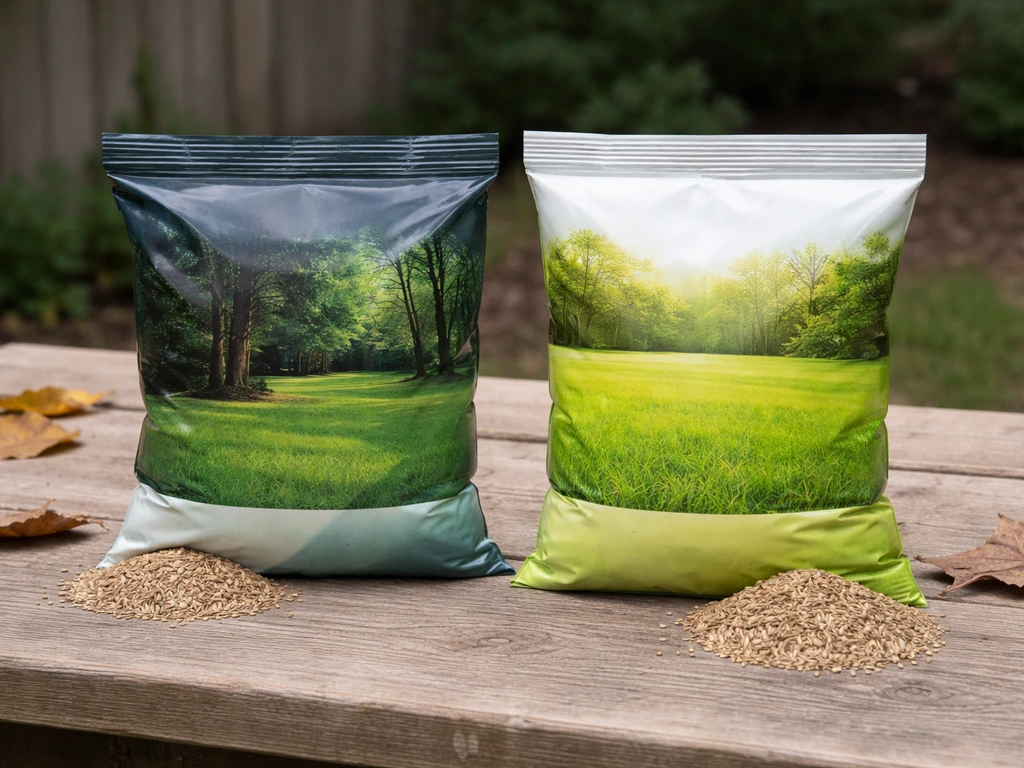
Seed selection is where a lot of people cut corners, and it costs them the whole project. If the species in your seed mix isn't adapted to your actual conditions, the stand will thin out, weeds will move in, and you'll be back to square one. Here's how to match seed to the three most common challenging conditions on this site.
| Challenging Condition | Best Seed Options | Key Adaptation |
|---|---|---|
| Deep shade (under trees) | Fine fescues (creeping red, chewings, hard fescue) | Tolerate low light; also handle root competition better than most grasses |
| Sandy soil | Tall fescue, improved Kentucky bluegrass cultivars | Deep root systems chase water and nutrients down through sand; less prone to drought stress |
| Heavy clay or poor drainage | Tall fescue blends | More tolerant of compaction and variable soil conditions than finer-bladed grasses |
| Rocky or varied soil types | Turf-type tall fescue blends | Handle poor, rocky, or mixed soil conditions; good drought resistance once established |
| Hot, dry summers with full sun | Warm-season grasses (bermuda, zoysia) or drought-tolerant tall fescue | Warm-season grasses go dormant rather than dying; tall fescue has the best summer tolerance among cool-season types |
For shaded areas, fine fescues are genuinely your best bet among cool-season grasses. Purdue Extension specifically notes that fine fescue should be the species of choice in shade conditions. But be honest with yourself about how much shade you're dealing with. If the canopy is so dense that nothing green grows there now, grass probably isn't the right solution either. What to do in spots where grass won't grow is a separate conversation, but it's worth knowing when to pivot. What to do in spots where grass won't grow starts with diagnosing the cause and choosing the right alternative or fix for your yard.
For sandy soil, Purdue's research on sandy-soil lawn performance is clear: species selection is the biggest single factor in how the lawn looks and performs, and you'll also need more frequent but smaller irrigation amounts to compensate for sand's poor water retention. Tall fescue and improved bluegrass cultivars with deeper root systems perform significantly better than shallow-rooted options.
When grass seed doesn't sprout or keeps struggling
If you've seeded and seen nothing after 3 to 4 weeks (beyond the normal germination window for your species), work through this list before reseeding. Most failures trace back to one of these causes.
- Seed was buried too deep. If you raked heavily or applied more than 1/4 inch of topdressing, the seedlings may have germinated and exhausted themselves trying to reach the surface. Reseed at 1/16 to 1/8 inch depth with a light raking and gentle roll.
- Surface dried out during germination. Even one or two days of dry conditions after the seed swells but before roots develop can kill the seedling. It doesn't recover. Water more frequently and consider a light straw mulch layer to slow evaporation.
- Soil temperature was wrong. Cool-season seed sown when soil temps are over 85°F or warm-season seed sown when soil temps are still below 65°F will stall. Check soil temperature at seeding depth and reseed in the right window.
- Soil crust formed over the seed. After rain or heavy watering on certain soil types, a hard crust can form that the seedling can't push through even after germinating. Gently rake the surface to break the crust without disturbing the seedlings.
- Seed-to-soil contact was poor. Broadcasting seed over loose, fluffy soil and not rolling or raking it in leaves seed sitting on top of air pockets. It absorbs moisture, starts to germinate, then dries out and dies. Always firm the soil after seeding.
- Wrong seed for the site. If the grass species isn't adapted to your shade level, soil type, or climate, it may sprout weakly then decline. Pull back and reassess whether the seed mix matches your actual conditions.
- Weed competition overwhelmed the seedlings. If weeds germinate faster and you've let them get established, they'll outcompete grass seedlings for moisture and light. Don't apply pre-emergent herbicides just before seeding (they block grass seed too), but plan to address weed pressure before your next attempt.
If you've worked through that list and the same spot keeps failing, it's worth stepping back and asking whether the underlying conditions are the real problem. Persistent failure in specific areas often points to something deeper: compaction that bounces irrigation right off, chronic shade from a growing tree canopy, or soil pH so far off that grass can't take up nutrients even when they're present. Some of these are fixable with real effort. Others are better solved by choosing a different ground cover, mulch bed, or hardscape. Knowing which situation you're in is more useful than seeding the same failing spot a third time.
Growing grass from seed is one of those projects that's simpler than it looks when conditions cooperate, and harder than it looks when they don't. The honest takeaway: assess your site first, prep the seedbed properly, use the right seed for your conditions, keep the surface moist through germination, and don't bury the seed. Do those five things and you've solved most of what makes grass hard to grow.
FAQ
Can I just keep reseeding if I don’t see sprouts yet?
Yes, but you should only do it after you verify the failure cause. If nothing appears within the germination window for your species (and you checked soil temperature and moisture), pause and test for crusting, overwatering, or seed buried too deep. If the soil is loose, firm it again and re-seed at the correct 1/16 to 1/8 inch depth, then water with lighter, more frequent cycles.
How do I water so I don’t wash the seed away or form a crust?
To prevent washing and crusting, aim for a gentle watering pattern. Use short cycles that keep the top layer moist without creating puddles, and water early morning first. If you see a surface crust after watering, reduce the flow rate and consider lightly raking or adjusting the irrigation pattern rather than adding more seed or fertilizer right away.
Is it okay to cover grass seed with compost or topsoil?
Avoid topdressing with thick material during germination. Even though a light, thin cover can help, burying seed more than about 1/4 inch reduces emergence, especially if the soil surface crusts. If you need erosion control, use a very thin layer or an erosion blanket designed for seeding, and confirm the seed depth stays in range.
What does overwatering look like during germination?
If you see dark, compacted, or slimy soil, or you consistently get puddles that last more than a few minutes, scale back and split watering into smaller applications. Persistent soggy conditions can reduce oxygen at the seed-soil interface and slow germination, so you want “moist,” not “waterlogged.”
What should I do if water pools where I want grass?
If your yard has poor drainage, start with drainage and grading before seeding, even if you plan to amend soil. For low spots, seed may never get enough oxygen. In some cases, improving drainage, installing soil fill, or converting the area to a different ground cover works better than repeated seeding.
How do I handle seeding on a hot, windy day?
If you seed in windy weather, use shorter watering cycles and avoid broadcast rates that leave seed exposed. Seed-to-soil contact matters more when wind and evaporation are high, so keep the surface evenly moist and consider rolling the seedbed lightly after seeding (without burying).
Can I use weed killer when I’m growing grass from seed?
Yes, but use it strategically. If you apply weed control products too soon, you can injure emerging seedlings. For pre-emergent herbicides, the timing window can be specific to the active ingredient, so wait until seedlings have established and follow label directions before using any herbicide during establishment.
When should I start mowing newly seeded grass?
Mowing too early can tear out fragile seedlings and reduce rooting. Wait until the grass reaches a safe height for your species, then mow high at first. A good rule is not to remove more than about one-third of the leaf blade per mowing session while seedlings are still thin and tender.
Is patch seeding different from seeding a full lawn?
For patch repairs, match the seed species to the existing lawn’s needs and consider the micro-area conditions. If you’re overseeding a lawn that already has thatch, very heavy lime or repeated amendments can create layered conditions. Use soil tests and apply nutrients cautiously to avoid stacking lime or nitrogen repeatedly.
Do I need a soil test before seeding?
A soil test is especially important when pH is likely low or you see slow growth even after seedlings establish. If pH is below about 5.5, lime can help, but timing matters. For overseeding, keep lime per application moderate to reduce the chance of lime layers building in the thatch.
How much shade is too much for grass seed to succeed?
Yes, shade changes what grass can do even if sun is present part of the day. Check direct sun duration across multiple times (morning, midday, late afternoon) because nearby structures and tree canopy movement can create “false shade.” If current plants struggle to grow, assume grass may not be a realistic long-term solution without major site changes.
How do sandy or clay soils change the seeding plan?
If your soil is sandy or clay-heavy, the same watering routine won’t work. Sand usually needs more frequent, lighter moisture during germination, while clay often needs improvements to drainage and may benefit from loosening and incorporating compost to prevent sealing and runoff.
What’s the biggest mistake with spring seeding?
Spring can work, but your risk factors are higher: weed pressure is usually stronger and heat stress can arrive before seedlings fully root. If you must seed in spring, prioritize fast establishment with the right species, keep the seedbed consistently moist, and plan for more aggressive early weed management without damaging seedlings.
Next Articles
What to Do Where Grass Won’t Grow: Fix Germination Fast
Diagnose and fix lawn seeding failures fast: seed viability, soil contact, moisture, pH, drainage, shade, and re-seeding
Why Won’t Grass Grow in My Yard? Fix It Fast Checklist
Fast checklist to diagnose why grass won’t grow, fix light, water, soil, and choose the right seed for your yard
Where Grass Don’t Grow: Diagnose and Fix Lawn Failure
Learn why grass won’t grow in shade, poor soil, wrong pH, drainage issues, drought, or extremes, and fix it step by step