Grass won't grow where it can't get enough light, can't breathe through compacted or waterlogged soil, can't handle extreme pH or salinity, or simply can't survive the temperature extremes of your region. If you suspect your lawn is failing because of light, drainage, pH, or temperature, this guide walks you through the most common causes and how to diagnose the one you have why won't my grass grow. Those are the real culprits, every time. Once you know which one you're dealing with, you can either fix the conditions or stop fighting them and plant something that actually belongs there.
Where Grass Don’t Grow: Diagnose and Fix Lawn Failure
Marcus Volkmann
29 Apr 2026
Where grass normally grows (and what makes it work)
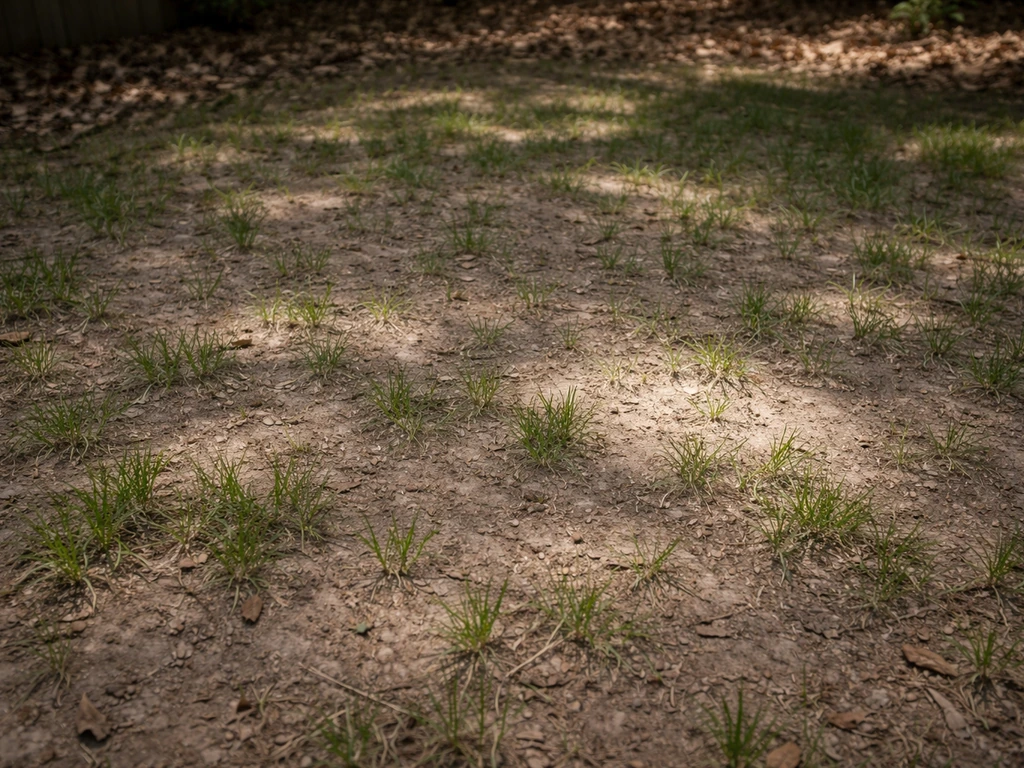
Grass thrives where it gets full or near-full sun, reasonable soil drainage, a soil pH roughly between 6.0 and 7.5, and moderate temperatures that align with its growth window. Cool-season grasses like Kentucky bluegrass and perennial ryegrass do best in temperate climates with soil temperatures in the 50 to 65°F range for active growth and germination. Warm-season grasses like bermudagrass need soil temps above 65°F to establish and stay green. Give any grass those basics and it will usually find a way.
The soil matters as much as the climate. A pH between 6.5 and 7.2 is ideal for Kentucky bluegrass, and most common turf species perform well somewhere in the 6.0 to 7.5 band. Within that range, nutrients like nitrogen, phosphorus, and potassium are available in forms roots can actually absorb. Soil that drains well but holds enough moisture, has loose enough structure for roots to push through, and carries some organic matter is the foundation every lawn is quietly depending on.
The places grass just won't grow
Most bare patches come down to one of a handful of conditions. Here's where grass routinely fails and why each situation kills it. If you are dealing with the places grass just won't grow, the next step is to match the plant to that limiting condition what to do where grass won't grow.
Heavy shade
This is the most common grass killer in residential yards. [Kentucky bluegrass needs full sun and is the least shade-tolerant cool-season grass you can plant. ](https://www. uidaho.
edu/extension/horticulture/landscapes/lawn) Bermudagrass will not tolerate shade at all. Zoysiagrass needs at least a half day of direct sun to survive. Geo Zoysia from Tri-Turf Sod Farms is marketed as among the most shade-tolerant zoysias, reportedly thriving with just 3 to 4 hours of direct sunlight.
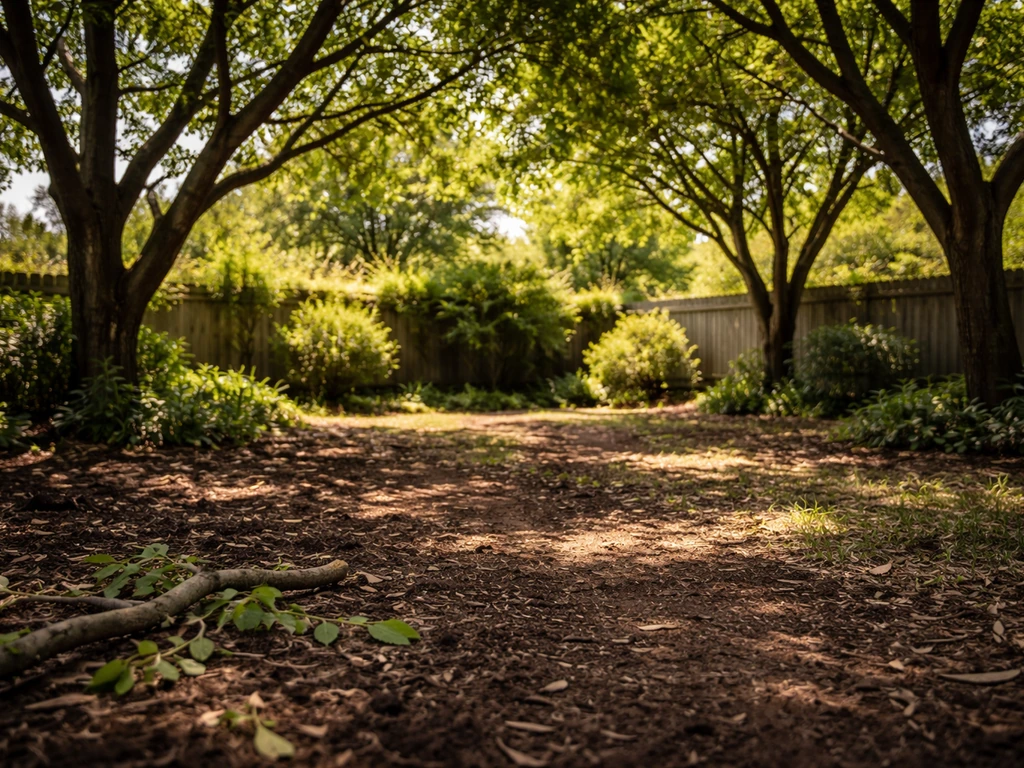
When a tree canopy closes in, most popular lawn grasses simply starve for light and thin out over a few seasons until you're left with bare dirt and moss, which is actually one of the clearest signs that the site has become unsuitable for turfgrass.
Missouri Extension similarly notes that it is difficult to grow turf under trees because changes in the quantity and quality of light cause grasses to thin out over time, making shade selection critical tree canopy closes in and most lawn grasses starve for light.
Compacted or waterlogged soil
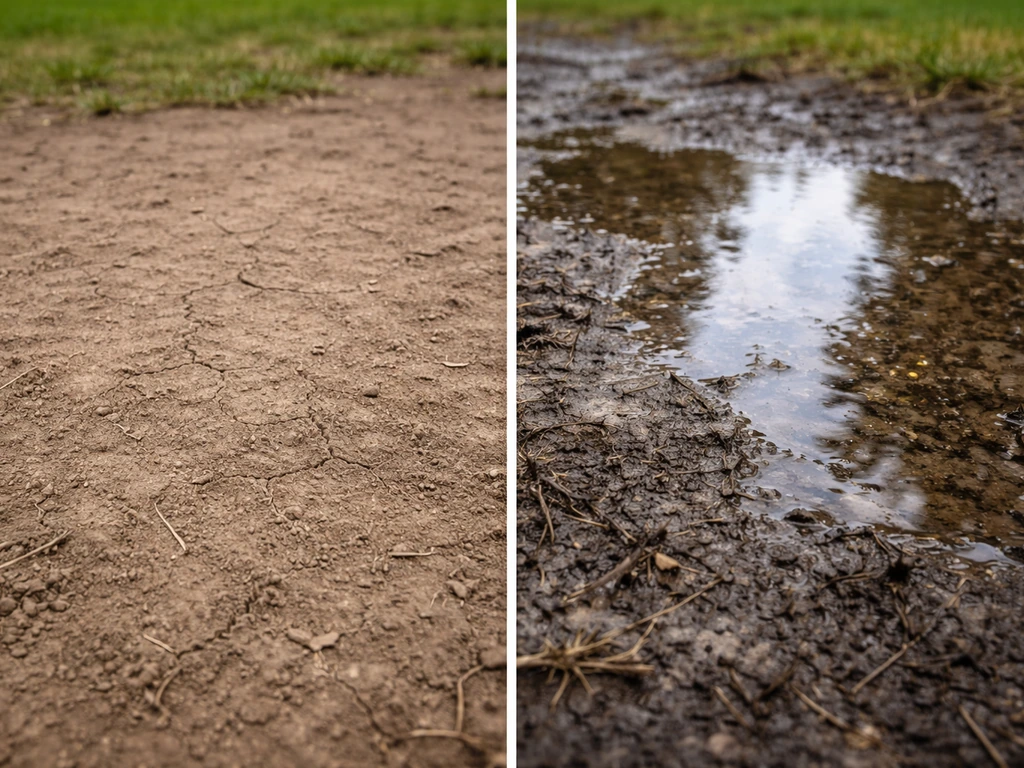
Grass roots need oxygen just as much as water. Compaction from foot traffic, heavy equipment, or naturally dense clay squeezes out the air pockets roots depend on. Flooding and hardpan layers do the same thing from the other direction, filling pore spaces with water and suffocating roots. Either way, the grass can't establish or sustain itself. You'll often see this under high-traffic paths, along driveways, and in low spots that pond after rain.
Wrong pH or poor fertility
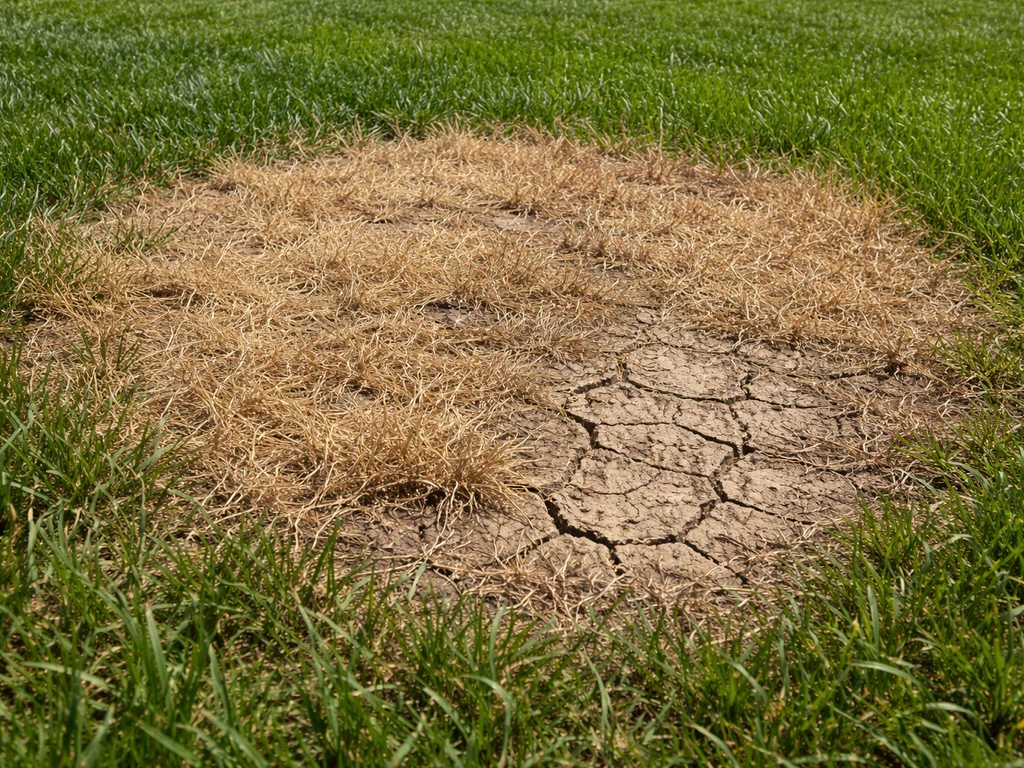
When pH drops too far below 6.0 or climbs above 7.5, nutrients lock up in forms grass can't use, even if you've fertilized heavily. You end up with grass that looks starved no matter what you feed it. Very acidic soils also tend to have aluminum and manganese at toxic levels. Soils with high salt content create a different problem: osmotic stress that makes it nearly impossible for roots to absorb water, and salt can slow or outright stop seed germination. This shows up most in coastal areas or yards near heavily salted roads.
Drought, heat extremes, and cold
Bermudagrass goes dormant and can die back in cold climates. Kentucky bluegrass wilts and browns out in prolonged drought or sustained heat above its comfort zone. Cool-season grasses planted in the deep South or Southwest will struggle through summer no matter what you do. The seed won't even germinate properly if the soil temperature is wrong: annual and perennial ryegrass both need soil temperatures in the 20 to 30°C (68 to 86°F) range for reliable germination, and surface temperature readings can be misleading since what matters is the temperature at the root zone.
Sand, fill dirt, and harsh substrates
Pure sand drains so fast it creates drought stress even after rain, and it holds almost no nutrients. Construction fill is often compacted subsoil with little to no organic matter, sometimes mixed with debris or material with extreme pH. New construction sites are particularly brutal for grass establishment because the topsoil was stripped and what's left has none of the structure or biology grass needs.
Excessive thatch
A thatch layer thicker than about half an inch to three-quarters of an inch starts blocking water, air, and fertilizer from reaching the soil. Seeds planted into thick thatch germinate in it rather than soil, then dry out and die. Once thatch hits an inch or more, it becomes a real barrier to any new growth and makes the whole lawn more vulnerable to drought and temperature stress.
How to figure out what's actually killing your grass
Before you spend money on seed, amendments, or new sod, spend 20 minutes diagnosing the real problem. If you are wondering, “is it hard to grow grass,” the answer is usually no once you identify the limiting factor for your site diagnosing the real problem. Here's the process I walk through on any patch that won't cooperate.
- Look at the light. Stand in the problem area and observe it at different times of day. Count how many hours of direct sun it gets. Less than 4 hours and you're dealing with a shade problem that no amount of soil work will fix without also addressing the canopy.
- Check for moss, algae, or bare soil crust. Moss growing in a spot is one of the clearest signals the area is too wet, too shaded, or too acidic for turfgrass to compete. Soil crust points to compaction.
- Do the screwdriver test. Push a standard screwdriver into moist soil. It should slide in 6 inches with moderate hand pressure. If you're straining or it stops at 2 to 3 inches, you have compaction.
- Look for drainage issues. Does water pool or sit for more than an hour after rain? Probe the area to see if there's a hardpan layer below the surface, or if the water table is just too shallow.
- Test your soil pH and nutrients. A basic home test kit can get you in the ballpark, but a lab test gives you real numbers. The University of Minnesota Extension's soil testing lab charges around $22 per sample for a standard test covering pH, phosphorus, potassium, and organic matter. Collect samples from multiple spots in the problem area and mix them.
- Check thatch depth. Dig a small plug of turf and measure the spongy brown layer between the green growth and the soil. More than three-quarters of an inch means thatch is likely interfering with establishment.
- Think about your climate and grass type match. If you're in a hot climate trying to grow cool-season grass, or vice versa, the mismatch itself is the problem.
Soil and ground fixes that actually work
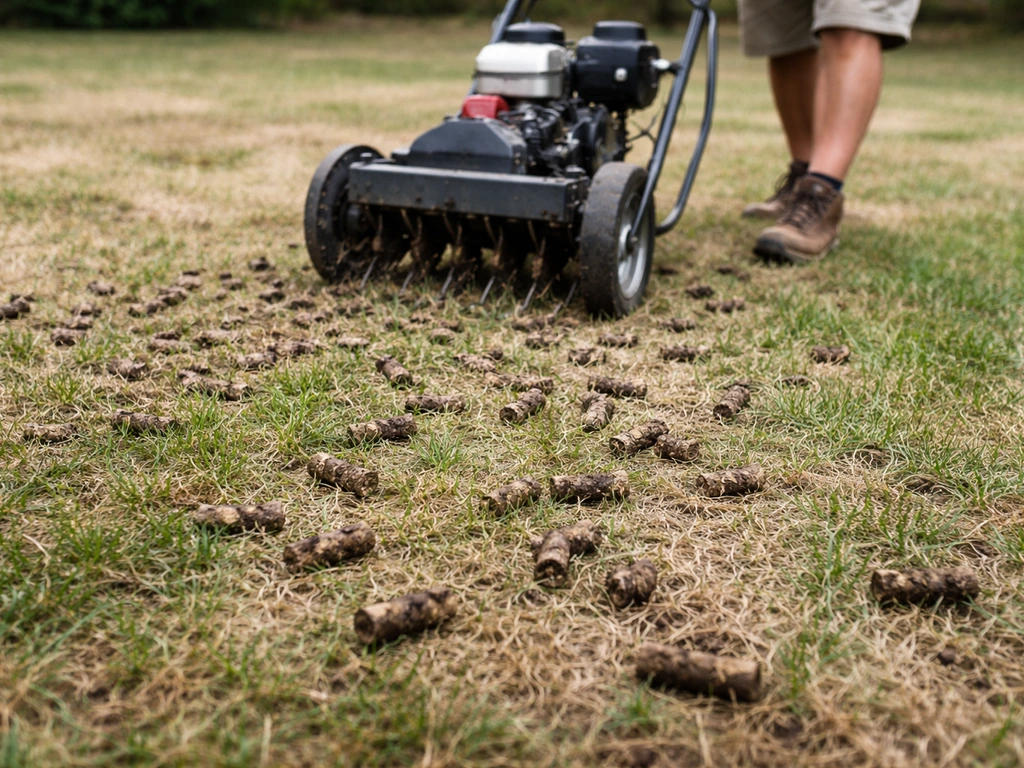
Once you've identified the limiting factor, here's how to tackle the most common soil and ground problems before you try to grow anything.
Fixing compaction
Core aeration is the standard fix for lawn-scale compaction. It pulls plugs of soil out, opens channels for air and water, and lets roots expand. For small compacted spots, loosening by hand to a depth of 6 to 8 inches with a fork or spade works well and gives you the chance to work in organic matter at the same time. After aerating, topdress with compost to improve soil structure over time. Aeration also helps lime and fertilizer reach the root zone instead of sitting on the surface.
Correcting pH
If your soil is too acidic (below 6.0), apply ground limestone based on your soil test recommendation. Lime is slow-acting, so for new grass establishment, try to apply it at least a few months ahead of seeding. For bermudagrass, Missouri Extension recommends applying lime 6 to 12 months before establishment. If your soil is too alkaline (above 7.5), sulfur is the main tool, but apply it carefully since Purdue's guidance on turf pH correction includes per-application rate limits to avoid damaging the lawn. Your soil test report will give you specific rates.
Improving sandy or nutrient-poor soil
Sandy soil needs organic matter added before seeding. Work in 2 to 4 inches of compost tilled to a depth of 4 to 6 inches. This improves water retention and adds cation exchange capacity so fertilizer actually stays available to roots. On construction fill, you may need to bring in a few inches of quality topsoil before amending, since some fill material is chemically hostile to grass.
Managing drainage problems
For spots that puddle consistently, the fix depends on what's causing it. A surface drainage issue can often be improved by regrading to direct water away from the low spot. A hardpan layer may need to be broken up mechanically. A high water table or poor drainage through the soil profile can be addressed with a French drain system, which moves water away from the problem area through perforated pipe and gravel. OSU Extension notes French drains as one practical drainage approach for managing soil moisture and salt issues.
Dealing with thatch
If thatch is over an inch thick, dethatch mechanically in the fall (for cool-season grasses) or in late spring (for warm-season grasses) before overseeding. After dethatching, aerate and topdress with compost, which introduces microbes that help break down remaining organic matter. Avoid over-fertilizing with nitrogen after the fix, since excess fertilizer drives fast top growth that microbes can't decompose quickly enough.
Addressing salt damage
For salt-stressed areas near roads or coastal spots, the main strategy is dilution and flushing. Water the area heavily and repeatedly to move salt through the soil profile, and make sure you have adequate drainage so the salt actually leaves rather than just moving down and coming back up. Improving drainage before flushing makes the process far more effective.
Managing light, moisture, and heat in tough spots
Shade management
If trees are the problem, selective pruning to raise the canopy and thin interior branches can meaningfully increase light reaching the ground. Even adding an hour or two of filtered light can shift a site from impossible to difficult but workable. If you can get the area to 4 or more hours of direct sun, shade-tolerant grasses become a real option. If you can't change the light, change the plant.
Moisture management in dry or sandy areas
Shallow, frequent watering encourages shallow roots that can't survive heat or drought. Water deeply and infrequently to push roots down. In sandy soils, this means irrigating long enough to wet the profile but waiting until the top few inches dry out before watering again. Mulching newly seeded areas helps retain moisture through the critical germination window.
Heat and cold extremes
Timing is everything when temperature extremes are involved. Don't seed cool-season grasses when soil temperatures are above 70°F or below 50°F. Don't expect warm-season grasses to establish when nighttime temps are still dropping near freezing. Get a soil thermometer, not just an air temperature reading, since the two can differ enough to matter for germination. Purdue's turfgrass research specifically flags that surface soil temperature doesn't always represent root-zone temperature, and that germination success is determined at the root zone.
Grass types compared for tough conditions
| Grass Type | Shade Tolerance | Drought/Heat Tolerance | Cold Tolerance | Ideal pH Range | Best Use Case |
|---|---|---|---|---|---|
| Fine fescue | High | Moderate | High | 6.0–7.0 | Shady, low-traffic areas in cool climates |
| Tall fescue | Good | Good | Good | 5.5–7.5 | Transition zones, partly shady or dry areas |
| Perennial ryegrass | Moderate | Moderate | Good | 6.0–7.5 | Overseeding, moderate shade, cool climates |
| Kentucky bluegrass | Poor | Moderate | Excellent | 6.5–7.2 | Sunny, cool-climate lawns with good soil |
| Bermudagrass | Very poor (none) | Excellent | Poor | 5.5–7.0 | Sunny, hot, drought-prone southern yards |
| Zoysiagrass | Low to moderate (cultivar-dependent) | Good | Moderate | 6.0–7.0 | Sunny to partly sunny warm-climate yards |
| Buffalograss | Poor | Excellent | Good | 6.0–7.5 | Low-rainfall sunny areas with minimal traffic |
For shade, fine fescue is your best grass option if you have 4 or more hours of sun. Tall fescue is a close second and handles transition-zone climates better. If you're below 4 hours of sun consistently, grass is likely going to be an ongoing struggle and an alternative makes more practical sense.
When grass won't work: alternatives worth planting
Sometimes the honest answer is that grass isn't the right plant for the spot. Pushing grass into deep shade, constantly waterlogged soil, or extreme substrates is an expensive way to keep replacing something that keeps dying. Here are the alternatives that actually work in those conditions.
Shade groundcovers
Mondo grass (Ophiopogon japonicus) tolerates deep shade to full sun depending on the cultivar and handles the dry, root-competitive conditions under trees that kill turfgrass. It's not a true grass, but it looks like one and stays low. Other proven shade groundcovers include pachysandra, liriope, sweet woodruff, and native ginger. Wisconsin Extension recommends groundcovers specifically for shady and other tough landscape areas, noting that once established they suppress weeds, reduce erosion, and require far less maintenance than struggling turfgrass.
Mulch beds
Under dense tree canopies where even shade groundcovers struggle, a mulch bed is sometimes the most practical solution. Wood chip mulch protects tree roots, improves the soil over time as it breaks down, and eliminates the bare dirt and erosion problem without trying to force vegetation into an impossible light environment.
Native or drought-adapted plants
For hot, dry, or sandy areas where grass keeps dying back in summer, native prairie plants, sedums, or drought-adapted ornamental grasses can provide year-round cover with far less irrigation and maintenance. These plants evolved to handle the exact conditions that make traditional lawn grasses fail.
Hardscape in extreme traffic areas
If a path gets heavy foot traffic and every grass variety you try compacts out and dies, the problem isn't your grass selection, it's that the spot isn't meant to be lawn. Stepping stones, gravel, or pavers solve the problem permanently instead of putting you on a cycle of reseeding every year.
The goal is to match the right solution to the actual conditions, not to force grass somewhere it can't survive. Once you've diagnosed the limiting factor and worked through the fixes in this guide, you'll know whether you're dealing with a fixable soil or site problem or a situation where the alternative is the smarter investment. Either way, you'll stop wasting seed and start getting ground cover that lasts.
FAQ
How do I tell if my bare spot is from shade versus poor drainage (they can look similar)?
Run a simple “light and water” check on the same day. For light, watch midday sun movement, note whether the area gets 4 or more hours of direct sun. For drainage, after a good rain, check 2 to 4 hours later and again the next morning, if the spot stays wet or reappears ponding, drainage or hardpan is likely the limiting factor, not the grass type.
Should I reseed right away if I see bare patches, or wait after fixing the soil?
Wait. Most soil fixes (lime for low pH, sulfur for high pH, organic matter to improve structure, and drainage changes) need time before seed will reliably establish. A common approach is to correct the condition first, aerate or topdress if needed, then seed at the next appropriate germination window for your grass type.
What soil test numbers matter most for deciding what to do next?
Treat pH as the go/no-go number first, then look at nutrient levels and soil texture. pH outside roughly 6.0 to 7.5 often means nutrients won’t be usable even if you fertilize. If you’re in the right pH band but grass still fails, focus on compaction and drainage, because roots can’t benefit from fertility if oxygen is missing or water is staying too long.
Can fertilizer cause “grass not growing” when the real issue is thatch?
Yes. Thick thatch can prevent fertilizer and water from reaching the soil, so you can end up “feeding” the barrier. If you can pull at the base and the layer between turf and soil is consistently thick (around an inch or more), dethatch and aerate before relying on fertilizing to fix establishment problems.
How do I measure root-zone temperature instead of guessing from air temperature?
Use a soil thermometer and measure at seeding depth or slightly deeper (commonly a few inches down for turf seed). Surface readings can be misleading because sun-heated top inches may be warm while the root zone is still too cool for germination, or vice versa.
Why does grass germinate but then die within a couple of weeks?
Common causes are watering frequency that keeps roots shallow, salt stress that kills emerging seedlings, or seed sitting in thatch rather than contacting soil. After germination starts, switch to deep, infrequent watering that encourages downward rooting, and verify the area has acceptable drainage so seedlings are not suffocating in waterlogged soil.
What if my lawn looks dry and weak, but I’m already watering regularly?
Low oxygen from compaction or persistent waterlogging can create “false drought stress.” Check whether the spot stays soft or spongy after irrigation or rain, if so, you may be drowning roots, not lacking water. In that case, aeration and improving drainage usually outperform adding more water.
If I have a lot of weeds in the bare area, can I use them to diagnose the problem?
Often, yes. Some weeds thrive in compacted, wet, or acidic soils, so a pattern of weeds can hint at the limiting factor. Use weed types only as a clue, then confirm with basic checks (pH test for chemistry, drainage observation, and a quick thatch/compaction inspection) before investing in reseeding.
How much sun do I need before I should give up on grass for the area?
A practical threshold is 4 or more hours of direct sun for shade-tolerant turf options like fine fescue. If the area consistently gets less, even good soil repairs may not deliver a lasting lawn, and switching to groundcovers or mulch beds is usually more cost-effective.
Can I just plant a shade-tolerant grass and skip the site changes?
Sometimes, but not always. Shade-tolerant choices still need acceptable drainage, workable pH, and enough root oxygen. If the soil is compacted or stays wet, the “right” shade grass can still thin out. Think of site conditions as the foundation, grass selection is the next layer.
What’s the fastest way to confirm whether pH is the bottleneck?
Do a soil test and avoid guessing based on appearance. Nutrient lockup from wrong pH can produce a starved look even when fertilized. If pH is out of the target band, correct it before you judge results from seed or fertilizer timing.
How do I handle salt issues if I’m near a road or coastal area?
Prioritize drainage and soil flushing. Apply enough water to move salt down the profile, but only if water can actually leave the area, otherwise you’ll redistribute salts around the root zone. After flushing, watch for re-salting patterns and consider reducing exposure from vehicle splash or road treatments where possible.
Is core aeration enough for heavy compaction, or do I need something stronger?
Core aeration is usually the right first step for lawn-scale compaction because it creates air and water channels quickly. If you suspect a hardpan layer below the reach of aerators, mechanical breaking may be needed and drainage may still be the limiting factor. The key is whether water penetrates after aeration or keeps ponding.
When should I switch from fixing to using hardscape or non-turf cover?
Use alternatives when the site repeatedly defeats grass despite correcting the top limiting factors. Red flags include persistent ponding, deep shade that stays below your workable threshold, repeated compaction where you can’t change foot traffic, or substrate that’s chemically hostile without major import work. In these cases, stepping stones, gravel, pavers, mulch beds, or groundcovers typically provide a more permanent solution.
Next Articles
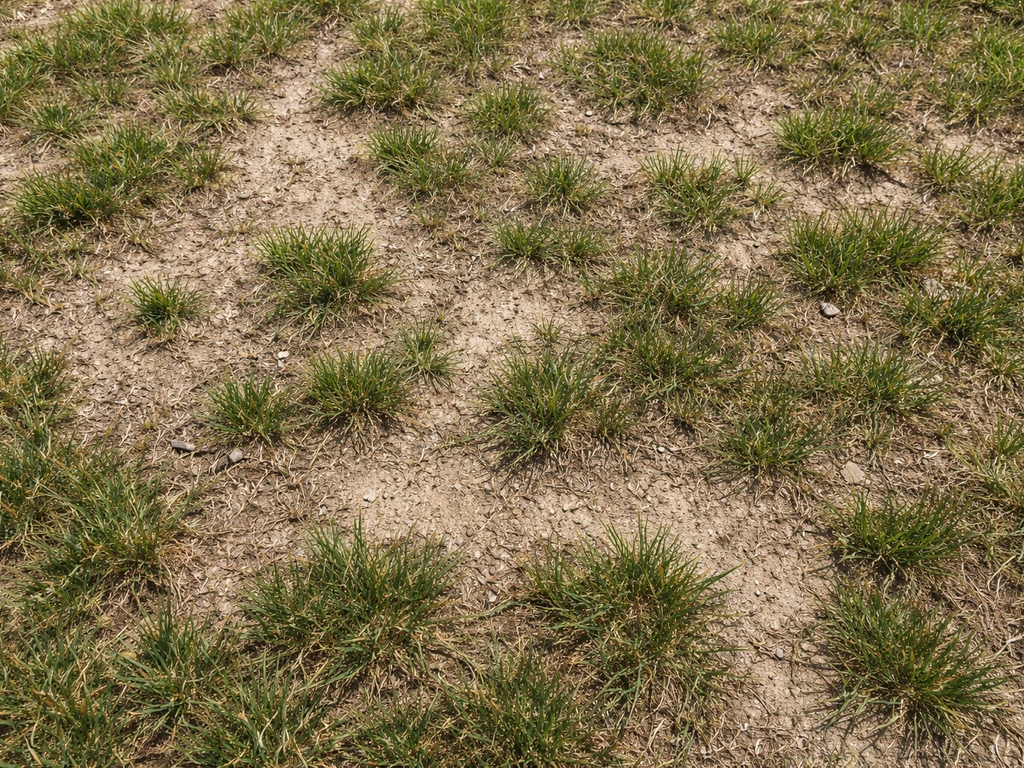
Why Won’t My Grass Grow? Diagnose and Fix a Thinning Lawn
Step-by-step diagnosis for thinning grass, from seed setup and soil tests to watering, pH, thatch, and reseeding timing.
Can You Grow Grass Over Gravel? How to Do It Right
Learn when you can grow grass over gravel and follow a step-by-step method for soil depth, drainage, seeding or sod, and
Do Wood Chips Help Grass Grow? When They Work and When Not
Learn when wood chips help grass grow, when they steal nitrogen, and step-by-step how much to apply and seed options.