
Grass won't grow in your yard because something in the environment is actively working against it, and in almost every case, that something falls into one of four buckets: not enough light, wrong or inconsistent water, poor soil, or a mismatch between the grass species and your conditions. University of Maryland Extension offers a blank" rel="noopener noreferrer">diagnostic framework for nonliving lawn problems like stress and damage causes. The good news is that every one of those problems is diagnosable today, with no special equipment, and most are fixable before your next planting window. If you are dealing with extreme conditions, knowing what to do where grass won't grow can help you choose the right fix for your specific spot.
Why Won’t Grass Grow in My Yard? Fix It Fast Checklist
Marcus Volkmann
2 May 2026
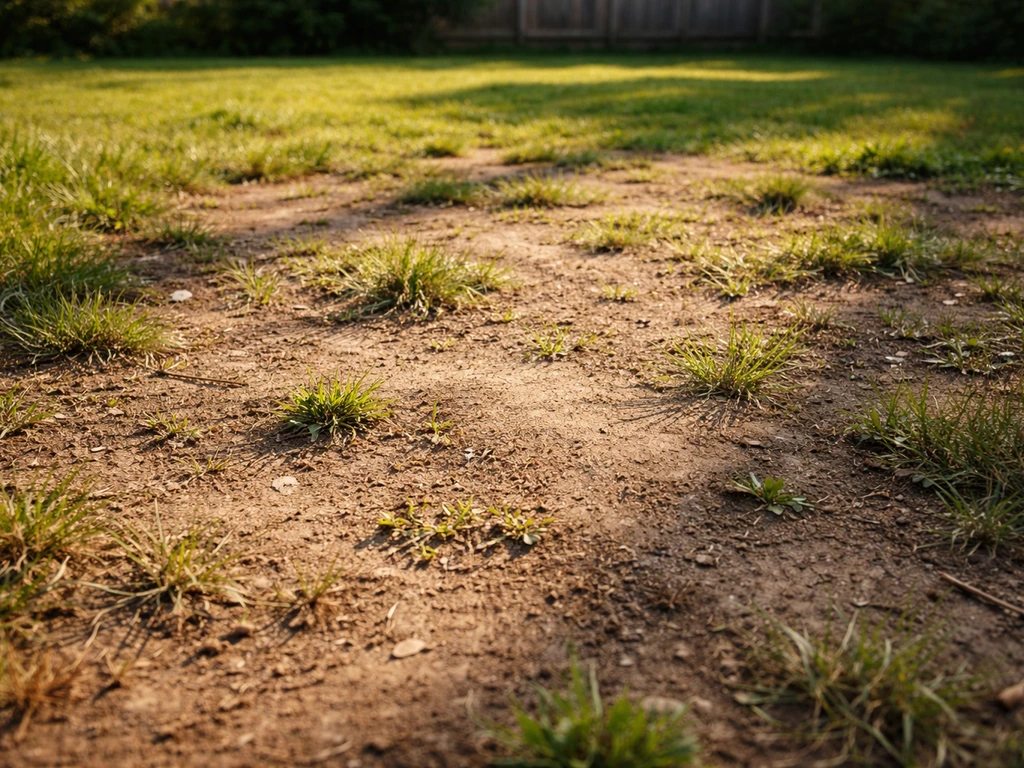
The most common reasons grass won't establish
Before you buy another bag of seed or roll out more sod, it helps to understand what's actually killing your grass, because the symptom (bare dirt, thin patches, seedlings that vanish) looks the same no matter what the cause is.
Not enough light
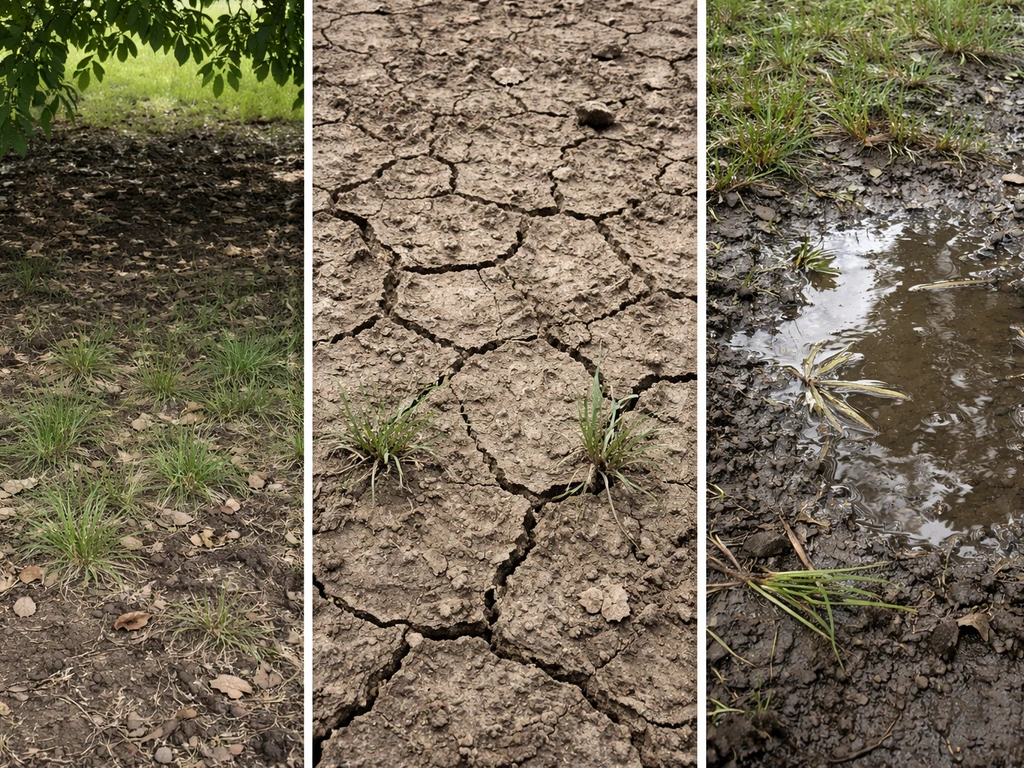
Shade is the single biggest cause of stand loss in home lawns. Penn State Extension is direct about this: shade reduces turf vigor, shortens roots, cuts shoot density, and makes grass far more susceptible to disease. The problem isn't just that grass can't photosynthesize, trees also compete aggressively for water and nutrients in the root zone, leaving your turf starved even on days when conditions seem fine. Mississippi State Extension ranks shade as the top cause of thinning stands and compaction as the second. If your problem area sits under a tree canopy or gets fewer than four hours of direct sun, shade is almost certainly your culprit.
Water problems, too much, too little, or uneven
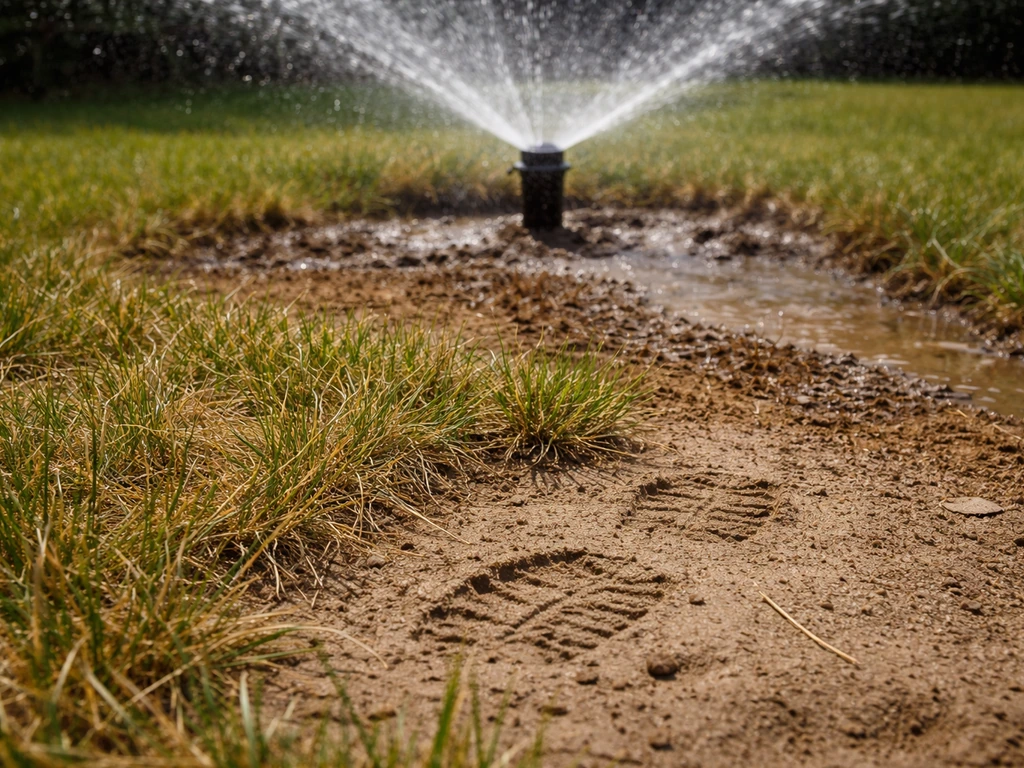
Watering sounds simple, but most grass failures I've seen come down to irrigation. Seedlings need consistent soil moisture to germinate and survive their first few weeks, but water past the point of infiltration and you create ponding that suffocates seedlings or triggers disease, University of Maryland Extension specifically flags waterlogging and scalding as common early-establishment killers. On the flip side, dry spots caused by sprinkler gaps or poor coverage create dead zones that look like seed failure but are really irrigation failure. Sandy soils lose moisture fast. Clay soils hold it at the surface and drown roots. Both cause bare patches for different reasons.
Soil issues (this is usually the real problem)
Compacted soil is the most common lawn quality problem according to Colorado State University Extension, because roots literally cannot push through it to reach water and nutrients. Tight, compacted ground also sheds water rather than absorbing it, so even if you water properly, the roots never benefit. Beyond compaction, wrong pH (anything outside the 6.0 to 7.5 range that Penn State recommends for turf), low organic matter, poor drainage, and nutrient deficiency all create conditions where grass either won't sprout or dies shortly after it does.
Heat, traffic, and timing
Planting cool-season grass in July or warm-season grass in October is a setup for failure. Germination windows are narrow, and even a week off can mean the seedlings hit a heat spike or cold snap they can't survive. Heavy foot traffic on new seed or newly laid sod breaks fragile root contact before establishment happens, and that four-to-eight-week establishment window Penn State identifies is critical. If kids, pets, or foot traffic cross the area regularly, the grass never gets a real chance.
Diagnose your yard today, a quick checklist
Walk your problem area and run through these checks. You don't need any tools for most of them, just your eyes, a stick, and honest observation.
- Count the sun hours: Watch the area for a full day (or think back carefully). Fewer than 4 hours of direct sun? Shade is your primary problem. 4 to 6 hours is marginal — you need a shade-tolerant species. Over 6 hours means light isn't the issue.
- Do the screwdriver test: Push a standard screwdriver into the soil with hand pressure. If it won't go in 2 to 3 inches easily, the soil is compacted. That's your first fix.
- Check topsoil depth: Dig a small hole about 6 inches deep. Is there actual dark topsoil, or does it go pale/orange/gray within 2 to 3 inches? Shallow topsoil means you need to add material before planting.
- Look for thatch: Grab a handful of dead material near the soil surface. If that layer is more than half an inch thick, it's blocking water and seed contact with soil.
- Watch water behavior: Run your sprinkler or hose for 10 minutes, then see what happens. Does water pool on the surface? Drain away too fast? Move sideways? Each behavior points to a different soil fix.
- Check your irrigation coverage: Walk the perimeter and every corner of your target area while the sprinklers run. Dry spots are usually irrigation gaps, not soil problems.
- Pull a weed and look at the roots: If weeds grow fine but grass won't, the problem is almost never the soil chemistry — it's more likely species mismatch, thatch, compaction, or shade.
- Get a soil test: Send a sample to your county extension office or use a home kit. You need the pH number and nutrient levels before you start adding amendments blindly. This costs $15 to $25 and saves you from wasting time on the wrong fix.
Fix the soil first, nothing else works without this
Soil health is the foundation. I've watched people reseed the same bare spots four times in a row without touching the soil, and they get the same result every time. Here's what to address and in what order.
pH: get it into the right range
Grass needs a soil pH between 6.0 and 7.5 to take up nutrients effectively. Outside that range, fertilizer becomes largely useless because the grass can't absorb it no matter how much you apply. Low pH (acidic) is fixed with lime, typically ground limestone at rates your soil test will specify. High pH (alkaline) is addressed with sulfur. Give lime two to three months to shift pH before you judge the results, which is why testing before planting season matters.
Compaction: let air and water back in
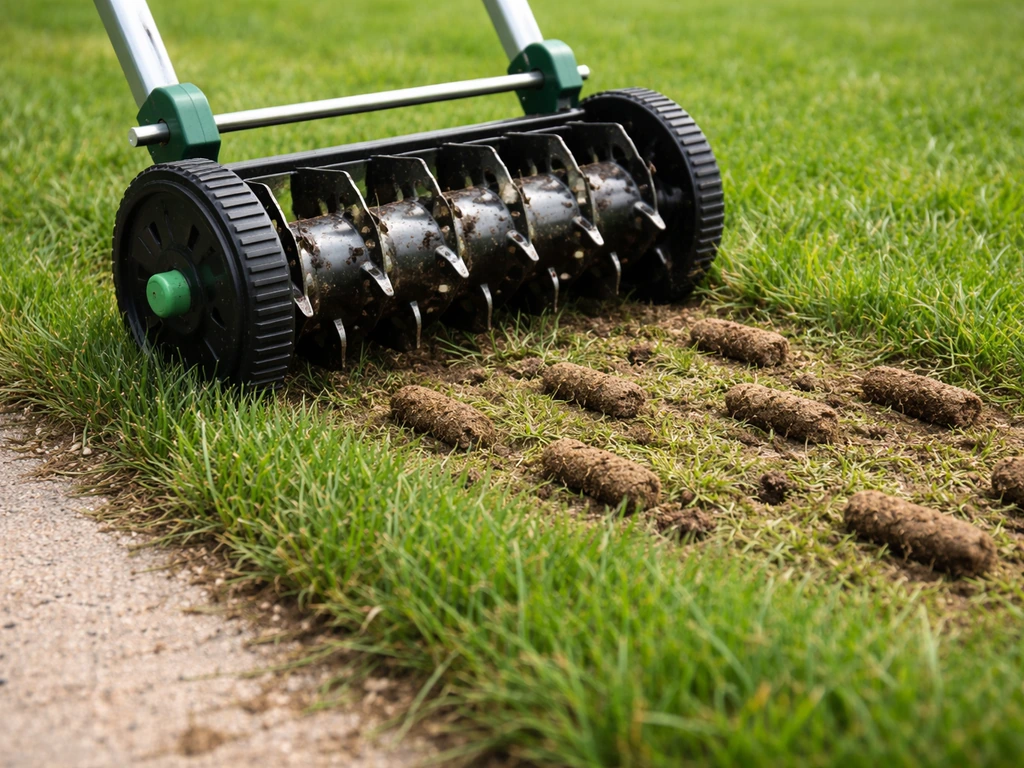
Core aeration is the standard fix for compaction, a machine pulls plugs of soil out of the ground, opening channels for water, air, and roots. For new areas being prepared from scratch, till to at least 4 to 6 inches before planting. Penn State Extension specifically recommends this depth for working phosphorus and potassium into the root zone, since those nutrients move slowly through soil on their own. For existing lawns with compaction, aerate in early fall for cool-season grasses or late spring for warm-season types, then topdress with compost.
Drainage: stop water from sitting
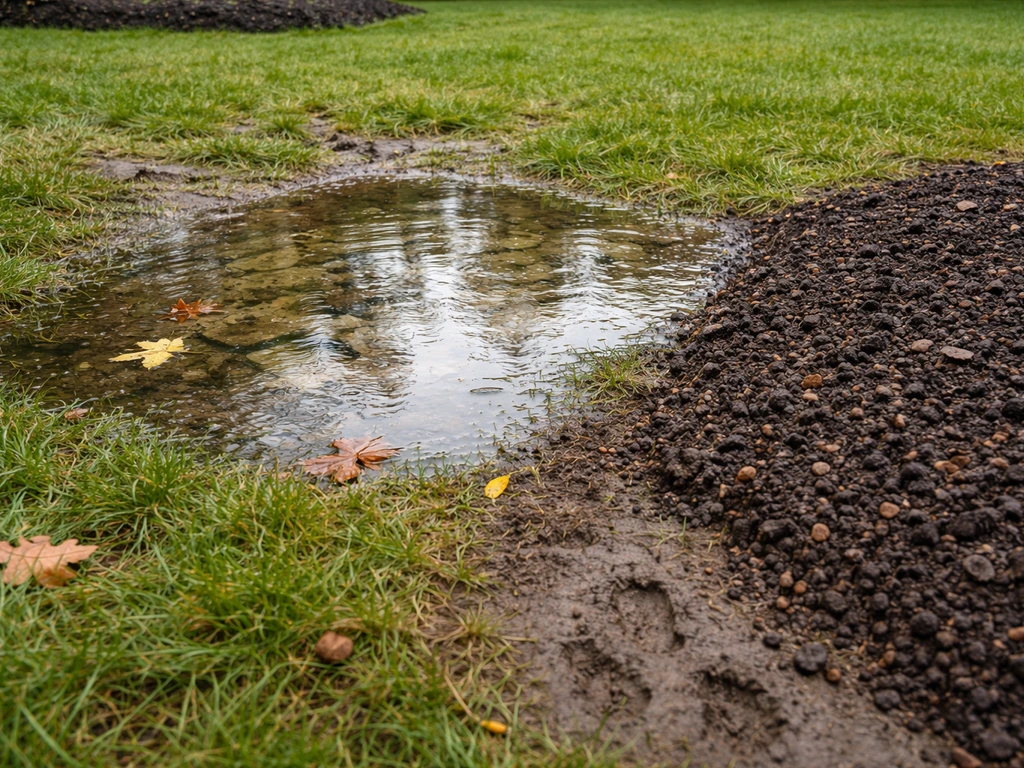
Waterlogged soil suffocates roots fast. If you have a low spot that ponds after rain, you have two realistic options: grade the area to redirect runoff, or improve the soil structure with organic matter and sand to increase permeability. For serious drainage problems, a French drain or catch basin is sometimes the only real answer. NDSU notes that in areas with drainage limitations, drought-tolerant grass varieties and surface amendments are often more practical than deep tillage.
Organic matter: the stuff that makes soil alive
University of Maryland Extension recommends targeting at least 3% organic matter content in your soil for healthy turf. Most suburban soils, especially in newer developments where topsoil was stripped during construction, come in well below that. Compost is your tool here, work 2 to 3 inches of quality compost into the top 6 inches of soil before planting, or use it as topdressing after aeration. Organic matter improves drainage in clay, water retention in sand, and feeds the microbial ecosystem that helps grass establish and resist disease.
Nutrients: what to add and when
Nitrogen drives green growth but shouldn't be applied heavily at seeding time, it favors weed competition and can burn seedlings. Phosphorus supports root development and is critical at establishment, but because it moves so slowly in soil, it needs to be tilled in before planting rather than applied on top. Get your soil test results first. If phosphorus and potassium are adequate, a starter fertilizer with a moderate nitrogen level is enough at seeding. If they're deficient, till in a balanced amendment to the full 4 to 6 inch depth.
Dealing with shade and tree competition
If the problem area is under trees, you're dealing with multiple issues stacked together: reduced light, root competition for water and nutrients, and often drip-line soil that's particularly compacted and acidic from leaf litter decomposition. There are some things you can do, but I want to be honest, heavy shade under a dense canopy is one of the few situations where grass just isn't going to work long-term. In extreme cases, you may end up with an area where grass won't take at all, even after you do everything else right grass just isn't going to work long-term.
What you can actually control
- Raise your mower height in shaded areas: mow at 3.5 to 4 inches instead of 2.5. Taller grass has more leaf surface for photosynthesis in low light and keeps more energy in reserve.
- Limb up trees to let more light through: removing lower branches can increase light penetration significantly without harming the tree.
- Choose genuinely shade-tolerant species: fine fescues (creeping red, chewings, hard fescue) are the best performers in shade for cool-season climates. St. Augustine grass handles shade better than most warm-season options.
- Water deeply but less frequently under trees: tree roots are aggressive. Deep, infrequent watering encourages grass roots to go deeper rather than competing at the surface.
- Topdress with compost annually under trees to replenish the nutrients tree roots pull away from the turf.
If you have less than four hours of direct sun and a mature tree canopy, consider shifting to a shade-tolerant groundcover or mulched bed instead. Knowing when grass won't grow is just as useful as knowing how to grow it, and the site has a full breakdown of what to do where grass won't grow that's worth reading if you're in that situation.
Watering: when, how much, and for how long
Watering strategy is completely different depending on whether you're trying to germinate seed or maintain established grass, and mixing up the two approaches is one of the most common reasons new lawns fail.
During germination (days 1 through 21)
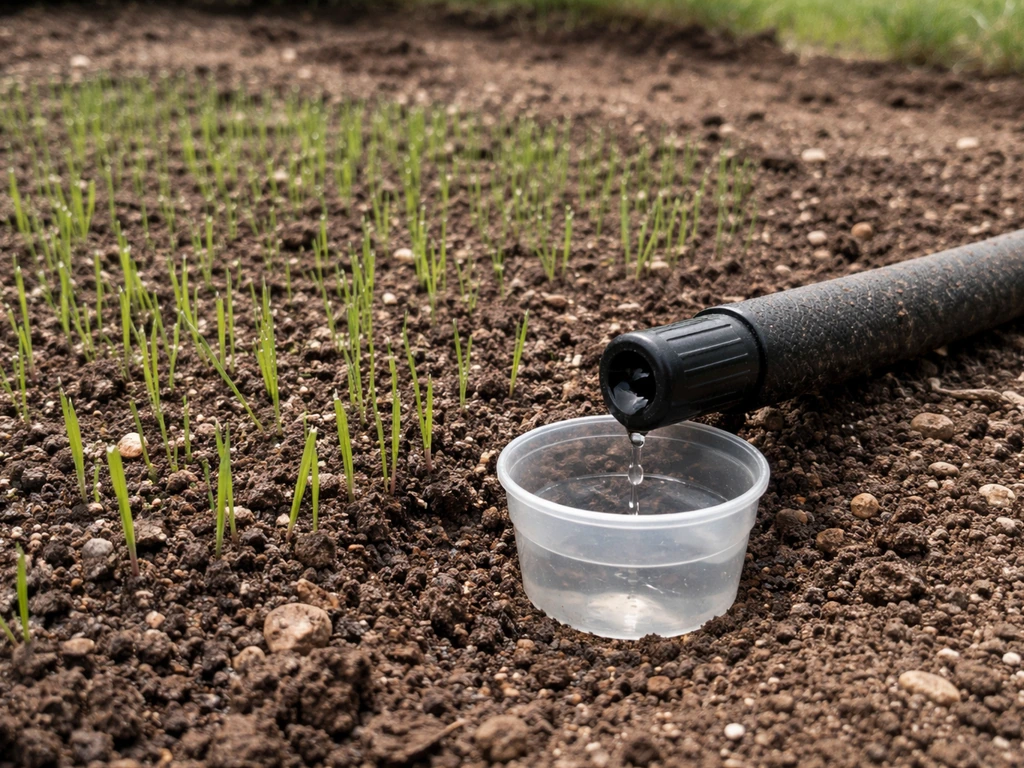
New seed needs the top quarter inch of soil kept consistently moist, not saturated, just damp. That means light, frequent watering: two to three short sessions per day in hot or windy conditions, maybe once per day in cooler weather. The goal is to never let the seed dry out completely, but also to never water to the point where you see runoff or pooling. University of Maryland Extension specifically warns against overwatering new seedlings, noting that ponding leads to suffocation and disease. Use a gentle spray so you don't wash seed away or crust the soil surface.
After germination through establishment (weeks 3 through 8)
Once seedlings are up and you can see consistent green coverage, start transitioning to deeper, less frequent watering. The goal now is to push roots downward. Aim for about an inch of water per week total (from rain plus irrigation), delivered in two sessions rather than daily. Penn State Extension emphasizes that the four-to-eight-week post-germination period is where most lawns actually fail, not because they didn't germinate but because establishment care dropped off too early.
Established grass
Once established, most grasses need about one inch per week during the growing season. Water early in the morning to reduce evaporation and minimize the leaf wetness that invites fungal disease. Check your sprinkler coverage with a few tuna cans placed around the yard, measure how much collects in 30 minutes and adjust run times from there. Uneven coverage creates persistent dead spots that look like disease or soil problems but are really just dry zones.
Picking the right grass and planting it correctly
Using the wrong grass species for your climate and conditions is one of the most overlooked reasons grass fails repeatedly. Is it hard to grow grass? In most cases, the difficulty comes down to matching the grass type to your climate and conditions. It's not a soil problem, it's not a watering problem, it's a species problem. No amount of amendment fixes a warm-season grass planted in Minnesota, or a cool-season mix that goes dormant every summer in Georgia.
Match the species to your conditions
| Grass Type | Best Climate | Sun Needs | Best For |
|---|---|---|---|
| Kentucky Bluegrass | Cool-season (North) | Full sun | Dense, lush lawns with good soil |
| Tall Fescue | Cool-season / Transition zone | Full sun to partial shade | Drought tolerance, clay or compacted soils |
| Fine Fescues (red, chewings, hard) | Cool-season (North) | Partial to full shade | Low-maintenance, shaded areas |
| Bermudagrass | Warm-season (South) | Full sun | High traffic, heat, drought |
| Zoysia | Warm-season / Transition zone | Full sun to light shade | Low maintenance, some shade tolerance |
| St. Augustine | Warm-season (South/Gulf) | Partial shade acceptable | Humid climates, shade under trees |
| Centipede | Warm-season (Southeast) | Full sun to light shade | Low-fertility soils, low maintenance |
Seed rates, timing, and topdressing
Seeding rates matter more than most people think. Sowing too thin leaves gaps for weeds. Sowing too heavy causes seedlings to compete with each other and damp off. Follow the label rate for your species, for tall fescue it's typically 6 to 8 pounds per 1,000 square feet for new establishment.
For overseeding into existing turf, use about half that. Timing should target soil temperatures of 50 to 65 degrees Fahrenheit for cool-season seed (typically late August through October in the North) and 65 to 70 degrees plus for warm-season varieties (late spring to early summer).
After seeding, lightly rake seed into the top quarter inch of soil and apply a thin layer of topdressing, starter compost or a sterile seed-starting mix at about a quarter inch depth, to retain moisture and improve seed-to-soil contact without burying the seed too deep.
Sod: easier establishment, same soil requirements
Sod gives you an instant visual result, but it still needs the same soil preparation underneath. If you lay sod over compacted, nutrient-poor soil, it will look fine for two to four weeks and then start dying as the roots hit a barrier they can't push through. Till and amend the soil to the same depth you would for seed, lay sod with staggered joints and no gaps, roll it to press it firmly against the soil, and keep it consistently moist for at least three to four weeks before reducing watering frequency.
When nothing seems to work, troubleshooting persistent failures
If you've done the basics, correct species, good soil prep, proper watering, and grass still won't establish or keeps thinning out, one of these less obvious problems is usually responsible.
Thatch buildup
Thatch is the layer of dead and living organic matter between the green grass blades and the soil surface. A little is fine and actually protective, but Penn State Extension notes that once it gets deep enough, it becomes its own growing medium, seed germinates in the thatch instead of making soil contact, then dries out and dies. NDSU recommends investigating any thatch layer deeper than half an inch as a potential problem. Use a dethatching rake or power dethatcher to remove the excess, then seed into the cleared surface.
Weeds outcompeting new grass
Crabgrass, goosegrass, and annual weeds are opportunistic, they colonize bare soil faster than most turf grasses can establish. If you applied a pre-emergent herbicide before seeding, it likely blocked your grass seed too. Wait the recommended interval (usually eight to twelve weeks after application) before seeding. For established lawns being overseeded, spot-treat weeds several weeks before seeding rather than applying a blanket pre-emergent.
Grubs, pests, and disease
White grubs eating roots cause grass to peel back like a loose carpet, grab a section and tug. If it lifts easily with no roots holding it, check for grubs in the soil below. Fungal disease typically shows as circular or irregular brown patches with visible discoloration patterns at the edge. Both need targeted treatment: grub control in early to mid-summer when larvae are young, and fungicide for active disease (though improving airflow, mowing height, and morning-only watering prevents most fungal issues before they start).
Allelopathy: when plants poison their neighbors
Some plants produce chemicals that suppress nearby plant growth, this is called allelopathy, and it's more common than most homeowners realize. Black walnut trees are the most well-known example, releasing juglone through roots and decomposing leaves that kills grass and many other plants. Tree of heaven, eucalyptus, and some ornamental plants have similar effects. If your dead zone is under or near a specific tree and no other explanation fits, allelopathy is worth researching for that specific species. The fix is often replacing the grass with a tolerant groundcover rather than fighting chemistry you can't amend away.
Salt damage
If your dead zones run along driveways, sidewalks, or road edges, road salt applied in winter is likely the cause. Salt raises soil sodium levels, disrupts water uptake, and can make soil nearly infertile. The fix requires flushing the affected soil with heavy irrigation to leach salt down through the profile, then testing and amending before replanting. Gypsum (calcium sulfate) helps displace sodium and improve soil structure in salt-damaged areas. Choose salt-tolerant grass varieties like tall fescue or bermudagrass for edges near roads if this is a recurring problem.
Sandy or extremely challenging substrates
Pure sand drains so fast that even correct watering leaves roots dry within hours. If you're working with a very sandy base, common in coastal areas, some new construction sites, and certain regions of the South and Midwest, organic matter addition is non-negotiable. Work in three to four inches of compost before planting, and consider drought-tolerant species like bermudagrass, zoysia, or centipede that are adapted to low-water-retention soils. Frequent, shorter watering cycles are necessary in the first weeks because the soil simply won't hold moisture long enough for one longer session to be effective.
Your next steps, in order
If you're standing in your yard right now wondering where to start, here's the sequence that works in most situations. Don't skip steps, each one sets up the next.
- Do the screwdriver test and count sun hours today. These two data points alone will tell you whether compaction or shade is your primary issue.
- Get a soil test. This is the single most useful $20 you'll spend on your lawn. Don't guess at pH or nutrients.
- Fix compaction and drainage before anything else. Core aerate if you have an existing lawn. Till to 4 to 6 inches if you're starting from bare ground.
- Amend based on your soil test results. Add lime or sulfur for pH, compost for organic matter, and till in phosphorus/potassium if they're deficient.
- Choose the right grass species for your actual conditions — not the one that looked good on the bag.
- Seed or sod at the right time for your species, at the correct rate, with a quarter inch of topdressing to hold moisture.
- Water correctly for the stage you're in: frequent and light during germination, transitioning to deep and infrequent as roots establish.
- Protect the area from traffic for the full 4 to 8 week establishment window.
- If it still fails, work through the troubleshooting list: thatch, weeds, grubs, disease, allelopathy, salt.
Most grass failures aren't mysterious, they're a predictable result of one or two fixable conditions that weren't addressed before planting. Work through the diagnosis steps honestly, address the actual cause rather than just reseeding over it, and you'll almost always get a different outcome.
FAQ
How can I tell if the problem is drainage or just bad watering? (I see water sitting sometimes.)
Do a quick “infiltration test” before you seed or sod: after a typical rain or a controlled sprinkler cycle, look for runoff within 5 to 10 minutes and check whether water soaks in or stays on top. If it pools or takes a long time to absorb, your issue is likely drainage or compaction, and reseeding without fixing the soil structure will keep failing.
My seedlings look stressed even though I’m watering. Could it be scalding or waterlogging?
Yes. If grass seedlings wilt suddenly while the soil surface still looks damp, it can be scalding or waterlogging depending on timing. A practical approach is to water early, use shorter cycles, and watch for puddling, algae, or a sour smell. If you see those, cut irrigation back and focus on permeability (aeration, organic matter, grading).
How do I know whether my sprinklers are the reason grass won’t fill in? It seems random.
Check for the “dead zone pattern” first. If the bare area grows where sprinklers miss, has a consistent edge behind a fence post or along a slope, or matches sprinkler head spacing, it is usually irrigation coverage. Use the tuna-can catch test specifically during the time you run irrigation, then adjust head angles and run times based on measured inches, not guesswork.
I put down pre-emergent before seeding, could it still be blocking my grass?
If you’re seeing weeds taking over while grass stays thin, you may have a seeding rate or timing issue, but you might also have herbicide carryover. For pre-emergents, the safe wait depends on the product, so you should follow the label interval before seeding. If you recently used a “weed and feed,” wait longer than you think and test a small strip before committing.
Should I just apply more fertilizer since grass won’t grow?
Do not rely on fertilizer alone to fix poor growth. If pH or phosphorus availability is off, fertilizer can fail or even worsen problems, like nitrogen stimulating weeds while seedlings struggle. The decision aid is simple: if you have never soil-tested, test first before you spend money on repeated reseeding and fertilizer applications.
I trimmed back my trees. Why is grass still not coming in?
Yes, shade damage can persist even if you later prune. If trees are pulling water and nutrients, or the area still receives too little direct sun, grass may not rebound. For decision-making, measure sun exposure over the day (direct sun only) and consider alternatives like a mulched bed or shade-tolerant groundcover if the area stays under about four hours of direct sun.
Could mowing be why my new grass is thinning or dying?
Mowing too early is a common silent failure. For most new lawns, the rule of thumb is to mow only after you see consistent coverage and the grass is established enough to hold together, typically after several mowings worth of growth. If you shear seedlings, you break root contact and increase stress, especially during the critical 4 to 8 week establishment window.
How can I tell if it’s allelopathy from a nearby tree, not a soil or watering issue?
Allelopathy usually looks like a persistent patch close to a specific plant root zone and does not improve with normal soil amendments. If the dead area tracks a tree drip line or leaf litter zone and repeats year after year, investigate that specific species. The most reliable “fix” is often switching to a tolerant groundcover or changing landscaping under the tree.
I aerated once and reseeded, but the problem keeps returning. Is one aeration enough?
If the soil is extremely compacted, you may need more than one aeration cycle. Aeration works best when done when soil is workable and then followed by topdressing or compost so openings stay filled and beneficial. If you can’t get a spade or probe to penetrate a few inches easily, plan for soil amendment and possibly deeper preparation rather than repeated surface seeding.
My lawn has brown spots. How do I decide if it’s disease versus grubs? (I can’t tell.)
If you regularly see bare spots that form circular patches with a defined edge pattern, or the grass looks wet and collapses, disease is possible. Before you treat, confirm by checking mowing height, watering time (morning only), and airflow. If symptoms match and persist, targeted treatment may be needed, but culture fixes should be addressed first because fungicides alone often disappoint.
What should I do if my yard is very sandy, and watering doesn’t seem to last?
If you have a very sandy base, water may soak down quickly, but roots also dry out fast between cycles. The adjustment is to focus on deeper establishment with more frequent short irrigation early on, then gradually extend to less frequent watering as roots anchor. Also, work in compost, about 3 to 4 inches if you’re truly sanding it out, because sand alone cannot hold nutrients and moisture long enough.
I can’t keep people/pets off the lawn. Will that always prevent grass from establishing?
Yes, transplant shock and seedling failure can be worsened by foot traffic and pet traffic. A practical safeguard is to exclude the area with temporary fencing and reroute foot paths until you have stable coverage. If traffic is unavoidable, choose a more tolerant groundcover approach rather than trying to push turf through constant disturbance.
How do I confirm it’s the wrong grass type and not a soil or irrigation problem?
Sometimes it’s “species mismatch.” A quick check is to look at seasonal color patterns: if your turf turns dormant every hot season, it may be a cool-season grass in the wrong climate, or it may not match your region’s heat and drought patterns. The remedy is switching to an adapted species or blend for your temperature extremes, then reseeding into properly prepared soil.
Next Articles
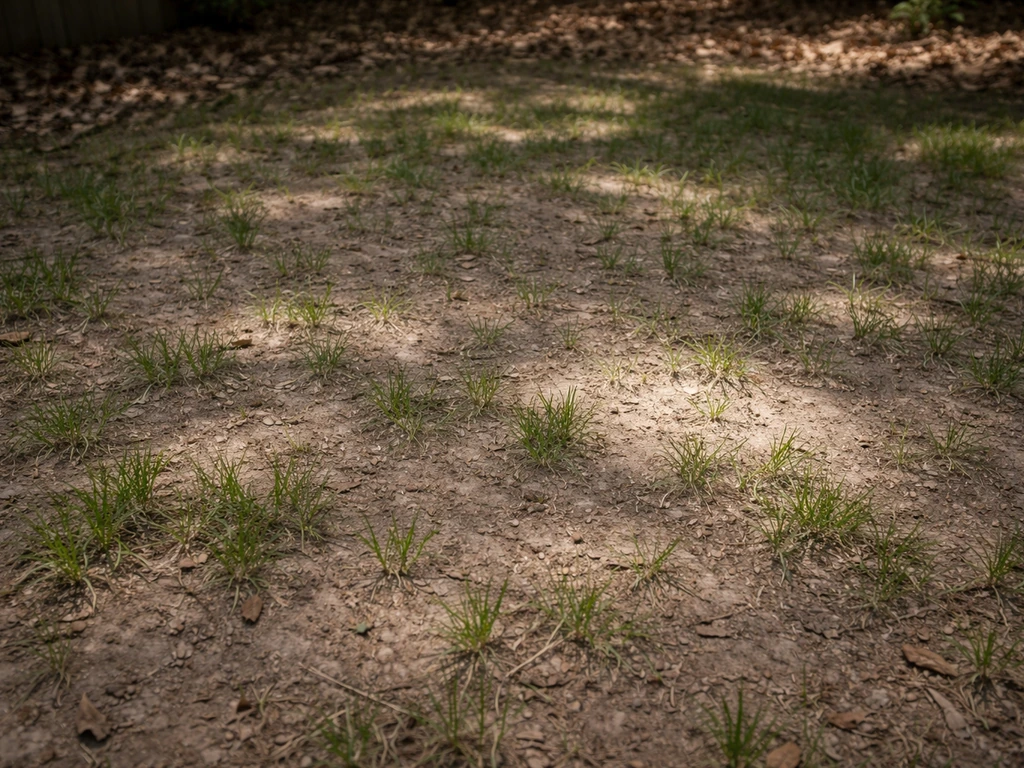
Where Grass Don’t Grow: Diagnose and Fix Lawn Failure
Learn why grass won’t grow in shade, poor soil, wrong pH, drainage issues, drought, or extremes, and fix it step by step
Why Won’t My Grass Grow? Diagnose and Fix a Thinning Lawn
Step-by-step diagnosis for thinning grass, from seed setup and soil tests to watering, pH, thatch, and reseeding timing.
Can You Grow Grass Over Gravel? How to Do It Right
Learn when you can grow grass over gravel and follow a step-by-step method for soil depth, drainage, seeding or sod, and