
Typical lawn grass cannot grow when fully submerged underwater. It can survive short periods of submersion depending on the species and water temperature, but it is not growing during that time. It is surviving or dying. True underwater growth simply does not happen with turfgrass because the plant needs oxygen at the roots and enough light to photosynthesize, both of which water cuts off quickly. If your yard is flooded or you have a low-lying area that stays wet or submerged, you need a different plan than just throwing grass seed at it.
Can Grass Grow Underwater? What Works and What Fails
Marcus Volkmann
22 May 2026
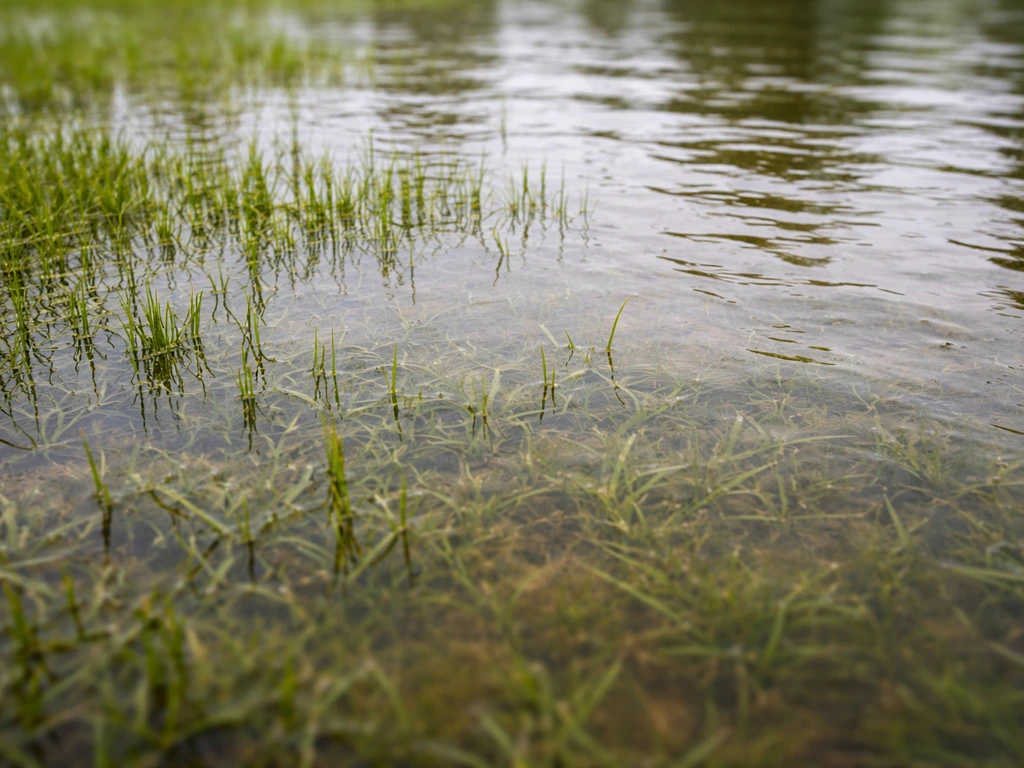
Wet ground vs. actually underwater: these are very different problems
This distinction matters a lot because people use 'underwater' loosely. There is a big difference between soil that stays saturated and soggy, a lawn that goes underwater for a few days after a storm, and an area that is genuinely submerged under several inches of standing water for weeks at a time. Each one has a different fix.
- Saturated/waterlogged soil: the ground is soaked but the grass blades are above the waterline. Many grass species handle this for short stretches, though root oxygen deprivation becomes a problem over time.
- Shallow temporary flooding: water covers the lawn surface for a few days after heavy rain or snowmelt. This is the most common scenario homeowners face, and survival depends heavily on species, water temperature, and duration.
- Prolonged submersion: the grass is fully underwater for weeks. At this point, most turfgrasses are dying or already dead, not just stressed.
- Permanent standing water or a water feature: the area is essentially a pond or bog. No standard turfgrass will establish here, and you need aquatic or emergent plants instead.
If your grass blades are above the waterline but the roots are sitting in standing water, you are dealing with a drainage problem. If the whole plant is submerged, you are dealing with a survival problem. Know which one you have before you do anything else.
Will grass seed germinate underwater?
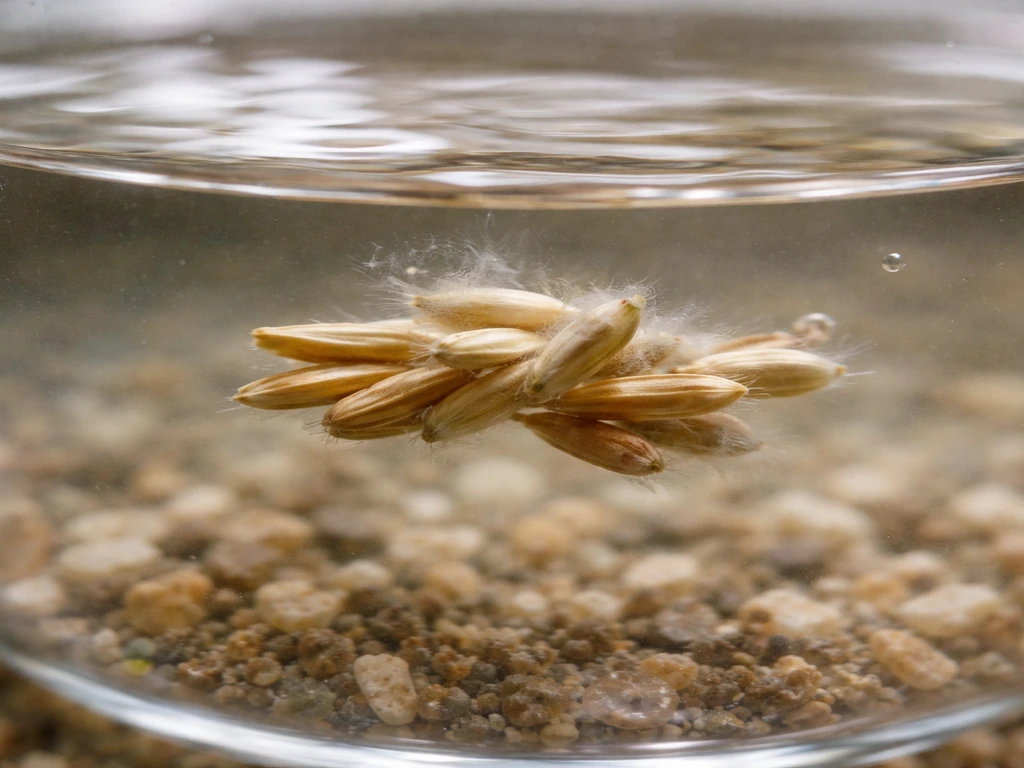
Grass seed will not germinate when fully submerged. Germination requires moisture, yes, but it also requires oxygen exchange and soil contact at the right temperature. Submerged seed either sits dormant, rots, or gets washed away. Even if you weighted it down somehow, the lack of oxygen in waterlogged or submerged conditions prevents the metabolic process that triggers sprouting.
I have seen people try to overseed flooded low spots thinking the water will help, and they end up losing the seed entirely. Wait until the area drains and the soil dries enough to be worked, then seed. Timing a re-seeding 24 to 48 hours after the standing water recedes, once the surface firms up slightly, is far more realistic than trying to seed into standing water.
What actually determines whether submerged grass lives or dies
Submersion tolerance in turfgrass comes down to four factors working together. None of them can fully compensate for the others, so you have to look at all four at once.
Water temperature

This is the biggest variable most people ignore. Cold water dramatically slows plant metabolism, which means the grass consumes stored energy far more slowly and can survive much longer. Research from field studies in Toronto found that blank" rel="noopener noreferrer">Kentucky bluegrass survived 35 days of submersion in 35°F water, and creeping bentgrass survived 38 days under the same conditions. Those numbers sound almost impressive until you realize that as soon as water temperatures climb into summer range, blank" rel="noopener noreferrer">Illinois Extension data shows warm-water submersion can kill turf in as little as a day or two. Spring flooding is survivable. Summer flooding in warm water is often fatal within 48 hours.
Species tolerance
Not all turfgrasses handle submersion equally. Michigan State University Extension rates them in relative tiers rather than giving universal day counts because conditions vary so much. Creeping bentgrass sits at the top with excellent submergence tolerance. Kentucky bluegrass lands in the middle at medium tolerance. Perennial ryegrass and Poa annua both sit at fair, meaning they handle it worse. If you have ryegrass and it goes under during a warm summer storm, expect losses. If you have a bentgrass fairway or a bluegrass lawn that floods in early spring with cold runoff, you have a better shot at recovery.
Oxygen and light
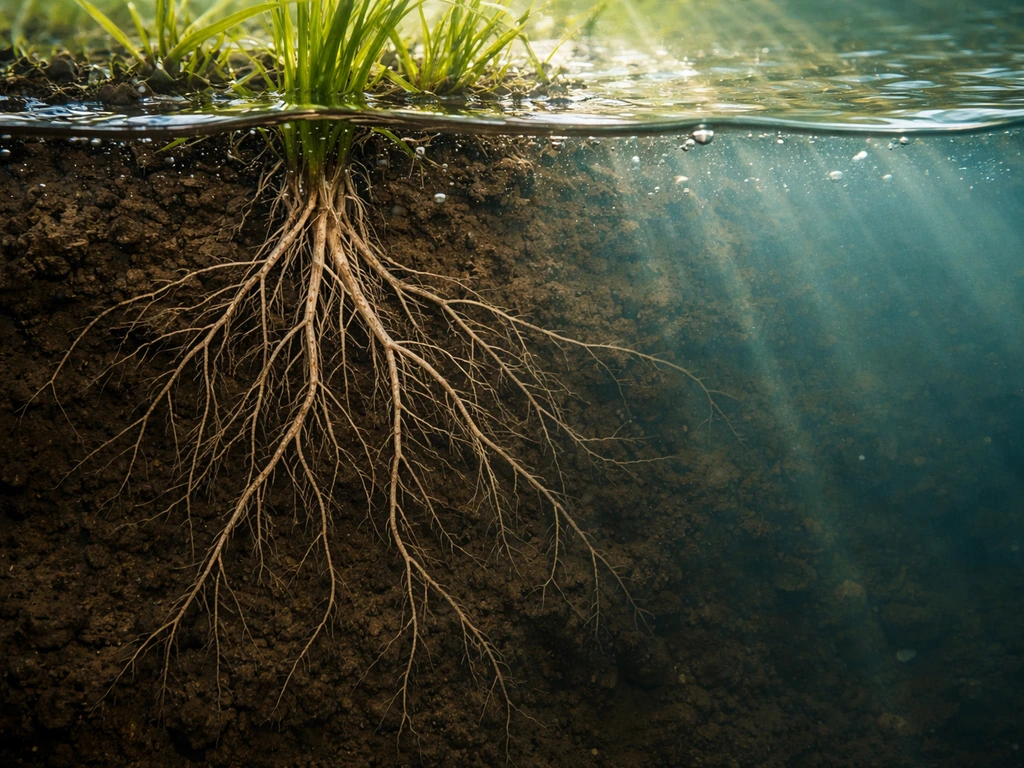
Even tolerant species are not growing underwater, they are just dying more slowly. Roots need oxygen, and submerged soil becomes anaerobic quickly. Light also attenuates fast through even a few inches of murky water, so photosynthesis shuts down. Turbid floodwater is especially brutal because it blocks almost all usable light. Clear, shallow water over a short period is the best-case scenario, and even then the plant is in survival mode, not growth mode.
Duration
Even if temperature, species, and water clarity are favorable, time still wins eventually. There is no turfgrass that will grow and thrive indefinitely underwater. So if you are wondering whether grass can grow in the end under true submersion, the reality is that it typically only survives for a limited time, then it dies without oxygen and light. The cold-water survival numbers above are absolute ceilings under ideal conditions, not typical outcomes. In real-world warm-weather flooding, expect damage to start showing within days.
| Species | Submergence Tolerance | Warm Water Risk |
|---|---|---|
| Creeping bentgrass | Excellent | Still dies fast in warm submersion |
| Kentucky bluegrass | Medium | Moderate; cold water extends survival significantly |
| Perennial ryegrass | Fair | High; losses likely within 1-2 days in warm water |
| Poa annua (annual bluegrass) | Fair | High; not a reliable choice for flood-prone areas |
When typical grass won't work: better options for wet and submerged areas
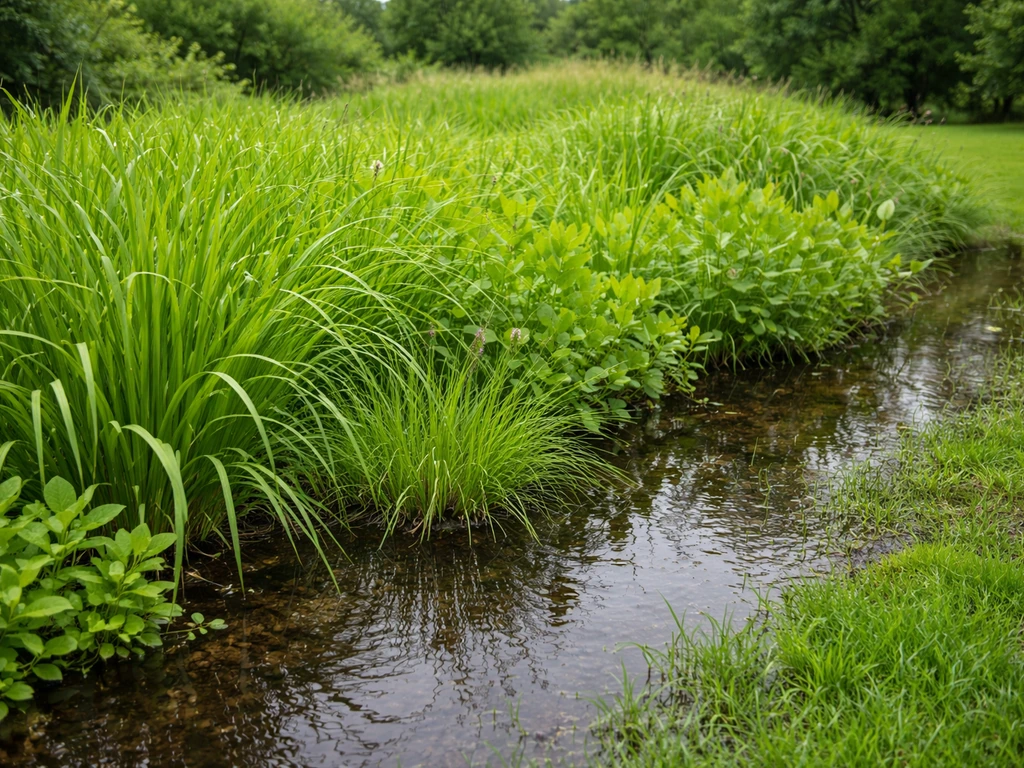
If the area floods repeatedly, stays waterlogged for long stretches, or is genuinely submerged as a permanent condition, stop fighting it with turfgrass. There are much better options that will actually thrive instead of just slowly dying.
Grass-like plants that handle wet and shallow water
- Sedges (Carex spp.): not true grasses, but look similar and many species thrive in consistently wet or seasonally flooded soil. Pennsylvania sedge and tussock sedge are good choices for North American climates.
- Rushes (Juncus spp.): work well in shallow standing water and boggy margins. Good for the edge of a water feature or a low spot that never fully dries out.
- Creeping Jenny (Lysimachia nummularia): a low groundcover that spreads in moist to wet conditions and handles shallow flooding better than any turfgrass.
- Sweet flag (Acorus calamus): an emergent plant that grows in shallow water up to about 4 inches deep, looks somewhat grass-like, and is genuinely aquatic-compatible.
True aquatic and emergent plants for deeper or permanent water
- Blue flag iris (Iris versicolor): thrives in shallow water and boggy soil, handles periodic full submersion.
- Pickerelweed (Pontederia cordata): an emergent plant for pond margins and permanently wet areas, very effective at stabilizing wet banks.
- Cattails (Typha spp.): aggressive colonizers of wet areas, excellent for erosion control on pond edges but can spread widely, so contain them if needed.
- Water sedge (Carex aquatilis): specifically adapted to standing water and wet meadow conditions.
Engineering fixes that let you keep grass
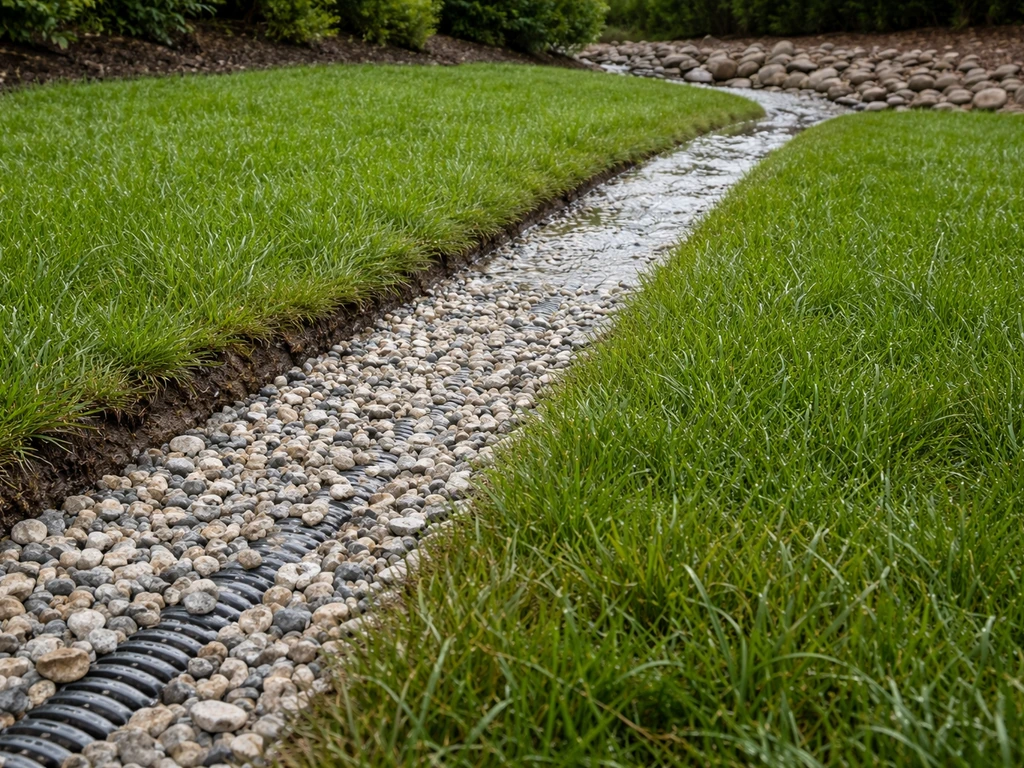
If you want turfgrass in a flood-prone area, sometimes the right move is fixing the drainage rather than changing the plant. French drains, grading adjustments, dry creek beds routed to a lower discharge point, or even a small constructed wetland that redirects water away from your lawn can all make a chronically flooded area viable for grass again. These are bigger investments but they solve the root cause instead of just accommodating the symptom.
Your practical checklist right now
If you are standing in front of a flooded or submerged patch of lawn today, here is what to actually do in order.
- Check water temperature. If it is cold spring runoff, your grass has a realistic chance of recovery if the flooding clears within a week or two. If it is warm summer water, assume losses are starting within 24-48 hours and plan for re-seeding.
- Identify your grass species if you can. Creeping bentgrass and Kentucky bluegrass hold up better than ryegrass. If you do not know what you have, look up your lawn's seed history or take a sample to your local extension office.
- Measure the submersion depth and duration. Shallow water that clears quickly is survivable. Water more than 2-3 inches deep that stays for more than a few days in warm weather is almost certainly lethal for most turfgrasses.
- Check light penetration. Clear water over a sunny area is less damaging than turbid brown floodwater that blocks all light. If you cannot see the grass through the water at all, the plant is already in critical stress.
- Once water recedes, do not immediately seed or fertilize. Wait until the soil firms up and can be walked on without compacting badly. Fertilizing anaerobic, waterlogged soil encourages disease rather than recovery.
- Assess damage after 1-2 weeks of dry conditions. If the crowns are still green and you see any new growth, the grass may recover on its own with light overseeding of thin spots. If the crowns are brown, mushy, or pull out easily, the turf is dead and needs re-establishment.
- For re-seeding, use an erosion control mat or biodegradable mesh on the area before seed germinates if the spot floods again during rain. This holds seed in place and reduces runoff losses.
- If the area floods every year or stays wet for months at a time, accept that turfgrass is the wrong plant for the job and pivot to sedges, rushes, or a drainage solution.
The honest answer is that grass is not an aquatic plant and will not behave like one. Understanding how growth direction and root structure work in grass (topics worth looking at alongside this one) helps explain why full submersion is so damaging: the growth points are close to the soil surface, the roots are shallow, and the whole system depends on soil oxygen that standing water eliminates. Can grass grow vertically?
In most cases, regular turfgrass does not grow upward to escape flooding because it still needs oxygen at the roots and light for photosynthesis. The sooner you accept whether you have a temporary flooding problem or a permanent water problem, the sooner you can pick the right fix and stop losing money on seed that will never survive.
FAQ
How can I tell if my lawn problem is “roots in water” versus “fully submerged,” and what should I do first?
If the blades are above water but the soil stays saturated, focus on drainage and aeration rather than re-seeding. Seed needs soil contact plus oxygen exchange, and prolonged waterlogged conditions turn the root zone anaerobic, so you may see some greening followed by collapse after standing water returns or temperatures warm.
Can I seed while the area is still underwater or puddled to get ahead of recovery?
Wait until water has receded and the surface firms enough that you can lightly work it without making ruts. Seeding into standing water usually leads to seed washout or rot, even if you hold it down, because the germination trigger requires oxygen conditions in the root zone.
What about hydroseed, sod mats, or blankets, do they work when flooding happens?
Yes, but only as a short-term “keep soil from washing” approach, not as a true underwater seeding method. Use erosion control and temporary matting to stabilize the area until you can drain and prep the top layer, then seed. Living mats can still fail if the floodwater stays warm or lasts weeks.
If the same spot floods every few months, is re-seeding still worth trying?
If flooding repeats, assume you will not get stable turf without changing water behavior. Look for a pattern like storms causing days of shallow standing water, or seasonal high groundwater, then prioritize grading, drainage, or redirecting runoff, because repeated oxygen loss keeps killing new growth.
Why does my grass survive spring flooding but die after summer storms?
Expect worse outcomes when water warms, the water is muddy or turbid, and the flood lasts longer than a few days. Warm runoff plus low light is a faster combination than spring flooding in cool water, so your plan should be stricter about delaying seeding until temperatures are cooler and the site is genuinely draining.
Should I mow, scalp, or bag after flood water goes away to help it come back?
Yes, mowing height matters after water recedes, but it is a follow-up step. If the area is still soggy, mowing can compact the soil and delay aeration. After drainage, remove only the most damaged tops and avoid heavy scalping until the ground is firm, then aerate if you have thick thatch.
Does shade under trees change whether grass can recover after a flood?
Partial shade can make recovery harder but it is not the primary cause of underwater death. If light is already limited, the reduced photosynthesis speed means the plant has less energy to regrow once oxygen returns, so you may need faster drainage fixes and more conservative expectations for thinning.
If I use a more flood-tolerant seed mix, will it actually grow under water?
It can, depending on the species of grass and local conditions, but mixing does not create true “underwater growth.” Even tolerant species primarily survive short submersion, then regrow when roots get oxygen and light returns, so species choice only helps if you still address the water problem.
My seeds didn’t sprout, how do I know whether it was because of submersion, temperature, or poor seed-to-soil contact?
Germination is typically delayed by water that removes oxygen at the seed-soil interface and by temperatures that are too cold or too warm. If the seed fails, check whether the surface stayed submerged or waterlogged long enough to prevent oxygen exchange, then re-seed only after the site can be worked and stays drained for a full window.
What are my realistic alternatives if the site stays wet or flooded most of the year?
If you cannot reliably drain the area, consider a permanent alternative to turf. Low-lying sites often do better with wet-tolerant groundcovers or designed water features, because turf may survive temporarily but will keep deteriorating when the site remains frequently saturated.
Next Articles
Can Grass Grow Vertically? Best Systems, Species, and Care
Can grass grow vertically? Choose the right species and systems, plus substrate, care, and troubleshooting for green wal
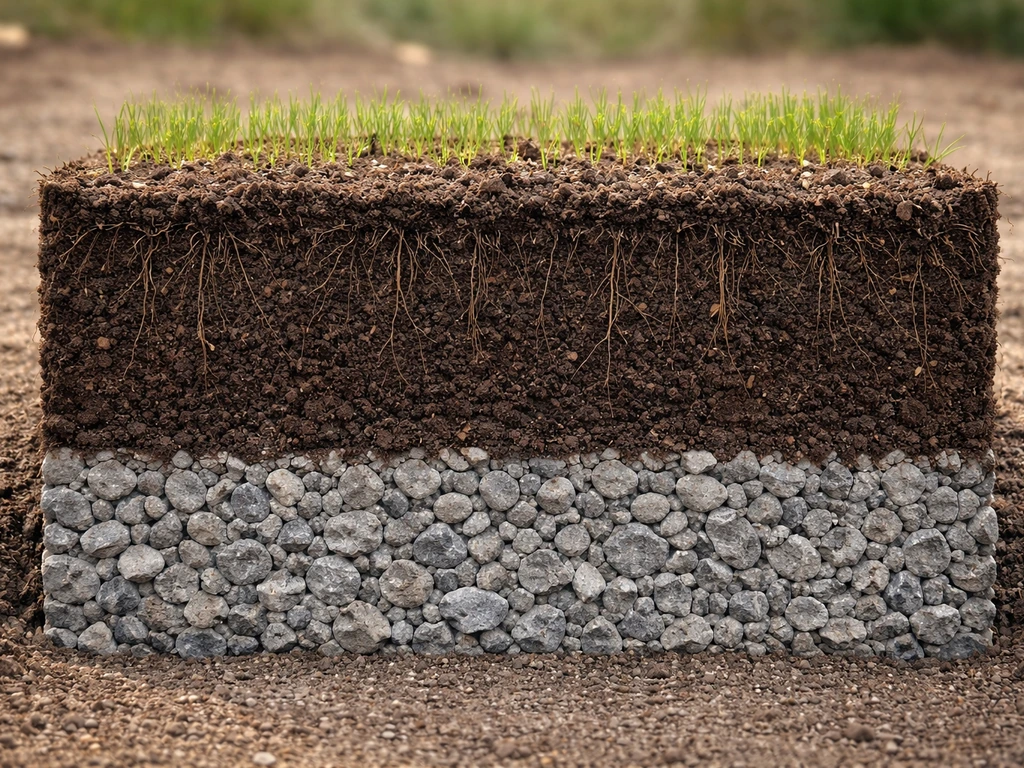
Can You Grow Grass Over Gravel? How to Do It Right
Learn when you can grow grass over gravel and follow a step-by-step method for soil depth, drainage, seeding or sod, and
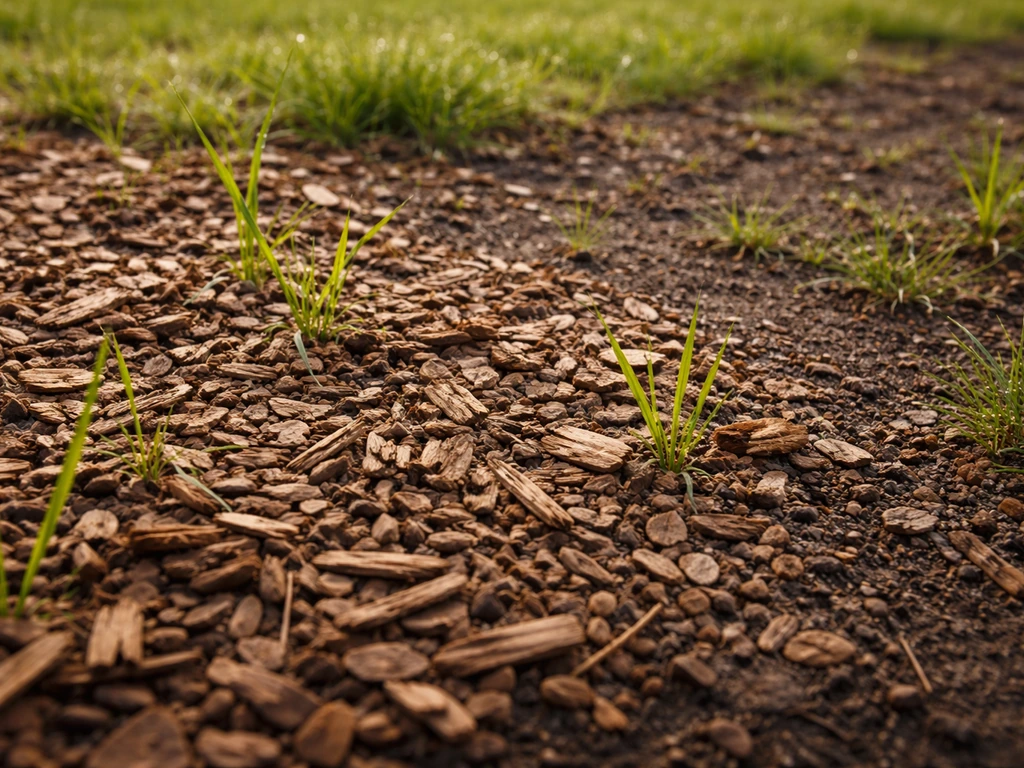
Do Wood Chips Help Grass Grow? When They Work and When Not
Learn when wood chips help grass grow, when they steal nitrogen, and step-by-step how much to apply and seed options.