
Grass cannot grow underground in any meaningful real-world sense. It needs light to photosynthesize, and without light there are no carbohydrates, no energy, and no growth. Roots can push several inches into the soil, but the green leafy part of any grass plant will die within days if you cut it off from sunlight completely. The one partial exception is when "underground" just means growing in a covered, confined, or low-light space that still gets some light, and there, the answer depends entirely on how much light is actually reaching the surface.
Can Grass Grow Underground? Light, Soil, and Real Fixes
Marcus Volkmann
8 Jun 2026
The Minecraft angle: grass blocks underground
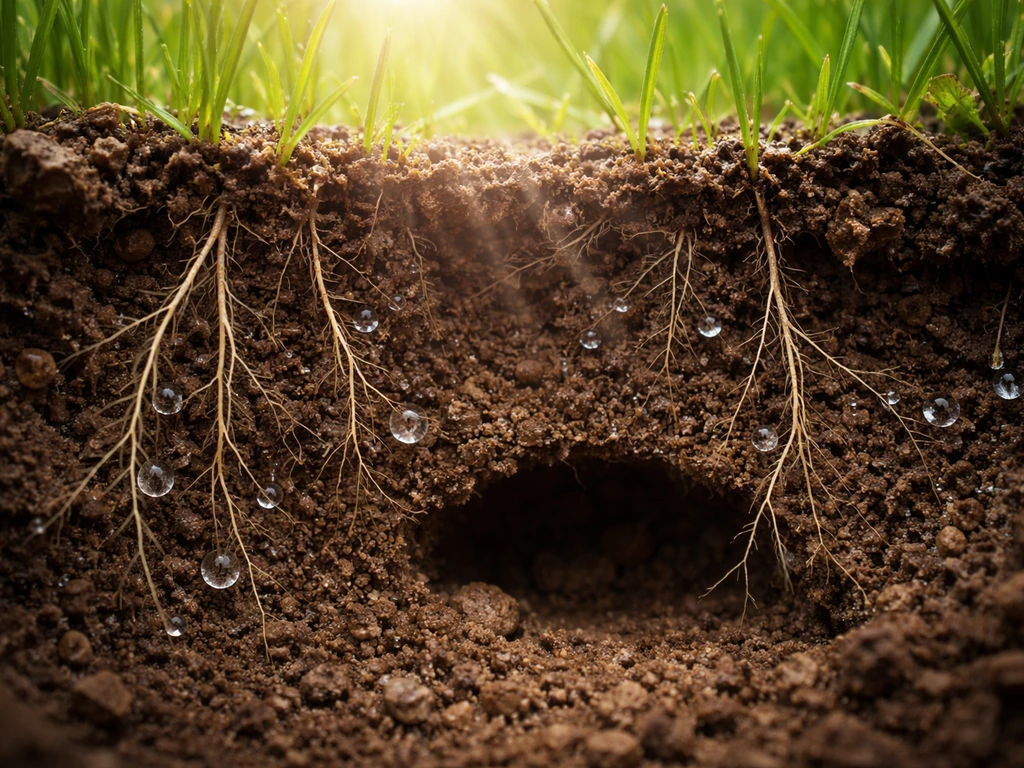
If you landed here partly because of Minecraft, this part is for you. In the game, grass blocks behave by their own set of rules. That is why Minecraft can show grass growing where real-life conditions would never allow it grass blocks behave by their own set of rules. Grass spreads from an existing grass block to adjacent dirt blocks, including diagonally, but only if the dirt block has a light level of at least 4 above it and is not blocked by a light-reducing block. That means a dirt block tucked underground in a completely dark cave will not receive a grass spread naturally through normal gameplay mechanics.
There is one interesting exception: world generation. Grass can appear on dirt blocks in caves during world generation even without a nearby light source, because the game places it as part of the terrain-building process rather than through spread mechanics. But once you are playing and building, the spread rule applies, get light level 4 or above to that dirt block, and grass can spread to it. Torch it up, open the ceiling, or use glowstone nearby, and you can absolutely have grass underground in Minecraft. Without that light level, it will not happen.
Why real grass cannot survive underground
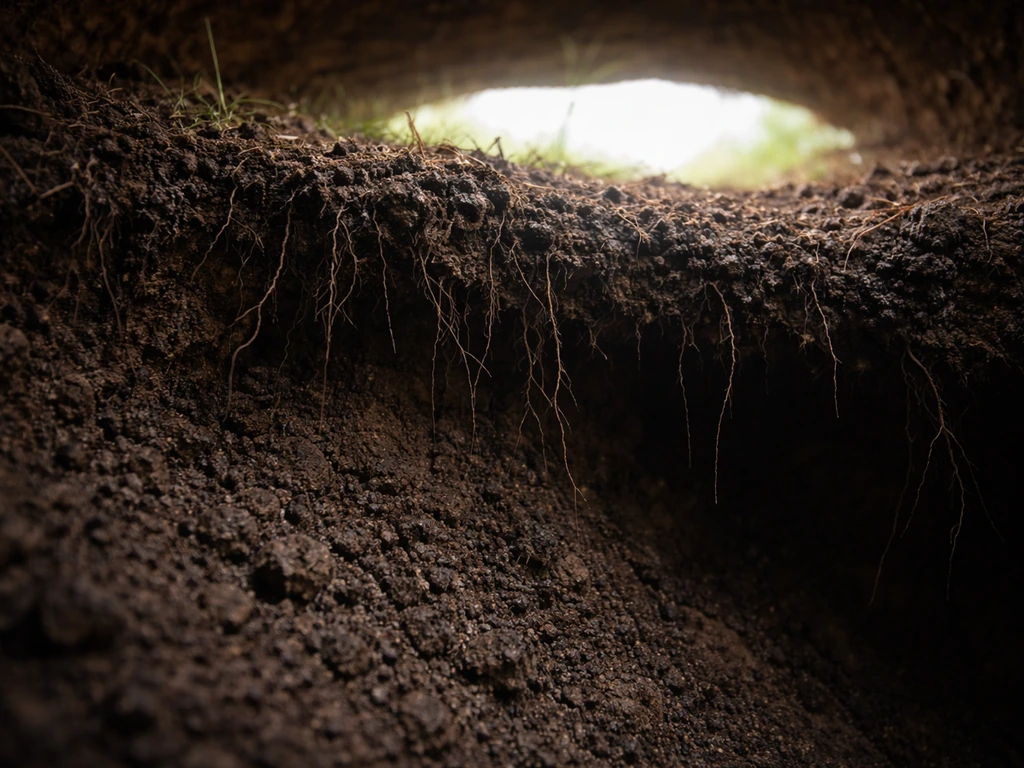
In the real world, four conditions kill grass the moment you push it underground or seal light off from it. Light is the biggest one. Grass produces energy through photosynthesis, and shaded turf research puts the breaking point at around 20 percent of full sunlight, that is "severe shade" territory where even the most tolerant cultivars start failing. Block all light completely and you are not even in the ballpark. Below ground, there is no sunlight, full stop.
Oxygen is the second problem. Compacted or waterlogged soil drastically reduces the oxygen available in the soil pore spaces, and oxygen is essential for root respiration. Research from UMass confirms that compaction decreases soil oxygen content directly, and UC IPM points out that insufficient soil oxygen, excess moisture, and root decay pathogens often act together to kill roots. Underground spaces, trenches, sealed beds, covered areas, tend to trap moisture, restrict airflow, and create exactly these anaerobic conditions.
Temperature and rooting depth round out the picture. Kentucky bluegrass, one of the most common cool-season grasses, grows best when average July temperatures stay under about 75°F and when soil pH sits between 6.0 and 7.0. Underground or enclosed spaces often have different temperature profiles than open ground, and if drainage is poor, waterlogging can push soil into anaerobic conditions that no grass root system can handle. Grass roots can reach 6 inches deep within just two weeks under good conditions, but those roots still need oxygen, moisture balance, and the right pH to function.
How to assess your specific site right now
Before you spend money on seed or sod, spend 20 minutes on a site check. These four diagnostics will tell you whether you are dealing with a fixable problem or a lost cause.
Check 1: Light
Stand at the spot at solar noon and look up. If you can see a clear patch of sky directly overhead, you probably have enough light. If you are under a deck, pavers, a tarp, soil, or dense canopy, measure what you are actually working with. A simple lux meter (under $20 at most hardware stores) will tell you. You need a minimum of roughly 20 percent of full sun for even the most shade-tolerant grass to survive, that is the "severe shade" threshold used in turf research. Below that, grass will not establish or persist.
Check 2: Soil depth and compaction
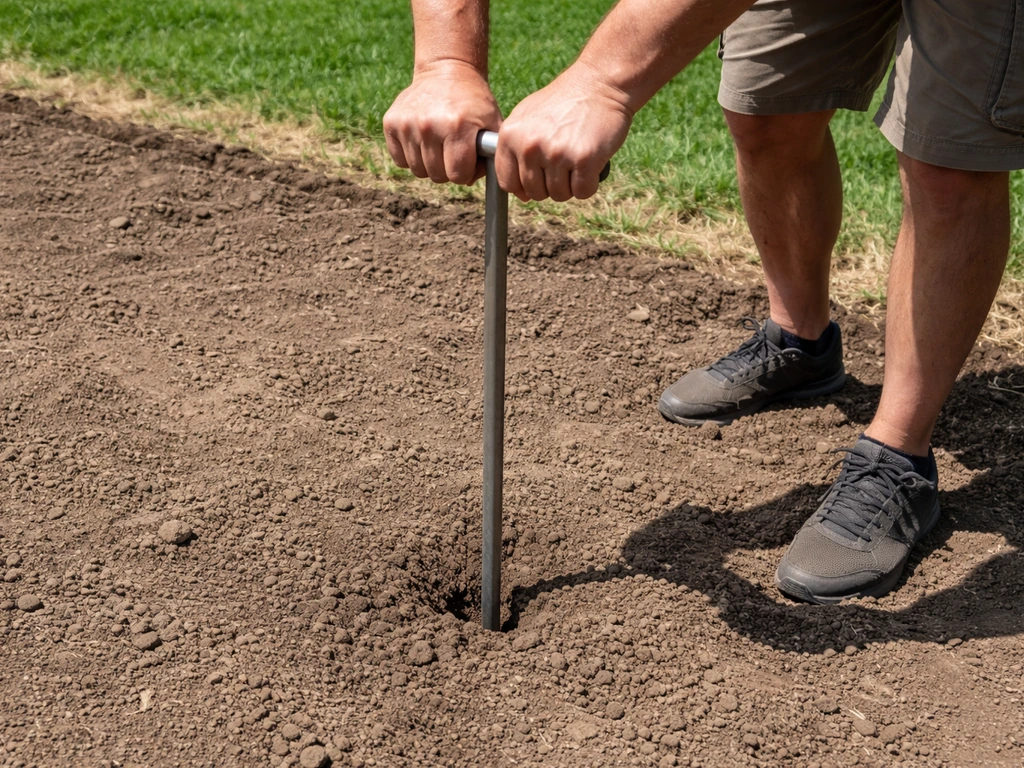
Push a screwdriver or a metal rod into the soil by hand. If it stops before 6 inches, you have either compaction or a physical barrier. Grass roots need at least 6 inches of workable soil to establish well, and compacted layers above a hardpan or subsoil will restrict both rooting and water movement. If you hit resistance at 2 to 3 inches, that soil needs aeration and amendment before you do anything else.
Check 3: Drainage
Dig a hole about 12 inches deep and fill it with water. Check it again one hour later. If the water is still sitting there at the same level, you have a drainage problem. Waterlogged soil starves roots of oxygen, and grass cannot survive in anaerobic conditions. In underground or enclosed spaces, poor drainage is extremely common and often the first thing that kills any attempt at growing turf.
Check 4: Soil pH
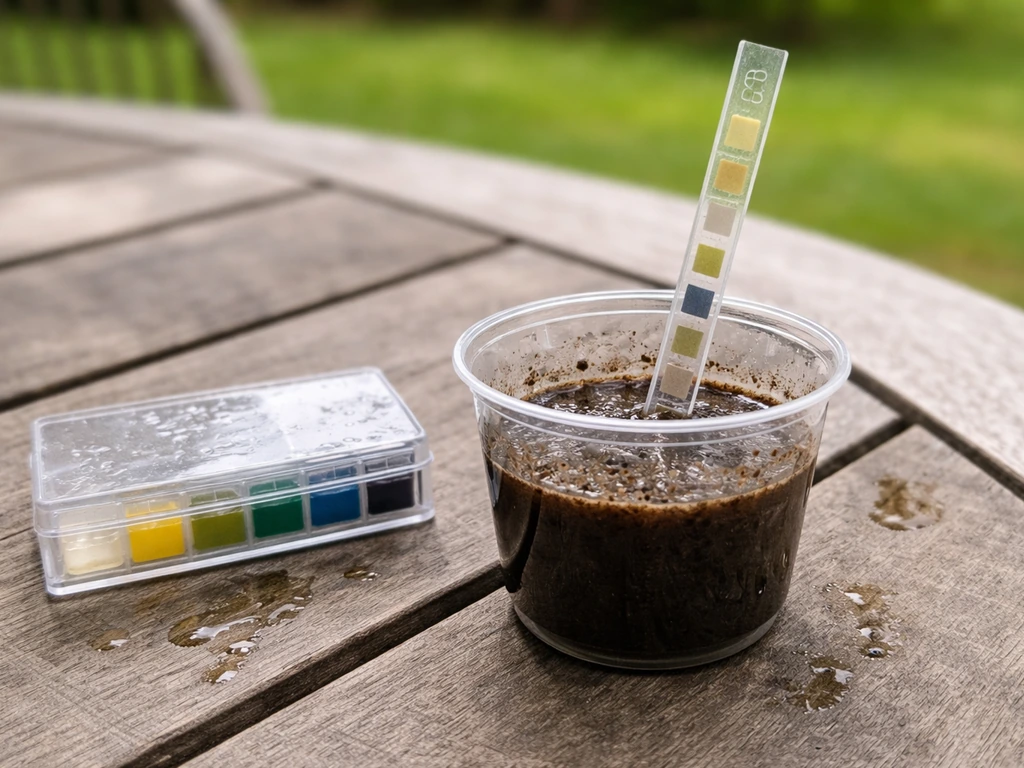
Pick up a basic soil test kit or send a sample to your local extension service. The acceptable range for most turf is pH 6.0 to 7.5. Soils in enclosed or disturbed areas, like backfilled trenches or compacted subsoil, often fall outside this range and need lime (to raise pH) or sulfur (to lower it) before grass will thrive. This is a five-minute test that tells you a lot.
How to give grass its best shot in tough "under" situations
If your "underground" situation is actually more like a thin-soil area, a recently covered bed, a space under a thin canopy, or soil that was just graded and compacted, there are real fixes. None of them work without addressing light first.
- Fix light first: If you are dealing with a covered area, remove or modify the cover to let light through. Even translucent panels or raising a structure a few inches can make a big difference. There is no soil amendment that replaces sunlight.
- Aerate aggressively: Use a core aerator to pull plugs from compacted soil before seeding. This opens up oxygen pathways, improves drainage, and gives roots somewhere to go. Do this before any other amendment.
- Add organic matter: Work 2 to 3 inches of compost into the top 6 inches of soil. This improves structure, oxygen retention, and moisture balance all at once. It is the single most cost-effective soil amendment for poor-performing turf areas.
- Correct pH: Test first, then apply lime or sulfur accordingly. Getting pH into the 6.0 to 7.0 range makes nutrients available that were otherwise locked out of the soil chemistry.
- Choose the right cultivar: Shade-tolerant fine fescues (like creeping red fescue or chewings fescue) perform significantly better than Kentucky bluegrass or tall fescue in low-light conditions. Match the cultivar to your actual light level, not your ideal light level.
- Manage moisture carefully: In enclosed or partially covered spaces, irrigation is tricky. Water deeply but infrequently, and make sure your drainage test passed before you commit to a watering schedule. Overwatering in low-oxygen soil accelerates root decay.
- Keep traffic off new grass: Compaction from foot traffic is especially damaging in enclosed or low-light areas where the turf is already stressed. Stay off it for at least 6 to 8 weeks after germination.
Comparing your options when light is limited
| Option | Light Needed | Maintenance | Best Use Case |
|---|---|---|---|
| Shade-tolerant fescue (e.g., creeping red) | 20–40% of full sun | Low to moderate | Partially shaded areas with some sky exposure |
| Irish moss (Sagina subulata) | Partial shade | Very low | Gaps between pavers, stepping stones, low-light ground |
| Liriope (lilyturf) | Deep to partial shade | Very low | Dense shade, slopes, low-maintenance borders |
| Mulch or gravel | None required | Minimal | Fully enclosed or zero-light areas under decks or pavers |
| Artificial turf | None required | Very low | Where appearance matters but conditions are impossible for grass |
When to stop trying to grow grass and go a different direction
There is a point where pushing grass into an underground or fully shaded situation stops being a challenge and starts being a waste of money. UMass puts it plainly: there are cases where blank" rel="noopener noreferrer">there is simply too much shade to support adequate turfgrass growth, regardless of what else you do. If your drainage test fails, your light is under 20 percent of full sun, and your soil is a compacted mess, you are stacking three losing conditions. No cultivar or amendment overcomes all three.
In those cases, the practical move is to stop fighting the site and use it differently. Irish moss works beautifully in low-light spaces between pavers and stays under 2 inches tall. Liriope is one of the most durable groundcover alternatives out there and handles deep shade that kills every grass variety. If it is purely a covered area like under a deck or beneath pavers with no light whatsoever, mulch or decorative gravel gives you a clean, low-maintenance surface that does not require any of the conditions grass needs.
If you are interested in how grass grows in other challenging scenarios, the same core principles apply whether you are asking about grass growing vertically, underwater, or in extreme environments. If you are wondering can grass grow underwater, it comes down to the same limiting factors like light, oxygen, rooting depth, and pH grass growing underwater. If you are interested in how grass grows in other challenging scenarios, the same core principles apply whether you are asking about grass growing vertically, underwater, or in extreme environments. So for the question of whether grass grows from the top or the bottom, the growth depends on light and the conditions that let new shoots emerge from the plant’s base and roots does grass grow from the top or bottom. Light, oxygen, rooting depth, and pH are always the limiting factors. Change any one of them past the threshold and grass stops working. The underground question is really just the most extreme version of the same problem every difficult lawn situation presents.
Start with the four diagnostic checks above before spending anything. Most people who ask this question are dealing with a specific spot on their property that is not truly underground, it is just very difficult. A screwdriver test, a drainage test, a lux reading, and a $15 soil test will tell you more in an afternoon than weeks of guessing.
FAQ
Can grass grow in a basement, garage, or crawl space if I place a light fixture over it?
Yes only if the “underground” area actually receives enough usable light to support photosynthesis, roughly at least 20 percent of full sun. A key practical step is to measure light at the grass surface (lux meter), then keep the soil oxygen-friendly by ensuring drainage and airflow (raised planters or vents). If the space stays humid or waterlogged, lighting alone will not save roots.
Does covering grass with a layer of mulch or landscape fabric make it grow underground?
It can be partially covered, but it is not the same as growing without light. Thick mulch, dense fabric, or buried mat layers usually block the light shoots need to establish, leading to thinning and dieback. If you want grass to persist, use only a thin, breathable ground cover and confirm the surface still meets the severe shade threshold using a light measurement.
If roots grow underground, why do the green parts die when there is no sunlight?
Roots can keep some tissue alive for a short time, but without light the plant cannot make enough carbohydrates through photosynthesis, so it cannot maintain growth and leaf function. In practice, you often see roots survive briefly, then shoots fail within days because energy reserves run out and new green growth cannot form.
Will watering underground spaces more often help grass if oxygen is low?
Usually no. Frequent watering in enclosed areas often worsens oxygen shortage by filling pore spaces with water, pushing soil toward anaerobic conditions. Better next step is to do the drainage test, then improve aeration and drainage (soil structure changes, not just more water) before you seed or sod.
What’s the quickest way to tell whether my “underground” spot is truly too dark versus just shaded?
Use a lux reading at turf height and compare it to the severe shade target, about 20 percent of full sun. Also do the solar-noon overhead check, if you cannot see open sky directly overhead, assume light is reduced and confirm with the meter because canopy and coverings can create much lower readings than people expect.
Can I use artificial grow lights to keep grass alive in total darkness under pavers or a roofed structure?
Artificial light can work if intensity and duration are high enough at the leaf level, but most setups underperform because bulbs may be strong while the grass surface receives little due to distance or obstructions. Measure at the canopy with a light meter, and do not skip the soil drainage and compaction checks, since low oxygen and wrong pH can kill grass even under good lighting.
How deep should soil be for grass to establish in an underground-like trench or raised bed?
Aim for at least about 6 inches of workable, uncompacted soil for good rooting, especially if you want stable survival. If you have a hardpan or resistance at 2 to 3 inches in the screwdriver test, you likely need soil amendment and aeration before seeding, otherwise roots cannot access enough aeration and water movement.
What should I do if my tests show low light, poor drainage, and compacted soil at the same time?
Treat it as a likely “lost cause” for turf. Instead of trying to fix everything with seed, switch strategy: replace grass with low-light groundcovers (like durable shade plants), or use mulch and gravel to create a stable surface that does not depend on photosynthesis at grass height. If you try turf anyway, you will usually spend money repeatedly.
Does grass grow underground during winter when light is reduced outdoors?
Lower outdoor light does not create “underground” conditions, so grass still relies on available daylight, and dormancy may occur rather than true underground failure. If your spot fails the severe shade target during peak season, winter will not improve it, so the practical move is to reassess light, drainage, and compaction when growth should be strongest.
Is there any scenario where grass appears without meeting the normal spread or light rules?
In Minecraft, grass can appear due to world generation rules rather than normal spread mechanics. In real life, there is no equivalent mechanism, so grass establishment always depends on enough light reaching the shoots, adequate soil oxygen, workable rooting depth, and appropriate pH.
Next Articles
Can Grass Grow in the End? How to Fix Bare Patches Fast
Yes, grass can regrow in a bare end patch with the right timing, soil fixes, drainage, and establishment care.
Does Grass Grow From the Top or Bottom? Learn Why
Grass regrows upward from the crown, while roots expand below. Learn mowing, thatch, soil, shade, and watering fixes.
Can Grass Grow Underwater? What Works and What Fails
Learn if grass can grow underwater, why lawn grass fails, and what conditions and plants actually work in flooded areas.