
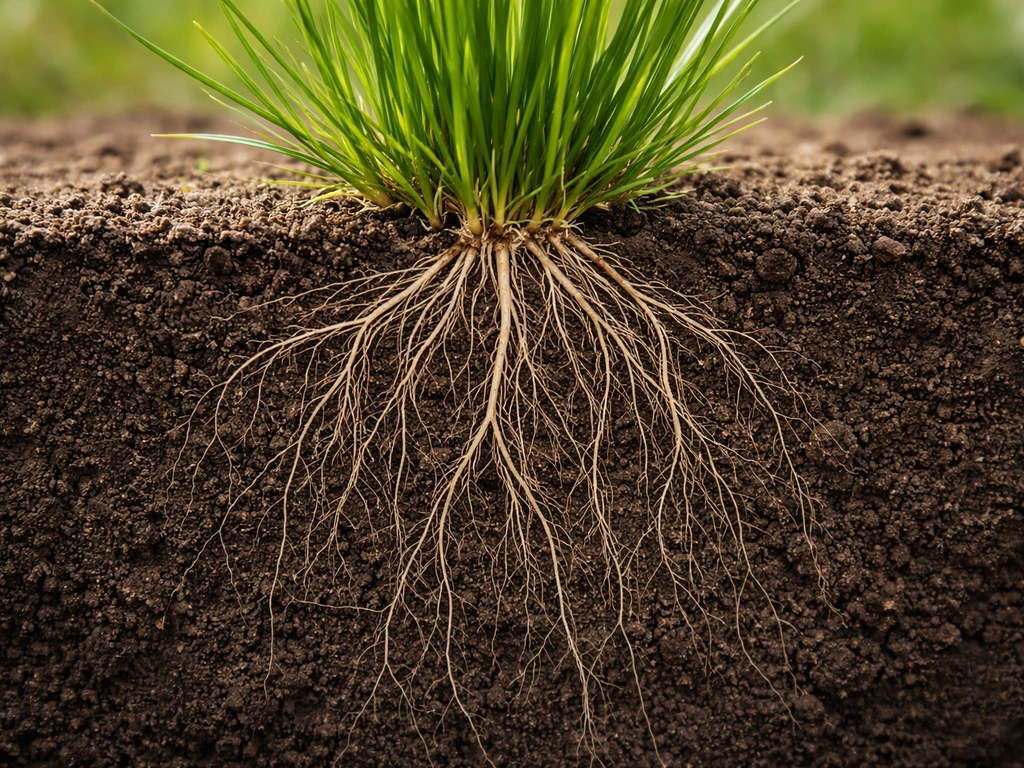
Grass grows from the bottom, not the top. New leaf blades emerge from the crown, which sits at or just below the soil surface, and each individual blade elongates from its base rather than its tip. That's why you can mow off the top of a grass plant and it keeps growing, the part that actually drives new growth never got touched. Understanding this one fact changes how you diagnose and fix almost every lawn problem you'll run into. If you're wondering can grass grow vertically, the key is still where new growth originates at the crown and base of the plant.
Does Grass Grow From the Top or Bottom? Learn Why
Marcus Volkmann
29 May 2026
Where grass growth actually comes from
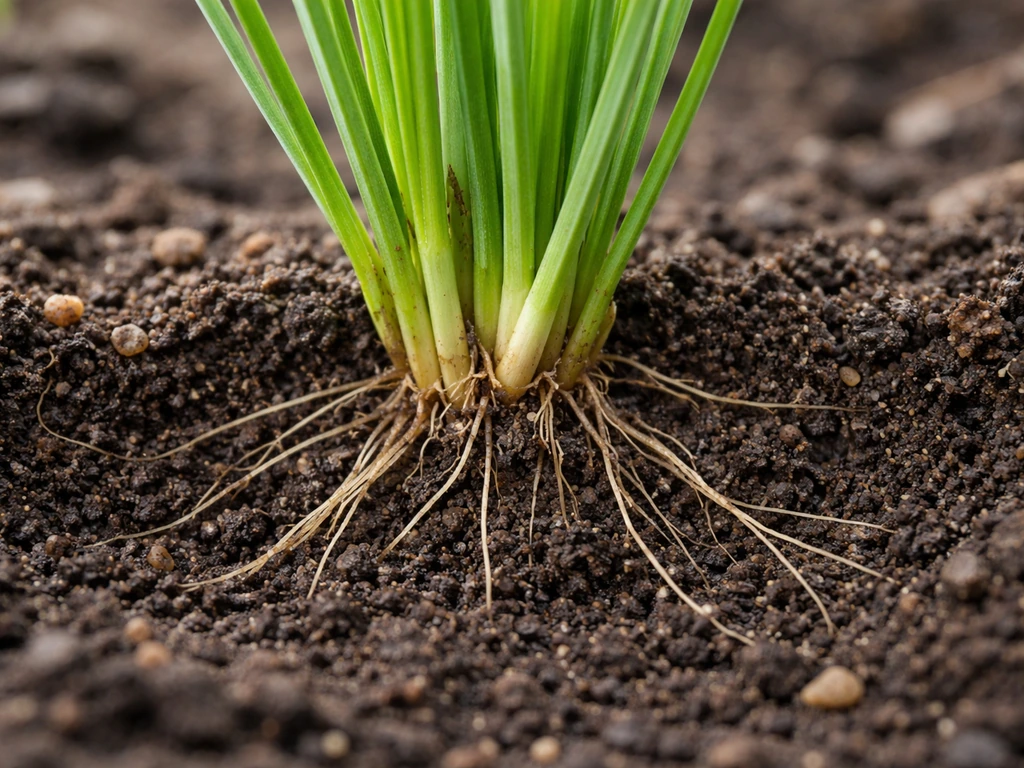
The crown is the command center of a grass plant. It sits right at the soil surface, connecting the root system below to the leaf blades above. All the actively dividing tissue, the meristem, lives here. Penn State Extension and Colorado State University Extension both confirm that new leaf growth originates at the base of the plant near this crown, not at the tip of the blade. Oregon State's forage research puts it plainly: grass leaf elongation happens through new cell formation at the base of each leaf blade, thanks to intercalary meristematic tissue that stays near the soil surface during vegetative growth.
Texas A&M makes the same point from a turf management angle: turfgrasses tolerate repeated mowing precisely because the growing point sits at the top of an un-elongated crown region near the soil surface, safely out of the blade's reach when you mow at a reasonable height. Cut the tips off, no problem. Damage or bury the crown, and you have a real issue.
There's also a hard limit worth knowing. Oregon State notes that if a leaf blade is severed below its collar (the point where intercalary meristem tissue lives), that specific blade cannot regenerate. The plant will push a new blade from the crown, but that individual blade is done. This is why scalping a lawn, cutting so low you shear into the crown zone, causes so much visible damage that takes weeks to recover from.
How grass regrows after mowing
When you run a mower over the lawn, you're trimming leaf tissue that has already matured. The crown at the base is untouched, and it immediately starts pushing new cell growth upward from the base of each remaining blade stub. You can actually watch this in slow motion if you mark a blade with a marker: the mark stays at the same height while new growth appears below it and pushes the old tissue upward. The blade isn't stretching from the top, it's being built from the bottom up.
Cornell University adds another dimension here: regular mowing can actually increase shoot density by stimulating tillering, which is the process of new stems developing from the crown. So mowing done right doesn't just maintain appearance, it can actively make your lawn thicker over time. The key is keeping cuts gradual. Cornell advises changing mowing height by no more than about 1/4 to 1/2 inch per increment to avoid removing too much leaf area at once and stressing the crown.
Root growth vs blade growth: what actually thickens a lawn
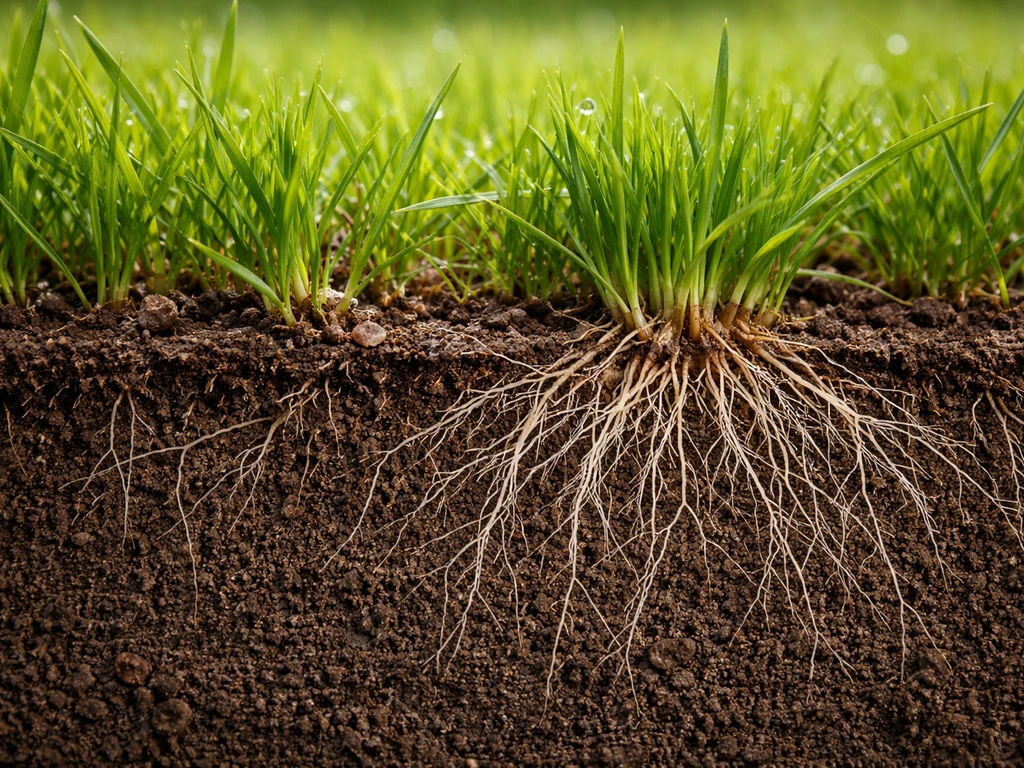
Blade growth is visible and satisfying to watch, but root and crown expansion is what genuinely fills in a thin lawn. A grass plant thickens a lawn by spreading through tillers (side shoots from the crown), rhizomes (underground stems), or stolons (above-ground runners), depending on the species. Kentucky bluegrass spreads aggressively via rhizomes. Bermudagrass uses both rhizomes and stolons. Tall fescue is a bunch-type grass, it clumps and doesn't spread much at all, which is why overseeding is critical for tall fescue lawns that thin out.
Root depth matters because deeper roots mean the plant can access more water and nutrients, which directly feeds the crown's ability to keep producing new tillers and blades. When roots are shallow, often because of compaction, drought, or overwatering, the plant stays stressed, tillering slows down, and the lawn thins out even if blade growth looks okay on the surface. Utah State University Extension makes this connection explicitly: the crown's survival and productivity depend on what's happening in the root zone.
Why lawns fail to fill in
If you understand that growth comes from the crown and base, you can work backward from a thinning lawn to figure out what's blocking it. The usual suspects are thatch, compaction, poor soil, and shade, and they often pile on top of each other.
Thatch
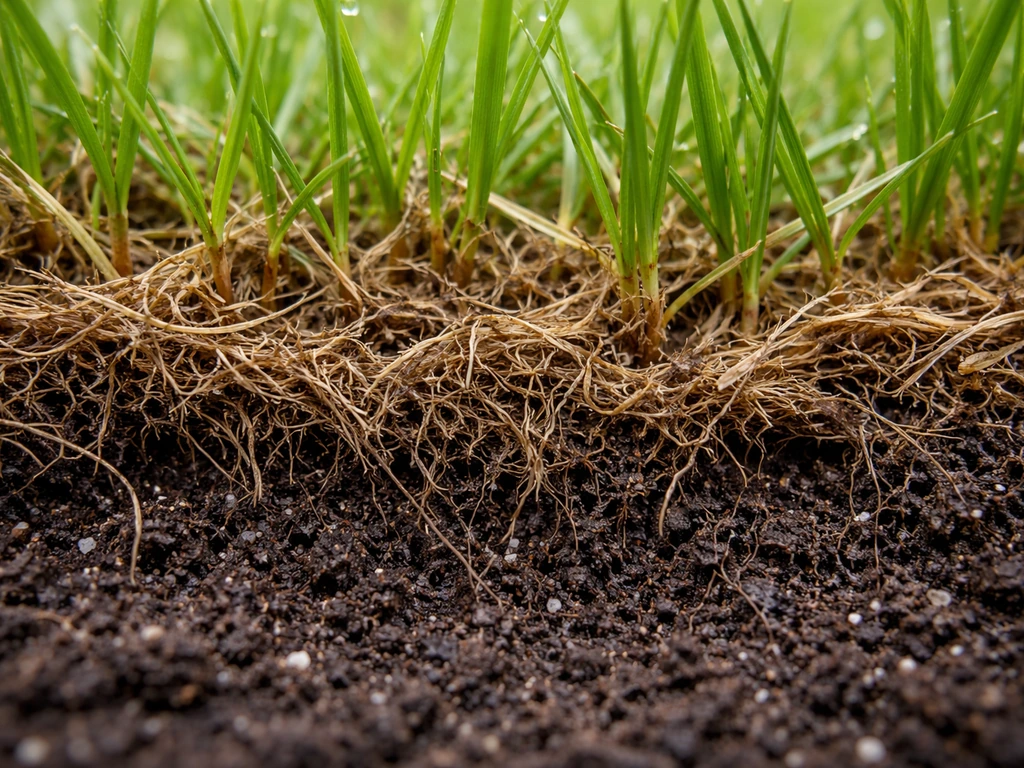
Thatch is the spongy layer of dead and living organic matter between the grass blades and the soil surface. A thin layer under 1/4 inch is actually fine and insulates the crown. But once it hits 1/2 inch, multiple extension programs flag it as a problem threshold. Penn State says turf problems become likely above about 1 inch. Oklahoma State and Kansas State both put the practical action threshold at 1/2 inch for cool-season lawns. Montana State confirms that a thatch layer over 1/2 inch blocks air and water from reaching the root zone. When that happens, the crown is sitting in a dry, oxygen-poor mat instead of healthy soil, and new growth slows or stops.
Soil compaction
Compacted soil physically squeezes out the air pockets roots need to grow downward. Utah State and University of Maryland Extension both describe how compaction limits air, water, and nutrient movement into the root zone, which starves the crown of what it needs to keep producing tillers. Heavy clay soils are the most prone to compaction, but even sandy soils in high-traffic areas can compact enough to cause problems.
Poor soil nutrition and watering problems
University of Maryland Extension notes that pale yellowing and chlorosis-like symptoms often trace back to nitrogen or iron deficiency, while compaction and thatch make those nutrient problems worse by blocking delivery to roots. On the watering side, University of Missouri Extension warns that overwatering starves roots of oxygen, so ironically, a lawn that gets too much water can thin out for the same reason as one that gets too little. Both extremes leave the crown without what it needs.
Shade
Penn State Extension is direct about what shade does: it shortens roots, reduces shoot density, and increases disease susceptibility. When light is limited, photosynthesis slows, the plant produces less energy, and the crown simply can't push new tillers at the rate it would in full sun. Add tree root competition for water and nutrients, which University of Maryland Extension specifically flags, and you have a lawn that's fighting on multiple fronts simultaneously.
Quick diagnosis: what to actually look at
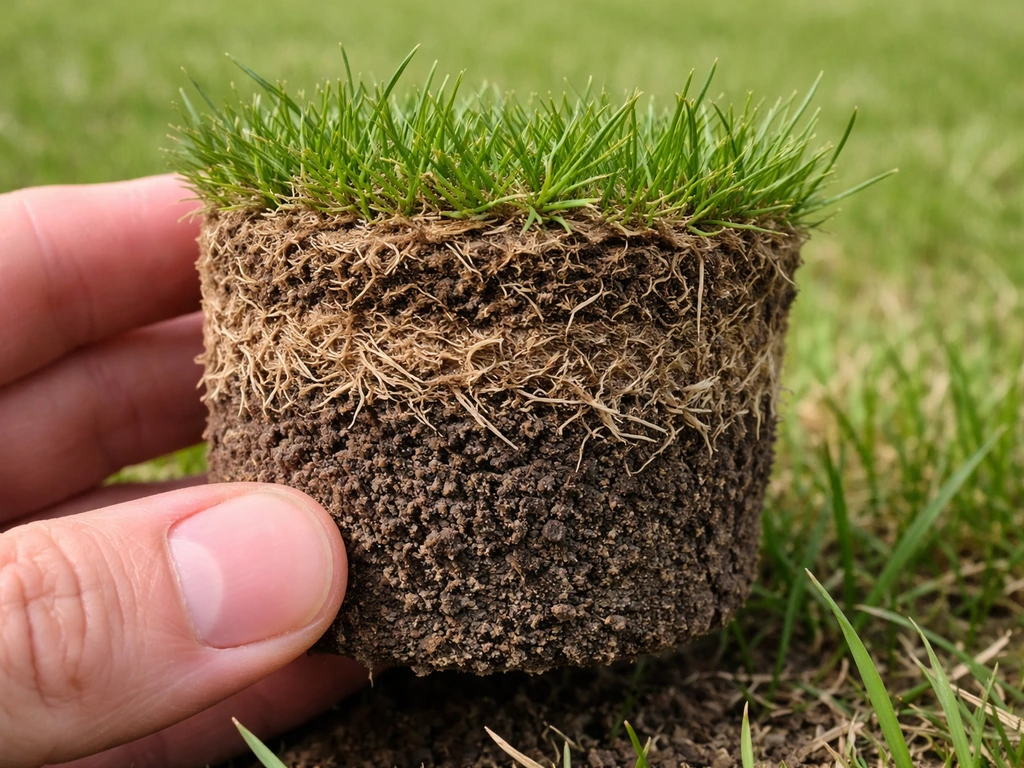
Before you spend money on seed or aeration, spend 20 minutes doing a proper inspection. Most lawn problems have visible clues if you know where to look.
- Cut a small plug out of the lawn about 3 inches deep with a knife or trowel. Look at the layer between the grass and the soil. If that brown spongy thatch layer is thicker than 1/2 inch, thatch management comes before anything else.
- Press a screwdriver or soil probe into the lawn. If it doesn't slide in easily to 4–6 inches with hand pressure, compaction is limiting root growth. This matters most in high-traffic zones.
- Look at the crown zone at soil level. Healthy crowns look green and firm. Brown, mushy, or shrunken crowns mean drought stress, disease, or scalping damage — and that's your actual growth bottleneck.
- Check root length on your plug. Healthy cool-season turf should have roots 3–6 inches long. Short, stubby white roots that barely extend an inch signal compaction, overwatering, or drought stress.
- Look at thinning patterns. Uniform thinning across the whole lawn usually means a soil or nutrition problem. Irregular patches often point to localized compaction, pest damage, or drainage issues. Thinning under trees points directly to shade and root competition.
- Note how long footprints stay visible after walking on the lawn. If imprints stay more than 30 seconds, the grass is drought-stressed and the crown is under pressure.
Practical fixes to encourage regrowth starting today
Get your mowing height right
The single most immediate thing you can do is set your mower to the right height for your grass type and stick to it. Mowing too low is the fastest way to stress the crown. University of Tennessee Extension gives these practical ranges for common species: Kentucky bluegrass 1.5 to 2.25 inches in cool or humid conditions and up to 3.0 inches in heat; tall fescue 2.0 to 3.5 inches; bermudagrass 1 to 2 inches in normal conditions and up to 3 inches in heat; centipedegrass 1 to 2 inches up to 3 inches. The high end of those ranges protects the crown and keeps more leaf surface for photosynthesis. If your lawn has been cut short for a while, raise the height gradually, no more than 1/4 to 1/2 inch per mowing, to avoid shocking the plant.
Water to keep crowns alive, not just blades wet
Illinois Extension advises watering when the lawn first shows drought stress signs: wilting, a blue-grey color shift, or footprints that stay visible. Letting it get past those early signs before watering puts the crown under real pressure. During active drought, Illinois recommends applying 1/4 to 1/2 inch every 2 to 4 weeks if full irrigation isn't possible, enough to keep crowns alive so the lawn can recover when conditions improve. Utah State University Extension also emphasizes “survival watering,” which aims to keep the crown alive during drought so the lawn can recover when conditions improve survival watering to keep crowns alive during drought. University of Missouri Extension confirms that thorough watering brings dormant turf back to active growth from the belowground crown. Deep, infrequent watering that wets 4 to 6 inches of soil beats frequent shallow watering every time for building deeper root systems.
Aerate to let the root zone breathe
Core aeration pulls plugs from the soil, typically 1/2 to 3/4 inch diameter, 2 to 4 inches deep, and spaced 2 to 6 inches apart according to University of Maryland Extension. This opens channels for air, water, and nutrients to reach the root zone and gives roots physical space to grow. Utah State and University of Maryland both emphasize that aeration directly encourages root growth by increasing oxygen delivery. University of Maryland recommends fall for cool-season lawns and June through July for warm-season lawns. UMN Extension suggests 3 to 5 passes with a commercial aerifier in severely compacted soil. Rent a core aerator for a few hours, it's one of the best ROI moves in lawn care.
Overseed thin areas
For bunch-type grasses like tall fescue, or any lawn that can't fill in through spreading, overseeding is the only way to increase density. UMN Extension recommends mid-August to mid-September as the preferred window for cool-season lawn renovation. Penn State gives practical seeding rates: Kentucky bluegrass at 2 to 3 lb per 1,000 sq ft and perennial ryegrass at 4 to 5 lb per 1,000 sq ft as establishment baselines. UMass Amherst suggests spreading seed at half the rate in two perpendicular directions to get more even coverage. Aerate first if the soil is compacted, University of Maryland notes that aeration lets seed, lime, and fertilizer actually enter the soil instead of sitting on top.
Special cases: sand, shade, and other tough situations
Sandy soils
Sand drains fast, which means the crown dries out faster and more often. Purdue Extension's guidance on sandy soil lawns is clear: water more frequently but in smaller amounts than you would on heavier soil, and wait until the turf shows the first signs of drought stress (that blue-grey color) before watering again. The goal is wetting the root zone thoroughly each time without letting it stay waterlogged. Organic matter amendments help sandy soil hold moisture and nutrients near the root zone, which directly supports the crown's ability to keep producing new growth. Grass does grow from the bottom in sand just like in any other substrate, but the crown dries out faster, so the maintenance rhythm has to adjust accordingly. Questions about truly unconventional substrates, like growing underwater or in extreme underground conditions, involve different biology entirely. Grass mostly grows from the crown near the soil surface, so it does not truly grow underground like a root crop can grass grow underground. Growing underwater is a different biology problem than normal lawn regrowth from the crown and root zone.
Shade-heavy areas
Penn State identifies fine fescues and rough bluegrass as the most shade-tolerant cool-season options. University of Maryland Extension agrees and adds turf-type tall fescues to the viable shade list, specifically naming hard fescue, creeping red fescue, sheep fescue, and Chewings fescue as the best performers. Purdue Extension confirms fine-leaf fescues like Chewings fescue for shade mixes. In shaded areas, mow higher than you normally would, more leaf surface means more light captured per plant. Reduce foot traffic, which compounds the stress. And be realistic: University of Maryland Extension is honest that if moss is already growing in an area, conditions are unsuitable for turfgrass and you should consider alternatives like groundcovers instead of fighting a losing battle.
Putting it all together
Grass grows from the bottom, from the crown and the base of each blade, and that's both reassuring and actionable. If you want to know whether can grass grow in the end despite mowing or thinning, start by protecting the crown so it can keep producing new blades. It means the mower isn't the enemy as long as you keep it set high enough to protect the crown. It means drought recovery is possible if the crown stays alive through the dry spell. And it means that when a lawn fails to fill in, the real obstacle is almost always something blocking the crown and root zone: thatch, compaction, poor nutrition, inadequate water, or too much shade. Fix the environment around the crown and the grass will do what it's designed to do, grow from the bottom up.
| Grass Type | Normal Mowing Height | Heat/Stress Height | Shade Tolerance | Spreads by |
|---|---|---|---|---|
| Kentucky Bluegrass | 1.5–2.25 in | 2.25–3.0 in | Low–Moderate | Rhizomes |
| Tall Fescue | 2.0–3.0 in | 2.5–3.5 in | Moderate | Clumping (bunch-type) |
| Fine Fescues | 2.0–3.0 in | 3.0+ in | High | Slow creeping or bunch |
| Perennial Ryegrass | 2.5–3.5 in | 3.0–3.5 in | Low–Moderate | Bunch-type |
| Bermudagrass | 1.0–2.0 in | 1.75–3.0 in | Very Low | Rhizomes and stolons |
| Centipedegrass | 1.0–2.0 in | 1.5–3.0 in | Low | Stolons |
FAQ
If grass growth comes from the base, why does the lawn sometimes look like it stops growing after mowing?
Mowing that removes too much leaf area can stress the crown even if the crown was not cut. Common causes are consistently mowing low, mowing too frequently, and mowing during heat or drought, which reduces the energy available for the crown to produce new tillers. If growth slows after mowing for more than 2 to 3 weeks, check for crown damage (scalping), thatch or compaction limiting oxygen, and whether you’re under-watering or under-fertilizing.
Can grass regrow if you mow down to “just stubble,” and where exactly is the cutoff point?
Grass can regrow if the crown and the blade collar region where intercalary meristem tissue lives remain intact. If blades are severed below that collar, the individual blade cannot regenerate, and you have to rely on new blades emerging from the crown. The practical takeaway is to avoid scalping, because recovery time increases dramatically once the crown zone is disturbed or buried.
How can I tell whether the crown is being damaged rather than the soil conditions being the real problem?
Look for symptoms over time. Crown zone damage often shows as patchy, “burned” spots that recover slowly even when you mow at a safe height and water correctly. If the grass looks thin but the area still has green activity after mowing adjustments, the issue is more likely thatch, compaction, poor nutrition, shade, or root stress. A quick check is to gently lift an edge of turf in the thinnest spots, healthy crown tissue should be alive and close to the soil surface.
Does mowing height matter for every grass type, or can I use one height for the whole yard?
You should not use one height for all lawns. Cool-season and warm-season grasses have different safe mowing ranges, and the “right” height is the one that protects the crown while keeping enough leaf area for photosynthesis. Using a single low height across mixed or unknown grass types increases the chance you are consistently stressing the crown of at least part of the lawn.
If I scalp once, will the lawn die, or is it always reversible?
One scalping event is often recoverable, but the recovery depends on how deep the cut went and the season. If the crown was not sheared into the collar zone, the lawn typically pushes new blades from the crown, but recovery can take weeks and may look worse before it improves. If you scalp repeatedly or during heat or drought, crown survival can drop, and you may need aeration and overseeding to restore density.
What’s the difference between mowing a little too low versus letting a lawn get overgrown and then cutting it back hard?
Cutting hard from tall growth removes a large amount of photosynthetic leaf area at once, which forces the crown to regrow with less energy. Even though regrowth still originates from the crown, the plant may tiller more slowly and recovery can be delayed. A safer approach is gradual raises or gradual reductions, limiting the change per mowing so the crown is not shocked.
Does grass always regrow from the same place if I remove leaves with a mower, or does the blade stub matter?
The regrowth comes from the crown and from the base region of each blade. The visible blade stub can’t keep elongating from its tip, but remaining tissue near the base can help the crown recover because it indicates the crown was likely not severed below the collar. If stubs were cut extremely low and the crown was disturbed, expect regrowth to come mostly from new tillers rather than from each existing stub.
My lawn is yellowing and thinning, could it be crown starvation even if the mower height is correct?
Yes. Yellowing-like symptoms can be related to nutrient issues such as nitrogen or iron deficiency, but compaction and thatch can make those deficiencies worse by limiting root delivery and oxygen. Also consider overwatering, which can starve roots of oxygen even if the surface looks fine. If you correct mowing height and still see persistent thinning, test soil or adjust fertilization and watering while assessing thatch and compaction.
How does overwatering fit with the idea that grass grows from the bottom?
Because the crown relies on the root zone, overwatering can reduce oxygen in that zone. That stresses the crown and slows tillering, so the lawn can thin even when the surface looks “well watered.” The practical fix is to water deeply and infrequently so the root zone stays moist enough without staying waterlogged.
Is core aeration only for compacted lawns, or can it help for thatch problems too?
Core aeration mainly improves oxygen and movement of water and nutrients into the root zone, which helps the crown function under compaction. For thatch, aeration can be supportive, especially when combined with proper mowing and de-thatching strategies, because improving infiltration reduces the crown’s exposure to a dry, oxygen-poor mat. If you have thick thatch, also focus on mowing practices that prevent further buildup.
When should I overseed, and how do I avoid overseeding at the wrong time for crown regrowth?
Overseed when your grass has the best conditions to establish from the crown through new growth. For cool-season lawns, the article points to mid-August to mid-September as a strong window for renovation, while warm-season timing differs. Seed too early in heat or too late when growth slows, and germination may fail or seedlings may not establish before stress hits the crown and roots.
Can I fix thin grass by only adjusting mowing, or do I need to address roots and thatch first?
Mowing adjustment is a good first step, but if density is still low after a couple of mowing cycles, the limiting factor is often below the surface. Common next checks are thatch thickness, soil compaction, shallow rooting, and shade. If the crown is not getting a healthy root environment, mowing alone usually cannot fully restore thickness.
Do shade and foot traffic reduce growth from the bottom, or only slow photosynthesis above ground?
Both. Shade reduces photosynthesis, which limits the energy the crown needs to produce new tillers from the base. Foot traffic adds mechanical stress and can compact soil, which further reduces oxygen and nutrient movement into the root zone. That combination can make recovery much slower even if the mower height is correct.
Next Articles
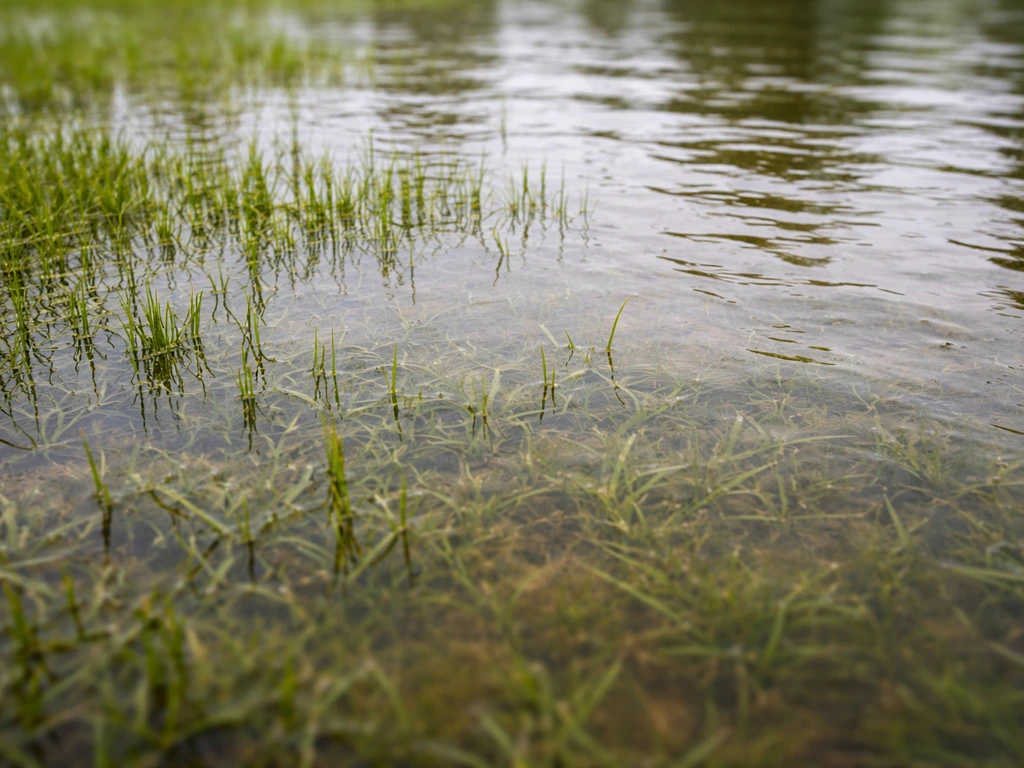
Can Grass Grow Underwater? What Works and What Fails
Learn if grass can grow underwater, why lawn grass fails, and what conditions and plants actually work in flooded areas.
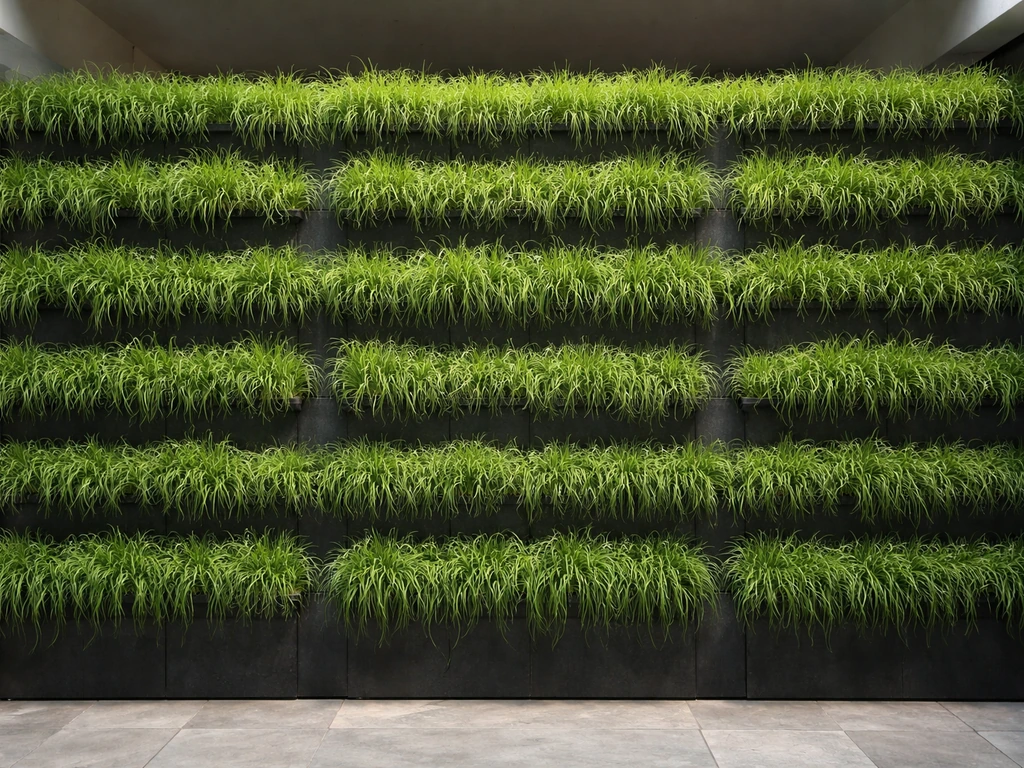
Can Grass Grow Vertically? Best Systems, Species, and Care
Can grass grow vertically? Choose the right species and systems, plus substrate, care, and troubleshooting for green wal
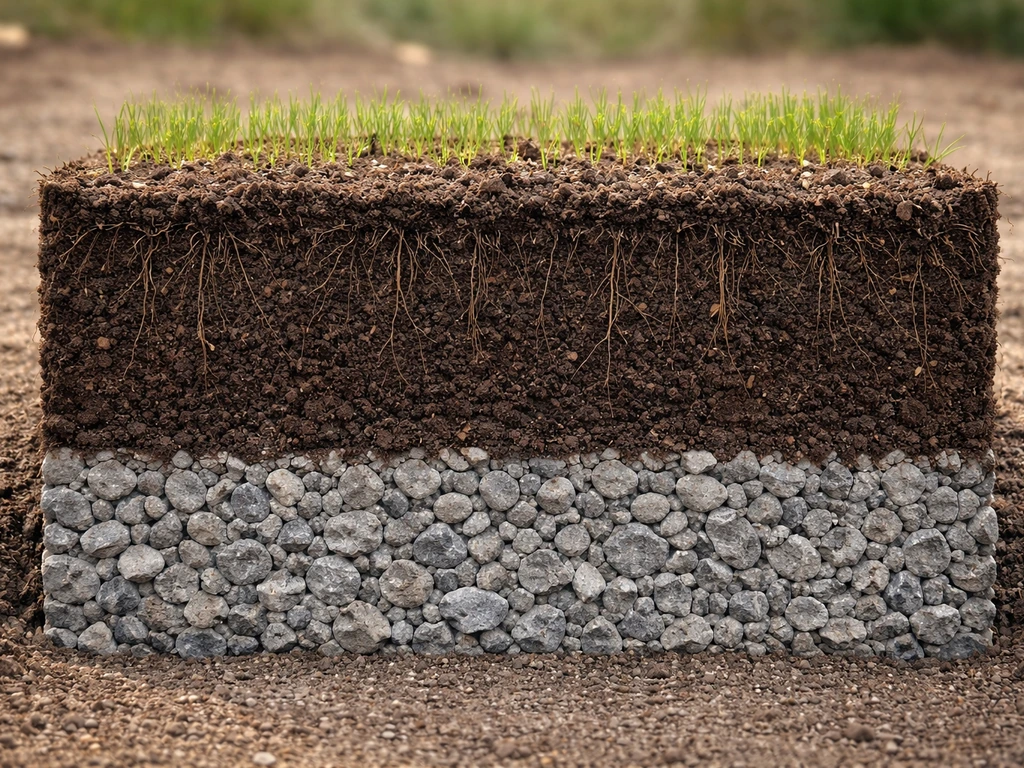
Can You Grow Grass Over Gravel? How to Do It Right
Learn when you can grow grass over gravel and follow a step-by-step method for soil depth, drainage, seeding or sod, and