
Uneven grass growth almost always comes down to one of four things: inconsistent water delivery, soil problems hiding just below the surface, shading or heat differences across the yard, or a seeding mistake that set certain spots up to fail from day one. If you are seeing clumps or thick patches surrounded by thin, bare areas, the same uneven-growth causes like inconsistent watering or soil issues are usually behind it grass growing in clumps. Once you pinpoint which one is driving your lawn, the fix is usually straightforward, and most of the time you can start making progress this weekend. Those same factors like uneven moisture and soil conditions are also why some patches of grass grow faster than others.
Why Does My Grass Grow Unevenly? Fixes That Work Fast
Marcus Volkmann
5 Jun 2026
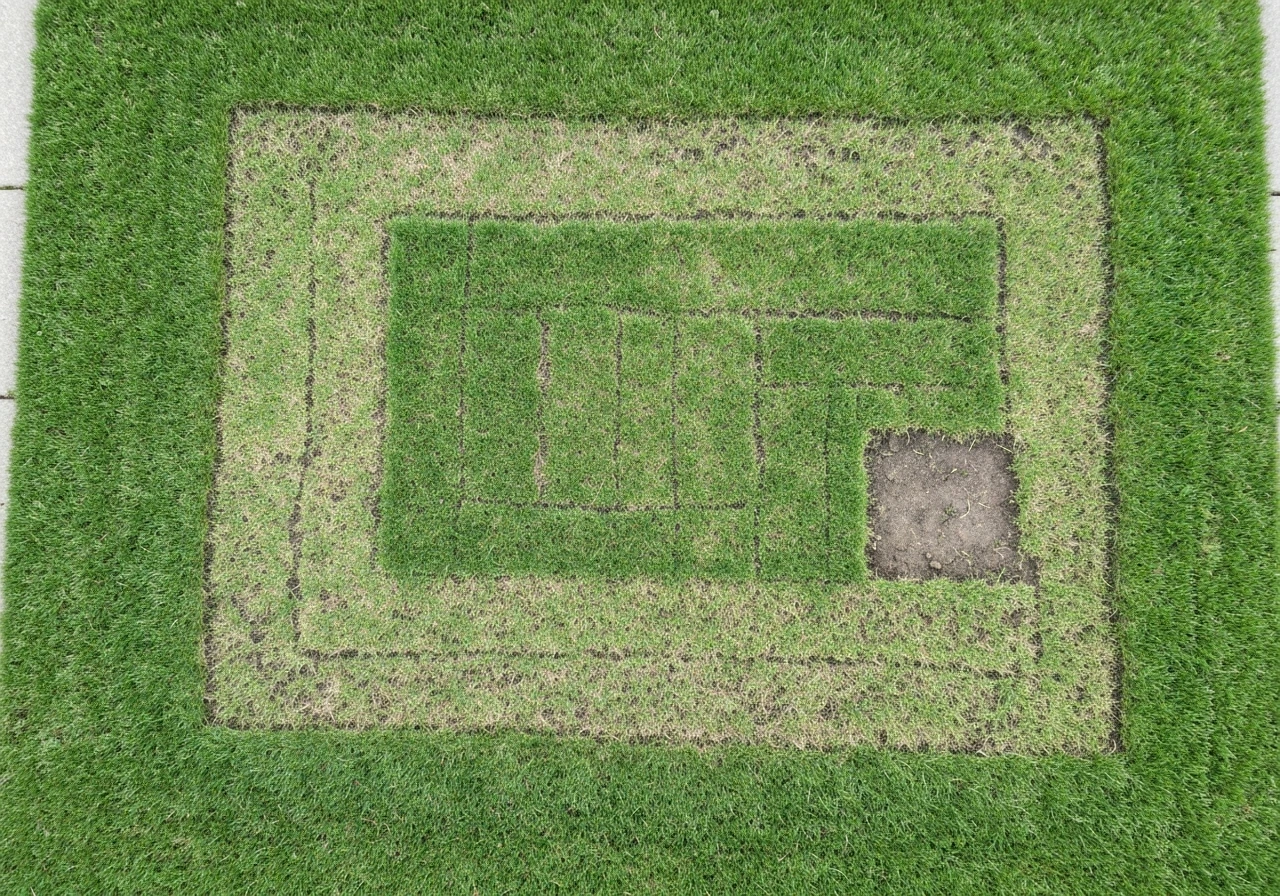
What uneven grass actually looks like (and what it's telling you)
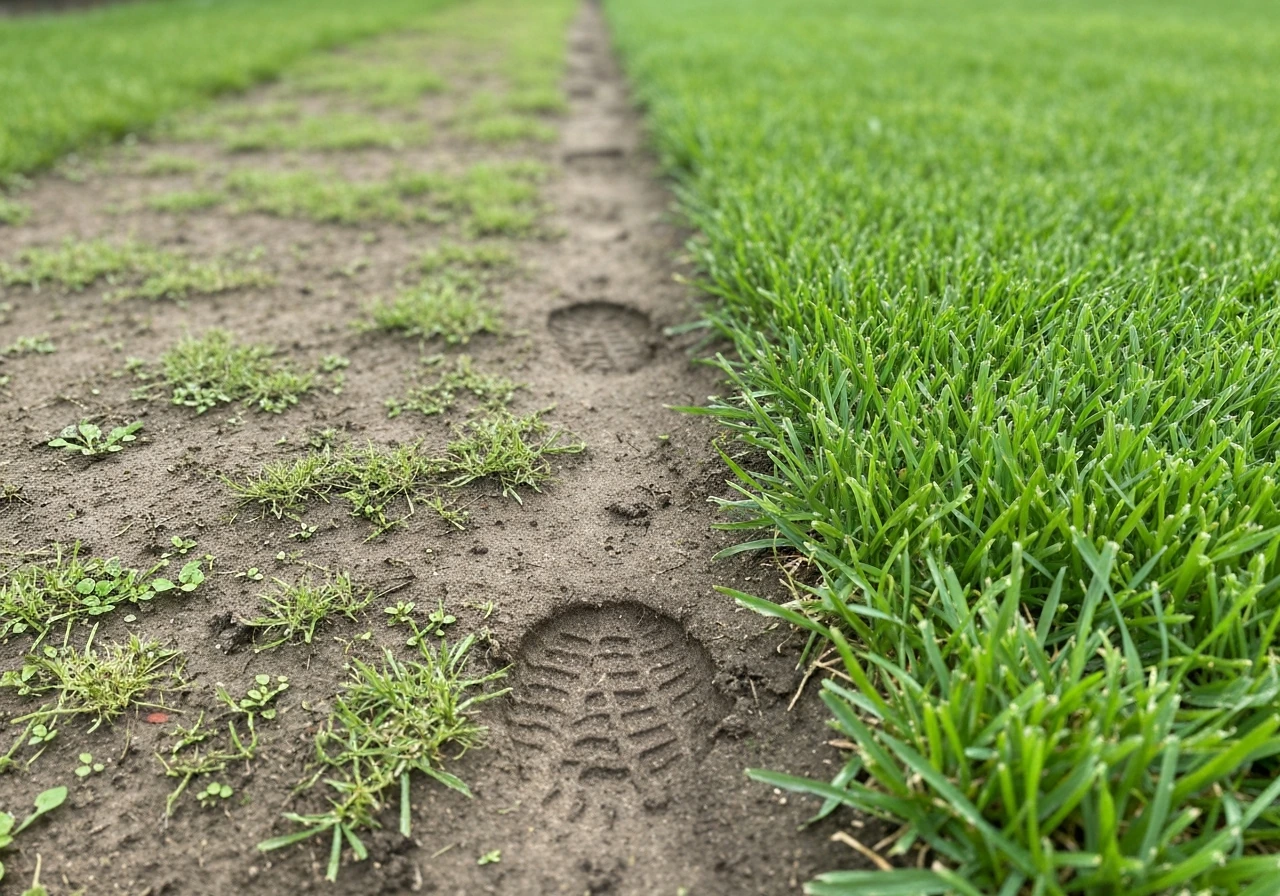
Before you can fix the problem, it helps to read what the lawn is trying to tell you. The pattern of the unevenness is a clue in itself.
- Bare patches or thin circles: often a drainage, compaction, or disease issue — or a sprinkler blind spot
- Long streaks or stripes: almost always a watering problem, either overlapping sprinkler heads or a missed zone
- Random thin spots scattered throughout: usually inconsistent seed germination, nutrient deficiency, or variable soil depth
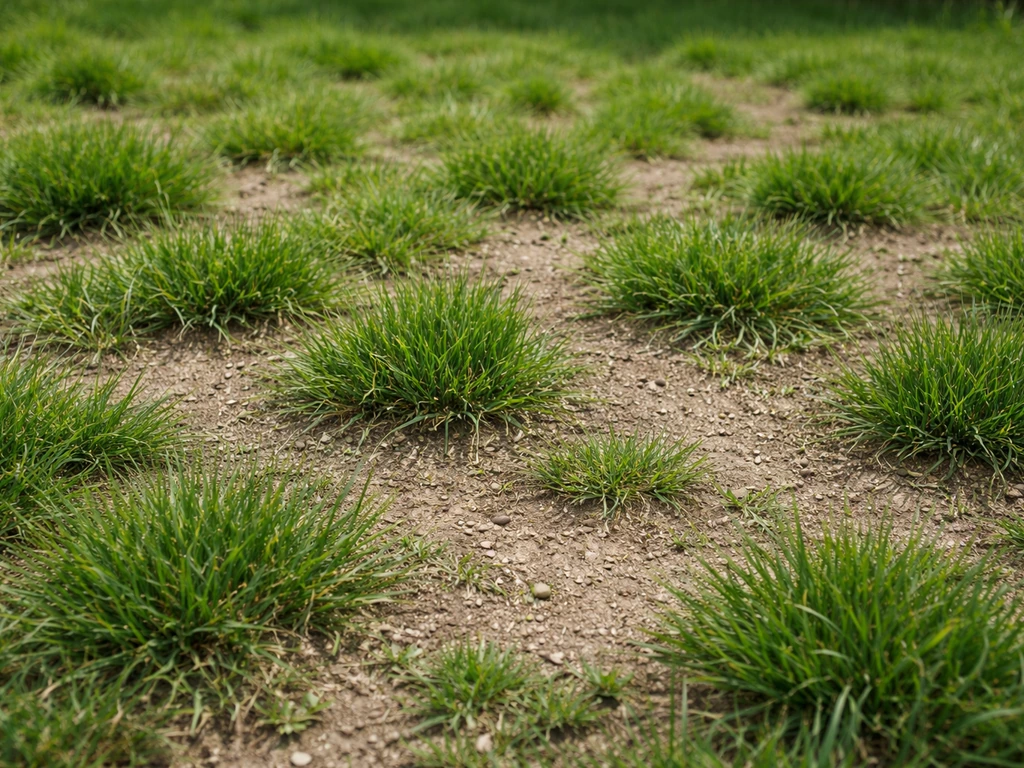
- Dense clumps surrounded by thin grass: could be a different grass species taking over, or isolated pockets of better soil
- Thick growth near trees or fences with thin grass in open areas: shade stress and root competition pulling moisture and nutrients away
- Fast-growing patches after rain: often low spots with better moisture retention, or areas with deeper topsoil
Pay attention to where the problem shows up relative to your sprinkler heads, the slope of the yard, trees, structures, and any areas that get heavy foot traffic. That location context usually narrows the cause down quickly.
Quick diagnosis: check light, water, and traffic first
Run through these three checks before you buy anything or pull up any sod. They take maybe 30 minutes and they rule out the most common culprits.
Light check
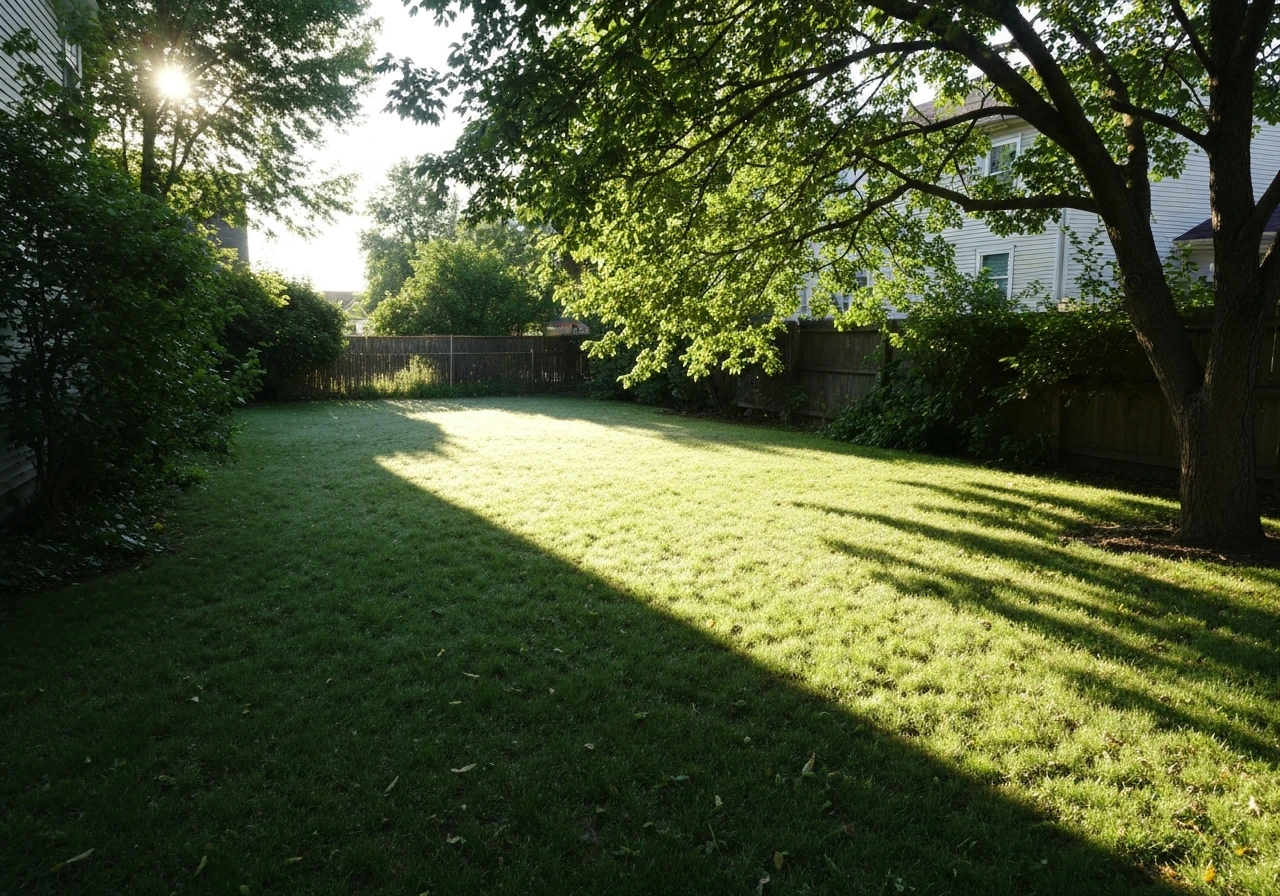
Walk the yard mid-morning and again at midday. Notice which areas get dappled or full shade versus direct sun for most of the day. Areas receiving fewer than 4 to 6 hours of direct sunlight will always struggle with standard grass seed, no matter how well you water or fertilize. If a patchy area lines up exactly with a tree canopy or a building shadow, shade is your answer.
Water (sprinkler) check
The most practical irrigation test you can do is the tuna-can method. Place 5 to 9 empty tuna cans (or any shallow containers of the same size) spread across a single irrigation zone. Run that zone for a full cycle, then measure the water depth in each can. If some cans have twice as much water as others, you have a distribution problem, mismatched nozzles, a clogged head, a pressure issue, or overlapping coverage gaps. Thin or bare streaks that align with low-reading can positions confirm a sprinkler cause. This test pairs well with checking the yard during a run: watch for heads that mist instead of throwing a solid arc, or heads that don't rotate.
Traffic and drainage check
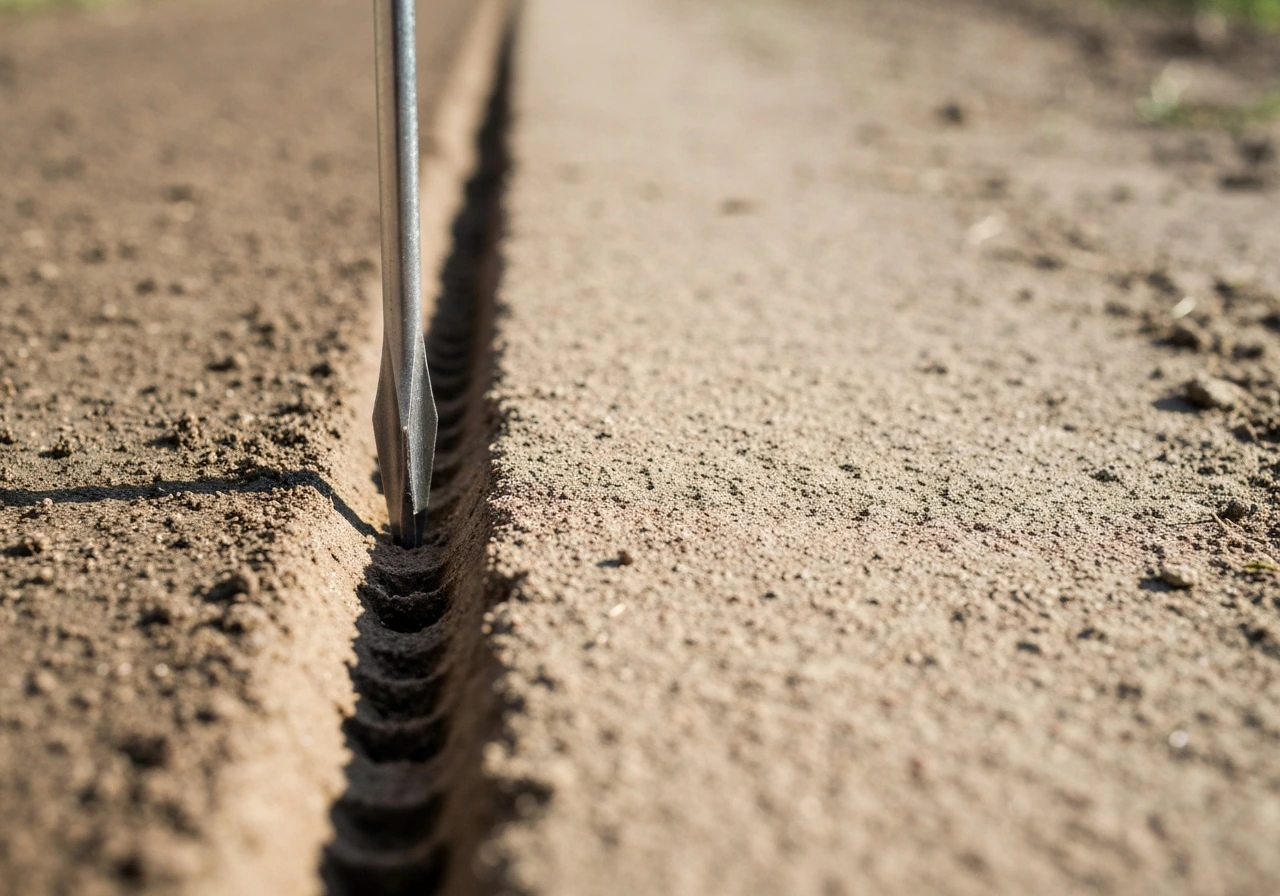
Stick a screwdriver into the soil in a thin area and then in a healthy area. If it goes in easily in the healthy spot but you have to push hard in the thin spot, compaction is the problem. Also look at thin areas 24 to 48 hours after a heavy rain: standing water or soggy ground in those exact spots points to a drainage issue that's drowning roots. High-traffic paths (between the driveway and the back gate, for example) compress soil quickly and create persistent bare zones.
Soil and ground conditions that cause uneven growth
Even if your watering and light are perfect on paper, the soil underneath can completely override those advantages in certain spots.
Compaction
Compacted soil restricts root growth, limits air movement, and sheds water instead of absorbing it. The screwdriver test above is a fast proxy, but if you want more certainty, push a flag or pencil into damp (not wet) soil: easy insertion to 6 inches means healthy structure; resistance at 2 to 3 inches signals compaction. Core aeration is the standard fix, and it works: pulling plugs about 3 inches deep and 3 inches apart opens up channels for air, water, and root expansion. Do this in early fall for cool-season grasses or late spring for warm-season types, when the grass is actively growing and can fill the holes.
Inconsistent topsoil depth
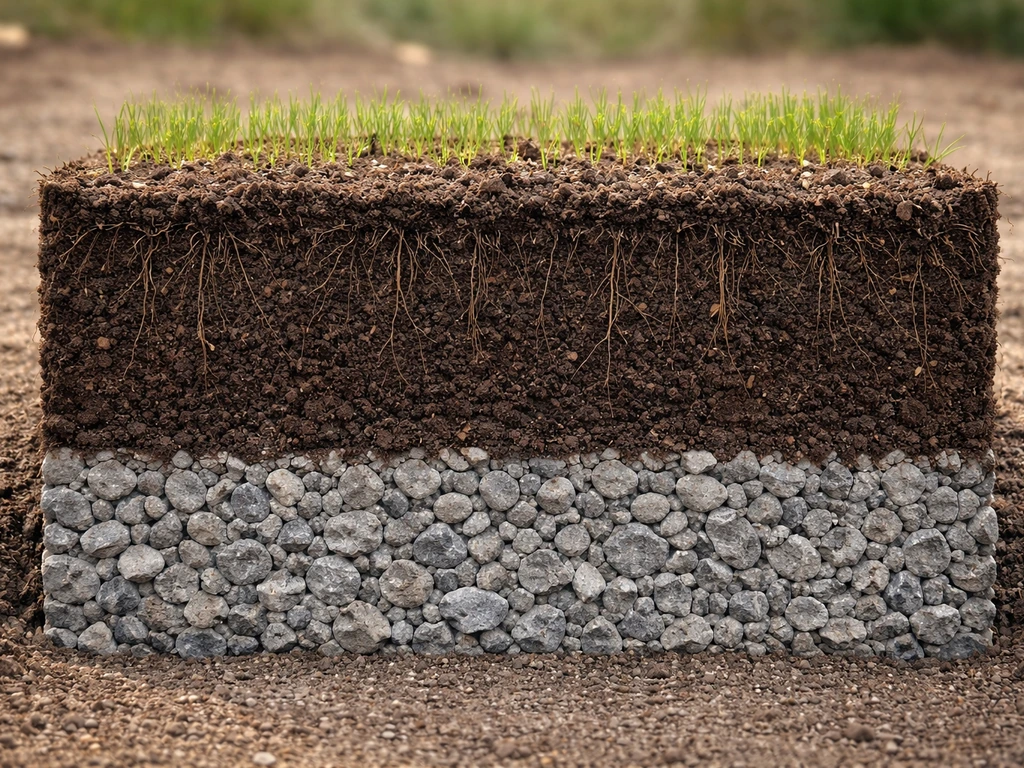
Builders are notorious for leaving 2 inches of topsoil in one spot and 8 inches in another, especially in newer construction. Shallow topsoil over clay or gravel means roots hit a hard layer early, the soil dries out faster, and those areas thin out under any stress. You can check this by digging a few small holes 6 inches deep and comparing the soil color and texture at different depths and locations. If you hit compact clay or gravel quickly in thin spots, you'll need to either topdress with a compost blend over time or address the underlying layer.
Nutrient deficiencies and pH variation
Soil pH affects how well grass can access nutrients, even when those nutrients are present. Most cool-season grasses grow best at a pH around 6.0 to 7.0, with a sweet spot near 6.5. If pH varies across the yard, which it often does in areas with different drainage or organic matter, some spots will look green and lush while adjacent areas look pale or thin. A soil test from your county extension office (typically $15 to $25) will tell you both pH and your actual nitrogen, phosphorus, and potassium levels. Phosphorus deficiency in particular tends to show up early as stunted or reddish-purple seedlings, while nitrogen deficiency causes general yellowing and slow growth across the whole area.
Sandy or thin substrates
Sand drains so fast that moisture and nutrients both flush out before roots can use them. If your yard has sandy soil, certain sections may dry out within hours of watering while clay-based areas nearby stay moist for days. This creates wildly different growth rates in the same lawn. Sandy spots need organic matter added over time (compost topdressing at about 1/4 inch per application is a practical rate), more frequent watering with shorter run times, and sometimes a grass species better suited to low-nutrient, fast-draining conditions.
Seeding and sod problems that lead to uneven establishment
A lot of patchy lawns aren't a current problem, they're the result of something that went wrong at seeding or sodding. If your lawn has been thin in the same spots since it was first planted, look here first.
Bad timing
Seeding cool-season grasses (fescue, bluegrass, ryegrass) in summer almost guarantees uneven results because germinating seedlings hit heat and drought stress before they've established roots. The best window for most of the country is late August through mid-September, when soil temperatures are still warm but air temperatures are cooling down. Spring seeding works but competes with crabgrass and early heat. If you seeded at the wrong time, some spots may have germinated fine while others, particularly exposed or south-facing areas, failed entirely.
Uneven seed distribution
Spreading seed in only one direction with a rotary or drop spreader almost always leaves thin stripes between passes. The fix is simple but most people skip it: apply half the seed rate going north-south, then apply the other half going east-west. This cross-hatching pattern dramatically improves coverage uniformity. Also, seed needs to be no more than about 1/4 inch deep in soil to germinate reliably, seed sitting on hard, crusty soil or buried under thick thatch won't make good contact and will show up as bare spots.
Germination failure from moisture inconsistency
Newly seeded areas need the top 1 inch of soil kept consistently moist, which often means watering lightly 3 to 4 times per day in hot or windy weather. Keep cool-season seedings moist, and for sod water to achieve rooting that stays moist but not saturated initially, then gradually reduces as the turf establishes blank" rel="noopener noreferrer">Keep newly seeded areas moist while they establish roots. Miss a day or let a section dry out before seedlings have roots deeper than an inch, and those seedlings die. Meanwhile, areas that happened to stay shaded or naturally moist germinate fine. The result is a patchy lawn that looks like a coverage problem but is actually a post-seeding watering failure. If you've noticed new grass come in patchy, this topic connects closely to the pattern you'd see when new grass sprouts and then dies, often the same root cause of inconsistent moisture during those first two critical weeks. This same inconsistent moisture during the first two weeks is why grass seed grows and then dies in patchy areas new grass sprouts and then dies. If your new grass is growing in patches, it usually comes down to inconsistent moisture in the first couple of weeks after seeding is it normal for new grass to grow in patches. If you have a trampoline, the extra shade and pressure from steady contact can create a similar patchy pattern in the surrounding grass, which is why grass can grow better under a trampoline grass grow better under a trampoline.
Targeted fixes: soil amendments, aeration, and fertilizing
Core aeration plus topdressing
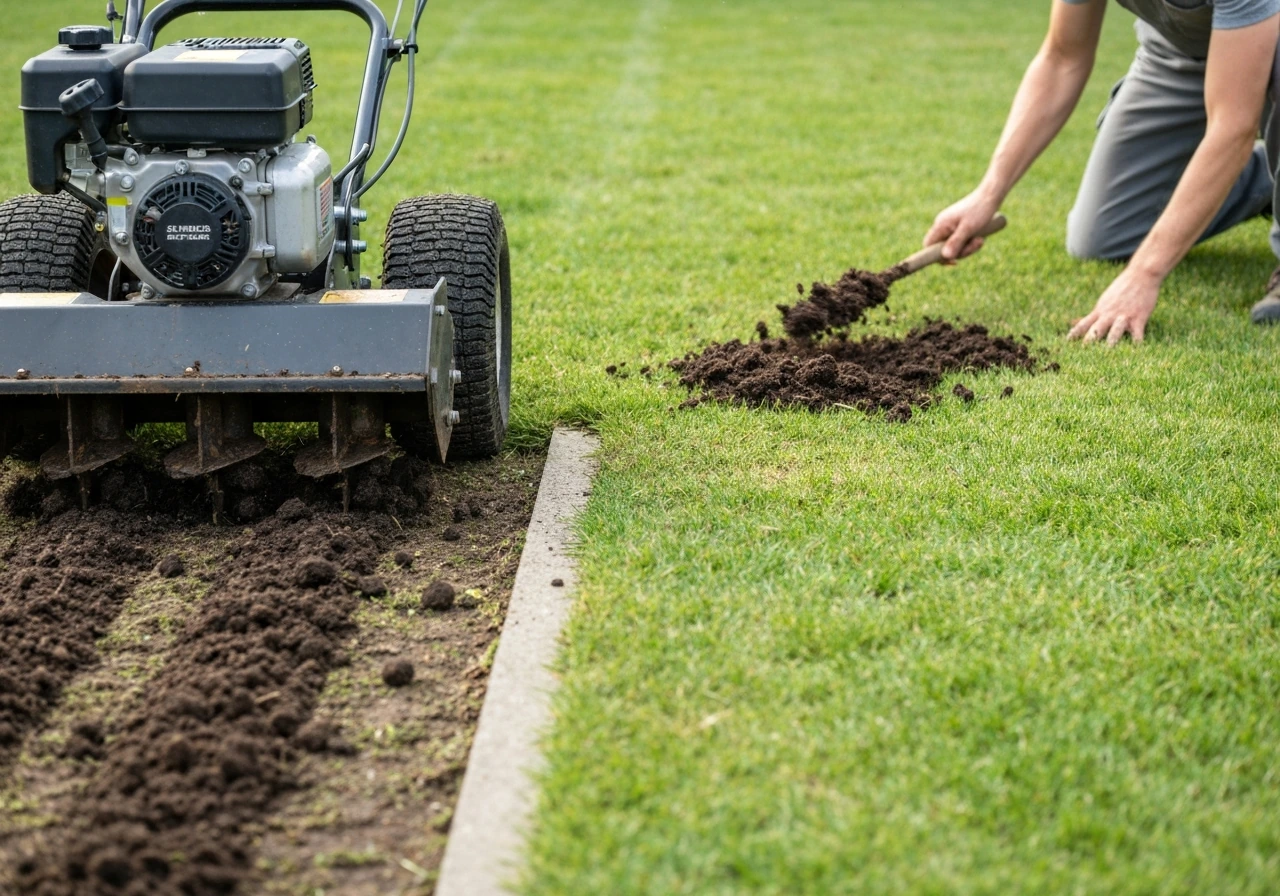
For compacted soil and thin topsoil, core aeration followed immediately by a compost topdress is the most effective one-two fix. Aerate first to pull plugs, then spread a 1/4 inch layer of quality compost or a compost-sand blend over the surface. The compost works its way into the aeration holes, improving both structure and organic matter over several applications. Do this once or twice a year (fall is best for cool-season lawns) and you'll see measurable improvement in 1 to 2 growing seasons.
Thatch management
A thatch layer under about 1/2 inch is normal and even beneficial. Once it creeps above 1/2 inch, it starts interfering with water and air movement into the soil. Above 1 inch, you'll see active turf problems: disease, uneven water absorption, and mowing difficulties. Check thatch by slicing out a small plug and measuring the spongy brown layer between the green grass and the soil. If it's approaching 1 inch, rent a power dethatcher or hire a crew to run one. Core aeration also helps break down thatch over time by encouraging the soil microbes that decompose it.
Targeted fertilizing based on a soil test
Blanket fertilizing the whole lawn when only certain areas are deficient wastes money and can push lush areas into fast, uneven growth while the thin areas still struggle. A soil test lets you apply lime to specific low-pH zones (to bring them toward that 6.5 target), phosphorus where seedling establishment is weak, and nitrogen where general growth is lagging. For the thin areas specifically, a starter fertilizer with higher phosphorus supports root development in ways that a standard lawn fertilizer won't. Apply targeted treatments to problem zones, then overseed those same areas immediately after.
Watering and mowing adjustments for more uniform growth
Fix the irrigation before anything else
If the tuna-can test revealed distribution gaps, fix those first. Adjust nozzle arcs so heads overlap by roughly 50% (head-to-head coverage), replace clogged heads, and check that operating pressure matches the manufacturer's spec for your nozzle type. Running high pressure causes misting and drift; low pressure causes gaps. Once coverage is uniform, set run times to deliver about 1 inch of water per week total (accounting for rainfall), applied in two sessions rather than one long soak. Deeper, less frequent watering encourages deeper root growth, which makes the turf more resilient when conditions vary across the yard.
Mowing height matters more than most people think
Scalping stressed areas makes everything worse. For cool-season grasses, maintain a cutting height of about 3 inches and never cut more than one-third of the blade length in a single mow. If the grass reaches 4.5 inches, that's when you mow. In shaded areas or during hot, dry stretches, raise the deck by 1/2 to 1 inch above your standard height, that extra leaf surface helps shaded grass photosynthesize and keeps sun-stressed areas from losing moisture. Thin spots that are actively recovering should not be mowed until they've thickened up enough to handle traffic.
Reduce traffic on thin areas
A recovering patch that keeps getting walked on will never fully fill in. Rope off problem areas during recovery periods or redirect foot traffic with stepping stones. Even two weeks of reduced traffic can make a noticeable difference when combined with watering and fertility improvements.
When to spot-sow vs. re-seed the whole thing, and what to do in shade or sand
Spot-sowing is right for most patchy lawns
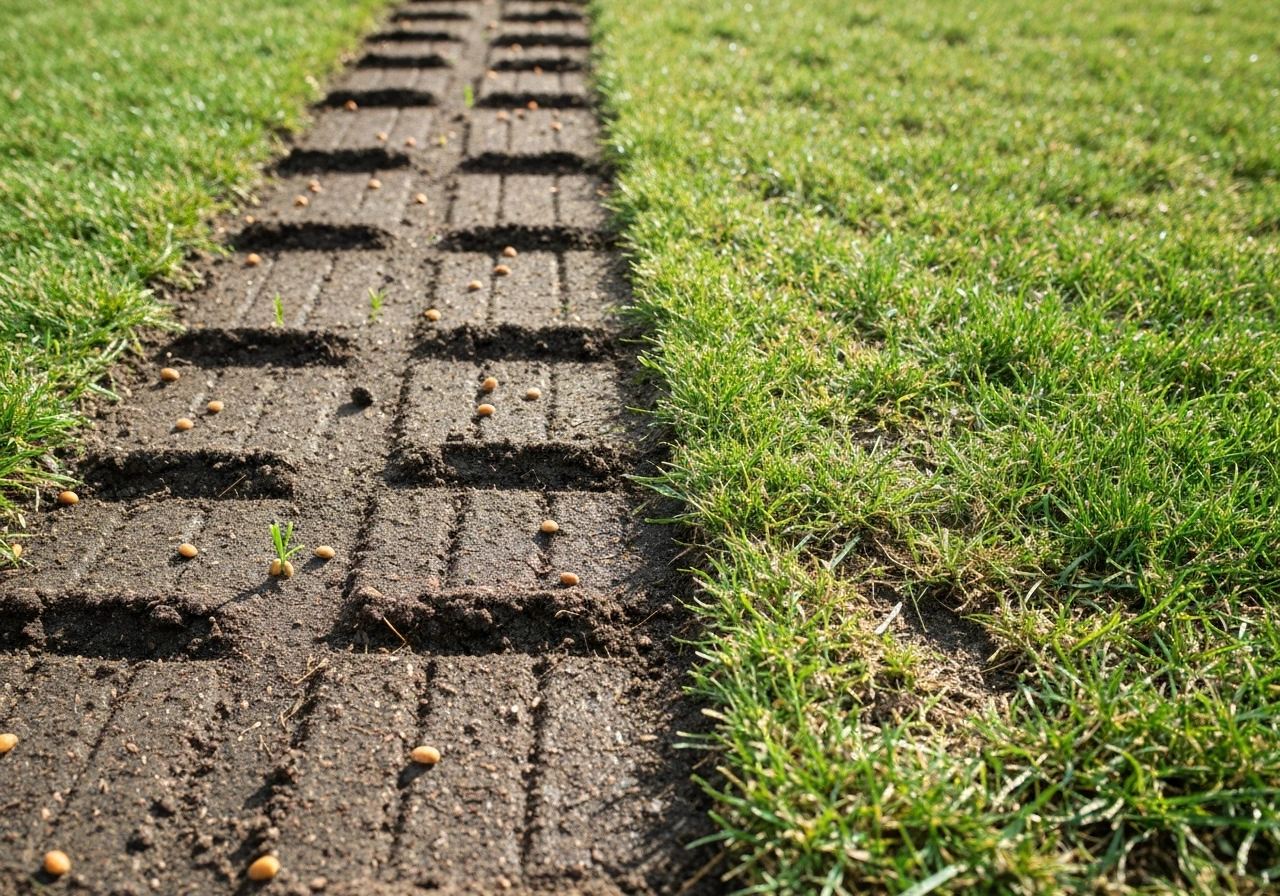
If the bare or thin areas make up less than about 30 to 40% of the total lawn, spot-sowing (overseeding just the problem areas) is the smarter move. Scratch the soil surface lightly with a rake or hand cultivator to improve seed-to-soil contact, apply seed at the recommended rate for the species you're using, and top with a thin layer of compost to hold moisture. Keep those spots watered daily (or twice daily in heat) until germination, and stay off them. Time this for late August through mid-September for cool-season lawns if you can. Spring is your second-best window, but you'll fight heat stress and weed pressure.
Full renovation makes sense when problems are widespread
When thin or uneven areas cover more than half the lawn, or when you've been spot-seeding the same spots for two or more seasons without lasting improvement, full renovation usually costs less time and effort in the long run. Core-aerate the entire lawn, overseed at full rate using the cross-hatch method, topdress with 1/4 inch of compost, and commit to the establishment watering schedule for the first 3 to 4 weeks. Mid-August to mid-September is the ideal renovation window for cool-season grasses across most of the country.
What to do in shaded areas
Standard lawn mixes won't perform well in shade, no matter how much you fertilize or water. If a thin or bare area sits under a tree canopy or next to a structure, switch to a shade-tolerant seed blend. Fine fescues (creeping red, chewings, hard fescue) are the most shade-tolerant cool-season options and will establish in 3 to 4 hours of dappled light per day where bluegrass and tall fescue fail. Mow these areas at the higher end of the recommended range (about 3.5 to 4 inches) and minimize foot traffic, which shaded turf handles poorly. Also understand that tree roots compete aggressively for water and nutrients, so shaded areas near trees need more frequent watering and may benefit from an annual compost topdress to replenish depleted organic matter. If a shaded spot gets fewer than 3 hours of sunlight, no grass will consistently thrive there, ground covers or mulch become the more practical choice.
What to do in sandy soil
Sandy lawns grow unevenly because water and nutrients move through sand so quickly that any variation in application rate becomes amplified. The long-term fix is building organic matter through repeated compost topdressing (1/4 inch per application, two to three times per year). Short-term, switch to shorter and more frequent irrigation cycles: two 10-minute runs instead of one 20-minute run gives sandy soil time to absorb without flushing. Choose grass species suited to sandy, low-nutrient conditions, like bermuda for warm climates or fine fescues for cool climates. Zoysia is also reasonably tolerant of sandy soils. Avoid heavy nitrogen applications on pure sand, nutrients leach before grass can use them, and you end up with burned or patchy growth that makes the problem worse.
| Cause | Key Sign | First Fix | Timeline |
|---|---|---|---|
| Irrigation gaps | Stripes or circles matching sprinkler pattern | Tuna-can test, adjust heads | Improvement within 2 to 4 weeks after fix |
| Soil compaction | Hard spots, poor screwdriver penetration | Core aeration | 2 to 4 months for full effect |
| Thatch over 1/2 inch | Spongy turf, water beading off surface | Power dethatch or core aeration | 1 growing season |
| Nutrient/pH imbalance | Pale, thin, or reddish-purple spots | Soil test, targeted lime or fertilizer | 4 to 8 weeks post-application |
| Shade stress | Thin areas under trees or near structures | Reseed with fine fescue blend | Full season to establish |
| Sandy soil | Fast-drying patches, uneven color after watering | Compost topdress, more frequent irrigation | Multiple seasons to build OM |
| Poor seeding coverage | Stripes or random bare spots since original planting | Cross-hatch overseed in late summer | 3 to 6 weeks for germination |
Most lawns with uneven growth have more than one thing going on at once. The table above is meant to help you stack-rank what to tackle first. Start with water and compaction because they're the quickest to diagnose and fix, and they affect everything else downstream. Once those are addressed, seeding and fertility work has a much better chance of sticking.
FAQ
Does uneven grass growth usually mean I need more fertilizer?
Probably not. A striping pattern that follows sprinkler coverage or the direction your spreader traveled is usually distribution or seeding-related, not a nutrient problem. True nutrient issues typically show up as more diffuse yellowing or pale growth rather than tight edges that match irrigation or passes.
How can I tell if my uneven patches are from too much water versus poor drainage?
If the soil stays wet longer after irrigation in the same thin spots, the issue is drainage, not feeding. Use the “squeeze test” in those areas, grab a handful at mid-depth, and if it forms a muddy ball that does not crumble when dry, water is lingering and roots are suffocating.
Can uneven growth happen even if my watering schedule seems right?
Yes, but only in a specific pattern. If bare spots are where you removed plugs/landscaped or where irrigation lines run, you may be dealing with root disruption or altered irrigation coverage. Check whether sprinkler heads were re-located or if mulch beds sit higher and force water to sheet away.
Why do some areas stay dry even when the sprinkler zone runs the same time?
It can, especially with uneven emitter spacing or nozzles. Look for wind-drift or misting by running a zone while someone stands at the edges, if you see spray drifting past the lawn or pooling in one corner, fix nozzle angle and overlap before you adjust run time.
If my lawn is patchy, how do I know whether it is a seeding problem or a long-term soil problem?
When seed is dying, you usually see it fail soon after germination, while older lawns fail over time due to soil or compaction. If you have gaps that started the day after a missed watering during the first 2 weeks, treat it as a post-seeding moisture problem, not a long-term soil correction.
Could underground work like sprinklers, fences, or utility lines cause patchy grass?
Yes, trenching and cable lines are common culprits. If thin zones follow invisible infrastructure, you may have disturbed backfill that compacts differently than surrounding soil or drains differently. A quick screwdriver or pencil insertion at several points can confirm whether those spots are harder or stay soggy.
How should watering change after overseeding so the patches fill in instead of staying uneven?
Dull, slow recovery can be caused by watering that is too light and too frequent for the plant’s root depth. Once seedlings are established, gradually change from daily light watering to deeper sessions, then re-test by ensuring you can wet the soil 4 to 6 inches down during a run.
What if I fertilize the thin area but it still does not fill in?
Shade and root competition can mask nutrition fixes. A practical rule is to watch for response lag, if the shaded area does not noticeably green up after targeted fertilization and irrigation corrections, switch to a shade-adapted grass (fine fescues) or consider mulch and ground cover when sunlight drops below about 3 hours/day.
Can mowing height cause uneven growth, and what should I check on my mower?
Common mowing mistakes include scalping, scalping repeats, or cutting too low in drought stress. Measure your deck height relative to the ground, if the soil is uneven, the same deck setting can scalp low spots, raise the deck in low areas and avoid mowing more than one-third of the blade at once.
When is it better to spot-sow versus fully renovate an uneven lawn?
Yes, and the cost can be worse than doing targeted work. If you have multiple failure causes, full renovation can still be the fastest route only after you fix the root problem (water distribution and compaction). If watering and soil checks look good, spot-sowing is usually faster and cheaper.
Does the tuna-can test always work, or can I get misleading results?
Yes. Even if average coverage looks fine, overlaps or gaps can change with pressure loss across the zone. Re-do the tuna-can test on a calm day, and note whether some cans only read low at the end of the cycle, that pattern often points to pressure drop, a clogged nozzle, or a failing check valve.
Next Articles
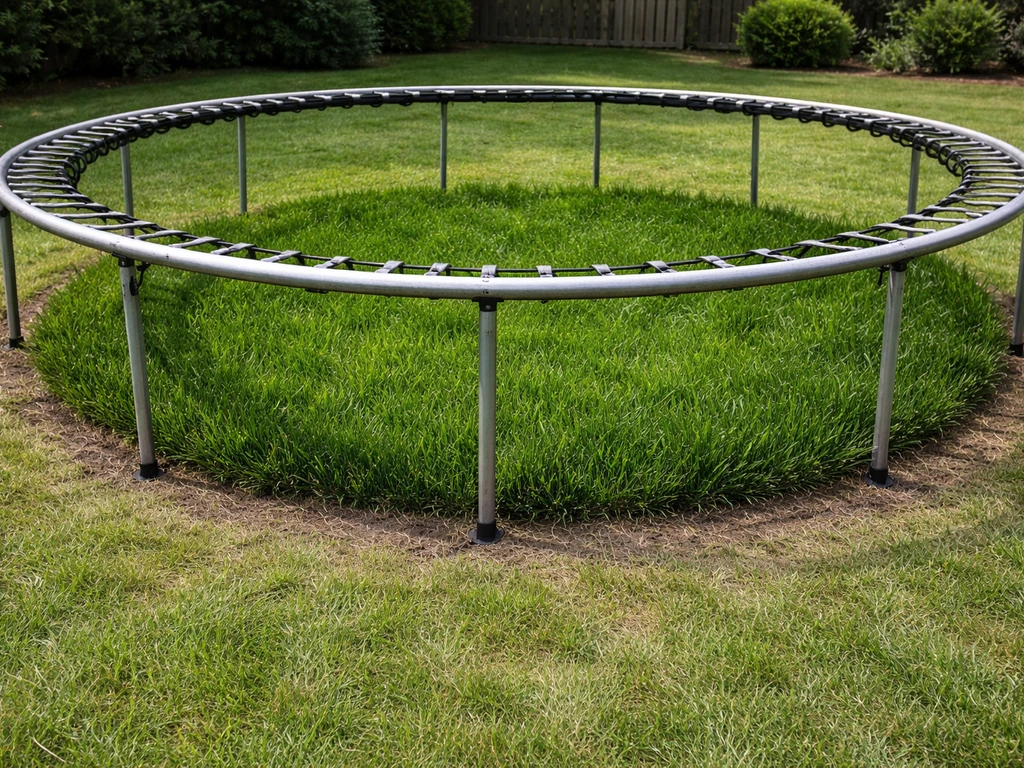
Why Does Grass Grow Better Under a Trampoline and How to Help
Learn why grass under a trampoline grows better and get step-by-step tips to prep, seed, water, and repair turf.
Why Does My Grass Grow in Clumps and How to Fix It
Learn why grass grows in clumps and how to diagnose poor soil, shade, watering, species, and thatch, then fix it.
Can You Grow Grass Over Gravel? How to Do It Right
Learn when you can grow grass over gravel and follow a step-by-step method for soil depth, drainage, seeding or sod, and