
Grass can absolutely grow under a trampoline, and in some yards it genuinely does grow better there than in the surrounding lawn. The reason comes down to a few accidental microclimate advantages: the trampoline frame and mat reduce direct foot traffic in the center, the mat can trap just enough moisture near the soil surface, and the partial shade actually suits certain grass species better than harsh afternoon sun. It sounds counterintuitive, but if your soil is decent and the light situation isn't completely blocked, the area under a trampoline can become a surprisingly healthy patch of turf.
Why Does Grass Grow Better Under a Trampoline and How to Help
Marcus Volkmann
13 May 2026
Will grass grow under a trampoline (and why it sometimes looks better)
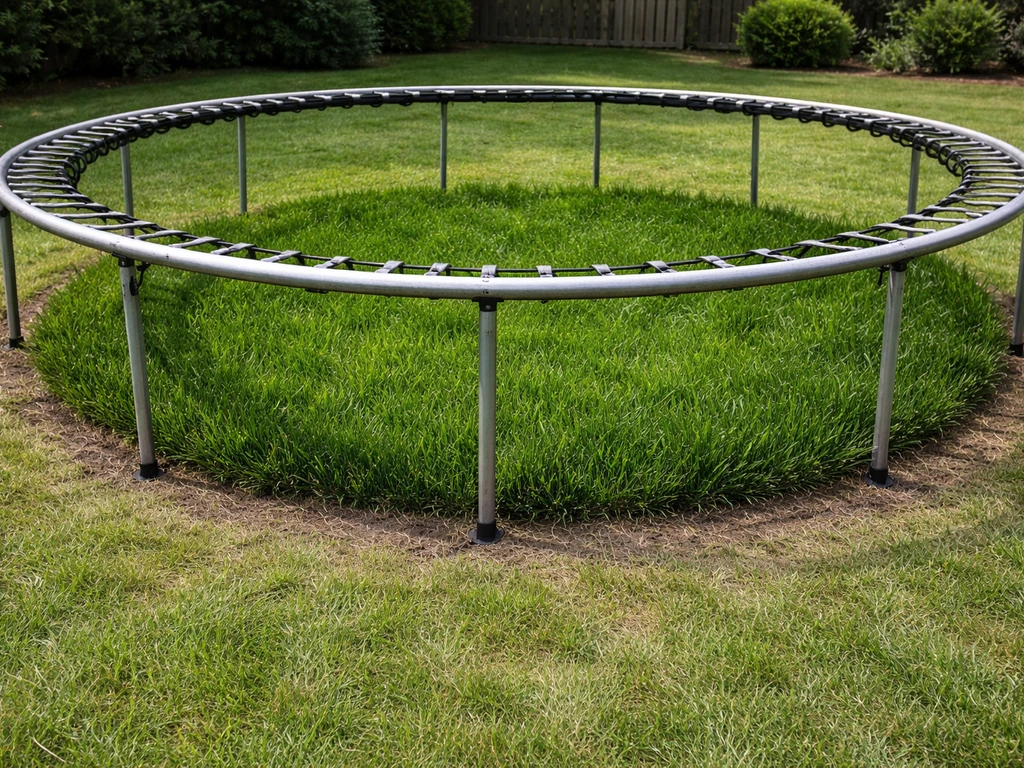
Yes, grass will grow under a trampoline in most situations, provided it gets at least 4 to 6 hours of sunlight per day. The reason it sometimes looks better than the rest of your lawn is a combination of factors working quietly in its favor. The trampoline legs sit outside the mat's edge, which means the ground directly underneath rarely takes a direct footstep.
Kids run around the perimeter, not through the middle, so the soil under the mat isn't getting compacted from traffic the way an open lawn area would be. Add in the fact that the mat creates a slight greenhouse effect on humid mornings, holding a thin layer of moisture close to the ground, and you've got conditions that can genuinely help grass establish and stay greener during dry spells.
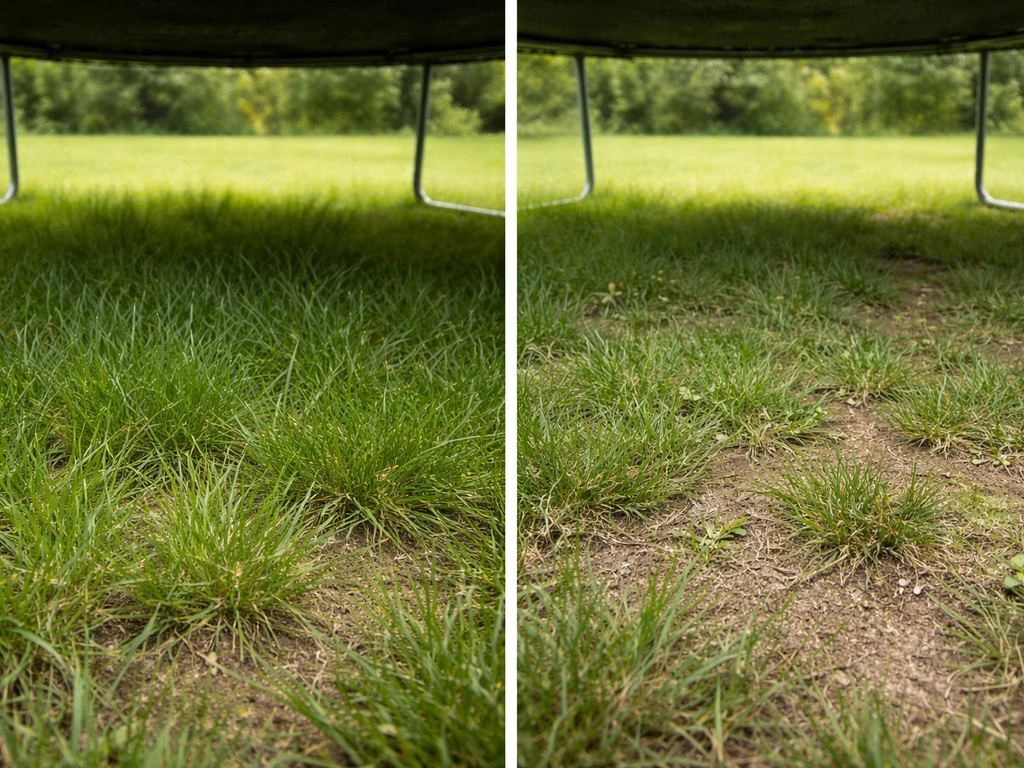
That said, the trampoline mat also blocks a significant portion of direct sunlight, which is where things get complicated. A dense mat can reduce light to the point where even shade-tolerant grasses struggle. If your grass under the trampoline looks thin, patchy, or pale rather than lush and green, the light reduction is almost certainly the main culprit. The 'it looks better under the trampoline' situation tends to happen when the mat is a looser weave, when the trampoline is positioned where it gets good morning light, or when the surrounding lawn is dealing with heavy traffic or drought stress that the sheltered area avoids.
Why grass may grow faster under a trampoline
Reduced foot traffic and compaction
The single biggest reason grass thrives under a trampoline is that nobody walks on it. One common reason some patches of grass grow faster is reduced foot traffic, which lowers compaction and lets roots spread more easily. Soil compaction is one of the main reasons lawn turf thins out in high-traffic areas, and the center of a trampoline footprint is essentially a protected zone. Roots can spread more freely, and the turf doesn't get beaten down the way it does in pathways or play areas.
Moisture retention near the mat
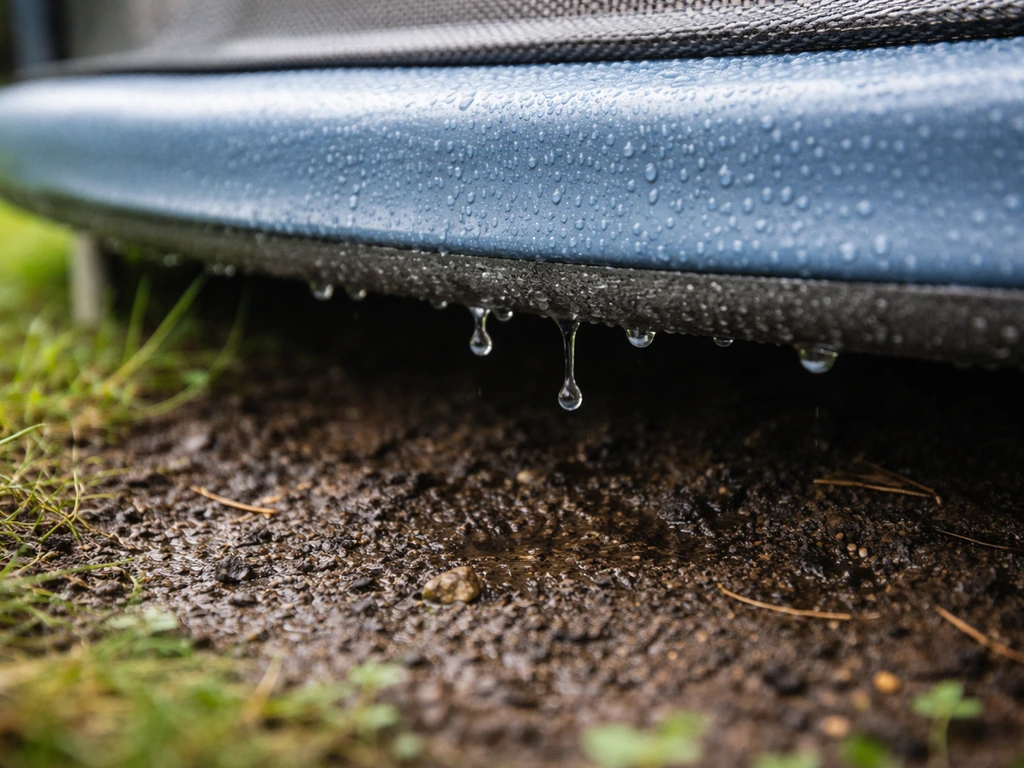
The trampoline mat acts almost like a loose canopy, slowing evaporation from the soil surface on warm days. During light rain, the mat catches some water and then drips it down slowly, which can give the area below a more even moisture supply than nearby open turf that dries out faster between waterings. This effect is most noticeable in summer when surrounding grass goes dormant from heat stress but the sheltered area stays greener a few extra days.
Partial shade as an accidental benefit
Full afternoon sun is harder on many cool-season grasses than people realize. Tall fescue, for example, is one of the more heat-tolerant cool-season grasses but still benefits from afternoon shade during peak summer heat. The dappled light through a trampoline mat can reduce heat stress, lower evapotranspiration, and keep the turf looking better compared to fully exposed sections. The caveat, of course, is that too much shade tips the balance back toward grass failure, which is why the type of mat and the orientation of the trampoline matter a lot.
Conditions that help grass succeed under a trampoline
Getting grass to reliably grow under a trampoline isn't just about luck. A few specific conditions make the difference between a decent stand of turf and a bare patch of dirt.
- Light availability: The area needs 4 to 6 hours of direct sunlight daily at minimum, either filtered through the mat or from the sides and open edges of the trampoline frame. Less than 4 hours and even the most shade-tolerant grasses will struggle to maintain density.
- Soil quality and drainage: Loose, well-draining soil is critical. If the area stays soggy for more than a day or two after rain, grass roots will rot and weeds will move in. Sandy or loam soils with good organic matter work best.
- Compaction history: If the trampoline was installed on already-compacted ground, the grass won't establish well even if other conditions are good. You'll need to address this before seeding.
- Trampoline mat weave: A looser, more open weave lets more light and rain through to the soil. A tight solid mat is functionally like a tarp and will create near-total shade, which is very difficult for any grass to survive under.
- Grass species match: Cool-season grasses like tall fescue and fine fescue are significantly more shade-tolerant than warm-season species like bermudagrass or zoysia. Matching the species to the reduced-light environment is one of the most impactful decisions you can make.
How to get grass to grow under a trampoline
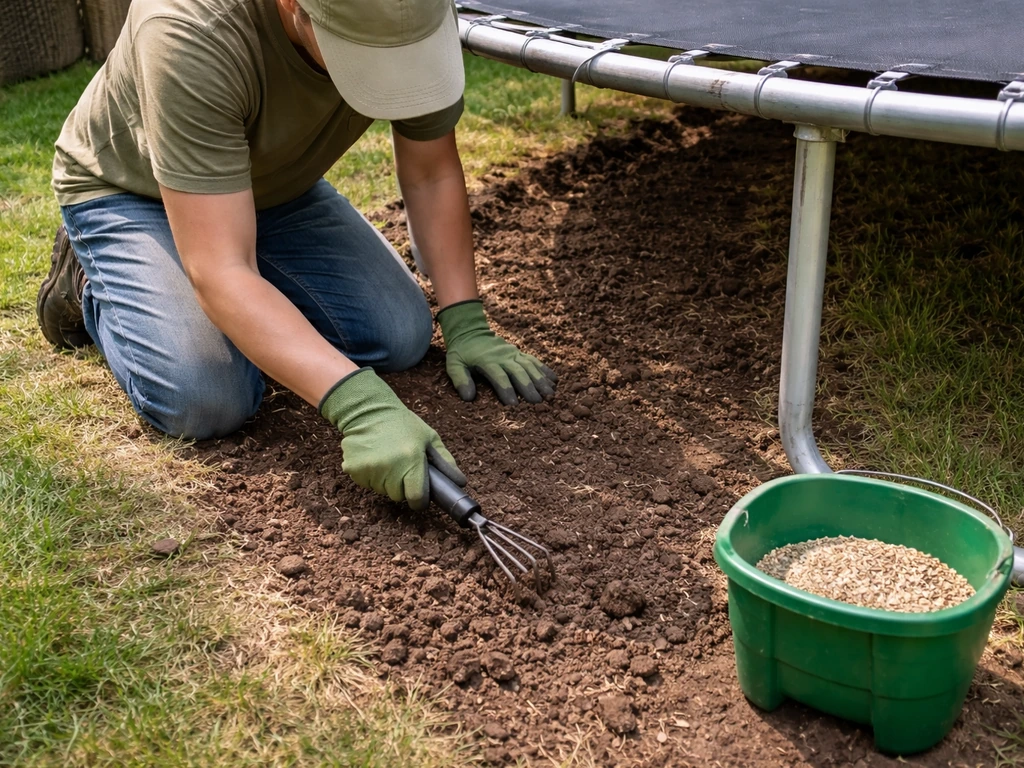
If the area under your trampoline is bare, thin, or weedy, here's a practical step-by-step process to get it established. The best timing for cool-season grasses is late summer to early fall when soil temperatures are in the 50 to 70°F range, which is ideal for germination. For warm-season grasses, late spring works better. You can do this without moving the trampoline entirely, though temporarily lifting one side makes the job much easier.
- Assess the light: Spend a day checking how much direct or filtered sunlight actually reaches the soil under the trampoline. If it's less than 4 hours, skip straight to the alternatives section at the bottom of this article.
- Test and amend the soil: A quick soil test will tell you if you're dealing with pH or nutrient problems. Most grass does well in soil with a pH of 6.0 to 7.0. If the soil is hard and compact, core aerate or hand-fork the area to loosen it before doing anything else.
- Clear out weeds and debris: Remove any existing weeds, dead grass, or thatch. You want mineral soil exposure for good seed contact. A stiff rake works well for clearing the top inch or two.
- Choose a shade-tolerant grass species: For most of the US, tall fescue or a creeping red fine fescue blend is the go-to for partial shade. These species can handle the reduced light under a trampoline mat with an open weave.
- Prepare the seedbed: Loosen the top 1 to 2 inches of soil and rake it smooth. The surface should be firm but not compacted, think of it like a gently packed surface rather than powdery or brick-hard.
- Spread seed and cover: Apply seed at the rate on the bag for new establishment (not overseeding rate). Rake seed lightly into the top 1/4 inch of soil, or use a lawn roller to firm it down. Cover with a thin layer of compost or topdressing mix, about 1/8 to 1/4 inch deep, to protect the seed and improve contact with the soil.
- Water immediately and consistently: Water the seeded area gently right after seeding. During germination, keep the top inch of soil consistently moist but not waterlogged. That typically means watering lightly once or twice daily during dry weather until seedlings are established.
- Limit disturbance: Keep kids and pets off the area until the grass has been mowed at least twice. New grass seedlings have almost no wear tolerance, so any foot traffic during the first few weeks can wipe out your progress.
What to change for faster results
Watering smarter, not more
Once seedlings have germinated and are a few inches tall, shift your watering from frequent and light to less frequent and deeper. You want moisture to penetrate the top 4 to 6 inches of soil to encourage roots to grow downward. Under a trampoline, the mat will intercept some overhead irrigation, so if you're using a sprinkler system, make sure you're getting actual water to the soil beneath, not just wetting the mat.
If you’re asking why grass seed grows briefly then dies, the most common cause is stress during establishment, like poor seed-to-soil contact, inconsistent moisture, or not enough sunlight making sure you're getting actual water to the soil beneath, not just wetting the mat. Drip irrigation or a soaker hose positioned at the perimeter works well here.
Topdressing with compost
A light topdressing of compost (about 1/4 inch) applied after aeration or after mowing the established grass will feed the soil biology and improve moisture retention without smothering the turf. Do this once in fall for cool-season grasses. It's one of the most cost-effective things you can do to improve a struggling patch under a trampoline.
Fertilizing in partial shade
Grass in shade actually needs less nitrogen than fully sunlit turf. Over-fertilizing a shaded area pushes lush soft growth that's more susceptible to disease and doesn't hold up well. Use a slow-release nitrogen fertilizer at roughly half the rate you'd use for open lawn, and apply it in fall for cool-season grasses. Skip heavy spring nitrogen applications under the trampoline.
Raising your mowing height
This is the change that makes the biggest visible difference for most people. Grass in shaded conditions needs more leaf surface area to capture enough light for photosynthesis. The Royal Horticultural Society recommends raising your mowing height to at least 2. RHS advice on lawns in shade recommends raising mowing height to at least 6 cm (about 2.
5 in), and possibly up to 9 cm (3. 5 in), in shaded conditions [raising your mowing height to at least 2. 5 inches in shade](https://www. rhs.
org. uk/lawns/lawns-in-shade/). 5 inches in shade, and up to 3. 5 inches in heavier shade.
For tall fescue, a mowing height of 3 to 4 inches is appropriate anyway, and that extra height under a trampoline is genuinely important, not just a preference. Never scalp the grass under the trampoline thinking it'll make it grow faster. It won't. It'll make it thinner.
Common reasons grass won't take under a trampoline
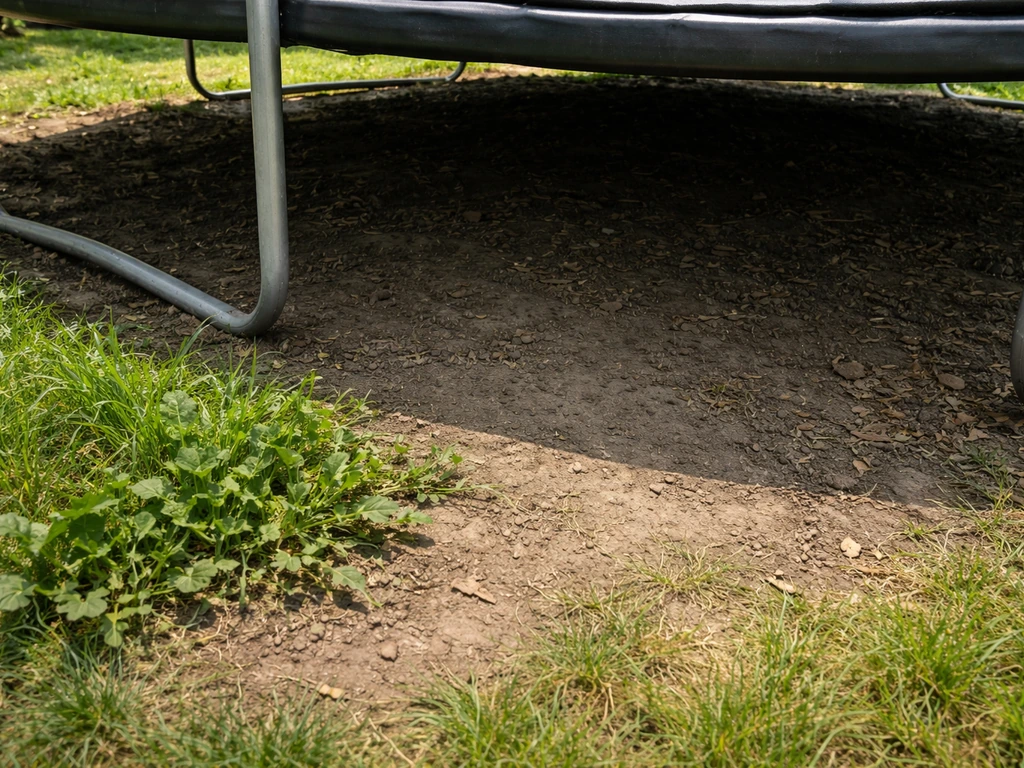
If you've tried establishing grass under the trampoline and it keeps failing, one of these is almost always the reason:
- Too little light: A dense mat blocking most of the sun is simply too dark for turf. Below 4 hours of light, even shade-tolerant species like fine fescue fail to produce enough energy to stay alive, let alone spread. This is the number one failure cause.
- Severely compacted soil: If the trampoline was installed years ago on clay-heavy soil, the ground underneath may be so compacted that roots physically can't penetrate it. Seed will germinate but die once the shallow roots hit the hard layer. You need to aerate or loosen the soil before any seeding attempt will succeed.
- Poor seed-to-soil contact: Grass seed scattered on top of thatch or hard ground without being raked in will fail to germinate reliably. Seed needs intimate contact with moist soil to absorb water and sprout.
- Drainage problems: A low spot under the trampoline that holds standing water after rain creates anaerobic conditions that kill grass roots and invite disease. If water pools there, you'll need to address drainage before trying to grow turf.
- Weed competition: If the area has a history of broadleaf weeds, especially shade-loving species like ground ivy (creeping charlie), those plants will outcompete newly seeded grass quickly. Clear them out completely before seeding, and expect to manage them during establishment.
- Incorrect grass species: Planting bermudagrass or another warm-season sun-lover under a trampoline in a temperate climate is a setup for failure. The species has to match the light and climate conditions.
The pattern of failure here is actually similar to what you'd see in any challenging light or soil situation, whether it's grass under a tree canopy or grass struggling in poorly prepped new construction soil. If you've experienced patchy or uneven establishment elsewhere in your yard, the underlying causes are often the same. That same patchy, uneven growth pattern can show up when new grass is still trying to establish and conditions like light and moisture vary across the area patchy or uneven establishment. If the grass in your yard grows unevenly, it can come down to uneven sunlight, compaction, and inconsistent moisture, so it helps to identify which of those factors is affecting the patch why does my grass grow uneven.
When to skip grass and try something else instead
Sometimes the honest answer is that grass isn't the right plant for the job. If the trampoline has a tight mat, sits in a naturally shady area, and your soil is compacted clay, fighting to grow turf there is going to cost you time and money with limited payoff. Grass can also grow in clumps when the turf is stressed, such as from uneven moisture, compaction, or poor seed-to-soil contact, so the fix is to address the cause and overseed or patch as needed compacted clay. Here are the practical alternatives:
Shade-tolerant ground covers
Low-growing ground covers can fill the space under a trampoline without needing as much light as grass. Creeping thyme works well in areas with good drainage and at least partial sun exposure, and it handles light foot traffic reasonably well. For darker, moister spots, there are several shade-tolerant ground cover options that perform well in partial to heavy shade. Just check invasiveness status for your region before planting anything that spreads aggressively, as some options that look appealing in a catalog can become serious weeds in your climate.
Rubber mats or wood chip mulch
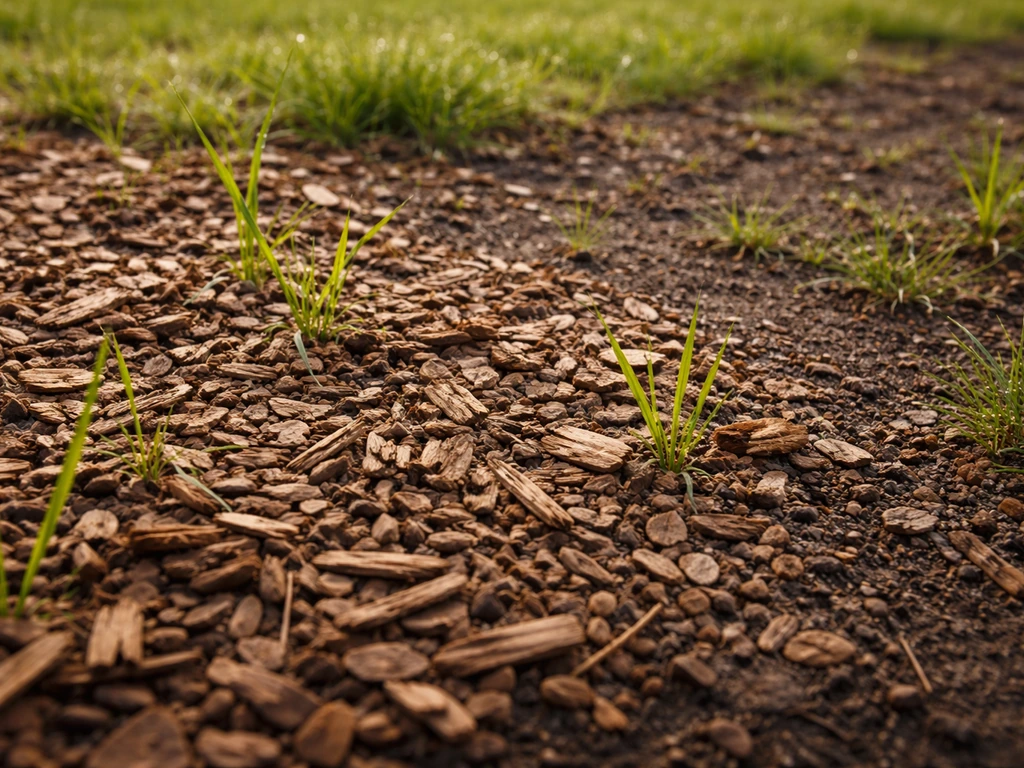
A thick layer of wood chip mulch (3 to 4 inches) under the trampoline suppresses weeds, absorbs impact if anyone jumps off the edge, and looks reasonably tidy. Rubber playground mats are another option, especially under the landing zone around the perimeter. Neither requires any maintenance beyond occasional top-up, and both are honest solutions when the light just isn't there for turf.
Move the trampoline periodically
If your yard allows it, shifting the trampoline by a few feet every few months prevents any one patch of ground from suffering prolonged shade and compaction. It also prevents the mat from trapping heat and moisture in a way that can damage or mat down turf over time. If you have the lawn space to rotate the trampoline's position, this is genuinely the easiest long-term solution for keeping the whole yard looking uniform.
Quick comparison of your options
| Option | Best for | Light needed | Maintenance | Cost |
|---|---|---|---|---|
| Shade-tolerant grass (tall fescue, fine fescue) | 4+ hours filtered light, decent soil | 4–6 hours min | Regular mowing and watering | Low (seed cost) |
| Creeping thyme ground cover | Well-drained soil, partial sun | 3–4 hours min | Very low once established | Low to moderate |
| Shade ground covers (Iowa State list options) | Deep shade, moist or dry soil | 2+ hours filtered | Low | Moderate |
| Wood chip mulch | Any light condition, bare soil problem | None required | Very low (refresh annually) | Low |
| Rubber playground mats | High-traffic landing zones | None required | None | Moderate to high |
| Move trampoline periodically | Yards with enough space to rotate position | N/A | Minimal effort | Free |
The bottom line is this: if the light is there and the soil is workable, grass under a trampoline is absolutely achievable and can even look better than the surrounding lawn once established. The key moves are choosing the right shade-tolerant species, getting proper seed-to-soil contact, raising your mowing height, and being patient through the first growing season.
UC ANR turf IPM recommends covering grass seed very shallow, about 1/16 to 1/8 inch deep, and lightly firming to improve seed-to-soil contact proper seed-to-soil contact.
If light is the limiting factor, don't keep battling it. Pick a ground cover or mulch option that actually matches the conditions, and save your energy for the parts of the lawn where grass can genuinely win.
FAQ
How much sunlight does grass under a trampoline really need, and how can I measure it?
Most grass needs at least 4 to 6 hours of direct or mostly direct sun to look consistently lush. To verify, place a simple sun-tracking card or use a smartphone light meter app at the soil level under the mat for a full day, then compare those readings to the surrounding lawn.
Will grass grow under the trampoline if the mat is very tight or newer and less breathable?
A tightly woven, newer mat can reduce both light and airflow more than you expect, which can cause slow thinning or pale color even if you water correctly. If you see weak growth, try a looser mat rotation (if your model allows) or overseed with more shade-tolerant grass and avoid extra nitrogen.
Why does the grass look fine for a few weeks after seeding, then die off?
That pattern is usually establishment stress, most often inconsistent moisture or seeds sitting on top of dry soil because of poor seed-to-soil contact. After seeding, lightly firm the area and keep the top inch consistently moist until germination, then transition to deeper, less frequent watering.
If my sprinkler wets the area above the mat but grass still fails, what am I missing?
Water from overhead irrigation can get trapped by the mat and only wet the fabric instead of soaking the soil. Use a tuna-can style soil probe or push a finger into the soil after watering to confirm moisture reaches 4 to 6 inches, and consider a soaker hose or drip line aimed at the perimeter.
Does foot traffic outside the mat matter, since the mat blocks the center?
Yes. Turf at the edges can still compact from kids running around the landing perimeter or from mowing and trimming movements. If the perimeter stays thin, aerate that ring, re-seed it separately, and use deeper watering there rather than only relying on the sheltered center.
When should I raise the mowing height under the trampoline, and what if the rest of my lawn is mowed shorter?
Raise mower height as soon as the grass is established and actively growing, typically around the first mowing after seedlings fill in. Keeping blades short under the trampoline reduces leaf area needed for shade photosynthesis, so aim for about 2.5 to 3.5 inches depending on your shade level.
Can I fertilize the patch under the trampoline like the rest of the lawn, or will it make things worse?
In most cases, you should fertilize less or not at the same times as sunny lawn areas. Shade grass generally needs lower nitrogen to avoid soft, disease-prone growth, so use a slow-release product at about half rate and prioritize fall feeding for cool-season grasses.
Is it okay to aerate under a trampoline, and won’t that damage the mat?
You can aerate, but do it carefully. Use a core aerator only if the mat and frame are stable enough to access the soil, and avoid overworking the area right before seeding. After aeration, topdress lightly (around 1/4 inch compost) to fill holes and improve seed contact.
What should I do if I’m seeing weeds instead of grass under the trampoline?
Weeds usually win when light is too low or the soil surface stays bare and intermittently moist. Remove the top growth, improve seed-to-soil contact, overseed with the right shade-tolerant mix, and consider a wood chip mulch or ground cover if sunlight is consistently below what grass can use.
Can I rotate the trampoline to help grass, and how often should I move it?
Rotating by a few feet can prevent long-term “matting” and repeated moisture trapping in one spot. A practical schedule is every 2 to 4 months during the growing season, then overseed any disturbed areas after moving so you do not create new weak patches.
What are good grass choices if the trampoline area is mostly shade or afternoon shade?
If the area gets morning sun but limited afternoon light, tall fescue and other shade-tolerant cool-season grasses usually perform better than typical sun-demanding varieties. If the site is very dark (and stays dark most of the day), switching to shade-appropriate ground cover may be more reliable than repeatedly overseeding grass.
When is it better to give up on grass and switch to mulch or ground cover?
If, after one full growing season with correct watering and mowing height, the area remains patchy or keeps failing due to persistent low light, it’s usually more efficient to switch. Thick mulch or shade-tolerant ground covers reduce maintenance and avoid repeated seed loss when the limiting factor is light.
Next Articles
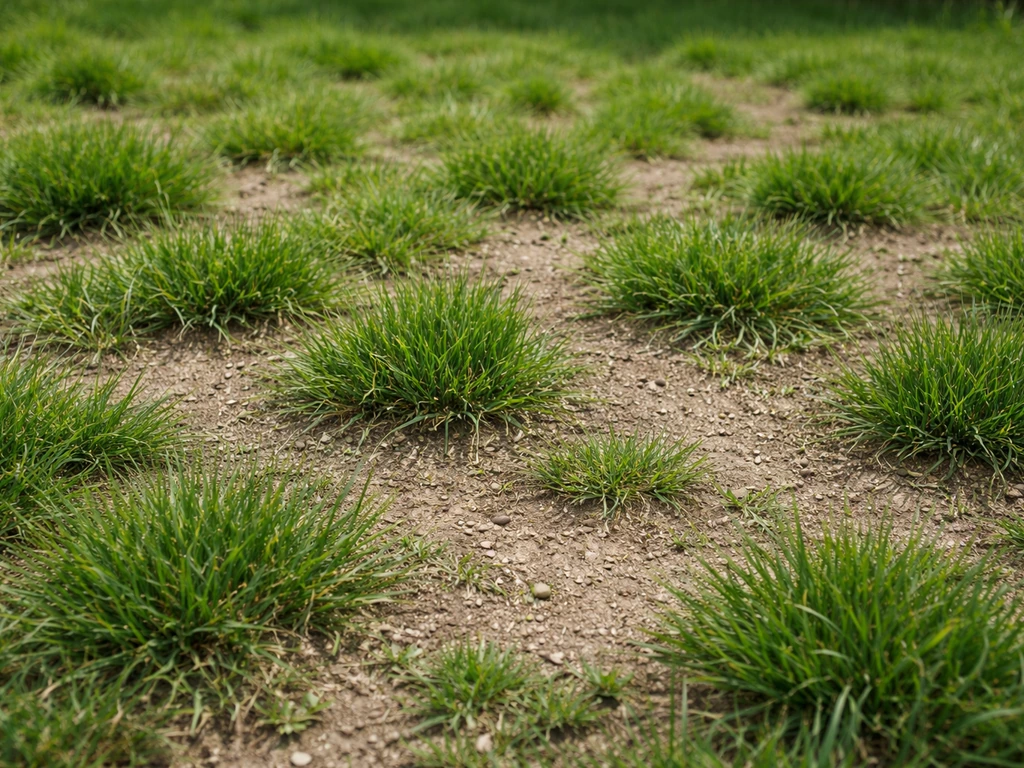
Why Does My Grass Grow in Clumps and How to Fix It
Learn why grass grows in clumps and how to diagnose poor soil, shade, watering, species, and thatch, then fix it.
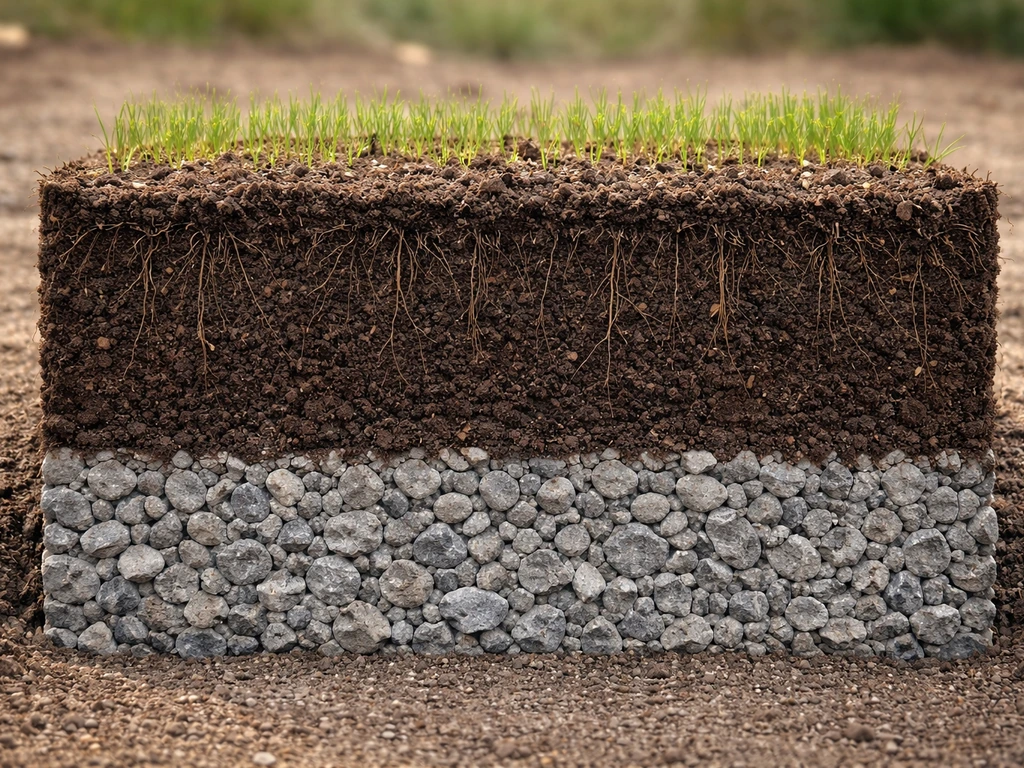
Can You Grow Grass Over Gravel? How to Do It Right
Learn when you can grow grass over gravel and follow a step-by-step method for soil depth, drainage, seeding or sod, and
Do Wood Chips Help Grass Grow? When They Work and When Not
Learn when wood chips help grass grow, when they steal nitrogen, and step-by-step how much to apply and seed options.