
Grass grows in clumps for two very different reasons, and knowing which one you're dealing with changes everything about how you fix it. Sometimes clumping is just what your grass species does naturally. Other times it's a sign your lawn is stressed, compacted, starved, or waterlogged in specific spots. The good news: both are fixable once you know what you're looking at.
Why Does My Grass Grow in Clumps and How to Fix It
Marcus Volkmann
11 Apr 2026
First, figure out if it's normal bunching or an actual problem
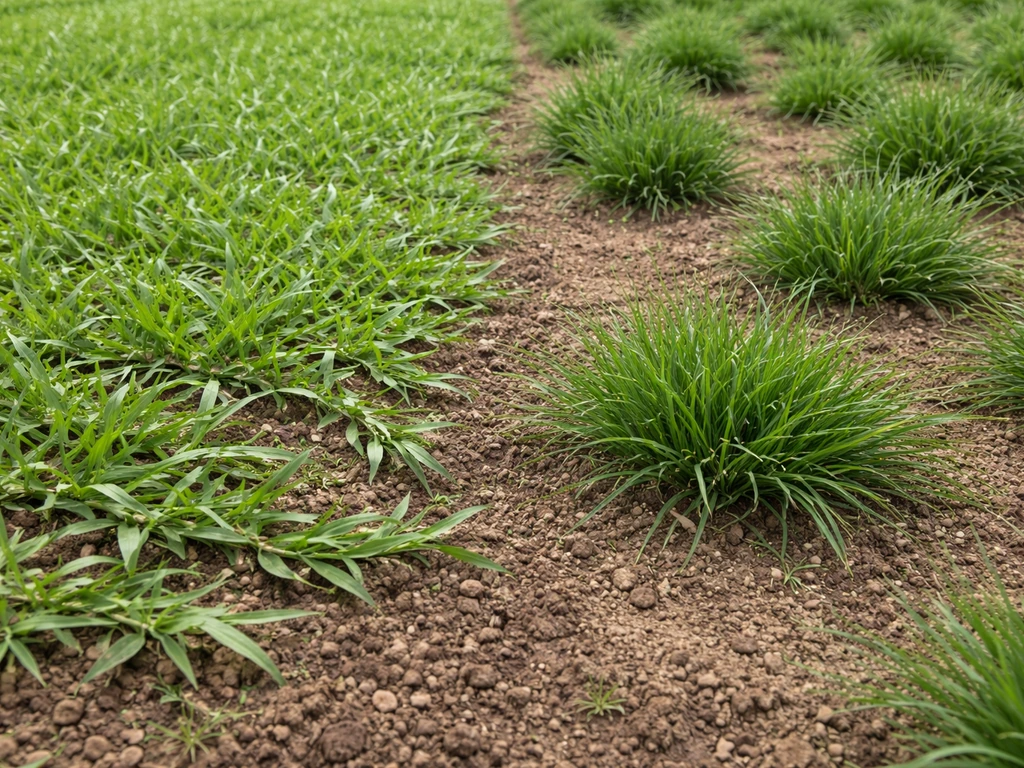
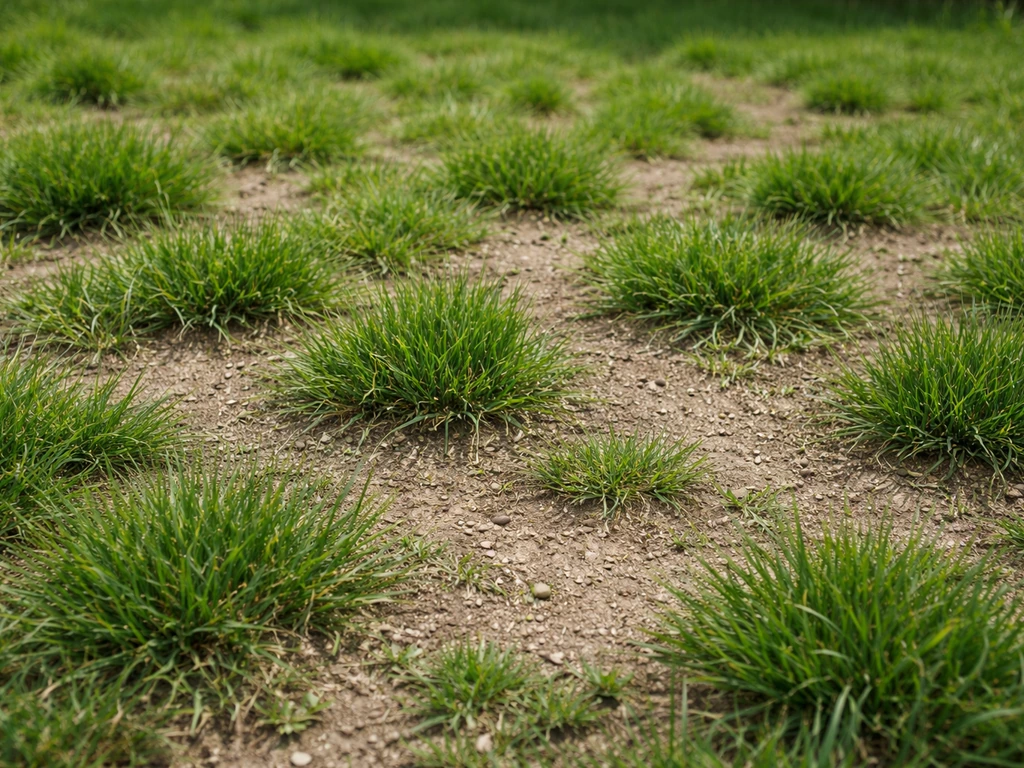
Not all grass spreads sideways to fill in bare gaps. Grasses fall into two broad growth categories: spreading types and bunch types. Spreading grasses like Kentucky bluegrass and creeping red fescue push out rhizomes or stolons underground and slowly knit a lawn together. Bunch-type grasses like tall fescue and most fine fescues grow in tight circular clumps and simply don't have that lateral spread mechanism. If you planted a bunch-type grass and expected it to fill in like a bluegrass lawn, you're going to be disappointed, because it won't happen on its own.
Tall fescue is probably the most common culprit behind clumpy lawns, especially in transition zone yards. It grows in distinct bunches, and if you have a bluegrass or bermuda lawn that got invaded by tall fescue, those isolated clumps are going to stick out like islands. Fine fescues are also bunch-type as a group, with creeping red fescue being the notable exception since it spreads via rhizomes. Colonial bentgrass is another bunch-type species identified by its growth habit.
So the first question to ask yourself is: what grass did I plant (or what moved in on its own)? If you're dealing with an invading bunch-type in an otherwise spreading lawn, that's a weed situation, not a soil problem. If your whole lawn is a bunch-type species, that's a management expectation issue. Either way, the diagnosis changes the fix significantly, and whether patchy growth is normal for new grass depends heavily on this species question.
Common causes of clumps: stress, roots, moisture, compaction, and thatch
Even if your grass is a spreading type, it can still clump up visually when stress hits unevenly across the lawn. Here are the most common culprits, roughly in order of how often I see them.
Soil compaction is a big one. When soil gets compacted, roots can't penetrate deeply, they stay shallow and weak, and grass in those spots struggles to fill in. Compacted areas end up thin or bare while surrounding turf looks okay, creating that clumpy, uneven texture. Prolonged foot traffic, heavy clay soil, or even parking a vehicle on the lawn once too often can do this. Shallow root systems are a reliable sign of compaction, and it's worth digging a small plug and actually looking at how deep the roots go before assuming anything else.
Thatch is the other physical barrier that creates clumping. A thin thatch layer (under about half an inch) is fine, but once it builds past that point, it starts causing problems. UMass Amherst notes that an excessive thatch layer (typically more than about 1/2 to 3/4 inch, depending on the situation) can restrict movement of air, water, fertilizer, and other materials to roots a thin thatch layer (under about half an inch) is fine, but once it builds past that point, it starts causing problems.. When thatch gets thick, grass roots start growing up into the thatch layer rather than down into the soil, which means they're exposed to more temperature swings and dry out faster. Missouri Extension recommends removing thatch from bluegrass once it hits about half an inch. Michigan State University Extension puts the action threshold at greater than half an inch, with an inch or more being a serious renovation trigger. That uneven spongy feel under your feet and the visual patchiness it creates are signs you're past the threshold.
Uneven moisture is often the hidden driver of clumping that people overlook. Grass in wet spots grows faster and more lush; grass in dry spots slows down, thins out, or even goes dormant. Fine fescues, which are drought-resistant, will actually go dormant and then develop a clumpier appearance under prolonged drought stress. University of Missouri Extension notes that thatch tends to be a problem in Kentucky bluegrass, fine fescues, and zoysiagrass lawns. What looks like a bunch-type growth problem is sometimes just drought-triggered dormancy in a grass that would otherwise spread more evenly.
Environmental factors that create uneven growth
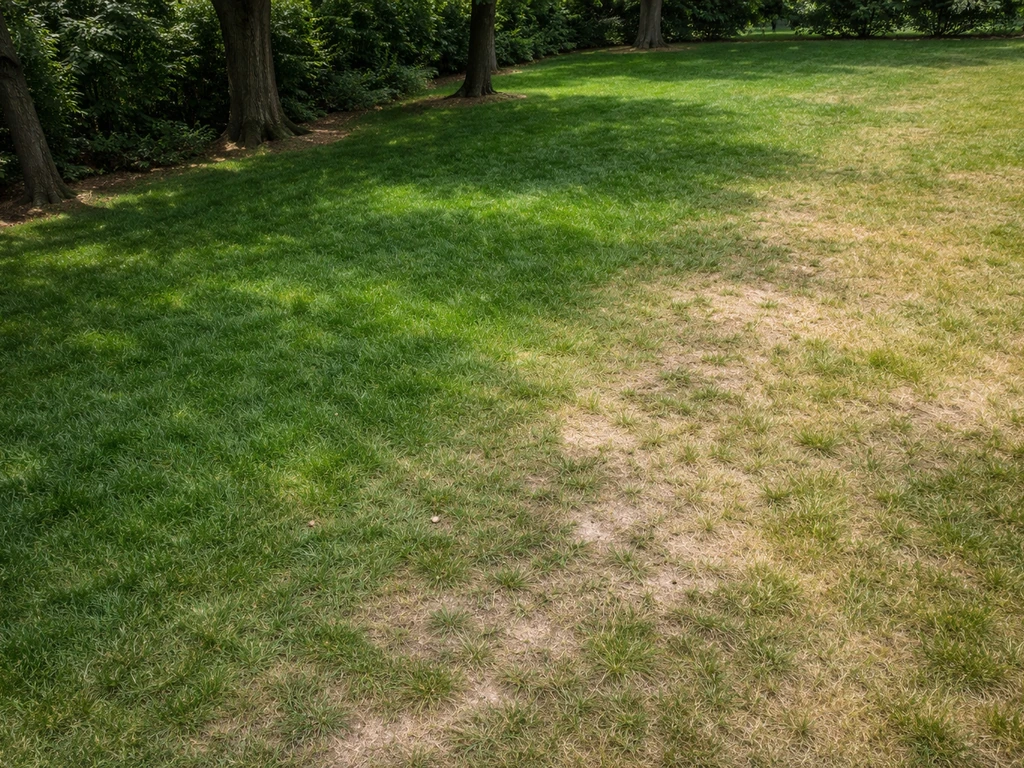
Shade, heat, and drainage patterns all create microclimates in your yard that make grass grow differently from one spot to the next. A shaded area under a tree might stay moist and cool, favoring certain grasses, while a south-facing slope dries out fast and scorches in summer. It's interesting that grass sometimes grows better under a trampoline than in surrounding areas, which is a perfect example of how small environmental differences create visible growth variation in a single yard.
Sandy soils drain so fast that grass roots can't pull enough water between irrigation or rain events, especially in summer heat. This creates a boom-and-bust growth pattern where grass surges after watering and then stresses out fast, leading to thin or clumpy areas. Drainage problems work the opposite way: low spots that pool water after rain will drown grass roots over time, leaving bare or thin patches surrounded by healthier turf.
Heat stress during summer is worth mentioning specifically because Kentucky bluegrass, which is adapted to moderate summers below about 90°F with adequate moisture, will visibly retreat and thin out during hot stretches. When it recovers unevenly in fall, you get a clumpy, irregular texture that wasn't there in spring. That's not a soil problem, it's a species-climate mismatch, and it explains why the same lawn that looked great in May looks ragged in August.
Soil causes: pH, nutrients, and why grass stays patchy
Soil chemistry problems show up as patchy, uneven growth all the time, and homeowners often blame watering or shade when pH or nutrient deficiency is the real issue. Tall fescue does best at a soil pH of about 5.5 to 6.5, while Kentucky bluegrass prefers 6.0 to 7.0. Outside those ranges, nutrient availability drops even if you're fertilizing regularly. Iron deficiency is a classic example: it can show up as mottled pale green or yellow patches, and it commonly occurs on soils with pH above 7.0 because iron becomes chemically unavailable even when it's physically present in the soil.
Nitrogen deficiency produces thin, slow-growing turf that doesn't fill in gaps the way healthy grass does. But before you throw down fertilizer, test your pH. As Illinois Extension points out, nutrient deficiency symptoms can appear either because the nutrient isn't in the soil OR because high pH is locking it up. Throwing more fertilizer at a high-pH soil is largely a waste of money and time. A simple soil test, available through most county extension offices for about $15 to $20, will tell you exactly where you stand and what to adjust.
Salt-affected soils are a less common but real cause of patchy, clumpy growth, particularly in arid regions, yards near roads treated with deicing salts, or anywhere with high irrigation water salinity. In those cases, species selection and soil management both need to change, because standard fertilizer adjustments won't overcome soluble salt problems on their own.
Yard management causes: mowing, irrigation, and seeding timing
How you manage your lawn creates clumping problems just as often as soil or species issues do. Mowing too low (scalping) removes the growing point of grass plants, kills off weaker areas, and leaves bare patches that fill in slowly and unevenly. Those bare patches then get colonized by whatever seed is blowing around, which is often a bunch-type weed grass, creating exactly the isolated clumps you're trying to avoid. Uneven grass growth across the lawn is one of the first signs that mowing height or frequency is inconsistent.
Irrigation uniformity is a bigger factor than most people realize. University of Minnesota Extension recommends an at-home irrigation audit using catch cans in a grid pattern: if you find that coverage uniformity drops below 60%, you have dry zones and wet zones that will produce visibly different growth rates across the lawn. Clumps and thin patches often map almost exactly onto irrigation dead zones, which is easy to confirm by running your system and watching where the coverage overlaps.
Over-fertilizing, particularly with nitrogen, drives excessive shoot growth that produces heavy thatch buildup over time. Oklahoma State University Extension identifies excessive growth and conditions unfavorable to organic matter decomposition as the main drivers of problematic thatch. Once thatch takes over, the lawn grows unevenly, mows unevenly, and looks clumpy even if the underlying species is a spreading type. The fix isn't more fertilizer, it's getting the thatch under control first.
Seeding and sodding timing also matters. Grass planted in the wrong season, or into soil that wasn't prepared properly, establishes unevenly. Bare spots don't fill, the established areas grow faster than the new areas, and the result looks clumpy and irregular. Grass seed that germinates and then dies is a classic sign of poor establishment timing or soil conditions that weren't addressed before seeding.
How to diagnose your lawn quickly today
You don't need equipment or lab results to get a working diagnosis. Here's a practical checklist you can run through in about 20 minutes in your yard.
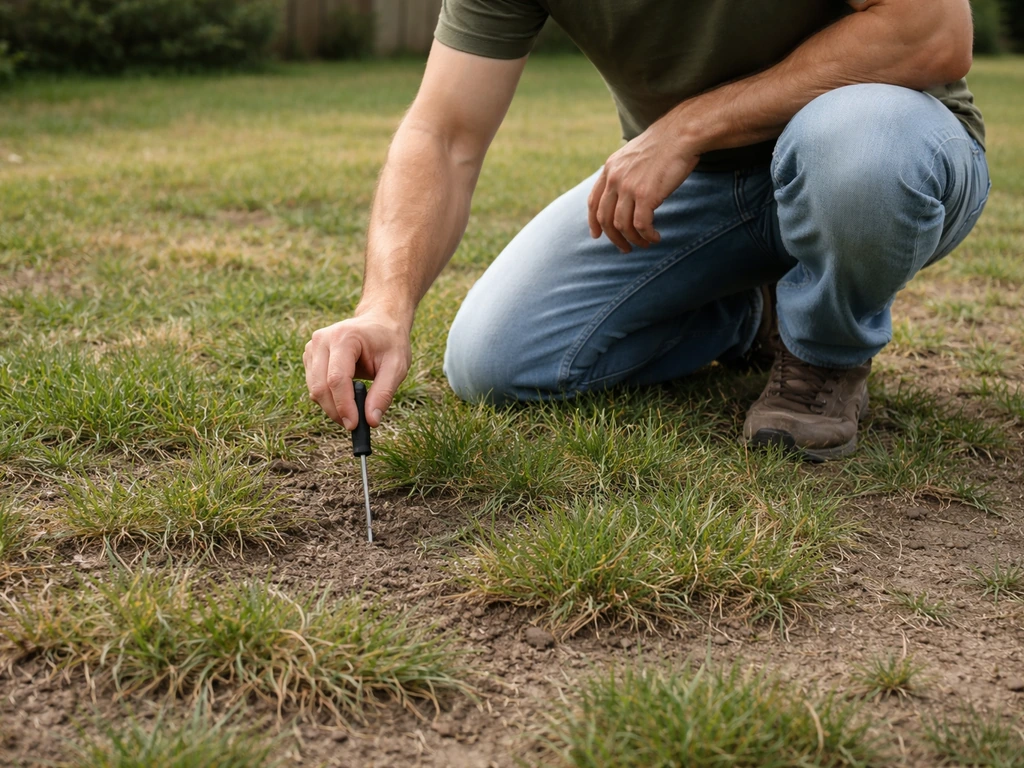
- Screwdriver test for compaction: push a standard screwdriver into the soil with hand pressure. If it stops at 2 to 3 inches, you have significant compaction. It should go in 6 inches easily in healthy lawn soil.
- Thatch check: pull a small plug of turf and measure the spongy brown layer between the green grass and the soil surface. Over half an inch means thatch is likely contributing to your problem.
- Root depth check: pull a plug in a clumpy area and a healthy area and compare root depth. Shallow roots (under 2 inches) in the clumpy area point to compaction or thatch, not a grass species issue.
- pH and soil test: get a basic soil test from your local extension office or a garden center test kit. This is the single most useful data point for ruling out chemistry as a cause.
- Irrigation audit: place a few cans (tuna cans work great) at different spots around the lawn, run your sprinklers for their normal cycle, and measure the water depth in each can. Big differences between cans mean uneven coverage.
- Sun mapping: walk your yard at different times of day and note which clumpy areas are in consistent shade, partial shade, or full sun. Shade-stressed grass often looks different enough that you can spot it just by color and density.
- Species ID: look closely at the clumps themselves. Tight, coarse-textured clumps that don't seem connected to surrounding turf are often tall fescue invaders in a finer-textured lawn, which is a different fix entirely than a soil problem.
This quick audit usually narrows it down to one or two likely causes, and that's all you need to build a fix plan. If you're seeing certain patches of grass growing visibly faster than others, that's a strong indicator of uneven irrigation or localized fertilizer patterns rather than a species or compaction issue.
The fix plan: getting your lawn to fill in evenly
Step 1: deal with compaction and thatch first
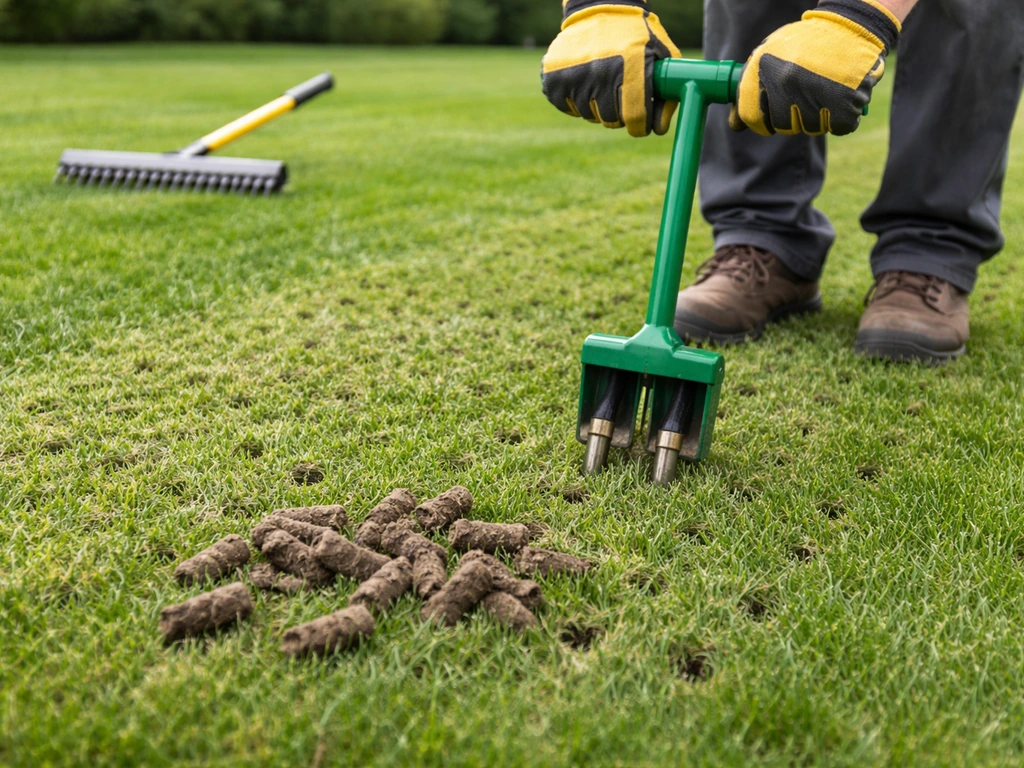
If your screwdriver test or root depth check flagged compaction, core aeration is your starting point. Core aeration pulls plugs of soil out of the ground, creating channels for water, air, and roots to penetrate deeper. Michigan State University Extension notes that fall is generally the best time to aerate because turf isn't under peak heat stress, giving it time to recover before winter. For heavy compaction, two passes in perpendicular directions makes a real difference. Leave the cores on the surface to break down; they act as a light topdressing.
If thatch is the problem, dethatching or verticutting before overseeding removes the physical barrier that's been preventing seed-to-soil contact. Oregon State University Extension points out that when thatch is heavy, most grass roots are actually living in the thatch layer rather than in the soil, so renovation has to address that layer before anything else will stick. Aeration and dethatching together in fall creates ideal conditions for both recovery and overseeding.
Step 2: fix the soil chemistry
Once you have your soil test results, adjust pH before you do anything else. For most cool-season grasses, you're aiming for 6.0 to 6.5. Lime raises pH in acidic soils; sulfur lowers it in alkaline soils. Give amendments time to work (usually a season) before expecting dramatic results. If iron deficiency is the issue and pH is the cause, lowering pH is the real fix, not spraying iron supplements that will just tie up again.
Step 3: topdress and overseed
After aeration, topdressing with a thin layer (about a quarter inch) of compost or quality topsoil fills in the aeration holes and improves soil structure, especially in sandy or clay-heavy yards. Then overseed into the aerated, topdressed surface. Oregon State University Extension specifically recommends overseeding after core aeration because the open channels give new seed direct soil contact and better moisture retention during germination. Keep the seed consistently moist for the first two to three weeks.
Step 4: fix irrigation and mowing
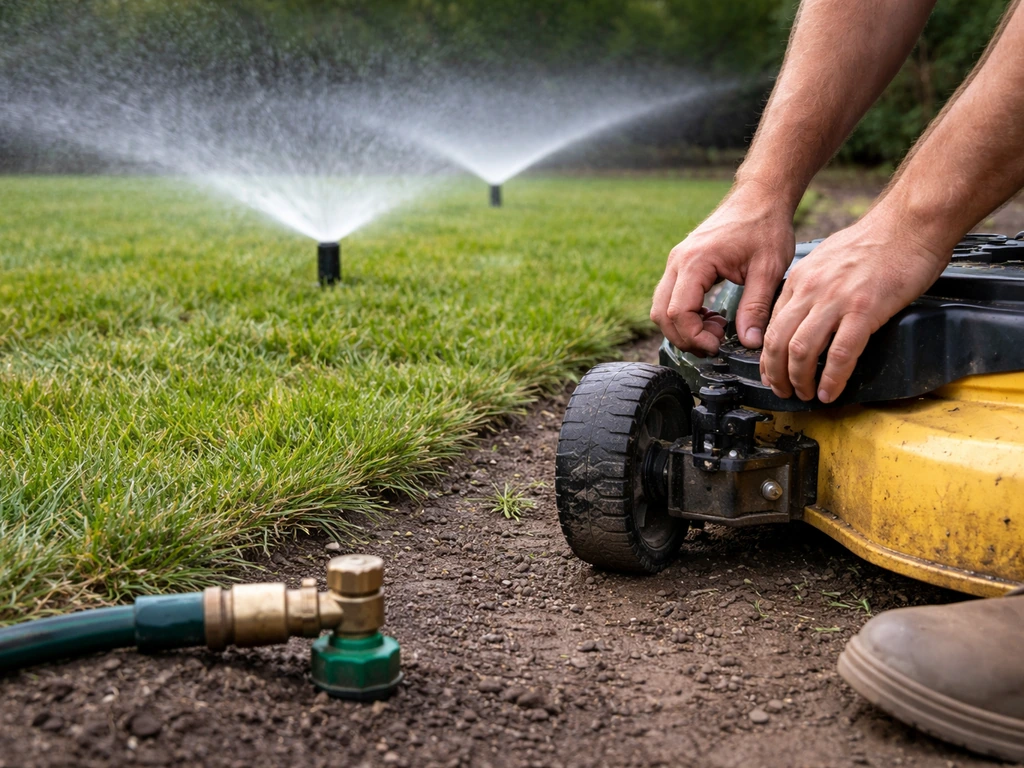
If your irrigation audit showed poor uniformity, adjust sprinkler heads or overlap patterns to get more even coverage before or right after overseeding. New seed in a dry zone will just fail again, sending you back to square one. On mowing, raise your deck height to at least 3 inches during the recovery period. Mowing stress on newly germinating areas is one of the most common reasons overseeding efforts don't deliver the even fill-in people expect.
Choosing the right grass for your conditions
If you've been fighting clumpy, uneven growth for years and nothing seems to stick, it may be a species mismatch problem. Using a spreading grass type in your climate can solve a lot of the fill-in problems that bunch-type grasses create. Here's a practical comparison of common grass types and their clumping tendencies to help you choose.
| Grass Type | Growth Habit | Clumping Risk | Best Use Case |
|---|---|---|---|
| Kentucky Bluegrass | Rhizomatous (spreading) | Low (fills in well) | Cool climates, moderate moisture, pH 6.0-7.0 |
| Tall Fescue | Bunch-type | High (won't spread laterally) | Transition zones, tolerates heat/shade, pH 5.5-6.5 |
| Fine Fescue (most types) | Bunch-type | Moderate to high, worse under drought | Shade, low fertility, cool climates |
| Creeping Red Fescue | Rhizomatous (spreading) | Low for a fescue | Shade, low-maintenance, cool climates |
| Creeping Bentgrass | Stoloniferous (spreading) | Low (aggressive spreader) | Golf/high-maintenance turf, cool regions |
| Bermudagrass | Stoloniferous (spreading) | Low (very aggressive) | Warm climates, high traffic, drought-tolerant |
| Centipedegrass | Stoloniferous (spreading) | Low | Southeast US, acidic soils pH 4.5-6.0 |
The bottom line on species choice: if you want a lawn that self-repairs and fills in bare patches on its own, pick a spreading type that's adapted to your climate and soil. If you're committed to a bunch-type like tall fescue (which makes sense in many transition-zone yards because of its heat and shade tolerance), accept that you'll need to overseed bare areas manually each fall rather than waiting for the grass to spread on its own. That maintenance expectation shift alone saves a lot of frustration.
One last thing: if you've addressed compaction, thatch, pH, and irrigation but still see isolated clumps that just won't blend in, those are almost certainly a different species than the surrounding turf. At that point the fix is spot-treatment (killing the clump) followed by reseeding with your chosen variety. It's tedious but it works, and it's the only permanent solution when the clump itself is the invader. Understanding the full picture of why a lawn grows unevenly across its whole surface often reveals that multiple causes are happening at the same time, which is why diagnosing before treating always pays off.
FAQ
How can I tell if the clumps are from my grass species or from weeds that invaded?
Look at the leaves and root structure in the clump. If the clumps have a distinctly different blade width, growth color, or seed head shape than the surrounding turf, it often indicates a different species. Also check whether clumps spread outward over time via stolons or rhizomes, spreading grass will gradually knit, while a bunch-type “island” tends to stay tight and persistent unless you overseed.
Is it possible for my lawn to look clumpy even when drainage and watering are fine?
Yes, uneven nutrition can do it. If you fertilize on a schedule but your soil pH is out of range, nutrients can become unavailable and growth slows only in certain areas. The giveaway is patchiness that aligns with soil type or previous amendments, not with low spots or sprinkler coverage.
What if only one side of my yard grows in clumps, but the rest looks normal?
That pattern often points to a microclimate issue like sun exposure, mowing direction, or salt movement. For example, wind can carry irrigation overspray or fertilizer granules to one zone, and roof runoff can create chronically wetter or drier bands. Run a quick visual check after rain, or do the catch-can grid test focusing on the affected side.
Can lawn clumps be caused by animal activity?
Definitely. Dog urine, repeated pet traffic, and burrowing animals can create small zones of burn or disturbed soil that then grow differently or get colonized. Dog urine damage often appears as small yellow or thin patches that later fill unevenly, especially where urine repeatedly hits the same spots.
Will frequent mowing fix clumps if the cause is thatch or compaction?
Usually no, it can make it worse. If roots are restricted by compaction or living high in thatch, mowing lowers the plants further and increases stress on weak areas, which can expand the clumpy look. Prioritize aeration for compaction and dethatching or verticutting for thick thatch, then return to a consistent mowing height.
Should I dethatch even if I am not sure the lawn is thick with thatch?
You can get a quick “feel test,” look for a spongy bounce underfoot, then measure thatch depth with a small flat tool. If it is under about half an inch, aggressive dethatching may remove healthy tissue and set you back. If it exceeds roughly half an inch, focus dethatching and overseeding in fall, rather than trying to solve it only with fertilizer.
How soon after aerating and overseeding should I expect clumps to improve?
You should see early germination within about 1 to 3 weeks if conditions are right, but visible blending takes longer. Expect the “islands” to shrink over successive mowings as new seedlings mature and thicken, often over a full growing season. If you see repeated die-off in the same spots, check irrigation uniformity and soil moisture, not just seed coverage.
What is the best way to confirm compaction without fancy tools?
Use a screwdriver or soil probe test, then verify with a root-depth plug. If the probe stops quickly or roots consistently stay shallow in the clumpy zones, that supports compaction. For confirmation, core aeration will also reveal whether the soil structure improves after recovery, cores break the cycle by restoring air and water pathways.
Can salt from roads or irrigation make grass clump?
Yes, salts can burn roots or stress plants unevenly, especially near driveways, sidewalks, and areas receiving deicing runoff. Clumps from salt stress often look worse at the edges of where water carries salt. The practical fix is to improve drainage and reduce exposure, then consider salt-tolerant species, because changing fertilizer rates alone will not correct soluble salt problems.
What should I do first if I suspect multiple causes at once?
Start with what you can test quickly and that unlocks everything else. Do a soil test for pH before heavy amendments, check compaction with a probe, and run an irrigation catch-can audit if clumps map like a grid. Then treat in the right order, core aerate for compaction, address thatch if thick, topdress lightly, and overseed with consistent watering and mowing height afterward.
Can I reseed tall fescue clumps without killing the whole lawn?
Yes, but it depends on whether the clumps are the invader. If tall fescue bunches are standing out inside a spreading grass lawn, spot-treatment and reseeding of the surrounding bare gaps generally works. Target only the clumps, remove as much of the bunch as possible, then reseed the chosen grass, because tall fescue will not “fill in” gaps by itself in a way that matches spreading species.
Next Articles
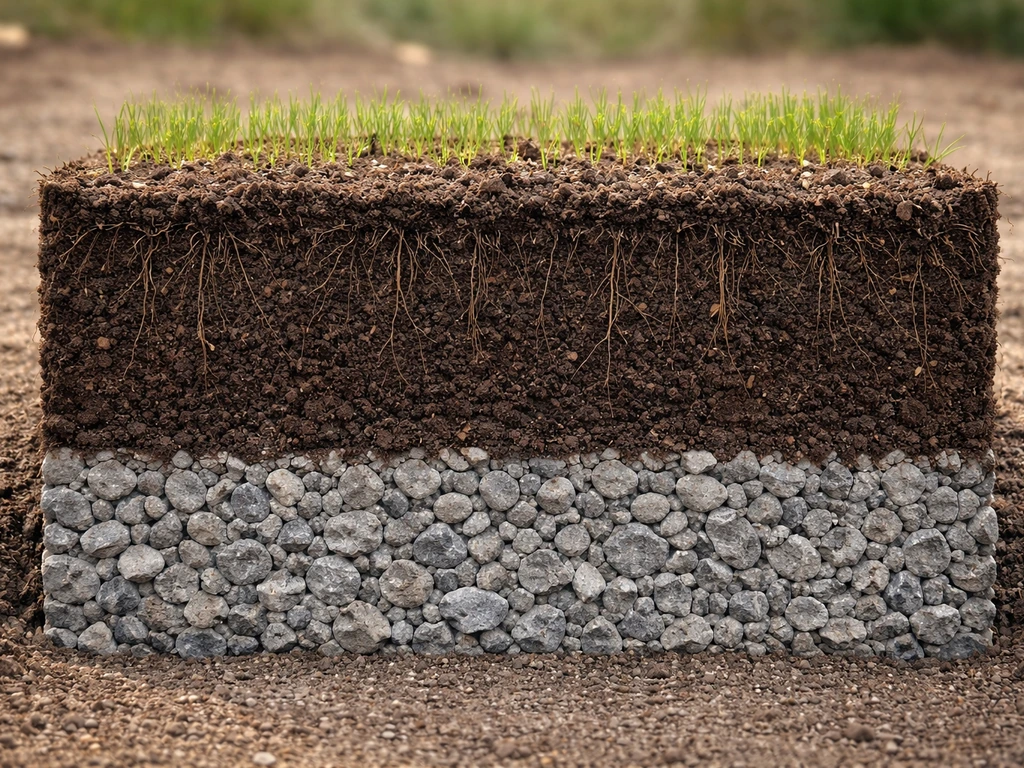
Can You Grow Grass Over Gravel? How to Do It Right
Learn when you can grow grass over gravel and follow a step-by-step method for soil depth, drainage, seeding or sod, and
Do Wood Chips Help Grass Grow? When They Work and When Not
Learn when wood chips help grass grow, when they steal nitrogen, and step-by-step how much to apply and seed options.

Will Potting Soil Help Grass Grow? What Works and What Fails
When potting soil helps grass grow, when it fails, and how to prep, apply, seed, water, and troubleshoot bare spots.