Yes, mulch can help grass grow, but only when you use it the right way. The short version: mulch helps by keeping soil moisture consistent, moderating soil temperature, and slowly adding organic matter as it breaks down. What it won't do is replace good soil prep, proper sunlight, or fertilizer. Used wrong, specifically too thick or with the wrong material at the wrong time, mulch can actually smother seedlings, rob your soil of nitrogen, or create a mold-friendly swamp under your lawn. So the real answer isn't just yes or no. It's yes, when, and how.
Does Mulch Help Grass Grow Faster? Benefits and How-To
Marcus Volkmann
12 Apr 2026
So does mulch actually help grass grow?
It does, under the right conditions. The main mechanism is moisture retention. Mulch slows evaporation from the soil surface, which keeps the seedbed consistently moist during germination and early root development. That matters a lot because grass seeds and young roots are extremely sensitive to drying out. Mulch also buffers soil temperature, keeping it from spiking too high in summer heat or dropping too fast in fall. Both of those swings stress grass roots and slow growth.
Over time, organic mulches break down and add organic matter to your soil, which improves structure, drainage, and nutrient availability. This is where mulch earns its long-term value. But for quick grass establishment, the moisture-and-temperature stabilization effect is the one that actually moves the needle.
Where mulch doesn't help (and can actively hurt) is when it's applied too thickly over live grass or freshly seeded areas. A layer deeper than about 4 inches can cut off oxygen to the soil and keep it so wet that disease and pests take hold. Think of mulch as a tool for creating better growing conditions, not a shortcut that replaces the fundamentals.
Wood mulch vs leaf mulch: which one helps and which one can backfire
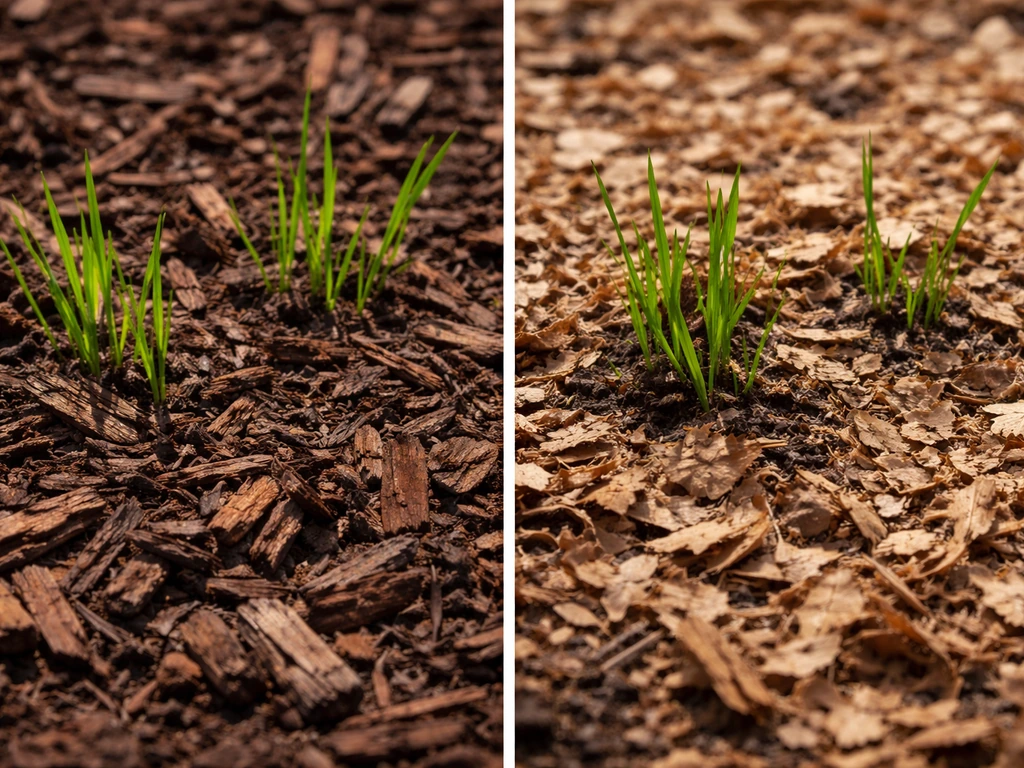
These two materials behave very differently, and picking the wrong one for your situation is one of the most common mistakes I see. Here's how they compare:
| Factor | Wood Chip Mulch | Shredded Leaf Mulch |
|---|---|---|
| Nitrogen tie-up risk | High, especially with fine chips mixed into soil | Low to moderate |
| Decomposition rate | Slow (coarser = slower) | Fast to moderate |
| Moisture retention | Good | Good, but can mat and block water |
| Weed suppression | Strong | Moderate |
| Best use case | Pathways, borders, established turf edges | Topdressing, seeding cover, soil amendment |
| Risk at seeding | High (nitrogen draw, can block germination) | Moderate (matting risk if too thick) |
| Long-term soil benefit | High (adds organic matter over time) | High (breaks down quickly into humus) |
Wood chips are the problematic one for grass specifically. Fresh wood chips are carbon-heavy and nitrogen-poor. When soil microbes break them down, they pull nitrogen out of the surrounding soil to do it. That's the nitrogen tie-up problem, and it's real. Mixing wood chips into a seedbed is something extension specialists explicitly warn against because it can tie up significant nitrogen that your grass desperately needs. Using them as a surface layer is less harmful, but you still need to watch for compaction and oxygen restriction. One upside: coarser wood chips break down more slowly, which means the nitrogen draw also happens more slowly and is easier to manage.
Shredded leaves are a much friendlier option for grass areas. If you want to dig into this further, there's a useful breakdown of whether leaves help grass grow and when they cross the line from beneficial to harmful. The short version: thin layers of shredded leaves work well as a temporary cover over seeded areas, but whole or matted leaves can block sunlight and water penetration, which stalls germination.
My recommendation: for grass seeding, stick with straw or shredded leaves. Reserve wood chip mulch for borders, pathways, and areas where you're not trying to establish turf. And if someone tells you to just dump a bag of wood chips to help grass grow, know that the research doesn't back that up for seeded areas.
Does mulch make grass grow faster?
Not directly, but it removes friction. Mulch doesn't contain growth hormones or significant nutrients. What it does is protect the conditions that allow fast germination to happen: stable moisture and stable temperature. Grass seeds germinate fastest when the seedbed stays consistently moist and the soil temperature hits the optimum range for that specific cultivar. Mulch helps maintain those conditions without constant irrigation.
What actually drives faster growth is nitrogen. Nitrogen is the primary driver of shoot, root, rhizome, and stolon growth rates in turfgrass. If your mulch is tying up available nitrogen (as wood chips can do), you're actively slowing growth down. This is why starter fertilizer matters so much during establishment: it compensates for the nutrient demands of early growth and offsets any temporary immobilization caused by decomposing organic material.
Temperature is the other big lever. Germination success depends strongly on soil temperature, and mulch that keeps the seedbed in the right range (generally 50 to 65°F for cool-season grasses, 70 to 90°F for warm-season types) can meaningfully speed up emergence. One specific warning from UMass Amherst: avoid dark-colored mulches during late-season seeding, because they absorb heat and can trigger premature germination before the seedling has a chance to establish properly.
How to apply mulch without smothering your grass
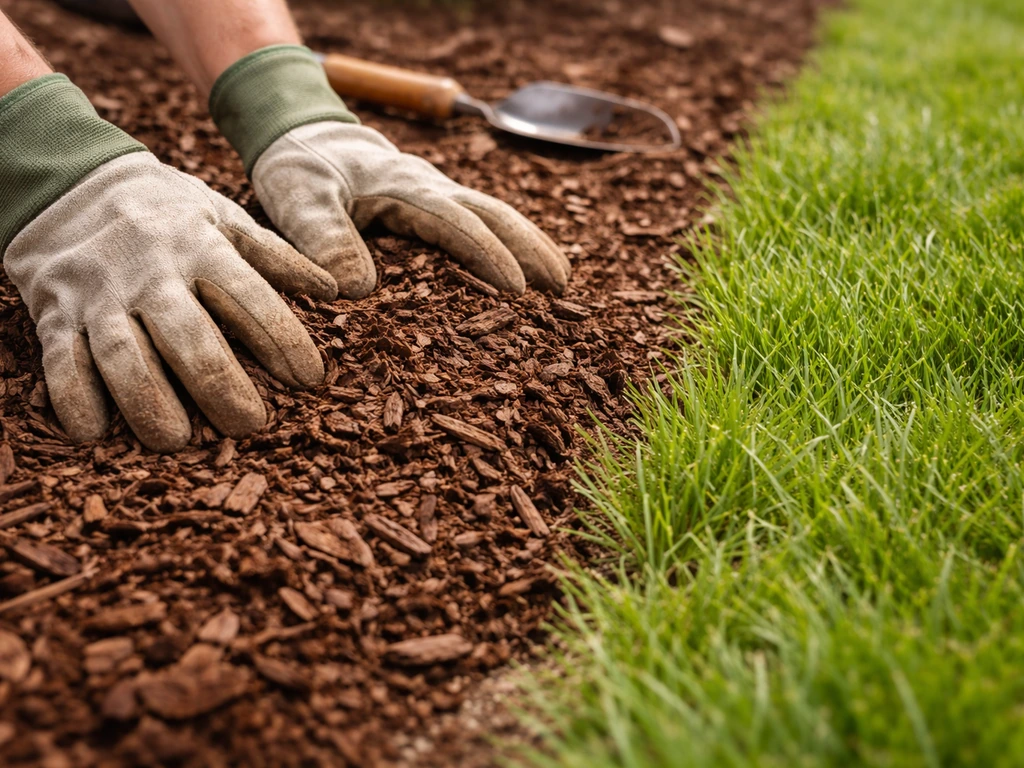
Thickness is everything here. The standard recommendation from extension research is 2 to 4 inches for most organic mulches. At this depth you get the moisture and temperature benefits without cutting off oxygen to the root zone. Go above 4 inches and you're crossing into territory where soil stays too wet, oxygen is restricted, and roots struggle. UC IPM research backs this up: mulch deeper than 4 inches can keep soil too wet and limit the oxygen that roots need to function.
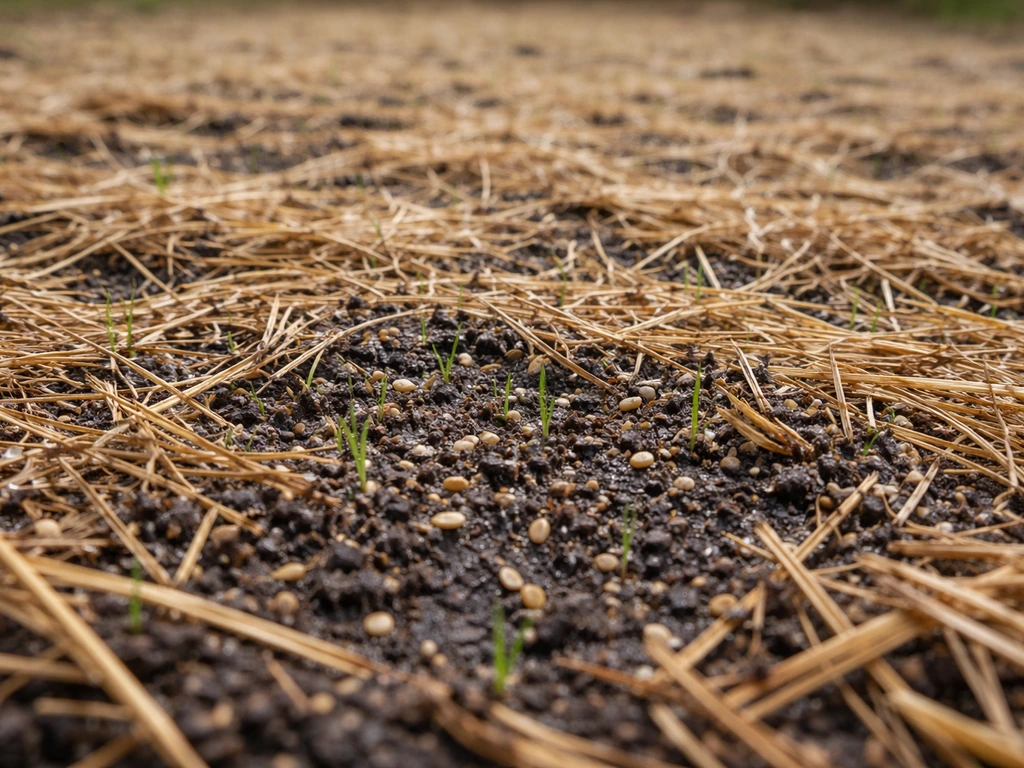
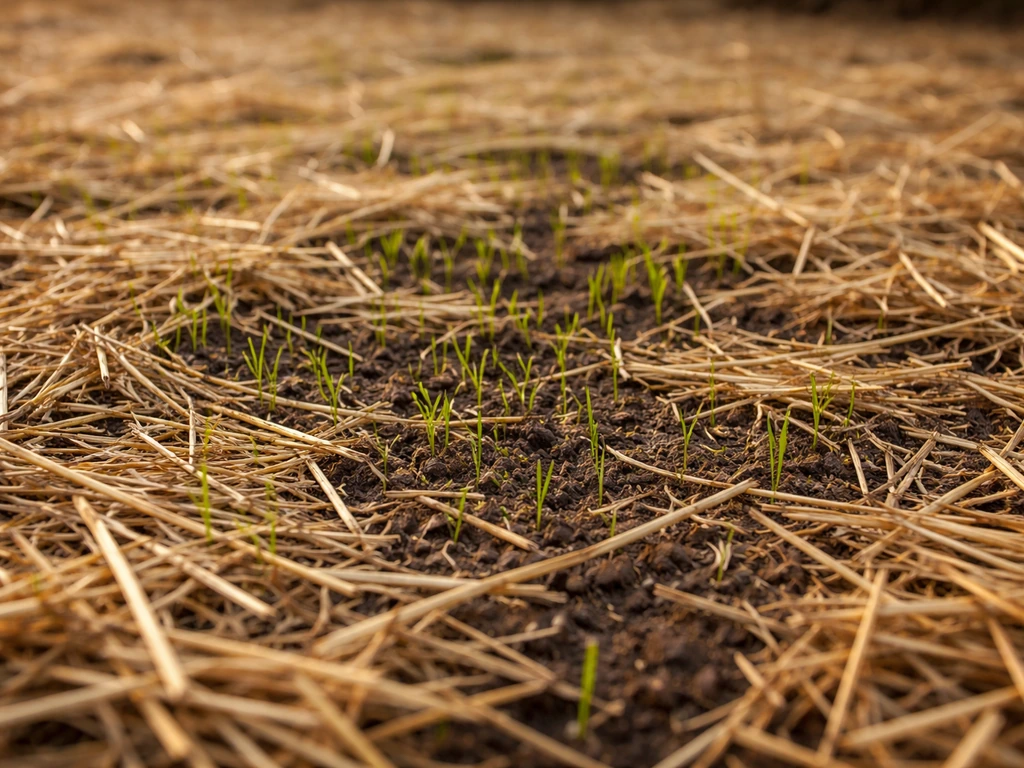
For grass specifically, even that 2 to 4 inch standard needs to be adjusted downward. If you're covering a seeded area, you want just enough mulch to hold moisture and reduce erosion without blocking light to emerging seedlings. A thin, almost see-through layer of straw is the traditional approach for a reason. You should be able to look at the seeded area and still see some soil underneath the mulch.
Placement matters too. Mulch should never be piled against the crowns of grass plants or mounded up on top of established turf. Think of it as a surface treatment for bare soil or pathways adjacent to grass, not a blanket thrown over the lawn. If you're mulching around the edges of a lawn near garden beds or trees, keep it at the perimeter and off the grass crowns themselves.
Timing is the third factor. Late season seeding situations where soil temperatures are dropping benefit most from mulch as an insulator. UMass Amherst specifically recommends clean, loose straw or straw netting for late-season grass establishment because it protects seeds through temperature swings without trapping too much moisture. In spring, when soils are already warming and moisture is typically adequate, mulch is less critical and more likely to cause problems if overdone.
Mulching for seeding vs mulching established turf
When you're seeding
Mulch has a clear job during seeding: hold moisture and reduce erosion until germination happens. Apply it thin, keep it loose, and remove or work it in once seedlings emerge to about an inch tall. Straw is the classic choice. It's light, it lets light through, and it breaks down without smothering. The main risk at seeding is overdoing the moisture retention. Soggy seedbeds encourage damping off, a fungal condition that kills young seedlings right at soil level. Penn State Extension describes damping off as rotting of seeds and newly emerged seedlings by fungi and links it to excessive soil moisture and conditions Soggy seedbeds encourage damping off. NC State Extension links damping off directly to extended periods of leaf wetness and excessive moisture, which is exactly what thick mulch creates. To reduce this risk, water in the early morning rather than evening so the seedbed dries out somewhat during the day.
Hydroseeding setups use a paper-fiber or wood-fiber mulch mixed right into the slurry. This works well for erosion control on slopes, and UMass Amherst notes the mulch component helps hold soil even when establishment is slow or poor. But for a typical lawn seeding in a backyard, you don't need hydroseed equipment. Straw spread by hand does the same job.
When you have established turf
For existing grass, mulch plays a different role. Here you're thinking about long-term soil improvement, not germination support. Thin topdressing with compost (which is essentially finished organic mulch) is a proven technique for improving soil structure and nutrient cycling in established lawns. This is different from dumping wood chips on your lawn, which would block sunlight, prevent gas exchange, and likely kill the grass underneath.
One natural mulching approach for established turf is mulch-mowing: running a mulching mower so clippings are finely shredded and drop back onto the lawn. This returns nitrogen and organic matter to the soil without any of the risks of thick mulch layers. It's one of the simplest, lowest-cost things you can do for long-term turf health.
Common problems to watch for
Nitrogen tie-up
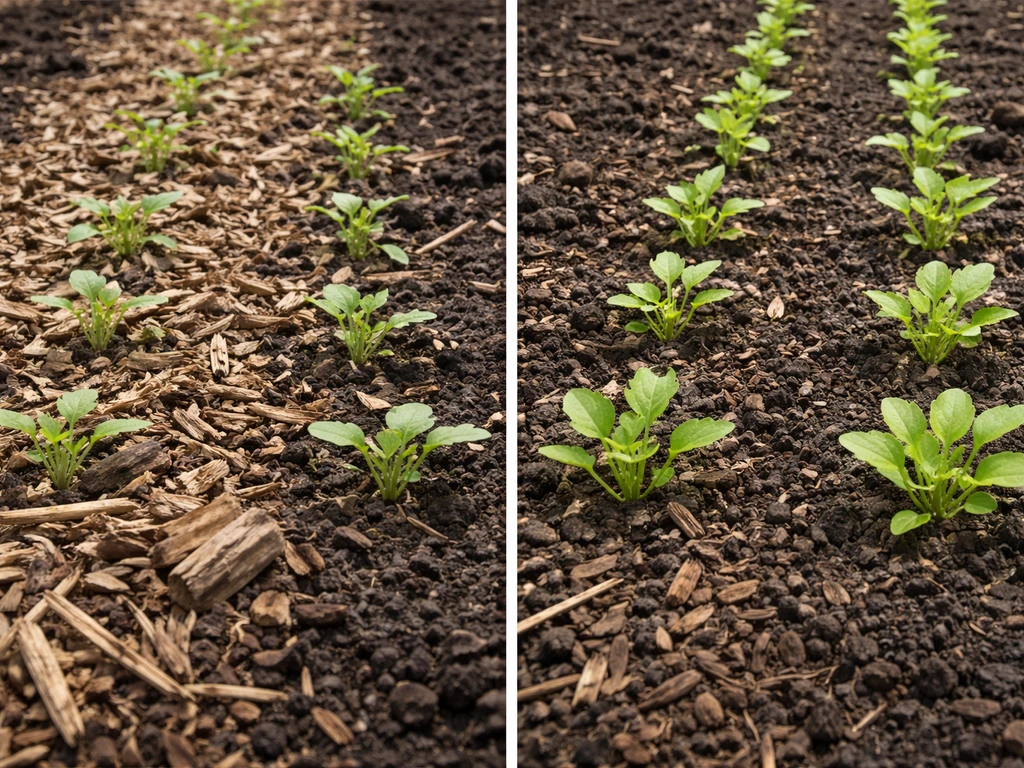
Fresh wood-based mulch on or near a seedbed can trigger temporary nitrogen immobilization as microbes break down the carbon-heavy material. The University of Saskatchewan is direct about this: mixing wood chips or bark into soil is not recommended because it can tie up significant nitrogen. Even as a surface mulch near grass, it's worth applying a nitrogen-rich starter fertilizer to compensate. The immobilization is temporary, but during the critical first few weeks of grass establishment, temporary nitrogen loss is enough to stall or set back growth.
Matting and water blockage
Whole leaves and fine-textured mulches can mat together and form a barrier that water can't penetrate. This is the opposite problem from what you want. Always shred leaves before using them as mulch, and check after rain to make sure water is actually getting through to the soil below.
Weed pressure
Mulch suppresses weeds by blocking light to the soil surface, which is a benefit in garden beds. But in grass seeding situations, that same weed suppression can work against your grass seeds if the mulch layer is too thick. Some weed seeds are smaller and more aggressive germinators than grass seeds and can still push through, while your grass can't. Keep the mulch layer thin during seeding and plan to supplement with a pre-emergent herbicide in established areas once the grass is mature enough to handle it.
Mold, disease, and pests
Thick, damp mulch is an invitation for fungal growth and pests. Damping off in seedlings gets worse when weather turns cool and wet after planting, which is exactly the combination of conditions that thick mulch can create or prolong. Slugs, fungus gnats, and various soil pathogens thrive in consistently moist, oxygen-poor mulch layers. Keep oxygen flowing by not going over 4 inches in depth, and pull mulch back from seedling crowns to let them breathe.
What actually helps grass in tough growing conditions
If you're dealing with grass that's struggling not just because of mulch choices but because of deeper obstacles like shade, sandy soil, or poor soil quality, mulch alone won't fix it. Here's where to focus your energy depending on the problem:
- Sandy soil: Work in organic matter first. Compost, finished leaf mulch, or a peat-based amendment will improve water retention far more than surface mulch will. If you're wondering whether peat moss helps grass grow in sandy conditions, the answer is yes, when it's incorporated into the soil rather than just spread on top.
- Poor or compacted soil: Aerate before seeding or topdressing. Even the best mulch or amendment won't penetrate hardpan soil. Core aeration opens channels for water, air, and nutrients to reach roots.
- Shade: Mulch won't solve a light problem. If your grass is struggling under dense tree canopy, consider shade-tolerant grass varieties or alternatives like ground cover plants. Pulling competing vegetation helps, but the fundamental issue is photosynthesis, not moisture.
- Timing issues: Grass seeded at the wrong soil temperature will fail regardless of mulch. Cool-season grasses do best seeded in late summer through early fall when soil temperatures drop into the 50 to 65°F range. Warm-season grasses want soil temps above 70°F consistently.
- Weed competition: Weeds steal water, light, and nutrients from establishing grass. Pulling weeds before seeding is one of the most effective and underrated steps in grass establishment.
For soil that's just generally depleted, think beyond mulch to a full soil improvement approach. Amendments like compost, potting soil blended into the seedbed, or even organic fertilizers like <a data-article-id="D2110A95-95B2-49C5-9F55-8DDF8BD84E55F">rabbit manure</a> can replenish nutrient levels that mulch alone won't address. Rabbit manure can replenish nutrient levels that mulch alone won't address. If you've got moss competing with your grass, that's usually a symptom of compaction, shade, or low pH rather than a mulch problem, and raking out moss is the starting point before any reseeding. Raking moss helps remove the layer that competes with grass, which can make it easier for new grass to establish <a data-article-id="D77CA72E-8328-4E17-AFCD-3829916FF4C0">raking out moss.
Your practical next steps
Here's the action plan I'd give anyone asking this question today, depending on where you are in the process:
- If you're seeding bare ground: prep the soil first (loosen, level, add compost if needed), sow seed at the recommended rate, then apply a thin layer of straw mulch. You should still see soil between the straw strands. Water in the morning, not the evening, to manage moisture without creating damping-off conditions.
- If you have established turf that's thin or slow: skip the wood chip mulch. Aerate, topdress with a quarter-inch layer of compost, and overseed in fall for cool-season grass or late spring for warm-season. Apply a starter fertilizer at seeding.
- If you're dealing with poor soil, sand, or compaction: address the root cause first. Incorporate organic matter, aerate if compacted, and test your soil pH. Mulch on the surface won't fix a soil problem six inches down.
- If you want to use leaves as mulch: shred them first, apply them thinly, and check after rain to confirm water is getting through. Whole leaves that mat are worse than no mulch at all.
- If you're tempted by wood chip mulch: use it in borders and pathways, not over grass or seedbeds. If it's already down near a seeded area, add a nitrogen-containing starter fertilizer to offset any immobilization effect.
- Regardless of mulch type: don't go deeper than 4 inches total, and keep mulch pulled back from plant crowns and new seedling shoots.
Mulch is a useful supporting tool for grass establishment, not a magic fix. Used thin, at the right time, with the right material, it genuinely helps. Used thick or with fresh wood chips near a seedbed, it can set your lawn back weeks. Match the tool to the job, address the real obstacles in your soil and site conditions, and the grass will follow.
FAQ
If I already have mulch on my lawn, should I remove it before seeding grass?
Usually yes, at least for the seeded strip. Even “allowed” mulch depth can be too heavy for germination. Rake it back to a thin layer (or clear to bare soil), then apply a light straw cover for moisture control. If you cannot remove it all, cut it back enough that you can still see soil and that rain can wet the seedbed.
Will mulch help grass grow if I don’t water regularly after seeding?
Mulch reduces evaporation, but it does not replace irrigation. Germination still fails if the seedbed dries out too far or stays waterlogged too long. As a practical rule, keep the top layer evenly moist for the first couple weeks, then shift to lighter, deeper watering once seedlings are established.
What’s the best mulch to use for a shady area where grass is struggling to grow?
Mulch can help moderate moisture, but it cannot overcome insufficient light. In heavy shade, prioritize thinner, loose straw or shredded leaves to avoid trapping moisture and fungus, and focus on addressing shade (tree pruning, thinning, or choosing shade-tolerant turf). If you use dark or thick mulch, you can worsen soil staying cool and wet, which slows emergence.
Can I use fresh wood chips as a top dressing on existing grass to boost growth?
It’s risky if it’s not fully composted and finely shredded. Fresh wood-based material can cause nitrogen immobilization and can suffocate the turf if piled thickly. For established lawns, stick to compost-style topdressing (or apply extremely thin, aged wood mulch in non-turf areas like borders), and pair any wood-based mulch with a lawn fertilizer plan that accounts for early-season nitrogen needs.
Do I need starter fertilizer if I’m using straw mulch for seeding?
Often you do, especially if the soil has low organic matter or you suspect nitrogen is limiting. Straw is typically less problematic than wood chips, but early growth still depends on available nitrogen during establishment. Use a labeled starter fertilizer for turf at seeding time, rather than relying on mulch alone.
How do I know whether my mulch layer is too thick during seeding?
Check three things: you should be able to see some seedbed through the straw, water should soak through after watering or rain, and the soil should not stay soggy for long periods. If the top feels squishy, seedlings look delayed or turn brown at the soil line, reduce the mulch and improve drainage or watering timing.
Should mulch be removed once grass seedlings start to emerge?
If it’s straw and applied thinly, you usually can leave it, but you should ensure it is not blocking light. Once seedlings are about an inch tall, loosen or pull back any matted sections, especially after rain, to restore airflow and prevent damping off. Never mound extra mulch on top of crowns.
Can mulch cause damping off even if I applied it at the right depth?
Yes, if moisture management is off. Even 2 to 4 inches can contribute to damping off when watering is frequent, the seedbed stays wet overnight, or the mulch mats and keeps the surface sealed. Water in the morning, watch for fungus-prone conditions, and adjust watering so the surface can dry somewhat during the day.
Does mulch help warm-season grasses the same way as cool-season grasses?
The mechanism is similar (moisture and temperature buffering), but timing and target soil temperature differ. Warm-season seed needs warmer soil, so mulch can speed emergence only when the seedbed reaches the cultivar’s germination range. Avoid heat-trapping mistakes like using dark, thick mulch late in the season for cool-season seeding, since it can trigger poor or premature germination.
Will mulch attract pests like slugs or fungus gnats?
It can, especially if the mulch is thick, stays damp, and stays in contact with the soil surface for long periods. Use thinner layers for seeding, keep mulch off crowns, and after rain inspect the area for persistent moisture. If you see lots of slugs or gnats, you may need to reduce mulch and improve drying and airflow.
Is mulch-mowing a better option than adding more mulch to existing grass?
In many cases, yes. Returning finely shredded clippings via mulch-mowing adds nitrogen and organic matter without the oxygen restriction and light blocking that thick mulch layers create. If you want extra help, topdress lightly with finished compost instead of adding bulky fresh mulch, since compost is more uniform and less likely to smother.
Should I use pre-emergent herbicides if I mulched and seeded?
Be careful. Pre-emergent herbicides can stop grass seed germination if applied before seedlings are established. In seeded areas, focus on thin mulch and mechanical weed control until the turf is mature enough for labeled post-establishment herbicide options.
Next Articles
Does Peat Moss Help Grass Grow? How to Use It Right
Peat moss can help grass seed by holding moisture and improving seedbed, but it won’t fertilize or fix drainage.
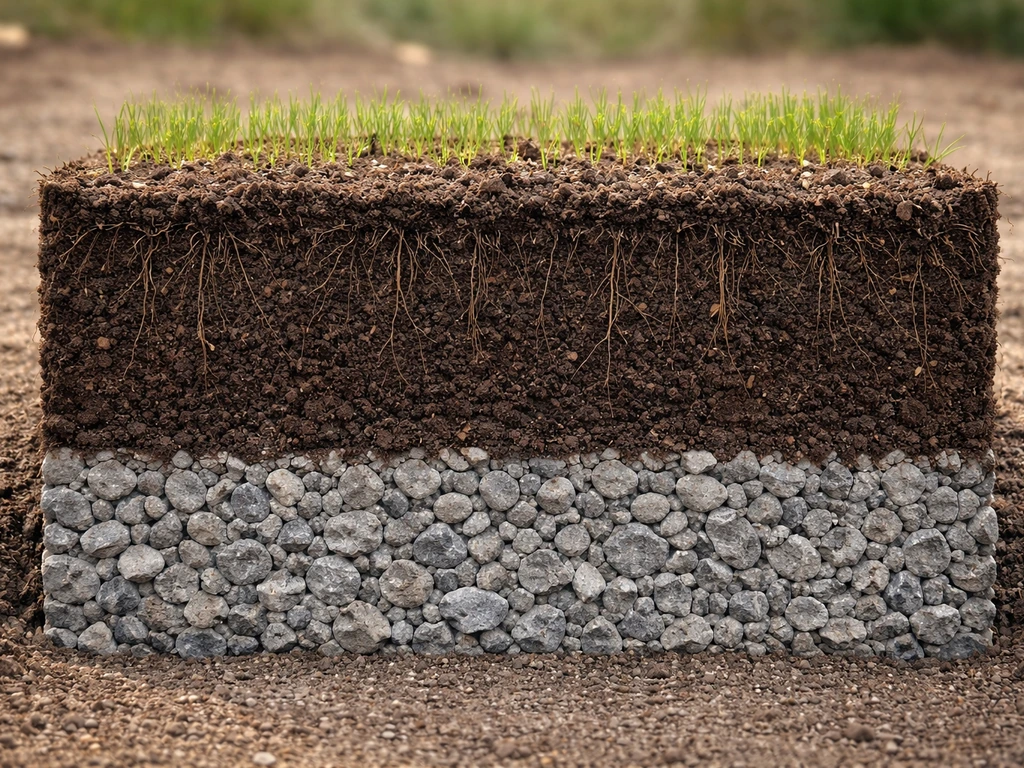
Can You Grow Grass Over Gravel? How to Do It Right
Learn when you can grow grass over gravel and follow a step-by-step method for soil depth, drainage, seeding or sod, and
Why Is Straw Used to Grow Grass: Benefits and How to Use It
Learn why straw helps grass seed by retaining moisture, warming soil, reducing erosion, and how to apply, anchor, and re