Yes, peat moss can help grass grow, but only in specific situations. It's not a miracle amendment and it's definitely not a fertilizer. Where it earns its place is in the seedbed: peat moss holds moisture really well, which helps grass seed stay in that critical moist zone long enough to germinate. Outside of that fairly narrow use case, though, it can disappoint you or actively work against you if you use it wrong.
Does Peat Moss Help Grass Grow? How to Use It Right
Marcus Volkmann
6 Apr 2026
What peat moss actually does for grass seed
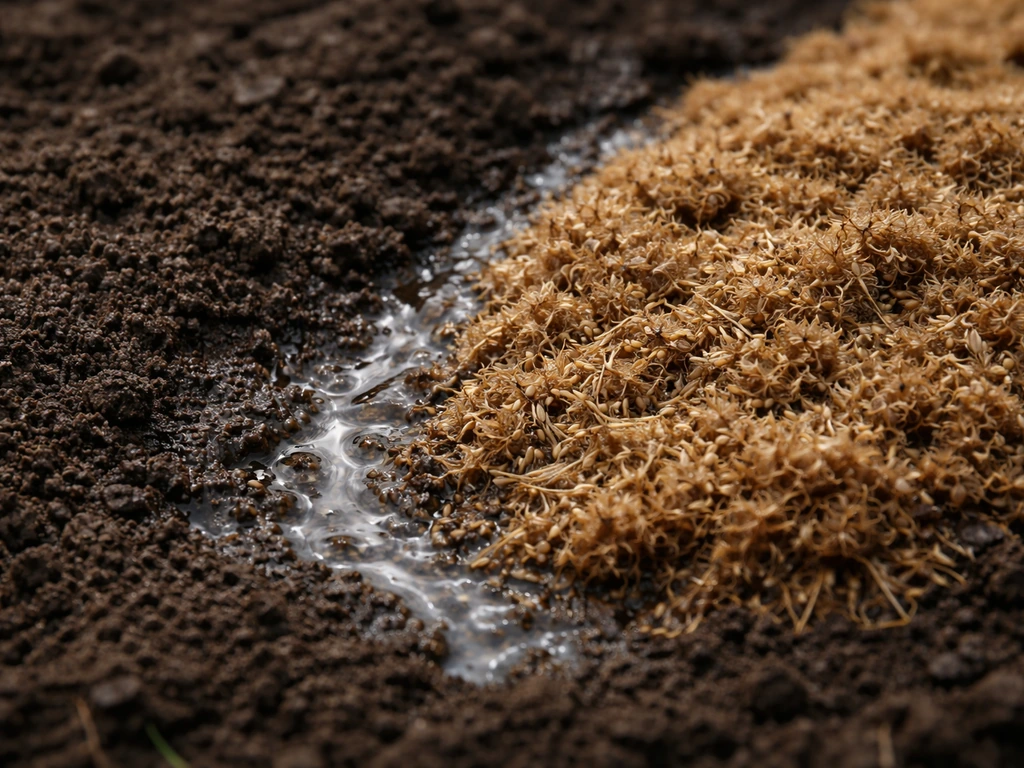
The main thing peat moss brings to the table is water retention. Sphagnum peat moss can hold up to 10 times its dry weight in water, which is a remarkable number. When you're dealing with a newly seeded lawn, the biggest killer of germinating seed is the seed zone drying out between waterings. Thin soil, sandy ground, or even just a hot April afternoon can pull moisture away from seeds before they sprout. A thin layer of peat moss slows that down.
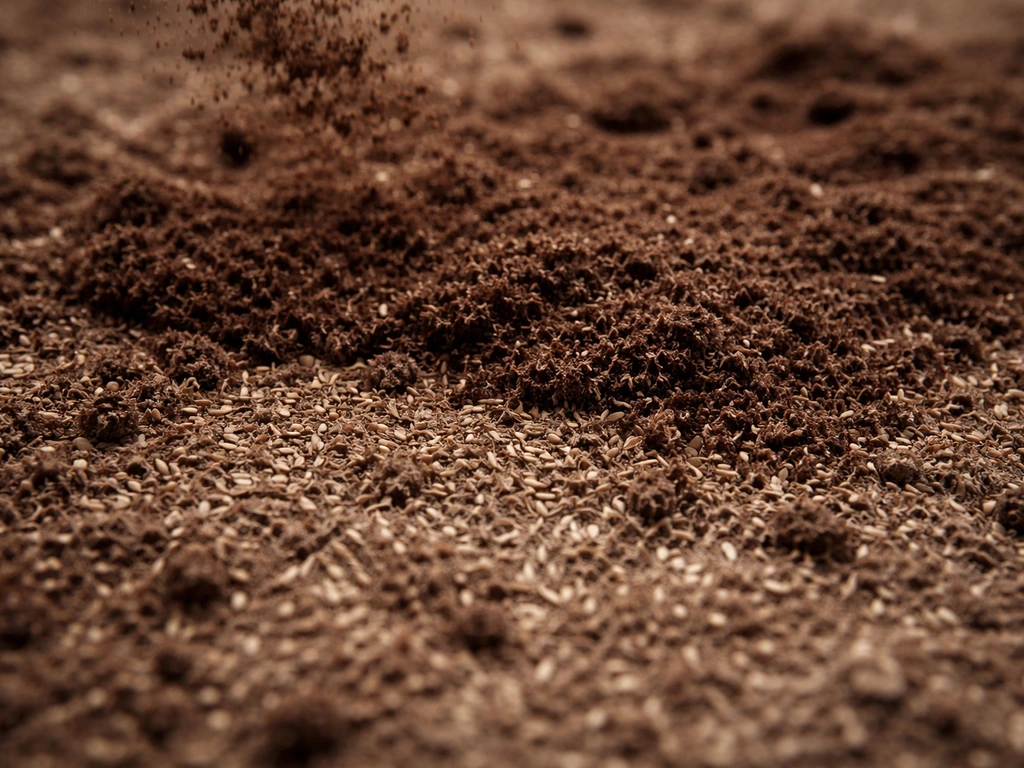
It also improves seedbed texture. Peat has a fine, spongy consistency that sits over seeds without crusting the way raw soil can. That matters because a hard crust after rain or irrigation can physically block seedling emergence. A light covering of peat stays loose enough for tiny grass shoots to push through. Both of these benefits are real, but they only show up when you apply it correctly, which most people don't.
What peat moss does not do: it provides almost no meaningful plant nutrition. It won't supply nitrogen, phosphorus, or potassium in useful amounts for grass. If your lawn is thin because the soil is depleted, peat alone won't fix that. It also won't break up compaction, won't fix heavy clay drainage, and won't improve shade tolerance. Those are separate problems that need separate solutions.
How peat moss changes your soil (and when that's good or bad)
Peat moss improves soil water-holding capacity, especially in coarse-textured soils. If you've got sandy or sandy-loam ground that drains so fast it can't hold a seed moist for more than an hour, adding peat to the top layer is a legitimate fix. Colorado State University Extension calls out sandy soils specifically as where peat really earns its keep.
Aeration is a secondary benefit. Worked into compacted soil, peat opens up some pore space and creates a looser texture. But if your compaction is serious, like what you see after years of foot traffic or heavy equipment, a few inches of peat won't save you. You need mechanical aeration first, then amendments.
The pH issue is the part that catches people off guard. Peat moss is naturally acidic, with a pH somewhere between 3.8 and 4.5. Most turf grasses prefer soil in the 6.0 to 7.0 range. If your soil is already acidic, adding peat will push it further in the wrong direction and actually slow down germination and establishment. If your soil is alkaline, a small amount of peat can nudge the pH down in a helpful way. But you really should know your soil pH before reaching for peat.
One more thing: once peat moss dries out completely, it becomes hydrophobic. It actually repels water. If you apply it and then miss a watering cycle, you can create a dry, crusty mat that sits on top of your seeds and blocks both moisture and seedling emergence. This is probably the single most common failure mode I see with peat on lawns.
When peat moss helps vs. when it fails
The honest answer is that peat moss is a narrow-use amendment for lawns. Here's how to think through whether it's right for your situation:
| Situation | Peat Moss Useful? | What to Do Instead (If Not) |
|---|---|---|
| Sandy soil, moisture drains fast | Yes, good fit | Apply thin layer at seeding |
| Alkaline soil (pH above 7.0) | Yes, modest benefit | Combine with soil test and pH correction |
| Acidic soil (pH below 6.0) | No, will worsen pH | Use compost or lime instead |
| Heavy clay, poor drainage | No, won't fix drainage | Aerate, add compost, regrade if needed |
| Compacted soil from traffic | No on its own | Mechanical aeration first |
| Shaded area with thin turf | Minimal benefit | Address light, use shade-tolerant seed |
| Overseeding established lawn | Marginal, compost better | Use fine compost as topdressing |
| Seeding new lawn in sandy area | Yes, real benefit | Apply 1/4 inch as seed cover |
Shade is worth calling out separately. If grass isn't growing because a tree is blocking light, no soil amendment changes that outcome. I've watched people spend money on peat, compost, and fertilizer under a dense oak canopy and get nothing. The limiting factor is light, not soil. raking moss that's taken over a shaded lawn might tell you more about what's really going on than any amendment will fix.
How to apply peat moss for grass seed the right way
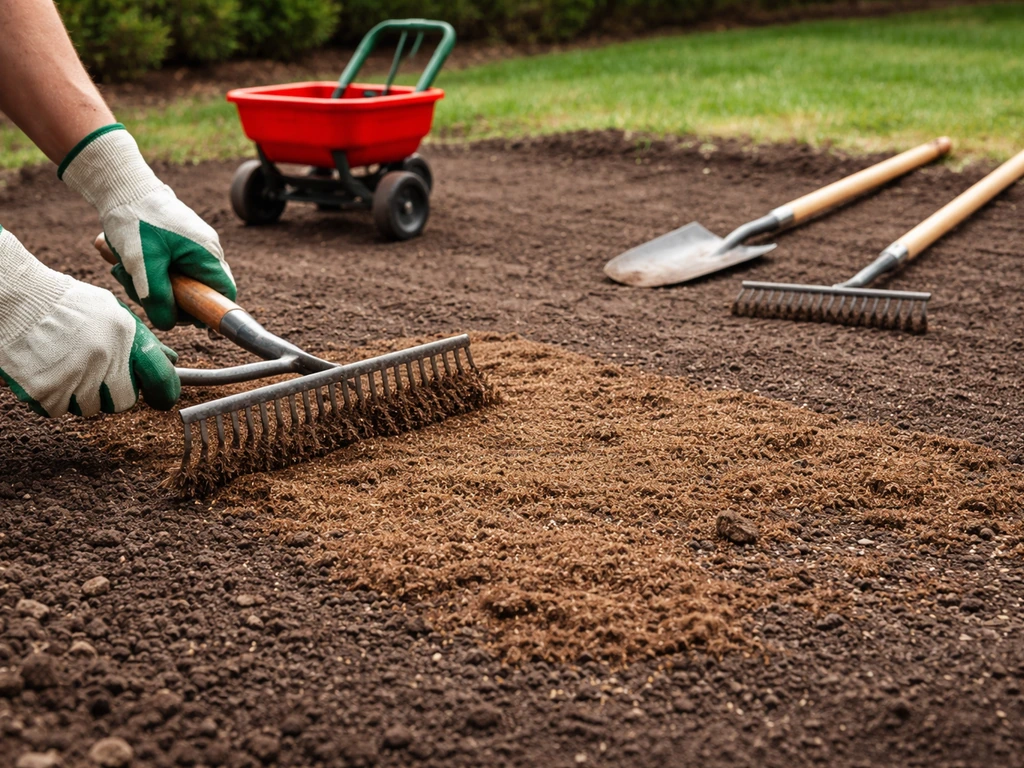
If your situation fits the "yes, peat makes sense" column above, here's how to do it correctly. Timing and depth matter a lot more than most guides let on.
Preparing the seedbed
Before peat even enters the picture, your seedbed has to be right. Loosen the top 2 to 3 inches of soil with a rake or tiller. Remove debris, rocks, and any dead thatch. If you have pH concerns, get a soil test done first. Peat is not a substitute for this prep work, it's an add-on to a properly prepared surface.
Depth and coverage
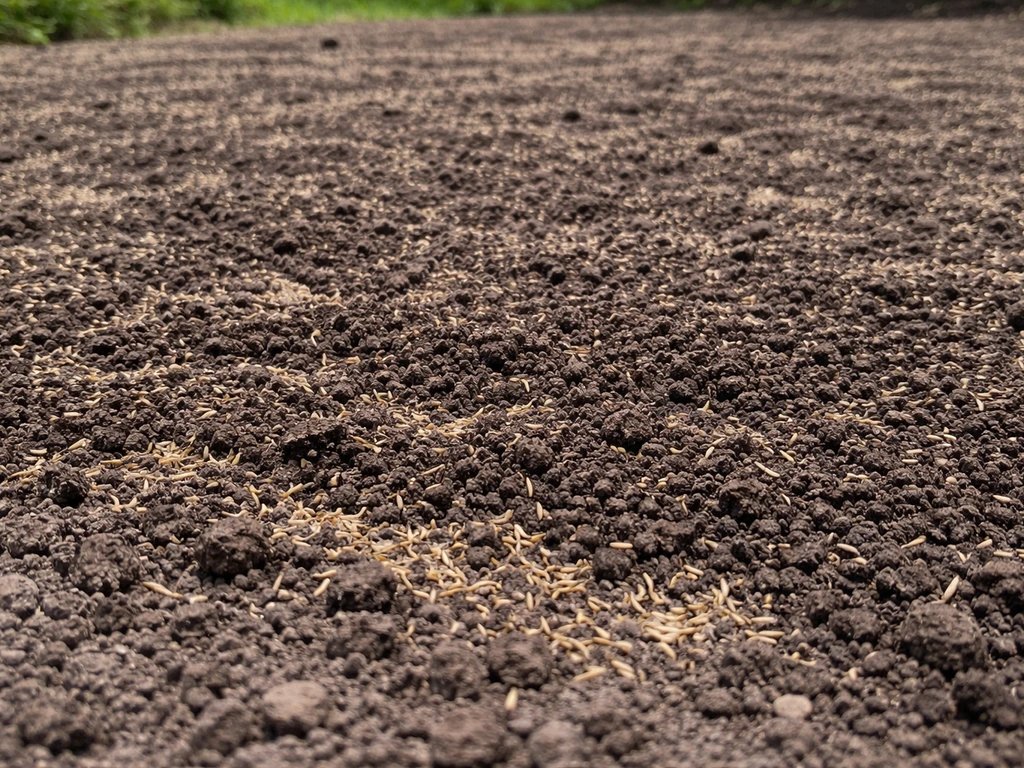
Keep it thin. University of Maryland Extension recommends covering sown seeds with only about 1/4 to 1/2 inch of material. That guidance applies directly to peat as a seed cover. More than 1/2 inch and you're creating a physical barrier that seedlings have to push through, and you're increasing the risk of that hydrophobic dry-out problem. Think of it as a dusting, not a layer.
The application sequence
- Prepare and rake the seedbed smooth.
- Broadcast your grass seed at the recommended rate for your species.
- Lightly rake the seed into the top 1/8 inch of soil so seeds make direct contact with the ground.
- Apply a 1/4 to 1/2 inch layer of peat moss evenly over the seeded area.
- Water gently and thoroughly immediately after application.
- Check moisture daily. Peat must stay consistently moist until germination is complete.
That last point is critical. Missouri Extension emphasizes that watering management after seeding matters more than which amendment you use. Peat amplifies both outcomes: keep it moist and it holds that moisture beautifully; let it dry out once and it goes hydrophobic. Plan for daily light watering if rain isn't in the forecast.
Topdressing established turf
If you're overseeding an existing lawn rather than starting fresh, peat is less compelling. Missouri Extension's turfgrass guidance describes topdressing at around 1/4 to 1/2 inch of material and notes that compost or peat moss isn't required for thatch reduction specifically. For overseeding, fine compost does a better job because it also contributes some fertility. Peat as a topdress makes sense only if moisture retention is your primary challenge and your pH is not already acidic.
Common mistakes people make with peat moss on lawns
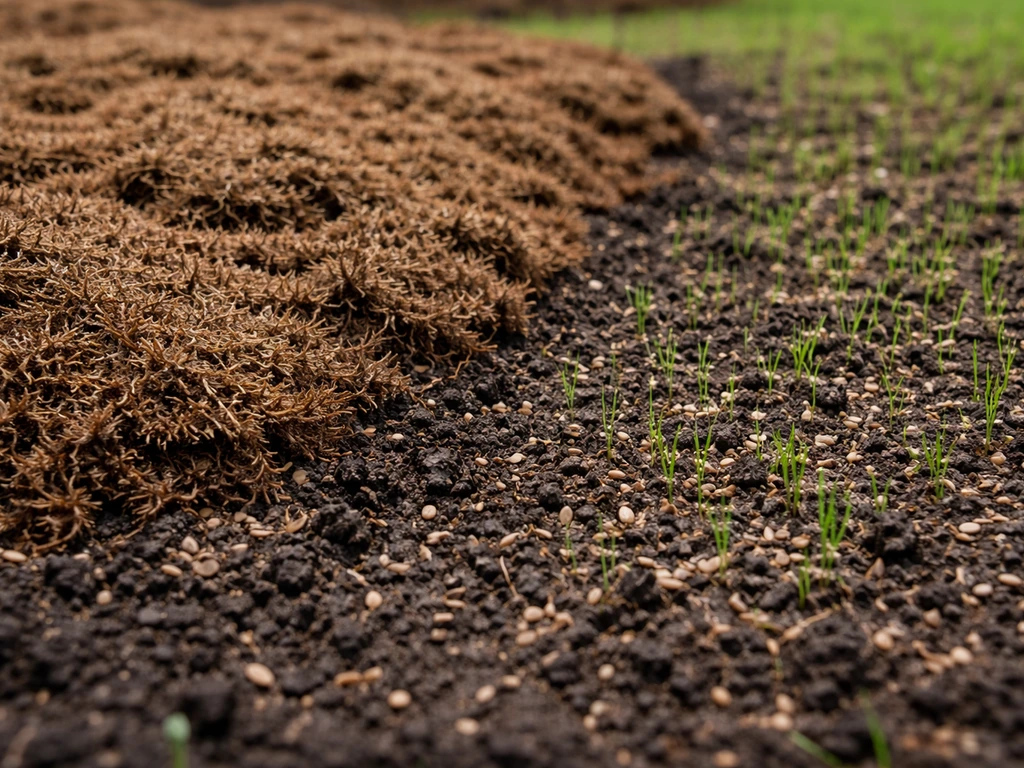
- Applying it too thick: Anything over 1/2 inch starts blocking seedling emergence and creates a dry crust risk.
- Skipping the soil test: Not knowing your pH before adding an acidic amendment is a real gamble.
- Treating it like fertilizer: Peat contributes almost nothing to soil nutrition. If you don't also use a starter fertilizer, you're leaving germination and early growth on the table.
- Not watering enough after application: Peat that dries out repels water and can create a barrier rather than a benefit.
- Using it on heavy clay: Clay's problem is drainage and structure, not moisture retention. Peat won't help and may make drainage worse.
- Relying on peat instead of good seed-to-soil contact: No cover material compensates for seeds sitting on top of loose, unraked soil with no ground contact.
Better alternatives and companion amendments
Peat moss has a real competitor in compost, and compost usually wins for most homeowner situations. Finished compost improves moisture retention almost as well as peat, but it also contributes slow-release nutrients, improves soil biology, and works across a wider range of pH conditions. The University of Maryland Extension recommends 1/4 to 1/2 inch of good-quality finished compost as a seed cover, and that's the advice I lean on most. If you're asking yourself whether to grab a bag of peat or a bag of compost at the garden center, go compost for most scenarios.
For people wondering whether other organic materials can help, it's worth knowing that mulch applied the right way can also protect seed from drying out, especially on slopes where erosion is a risk. The key with any cover material is keeping it thin enough that it doesn't block emergence, which is the same rule as with peat.
Starter fertilizer is the most overlooked companion to any seeding effort. If you're putting peat down and expecting grass to thrive without feeding it, you're going to be frustrated. A phosphorus-forward starter fertilizer applied at seeding gives roots the early boost they need to push through any soil, amended or not.
Some organic materials that people toss on the lawn actually do have a nutrient upside. Rabbit droppings, for example, are a low-burn nitrogen source that can work as a mild fertilizer amendment alongside seeding. Not a replacement for a proper starter fertilizer, but worth knowing if you're working with what you've got.
Coconut coir is a strong renewable alternative to peat for moisture retention. Colorado State University Extension mentions it as a water-retention amendment with less environmental baggage than peat harvesting. It's also pH neutral, which removes the acidification risk entirely. If you're doing a large seeding project and want reliable moisture retention without worrying about pH, coir is worth looking at.
If you're trying to thicken up an existing lawn rather than start from scratch, mechanical solutions often outperform any amendment. Aerating and overseeding in fall, then topdressing with compost, will do more than a layer of peat. Staying on top of weeds is also one of the most direct ways to give existing grass room to spread, and it costs nothing but time.
On the subject of organic matter that breaks down on the lawn: leaf material left on the surface can actually contribute to soil structure over time, though it needs to be broken down finely to avoid smothering. The same logic applies to wood chips as a ground cover, which work well in beds but are generally too coarse and too slow to decompose for use over grass seed.
One more comparison worth making: if you're weighing peat moss against potting soil as a seed cover, potting soil usually has more immediate fertility and a more stable pH, but it can also contain materials that compact or don't integrate well with native soil. Neither is perfect. Finished compost or a thin layer of native topsoil are still the most reliable choices for covering seed on a new lawn.
The short version: when to use it and when to skip it
Use peat moss when you're seeding into sandy or moisture-challenged soil, your pH is neutral to alkaline, and you can commit to consistent watering until germination. Colorado State University Extension describes soil amendments as materials added to improve physical properties such as water retention, permeability, and water infiltration sandy or moisture-challenged soil. Apply it thin, no more than 1/2 inch, always on top of seed that's already been raked in, and always water immediately after. Pair it with a starter fertilizer because peat feeds your soil structure, not your grass.
Skip peat moss when your soil is already acidic, when you've got drainage problems in clay, when shade is the real issue, or when you're overseeding a reasonably healthy lawn. In those cases, compost, aeration, or better seed-to-soil contact will get you further, faster, and for roughly the same cost.
FAQ
How much peat moss should I use to help grass seed germinate (and how do I measure it)?
Use a light cover, about 1/4 to 1/2 inch over the seed. If you’re calculating volume, treat it like a topdressing layer: for every 1/2 inch depth over 100 square feet, you’re essentially applying about 5 cubic feet of material. Err on the thinner side, because more peat increases both emergence problems and the chance the mat dries out.
Can I mix peat moss into the soil instead of using it as a top cover?
You usually should not rely on mixing as the main method. Peat works best as a thin seedbed cover that slows drying at the surface. If you blend it in heavily, the mix can behave differently than a surface dusting, and you still need proper seed-to-soil contact and correct watering.
What happens if I apply peat moss and then it rains after a day or two?
If peat stays moist, you’re generally fine. The risk starts when the cover dries out completely for even part of a day, it can become water-repellent and block moisture from reaching the seed. If rain arrives after a dry stretch, you may need to water gently and thoroughly to re-wet the surface before expecting normal germination.
Is peat moss safe for all grass types?
It can be, but pH is the practical limiter. Because peat is naturally acidic, cool-season grasses and warm-season grasses both establish better when your starting pH is near their preference. The safest approach is to test soil first, then use peat only if your pH is neutral to alkaline or you’re confident you won’t push it too far down.
What soil pH is too acidic for peat moss?
If your soil is already acidic, peat will usually make the pH decline more and can slow early establishment. A useful decision rule is to get a soil test and avoid peat when your measured pH is significantly below the grass target range (commonly around 6.0 to 7.0). If you cannot test, it’s safer to choose compost or other neutral covers rather than peat.
Will peat moss help if my problem is compacted soil?
Not by itself. Peat can slightly loosen surface pore space, but it won’t fix hard compaction from foot traffic or equipment. If footprints leave pronounced impressions or water pools on the surface, plan mechanical aeration first, then topdress lightly for moisture management.
Does peat moss replace fertilizer when seeding?
No. Peat mostly contributes physical benefits like moisture retention and texture, it supplies little meaningful nitrogen, phosphorus, or potassium. Pair your seeding with a phosphorus-forward starter fertilizer to support root establishment, especially in the first few weeks after germination.
Can peat moss make weed problems worse?
It can contribute to weeds if the peat is low quality or contaminated. More importantly, peat doesn’t substitute for weed control. If you have significant weeds already, address them before seeding, and avoid applying thick layers that trap debris and create uneven surfaces.
Should I use peat moss for overseeding, or only for new lawns?
Peat is less compelling for overseeding on an otherwise healthy lawn. Compost often performs better because it supports moisture plus some slow-release nutrition and integrates across a wider pH range. Peat makes more sense for overseeding when moisture retention at the seed surface is your main limiting factor and your pH is not already acidic.
How long do I need to keep the seed zone moist after applying peat moss?
Until germination is complete and the seedlings can handle normal irrigation cycles. In practice, that often means daily light watering during the germination window if rain isn’t forecast. The key is to avoid letting the peat fully dry out at any point during that period.
Is coconut coir a better alternative than peat moss for grass seed?
Often it is, especially if you want moisture retention without the acidification risk. Coir is typically pH neutral, so it avoids the “make acidic soil more acidic” problem. It still needs the same main rules as peat (keep it thin and keep the seedbed consistently moist).
Next Articles
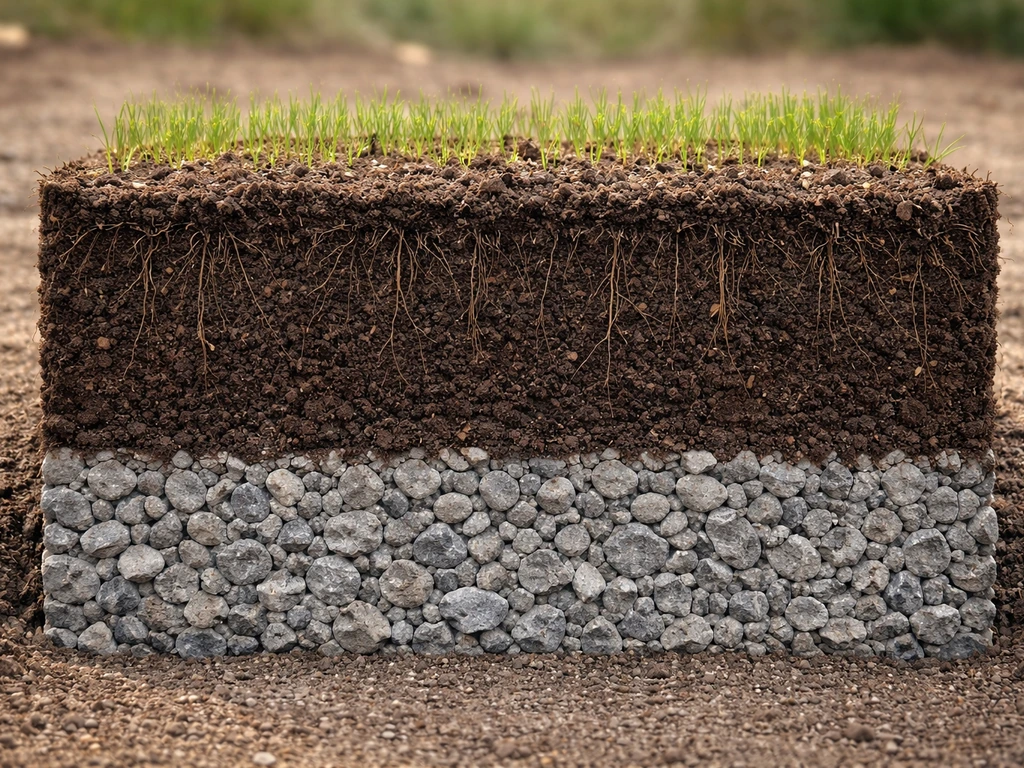
Can You Grow Grass Over Gravel? How to Do It Right
Learn when you can grow grass over gravel and follow a step-by-step method for soil depth, drainage, seeding or sod, and
Why Is Straw Used to Grow Grass: Benefits and How to Use It
Learn why straw helps grass seed by retaining moisture, warming soil, reducing erosion, and how to apply, anchor, and re
Will Grass Seed Grow Without Straw? Yes, But Here’s How
Learn how to grow grass seed without straw, with proper soil prep, seed contact, and consistent watering to prevent fail