
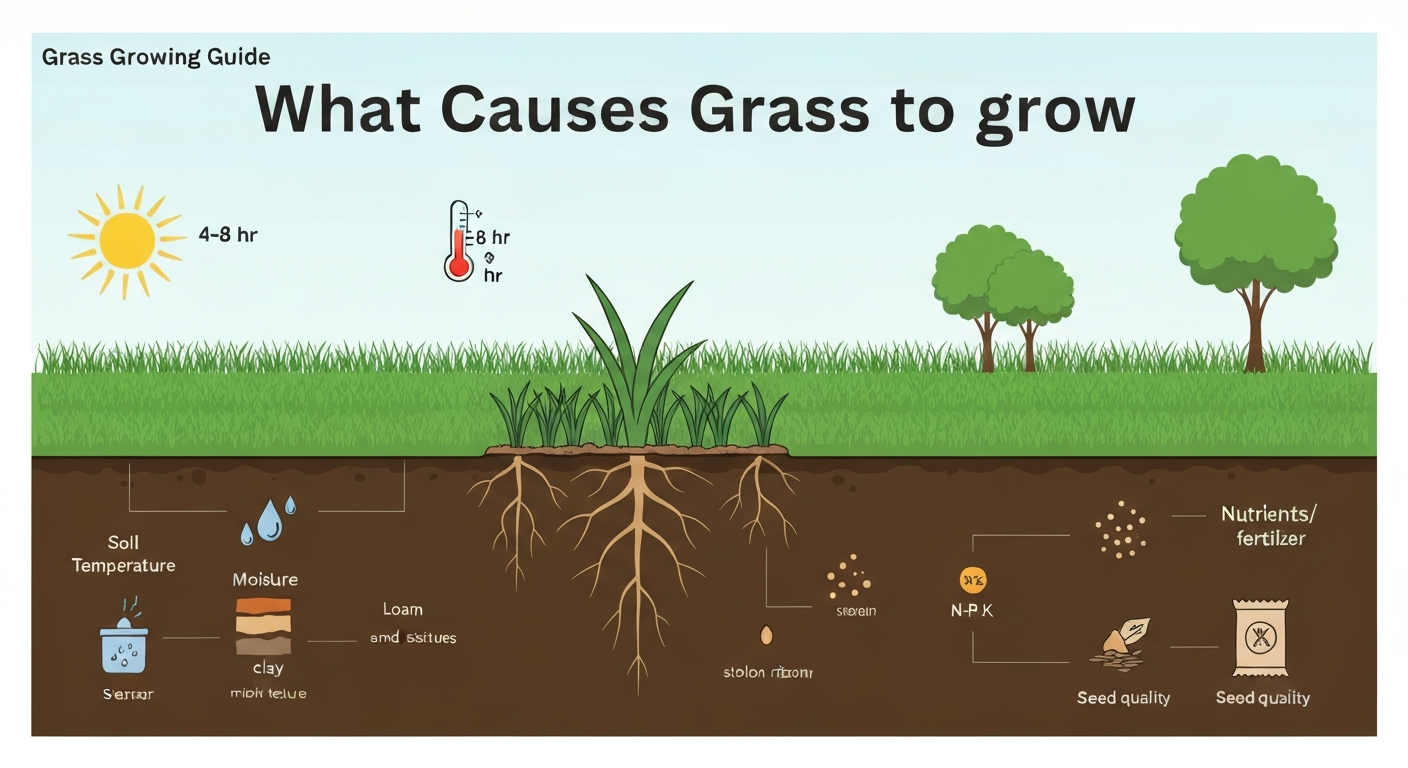
Grass grows when six conditions line up: enough light, the right soil temperature, consistent moisture, decent soil structure, available nutrients, and viable seed. Pull any one of those out and growth stalls or stops entirely. Most lawn failures I've diagnosed come down to one or two of those factors being off, and once you identify which one, the fix is usually straightforward. This guide walks you through the biology, the diagnostics, and the measurable targets so you can stop guessing and start fixing.
What Causes Grass to Grow - Causes, Fixes & Diagnostic Checklist
Marcus Volkmann
9 Aug 2026
Who this guide is for and how to use it
Whether you're a homeowner staring at a bare patch that won't fill in, a landscaper troubleshooting a new install that just sat there, or a gardener dealing with grass that grows fine in one area and dies in another, this guide is built for you. Start with the biology section if you want the full picture. Jump to the diagnostic checklist and field tests if you already suspect a problem. Use the measurable targets section as your reference when making amendments or scheduling irrigation. The most common site-specific obstacles, including shade, compaction, sandy or clay-heavy soils, salt, fungi, and weeds like nutsedge and water grass, all get their own coverage here.
How grass actually grows
Grass is a monocot, meaning it germinates from a single seed leaf and grows from the base of the plant rather than the tip. That architecture is the whole reason you can mow it and it keeps coming back. The growing point, called the crown, sits just at or below the soil surface. As long as the crown survives, the plant can regenerate. Roots grow downward from the crown, while shoots (leaf blades) extend upward. Beyond the crown, two other structures spread the plant laterally: stolons, which run above ground and put down roots at nodes (you see this in bermudagrass and St. Augustine), and rhizomes, which travel underground and push up new shoots (Kentucky bluegrass does this well). Species that spread by stolons or rhizomes can fill in bare spots on their own once established. Bunch grasses like tall fescue have neither, so they don't spread and need to be overseeded to repair damage. Recommended seeding rates for tall fescue are 5–8 lb per 1,000 ft² for new lawns and about 3–4 lb per 1,000 ft² for overseeding (Time for Fall Seeding of Tall Fescue, NC State TurfFiles) Time for Fall Seeding of Tall Fescue — NC State TurfFiles.
Photosynthesis is the engine behind all of this. Leaf blades capture sunlight and convert carbon dioxide and water into sugars, which fuel root extension, tillering (the production of new shoots), and the buildup of carbohydrate reserves in the crown and roots. Those reserves matter especially during dormancy and stress recovery. Research on zoysiagrass winterkill shows that low non-structural carbohydrate (TNC) levels in crowns and roots directly predict which plants die versus survive a hard winter. Shade, drought, and heat all reduce photosynthesis, drain those reserves faster, and limit a plant's ability to recover from damage. That's the underlying reason so many lawn problems come back to light and moisture.
The six factors that drive grass growth
Light
Most turfgrasses need a minimum of 4 to 6 hours of direct sunlight per day to stay healthy. Full-sun species like bermudagrass and Kentucky bluegrass struggle below that threshold. Fine fescues (hard fescue, creeping red fescue, chewings fescue) are the most shade-tolerant cool-season options and can persist with as little as 3 to 4 hours of filtered light. Even they will thin out under dense tree canopy where light and root competition combine. When you're below those minimums, grass alternatives become worth considering.
Temperature
Soil temperature at a 2-inch depth drives germination more than air temperature does. Cool-season grasses germinate best between 50 and 65°F soil temperature. Warm-season grasses like bermudagrass and zoysia prefer soil temperatures above 65°F, ideally 70 to 80°F, for good establishment. Outside those windows, seed can sit dormant, rot, or germinate weakly. This is why seeding at the wrong time of year is one of the most common reasons a new lawn fails without any other apparent cause.
Moisture
New seed needs the top 1 inch of soil to stay consistently moist until germination, which means light, frequent watering (sometimes twice daily in hot weather). Established turf is more forgiving, but deficit irrigation still reduces shoot density and root depth. Research-based guidance from UC ANR recommends adjusting weekly irrigation depth based on reference evapotranspiration (ET) and a turf crop coefficient specific to your region and season rather than running fixed schedules. Soil-moisture sensor-based scheduling can cut irrigation volumes meaningfully compared to fixed timers while maintaining quality, especially when you're targeting a Management Allowable Depletion of around 50% before triggering irrigation.
Soil texture
Clay soils hold nutrients well but compact easily and drain poorly. Sandy soils drain fast but can't hold water or nutrients long enough for good establishment. The ideal is a loam with roughly 25% air space, 25% water, and 50% solid particles when properly tilled. Purely sandy substrates often need organic matter amendments (3 to 4 inches of compost incorporated to 6 inches depth) before seeding to give seed a fighting chance. Clay soils often need aeration and gypsum to improve structure before they'll accept water at a useful rate.
Nutrients
Nitrogen drives shoot and leaf growth. Phosphorus supports root establishment, which is why starter fertilizers are higher in P. Potassium improves stress tolerance, drought resistance, and disease resistance. For cool-season lawns, Penn State Extension recommends 2 to 4 lb of nitrogen per 1,000 ft² per year for Kentucky bluegrass and perennial ryegrass at optimum quality, split across the season. Fine fescues need much less, around 1 to 2 lb N/1,000 ft²/year. Overfertilizing, especially with nitrogen, pushes excessive top growth, depletes carbohydrate reserves, and increases disease pressure.
Seed quality
Old or improperly stored seed loses viability quickly. Seed stored at room temperature for more than a year can drop well below 70% germination. Always buy seed with a current test date on the tag and a germination rate of 85% or higher. Cheap bulk seed mixes often include weed seed or low-performing varieties, which is a hidden cost that shows up 6 weeks after planting.
Cool-season vs. warm-season grass: timing is everything
Cool-season grasses (Kentucky bluegrass, perennial ryegrass, tall fescue, fine fescue) grow most actively in spring and fall when soil temperatures are between 50 and 65°F. They go semi-dormant in summer heat and can go fully dormant in hard winters. Warm-season grasses (bermudagrass, zoysia, St. Augustine, centipede) grow actively from late spring through early fall and go dormant once soil temperatures drop below about 55°F, turning brown until spring.
Dormancy is not death. Both types store carbohydrates in their crowns and roots to survive their off-season. The problem comes when stress during the growing season depletes those reserves before dormancy begins, or when conditions during dormancy (like ice encasement or salt spray) cause additional carbohydrate loss. Winterkill in warm-season grasses is often a late-season management failure, not just a weather event. This is why cultural practices in the 6 to 8 weeks before expected dormancy matter as much as anything you do in spring.
| Grass type | Best seeding window | Soil temp for germination | Active growth season | Dormancy trigger |
|---|---|---|---|---|
| Kentucky bluegrass | Late summer to early fall | 50–65°F | Spring and fall | Heat above ~85°F / winter cold |
| Perennial ryegrass | Late summer to early fall | 50–65°F | Spring and fall | Extreme heat or cold |
| Tall fescue | Late summer to early fall | 50–65°F | Spring and fall | Moderate heat tolerance; some summer stress |
| Fine fescue | Early fall (northern zones) | 50–65°F | Spring and fall | Summer heat; low-input tolerant |
| Bermudagrass | Late spring to early summer | 65–80°F | Late spring to early fall | Soil temp below ~55°F |
| Zoysia | Late spring to early summer | 65–80°F | Late spring to early fall | Soil temp below ~55°F |
| St. Augustine | Late spring (sod/plugs) | 65–80°F | Late spring to early fall | Soil temp below ~60°F |
Why grass won't grow: the real culprits
Shade
Dense shade from trees is the number one reason grass fails in established landscapes. The problem isn't just reduced light. Tree roots compete aggressively for water and nutrients in the same zone where grass roots need to grow. Under mature canopy, you're often dealing with both. The realistic fix starts with species selection: switch to fine fescue blends in cool climates or St. Augustine in warm climates, which tolerate moderate shade better than most alternatives. Raise canopy by removing lower limbs up to 8 feet to improve light penetration and airflow. Reduce nitrogen under trees since the shade will limit how much growth the turf can sustain anyway. If the area gets fewer than 3 hours of direct sun, grass is the wrong plant for that spot.
Compaction
Compacted soil prevents root penetration, reduces air and water movement, and physically limits plant growth. A hand penetrometer is the right tool here. Penn State Extension's protocol flags any reading above 300 psi as strongly inhibiting root penetration. I've found that problem areas usually show consistent readings above 300 psi in the top 2 to 4 inches. Core aeration with a hollow-tine aerator is the primary fix, timed to early fall for cool-season turf and late spring to early summer for warm-season turf. See Lawn Renovation & Overseeding, UMass Amherst (CAFE) for guidance on core (hollow‑tine) aeration timing, benefits, and frequency recommendations Lawn Renovation & Overseeding — UMass Amherst (CAFE). On clay soils or high-traffic areas, annual aeration is justified. On lighter soils with low traffic, every 2 to 3 years is usually enough.
Poor seedbed
Seed that can't make firm contact with moist soil won't germinate reliably. This happens in thatch layers thicker than 0.5 inch, on loose unraked soil, or when seed is broadcast onto dry, packed ground and left. Small-seeded grasses like Kentucky bluegrass and fine fescue should be placed at or near the surface, no deeper than 1/4 inch. Larger-seeded grasses like tall fescue and perennial ryegrass can go up to about 1/2 inch deep. Seed-to-soil contact and consistent moisture matter more than precise depth once you're within those ranges. A light drag or roller pass after seeding improves contact substantially.
pH and nutrient imbalance
Most cool-season turf species perform best between pH 6.0 and 7.0. Most warm-season species tolerate pH 5.5 to 7.0 acceptably. Outside those ranges, nutrient availability shifts dramatically even when nutrients are physically present in the soil. Iron and manganese become less available above pH 7.5. Phosphorus locks up in very acidic soils. Lime applications should always be based on the buffer pH reading from a lab test, not just the active pH, because buffer pH accounts for the soil's capacity to resist change. Adding lime without a lab test is a common mistake that results in over-liming and secondary problems.
Drainage and salt problems
Saturated soil suffocates roots by displacing oxygen. Grass sitting in standing water for more than 24 to 48 hours after rain is under serious stress. Salt-affected soils are a separate but often overlapping problem, especially near roads treated with de-icing salt or in coastal areas. The threshold for sensitive seedlings using a 2:1 soil-water extract is around 0.25 dS/m, which roughly translates to a saturated paste EC (ECe) of about 2.0 dS/m. Above 4 dS/m ECe, you're in conventionally defined saline soil territory where most turf species struggle significantly. Salt-tolerant species like bermudagrass handle higher levels better than cool-season turf. In persistently wet areas, French drains or grade correction are necessary before grass will establish.
Mowing and chemical damage
Scalping the lawn by removing more than one-third of the blade height in a single mow depletes carbohydrate reserves and opens the canopy to weed invasion. Dull mower blades shred rather than cut, creating wound surfaces that invite fungal infection. Herbicide damage, particularly from broadleaf or pre-emergent herbicides applied too close to seeding time, is a frequent cause of bare patches. Most pre-emergent herbicides have a waiting period of 8 to 16 weeks before overseeding can succeed. Always check the label for re-seeding intervals.
Pests
White grubs (larvae of Japanese beetles and other scarab beetles) feed on grass roots below the soil surface. A quick way to check: grab a section of turf near a dead patch and pull upward. If the turf peels back like a carpet with no roots attached, grubs are likely. Thresholds vary by species and region, but general guidance is that 5 or more grubs per square foot warrants treatment. Sod webworms and armyworms cause surface feeding damage that looks like drought stress or irregular brown patches but shows up in warm weather when drought shouldn't be a factor.
Fungi
Fungal diseases are common when you combine high humidity, poor airflow, and excessive nitrogen. Dollar spot appears as silver-dollar-sized tan patches. Brown patch creates large irregular brown rings, often in hot humid weather. Pythium blight can kill new seedlings within 24 hours under the right conditions. Cultural controls come first: improve airflow by raising canopy, avoid evening irrigation, reduce nitrogen (especially quick-release forms in summer), and dethatch if thatch exceeds 0.5 inch. Fungicide applications are a last resort for most home lawns and need to be correctly timed to the disease's life cycle to be effective. The causes of fungal lawn disease are covered in more depth in a related guide on what causes fungus to grow in grass. See the related guide “what causes fungus to grow in grass” for a deeper explanation of fungal disease causes and controls. Learn whether crimson fungus can grow on grass can crimson fungus grow on grass.
Weeds: nutsedge and water grass
Nutsedge (nutgrass) is not a true grass. It's a sedge with a triangular stem and a root system that produces underground nutlets, which is why pulling it makes the problem worse. It thrives in wet, poorly drained soil and competes aggressively with turf. The only truly effective chemical control is a sulfonylurea herbicide like halosulfuron or imazosulfuron, applied when nutsedge is actively growing. Cultural control means fixing the drainage issue that created the favorable environment in the first place. For more on why nutsedge thrives and how to stop it, see what causes nut grass to grow. Water grass is a common name for several weedy grasses (including goosegrass and barnyardgrass) that establish in thin, stressed turf, particularly in wet areas or compacted spots. Both nutsedge and water grass are symptoms of an underlying site problem as much as they are problems themselves.
Diagnostic checklist: read your lawn before you treat it
Before spending money on seed, fertilizer, or chemicals, spend 20 minutes observing. Pattern and location tell you most of what you need to know.
| What you see | Likely cause | First step |
|---|---|---|
| Bare patch under tree with exposed roots | Shade + root competition | Test light hours; consider fine fescue or groundcover |
| Bare patch with circular or ring pattern | Fungal disease | Check for mycelium or spore signs early morning |
| Thin, yellow turf across whole lawn | Nutrient deficiency or low pH | Soil test for pH, N, P, K |
| Turf peels back like carpet near dead zones | White grub damage | Peel back sod; count grubs per sq ft |
| Standing water 24+ hrs after rain | Drainage failure or compaction | Compaction probe; drainage test |
| Brown patches in heat with no rain deficit | Sod webworm or armyworm | Inspect grass blades and soil surface at dusk |
| Sparse growth in one band near road | Salt damage | Salinity test on lab or EC meter |
| Yellow-green triangular plants in wet zones | Nutsedge | Fix drainage; apply halosulfuron when actively growing |
| Thin turf everywhere, no obvious pattern | Wrong species for site or poor soil structure | Full soil test + light assessment |
| Good germination then die-off at 2–4 weeks | Damping off (Pythium) or drought stress | Check watering consistency; avoid evening irrigation |
Field tests you can do today
Soil test
Send a sample to your state extension lab or a reputable commercial lab. Sample to a consistent 4-inch depth for lawns. Pull 8 to 10 cores from around the problem area and mix them in a clean bucket before submitting. Ask for pH, buffer pH, extractable phosphorus and potassium, organic matter percentage, cation exchange capacity (CEC), and soluble salts (EC). The buffer pH is what tells the lab how much lime you actually need, not just whether the soil is acidic. Interpret results using the lab's own recommendations since extraction methods differ between labs and a number from one lab is not directly comparable to another.
Compaction probe
A hand penetrometer costs around $30 and gives you objective data in minutes. Push the cone into moist (not wet) soil at 5 to 10 locations across the problem area. Record the depth at which you first hit 300 psi and where it stays above 300 psi through the root zone (top 6 inches matters most). If more than half your readings exceed 300 psi in the top 4 inches, aeration is warranted. If the compaction layer starts below 4 inches, subsoiling or deep-tine aeration may be needed before standard core aeration helps.
Simple drainage test
Dig a hole 12 inches deep and 12 inches wide. Fill it with water and let it drain completely. Fill it again immediately and time how long it takes to drain. Well-drained soil empties within 1 to 3 hours. If it's still holding water after 6 hours, you have a drainage problem significant enough to limit grass establishment. You may also have high clay content, a hardpan layer, or both. That diagnosis changes whether aeration alone will help or whether you need a French drain or raised planting grade.
Salinity check
If you're near a road that gets de-iced in winter, have a well with high mineral content, or are in a coastal area, check salinity before seeding. An inexpensive EC meter (under $20) in a 2:1 water-to-soil slurry gives you a directional reading. A 2:1 EC above 0.25 dS/m is a caution flag for seedling establishment. Send a formal sample to a lab for a saturated paste extract (ECe) if you need precision. Above 4.0 dS/m ECe, you're looking at species selection changes and possibly soil replacement or leaching before any grass will establish well.
Seed viability check
Count out 10 seeds from your bag. Place them between two layers of damp paper towels, fold, put in a plastic bag, and leave at room temperature for 7 to 10 days. Count how many have germinated. Below 7 out of 10 (70%) and you're seeding at a disadvantage. Below 5 out of 10, you should replace the seed. Check the germination date on the bag tag first. Seed more than 12 to 18 months old stored at room temperature may already be degraded before you even run this test.
Measurable targets to aim for
These are the numbers that move the needle. Print this section and keep it with your soil test report.
| Parameter | Target range | Notes |
|---|---|---|
| Soil pH (cool-season turf) | 6.0–7.0 | Use buffer pH for lime rate calculation |
| Soil pH (warm-season turf) | 5.5–7.0 | Bermudagrass tolerates slightly lower end |
| Soil EC (2:1 extract, seedling) | Below 0.25 dS/m | Above this, seedlings show stress; adjust species or leach |
| Soil EC (saturated paste ECe) | Below 4.0 dS/m | Above 4.0 dS/m = saline; major turf limiting factor |
| Soil compaction threshold | Below 300 psi | Readings above 300 psi inhibit root penetration |
| Drainage rate | Drain within 1–3 hrs (12-in hole test) | Slower than 6 hrs indicates drainage intervention needed |
| Management Allowable Depletion (irrigation trigger) | ~50% MAD for quality turf | 75% MAD saves water but reduces turf quality |
| Annual N rate (KBG, perennial ryegrass) | 2–4 lb N/1,000 ft²/yr | Split applications; avoid single heavy fall dose |
| Annual N rate (fine fescue) | 1–2 lb N/1,000 ft²/yr | Lower input; excess N reduces fine fescue density |
| Seeding rate: Kentucky bluegrass | ~2 lb/1,000 ft² | New lawn; fine seed, surface to 1/4 in depth |
| Seeding rate: perennial ryegrass | 6–8 lb/1,000 ft² | New lawn; 0.25–0.5 in depth |
| Seeding rate: tall fescue (new) | 5–8 lb/1,000 ft² | Overseed/repair: 3–4 lb/1,000 ft² |
| Seeding rate: fine fescue | 3–6 lb/1,000 ft² | Early fall for northern zones |
| Seed depth: fine seed (KBG, fine fescue) | Surface to 1/4 in | Seed-to-soil contact more critical than depth |
| Seed depth: larger seed (tall fescue, ryegrass) | Up to 1/2 in | Don't exceed this; deeper = reduced emergence |
Putting it together: site-specific fixes
Clay soils
Core aerate first. Then topdress with 1/4 inch of compost and work it into the holes before overseeding. For severely compacted clay, you may need to core aerate twice in the same season (once in early fall, once 4 to 6 weeks later) to meaningfully change the root zone. Gypsum (calcium sulfate) at 40 to 50 lb per 1,000 ft² can improve clay flocculation over a season without changing pH, which matters when your pH is already in the right range. Don't add sand to clay in small amounts. It takes a very high percentage of sand (usually 60 to 70% by volume) to improve clay drainage; small additions can actually make the structure worse.
Sandy soils
Organic matter is your primary amendment. Work 3 to 4 inches of compost into the top 6 inches of a sandy seedbed before establishing grass. This improves water and nutrient retention dramatically. On established sandy turf, regular light topdressing with compost (1/4 inch per application, 1 to 2 times per year) gradually builds organic matter. Sandy soils also need more frequent, smaller irrigation cycles since they drain quickly. Fertigation or split fertilizer applications (smaller amounts more often) reduce nutrient leaching compared to a single heavy application.
Shade from trees
Raise the mowing height under trees by at least 0.5 inch above your normal setting. Taller grass blades capture more of the available light. Reduce fertilizer rates since the grass can't use high nitrogen inputs it can't photosynthesize. Use fine fescue blends for cool climates. If you're in a zone where St. Augustine grows, it's your best warm-season shade option. For dense shade under mature trees where light falls below 3 hours per day, consider a shade-tolerant groundcover, mulch beds, or hardscape. Grass will never win in true dense shade, and repeated attempts will only feed the frustration.
Persistent wet areas
First rule: no amount of species selection overcomes consistently saturated soil. Install drainage (French drain, swale, or grade correction) before investing in seed or sod. Once drainage is corrected, select species appropriate to occasionally moist but not saturated conditions. If the site stays wet by design (a low spot you can't drain), replace grass with sedges, native wetland plugs, or a dry creek bed and accept that turf is the wrong plant for the location.
When to choose alternatives or call a professional
Some situations genuinely don't support grass, and recognizing them early saves time and money. Consider groundcovers (pachysandra, liriope, creeping thyme, native sedges) when shade is consistently below 3 hours of sun and tree root competition is intense. Consider hardscape or decomposed granite when the area has high foot traffic, no irrigation, and repeated grass failures. Consider artificial turf for high-use pet areas, sports surfaces, or any spot where the cost of establishment and maintenance outweighs the value of natural turf. Call a professional when you're dealing with large-scale compaction requiring subsoiling equipment, persistent fungal diseases that recur despite cultural changes, severe grub infestations, or a drainage issue that requires grading or drainage system installation.
The bottom line is that grass growing problems are almost always traceable to one or two fixable factors. Identify those factors with the tests described above, match the remedy to the measurement, and you'll recover most lawns faster than you expect. The ones that don't respond to those fixes are telling you something important: that the site needs a different approach, not just more seed and more hope.
FAQ
What are the fundamental biological and environmental causes that make grass grow (or fail to grow)?
Grass growth depends on photosynthesis (light), temperature (species‑specific), water (soil moisture), rooting medium (texture, structure, depth), nutrients (esp. N, P, K), seed/plant quality, and absence of excessive biotic/abiotic stress (pests, disease, compaction, salinity, chemicals). Failure results when one or more of these factors is limiting: too little light or water, wrong temperature window for the species, poor seedbed/planting depth, compacted or saline soil, imbalanced pH or nutrients, insect/disease pressure, or competition from aggressive weeds.
How do I quickly diagnose why a patch of lawn is thin or not growing?
Use a short checklist: 1) Visual cues: color (chlorosis vs browning), uniform vs patchy, presence of thatch, mushrooms, insect holes, or nutgrass. 2) Light: measure shade (hours of direct sun). 3) Soil test: sample top 4 inches to check pH, nutrients, EC (salts), organic matter. 4) Compaction test: push a screwdriver or hand penetrometer — resistance at shallow depth indicates compaction. 5) Drainage: dig a 12 in hole, fill with water, see how long it drains (poor if >24 hr). 6) Recent history: mowing height, herbicide or fertilizer burns, irrigation schedule. Prioritize the limiting factor(s) you find.
What simple tests can I do at home to confirm the problem?
Do these quick tests: 1) Soil pH strip or send a 4 in core to your extension lab for full analysis. 2) Screwdriver push test for compaction (hard to push = compacted). 3) Drainage test: 12 in hole water drain time. 4) Hand‑pull turf: shallow roots indicate poor rooting or drought/compaction. 5) Visual fungal signs (mats, mycelium), insect presence (grubs), or perennial weed identification (nutsedge, water‑loving grasses) for targeted fixes.
What pH and nutrient targets should I aim for?
For most cool‑season grasses target pH 6.0–7.0; warm‑season grasses acceptable 5.5–7.0. Follow your lab's lime recommendation to correct pH. Annual nitrogen targets (cool‑season): Kentucky bluegrass/perennial rye ~2–4 lb N/1,000 ft²/yr split across the growing season; fine fescue ~1–2 lb N/1,000 ft²/yr. Apply balanced P and K according to soil test—do not apply P unless soil test shows deficiency. Use slow‑release N where possible.
What seeding rates and seed depths should I use for common turf species?
Recommended establishment seeding rates (per 1,000 ft²): Kentucky bluegrass ≈2 lb, perennial ryegrass 6–8 lb, tall fescue 5–8 lb, fine fescue 3–6 lb. Overseeding/repair rates are about half (or slightly higher for spot repair). Seed depth: small seeds (KBG, fine fescue) at surface to ≤1/8–1/4 in; larger seed (tall fescue, perennial rye) up to 1/2 in. Ensure good seed‑to‑soil contact and consistent moisture.
How should I water newly seeded turf versus established turf (measurable schedules)?
New seed: keep the surface consistently moist—light irrigation 2–4 times daily (or automated 5–15 minutes) until germination, then reduce frequency and increase duration to encourage rooting. Established turf: use ET‑based scheduling (reference ET × turf Kc) or soil moisture sensors. Aim to supply the seasonal water need (commonly 0.5–1.5 inches/week depending on climate and season) and avoid letting soil drop below ~50% allowable depletion (MAD) for high quality; refill before severe stress.
Next Articles
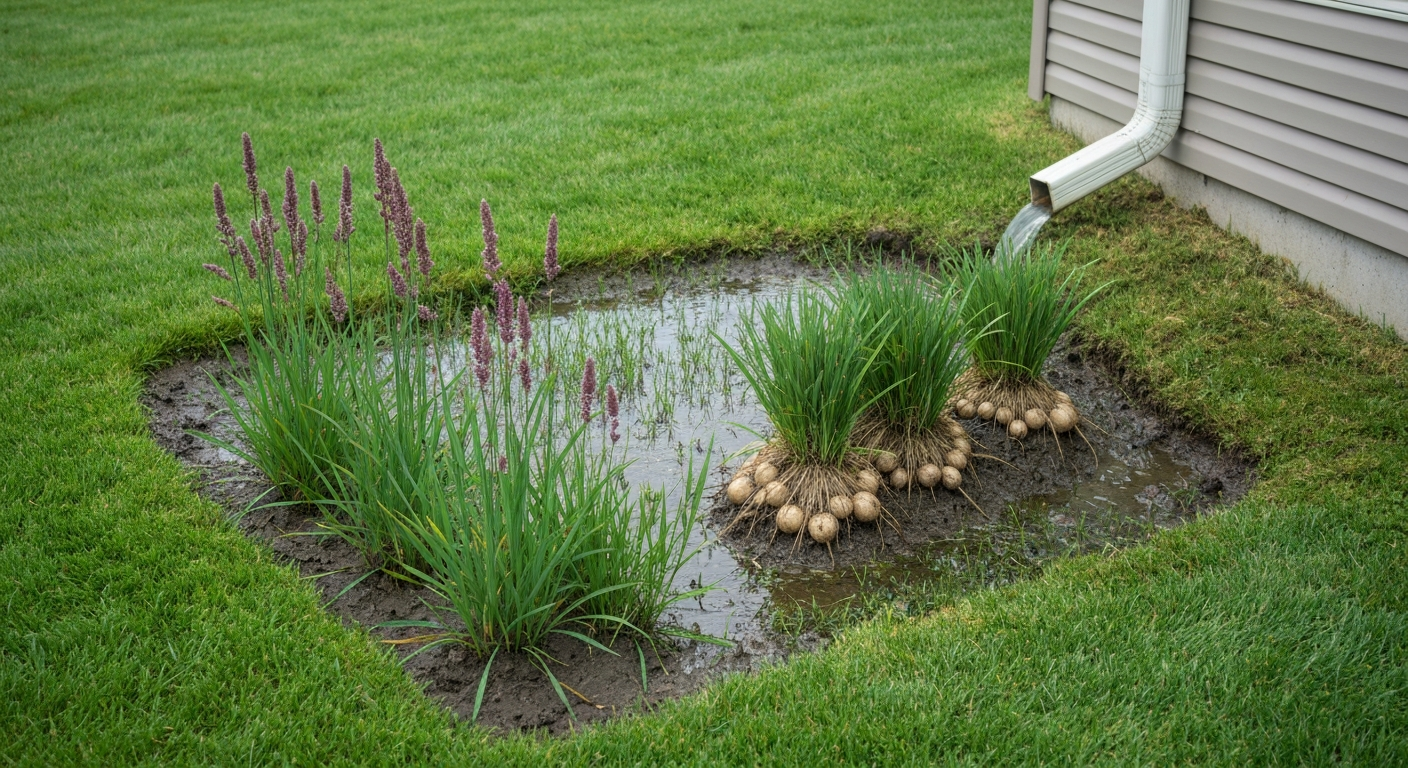
What Causes Water Grass to Grow: Diagnosis & Long-Term Fixes
Why water grass grows: causes, ID tips, quick fixes and long-term drainage and treatment steps for healthy lawns.
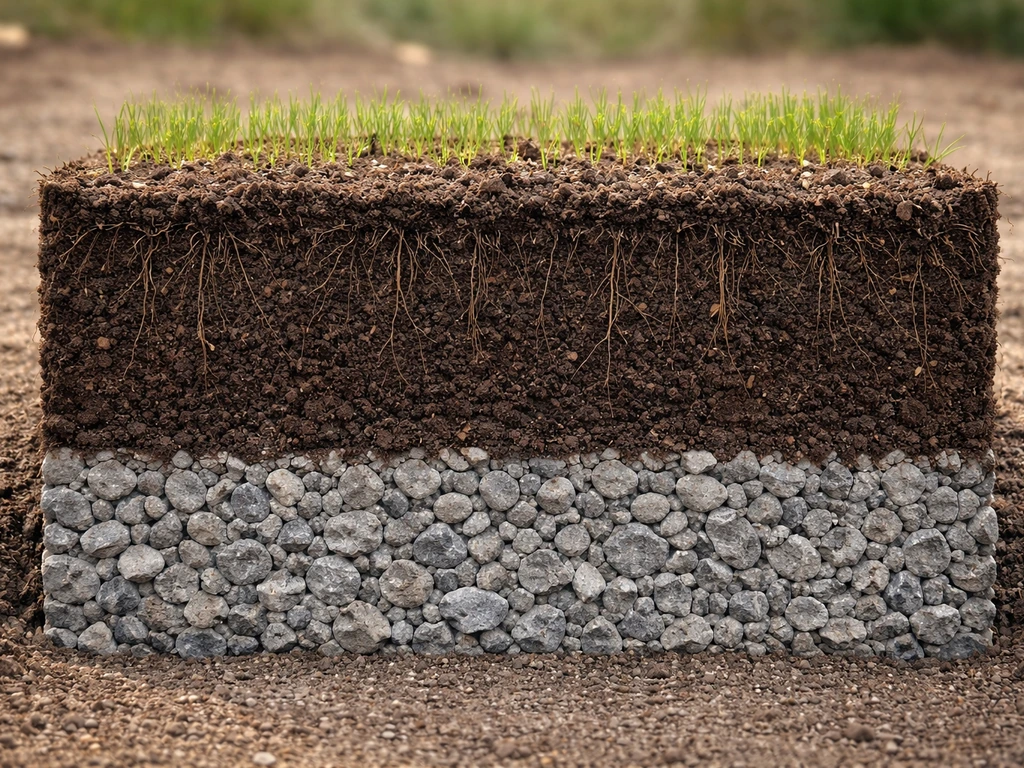
Can You Grow Grass Over Gravel? How to Do It Right
Learn when you can grow grass over gravel and follow a step-by-step method for soil depth, drainage, seeding or sod, and
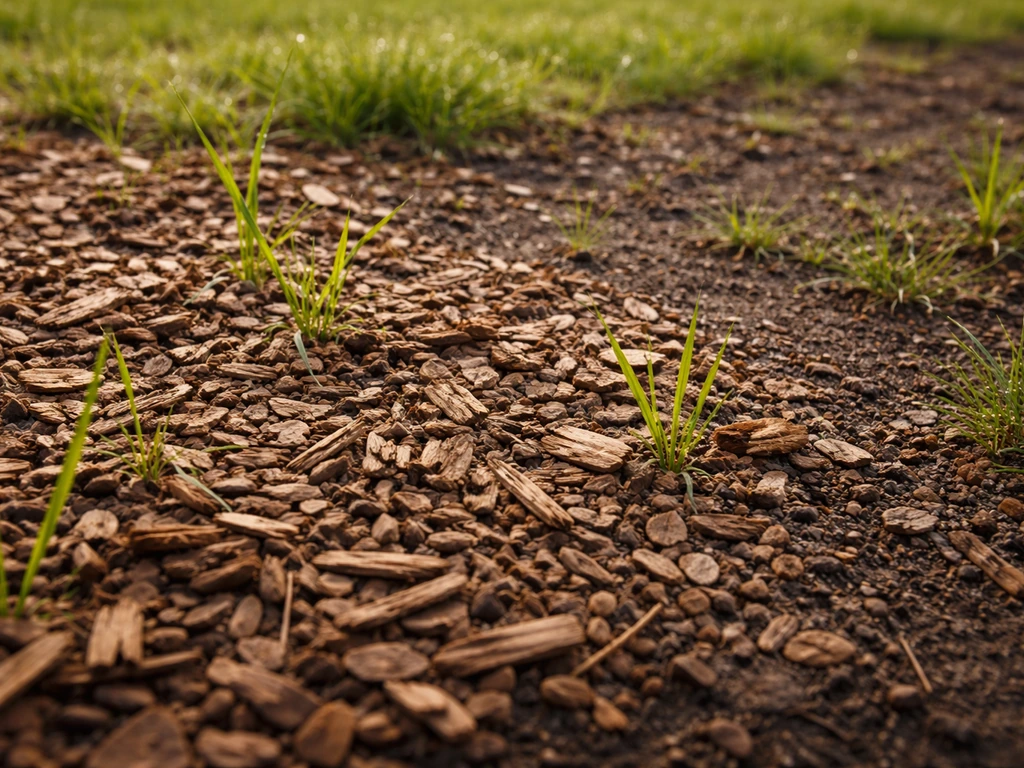
Do Wood Chips Help Grass Grow? When They Work and When Not
Learn when wood chips help grass grow, when they steal nitrogen, and step-by-step how much to apply and seed options.