
Yes, ryegrass will grow without tilling. You don't need to plow or cultivate the soil to get ryegrass to germinate and establish. What you do need is seed-to-soil contact, consistent moisture, and the right temperatures. Those three things are the whole game, and you can achieve all of them without ever touching a tiller.
Will Ryegrass Grow Without Tilling? How to Succeed No-Till
Marcus Volkmann
6 Jul 2026

What 'no-till' actually means when you're growing ryegrass
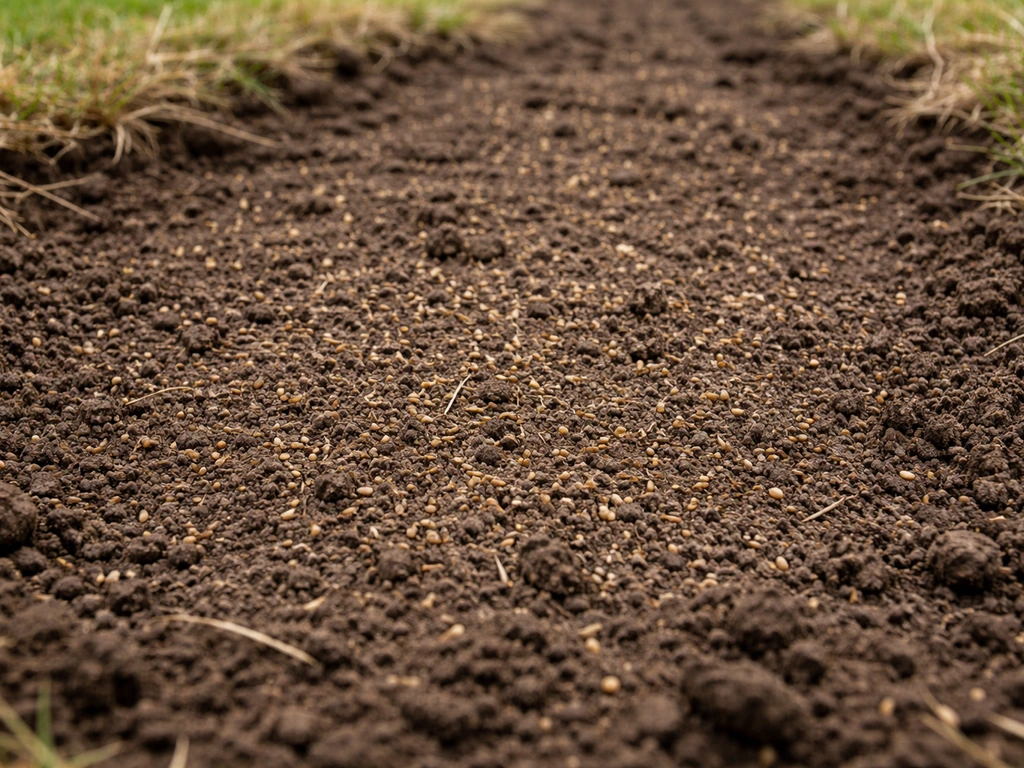
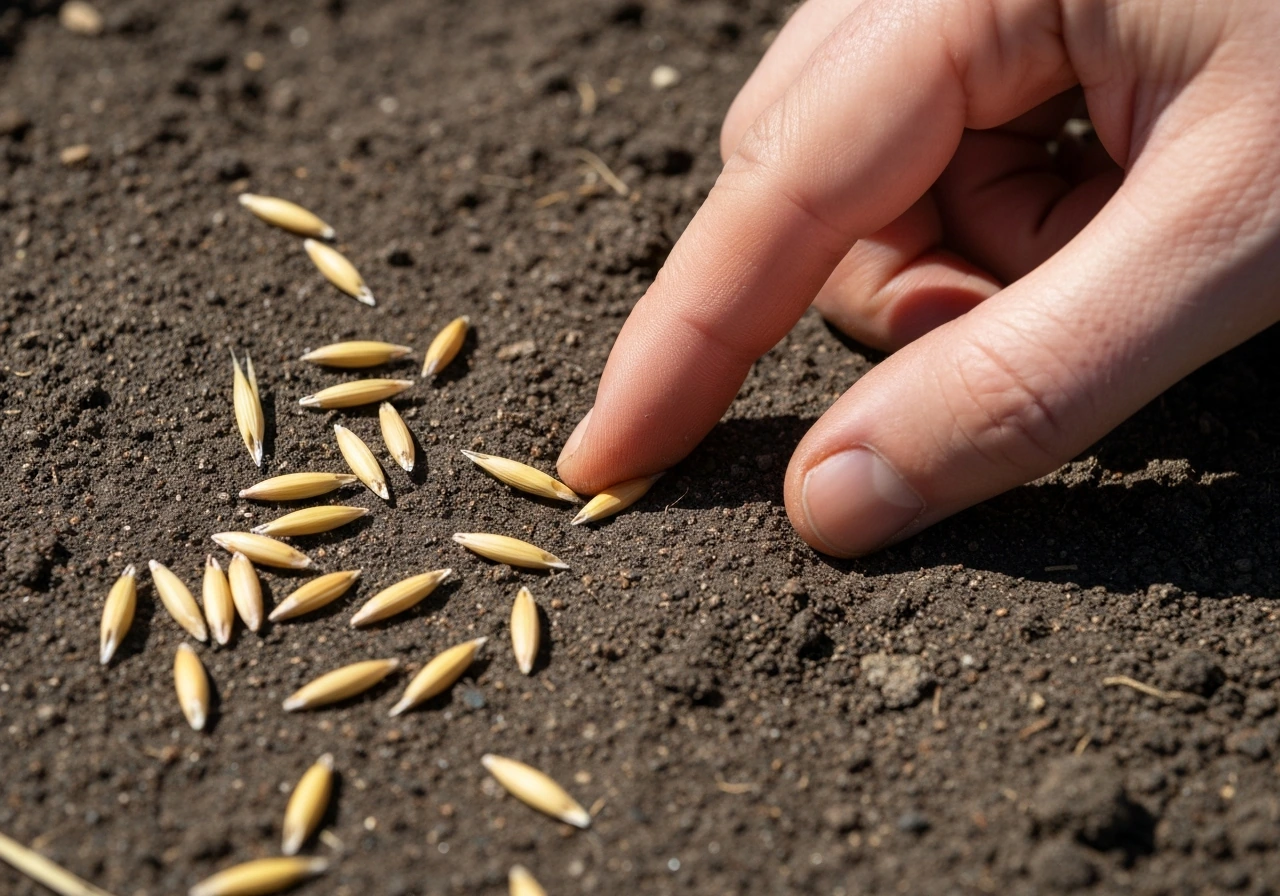
No-till doesn't mean zero prep. It means you're skipping deep soil cultivation: no rototilling, no plowing, no turning the ground over. Instead, you're working with the surface you already have, using light prep techniques to create the right conditions at the top inch or so of soil. If you are also wondering whether other cover crops like oats will grow on top of the ground, the same no-till idea of keeping seed near moist surface soil is the key starting point oats grow on top of the ground. For ryegrass, that's actually all you need. Perennial ryegrass targets a planting depth of about 1/4 to 3/8 inch. Annual ryegrass is similar. Anything deeper than about 1 to 2 cm starts to reduce germination, and burying seed below 5 cm can stop it entirely. So the goal of no-till prep isn't to dig deep, it's to get seed sitting snugly against moist soil at a very shallow depth.
In practice, no-till for ryegrass looks like this: mow low, remove excess thatch, break up surface crust, broadcast seed, drag or rake lightly, roll if you can, and water consistently. That's genuinely it. Rye grows at the surface by forming strong seed-to-soil contact, so it can establish even when you do not bury it deep. Whether you're overseeding an existing lawn, patching a bare spot, or starting from scratch on neglected ground, the approach is the same.
How ryegrass actually establishes without tilling
Germination requires three things: moisture, oxygen, and the right temperature. Tilling doesn't create those conditions, it just makes them slightly easier to achieve by loosening soil. When you skip tilling, you have to be more deliberate about making those conditions happen at the surface.
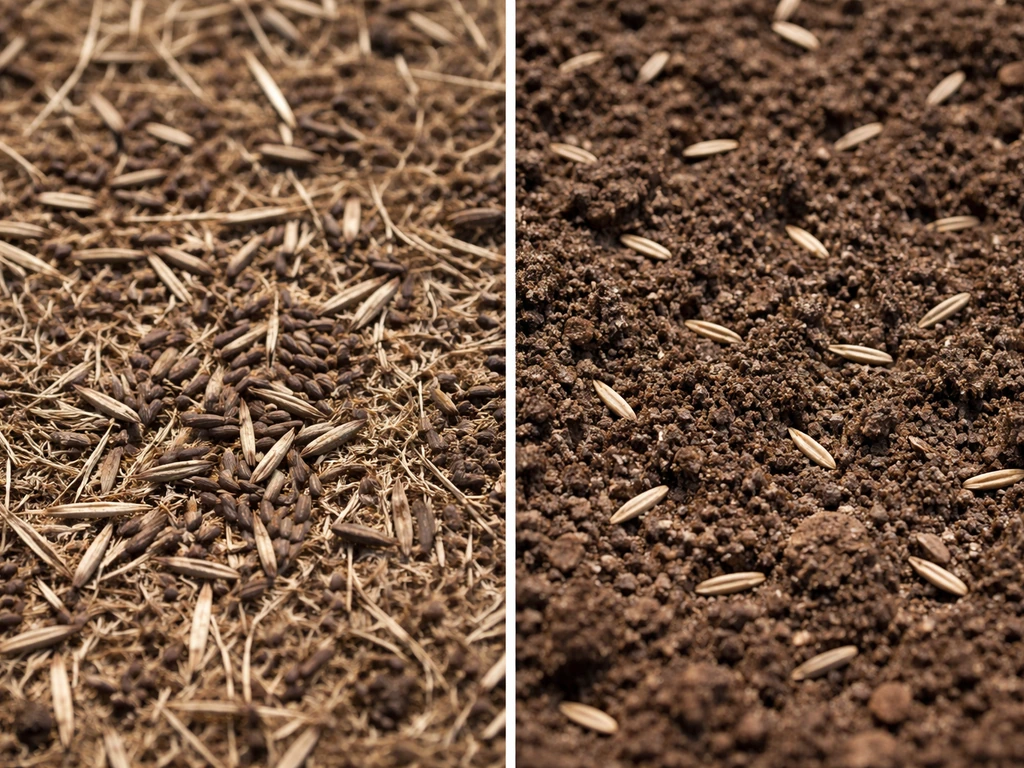
The biggest issue with surface-sown seed is that it can sit on top of thatch, dry out, or get washed away before it ever contacts soil. A seed lying on dead grass or loose debris has no capillary moisture pulling up from below and no soil particles holding it in place. That's the failure mode. The fix is getting that seed physically touching mineral soil, even if just barely. If you’re wondering whether ryegrass can grow on top of soil, the answer is yes only when the seed makes solid contact with the mineral soil surface seed physically touching mineral soil. Once a ryegrass seed is in contact with moist soil, it absorbs water, swells, and the radicle (root) pushes down. From there, establishment happens fast. Perennial ryegrass is one of the quickest-establishing cool-season grasses you can plant, often showing visible sprouts in 5 to 7 days under good conditions.
Conditions that give no-till ryegrass the best shot
Temperature
Perennial ryegrass germinates best between about 68 and 86°F. That puts the ideal seeding window in late summer to early fall in most regions, roughly late August through early October. In cooler climates, you want to seed by early September so seedlings establish before temperatures drop toward freezing. Annual ryegrass has a similar preference but tolerates a slightly wider range. The key warning: if you overseed too late, ryegrass won't establish before cold weather shuts down root development. Roots of cool-season grasses slow dramatically near 32°F, so timing is not something to shrug off.
Moisture and drainage
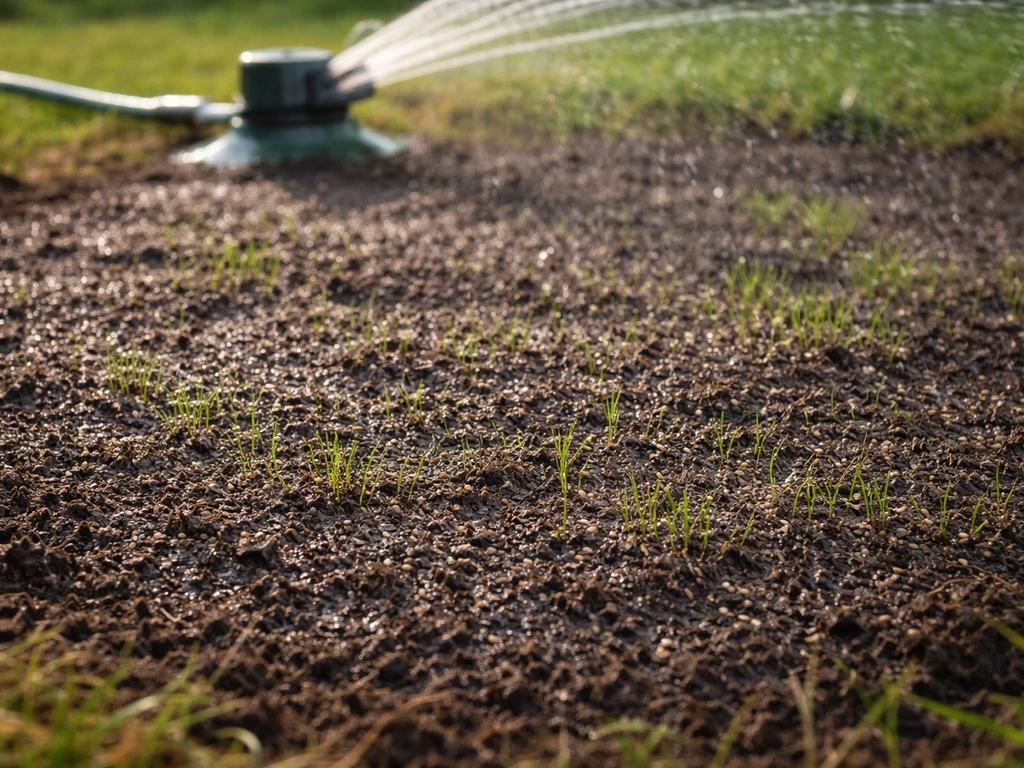
Ryegrass is a heavy water user and germination stalls without consistent surface moisture. You need to keep the top inch moist (not saturated) from the day you seed until seedlings are well established. In dry conditions, that means light, frequent watering, sometimes twice a day for the first week to ten days. Poor drainage can be just as bad as drought: waterlogged seed rots. If your surface puddles after rain, you have a problem to address before seeding, not after.
Sunlight and shade
Ryegrass is not a shade-tolerant grass. It prefers full sun and will thin out quickly under heavy tree canopy. If you're dealing with dense shade, ryegrass isn't your best long-term option, though annual ryegrass can work as a temporary cover in partial shade. For the no-till approach specifically, heavy shade often means more thatch and surface debris, which compounds the seed-to-soil contact problem.
Soil compaction
Compacted soil creates large surface voids that prevent seed from sitting flush against the soil and also reduces upward capillary moisture movement. If your ground is hard-packed clay or heavily compacted, seed contact and moisture delivery both suffer. With clay, focus on improving surface seed contact and keeping the top inch consistently moist for better no-till ryegrass establishment grow in clay. This is exactly where core aeration earns its keep in a no-till approach. Penn State Extension notes that overseeding can be done after aeration or dethatching, with a disk-type seeder that drops seed into slits while emphasizing good seed-to-soil contact and spacing for germination core aeration earns its keep in a no-till approach. It doesn't violate the no-till principle but it addresses compaction directly at the surface.
Surface prep without tilling: what actually works
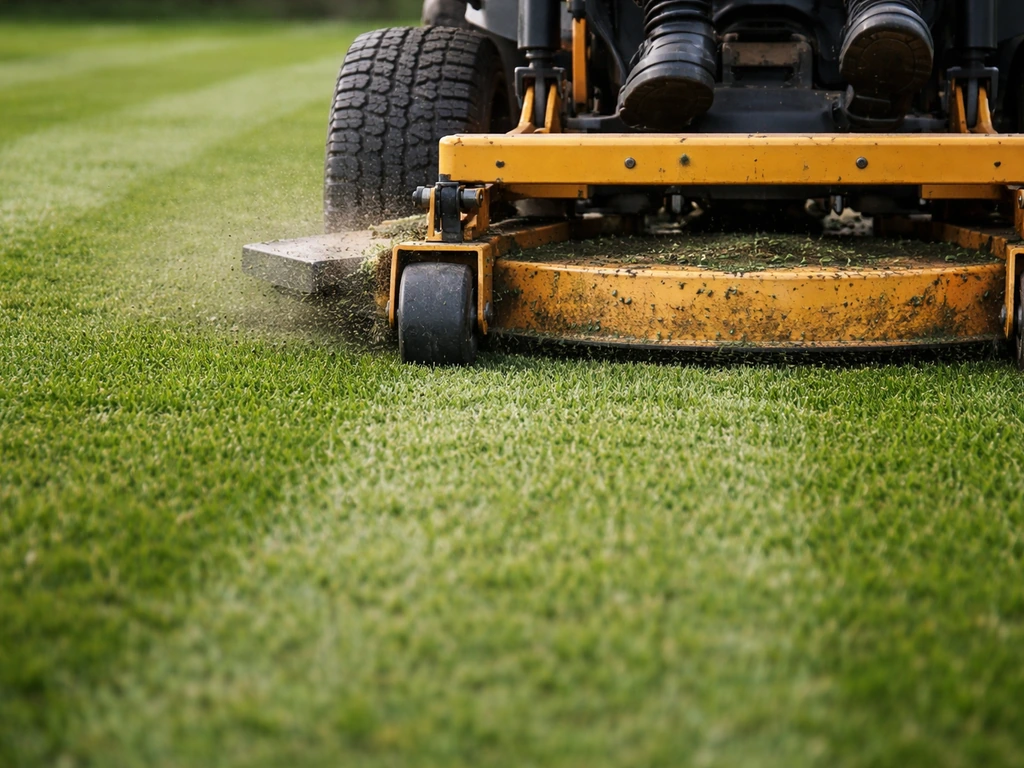
This is the most important practical section. These techniques replace tilling and each one targets the seed-to-soil contact problem from a different angle. You don't need to do all of them, but combining two or three makes a real difference.
- Mow low first. Drop your mower to about 1 to 1.5 inches before seeding. This removes competition, cuts back thatch, and exposes more bare soil at the surface. K-State Extension specifically recommends this step for overseeding, and it's free and immediate.
- Rake or scarify. A firm metal rake dragged across the surface scratches up the top layer, breaks soil crust, and creates small furrows that catch seed. You're not digging, just disrupting the crust. A dethatching rake or power dethatcher does this even better by removing the dead material that blocks seed contact.
- Core aerate. Running a core aerator over the area pulls small plugs of soil and leaves holes where seed can fall and make direct contact. Penn State Extension recommends six to eight passes for overseeding. The pulled plugs break down into a light topdressing on their own.
- Slit seed or use a disk seeder. A slit seeder (also called a vertical mower or overseeder) cuts narrow furrows and drops seed directly into them at the right depth. This is the closest no-till equivalent to drilling and gives the most reliable seed contact of any method. If you can rent one, do it.
- Topdress with compost or fine soil. A thin layer of compost, about 1/8 to 1/4 inch, spread over broadcast seed anchors it against the soil and holds moisture. OSU Extension confirms that 1/8 to 1/4 inch of mulch is sufficient for coverage without blocking emergence.
- Roll after seeding. A light lawn roller run over broadcast seed pushes it into contact with the soil surface. Purdue Extension specifically recommends rolling immediately after seeding to ensure seed-soil contact. This step is underrated and easy.
If you have a firm, clean seedbed and broadcast seed, WSU Extension notes that a very light drag or harrow after broadcasting is enough to achieve proper depth and seed contact without any deeper cultivation. You don't need a tiller. You need the seed touching soil.
Seeding rates, timing, and application for no-till
How much seed to use
For turf-type perennial ryegrass, use 4 to 5 pounds per 1,000 square feet for a new seeding. For overseeding into existing turf, 8 to 10 pounds per 1,000 square feet is a common recommendation to compensate for the competition and lower germination rates typical of surface seeding. Going heavier when you're not tilling makes sense because some seed will inevitably land in spots with poor contact.
When to seed
Late summer to early fall is the sweet spot: late August through mid-September in cooler northern regions, and up to early October in warmer southern areas. This aligns soil temperatures with ryegrass's preferred germination window and gives seedlings several weeks to establish root systems before winter. Spring seeding is possible but harder because you're racing against summer heat and the accompanying germination slowdown.
How to apply
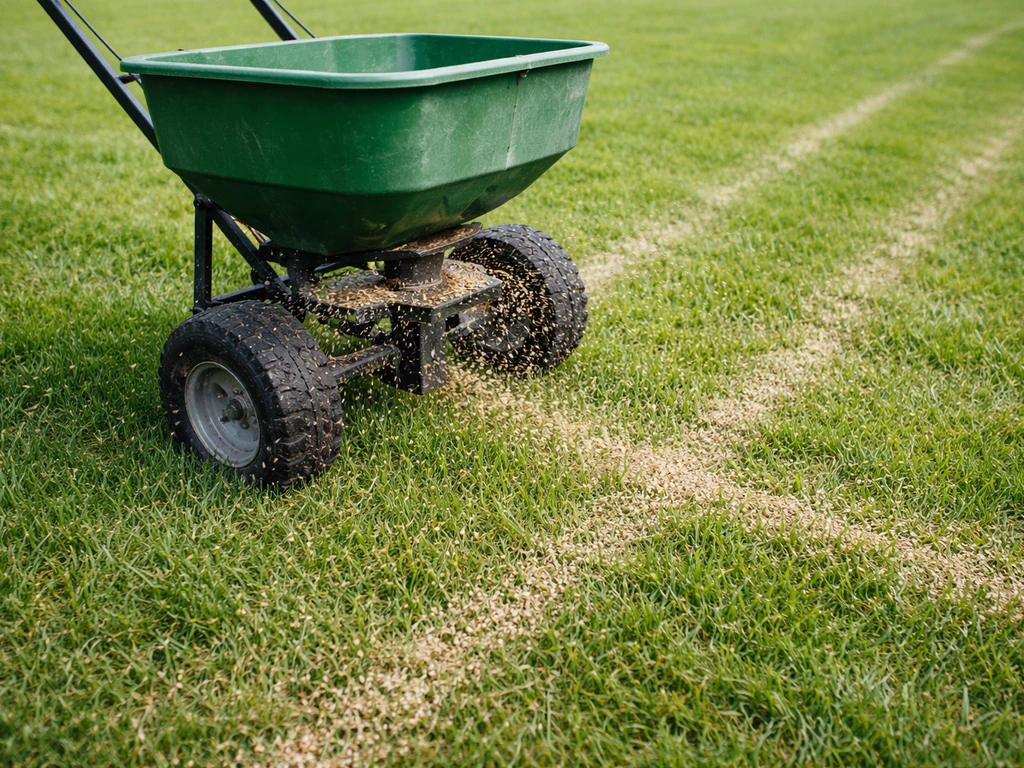
Broadcast seed with a rotary spreader in two passes at half the total rate, with passes running perpendicular to each other. This prevents striping and gives more even coverage. After spreading, rake lightly, roll if possible, and water immediately. Apply a starter fertilizer just before or right after seeding to support early root development. Then keep the surface moist, watering lightly once or twice daily for the first 7 to 14 days until germination is visible and seedlings are an inch tall.
When no-till fails: the real culprits and how to fix them
| Failure Mode | What's Happening | Quick Fix |
|---|---|---|
| Seed sitting on thatch or debris | No soil contact, seed dries out or washes away | Dethatch before seeding, rake after broadcasting, or use a slit seeder |
| Surface dries out too fast | Seed needs constant moisture for germination | Water lightly twice daily; topdress with thin compost layer to retain moisture |
| Soil crust forming | Rain or watering seals the surface, blocking oxygen and emergence | Scratch crust with rake before re-seeding; improve drainage if persistent |
| Heavy thatch competition | Thatch acts like a sponge that holds seed above soil | Power dethatch first, then seed; don't skip this step on lawns with thatch over 1/2 inch |
| Birds and wildlife eating seed | Surface seed is highly visible and accessible | Topdress lightly with straw or compost; roll to push seed down; time seeding before rain |
| Washoff on slopes | Seed migrates before establishing | Use a tackifier or straw erosion mat; avoid heavy irrigation on slopes right after seeding |
| Wrong temperatures | Too cold or too hot slows or stops germination | Adjust timing; aim for soil temps in the 50–65°F range for germination to begin reliably |
The single most common no-till failure I see is seed that never contacts soil because nobody raked or rolled after broadcasting. It just sits on the surface, dries out, and either blows away or gets eaten. Spending five minutes with a rake and roller after seeding fixes this almost entirely.
If germination still isn't happening: fallback options
If you've done the prep work, seeded at the right time, and you're still seeing patchy or absent germination after two to three weeks, here's how to work through it.
- Re-seed at a higher rate. Surface seedings have more failure points than drilled seed. Bumping the rate to 10 to 12 pounds per 1,000 square feet on a second pass often fills in the gaps without any additional prep.
- Switch to a slit seeder. If you broadcast the first time and had poor results, renting a slit seeder for a second pass usually solves the seed contact problem definitively. It's the mechanical shortcut that replaces tilling.
- Improve your watering. A lot of failed germinations are simply watering failures. If you're watering deeply once a day instead of lightly twice a day, the top inch is drying out between cycles and seed is dying before it sprouts.
- Add a thin topdressing. A 1/4 inch of compost worked into the surface before a second seeding raises organic matter, holds moisture, and gives seed something to nestle into. This is especially useful on compacted or sandy surfaces.
- Consider plugs for bare patches. For small areas where nothing is germinating, plug transplants of perennial ryegrass can be installed without any tilling and give you immediate visible coverage while you troubleshoot the seeding approach.
- Reconsider the grass type. If you're fighting heavy shade, compacted clay, or a surface that stays dry, ryegrass may not be the right fit regardless of technique. Annual ryegrass can work as a short-term cover while you improve conditions. For shady areas, fine fescues are worth exploring. Related to this: if you've been considering oats as a companion or cover, understanding how surface-sown grains establish is worth comparing against ryegrass behavior since the contact and moisture requirements overlap significantly.
A simple no-till ryegrass plan you can start today
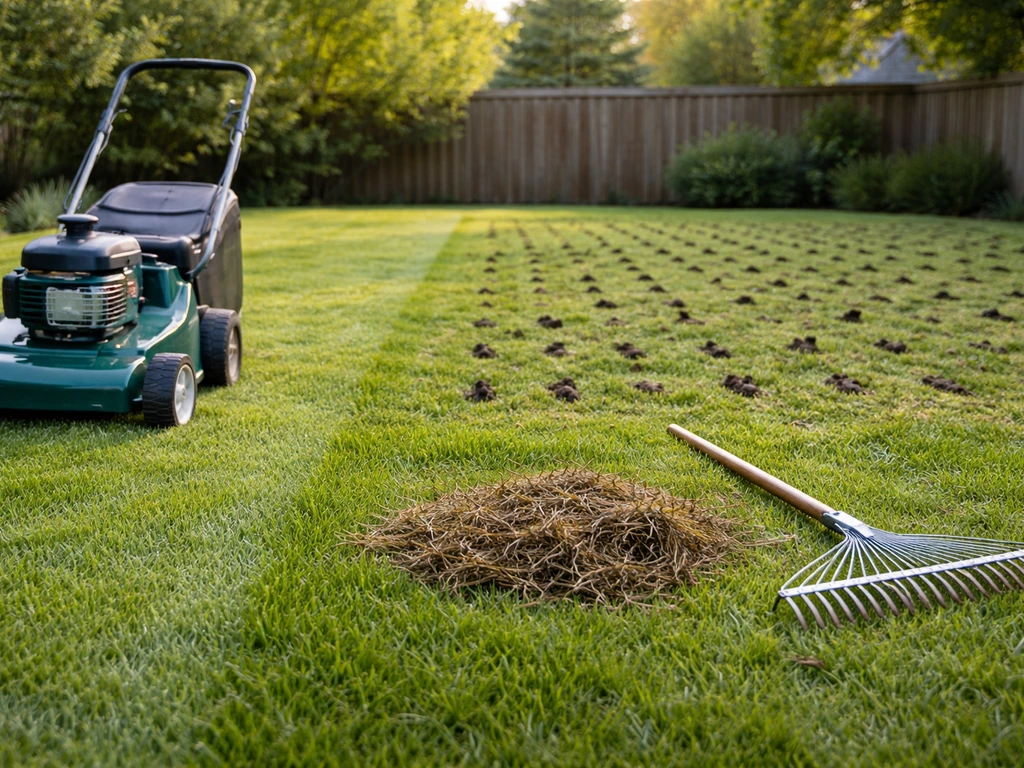
- Mow the area as short as your mower allows, around 1 to 1.5 inches.
- Dethatch or rake aggressively to remove dead material and scratch the surface.
- Core aerate if you have compaction issues (rent a machine for large areas).
- Apply starter fertilizer at label rate.
- Broadcast perennial ryegrass at 8 to 10 lb per 1,000 sq ft using a rotary spreader in two perpendicular passes.
- Rake lightly to work seed toward the soil surface.
- Roll with a lawn roller or drag a board over the area to press seed into contact with soil.
- Topdress with 1/8 to 1/4 inch of compost if you have it.
- Water immediately and keep the surface consistently moist for 7 to 14 days.
- Mow once seedlings hit about 2 inches, keeping height at 2 to 3 inches until fully established.
That's a complete no-till ryegrass establishment plan with nothing exotic required. If you're wondering about whole oats, they generally won't act like a true grass seed for establishing a lawn without the right germination conditions does whole oats grow grass. The tiller isn't the point. Seed contact, moisture, and timing are the point, and all three are fully achievable without turning the soil over.
FAQ
How do I know if my no-till ryegrass seed is getting enough soil contact?
After seeding, lightly rake or roll and then check a few spots by gently lifting the seed layer with your hand. If most seeds lift off dry or stay on top of thatch, contact is poor. You want the majority to be held against mineral soil, not dead grass, and you should see seed pressed into the surface after dragging or rolling.
Will ryegrass still establish if I spread seed but do not water for the first day?
Usually you will lose a lot of seed. Ryegrass germination depends on moisture at the top inch immediately, so if the surface dries out before the seed swells, germination can stall for days or fail entirely. Water right after seeding, then keep the top inch moist until you see sprouts.
Can I seed ryegrass in spring without tilling?
Yes, but it is less reliable. Spring seeding often struggles because warm weather speeds up drying and heat slows cool-season germination, especially if you miss the moisture window. If you must seed in spring, keep the surface consistently moist and aim for the coolest part of the season rather than mid-summer.
What’s the best way to overseed no-till into an existing lawn with heavy thatch?
Mow low first, then remove as much thatch as possible before broadcasting. Even if you rake lightly after seeding, thick thatch can prevent mineral-soil contact, so consider core aeration or a dethatching pass to reduce the barrier and improve capillary moisture movement.
How shallow is shallow enough for no-till ryegrass, and what should I do if my rake buried the seed too deep?
Target about 1/4 to 3/8 inch, but anything deeper than roughly 1 to 2 cm starts to reduce germination. If you over-raked and many seeds are visibly buried, you can either wait and accept reduced stand density or re-seed the problem areas at a shallower depth with another light rake and a firming roll.
Is it better to use a drag, a rake, or a roller after broadcasting?
Any method that firms seed into the surface works, but a roller often gives the most consistent seed-to-soil contact because it presses seeds down without digging. If you cannot roll, use a controlled light drag or rake, then water immediately to help seeds settle.
How much ryegrass seed should I use if my goal is just to fill thin spots?
For overseeding, a common approach is heavier than new seeding, because competition and surface placement reduce establishment. Practically, many people use about 8 to 10 pounds per 1,000 square feet for overseeding, then spot-patch bare areas after germination if density is still low.
What should I do if it rains right after seeding and the surface gets muddy?
If you get puddling, seeds can rot from lack of oxygen. Improve drainage if you can, and avoid heavy traffic. If the ground is only damp, rainfall is usually fine, but if you see standing water for long periods, delay re-seeding until the surface is workable and can dry slightly between wetting events.
Does ryegrass tolerate partial shade with no-till, and will annual ryegrass perform better?
Ryegrass is generally not truly shade tolerant. In partial shade it may germinate, but density often drops over time as competition increases. Annual ryegrass can act as a temporary cover, but for a longer-term solution, you may need a more shade-adapted turf species rather than relying on ryegrass alone.
Why did I get patchy germination after 2 to 3 weeks, even though timing and watering seemed right?
Patchiness often comes from uneven seed coverage, poor seed-to-soil contact in certain zones, or inconsistent moisture. Check whether you spread in two perpendicular passes, whether you raked or rolled after broadcasting, and whether there are dry edges or thatch-heavy pockets. Re-seed only the weak areas after you confirm the surface is pressing seeds into mineral soil.
Next Articles
Does Whole Oats Grow Grass? What to Expect and How to Use It
Whole oats can sprout quickly, but they grow oat plants, not real grass lawn, so use for temporary cover, not permanence
Will Oats Grow on Top of the Ground? How to Seed Correctly
Will oats sprout on bare soil or under mulch? Get seeding depth, moisture, and fixes for surface-sown oats.
Can You Grow Grass Over Gravel? How to Do It Right
Learn when you can grow grass over gravel and follow a step-by-step method for soil depth, drainage, seeding or sod, and