
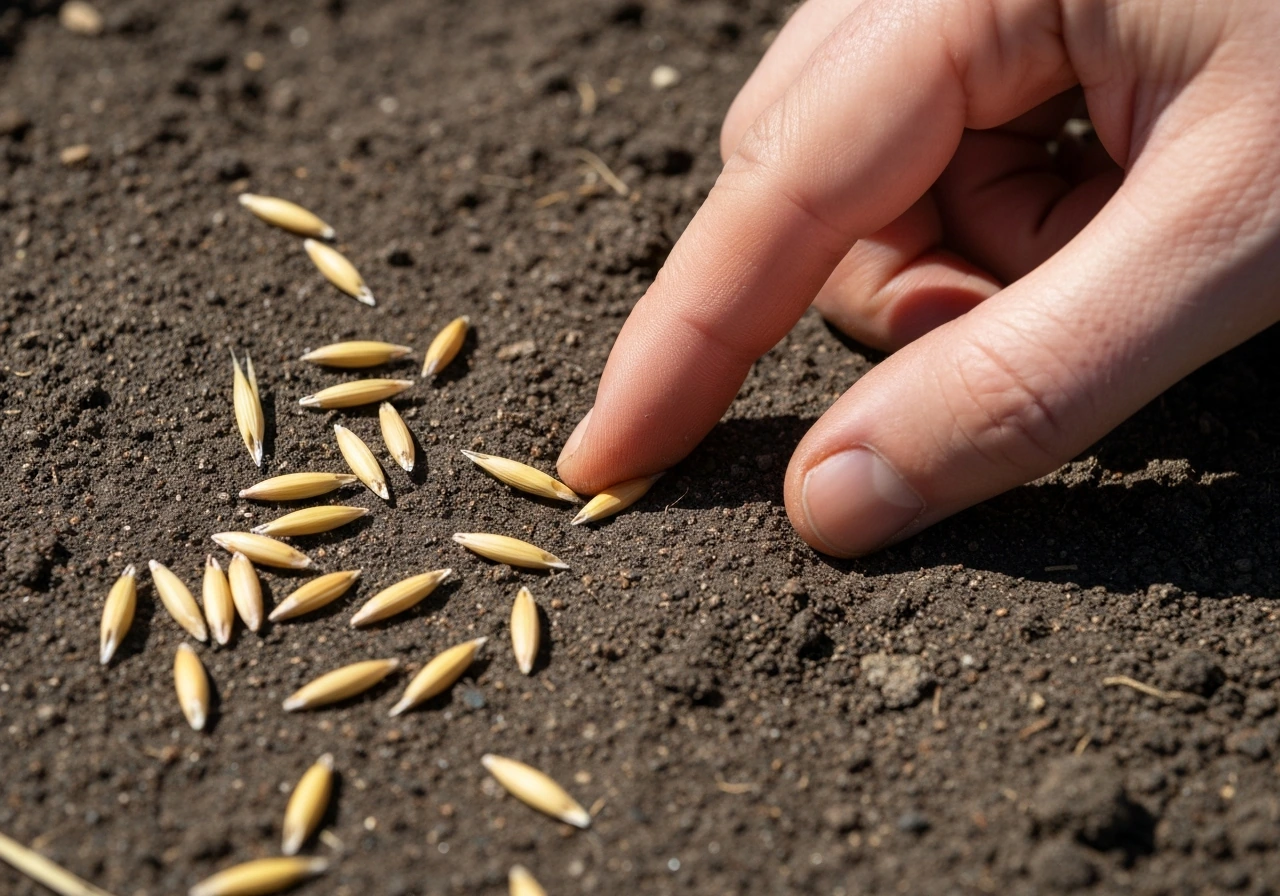
Oats can germinate on top of the ground, but they are working against the odds every single day they sit there exposed. A seed left on bare soil surface can sprout if the surface stays consistently moist and temperatures are in the right range, but in most real-world conditions, surface-sown oats without any incorporation have noticeably lower germination rates than seeds lightly covered or worked in. The good news is that a little intervention, even just a quick raking or rolling, makes a dramatic difference and is absolutely worth doing before you walk away and hope for the best.
Will Oats Grow on Top of the Ground? How to Seed Correctly
Marcus Volkmann
5 May 2026
Can oats germinate if seeds stay on the surface
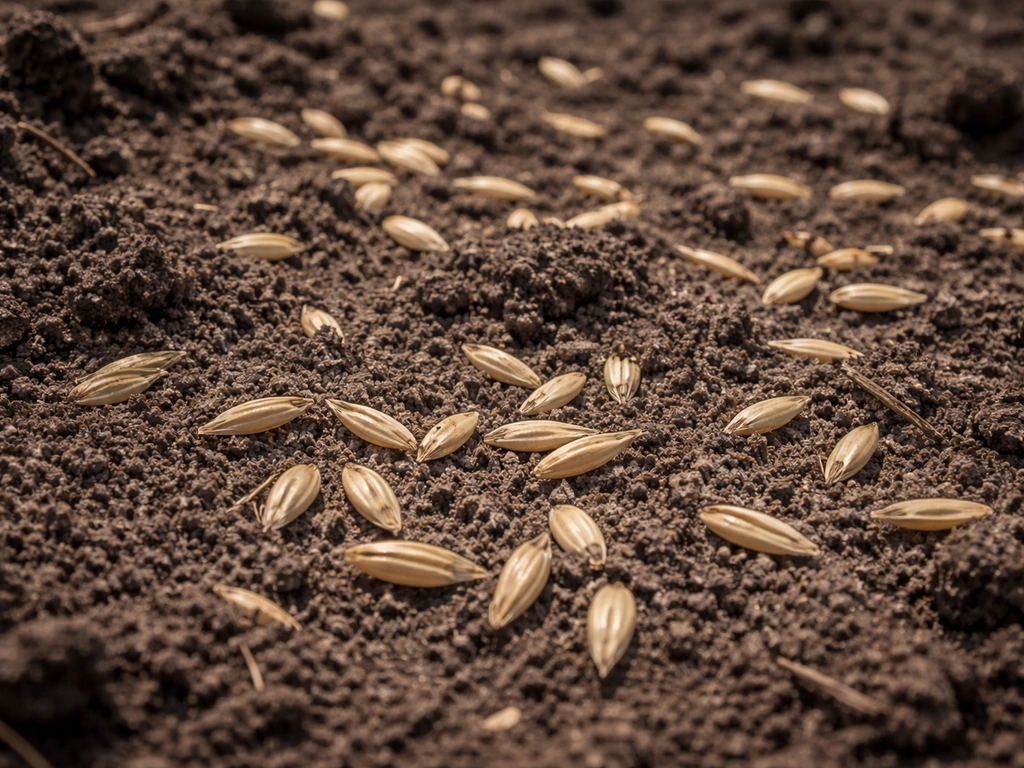
Yes, oats will germinate on the soil surface, but not as reliably as when they have soil contact. Oat germination itself is not strongly light-sensitive, meaning seeds won't refuse to sprout just because they're sitting in sunlight. The real problem is moisture. A seed lying exposed on dry or partially dry soil cannot reliably pull in the water it needs to kick off germination. Oregon State University's forage research puts it plainly: seed germinates better when it's in contact with the moister zone of the soil profile rather than the driest top layer. When a seed is just sitting on the surface, it's entirely at the mercy of whatever water happens to hit it and stay around it.
That said, I've seen oats broadcast on bare ground in late spring with decent rainfall come up surprisingly well, maybe 60–70% of what you'd get with a drill. The conditions matter enormously. Consistent moisture, mild temperatures, and firm bare soil give surface-sown oats a fighting chance. Sandy, rocky, mulched, or thatch-covered surfaces are a different story entirely.
What "on top of the ground" actually means for germination
When people ask whether oats will grow on top of the ground, they're usually describing several very different situations, and the answer changes depending on which one applies to you.
| Surface Type | Germination Outlook | Main Problem |
|---|---|---|
| Bare, firm soil | Fair to good with moisture | Surface drying between rains or irrigation |
| Bare, loose/sandy soil | Poor without pressing in | Seeds shift, dry out, no consistent contact |
| Existing thatch or dead grass layer | Poor | Seeds never reach soil, no moisture transfer |
| Mulch (wood chips, straw, etc.) | Very poor | Insulation from soil, irregular moisture, fungal risk |
| Rocky or compacted surface | Poor to very poor | No seed-to-soil contact at all |
| Existing thin vegetation | Fair if overseeded correctly | Competition for moisture and light at seedling stage |
Bare, firm soil is the only surface where completely unincorporated oats have a reasonable shot. Thatch, mulch, and rocky ground all prevent the fundamental thing oat seeds need: direct contact with moist soil particles. If your seeds are sitting on top of a thatch layer or a layer of wood chips, they are essentially sitting in air. No amount of watering will make up for the fact that there's no soil for the root to reach immediately after sprouting.
The conditions that actually determine success
Moisture
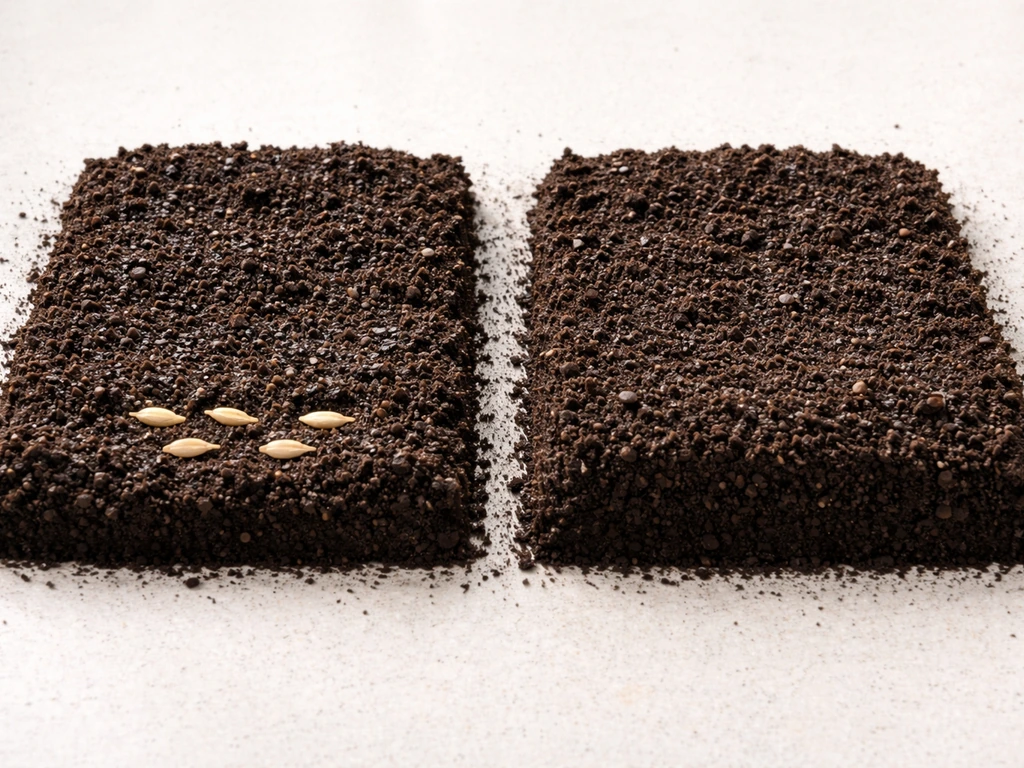
This is the single biggest factor. Penn State Extension puts soil moisture for germination at around 50 to 75 percent of field capacity. The surface layer of soil dries out faster than anything below it, so seeds sitting right on top are in the most unreliable moisture zone in your entire yard. If you can keep the surface visibly moist, not flooded, but consistently damp, for the 7 to 10 days it takes oats to emerge under decent conditions, surface germination is possible. That usually means watering at least once or twice a day in warm weather, or relying on consistent overcast and rain.
Temperature
Oats are a cool-season grain. Germination can begin at soil temperatures as low as 35 to 40°F, and optimum growth happens around 68 to 70°F. Once soil temperatures push above 82 to 86°F, growth slows noticeably. In May, most of the country sits right in the sweet spot for oat germination. The risk in warmer climates is that the surface layer of bare soil can heat up significantly higher than the air temperature, especially in full sun, which stresses surface seeds more than buried ones.
Light
Oats are not photoblastic, meaning they don't require darkness to germinate and light won't block sprouting. Full sun won't stop your seeds from germinating. What it will do is dry out the surface faster and heat exposed seeds more aggressively. Partial shade or overcast conditions are actually helpful for surface-sown oats simply because they slow the drying process.
Seed-to-soil contact
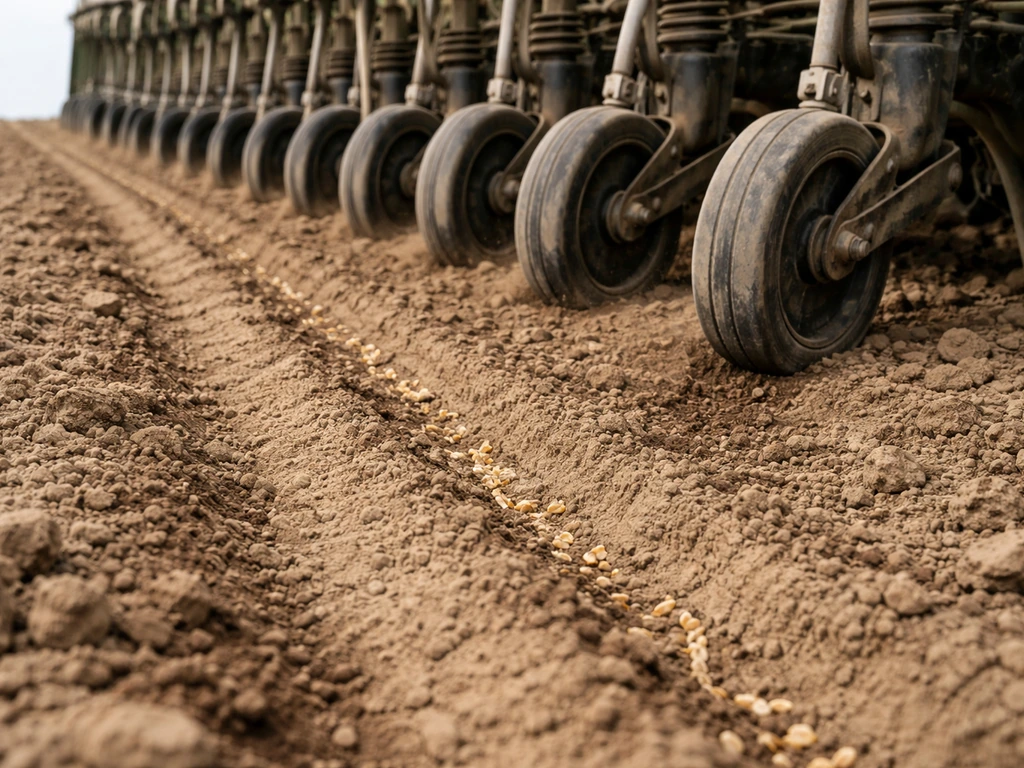
Every authoritative source on oat seeding circles back to this: seed-to-soil contact is critical. A drill with press wheels is the gold standard because it places seeds at a consistent depth and firms the soil around each seed. When broadcasting without a drill, the goal is to simulate that contact as closely as possible, which is why raking, harrowing, or rolling after broadcasting makes such a measurable difference. Without it, uneven contact means uneven germination.
How to sow oats without burying them too deep
The ideal seeding depth for oats is about 0.5 to 1.5 inches, depending on your soil moisture and texture. The rule of thumb from Oregon State is that heavier (clay) soils call for shallower placement, while sandier soils need seeds placed slightly deeper to reach moisture. Going deeper than 3 inches (8 cm) consistently hurts emergence. So the practical target is shallow coverage, not zero coverage.
Here's the approach I'd use for broadcasting oats today, in order of preference:
- Broadcast at the right rate: for a cover crop or ground cover purpose, aim for 40 to 60 pounds per acre (roughly 1 to 1.5 pounds per 1,000 square feet). For forage or heavier stands, go up to 75 to 100 pounds per acre.
- Rake lightly after broadcasting: a single pass with a garden rake to work seeds about a quarter to half inch into the soil is enough to dramatically improve seed-to-soil contact without burying seeds too deep.
- Roll or firm with a cultipacker or lawn roller if you have access to one: pressing seeds gently into the soil surface firms the contact zone and improves germination in the same way a drill's press wheel does.
- Water immediately after sowing: get the surface moist right away and keep it that way. Don't let the surface crust or fully dry out for the first 10 to 14 days.
- Apply a very thin layer of compost or fine soil over broadcast seed if you can't irrigate consistently: a quarter inch of topdressing improves moisture retention and shields seeds from birds and wind without smothering them.
Washington State University Extension specifically recommends a very light harrowing or dragging after broadcasting to achieve proper depth and contact. Even dragging a piece of chain-link fence or the back of a rake over a small area works. This is a low-effort step that pays back in noticeably better stands. Similar thinking applies when asking whether ryegrass or rye grain will grow when sown on top of soil without tilling, where the same surface-contact principle holds.
This same surface-contact rule also answers whether ryegrass will grow in clay when sown on top without tilling will rye grass grow in clay. Rye behaves similarly, and it generally needs that moist soil contact rather than just sitting fully exposed on top. Ryegrass behaves similarly, so sowing it on top of soil without tilling still depends on good seed-to-soil contact and consistent moisture surface-contact principle holds.
Ryegrass can also struggle to establish without tilling, mainly because surface seeds still need reliable seed-to-soil contact and consistent surface moisture will ryegrass grow without tilling.
When to expect sprouting and how to tell if it's working
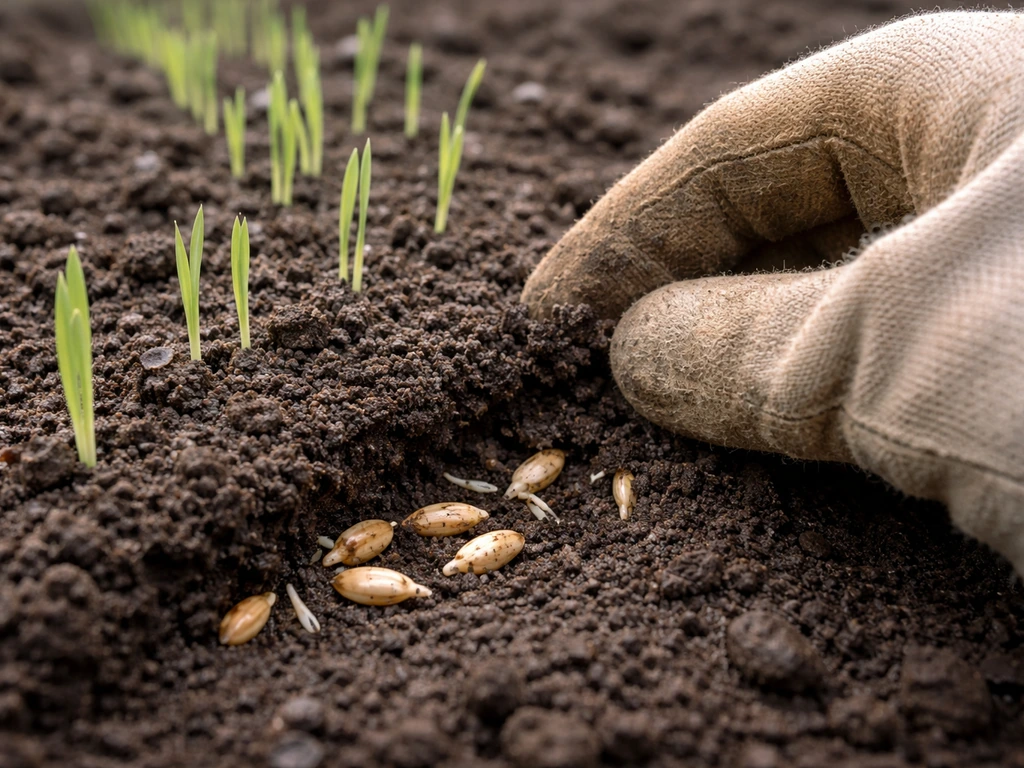
Under good conditions in May, with soil temperatures in the 55 to 70°F range and consistent moisture, oats typically begin emerging in 7 to 10 days. You'll see a thin, pale green spike push up through the soil surface. If you're at day 10 and seeing nothing, check these things before you give up:
- Scrape back a small area and look for seeds: if seeds are swollen and have a tiny root starting (radicle), germination is happening but emergence is delayed, possibly by a crust.
- Check soil moisture an inch down: if it's bone dry under the surface, the seeds may have germinated slightly and then stalled for lack of water.
- Look at the seeds themselves: if seeds are still hard and unchanged after 10 days, they had no moisture at all, or soil temperature was too cold.
- Check for birds: if seeds have just disappeared from the surface, birds are the likely culprit before germination even had a chance.
By day 14 to 21, you should have visible seedlings establishing. A healthy emerging oat stand looks like a thin, even green fuzz across your seeded area. Patchy or very uneven germination usually points to inconsistent seed-to-soil contact or uneven irrigation.
Troubleshooting: birds, drying, crusting, weeds, and poor germination
Birds eating your seed
Surface-sown oat seed is essentially an open buffet for birds. This is one of the most common reasons broadcast oats fail on bare ground. The fix is to get seed into the ground as quickly as possible after broadcasting: rake it in, roll it in, or cover it with even a thin layer of compost. Seed that's even a quarter inch below the surface is much less accessible to birds than seed sitting on top.
Surface drying between waterings
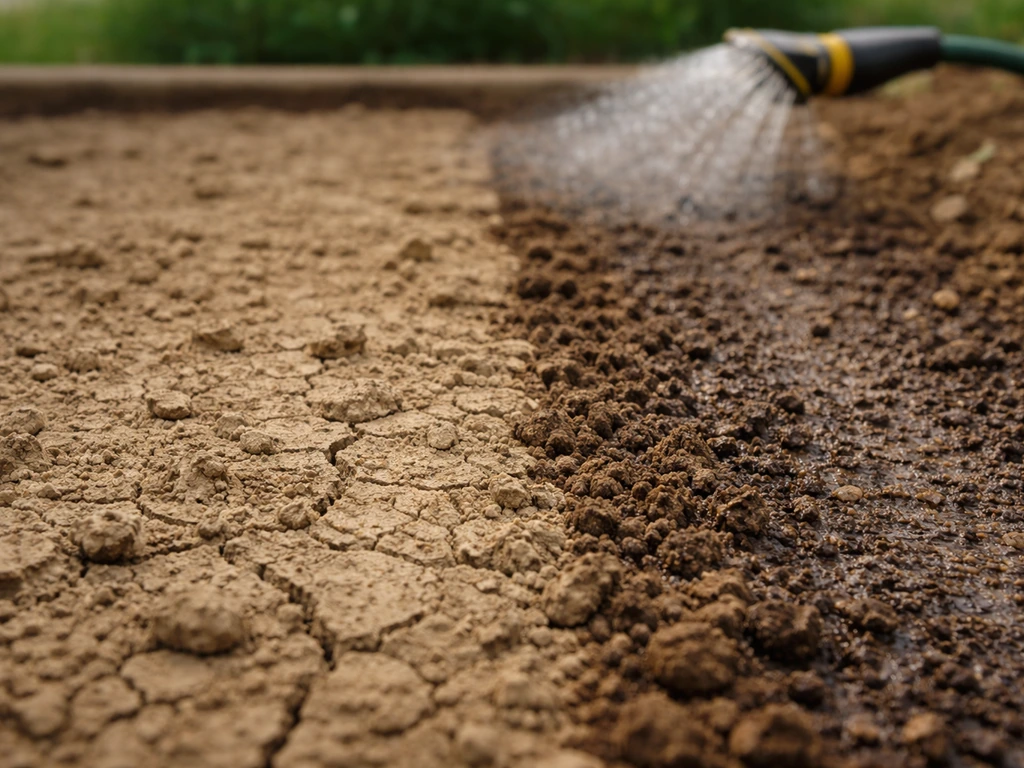
The top half inch of soil can go from moist to bone dry in hours on a warm, breezy day. If you're watering once a day in full sun and warm temperatures, it may not be enough to keep surface seeds alive. Water twice daily, morning and late afternoon, until you see consistent emergence. Once seedlings are up with their first true leaves, you can scale back.
Soil crusting
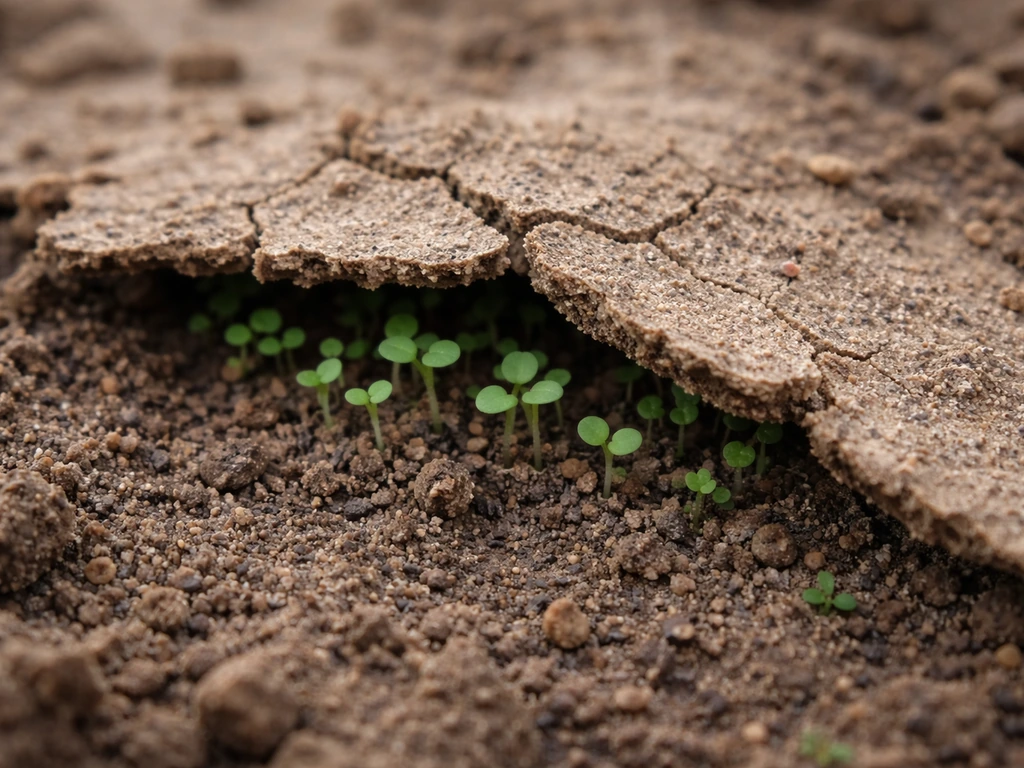
Crusting happens when rain or irrigation breaks up the soil surface and then it dries into a hard layer. University of Minnesota Extension explains this well: germinating seedlings can push against a crust, elongate trying to break through, and eventually exhaust their stored energy before emerging. If you see a hard, sealed soil surface and no seedlings, break it gently with a rotary hoe or the tines of a garden rake, being careful not to go deeper than about half an inch. Keeping the surface moist after seeding is the best prevention since crusting mainly occurs as soil dries.
Weed competition
Oats are good weed suppressors once established, but as seedlings they're vulnerable. If you have a heavy weed seed bank, weeds can outpace oat seedlings at the surface. SARE research on oat cover crops found that timing is critical: plantings made too late lost their weed suppression window entirely. On a small scale, starting with a lightly raked or cultivated seedbed gives your oats a head start over weed seeds that were also sitting on the surface.
Patchy or very low germination overall
If germination is happening but the stand is thin and irregular, the usual culprits are uneven seed distribution, inconsistent moisture across the area, or seed that was old and had reduced viability. Do a quick germination test by placing 10 seeds on a damp paper towel and checking in a week. If fewer than 7 or 8 sprout, your seed quality is the problem, not your technique.
If oats won't take: practical alternatives and next steps today
If you've tried broadcasting oats and they're not establishing, don't wait weeks hoping something changes. Here's what to do now:
- If seed is still visible and unsprouted after 14 days: lightly rake the area to work remaining seeds into the soil, water thoroughly, and reassess in another week.
- If the surface is crusted: break the crust with a garden fork or rake tines at a very shallow depth, then water gently. Don't till deep or you'll bury seeds too far.
- If the area has thatch or mulch more than an inch thick: surface seeding won't work here. You'll need to remove or thin that layer first, then reseed directly on the exposed soil surface.
- If soil temperatures are already climbing above 80°F: oats are losing their window for the season. Consider switching to a warm-season cover crop like buckwheat or sorghum-sudan, which handle summer heat far better than oats.
- If you're trying to establish a cover crop and oats keep failing: consider annual ryegrass as an alternative. It establishes from surface broadcast seeding more aggressively than oats in many conditions, and it tolerates a wider range of surface types.
- If this is a lawn situation rather than a cover crop: oats are a temporary, non-perennial solution. They'll die at first frost. Consider whether a perennial grass seed like tall fescue or a ryegrass blend better meets your actual long-term goal.
The bottom line: oats can grow on or very near the soil surface, but "on top" without any incorporation at all is always a gamble. A five-minute raking session after broadcasting is the single most impactful thing you can do to improve your odds. Get seeds in contact with moist soil, keep the surface consistently damp for two weeks, and protect against birds. Do those three things and oats are genuinely easy to establish even without a proper drill or tiller.
FAQ
How long do I need to keep surface-sown oats watered for them to emerge?
Not always. Oats can germinate right at the surface if moisture stays consistently available, but if you cannot keep the top layer damp for roughly 7 to 10 days, you will usually get a poor stand. If you are in a hot or windy site, aim for even shallow incorporation (about 0.5 to 1 inch) so roots can reach the moister soil zone sooner.
What watering schedule works best for broadcast oats on bare ground?
In many gardens, a simple way to gauge “enough” is the top 1 inch rule. If that top inch dries to dust before day 7 to 10, surface seeds struggle. Water lightly but more often (often twice daily in warm, sunny weather) until you see consistent emergence, then reduce frequency.
Do clay and sandy soils behave differently when oats are sown on top of the ground?
It depends on the soil and weather. Clay and heavier soils tend to crust more easily and can also hold water longer, so they may need gentler watering but more attention to preventing a sealed surface after rain. Sandy soils lose moisture fast, so you may need shorter, more frequent watering to keep seeds in contact with damp soil.
Will a thin layer of compost over broadcast oats improve germination?
Yes, but timing and coverage depth matter. Even a thin compost layer can help by improving seed-to-soil contact and reducing bird access, but compost can also dry out or blow away if it is too light. For surface broadcasting, strive for an even, minimal cover that still places seeds roughly within 0.5 to 1.5 inches of moist soil.
Is rolling after broadcasting oats better than just raking them in?
If the surface is already firm and fairly smooth, rolling can substitute for a drill to increase seed-soil contact. A light pass with a roller can press seeds into the top moisture zone. Avoid heavy rolling on very wet soil because it can create compaction that later reduces emergence.
What should I do if rain turned the soil into a hard crust and my oats are not coming up?
Yes, and it is easy to miss. If you watered heavily and then it dried into a hard crust, oats may elongate and fail to break through. You can usually fix this by gently loosening only the top half inch with a rake or rotary hoe and then immediately re-establish consistent surface moisture.
What bird protection actually works for oats broadcast on top of soil?
Birds are one of the biggest failure points for oats sown on top. If you cannot incorporate quickly, cover helps, such as using a light row cover or netting until seedlings emerge. Once you see sprouts, remove or vent covers so seedlings are not steamed and so airflow reduces fungal issues.
What is the risk if I rake the oats too deeply after broadcasting?
Yes, especially if you sow too deep. Oats that end up consistently deeper than about 3 inches often emerge poorly because seedlings have to spend too much energy reaching the surface. When broadcasting, use raking or harrowing to bring seeds into shallow placement, not deeper digging.
My oats are sprouting but patchy and uneven. How do I troubleshoot?
If you get emergence but the stand is thin, consider whether distribution and seed condition are the problem. Uneven spreading causes patchiness even with good moisture, and old seed can fail even with perfect technique. A quick paper-towel germination check for a small sample can confirm whether viability is the limiting factor.
At what point should I decide that surface-sown oats are failing?
Don’t assume delay means failure. After good sowing conditions, you typically see first emergence around day 7 to 10, and by day 14 to 21 you should have visible seedlings. If day 14 is completely blank, check seed depth, seed-to-soil contact, crusting, and whether the top layer dried out too fast.
Next Articles
Can You Grow Grass Over Gravel? How to Do It Right
Learn when you can grow grass over gravel and follow a step-by-step method for soil depth, drainage, seeding or sod, and
Do Wood Chips Help Grass Grow? When They Work and When Not
Learn when wood chips help grass grow, when they steal nitrogen, and step-by-step how much to apply and seed options.

Will Potting Soil Help Grass Grow? What Works and What Fails
When potting soil helps grass grow, when it fails, and how to prep, apply, seed, water, and troubleshoot bare spots.