
Yes, rye will grow in clay soil, but how well it grows depends heavily on which type of rye you're planting and what you do to the soil before you seed. Cereal rye (Secale cereale) is genuinely tough and handles clay better than almost any other cool-season grain. Perennial ryegrass (Lolium perenne) can establish in clay too, but it demands better seed-to-soil contact and will struggle if the clay is heavily compacted or constantly waterlogged. Surface-seeding on top of bare clay without any soil prep is the scenario most likely to disappoint you. With the right timing, a few targeted amendments, and realistic seeding rates, you can get a solid stand of either species even on stubborn clay.
Will Rye Grass Grow in Clay? Seeding, No‑Till, Rates & Fixes
Marcus Volkmann
15 Jul 2026
Quick answer: will rye grow in clay, on top of soil, or without tilling?
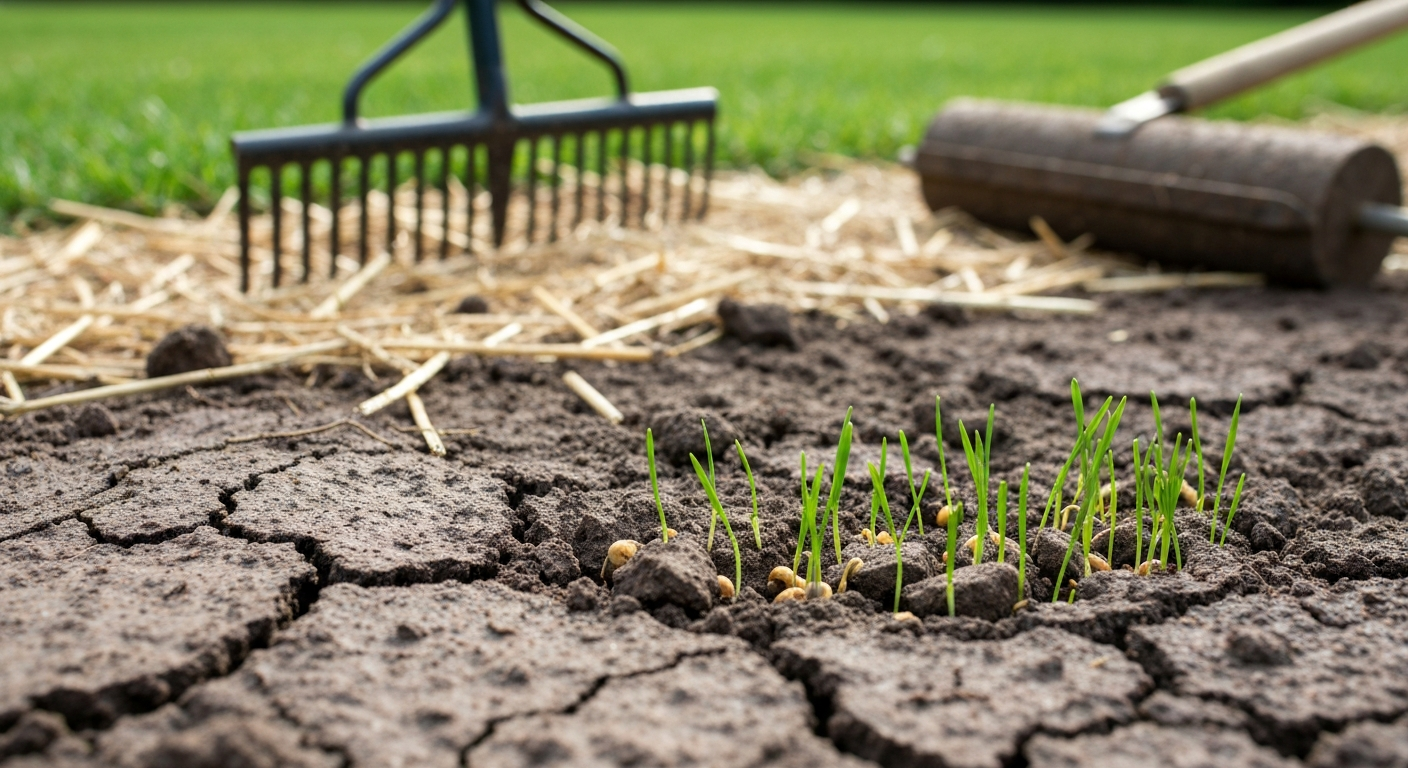
Rye will grow in clay if you address compaction and drainage before seeding. Cereal rye is the more forgiving option and will push through marginally compacted soil better than perennial ryegrass. Both species can establish from surface-seeding (seed placed on top of soil without tillage), but only if you follow up with packing, raking, or a slit seeder to create seed-to-soil contact. Leaving seed lying loose on the surface of bare clay almost always fails: the clay crust blocks emergence, birds and mice find the seed easily, and the seeds dry out between rain events. No-till is workable, but it is not the same as doing nothing. You still need mechanical contact.
Rye biology and varieties: cereal rye vs perennial ryegrass and which to choose
The word 'rye' gets used loosely and that causes real confusion at the seed counter. There are three distinct plants people mean when they say rye for lawn or cover-crop use, and they are not interchangeable. See the NC State Extension Plant Toolbox entry Secale cereale (Cereal Rye) | NC State Extension Plant Toolbox for a clear distinction and recommended uses of cereal rye versus other rye/ryegrass species.
- Cereal rye (Secale cereale): a winter annual grain, not a turfgrass. It is the hardiest small grain available and is widely used as a fall-sown cover crop to suppress weeds, scavenge nitrogen, and control erosion. It grows tall and goes to seed in late spring. If you want a lawn, this is not your plant. If you want fast ground cover, erosion control, or a cover crop over winter, cereal rye is excellent.
- Annual ryegrass / Italian ryegrass (Lolium multiflorum): a cool-season annual or short-lived biennial used for temporary cover, winter overseeding of warm-season turf, and forage. It germinates fast and establishes easily but will die out, so it is better suited to temporary situations than permanent lawns.
- Perennial ryegrass (Lolium perenne): a bunch-type turfgrass with medium-to-fine texture and fast germination. This is the species in most lawn seed mixes and the one used for winter overseeding of bermuda or zoysia lawns. It will persist for several years but is not a true permanent lawn grass in many climates.
Always check the seed tag. If you want a lawn, buy perennial ryegrass (Lolium perenne). If you want to protect bare soil over winter or build organic matter in a garden bed, buy cereal rye. Mixing them up is the single most common mistake I see homeowners make after purchasing a bag at the hardware store.
For clay soil specifically, cereal rye is the easier win because it tolerates poor drainage and compaction better and has a more vigorous root system. Perennial ryegrass will work on clay too, but it rewards you more when you put in the prep work first.
Germination and growth requirements: temperature, seed depth, moisture, and pH
Rye species share some germination basics but differ enough that the details matter, especially on clay where conditions are less forgiving.
| Factor | Cereal Rye | Perennial Ryegrass | Annual Ryegrass |
|---|---|---|---|
| Minimum germination temp | ~34°F (1°C) | ~41°F (5°C) | ~41°F (5°C) |
| Optimum germination temp | 54–65°F (12–18°C) | ~77°F (25°C) controlled; cooler in field | 50–65°F (10–18°C) |
| Ideal seeding depth | 0.75–1.5 in (drilled) | ~0.5 in or less | 0.25–0.5 in |
| pH range | 5.0–7.0, tolerates lower pH | 6.0–7.0 preferred | 5.5–7.0 |
| Moisture need at germination | Moderate; tolerates drier soils | Consistent surface moisture critical | Consistent surface moisture important |
Seed depth is where clay soil creates its first real problem. Perennial ryegrass germinates best from a very shallow placement of about half an inch or less. Research shows that seeds placed strictly on the surface (0 cm) with no soil contact have significantly lower emergence than seeds placed at even 1 to 2 cm depth. Clay soils that crust after rain effectively bury seed under a hard cap rather than loose soil, and seedlings lack the energy to push through. Cereal rye, because it is drilled deeper to begin with (up to 1.5 inches), is less vulnerable to this problem but needs a firm seedbed to make that depth count.
For pH, clay soils in many regions run slightly alkaline or have localized low spots with poor drainage that push pH down. Both perennial ryegrass and cereal rye prefer a pH somewhere between 6.0 and 7.0 for optimal nutrient uptake. A simple soil test before seeding tells you whether lime or sulfur is needed, and it is the cheapest improvement you can make before you spend money on seed.
How clay soils affect grass establishment: compaction, drainage, crusting, and nutrients
Clay soil is not a death sentence for rye, but it stacks several problems on top of each other that you need to understand before you seed. I have had clients come back to me frustrated after their seed 'just sat there and did nothing,' and nine times out of ten the clay was the culprit.
Compaction
USDA-NRCS bulk density data puts the threshold for clay soils at about 1.39 g/cm³ where root growth starts to be affected, and at 1.47 g/cm³ roots are genuinely restricted. Compacted clay lawns regularly hit or exceed these numbers, particularly in high-traffic areas. When soil is that dense, seedling roots cannot penetrate far enough to find water and the plant simply stalls after germination. You might see a brief flush of sprouts that then yellow and thin out, which is a classic sign of shallow rooting into a hard pan.
Drainage and waterlogging
Clay holds water longer than any other soil type because its tiny particles pack tightly and limit the macropores that allow drainage. For cereal rye used as a cover crop, this is less critical because the plant is tolerant of temporary wet conditions. For perennial ryegrass on a lawn, standing water longer than 24 to 48 hours after a rain event will rot germinating seeds and suffocate young roots. If you have areas that stay soggy, no amount of seed will give you a good stand until drainage is addressed.
Surface crusting
When clay dries after rain or irrigation, it forms a hard crust at the surface. This crust is the physical enemy of both surface-seeded grain and shallow-planted turf seed. Seedlings that germinate just below or at the surface hit the crust and bend sideways or give up. This is why even a light raking or dragging after broadcasting seed onto clay makes a measurable difference in stand establishment.
Nutrient availability
Clay soils are not inherently low in nutrients: in fact, the clay particles hold cations like calcium, magnesium, and potassium quite well. The problem is that compaction and poor drainage limit root access to those nutrients and can create anaerobic conditions that reduce nitrogen availability. A soil test that covers pH, nitrogen, phosphorus, and potassium is worth doing before you invest in seed and amendments.
Can rye germinate on top of clay or in no-till (seed-on-top) situations?
This is probably the most common question I get, and the honest answer is: sometimes yes, but often not as well as you need it to. Whether you are wondering if ryegrass will grow on top of soil or whether it will grow without tilling, the answer is the same: the seed needs contact with moist soil particles to germinate reliably. See will ryegrass grow on top of soil for step-by-step guidance and specific tips (resource ID 60c25d8d-801e-442d-a513-216ce3e3d7e2). For a focused discussion on this exact question, see the section on whether rye will grow on top of the ground will rye grow on top of the ground. If you're wondering whether whole oats can be used to grow grass, see our guide on whether whole oats can be used to grow grass. Clay makes that harder than loam does. If you're also curious whether oats can be surface-seeded, see will oats grow on top of the ground for tips specific to oats.
Cereal rye broadcast onto a freshly tilled or disturbed clay surface with no further incorporation can still establish, particularly if you follow immediately with a roller or cultipacker to press seed against the soil. Studies and extension trials consistently show that broadcast seeding works, but gives less uniform stands and lower early biomass than drilled seeding. Broadcasting on undisturbed clay without any follow-up rolling or raking is the riskiest approach, and the one most likely to waste your seed money.
For perennial ryegrass on a lawn surface, completely no-till broadcast seeding (scatter and walk away) produces poor results on clay because surface crusting, lack of contact, and exposure to drying are all working against germination. Overseeding into existing turf is more forgiving than seeding bare clay, because the existing grass canopy holds some moisture and reduces crust formation, but you still need mechanical help to get seed into the soil.
Surface-seeding (broadcast/on-top) techniques and how to improve seed-to-soil contact
If you cannot till or use a drill, you can still get a decent stand with surface seeding on clay, as long as you treat it as a process rather than a one-step task. Here is what actually works.
- Mow or cut existing vegetation as short as possible before broadcasting. Residue and thatch act as a physical barrier between seed and soil. The closer you get seed to the actual soil surface, the better.
- Broadcast seed at a rate 10 to 20 percent higher than the standard drilled rate to compensate for the lower contact and higher predation risk from birds and insects on exposed seed.
- Follow seeding immediately with a lawn roller, cultipacker, or even a piece of chain-link fence dragged over the surface. The goal is physical pressing of seed against moist clay particles.
- Rake lightly if you do not have a roller. Even a garden rake pulled lightly across broadcast seed moves some seed into surface irregularities and breaks the smooth clay crust.
- Apply a thin layer of straw mulch (one bale per 1,000 square feet is a reasonable guideline) or a quarter-inch of compost over the seeded area. This holds moisture, reduces crusting, and protects seed from birds.
- Water lightly and frequently immediately after seeding. On clay, apply water in short runs to allow infiltration and prevent runoff that moves seed. Multiple short irrigations per day during the first week are better than one deep soak.
The compost topdress step is particularly useful on clay because it adds organic matter right where germinating roots will first encounter soil, creating a slightly more hospitable zone even if the clay below remains compacted. Over multiple seasons of this approach, you will see genuine improvement in your soil structure.
No-till and overseeding methods: slit seeders, aeration plus topdress, and mechanical options
If you are overseeding an existing lawn or establishing rye in a no-till situation, mechanical options give you dramatically better results on clay than surface broadcasting alone. All of these tools are available for rent at most equipment rental yards and garden centers.
Slit (slice) seeding
A slit seeder cuts narrow furrows in the soil surface with rotating blades and drops seed directly into those slits. This is the closest you can get to drilled seeding without full tillage and it is the single best tool for overseeding a clay lawn. The blades mechanically break the clay crust, the furrow gives the seed the shallow burial it needs, and firm soil on either side of the slit provides contact. For perennial ryegrass on a clay lawn, I consistently recommend a slit seeder over any broadcast method.
Core aeration followed by seeding and topdressing
Core aeration removes plugs of soil roughly three-quarters of an inch in diameter and up to three inches deep. On clay, this temporarily relieves compaction, creates physical holes that seed can fall into, and opens channels for water and air penetration. After aerating, broadcast your seed so it falls into and around the core holes, then topdress with a quarter to half inch of compost and water it in. This method builds long-term soil structure over multiple seasons in a way that a single seeding never will. Aim for 20 to 40 holes per square foot if your aerator allows it, and repeat annually on compacted clay.
Vertical mowing (verticutting) before overseeding
For overseeding into existing turf on clay, running a vertical mower (dethatcher) across the lawn before broadcasting seed removes thatch and scarifies the surface, creating grooves that collect seed and improve contact. It is a less precise method than slit seeding but is useful when your lawn has significant thatch buildup on top of clay.
What about deep tillage or ripping?
For severe subsoil compaction on large areas, mechanical deep ripping is effective and is the approach NRCS recommends for agricultural-scale problems. For most homeowners with a compacted clay lawn, this is impractical. Regular core aeration combined with compost topdressing repeated over two to three seasons is the realistic path to genuinely improving clay structure without heavy equipment.
When to plant and recommended seeding rates
Timing is where a lot of rye seedings fail on clay even when everything else is right. Clay soils stay wet longer in spring and stay warm longer into fall, which affects your planting windows compared to loam or sandy soils.
Fall seeding (the preferred window for most rye)
Fall is the best time to seed both cereal rye and perennial ryegrass in most of the country. Cereal rye can be seeded as late as soil temperatures allow, right down to near-freezing conditions. Extension sources (Cereal Rye, Michigan Cover Crop Fact Sheet (MSU & NRCS)) report cereal rye can germinate down to about 34°F (1°C) and recommend drilling seed 0.75–1.5 inches deep for reliable emergence blank" rel="noopener noreferrer">Cereal Rye — Michigan Cover Crop Fact Sheet (MSU & NRCS). For perennial ryegrass used in lawns, aim for when soil temperatures are consistently between 50 and 65 degrees Fahrenheit, typically late August through October in most northern states and into November further south. Clay soils in fall are usually moist enough from summer rains and cooling temperatures to support germination without heavy irrigation, which is a real advantage.
Spring seeding
Spring seeding of perennial ryegrass on clay is trickier. Clay soils stay saturated longer after winter, meaning you often cannot work the ground or run equipment across it without making compaction worse. Wait until the surface is firm enough that you do not leave deep footprints before attempting to aerate or slit-seed. Once soil temperatures reach 50°F consistently, perennial ryegrass will germinate, but spring seedings face increasing heat stress as summer approaches and often produce thinner stands than fall seedings. Cereal rye is typically not planted in spring except as a short-season cover crop, since it will bolt quickly once temperatures rise.
Seeding rates by method and species
| Species / Use | Drilled or Slit-Seeded Rate | Broadcast Rate (surface) | Notes |
|---|---|---|---|
| Cereal rye (cover crop) | ~1.4 lb per 1,000 ft² (~60 lb/acre) | 1.6–1.7 lb per 1,000 ft² (+10–20%) | Increase broadcast rate on clay due to poor contact |
| Perennial ryegrass (new lawn) | 4–6 lb per 1,000 ft² | 5–8 lb per 1,000 ft² | Higher end for clay or renovation seeding |
| Perennial ryegrass (overseeding) | 3–5 lb per 1,000 ft² | 4–6 lb per 1,000 ft² | Use slit seeder or aerate first on clay |
| Annual ryegrass (winter overseeding) | 5–8 lb per 1,000 ft² | 8–10 lb per 1,000 ft² | Commonly overseeded into warm-season turf in fall |
Do not be tempted to cut rates on clay to save money. The conditions that clay creates (crusting, compaction, poor contact) already reduce your effective germination percentage, so starting with the lower end of the rate range means even fewer plants reach establishment. On clay, lean toward the higher recommended rates every time.
Watering and keeping seedlings alive on clay
Irrigation on clay is a balancing act. The seed zone needs to stay consistently moist for the first 7 to 14 days after seeding, which usually means light watering once or twice a day. The problem with clay is that it absorbs water slowly: if you apply more water than the soil can accept in a short run, the excess runs off the surface and carries seed with it. Short irrigation cycles of 5 to 10 minutes, repeated two or three times per day, outperform a single 20-minute soak on clay. Once seedlings are visible and have their first true leaves, you can begin stretching the interval between waterings to encourage deeper rooting.
Troubleshooting: when to amend, repair, or consider alternatives
Sometimes the honest answer is that the clay is too far gone for grass to establish without significant intervention. Here is a quick decision checklist based on what I see most often. For another relevant comparison, see will ryegrass grow without tilling.
| Situation | Recommended Action |
|---|---|
| Thin or patchy existing lawn on clay, mostly firm ground | Core aerate, slit-seed with perennial ryegrass, topdress compost, water daily for 2 weeks |
| Bare clay after construction or grading | Loosen top 2–3 inches if possible, seed cereal rye for first winter to build organic matter, overseed with turf species the following fall |
| Clay that stays waterlogged for days after rain | Address drainage first (French drain, grading, raised planting area) before seeding anything |
| Severely compacted clay with bulk density above ~1.47 g/cm³ | Repeated annual core aeration + compost topdress over 2–3 seasons; consider contractor deep-tine aeration for large areas |
| pH outside 6.0–7.0 | Soil test, apply lime to raise pH or elemental sulfur to lower it; retest before seeding |
| Consistent failure after two attempts | Consider contractor consultation, soil replacement in problem zones, or alternative groundcovers tolerant of poor drainage |
One thing I always caution against: adding large amounts of coarse sand to clay soil in an attempt to improve drainage without professional soil testing and a precise mixing ratio. Adding the wrong proportion of sand to clay can actually create a concrete-like mixture that is harder to work with than the clay alone. Compost is a far safer amendment for home lawns, and it builds soil biology along with structure.
If your situation involves seeding on top of undisturbed soil rather than clay specifically, the same logic applies: mechanical contact is the non-negotiable step. Whether you are asking if ryegrass will grow on top of soil or if it will grow without tilling, the answer in both cases comes back to finding a way to get seed against moist soil, whether that is a slit seeder, a roller after broadcasting, or a well-timed rain followed by raking. The seed biology does not change just because the method does.
FAQ
Will rye (cereal rye or ryegrass) grow in clay soil?
Yes — but results depend on which 'rye' you mean and on clay constraints. Cereal rye (Secale cereale) and ryegrasses (Lolium spp.) will germinate and produce growth in clay if basic needs are met: good seed‑to‑soil contact, adequate moisture, and reasonable surface conditions. Clay limitations (compaction, poor aeration, surface crusting, slow infiltration, extreme wetness or droughty hardpan) reduce emergence and root development. Cereal rye is tough as a cover crop and tolerates heavy soils better than many species, while perennial/annual ryegrasses used for turf need shallower seed placement and better surface contact to establish reliably on clay.
Will rye grow when I just broadcast seed on top of the soil (seed‑on‑top/no‑till/surface seeding)?
Sometimes — but surface broadcasting without improving seed‑to‑soil contact is the least reliable method on clay. Broadcasted seed can work if you: increase the seeding rate to compensate for losses, lightly rake/drag to mix seed into the surface, roll or cultipack to firm contact, keep the surface consistently moist, and remove thick residue that blocks contact. On compacted or crust‑prone clay, emergence often fails unless you use slit seeding, drill, or core aeration first.
Which rye should I use: cereal rye, annual (Italian) ryegrass, or perennial ryegrass?
Choose by purpose: - Cereal rye (Secale cereale): best as a fall‑sown cover crop for biomass, erosion control and nitrogen scavenging; winter annual habit (not a lawn grass). - Annual/Italian ryegrass (Lolium multiflorum): fast germination, good for temporary forage, cover or winter overseeding of warm‑season lawns; establishes with shallow placement. - Perennial ryegrass (Lolium perenne): a turfgrass/overseeding choice for lawns — germinates quickly but is a bunch‑type with moderate persistence. Do not substitute names on seed tags; they are different species with different management and longevity.
What germination conditions do rye seeds need on clay?
General rules: - Cereal rye will germinate at low temperatures (near freezing) but needs seed‑to‑soil contact and some burial (recommended drill depth ¾–1.5 in for cereal rye). - Perennial/annual ryegrass prefers warmer cool‑season temperatures (optimal germination near ~65–77°F/18–25°C) and shallow placement (¼–½ in). - On clay, maintain consistent surface moisture (light, frequent waterings) and avoid crusting by keeping the surface damp and using a roller or light mulch where appropriate.
What seeding rates should I use on clay for different rye types?
Typical guidance (adjust upward for broadcast/no‑till to offset poorer contact): - Cereal rye (cover crop): ~60 lb/acre drilled (≈1.3 lb/1,000 ft²); broadcast rates often increased by 10–25%. - Perennial ryegrass (turf renovation): ~4–6 lb/1,000 ft² (use 5–8 lb/1,000 ft² for heavy renovation); increase rate if surface broadcasting. - Annual/Italian ryegrass (temporary overseeding): ~5–10 lb/1,000 ft² depending on desired density. For surface broadcasting on clay, plan to increase rates and ensure seed is firmed into contact by raking/rolling.
How should I surface‑seed or overseed rye on a clay lawn for best success?
Best practices: - Prepare: mow low, remove debris, and lightly rake to loosen the surface. - Create contact: core aerate or use a slit seeder (slice seeder) before seeding. If no equipment, drag a chain, stiff rake or use a lawn roller after broadcasting. - Seed depth: keep ryegrass very shallow (~¼–½ in) — don’t bury turf rye deep; cereal rye needs modest burial if used as a cover crop. - Firm and irrigate: lightly roll or tamp and keep the seedbed consistently moist with light, frequent irrigation until seedlings establish. - Topdress: after core aeration, work compost into cores to improve long‑term structure on clay.
Next Articles

Will Ryegrass Grow Without Tilling? How to Succeed No-Till
Learn if ryegrass grows without tilling and get a no-till seeding plan for success with surface prep, timing, and wateri
Does Whole Oats Grow Grass? What to Expect and How to Use It
Whole oats can sprout quickly, but they grow oat plants, not real grass lawn, so use for temporary cover, not permanence
Will Oats Grow on Top of the Ground? How to Seed Correctly
Will oats sprout on bare soil or under mulch? Get seeding depth, moisture, and fixes for surface-sown oats.