
Switchgrass can grow in wooded areas, but only under the right conditions, and those conditions are narrower than most people expect. The short version: if your woods get 4 or more hours of direct sun daily and the canopy is open enough to qualify as a woodland edge, savanna, or thinned stand, you have a realistic shot. If you're looking at a closed-canopy forest where sunlight barely hits the ground, switchgrass will struggle to establish and almost certainly won't thrive long-term. Knowing which situation you're actually in is the most important thing you can figure out before you spend money on seed or plugs.
Will Switchgrass Grow in the Woods? How to Decide and Succeed
Marcus Volkmann
2 Jun 2026
What switchgrass actually is and where it wants to live
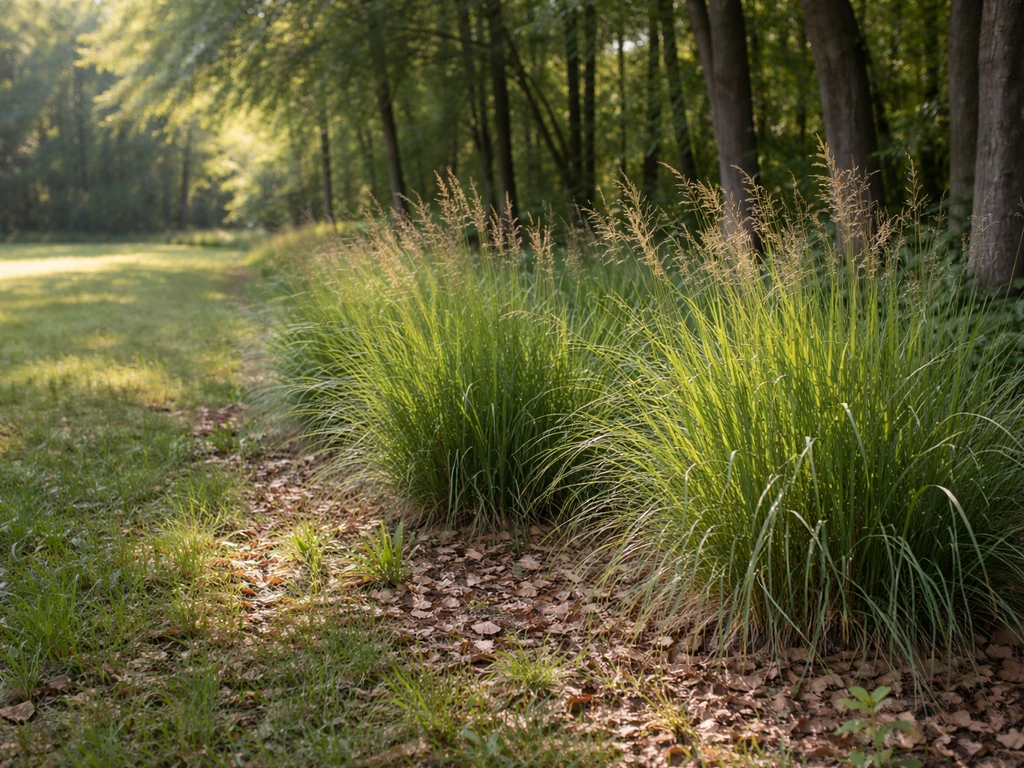
Switchgrass (Panicum virgatum) is a native warm-season perennial grass that's originally at home on prairies, open savannas, roadsides, and riverbanks across a huge swath of North America. It's hardy in USDA zones 3 through 9, meaning it handles brutal cold winters and sweltering summers with equal ease.
It's also one of the most adaptable native grasses you can plant: it tolerates drought once established, handles poorly drained soils that would drown other species, and grows across a wide pH range of roughly 6 to 8. Mississippi State Extension specifically calls it 'high drought tolerant,' and the NRCS describes it as one of the most adaptable species for soil types. That adaptability is real, and it's why so many people try it in challenging spots.
But here's what trips people up: switchgrass is classified as shade-intolerant by the NRCS. It does best in full sun, and every major extension service, from Oklahoma to Wisconsin to Georgia, says the same thing. Part shade is workable. Too much shade and the plants get floppy, weak-stemmed, and eventually fail to compete with woodland understory vegetation. The plant's natural habitat is open ground, not forest understory, and that matters a lot when you're sizing up your specific woods.
The real challenges your woods will throw at switchgrass
Light is the biggest issue, but it's not the only one. When you're working in or around a wooded area, you're dealing with a set of stacked problems that each chip away at switchgrass's odds of success.
- Shade: A dense canopy dramatically cuts photosynthetically active radiation. Switchgrass needs at least 4 hours of direct sun, and performance drops off sharply below that threshold. Even partial shade can cause the classic 'floppy plant' problem noted by both Oklahoma State and Wisconsin Extension, where the stems lean and lodge rather than standing upright.
- Root competition: Mature trees, especially shallow-rooted species like maples and beeches, run aggressive lateral roots through the topsoil. Those roots compete directly with switchgrass for water and nutrients, and in dry spells, the tree almost always wins.
- Moisture swings: Woodland soils often go from very wet in spring (snowmelt, rain) to surprisingly dry in summer, when tree canopies intercept rainfall and roots pull soil moisture down fast. Switchgrass can handle both extremes to a point, but the rapid swings during establishment are stressful.
- Leaf litter and thatch: A deep layer of decomposing leaves smothers seedlings, creates an unstable seedbed, and hosts slugs and fungi. This is one of the most underrated obstacles in woodland plantings.
- Soil compaction and chemistry: Woodland soils under mature trees are often acidic, compacted, and low in phosphorus. Switchgrass can manage in a wide pH range, but heavily acidic or nutrient-depleted soils slow establishment considerably.
The US Forest Service research on switchgrass establishment in thinned pinelands on the Lower Coastal Plain of NC is telling here: even in a managed, partially open forested setting, establishment success varied meaningfully based on site preparation. The site prep work is doing heavy lifting to compensate for exactly these stacked problems.
Will it actually grow in your woods? Here's how to decide
Before you do anything else, go out and honestly assess your site using these three decision factors. This will tell you whether your answer is 'yes,' 'maybe with work,' or 'no, try something else.'
| Condition | Yes (worth trying) | Maybe (marginal) | No (don't bother) |
|---|---|---|---|
| Direct sunlight per day | 6+ hours (woodland edge, opening) | 4–6 hours (thinned canopy, dappled light) | Under 4 hours (closed canopy, deep shade) |
| Canopy density | Open, savanna-like, or edge | Partially thinned, light gaps present | Dense, continuous closed canopy |
| Soil drainage | Well-drained to moderately wet | Seasonally wet but not waterlogged | Permanently waterlogged or heavily compacted hardpan |
| Tree root competition | Minimal (sparse trees, deep-rooted conifers) | Moderate (some root competition) | Severe (dense shallow-rooted hardwoods, e.g., silver maple) |
| Leaf litter depth | Thin or absent | 1–2 inches, manageable with raking | 3+ inches of matted, compacted duff |
The sweet spot for switchgrass in a wooded context is what the Forest Service describes as thinned or open woodland, essentially a savanna opening, a woodland edge, a utility right-of-way cutting through trees, or a stand that's been selectively thinned. If you're looking at a dense forest interior, redirect your energy to the alternatives section below. If you're on the edge or in an opening, keep reading.
How to get the site ready before you plant
Site preparation is where woodland switchgrass projects succeed or fail. Research on establishment in forested settings shows that site prep treatments directly affect stand metrics like percent cover, tiller density, and biomass. Don't skip this step or rush it.
Clear the leaf litter and existing competition
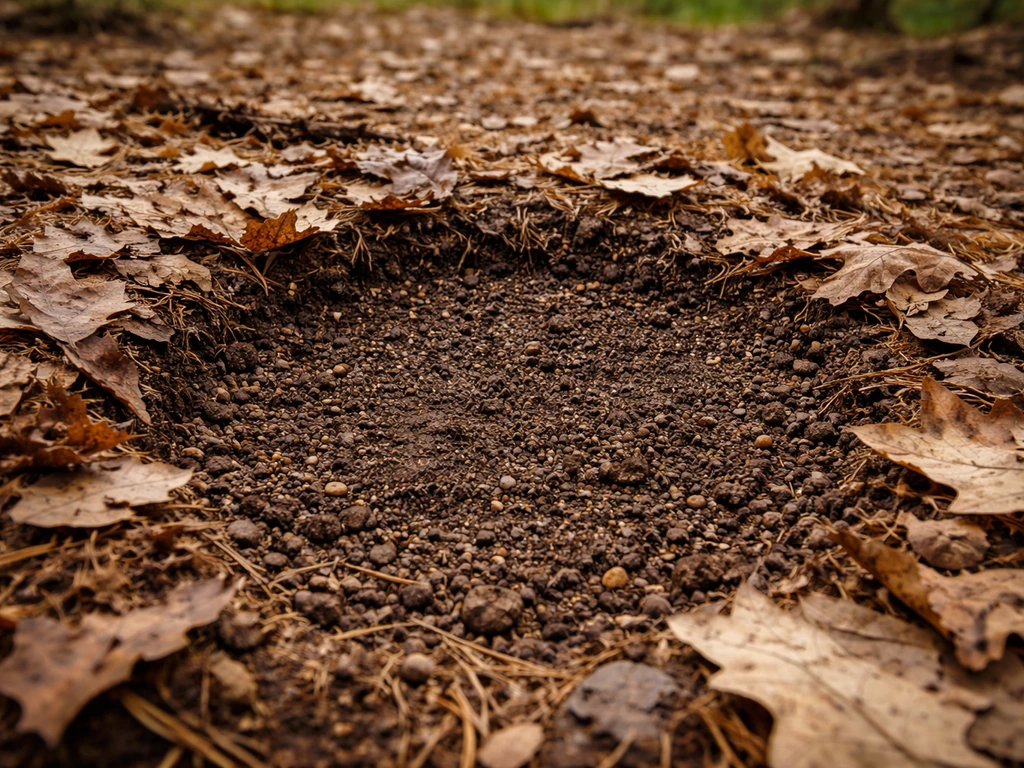
Rake out or till under thick leaf litter before planting. A deep duff layer prevents seed-to-soil contact, which is non-negotiable for good germination. If you're dealing with existing grass, weeds, or woody brush, knock them back aggressively before you plant. Spot-clearing the planting zone and, where feasible, applying a non-selective herbicide a few weeks ahead of planting gives switchgrass the clean start it needs. Just be aware: once you've prepared your seedbed, avoid re-tilling the soil afterward. The Michigan Wildlife Conservancy makes this point clearly: disturbing the soil again after initial prep creates a new weed seedbed, which is the last thing you want during switchgrass establishment.
Soil amendments and pH
Pull a soil test before you amend anything. Most woodland soils under hardwoods are acidic, often in the 4.5 to 5.5 pH range. Switchgrass performs across pH 6 to 8, so if your test comes back very acidic, lime applications are worth the effort. Work lime in at least a few weeks before planting so it has time to react with the soil. If the soil is heavily compacted, a single pass with a broadfork or a rented core aerator breaks up the surface enough to improve seed contact and early root penetration. Avoid deep tilling in areas with heavy tree roots; surface preparation is usually enough and causes less root damage to your trees.
Drainage
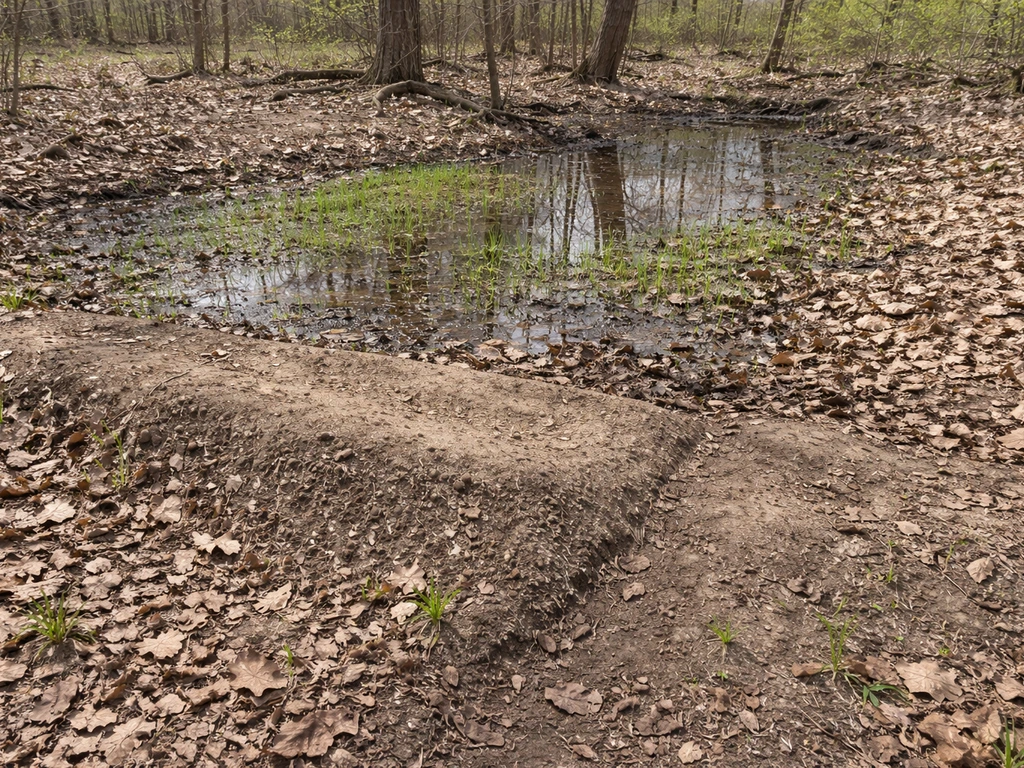
Switchgrass handles seasonally wet sites well, but standing water during the germination period will kill seedlings. If your site ponds in spring, consider shallow surface grading or a simple French drain to move water off before you plant. For most woodland edges, drainage isn't a major issue, but it's worth watching after heavy rain to know what you're dealing with.
Planting switchgrass in the woods: timing, seed vs plugs, and spacing
When to plant
Switchgrass is a warm-season grass, so timing matters. In most regions, you have two windows: a spring window from April to May, and a late-summer window from mid-July to late August (this is the guidance from Mississippi State Extension). Spring planting catches warm soil temperatures and natural rainfall. Late-summer planting works well in regions with reliable late-season moisture. Avoid planting in the heat of early summer when soil moisture is unpredictable and seedling stress is highest.
Seed vs plugs vs rhizomes
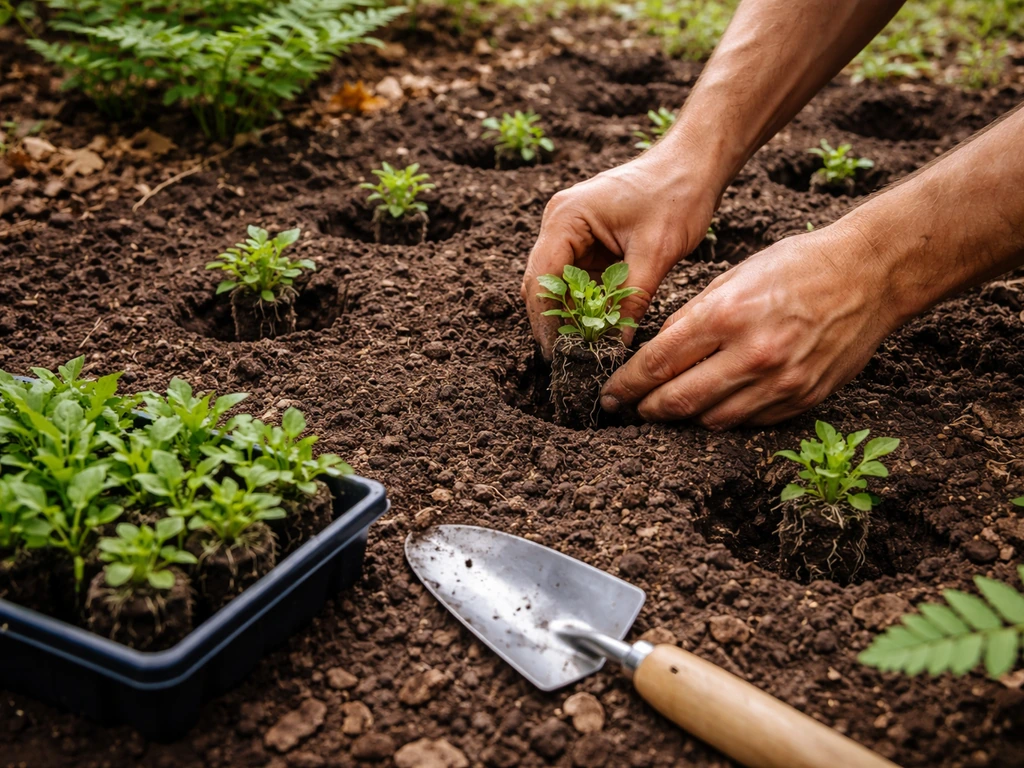
For a woodland site specifically, plugs or divisions (rooted transplants) give you a meaningful advantage over direct seeding. If you want the clearest, tree-friendly approach, focus on how to grow grass under oak trees by managing light, soil prep, and competition in a way that matches an oak canopy woodland site specifically. Plugs already have an established root system, so they're less vulnerable to competition from weeds and tree roots during those critical first weeks.
Seed is cheaper per area and makes sense for large openings, but in a challenging woodland environment with significant competition, the higher cost of plugs often pays for itself in establishment success. If you do seed, use a grassland drill if you have access to one, target around 5 to 6 pounds of pure live seed (PLS) per acre at about a half-inch depth, and firm the seedbed with a cultipacker after seeding to ensure good soil contact.
For smaller yard-scale patches, spacing plugs about 18 to 24 inches apart is a practical starting point.
Reducing competition at planting time
Switchgrass is notoriously slow to establish: UW Extension notes that much of the plant's first-year energy goes into building a deep root system rather than visible top growth. During this establishment window, weed competition is your biggest enemy. Before planting, spot-clear any aggressive understory plants. Around the planting area, consider a narrow mowed or cleared buffer to reduce seed rain from surrounding weeds. If aggressive vines or woody plants are nearby, cut them back hard so they're not shading your new planting while it's getting started.
Keeping the plants alive and growing after planting
Watering through establishment
The first full growing season is the hardest. Keep your planting moist but not waterlogged during germination and early growth. In a woodland setting, tree canopies intercept rainfall, so don't assume rain is reaching your planting at ground level. Check soil moisture at the root zone manually and supplement with irrigation during dry stretches. Once switchgrass has been in the ground for a full season and is showing strong tiller development, you can back off watering significantly. It's that first year where irrigation makes or breaks the stand.
Mowing during establishment
In the establishment year, mowing is about weed control, not managing your switchgrass. The standard approach from UGA Cooperative Extension: when weeds reach 18 to 24 inches tall, mow the whole stand down to 6 to 8 inches. This tops the weeds without cutting switchgrass crowns at the soil surface. Don't mow lower than that. UW Extension adds that you generally shouldn't mow or graze the seeding-year stand unless weed pressure forces it. The goal is to keep weeds from shading out your young switchgrass without stressing the plants themselves.
Weed control strategy
Mowing handles a lot, but in a woodland setting you may also be dealing with aggressive broadleaf invaders from the surrounding forest edge. Labeled broadleaf herbicides can be used when necessary, and there are products like Weedar 64 that are labeled for certain broadleaf and foxtail situations in switchgrass stands. Always check the label to confirm the product is safe to use over established switchgrass and appropriate for your specific weed species. The core rule is: keep the weed pressure off the stand during the first two years, and switchgrass will reward you once it's rooted in.
Burning and long-term stand management
Prescribed burning is the gold standard for managing mature switchgrass stands in open areas, because it removes accumulated thatch, recycles nutrients, and keeps woody encroachment in check. In a woodland context, burning is usually not a practical or safe option because of the surrounding tree canopy and fire risk. Instead, plan on aggressive annual or biennial mowing in late winter (before new growth emerges) to clear the previous year's dead stems and reset the stand. This mimics the ecological role of fire well enough for most home and small-farm situations.
When the woods are too shady: what to plant instead
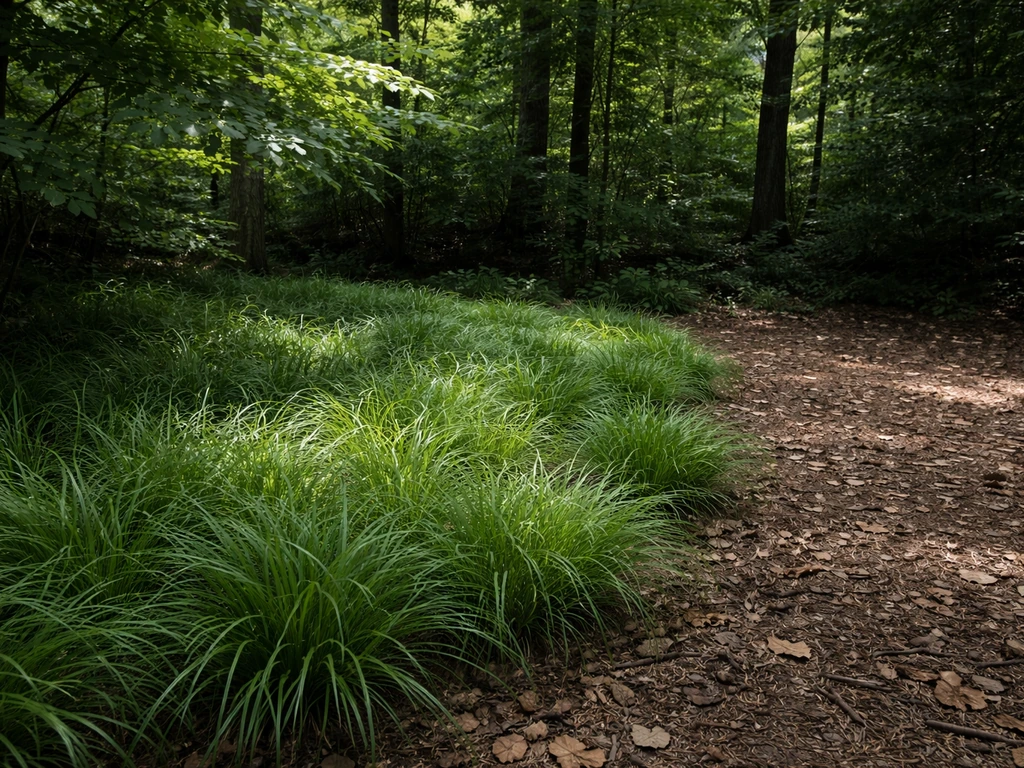
If your honest site assessment puts you in the 'no' or 'maybe not' column, don't force switchgrass where it won't thrive. There are better options for heavily shaded or heavily competitive woodland understories, and picking the right one saves you a lot of frustration.
| Plant | Shade tolerance | Best use in woods | Notes |
|---|---|---|---|
| Pennsylvania sedge (Carex pensylvanica) | High | Dry to medium woodland ground cover | Spreads by rhizomes, low-maintenance, grass-like appearance |
| Wild ginger (Asarum canadense) | High | Moist, shaded forest floor | Broadleaf groundcover, suppresses weeds once established |
| Creeping red fescue (Festuca rubra) | Moderate to high | Lightly to moderately shaded woodland edges and thin turf | Cool-season grass, tolerates shade better than most turf grasses |
| Wood sedge (Carex sylvatica) | High | Moist shaded woodland understory | Elegant, clumping, handles deep shade well |
| Ostrich fern (Matteuccia struthiopteris) | High | Moist shaded areas, streamside woodland | Aggressive spreader, useful for erosion control under trees |
| Eastern gamagrass (Tripsacum dactyloides) | Moderate | Woodland edges and savannas, wetter soils | Native warm-season grass, handles more shade than switchgrass |
If your goal is forage or wildlife habitat in a partially open woodland, Eastern gamagrass is worth a serious look. It tolerates more shade than switchgrass and handles wet soils. For pure ground cover and erosion control under trees, Pennsylvania sedge and creeping red fescue are two of the most reliable performers you can plant. If you've recently removed trees and are reestablishing grass in that area, the soil and light conditions will be different enough that switchgrass or other species may become viable options in the coming seasons. After tree removal, you may need to recheck sunlight and prepare the soil so grass can take hold reestablishing grass in that area.
For woodland edges and buffer strips between a wooded area and a lawn or field, switchgrass actually fits well. If you want step-by-step guidance specific to yard-scale areas, this is the same approach covered in our guide on how to grow grass under a tree. Penn State Extension and NRCS riparian buffer guidance both include warm-season grasses like switchgrass as standard species for transition zones. If you have a defined edge rather than a shaded interior, that's exactly the kind of site where switchgrass earns its reputation. The key is being honest about whether your site is a true woodland edge or a shaded interior, because those are very different growing environments, and switchgrass performs very differently in each.
Your next steps, in order
- Measure your sunlight honestly. Spend a day observing how many hours of direct sun hit your proposed planting area. Less than 4 hours means you should skip to the alternatives section.
- Pull a soil test. Your local extension service can process one for about $15 to $20. Look at pH first: if you're below 5.5, plan on liming before you plant.
- Scout for root competition and drainage issues. Walk the site after a rain and check how quickly water moves through. Note where tree roots are concentrated.
- Clear the site at least 3 to 4 weeks before planting. Rake out leaf litter, cut back competing plants, and apply herbicide if needed. Do not re-till after the seedbed is prepared.
- Choose seed or plugs based on your site difficulty. Go with plugs for a challenging woodland site; use seed only in larger open areas with lower competition.
- Plant in your spring window (April to May) or late summer window (mid-July to late August).
- Water through the first growing season and mow defensively when weeds hit 18 to 24 inches, cutting back to 6 to 8 inches.
- Plan on late-winter mowing in years two and three to manage thatch and keep the stand vigorous.
FAQ
If my woods only get a little sun, can I still make switchgrass work with extra fertilizer or better soil?
Switchgrass is unlikely to thrive in a true closed-canopy forest even if the soil is decent, because it is shade-intolerant and will be outcompeted by the understory. If you only have 1 to 3 hours of direct sun, plan on a “maybe with work” only if you also have a realistic way to create an opening (for example, selective thinning or using a maintained right-of-way style corridor). Otherwise, choose a more shade-tolerant grass or sedge for the interior.
How do I measure whether the “4 or more hours of direct sun” is truly enough in my woods?
Yes, but you need to verify the specific tree cover before you spend on seed. A woodland edge can shift over time, so re-measure light during the growing season (use a second check in late spring and mid-summer). Also watch for seasonal canopy changes, like leaf-out density, because shade during peak growth has a bigger impact than brief sun gaps.
What’s the most common mistake people make when they clear the planting area?
Creeping groundcovers and invasive weeds can be a bigger problem than tree roots, because they compete immediately for light and moisture. Create a clean zone at planting, then keep a narrow cleared buffer around it so weed seed rain does not constantly re-seed the area. If you see vigorous regrowth after you clear, use that as a sign you need more aggressive pre-treatment or plug planting to get ahead.
Can switchgrass grow in woods that get soggy in spring?
It is possible, but expect the first year to be more fragile. The key risk is standing water during germination, if water sits on the surface after heavy rain. If you have spring ponding, do not rely on “eventual drainage,” instead address it before planting (for example, shallow surface grading or a French drain) and plant only after the site stops pooling.
Is deep tilling under trees a good idea to help switchgrass establish?
Core aeration or light surface disturbance is helpful for seed-to-soil contact, but deep tilling near large tree roots can damage roots and create new weed habitat. If you already have an intact duff layer, focus on removing the thick litter first, then do minimal soil disturbance where needed. Firming after seeding matters, because loose soil can cause seed to dry out or wash.
When should I choose plugs or divisions instead of direct seeding in a wooded setting?
Direct seeding can work, but plug or division planting is usually the safer choice when there is heavy understory competition or significant root sorption from nearby trees. Plugs also give you a head start before weeds get tall enough to shade the young grass. If you choose seed, be prepared for more follow-up mowing and possibly supplemental weed control in year one and two.
How shallow or deep should I plant switchgrass seed for a woodland edge site?
If you seed too shallow, you increase drying and reduce germination, if you seed too deep you slow emergence and reduce stand uniformity. For most practical woodland seedbeds in this context, aim around a half-inch depth and then firm the soil so the seed contacts mineral soil rather than sitting on top of duff or debris.
How often should I water switchgrass the first year in the woods?
In a woodland, the canopy can block rainfall and increase evaporation, so visual cues can be misleading. Check soil moisture at the root zone by digging a small plug of soil a few inches down, then irrigate during dry stretches to keep it consistently moist but not waterlogged. Once you have strong tillers after the first season, you can reduce irrigation frequency.
If I’m mowing for weed control, how do I avoid accidentally stressing switchgrass?
Do not mow to “control appearance,” keep mowing driven by weed height and timing. When weeds reach the cited 18 to 24 inch range, mowing down to 6 to 8 inches helps suppress weeds without cutting into the switchgrass crown. Also time the mowing in late winter when possible, because you want to reset the stand before new growth begins.
Can I use broadleaf herbicides in my switchgrass stand, and when is it safe?
Herbicide choices depend on the weed type and whether your switchgrass is established enough for the product you select. The safe approach is to match label directions to your weed species and crop stage, then spot-treat rather than blanket-spray when possible in a mixed woodland area. If you cannot confirm “safe over established switchgrass,” plan on mechanical control (mowing and spot-clearing) for the first two years instead.
Is prescribed burning ever an option for establishing switchgrass in the woods?
Yes, burn-offs are generally different from mature stand prescribed fire. In woodland settings, you usually cannot safely burn due to surrounding canopy and fire spread risk, so rely on late-winter mowing to remove thatch. If you want fire-like effects, the closest practical substitute is consistent mowing that prevents woody encroachment and resets dead stems annually or biennially.
Why does my switchgrass look sparse after planting in a wooded area?
Avoid expecting switchgrass to fill in quickly. The first year focuses on root development, so partial cover is normal, and the stand typically looks thinner before it thickens. Use that first-year window to control weeds aggressively and ensure moisture during establishment, then reassess stand density after the first full growing season.
What should I plant instead if my site is too shaded for switchgrass?
If your light and canopy assessment shows “no,” switching species can prevent wasted time. For more shade and wetter soils, eastern gamagrass is often a better fit, and for ground cover under trees, sedges and creeping red fescue are more reliable options. If you recently removed trees, re-check sunlight and re-do soil prep before deciding, because conditions can improve enough in a year or two.
Will switchgrass work better along the border of the woods than deep inside?
Yes, but treat it as a buffer edge project, not an interior woodland project. Switchgrass tends to perform well where there is a defined sun-fed edge, like a transition zone between a lawn and a wooded area, or a maintained right-of-way corridor. If your “edge” is actually an interior pocket that stays shaded, the same species may underperform, so keep the site classification clear before planting.
Next Articles
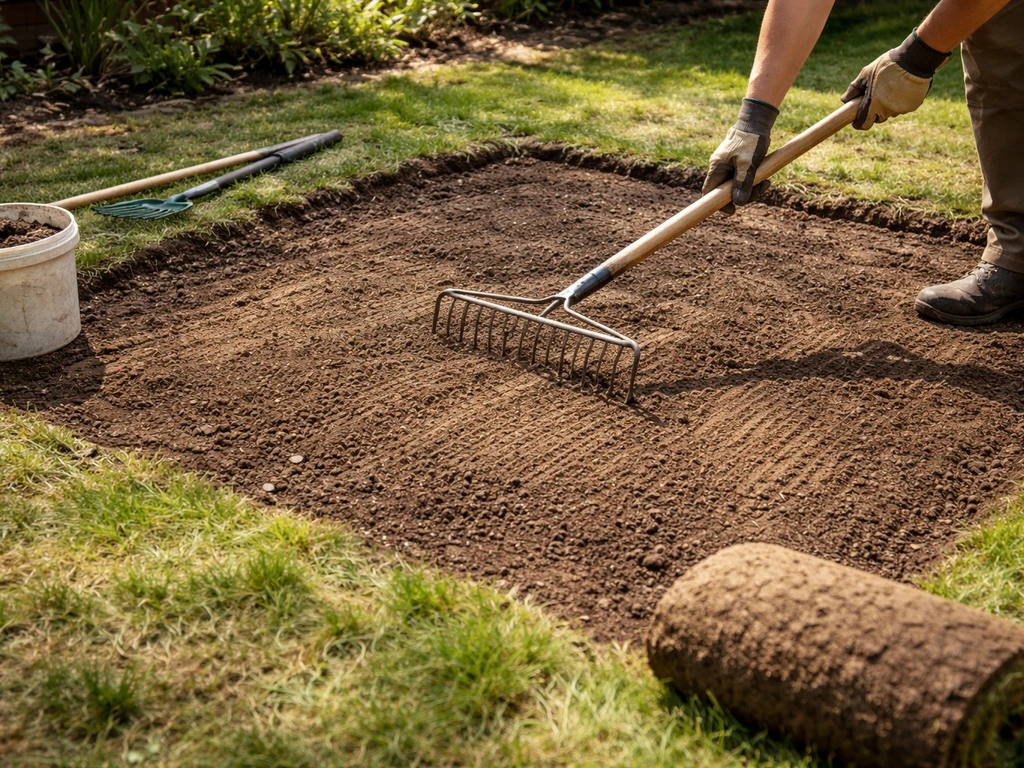
How to Grow Grass After Tree Removal: Step by Step
Fix a bare tree-removal spot: soil prep, root cleanup, sun and drainage checks, then seed or sod with maintenance steps.
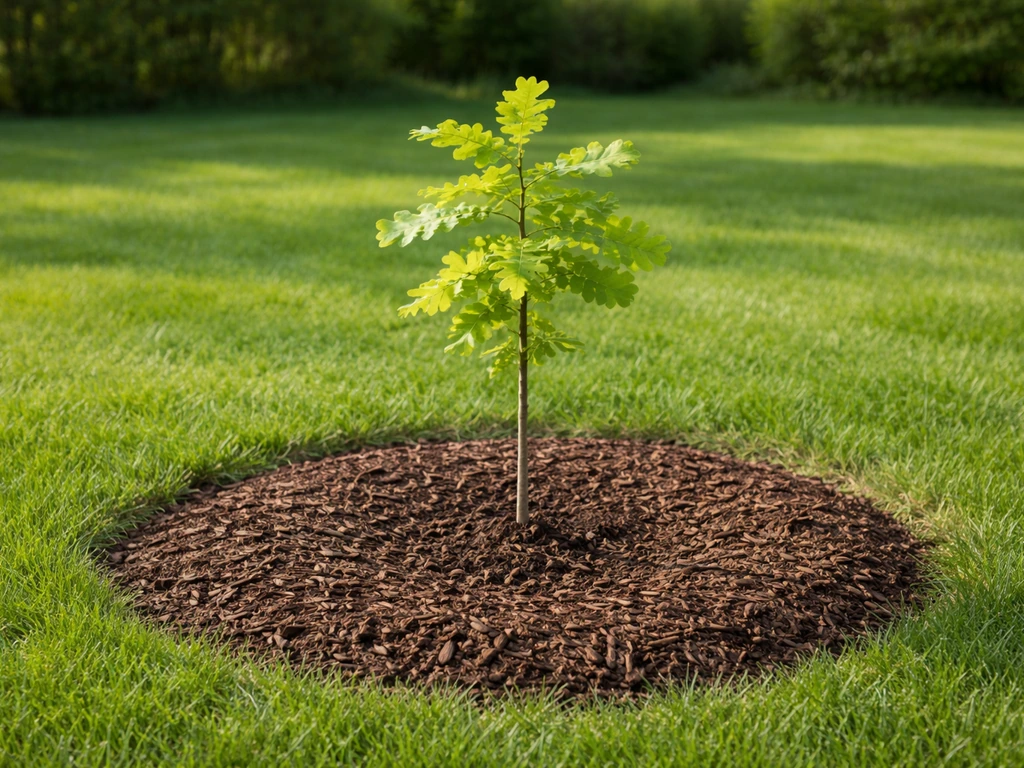
Can Pale Oak Saplings Grow on Grass? Conditions and Steps
Yes, but only with sun, grass removed in a ring, and amended, well-drained soil plus careful watering and mowing.
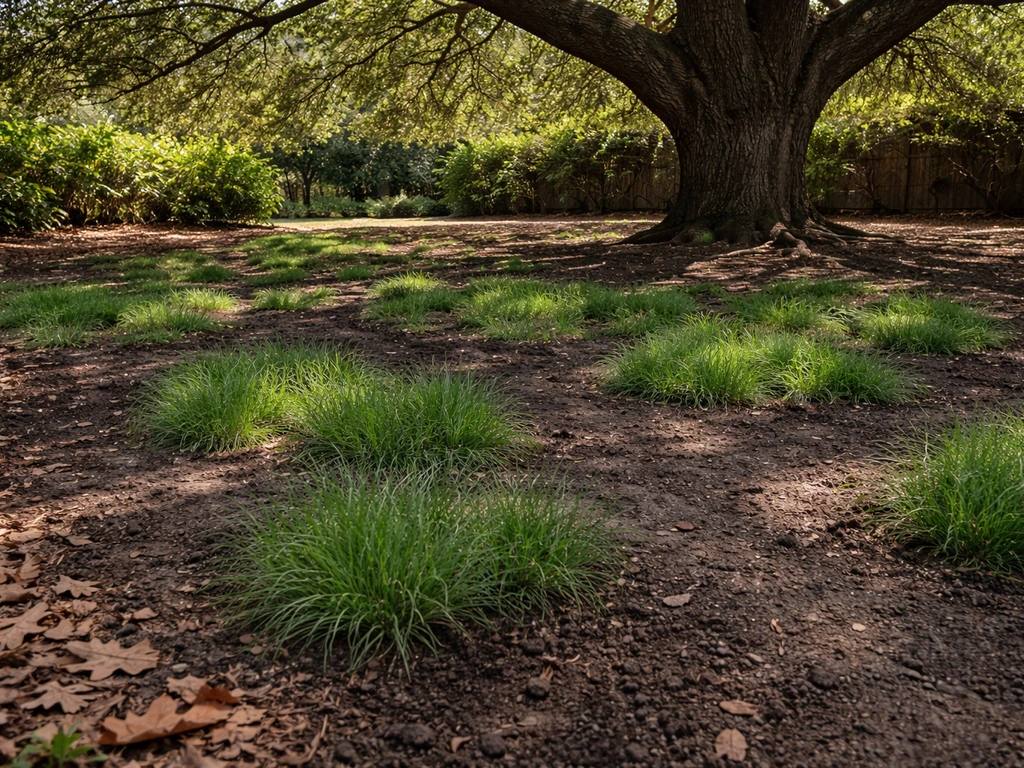
How to Grow Grass Under Oak Trees: Step-by-Step Guide
Learn how to grow shade grass under oak trees with soil prep, oak litter control, irrigation, mowing, and troubleshootin