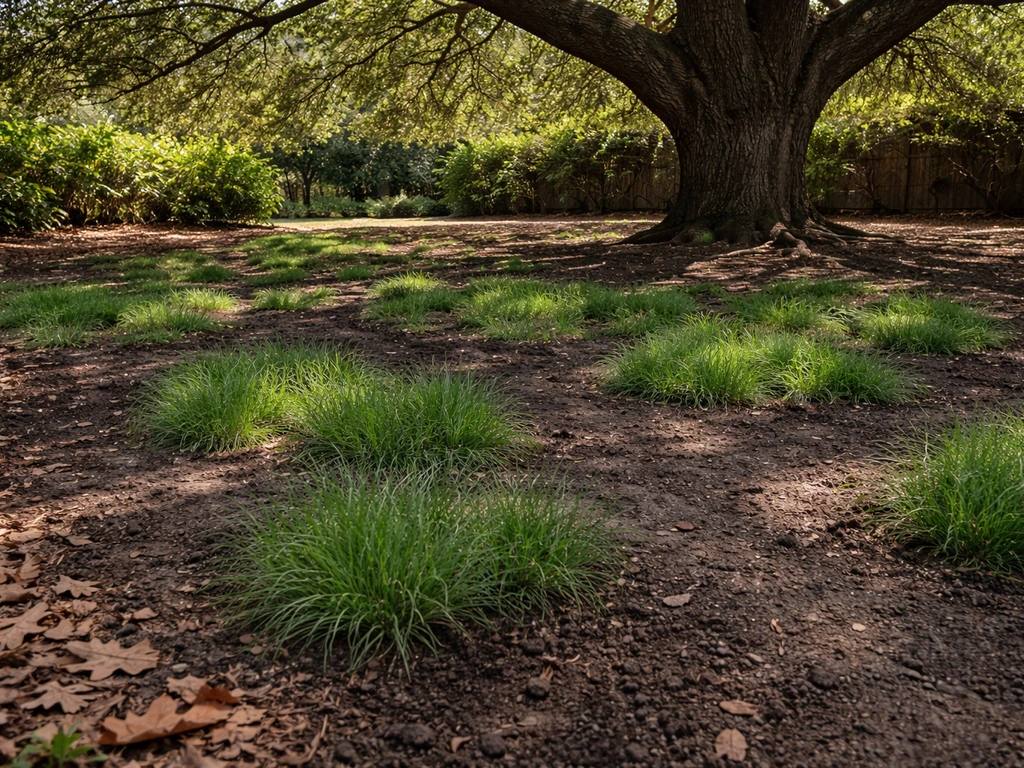
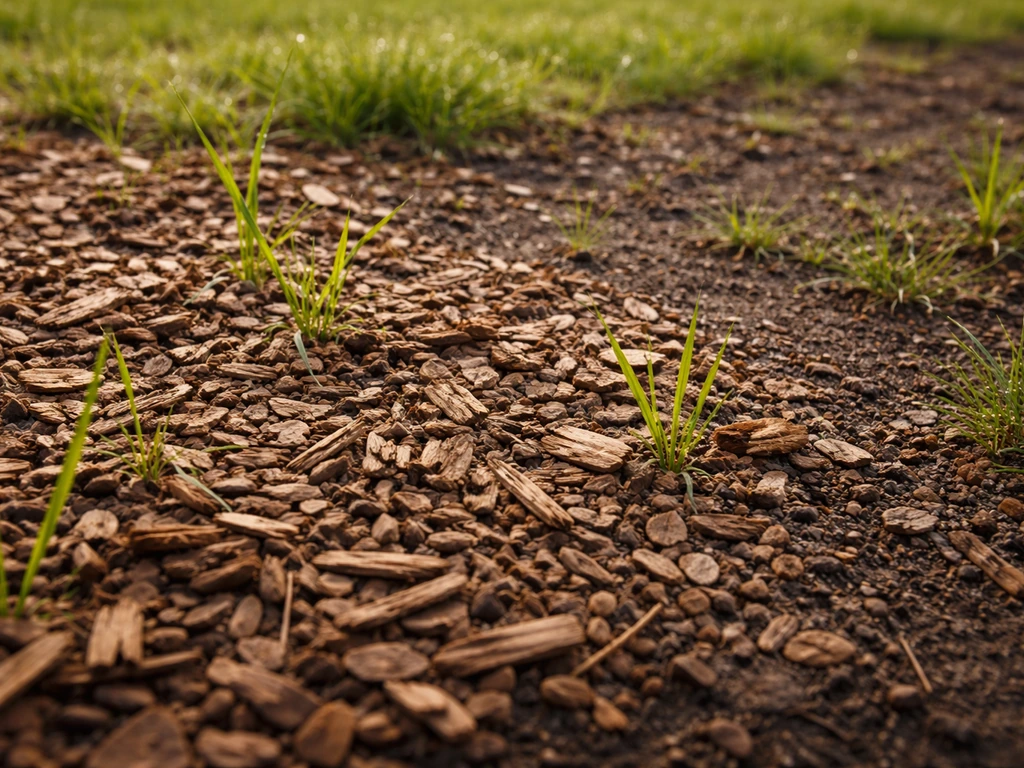
Live oaks are a specific challenge. They hold their leaves year-round, which means the shade under a live oak is constant and dense, never giving the grass a seasonal break the way a deciduous oak does. That persistent low-light environment alone eliminates most turf options right out of the gate. If you're working under a live oak, I'd strongly recommend reading through this whole guide before buying a single bag of seed, because skipping straight to seeding without addressing the underlying problems is the number one reason people try and fail two or three times.
Why grass keeps dying under oak trees
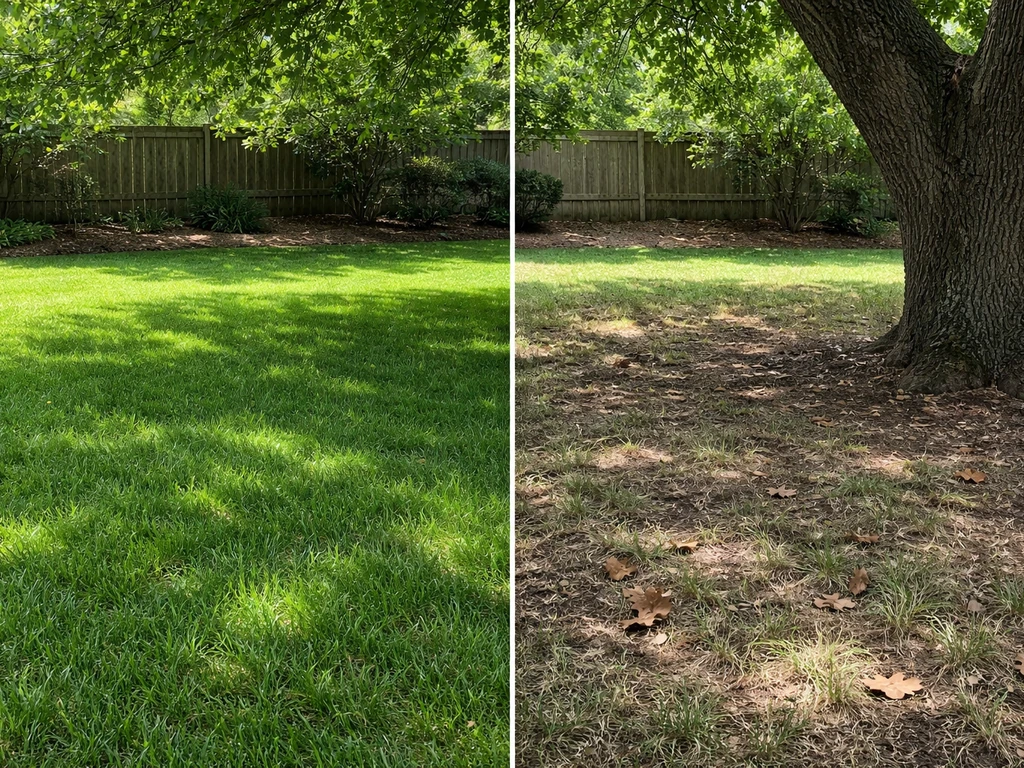
There are usually several things working against you at once under an oak, not just one. Understanding which ones apply to your situation is the key to fixing it. Here are the main culprits:
Low light
This is almost always the primary problem. Most turf grasses need a minimum of 4 to 6 hours of direct sunlight to survive, and many need more to thrive. A mature oak's canopy can reduce light levels well below what even shade-tolerant grasses need, especially live oaks or densely branched specimens where the canopy filters out the majority of available light.
Root competition for water and nutrients
Oak trees are aggressive competitors. Their root systems spread far beyond the dripline and occupy much of the same soil zone where turfgrass roots live. Penn State Extension also notes that trees have extensive root systems and dense leaves that can severely restrict light intensity under trees, making turf growth difficult in shade trees have extensive root systems and dense leaves that severely restrict light intensity under trees. Both the tree and the grass are pulling from the same reservoir of water and nutrients, and in a dry stretch, the tree wins. This is also worth noting from the tree's perspective: heavy turf growing right up to the trunk can compete with the tree itself, which some extension experts flag as a concern for long-term tree health.
Leaf litter and acorn buildup
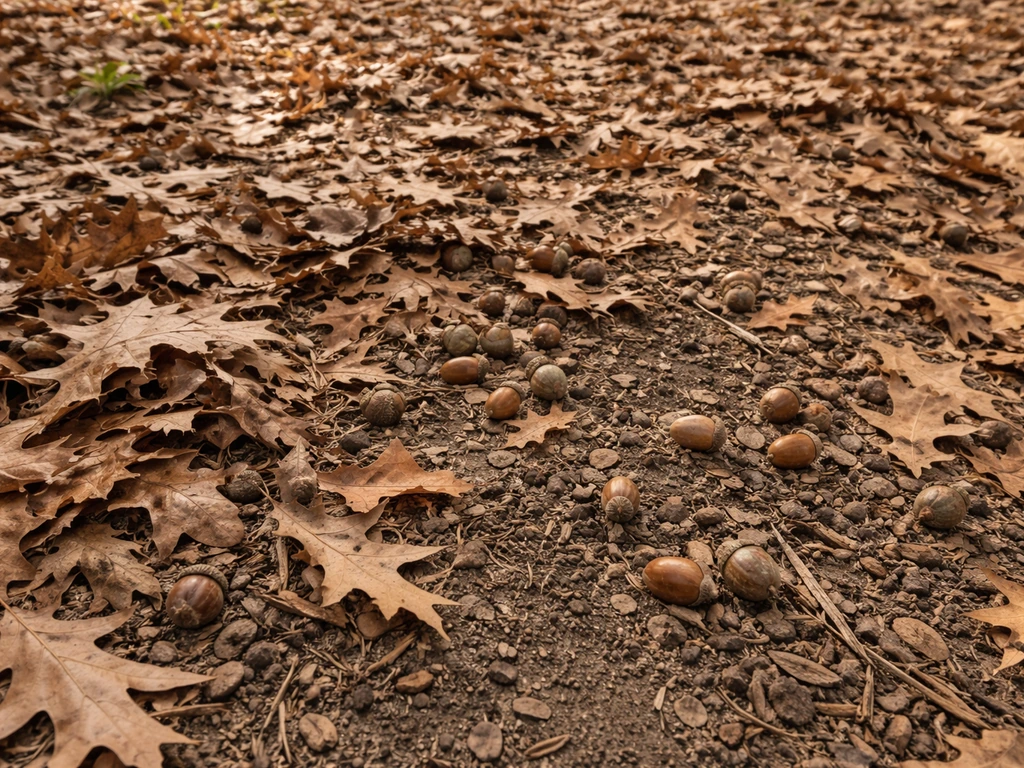
A thick layer of oak leaves and acorns sitting on the lawn is a germination killer. Research into leaf litter depth effects on seedling establishment confirms that even a modest litter layer can significantly suppress germination and early growth. Decomposing oak leaves also tend to acidify the soil over time, which compounds the problem. If you seed into unmanaged leaf litter, the seed either never contacts the soil properly or the seedlings get smothered before they get established.
Compacted, nutrient-depleted soil
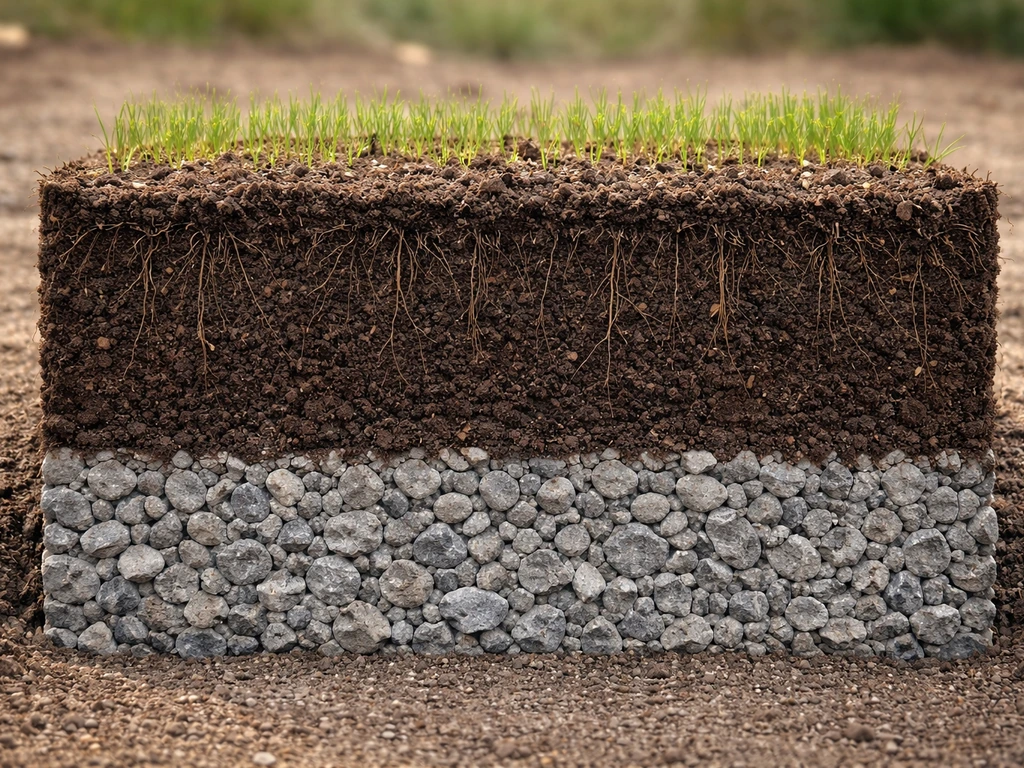
The area under a large oak often gets a lot of foot traffic (people walking to and from the shade), and the soil gets hard over time. Compaction reduces water infiltration and cuts off oxygen to the root zone, making it nearly impossible for new grass to root in. At the same time, the tree's heavy root system tends to pull available nutrients out of the topsoil aggressively, leaving behind a depleted seedbed.
Erratic moisture patterns
You'd think shade means more moisture, but under an oak it's more complicated. The canopy deflects rainfall away from the base of the tree, so the area right under the trunk can stay bone dry even after a good rain. Meanwhile, the leaf litter can hold surface moisture inconsistently. New grass seedlings need consistent moisture in the top 1 to 2 inches of soil, and under an oak that's genuinely hard to maintain without supplemental irrigation.
Picking the right grass for oak shade
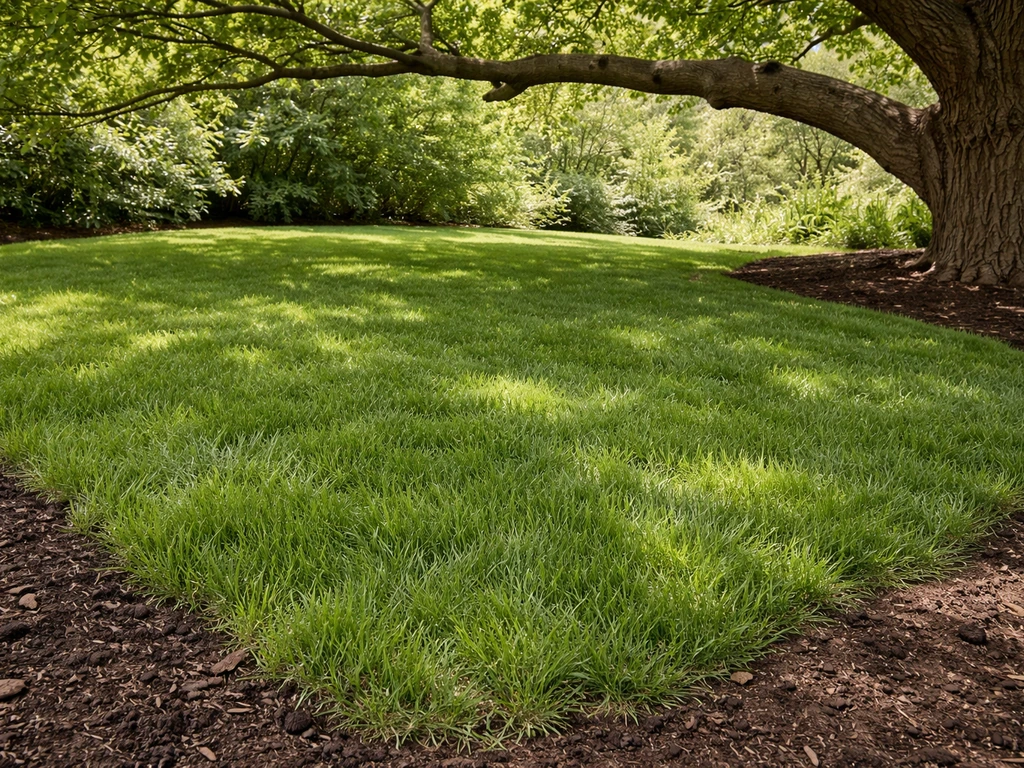
If you're in a cool-season climate (roughly the northern two-thirds of the US), fine fescues are your best bet under oak trees. This group includes creeping red fescue, Chewings fescue, hard fescue, and sheep fescue, and they're genuinely the most shade-tolerant cool-season grasses available. University of Wisconsin Extension specifically describes fine fescues as suited to conditions where light intensity is too low for other cool-season grasses. OSU turf research found that Chewings fescue and strong creeping red fescue cultivars were among the top performers in shade evaluations, though there is meaningful variability among fine fescue cultivars, so choosing a tested cultivar matters.
If you're in the warm-season South, St. Augustinegrass is typically the best option for shade, followed by zoysiagrass. Bermudagrass, which dominates many Southern lawns, performs poorly in shade and is not a good choice under oaks. In the transition zone (think Virginia, Tennessee, North Carolina), you're in a tougher spot and may want to use a blend of fine fescues for shade areas while using a different grass type in sunnier parts of the yard.
| Grass Type | Climate Fit | Shade Tolerance | Notes |
|---|
| Strong creeping red fescue | Cool-season | Excellent | Top performer in OSU shade trials; good for dense shade |
| Chewings fescue | Cool-season | Excellent | Also highly rated in shade evaluations; fine texture |
| Hard fescue | Cool-season | Very good | Low maintenance; drought-tolerant once established |
| Sheep fescue | Cool-season | Good | Works well in dry, infertile spots under oaks |
| St. Augustinegrass | Warm-season | Good | Best warm-season shade option; needs some light |
| Zoysiagrass | Warm-season | Moderate | Better than bermuda in shade; slower to establish |
| Bermudagrass | Warm-season | Poor | Avoid under oaks; needs full sun to perform |
One practical note: when you're buying fine fescue seed, look for a product labeled specifically as a shade mix or a fine fescue blend rather than a generic sun/shade mix, which often contains a lot of Kentucky bluegrass or perennial ryegrass that won't survive long-term under a dense canopy. UMN Extension recommends seeding fine fescues at 3 to 6 lb per 1,000 square feet, while Penn State Extension puts the range at 4 to 5 lb per 1,000 square feet for fine fescues in seed mixtures. Purdue University turf publications on fine fescues include seeding-rate guidance with ranges for seeding lawns using fine fescues blank" rel="noopener noreferrer">fine fescues seeding-rate guidance ranges. Splitting the difference and aiming for about 4 to 5 lb per 1,000 square feet is a reasonable target.
Getting the site ready before you seed
Site prep under an oak is more involved than prepping a sunny lawn area, and it's the step most people rush through. Don't. The extra work here is what separates a lawn that establishes from one that just wastes your seed money.
Clear the leaf litter and acorns
Rake or blow out all the accumulated leaf litter and acorns before you do anything else. UNH Extension specifically recommends raking leaf litter from under the tree each fall as a core practice for improving lawn success. Don't try to seed into it, and don't till it in if you can help it, because large amounts of decomposing oak leaves can create allelopathic effects and disrupt the soil chemistry. Bag it or compost it away from the seeding area. After establishment, you'll need to keep up with this every fall as a routine maintenance task.
Soil test and amend
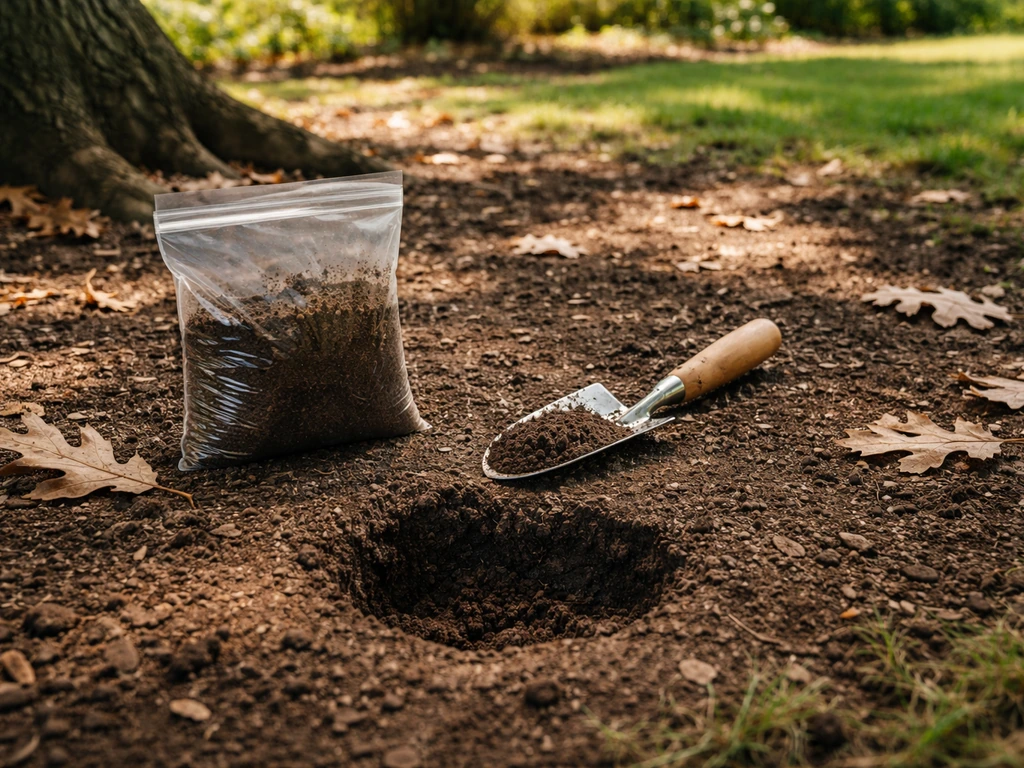
Pull a soil sample and send it to your local extension service before spending anything on amendments. Oak leaf decomposition tends to lower soil pH over time, and if your soil is sitting below 6.0 you're going to have nutrient availability problems regardless of how much fertilizer you apply. Your soil test will tell you exactly how much lime to add to bring it up. Apply the lime, work it in lightly, and give it a few weeks to buffer the soil if you can. Also check for low phosphorus, which is critical for root development in newly seeded areas.
Aerate to break up compaction
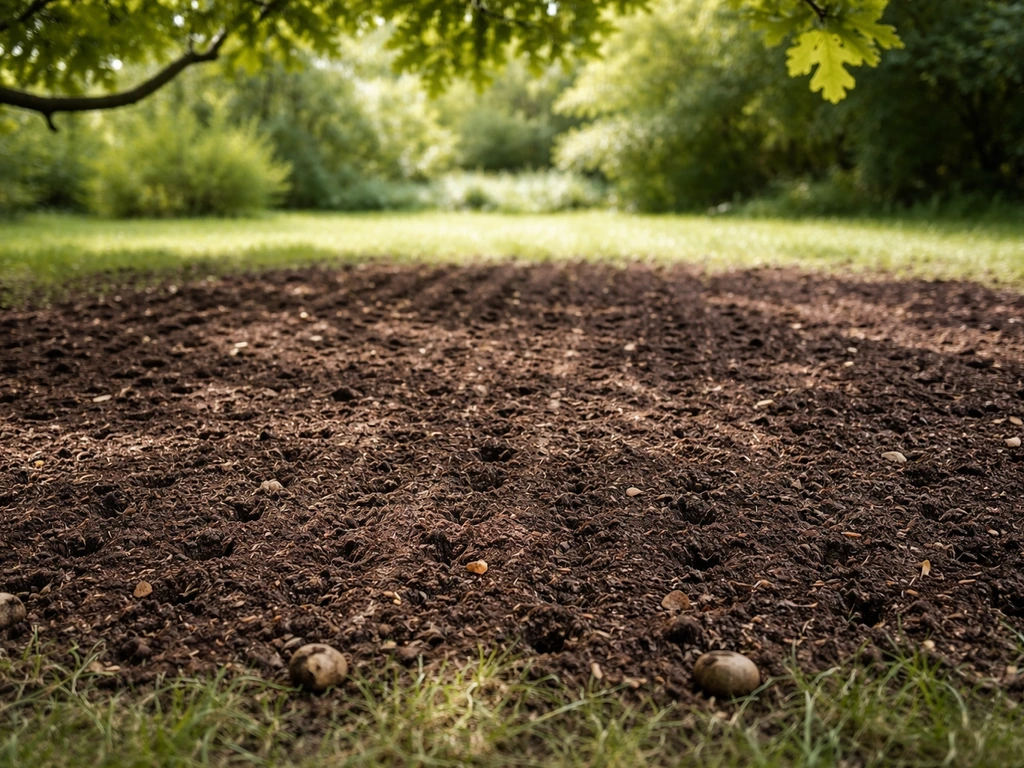
Core aeration is non-negotiable if you're seeding into a compacted area under an oak. UW Extension directly ties aeration to managing soil compaction and thatch problems that contribute to turf thinning. Use a core aerator (rent one from a hardware store), pull 2 to 3 inch cores across the entire area, and leave the cores on the surface to break down. This opens the soil structure, improves water infiltration, and gives new grass roots somewhere to actually grow. If the ground is extremely hard, do two passes in different directions.
Topdress with a thin layer of compost
After aerating, apply a quarter-inch layer of finished compost across the area and rake it lightly into the aeration holes. This adds organic matter, improves moisture retention, and gives the seedbed a bit of nutritional boost without overwhelming the soil. Avoid thick applications of compost or topsoil, which can interfere with seed-to-soil contact and create layering problems.
Consider canopy thinning
If the oak's canopy is extremely dense, it's worth having an arborist thin it before seeding. Removing 20 to 30 percent of the interior canopy increases light penetration significantly without harming the tree. This one-time investment makes a meaningful difference and can be the factor that determines whether fine fescue survives long-term. Obviously, don't do anything that harms the tree's structure, but thoughtful thinning is a common practice for exactly this purpose.
Step-by-step: planting grass under oak trees
- Time your seeding correctly. For cool-season grasses (fine fescues), the best window is late summer to mid-fall, typically late August through mid-October depending on your region. Virginia Cooperative Extension puts the optimal establishment window in that September through mid-October range. Fall seeding avoids summer heat stress and gives roots a long, cool establishment period before winter. Spring seeding works as a backup but leads to higher failure rates from summer heat hitting immature turf.
- Clear the area thoroughly. Rake out all leaf litter, acorns, and debris. Remove any existing dead or thinning grass. You need bare soil contact for new seed to work.
- Aerate the area. Use a core aerator and make at least one full pass, two if the soil is heavily compacted. Leave the cores to break down on the surface.
- Apply soil amendments. Add lime if your soil test calls for it, plus any phosphorus the test recommends for new seeding. Rake amendments in lightly.
- Topdress with a thin layer of compost (no more than a quarter inch). Rake it into the aeration holes.
- Seed at the right rate. For fine fescues, spread seed at 4 to 5 lb per 1,000 square feet. Use a broadcast spreader for even coverage. Make two lighter passes in perpendicular directions rather than one heavy pass.
- Rake lightly to ensure seed-to-soil contact. Virginia Tech Extension notes that small-seeded grasses need to stay near the soil surface, and the roots must contact soil quickly after germination. Don't bury the seed more than a quarter inch deep.
- Apply a light straw mulch if you're in a dry climate or seeding on a slope. Rutgers recommends a light straw application to conserve seedbed moisture, but warns against applying it too heavily or you'll smother the seedlings. Aim for coverage light enough that you can still see the soil through it.
- Water immediately after seeding and begin a consistent light-watering schedule.
Watering, light management, and keeping it alive
Watering during establishment
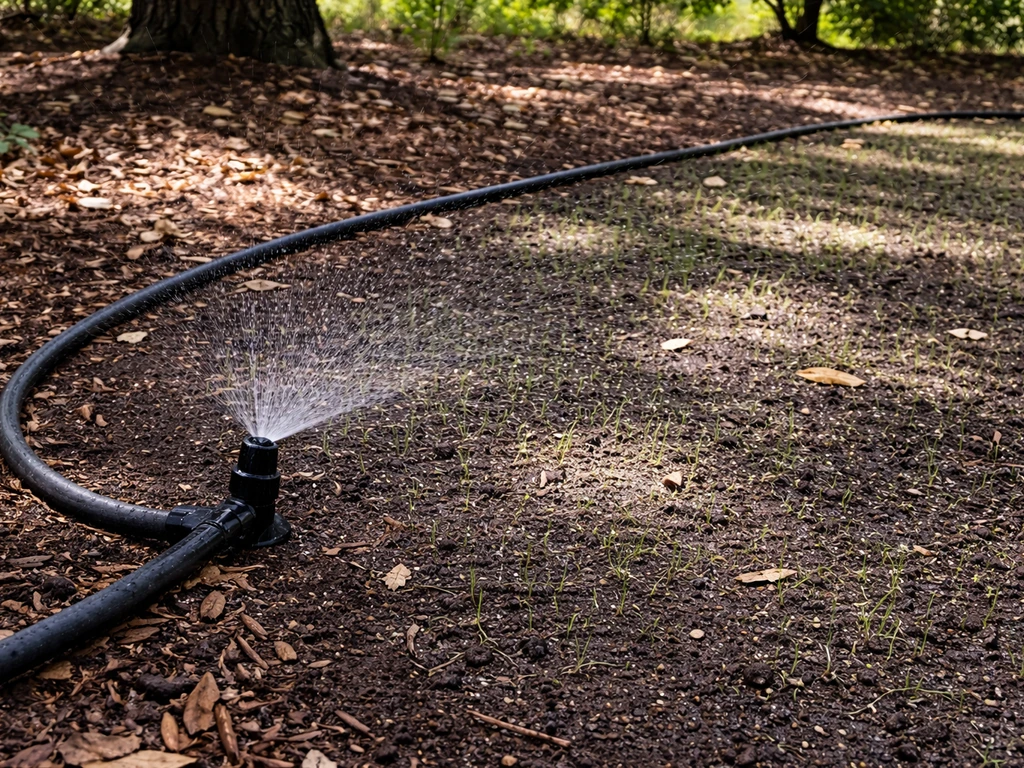
Keep the top 1 to 2 inches of the seedbed consistently moist until germination, which typically takes 7 to 21 days for fine fescues depending on soil temperature. University of Missouri Extension recommends keeping the seedbed moist but not saturated during this period, and offers a useful diagnostic: if you can squeeze water out of the soil, you're overwatering. Light, frequent watering is better than deep infrequent watering at this stage because the seed is right at the surface and the soil there dries out fast.
Once seedlings reach about 2 inches tall, begin transitioning to less frequent but deeper watering. This encourages roots to follow moisture deeper into the soil rather than staying shallow. Colorado State University Extension notes that after establishment, about one hour of irrigation per week is a reasonable starting point, with adjustments based on checking soil moisture at rooting depth. Under an oak, you'll likely need to supplement natural rainfall because the canopy intercepts a meaningful amount of rain before it reaches the ground.
Managing sunlight long-term
Even after grass is established, shade management is an ongoing task. If the canopy has grown denser since your initial thinning, or if new suckers and low branches are blocking more light, have the tree pruned again. Fine fescues can handle quite a bit of shade, but they still have a floor. Areas that get fewer than 3 to 4 hours of filtered light daily are going to thin out over time no matter what you do.
Mowing and fertilizing in shade
Mow shaded fine fescue areas at a slightly higher height than the rest of your lawn. UMN Extension recommends raising the mowing height by about half an inch to one inch compared to what you'd use in full sun. The extra leaf area helps shaded grass capture more of the limited available light, which makes a real difference in stress tolerance. Don't over-fertilize shaded areas either. Too much nitrogen in low light leads to soft, disease-prone growth. Apply a light, balanced fertilizer once in fall and once in spring, and skip the heavy summer applications entirely.
Keep foot traffic to a minimum in the first season. New grass under oaks is vulnerable, and compaction from repeated walking will quickly undo your site prep work. If the area is a regular pathway, consider adding stepping stones through the lawn area to direct traffic and protect the turf.
When the grass won't take or keeps thinning out
Even when you do everything right, grass under oaks can still struggle. Here's how to diagnose what's actually going wrong:
| Symptom | Likely Cause | Fix |
|---|
| Seed never germinated | Poor seed-to-soil contact, buried under litter, or dry seedbed | Re-rake area, remove litter, reseed with light straw cover and consistent irrigation |
| Grass came up but disappeared after a few weeks | Heat stress, drought, or competition from tree roots | Water more frequently, check irrigation distribution, consider canopy thinning |
| Patchy thin areas that won't fill in | Too much shade in specific spots, or compaction returning | Aerate patchy areas, overseed, raise mowing height, evaluate canopy density overhead |
| Grass looks yellow or pale | Nutrient deficiency or low soil pH (acid from litter) | Test soil pH, apply lime if below 6.0, do a light fertilizer application |
| Grass developing spots, rot, or fungal patches | Shade-related disease pressure (leaf spot, rust) | Improve air circulation by thinning canopy, reduce nitrogen, avoid evening watering |
| Grass grows fine initially but thins every summer | Root competition and heat stress together | Deep-water less frequently, overseed each fall with fine fescue, accept some summer dormancy |
| Nothing works at all | Too much shade (under 3 hours of light daily) | Switch to shade-tolerant groundcovers or mulch the area under the dripline |
Shade-related lawn diseases are a real issue that doesn't get enough attention. University of Maryland Extension notes that leaf spot and melting-out type diseases are common in turf grown in too much shade, and Clemson identifies rust as a frequent problem in overly shaded lawns. Both of these can cause rapid thinning that looks like a shade problem but is actually a disease problem triggered by the shade. The fix is almost always canopy management combined with avoiding overwatering and excess nitrogen, not fungicide applications.
When to give up on grass and use an alternative
I'll be direct here: if you're working under a mature live oak with a dense, spreading canopy and the area gets fewer than 3 hours of filtered sunlight, grass is probably not a realistic long-term solution. You can get it to sprout, but you'll be fighting a losing battle every season. This is also why many people ask whether they will switch grass grow in the woods, since dense shade and competition can make standard seeding fail. In these situations, a mulched bed with shade-tolerant groundcovers like liriope, mondo grass, or native ferns is going to look better, require less work, and actually support the tree's health. The same general principle applies to any tree with dense shade, which is something we cover more broadly in the guide on how to grow grass under a tree.
If you've recently had an oak removed and are now trying to establish grass in an area that previously had none, you're actually in a much easier position. Without the ongoing competition, compaction, and shade, the lawn can establish normally once the stump and roots are dealt with, which is a different problem set worth exploring separately.
Your next steps right now
If it's currently spring or early summer (and it is, since we're in April 2026), the best thing you can do right now is not seed yet. Instead, use this time to get your soil test done, have the canopy thinned if needed, aerate the area, and set up irrigation if you don't already have it. Plan to seed in late August or September when soil temperatures drop and cool-season fine fescues can establish without summer heat stress working against them. That preparation window is genuinely valuable, and the homeowners I've seen succeed under oaks almost always spent the spring getting the site ready rather than rushing to seed in April.