
Yes, you can grow grass under a tree, but only if you match the right grass to the actual conditions, prep the soil without damaging the tree, and keep your expectations honest. Most people fail because they treat the area like open lawn and expect the same results. The ground under a tree is a fundamentally different growing environment, and once you understand why, fixing it becomes a lot more straightforward.
How to Grow Grass Under a Tree: Step-by-Step Guide
Marcus Volkmann
10 Apr 2026
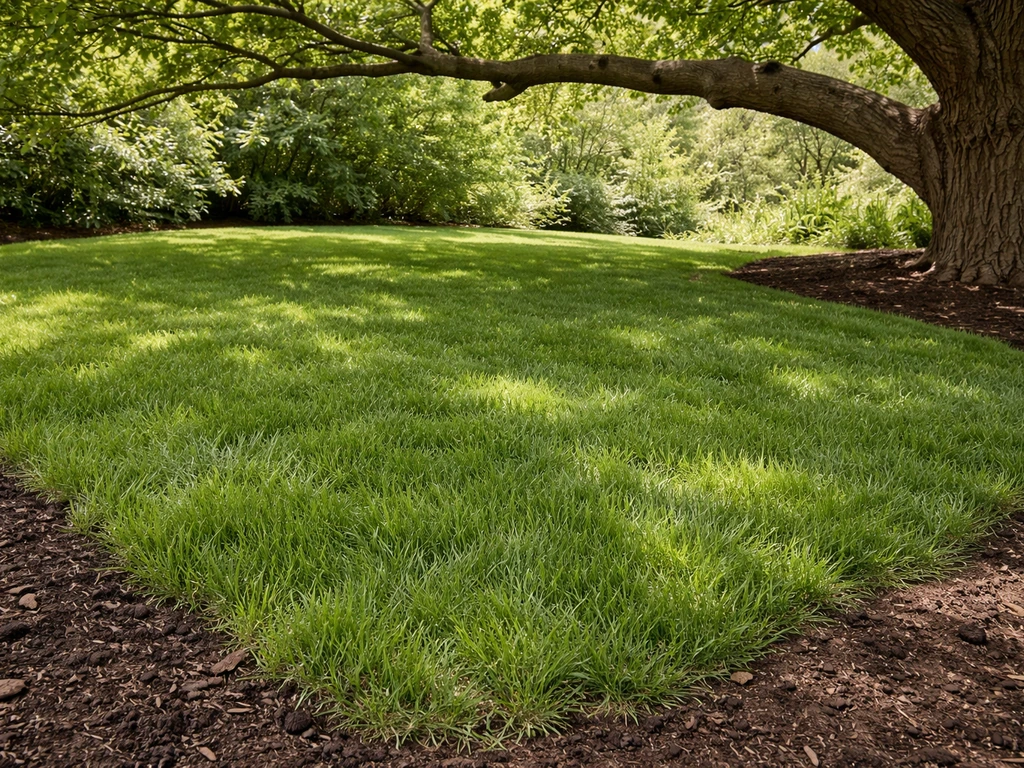
Why grass struggles (and dies) under trees
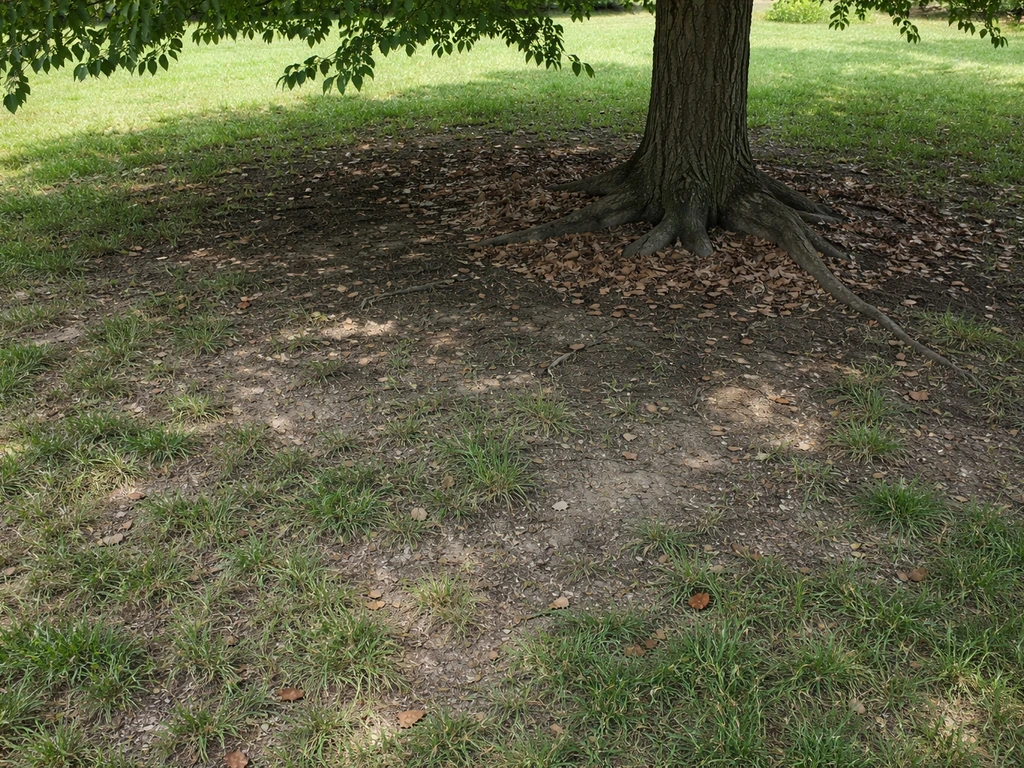
There are four things working against you at once under a tree canopy: shade, root competition, uneven moisture, and leaf litter. Each one alone can stress turf. All four together is why that ring of bare dirt around your tree stays bare no matter what you do.
Shade is the most obvious problem, but it goes deeper than just less light. Shade also shifts the ratio of near-red to far-red light wavelengths, and that shift actually reduces photosynthesis efficiency in grass plants. According to MU Extension, this means that even when it looks like there is 'some daylight' under the canopy, the quality of that light is too low for most turfgrass to photosynthesize effectively. The grass uses energy just trying to grow, leaving nothing for density, root development, or wear tolerance.
Root competition is the second killer. The USGA points out that most tree roots are shallow and occupy the exact same near-surface zone as turfgrass roots. You are not just sharing space, you are sharing the same water and nutrient supply. The tree almost always wins that competition. Even if you fertilize and water well, the tree intercepts a significant portion of both before your grass roots ever get to them.
Moisture is inconsistently distributed under a canopy. Heavy rain may barely penetrate a dense tree canopy, leaving the soil underneath dry while everywhere else is saturated. Then during dry spells, tree roots actively pull moisture out of the top soil layer faster than grass roots can compete. The result is erratic wet-dry cycles that stress turf at exactly the wrong times.
Finally, leaf litter. Leaves that mat down block light, smother seedlings, create conditions for fungal disease, and break the seed-to-soil contact that germination depends on. If you skip clearing debris and just seed over it, you are wasting your time and your seed.
Read your site before you buy anything
Before you buy a single bag of seed, spend a few days actually measuring what you are working with. The two most important things to know are how much direct sunlight the area gets per day and how dense the surface root network is.
For light, stand in the area at different times of day and count the hours of direct, unfiltered sun. Most cool-season shade grasses need at least 3 to 4 hours of direct sun plus dappled light to establish. Bermudagrass needs a minimum of 8 hours of direct sunlight for sustained healthy growth, which is why it is essentially useless under most trees. If you are getting fewer than 3 hours of direct sun, you are at the edge of what any turfgrass can handle, and groundcovers may honestly be a better answer.
For roots, dig a small test hole about 4 to 6 inches deep. If you hit dense, matted roots immediately, aeration is going to be difficult and overseeding rates may need to go up. Surface root density also tells you which soil amendment approaches are safe to use. If there are roots right at the surface, do not rototill. You will cause real damage to the tree.
Check drainage too. Under dense canopies where rain barely penetrates, soil can become compacted and hydrophobic. Press your foot into the soil after a rain. If water puddles or the surface stays slick, drainage is a problem and aeration will be a priority. Compaction is also a hidden tree-killer: MSU Extension is clear that keeping heavy equipment and foot traffic off tree root zones is important because compaction directly harms root health.
Do a basic soil test if you have the time. Most county extension offices process them for under $20. Under trees, pH and nutrient levels are often different from the rest of your lawn because leaves acidify soil as they decompose and the tree itself uptakes nutrients aggressively.
Choose a grass that actually fits the conditions
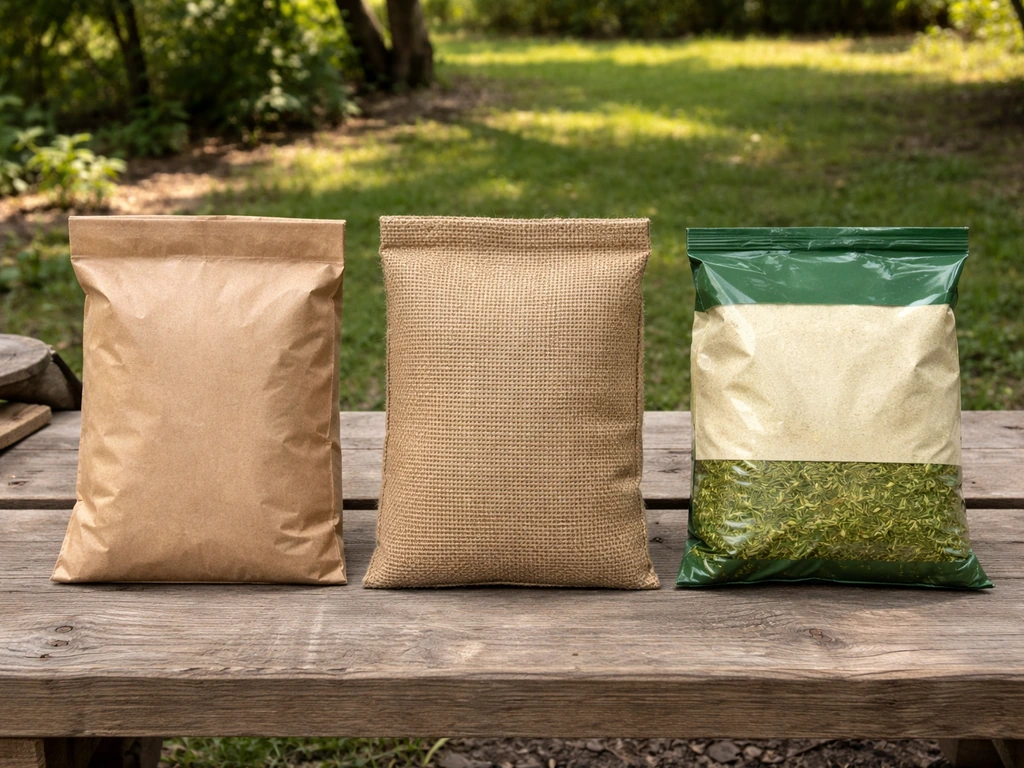
Grass species vary dramatically in shade tolerance, and picking the wrong one is the single fastest way to guarantee failure. Here is a practical comparison of the most common options:
| Grass Type | Shade Tolerance | Root Competition Tolerance | Best Use |
|---|---|---|---|
| Fine fescue (creeping red, chewings, hard) | Very good | Good | Best overall for dense shade under trees in cool climates |
| Tall fescue | Moderate | Moderate | Good for partial shade; mow at 3.5 inches minimum |
| Kentucky bluegrass | Low to moderate | Low | Use in blends with fine fescue, not alone under trees |
| Zoysiagrass | Moderate (best warm-season) | Moderate | Warm climates; tolerates some shade better than bermuda |
| Centipedegrass | Moderate | Low-moderate | Warm climates; low maintenance but not for dense shade |
| Bermudagrass | Very poor | Poor | Avoid under trees entirely; needs 8+ hours direct sun |
For most homeowners in cool-season regions, fine fescues are the go-to recommendation. MU Extension rates them 'very good' for shade tolerance, and they genuinely outperform other options when light is limited. A 50/50 blend of Kentucky bluegrass and fine fescue is rated 'Excellent' for shade by NC State Extension, with a suggested seeding rate of 1.5 lb of each per 1,000 square feet and a cutting height of 2 to 3 inches. Fine fescues are also slower to establish visually, so do not panic if the area looks thin for the first few weeks.
If you are dealing with an oak specifically, the soil chemistry and canopy density present their own specific challenges. There is a detailed breakdown of how to grow grass under oak trees that goes into those particulars if that is your situation.
For warm climates, zoysiagrass and centipedegrass are the most realistic options under partial shade. Mississippi State University Extension specifically lists bermudagrass as the least shade-tolerant warm-season option, so if someone recommends bermuda for under your tree, push back on that.
Prep the area without hurting the tree
This is where most DIY attempts go wrong. People either do too little (just scatter seed on compacted bare soil) or too much (rototill aggressively and damage or sever roots). The goal is to improve the seedbed without causing lasting harm to the tree.
Clear debris and manage leaves
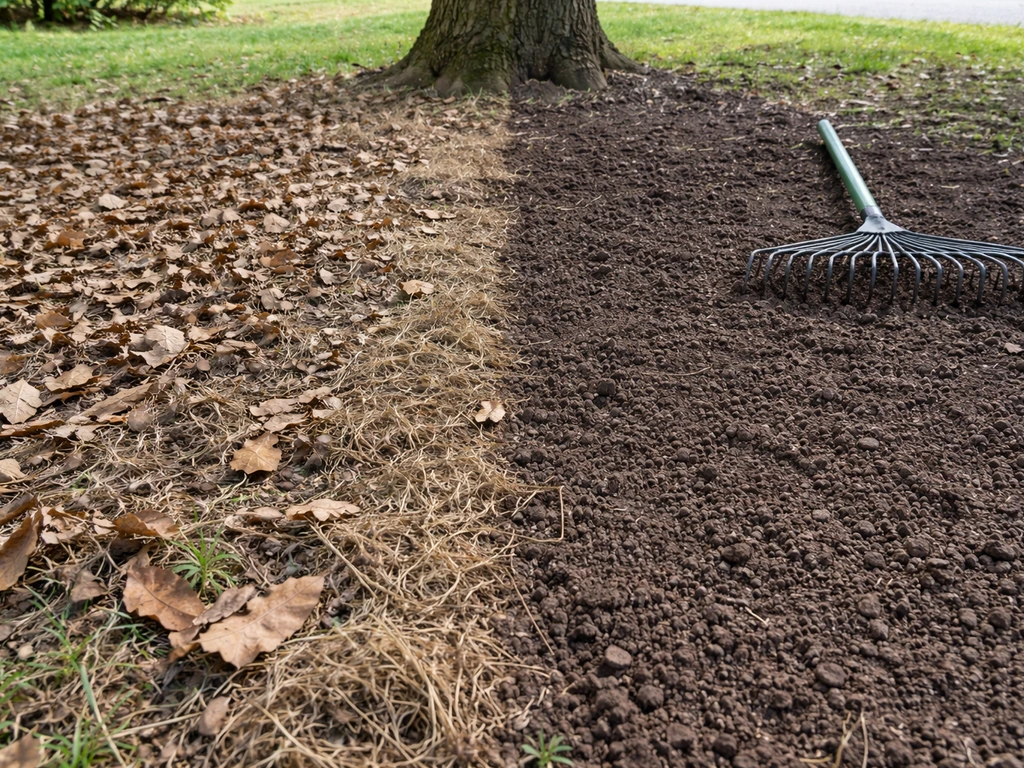
Rake out all leaf litter, old thatch, and matted organic debris. Seed-to-soil contact is non-negotiable for germination, and anything sitting on top of the soil disrupts it. MU Extension specifically identifies removing matting debris as part of establishment management. Do not leave even a partial mat of leaves over the seedbed after planting.
Aerate carefully
Core aeration is your best tool for improving compacted soil under trees without rototilling or cutting roots. A core aerator pulls small plugs from the soil, relieving compaction and improving water penetration. For areas with dense surface roots, use a hand aerator or a small-footprint machine and work slowly. Avoid deep vertical tillage or power raking in areas with heavy surface roots. NDSU Extension confirms that core aeration is a primary tool for thatch control and soil improvement, and Penn State Extension notes that aeration paired with power raking helps manage thatch depth before seeding.
Amend the soil lightly
If your soil test shows pH issues or nutrient deficiencies, this is the time to correct them. Spread amendments by hand under the canopy rather than dragging heavy equipment across the root zone. UF/IFAS specifically advises spreading soil amendments by hand under tree canopies to avoid compaction and root damage. A thin layer (no more than half an inch) of compost worked into the aeration holes gives seedling roots something to grab.
Do not grade aggressively over roots
It is tempting to add several inches of topsoil to cover surface roots and level things out. Resist this. Adding more than an inch or so of soil over a tree's root zone can suffocate the roots by reducing oxygen exchange. If surface roots are exposed and causing mowing issues, a thin topdressing is fine, but do not bury them deeply.
How to plant: seed, sod, or plugs
Each planting method has a real-world trade-off under trees. Seed is cheapest and gives you the most species flexibility, but it is also the most vulnerable during establishment. Sod gives you faster cover and better initial weed suppression, but the root zone under a tree is often too competitive for sod to knit in well unless conditions are close to ideal. Plugs are a middle ground, mostly used for warm-season grasses like zoysia.
Timing matters more than most people realize
For cool-season grasses (fine fescue, tall fescue, Kentucky bluegrass blends), late summer to early fall is the optimal planting window. Penn State Extension calls late summer the optimum seeding time, and Virginia Cooperative Extension pinpoints September through mid-October as the prime window. Fall planting means cooler temps, less weed pressure, and soil that is still warm enough for germination. Spring seeding is possible but riskier: the moisture needed for germination also promotes aggressive weed competition, including crabgrass, as MU Extension notes.
One important warning: if you apply pre-emergent herbicides in spring for weed control, you cannot seed at the same time. NC State Extension is direct about this. Pre-emergents stop seed germination, including the grass seed you are trying to establish. Preemergence herbicides work by preventing germinated weed seedlings from establishing, including by inhibiting root and shoot growth, so they can interfere with seedling establishment. Pick one or the other.
Step-by-step seeding process
- Rake out all leaf litter and debris so bare soil is exposed.
- Core aerate the area if soil is compacted, working around visible surface roots carefully.
- Spread a thin layer of compost (under half an inch) and rake it into aeration holes.
- Broadcast seed at the rate recommended for your mix. For fine fescue blends, MU Extension recommends 5 to 7 lb per 1,000 sq ft. For a 50/50 Kentucky bluegrass and fine fescue mix, NC State Extension suggests 1.5 lb of each per 1,000 sq ft.
- Rake lightly to improve seed-to-soil contact. Do not bury seed deeper than a quarter inch.
- Apply starter fertilizer per package directions.
- Water lightly and immediately.
For sod under trees, the process is similar through step 3. Lay sod tightly with staggered joints, press it firmly into the soil, and water heavily on the first application to soak through the sod and wet the top 1 to 2 inches of underlying soil, per MU Extension's guidance. Avoid saturating afterward.
Aftercare: the 4 to 8 weeks that decide everything
Penn State Extension is direct about this: the 4 to 8 weeks after seeding or sodding are the critical window for survival. New root systems cannot handle severe moisture stress, and any gap in care during this period can mean starting over.
Watering schedule
MU Extension's guidance for newly seeded lawns is straightforward: water daily and potentially up to four light waterings per day in hot, dry conditions. Keep the seedbed moist but not saturated to a depth of 1 to 2 inches until germination. Under a tree canopy, the soil often dries faster than open lawn because tree roots are actively pulling moisture, so you may need to water more frequently than you would expect. Once the grass has been mowed two or three times and roots are establishing, shift to deeper, less frequent watering to encourage the roots to grow down rather than staying shallow.
Mowing height
Mow high. This is not optional in shade. Taller grass blades intercept more of the limited light available, and cutting too short under a tree effectively kills the plant. NC State Extension recommends tall fescue be kept at about 3.5 inches and never mowed below 2.5 inches. For fine fescue and bluegrass blends, a cutting height of 2 to 3 inches is the minimum. Never remove more than one-third of the leaf surface in a single mowing, especially during the establishment period.
Fertilizing
Apply starter fertilizer at planting. About 6 to 8 weeks after emergence, fertilize again with approximately half a pound of nitrogen per 1,000 square feet, which aligns with both Penn State Extension and NC State Extension recommendations for new turf. Do not over-fertilize fine fescues: Penn State Extension specifically warns that nitrogen overfertilization is detrimental for fine fescues under shade, making them more susceptible to disease and reducing stand persistence. Keep nitrogen rates conservative.
Weed control
Hold off on post-emergent herbicides until the new grass has been mowed at least two or three times and is clearly established. Most broadleaf herbicides and many weed controls stress new seedlings. Hand-pull weeds in the establishment area if needed. Once the turf is established, normal weed management can resume.
When patches stay bare: troubleshooting common failures
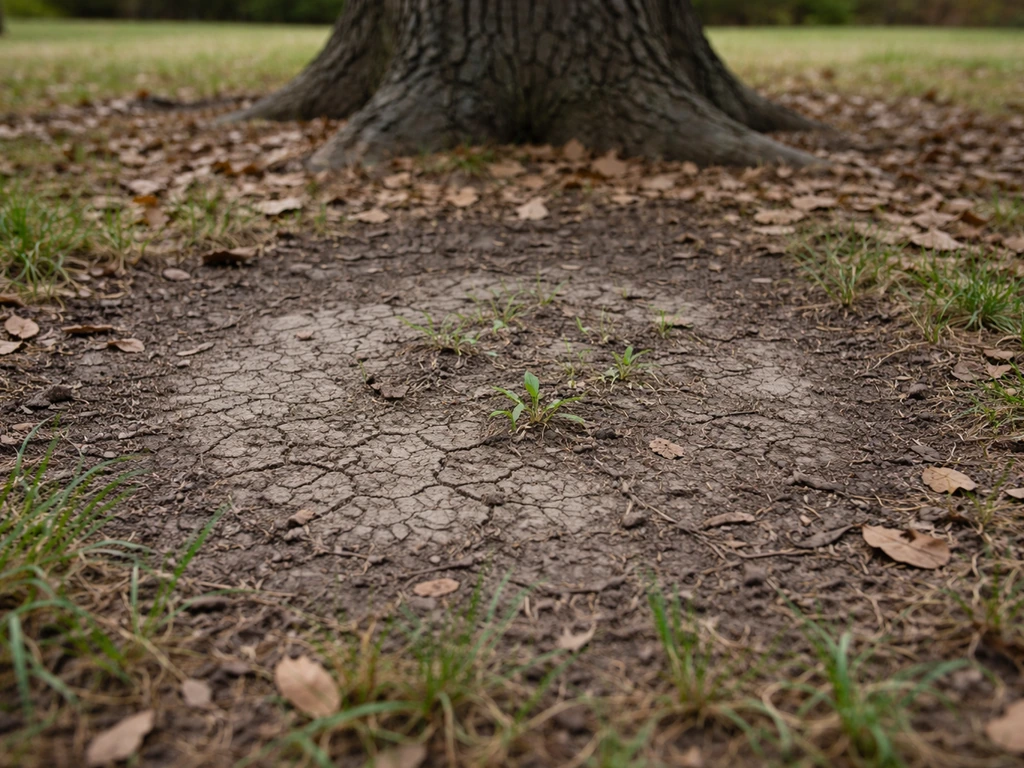
Even with good prep, some spots under trees stubbornly refuse to establish. Here is how to read the problem and respond.
- Seed germinates but thins out after 2 to 3 weeks: This usually means root competition is winning. The tree is pulling water faster than seedlings can establish. Increase watering frequency, raise mowing height immediately, and consider overseeding at a higher rate.
- Mold or gray fuzz on seedlings: This is a fungal issue, common in shaded, damp areas. Improve air circulation if possible, reduce watering frequency slightly (while maintaining soil moisture at depth), and avoid late afternoon watering that leaves foliage wet overnight.
- Seed washes away after rain: Slope plus lack of canopy cover means you need to anchor seed with a light straw mulch or erosion netting. Penn State Extension warns that incorrect mulching can cause seed movement and smother seedlings, so use straw sparingly, just enough to reduce runoff without blocking light.
- Persistent bare ring directly under the drip line: This is often the densest root zone combined with the least consistent rainfall penetration. This specific zone is the hardest to establish and is often better addressed with mulch than turf.
- Grass establishes in fall but dies by summer: This usually means the summer root competition and moisture deficit are too severe for the species you chose. Upgrade to a more competitive fine fescue blend or consider the mulch alternative.
If you recently removed a tree and are now trying to fill in what was underneath it, the soil conditions are different and there is a specific process worth following. The guide on how to grow grass after tree removal covers dealing with stump grindings, soil recovery, and replanting in that context.
When grass just won't work: honest alternatives
Some spots under some trees are genuinely not viable for turfgrass, no matter how well you prep. Dense canopy, severe root competition, and low-light conditions below 3 hours of direct sun per day put you in territory where even the best shade-tolerant grass will be a constant maintenance struggle. At that point, alternatives are not giving up, they are making the right call.
Mulch is the most common and honestly the most sensible solution for truly difficult spots. UF/IFAS recommends removing turfgrass from these zones and applying a thin layer of mulch instead. A 2 to 3 inch layer of wood chip or shredded bark mulch suppresses weeds, conserves moisture, protects roots from compaction, and looks intentional rather than neglected. Keep mulch pulled back from the trunk to avoid rot.
Shade-tolerant groundcovers are another option for areas where you want living coverage without the mowing and establishment struggle of turf. Native groundcovers like wild ginger, pachysandra, or hostas thrive in the same conditions that kill grass. They do not need mowing, compete well with tree roots, and fill in naturally over time.
Patch-by-patch reseeding is a realistic middle-ground strategy for partial-shade zones where grass grows in some spots but not others. Focus your effort on the areas getting 4 or more hours of direct sun and accept mulch or groundcover for the denser shade spots. A mixed approach often looks better than a failed uniform lawn.
It is also worth knowing that some native grasses are built for low-light woodland edges and can bridge the gap between lawn grass and groundcover. If you are curious whether something like that fits your situation, the article on whether switch grass will grow in the woods is worth a read for understanding what native alternatives can realistically handle.
One thing to keep in mind as you make decisions: the tree and the lawn are in a long-term relationship, and the tree is always the senior partner. Aggressive interventions that harm the root system just to get grass to grow are a bad trade. You might end up with a struggling lawn and a stressed tree.
A spot of mulch under a healthy, beautiful tree is a far better outcome than a ring of dead sod around a declining one. If you are planting new trees and thinking ahead, understanding how young trees and grass interact from the start, including whether pale oak saplings can grow on grass, can help you plan smarter from day one and avoid creating the same problem in a few years.
FAQ
How long should it take for grass to fill in under a tree after seeding or sodding?
Expect the first visible growth from seed in roughly 2 to 4 weeks (longer in deep shade), but true “fill in” usually takes 8 to 12 weeks. If after about a month you see no seedlings at all, the issue is often poor seed-to-soil contact (leaf mat or loose debris still on top) or the wrong grass for the actual hours of direct sun.
Is it ever okay to use regular lawn seed mixes under a tree?
Usually not. Even if the mix says “shade tolerant,” many blends still assume more daylight and less root competition than most canopy zones provide. Match the species to your measured sun hours first, then check whether surface roots are dense enough to limit establishment (dense surface roots often require more careful bed prep rather than heavier seeding).
Should I overseed every year to keep grass under a tree looking full?
You can, but treat it as a patch maintenance plan, not a guaranteed fix. If the site has persistent root competition and less than about 3 to 4 hours of quality light, annual overseeding may just add expense. Better approach: overseed only the areas that meet your light threshold, and use mulch or groundcover where they do not.
How often should I water under a tree during establishment, and what’s the best way to avoid overwatering?
Water to keep the top 1 to 2 inches consistently moist, often daily at first, but verify with a quick probe (a screwdriver or soil probe) rather than watering on schedule alone. If water puddles, stays slick, or you can easily squeeze clumps and they don’t break apart, you may be keeping the soil too saturated, which increases disease risk and weakens new roots.
What’s the biggest mistake people make when preparing the soil under a tree?
Rototilling or aggressive tilling. If you hit dense, matted surface roots, tilling can sever them and create lasting stress for the tree. In root-dense areas, choose core aeration, hand aeration, raking only for debris removal, and light amendments into aeration holes instead of turning the soil.
Can I use leaf mulch or compost as a top layer after seeding under a tree?
You can use a thin compost layer, but don’t cover seeds with a thick blanket. Keep compost to about half an inch and ensure seeds still touch the soil. Thick layers, even if they seem “natural,” can block light and prevent proper seed-to-soil contact, leading to patchy or failed germination.
Do tree roots make grass impossible to mow later on?
They can, especially if the surface is bumpy, compacted, or there are exposed roots. Use a higher mowing height, avoid scalping, and consider a mower with good traction rather than pushing through rutted spots. If the canopy zone is frequently too uneven for mowing without scalping, switching that area to mulch or groundcover is often the lower-maintenance option.
Should I fertilize under a tree the same way I fertilize the rest of my lawn?
Reduce intensity and be more targeted. Shade reduces grass performance and can change nutrient uptake, so overfertilizing, especially nitrogen, can increase disease pressure in fine fescues. Use soil test results if possible, then apply starter fertilizer at planting, followed by conservative follow-up rates after emergence.
Why do weeds take over under my tree after I seed?
Two common reasons are timing and pre-emergent products. If you used a spring pre-emergent herbicide, seeds (including your grass) may not germinate. Also, weeds often outcompete seedlings if the seedbed is too dry or if the cut height was too low, reducing the grass’s ability to capture limited light.
Can I spot-treat weeds with herbicides once grass is growing under a tree?
Delay systemic and many broadleaf treatments until the turf is clearly established, typically after it has been mowed multiple times. Under trees, stressed seedlings are more vulnerable, and you may get damage that sets you back to bare soil. If you must act early, hand-pulling is safer for the establishment window.
What should I do if the bare ring around my tree keeps coming back?
First confirm the light and root conditions haven’t changed, then stop trying to force uniform turf everywhere. Focus reseeding or renovation only where you measure enough direct sun (often 4+ hours helps), improve seedbed only in those zones, and convert the deep-shade ring to mulch or groundcover where grass repeatedly fails.
I see lots of mushrooms or fungi after planting under a tree. Should I worry?
Some fungal activity can show up with damp, shaded conditions, especially during establishment. If you also notice persistent soggy soil, slow germination, or patchy damping-off, it’s a sign you may be overwatering or not improving drainage/soil structure. Core aeration and adjusting watering frequency often help more than adding more seed or fertilizer.
Next Articles
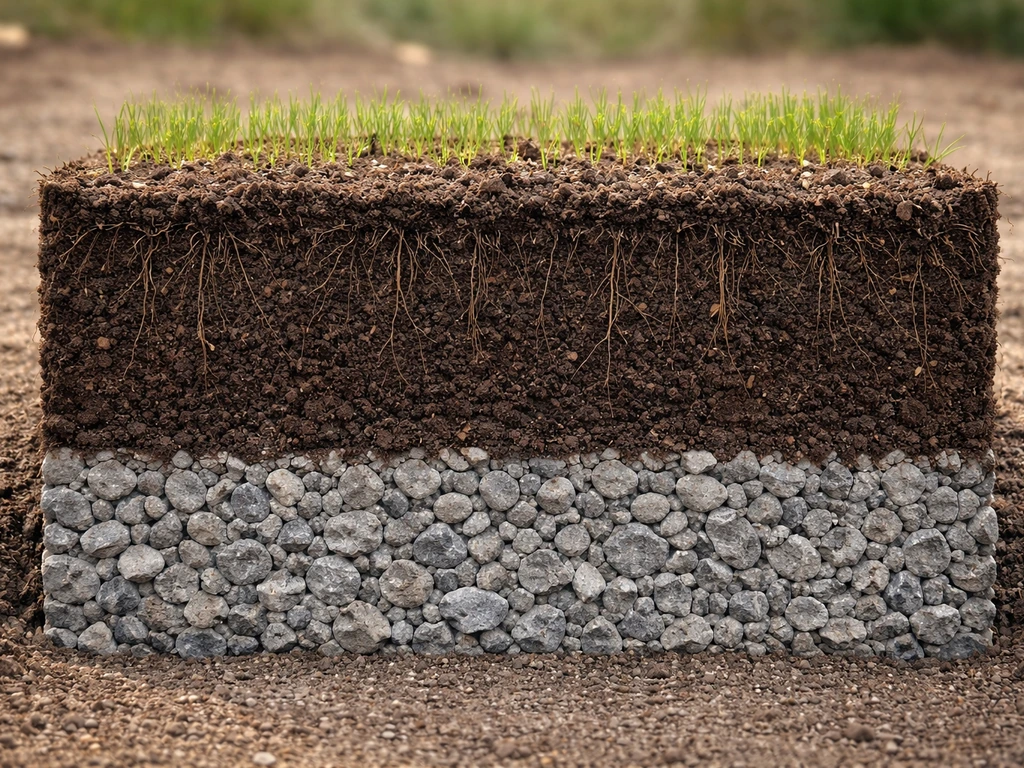
Can You Grow Grass Over Gravel? How to Do It Right
Learn when you can grow grass over gravel and follow a step-by-step method for soil depth, drainage, seeding or sod, and
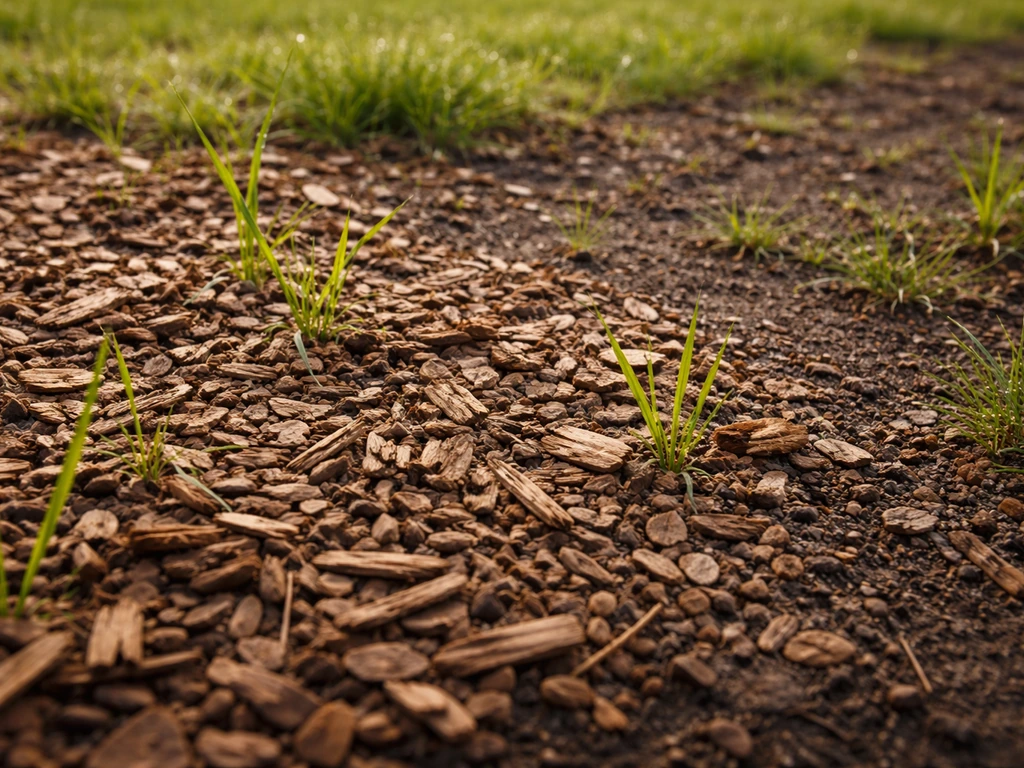
Do Wood Chips Help Grass Grow? When They Work and When Not
Learn when wood chips help grass grow, when they steal nitrogen, and step-by-step how much to apply and seed options.

Will Potting Soil Help Grass Grow? What Works and What Fails
When potting soil helps grass grow, when it fails, and how to prep, apply, seed, water, and troubleshoot bare spots.