You can grow grass under a maple tree, but not everywhere under it, not always on the first try, and only with the right species. Fine fescues (creeping red, chewings, hard, sheep) are your best shot in heavy shade. Shade-tolerant tall fescue blends work where you have at least filtered light. Kentucky bluegrass and perennial ryegrass will almost certainly fail under a dense maple canopy, no matter how carefully you seed them. The honest answer is that maybe 60–80% of the area under a mature maple can support a reasonable stand of fine fescue with proper site prep, the right timing, and some patience, the remaining area near the trunk, over exposed surface roots, and in the deepest shade is better off as mulch or groundcover.
How to Grow Grass Under Maple Tree: Shade-Safe Plan Step-by-Step
Marcus Volkmann
26 Jul 2026
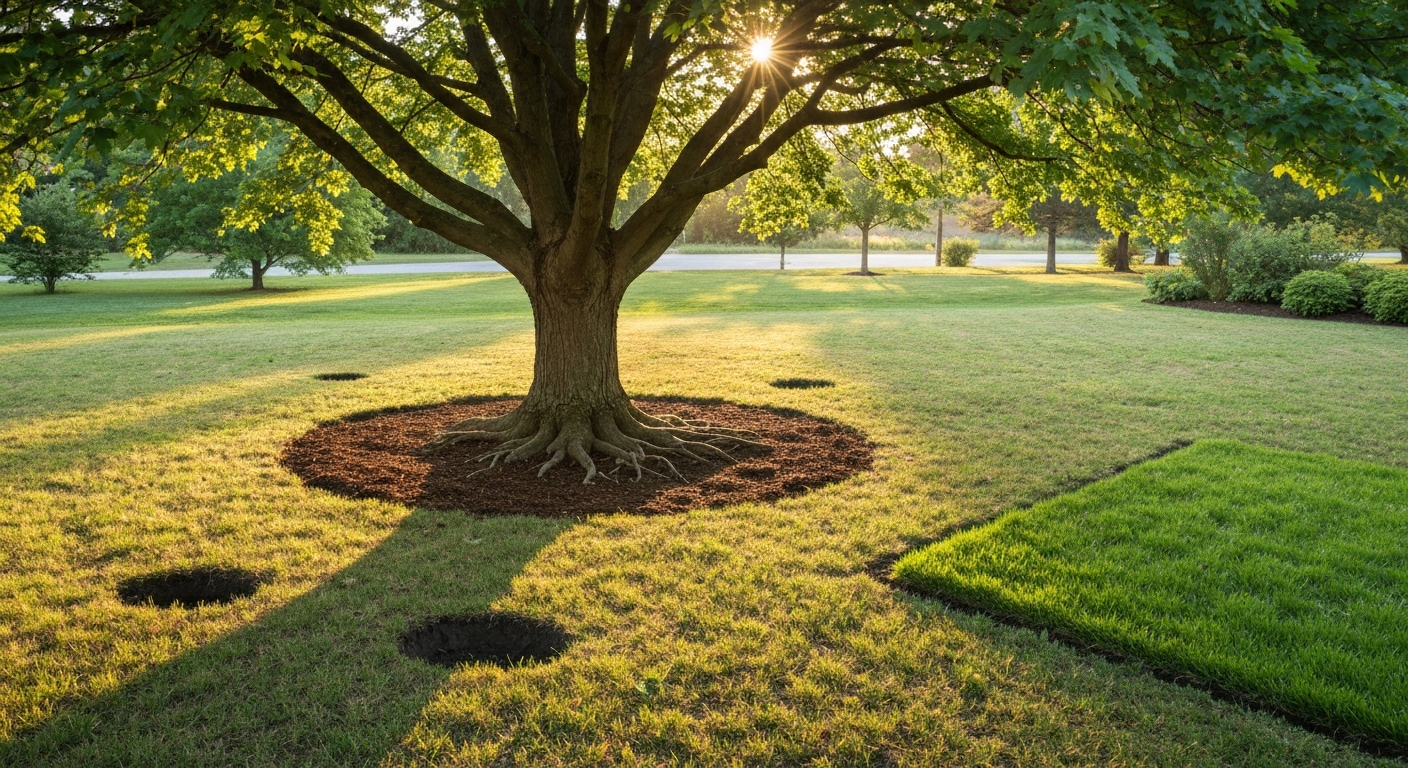
Can you realistically grow grass under a maple tree?
The short version: it depends on which maple, how old it is, what your soil looks like, and how much sunlight actually makes it through. A young or recently planted red maple with a thin canopy is a very different problem from a 60-year-old sugar maple with a 50-foot spread, surface roots, and dense leaf cover that blocks 90% of incoming light. I've worked on both ends of that spectrum. Some spots under maples are genuinely plantable and can sustain a decent lawn with regular effort. Others are a losing battle that will cost you money every season if you keep insisting on turf.
What makes maples harder than many other trees is the combination of factors they throw at grass all at once: dense canopy shade, aggressive shallow roots that steal water and nutrients, leaf litter that mats down and smothers seedlings if left too long, and often compacted soil from years of surface root activity and foot traffic. Fix one of these and you still have four others working against you. That's why the approach here is methodical, diagnose first, then address the problems in the right order before you spend money on seed.
Why grass won't grow under your maple: a quick diagnosis
Before you do anything, it helps to know which of these culprits is actually the main problem at your site. Usually it's two or three working together, but one tends to be the worst offender.
- Shade: Maple canopies, especially sugar and Norway maples, can reduce light reaching the soil surface by 80–95%. Turfgrass research measures this in daily light integral (DLI, mol·m⁻²·d⁻¹). At 90% shade (DLI around 3 mol·m⁻²·d⁻¹), even shade-tolerant species fail. Fine fescues start to thin significantly at that threshold. If you can barely read a newspaper on the ground at noon, the light is likely too low for turf.
- Root competition: Maple root systems are wide and shallow — major lateral roots and high densities of fine roots concentrate in the top 15–30 cm of soil, often well beyond the canopy edge. Those roots are extremely competitive for both moisture and nutrients. In dry summers, the tree wins every time, and your grass browns out first.
- Compacted soil: Foot traffic, equipment, and surface root activity compact the soil under maples over time. Compacted soil restricts root penetration, reduces water infiltration, and creates anaerobic conditions that grass cannot tolerate. Spike aeration (solid tines) makes this worse by pushing soil sideways. You need hollow-tine core aeration.
- Leaf litter: Maple leaves decompose slowly and mat down quickly when wet. A thick layer left sitting on seedlings — or on thin, established grass — will smother it. This is especially damaging in fall, which is also your best seeding window, so timing your cleanup matters.
- Surface roots: Exposed, raised surface roots break up the planting area, create high and dry spots that can't hold moisture, and make mowing hazardous. You cannot backfill heavily over these roots without harming the tree.
- Moisture stress: The combination of root competition and canopy interception (large maple leaves intercept significant rainfall before it hits the soil) can create dry pockets even in rainy periods. Conversely, some spots under maples stay saturated because the dense canopy creates a roof effect that prevents evaporation. Both extremes stress turf.
- Timing: Most homeowners try to seed in spring under maples, and most of them fail. The canopy leafs out just as spring seedlings need to establish, cutting light dramatically. Seeds sown too late in fall get smothered by leaf drop before they germinate. The planting window is narrow and critical.
How to actually assess your site before you spend a dollar on seed
I've seen homeowners skip this step and spend $200 on seed and sod that fails within a season because they never checked the basics. A 30-minute assessment will tell you whether you're fighting a winnable battle or setting yourself up for frustration.
Shade mapping
Walk the area three times on a sunny day: mid-morning, solar noon, and mid-afternoon. Note where patches of direct light hit the ground and how long they last. If a spot gets two or more hours of direct sun plus dappled light for another two to three hours, fine fescue has a fighting chance there. If you're curious about the numbers, an inexpensive quantum (PAR) meter measures PPFD in µmol·m⁻²·s⁻¹ and lets you calculate DLI. Sports‑turf research reports bermudagrass persistence thresholds of about 26 mol·m⁻²·d⁻¹ DLI for non‑overseeded stands and about 21–22 mol·m⁻²·d⁻¹ when overseeded, while extreme shade (~90%, ≈3 mol·m⁻²·d⁻¹) leads to establishment failure (Shade Effects on Overseeded Bermudagrass Athletic Fields: I. Turfgrass Coverage and Growth Rate, Richardson et al., Crop Science 2019) Shade Effects on Overseeded Bermudagrass Athletic Fields: I. Turfgrass Coverage and Growth Rate (Richardson et al., Crop Science 2019). Anything below about 5 mol·m⁻²·d⁻¹ is very marginal for even the most shade-tolerant turfgrasses, that's your cut-off line for deciding where not to bother with seed.
Dripline and root survey
Mark out the dripline (the outer edge of the canopy). Maple roots extend at least to this line and often well beyond it. Walk the area inside the dripline and note where surface roots are visible or where the ground feels firm and uneven underfoot. These are your highest-conflict zones. Also note the Tree Protection Zone (TPZ), a commonly used rule of thumb is roughly 1 foot of radius for every 1 inch of trunk diameter at breast height (DBH). You should not run power equipment, rototill, or deeply excavate within this zone.
Soil test
Take a composite soil sample from 8 to 10 cores pulled from different spots in the planting area, to a depth of 2 to 4 inches (standard for lawns). Submit it to your state extension soil testing lab. You're looking for pH (target 6.0–6.8 for cool-season turf), organic matter content, and nutrient levels. Fine fescues tolerate a slightly lower pH than Kentucky bluegrass, but you still want to correct significant deviations before planting. Never lime or add sulfur without a test and the lab's buffer-pH-based rate recommendation, getting it wrong wastes money and time.
Compaction and leaf-litter inventory
Probe the soil with a screwdriver or soil probe. If you can't push it 6 inches into the ground with moderate hand pressure, you have significant compaction. Soil compaction is a frequent cause of turf failure beneath trees; core (hollow‑tine) aeration that removes plugs is recommended to relieve compaction, avoid spike (solid‑tine) aeration which can worsen compaction in heavy soils, and perform aeration during active growth (fall for cool‑season grasses) The University of Minnesota Extension recommends core (hollow‑tine) aeration to relieve compaction and cautions that spike (solid‑tine) aeration can worsen compaction in heavy soils; timing should be during active growth (fall for cool‑season grasses).. Note how deep and how widespread it is. Also look at the existing ground surface: is there a matted layer of decomposing leaves? Is there any existing turf, moss, bare soil, or a mix? Moss is a reliable indicator of compacted, acidic, low-nutrient soil, it wins where grass loses. These findings shape your prep plan.
Measurable expectations: what success actually looks like and how long it takes
Be realistic here. Under a maple, you are not going to get a golf-course lawn. Here is what a reasonable success timeline looks like for a fall seeding of fine fescue in a moderately shaded zone with proper site prep:
| Milestone | Typical Timeframe | Notes |
|---|---|---|
| Germination visible | 10–21 days after seeding | Fine fescues germinate slower than rye; soil temps of 50–65°F are ideal |
| Seedlings 1–2 inches tall | 3–5 weeks post-germination | Keep traffic off; don't mow yet |
| First mow possible | 6–8 weeks post-seeding | Mow at 3.5–4 inches; never remove more than one-third of blade height |
| Partial coverage (40–60%) | End of first growing season | Expect thin patches; overseed bare areas next fall |
| Established stand (60–80%) | End of second growing season | Realistic target for moderate shade zones |
| Maximum sustainable coverage | Year 2–3 | 80% in moderate shade; lower near heavy canopy or surface roots |
If you're targeting the deepest shade zones (directly under the canopy where light rarely penetrates), revise these expectations downward. Some areas will never hit 60% grass coverage no matter what you do, and continuing to overseed them every year is not a solution, it's just a recurring cost.
The decision checklist: keep trying with turf or switch to something else?
This is the question I get asked most, and the honest answer requires a checklist, not a blanket recommendation. Use this to make the call for specific zones under your tree.
| Site Condition | Persist with Turf? | Consider Alternatives? |
|---|---|---|
| Receives 3+ hours of dappled/filtered light daily | Yes, with fine fescue | Optional |
| Light is less than 2 hours daily (DLI below ~4 mol·m⁻²·d⁻¹) | No | Yes — mulch, groundcover, or hardscape |
| Surface roots cover more than 30% of the planting area | No — uneven mowing, root damage risk | Yes — mulch ring recommended |
| Soil pH below 5.5 or above 7.5 and correction is impractical | No | Yes |
| Soil compaction severe and root proximity prevents core aeration | No | Yes |
| Two or more consecutive seeding attempts have failed | No — reassess root and light conditions | Yes |
| Area is within the trunk's immediate TPZ (high root density) | No | Yes — extend mulch ring |
| Moderate shade, correctable soil, manageable roots | Yes — with realistic expectations | Optional |
Alternatives to turf that actually work under maples include: a 3- to 4-inch mulch ring (keep it away from the trunk, no volcano mounding), shade-tolerant groundcovers like pachysandra, wild ginger, hostas, or creeping Jenny, or decorative gravel. If you are committed to a low-maintenance look, extending a mulch ring to the dripline is often the smartest long-term choice for the tree's health and your sanity.
Choosing the right turf: species and mixes that actually work in shade
Species selection is where most people go wrong. They grab whatever seed is on sale, or they resod with Kentucky bluegrass because it looks great in the sunny part of the yard. It won't work under a maple. Here's a practical breakdown:
| Species | Shade Tolerance | Best Use Under Maples | Notes |
|---|---|---|---|
| Creeping red fescue | High | Moderate to heavy shade zones | Spreads via rhizomes to fill gaps; good for low-traffic areas |
| Chewings fescue | High | Moderate shade, slightly drier sites | Bunch-type, no spreading; mix with creeping red for better coverage |
| Hard fescue | High | Low-fertility, dry shade | Very drought-tolerant; low maintenance once established |
| Sheep fescue | Moderate-High | Dry, infertile shade areas | Very low input; naturalistic look |
| Turf-type tall fescue | Moderate | Light to moderate shade (3+ hours sun) | Deeper roots than fine fescues; better under partial canopy |
| Kentucky bluegrass | Low | Not recommended under maples | Will thin and die in most maple shade conditions |
| Perennial ryegrass | Low | Not recommended | Fast to germinate but will not persist in shade |
For most homeowners under a typical maple, a shade mix containing 50–70% fine fescue (a blend of creeping red, chewings, and hard fescue) plus the remainder in shade-tolerant Kentucky bluegrass or turf-type tall fescue is the starting point. If you're dealing with deep shade and a site that has failed before, go 100% fine fescue. For a transition zone that gets a few hours of direct sun, a 60/40 fine fescue and tall fescue blend gives you more durability. Avoid mixes that list perennial ryegrass as more than 15% of the blend, it germinates fast and looks encouraging early, but it won't stick around under the canopy.
For sod, your options are more limited but do exist. Some sod suppliers carry fine fescue sod or shade-blend sod. It establishes faster than seed but is more expensive and requires careful installation to ensure good soil-to-sod contact without deep tillage near tree roots. Plugs are an option for groundcover grasses or for filling in established areas with bare spots.
When to plant: timing is probably the most underrated factor
If I had to pick one thing that separates successful grass establishment under maples from failed attempts, it's timing. Get this wrong and the best seed in the world will fail.
Fall is almost always the best window
For cool-season grasses like fine fescue, late summer to early fall, typically late August through mid-October depending on your climate zone, is the ideal seeding window. Soil temperatures are still warm enough to trigger germination (above 50°F), air temperatures are cooling to reduce heat stress on seedlings, and crucially, maple leaves haven't yet fallen heavily enough to smother new grass. You get 4 to 6 weeks of good growing conditions before hard frost. The key is to seed early enough in fall that seedlings have two to three weeks of growth before serious leaf drop begins. If your maple drops leaves heavily in October, target your seeding for late August or early September.
Spring seeding: possible but harder
Spring seeding under maples is a gamble. The window between soil temperatures reaching 50°F and the maple leafing out is short, often just 3 to 4 weeks. If you hit that window with fine fescue, you can get germination. But once the canopy closes in late spring, seedlings that haven't fully established get hammered by reduced light exactly when they need energy for root development. Spring seeding works better under younger, thinner-canopied maples. For established maples, I recommend fall as the primary strategy and spring as a backup for patching after a fall planting.
Summer: mostly avoid it
Seeding under a full maple canopy in summer combines maximum shade, root competition, heat stress, and moisture competition all at once. It's the worst possible set of conditions for grass establishment, and the failure rate is very high. The exception is very light-canopied or young maples in the northern US or Canada where summer temperatures stay mild, but even then, fall is still better.
Step-by-step site prep and planting
This is the practical sequence I follow when renovating a shaded maple zone. Don't skip steps or reorder them, each one sets up the next.
- Test your soil first (2–4 inch cores, 8–10 composite samples, sent to your state extension lab). Wait for results before amending anything.
- Correct soil pH based on lab recommendations. If lime is needed, apply it 6 to 12 months before seeding if possible — lime acts slowly. If sulfur is needed to lower pH, same principle applies. Never guess rates.
- Clear existing debris. Remove matted leaf litter and dead grass. Don't bury it — bag it or compost it off-site.
- Perform hollow-tine (core) aeration. Pull 2- to 4-inch deep cores across the entire planting area. Run two passes in perpendicular directions for better coverage. Do NOT use spike aeration — it compacts soil around the holes. Near tree roots, be conservative with depth to avoid cutting major roots. Mark utilities first.
- Topdress lightly after aeration. Work 1/8 to 1/4 inch of screened compost into the aeration holes. Do not dump several inches of fill over tree roots — this can suffocate roots and harm the tree. Thin, frequent additions are always better than one heavy application.
- Overseed immediately after topdressing. Use your chosen fine fescue blend at the seeding rate on the label (typically 4–8 lb per 1,000 sq ft for overseeding; higher for bare areas). Drag a rake lightly across the surface to improve seed-to-soil contact.
- Water carefully but consistently. Keep the soil surface moist (not saturated) for the first 2 to 3 weeks until seedlings are visible. Under a maple canopy, rainfall interception by leaves can leave the soil drier than you expect — check moisture with your finger, not by looking at the weather app.
- Stay off the area. Keep foot traffic to zero for at least 6 to 8 weeks after seeding.
- First mow at 3.5 to 4 inches once seedlings are about 5 inches tall. Never remove more than one-third of the blade height at a single mowing.
Canopy and root-safe pruning: how to get more light without hurting the tree
Selective canopy pruning is one of the most effective tools for improving grass growth under a maple, but it needs to be done correctly. Crown thinning and lifting (removing lower limbs) can meaningfully increase the amount of light reaching the soil surface. Research on canopy openings consistently shows that even moderate crown work can increase ground-level PPFD by a significant margin. For your grass, more light means better photosynthesis, better rooting, and better disease resistance.
The rules here are non-negotiable if you want to keep a healthy tree. First, follow ANSI A300 pruning standards, the accepted industry standard for tree pruning. The most relevant limit is removing no more than 25% of the live crown in any single year. Removing more than that stresses the tree, invites disease, and can trigger excessive sucker growth. Second, hire an ISA-certified arborist for any significant crown work on a mature maple. This is not a job for a chainsaw and a ladder. Third, check local municipality rules, many cities require permits for structural pruning of mature trees and specify that work must follow ANSI A300.
What you can typically do yourself: removing small, low-hanging branches under 2 inches in diameter using clean, sharp tools, making proper three-cut pruning cuts to avoid tearing bark. What you should always call an arborist for: anything near the main scaffold branches, crown thinning on mature maples, removing limbs over 3–4 inches in diameter, and any work that requires climbing or a lift. Also ask an arborist about "canopy lifting" (removing the lowest tier of live branches), this is often more effective for improving ground light than interior thinning, and less stressful to the tree when done in the right season (late dormancy or early post-leaf-out for most maples).
A note on root pruning: if surface roots are the main problem, do not trench or cut them without professional guidance. Cutting major structural roots inside the TPZ can destabilize the tree and cause long-term decline. An arborist with an air spade (air excavation tool) can work around roots safely when needed, this is a job for a professional, not a rental rototiller.
Watering, mowing, and ongoing maintenance under a maple
Once established, shade-grown grass needs a different maintenance approach than a sunny lawn. Mow high, 3.5 to 4 inches is the minimum for fine fescues under a maple canopy. Taller grass blades capture more light in low-light conditions and are more drought-tolerant. Sharpen your mower blade more frequently because dull blades tear grass in low-light conditions, increasing disease susceptibility.
Water deeply but infrequently once the grass is established, roughly 1 inch per week total (rainfall plus irrigation), applied in one or two sessions rather than a little every day. Shallow daily watering encourages shallow rooting, which makes the turf more vulnerable to root competition from the maple. Early morning watering is best to reduce disease pressure, which is already elevated in shaded conditions. During summer drought, remember that the maple's roots will out-compete your grass for available moisture, supplemental irrigation during dry spells is often necessary to prevent die-off.
On fertilizer: shade-grown grass needs less nitrogen than a sunny lawn because it's growing more slowly. Over-fertilizing promotes lush top growth at the expense of roots and increases disease risk. A light fall application (0.5 to 1 lb actual nitrogen per 1,000 sq ft) based on your soil test results is usually sufficient. Don't fertilize in the heat of summer under a maple, stressed grass cannot use it well, and it encourages disease.
Leaf management in fall is critical. Remove maple leaves promptly, don't let them mat down for more than 3 to 5 days. Mow over light leaf fall to shred leaves into smaller pieces that filter down through the turf. Bag heavy deposits. Matted leaves block light, trap moisture, and create ideal conditions for fungal disease on your already-stressed shade turf.
Troubleshooting: when the grass doesn't take or starts dying off
If your seeding doesn't germinate or the seedlings die off quickly, run through this list before reseeding:
- Soil too dry: Maple leaf interception is often the culprit. Check soil moisture manually and irrigate more consistently through the germination window.
- Planted too late in fall: If hard frost hit before seedlings were 3 to 4 inches tall, they likely didn't survive. Plan earlier next fall.
- Wrong species: If you used a standard sun mix or a blend heavy in perennial ryegrass, switch to a high-percentage fine fescue blend.
- Seed buried too deep: Grass seed should be at or just below the soil surface — 1/8 to 1/4 inch maximum. Deep burial prevents germination.
- Leaf smothering: Fell maple leaves covering seedlings for a week or more? That can kill an entire flush of new germination. Clear leaves promptly during germination.
- Compaction not addressed: If you didn't aerate first, the soil may be too dense for roots to penetrate. Aerate before reseeding.
- Disease: Red thread and dollar spot are common in fine fescues under shade. Identify and treat if needed, but also address the underlying causes — poor air circulation, excessive moisture, and low fertility make disease worse.
When grass just won't work: practical alternatives
Some spots under a maple simply will not sustain turf grass, and the most cost-effective decision is to acknowledge that and plant something better suited to the conditions. This isn't giving up, it's smart landscaping. The zone immediately around the trunk (and often extending several feet out) is almost always better served by a mulch ring. Use 3 to 4 inches of shredded hardwood or wood chip mulch, keeping it 3 to 4 inches away from the trunk (never volcano-mound it against the bark). This protects the root zone, retains moisture, reduces mower and trimmer damage to the trunk, and actually improves tree health.
For the zones beyond the mulch ring where turf consistently fails, consider shade-tolerant groundcovers. Pachysandra terminalis is a classic choice for deep shade under maples, dense, evergreen, and virtually maintenance-free once established. Wild ginger (Asarum canadense) is a native option with the same deep-shade tolerance. Hostas work well for a more ornamental look. Creeping Jenny (Lysimachia nummularia) handles moderate shade and spreads quickly to fill gaps. These plants compete better with maple roots than grass because they have lower light requirements and often tolerate slightly more acidic soil conditions.
If the goal is a clean, lawn-like appearance without maintenance, quality artificial turf is now a realistic option for under-tree areas, especially in high-visibility landscapes. It won't harm tree roots if installed without deep compaction of the root zone, but it does change soil gas exchange beneath the surface, consult an arborist before installation on a tree you care about.
How maple compares to other difficult tree situations
Maples are genuinely one of the harder trees to grow grass under because of the combination of dense canopy, aggressive shallow root systems, and the leaf-litter timing problem in fall. If you've also struggled to establish turf in other tree-dominated areas of your property, the diagnostic approach and species choices outlined here apply broadly. Growing grass in a wooded area with multiple tree species at once adds additional complexity around canopy structure and soil chemistry. Similarly, cedars, spruces, and evergreens create their own distinct challenges, typically more about soil acidification and year-round shade rather than the seasonal light dynamics that make maples particularly tricky in autumn. For detailed guidance specific to cedars, see my guide on how to grow grass under cedar trees. For specific guidance on managing turf under conifers, see a dedicated guide on how to grow grass under spruce trees. For specific tactics tailored to needleleaf species, see our guide on how to grow grass under evergreen trees.
The underlying principle is the same regardless of tree species: assess light honestly, match species to actual conditions, prep the soil without damaging the tree, plant at the right time, and manage your expectations. A 70% stand of fine fescue under a mature maple, maintained at 4 inches, is genuinely a success worth being proud of, and it beats a patchy, repeatedly reseeded lawn by any practical measure.
FAQ
Why won’t grass grow under my maple tree?
Common causes: too little light (deep shade), root competition (shallow, dense maple roots stealing water/nutrients), compacted/poor topsoil, thick leaf litter or matting, surface roots preventing germination, moisture stress (dry or waterlogged), wrong turf species for shade, and poor timing (seeding during heat or drought). Diagnose by measuring light (PPFD/DLI or compare to a sunny spot), doing a soil test (pH, nutrients, organic matter), inspecting for compaction (hard surface, poor infiltration), and noting root exposure or heavy leaf layers.
How do I measure whether there’s enough light to grow grass?
Use a handheld quantum/PAR or PPFD meter to record photosynthetic photon flux density (µmol·m⁻²·s⁻¹) at the soil surface across the day; convert to daily light integral (DLI) if possible. Practical thresholds: very low DLI (≈3 mol·m⁻²·d⁻¹) usually fails for most turfs; moderate DLI (≈7–12) may support shade‑tolerant cool‑season mixes (fine fescues). If you can’t measure, observe: <3–4 hours direct sun and dense canopy usually means very limited light.
Which turf species or seed mixes are best under maples?
For cool‑season lawns under maples, choose high proportions of fine fescues (creeping red, chewings, hard, sheep) — commonly 50–70% in shaded mixes — or turf‑type tall fescue blends where some moderate light exists. Avoid pure Kentucky bluegrass or perennial ryegrass in deep shade. Use certified shade‑mix seed blends from extension recommendations and local cultivar lists.
How do I prepare soil and seed without damaging the tree roots?
Follow tree‑safe methods: do not deep rototill inside the tree protection zone. Instead: (1) Take a composite soil test (8–10 cores to 2–4 in depth) and follow extension lime/fertilizer rates. (2) Relieve compaction with hollow‑tine core aeration (2–4 in depth) rather than spike aeration; make perpendicular passes for better hole density. (3) After aeration, lightly topdress with screened compost or quality topsoil at thin layers (≈1/8–1/4 in), worked into cores. (4) Broadcast seed or use seed/plug mixes; avoid cutting or severing major roots—consult an arborist before any excavation deeper than 2–4 in.
What timing and watering plan should I use for establishing seed or plugs under maple trees?
Timing: for cool‑season grasses, seed in early fall (best) when soil is warm and canopy leaf‑out may be less dense; spring seeding is possible but riskier. Watering: keep seeded area consistently moist (light irrigation 2–4 times daily initially to prevent surface drying) until seedlings are 2–3 in tall and have visible root establishment (~3–6 weeks), then reduce frequency and increase depth gradually. Expect slower germination and growth under shade—plan for longer establishment (6–12+ weeks). Adjust for local climate and rainfall.
When is it safe to prune the canopy to increase light, and how much can I remove?
Follow ANSI A300/ISA best practices: don’t remove more than ~25% of the live crown in one year without professional assessment. Canopy thinning (selective limb removal) is preferred over heading cuts. Work with a certified arborist, check local permitting rules, and aim for staged pruning over multiple years if large increases in light are needed. Measure post‑prune light (PPFD/DLI) to confirm improvements before investing in major turf renovation.
Next Articles
How to Grow Grass Under Cedar Trees: Shade Lawn Guide and Care
Can grass grow under cedar trees? Step-by-step plan: assess light/soil, pick shade grasses, plant or choose alternatives
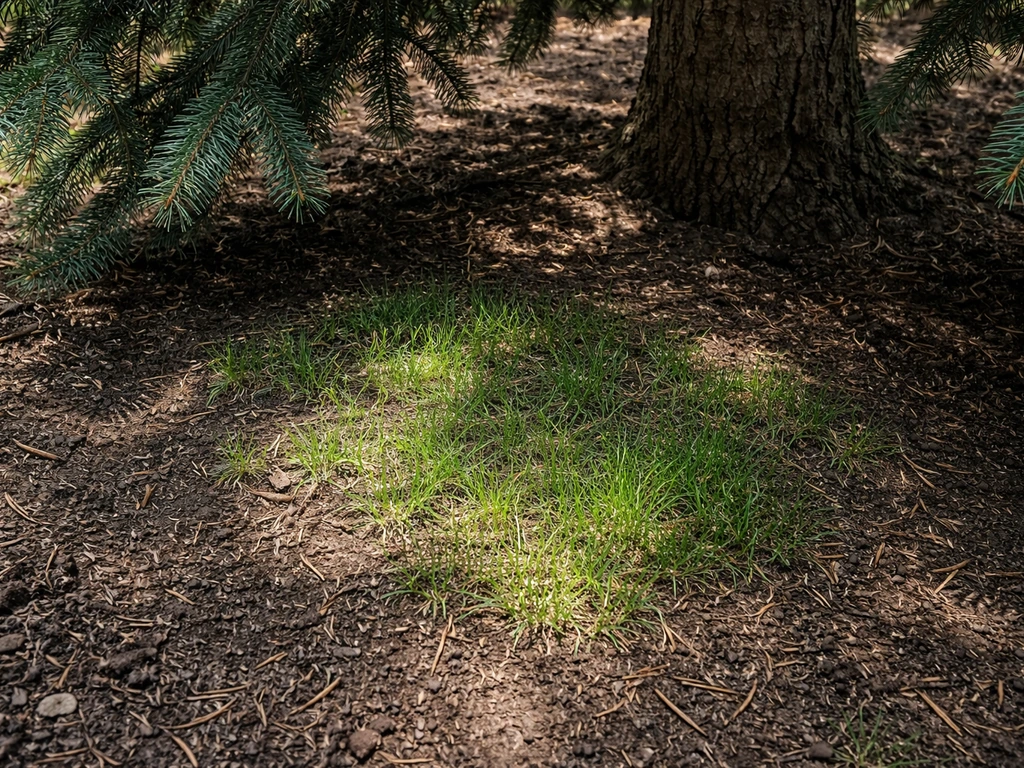
How to Grow Grass Under Spruce Trees: Step-by-Step
Fix shade, needle buildup, and root competition under spruce with soil prep, seeding or sod, plus tailored watering and
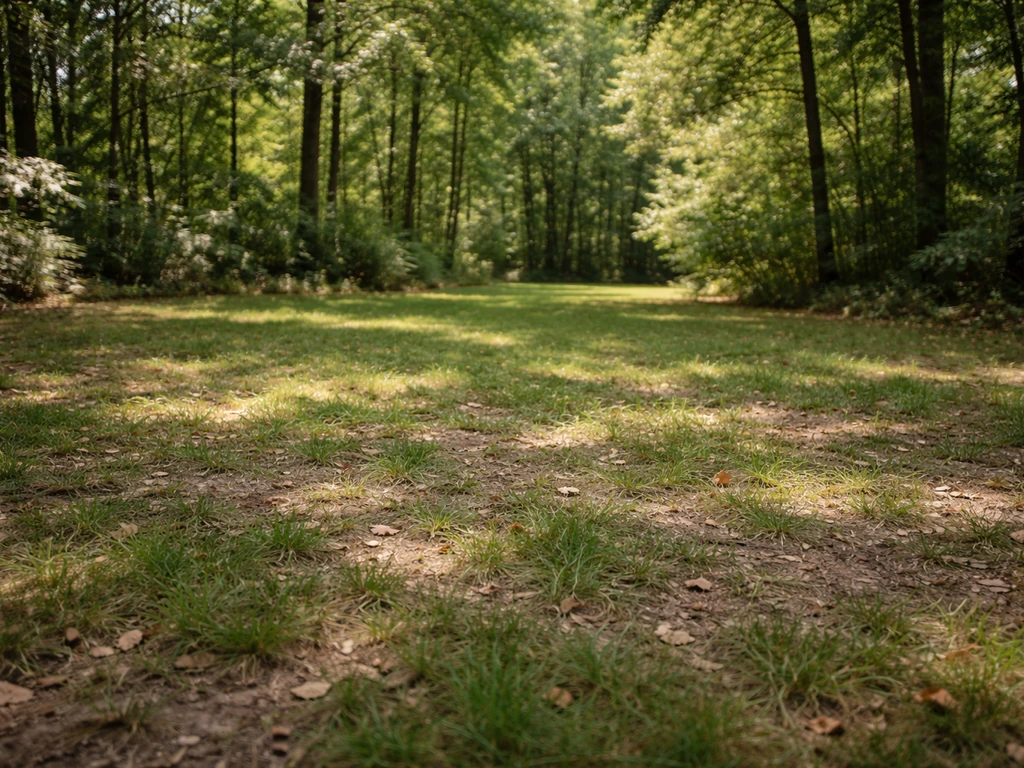
How to Grow Grass in a Wooded Area Step by Step
Step-by-step plan to grow shade grass in wooded areas, from light checks and soil prep to seed, watering, and maintenanc