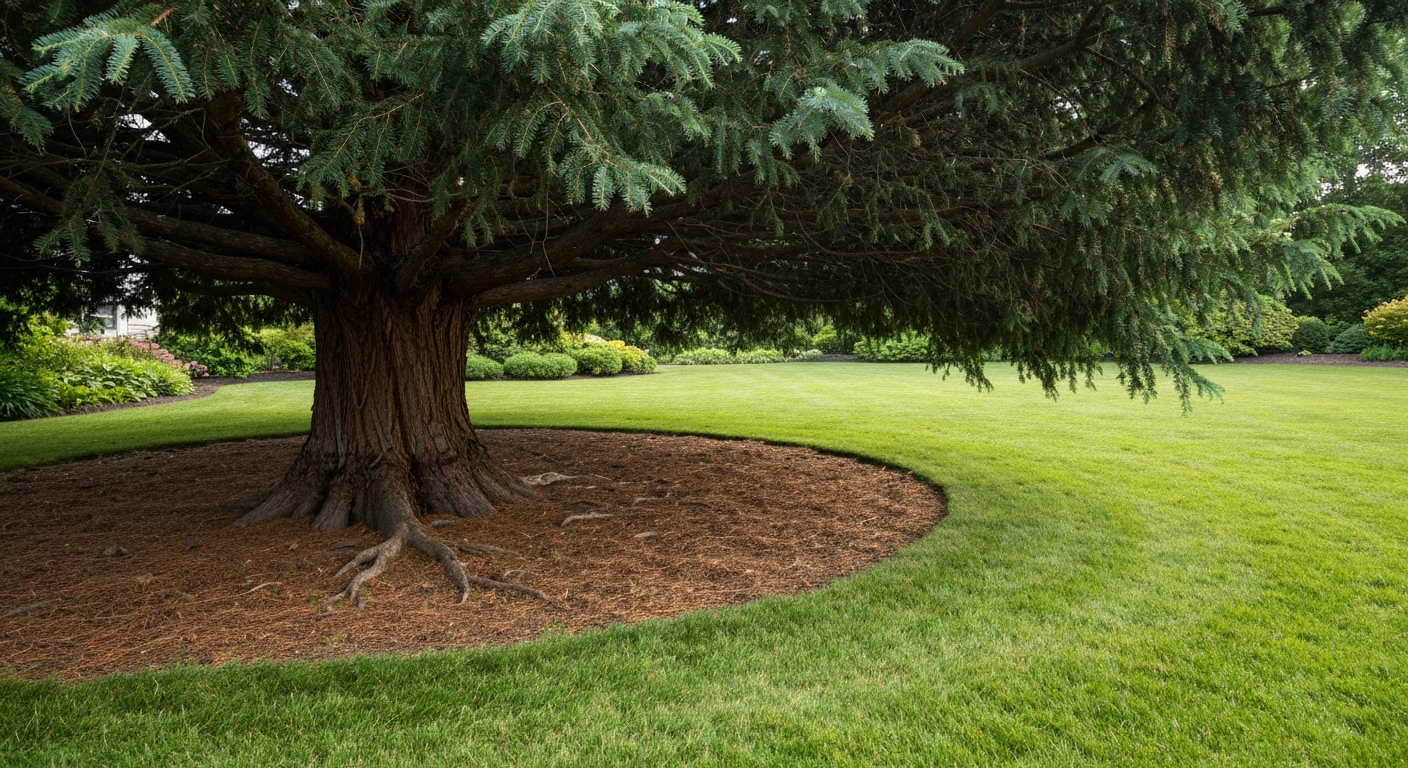
Grass can grow under cedar trees, but it's genuinely hard and often temporary. In my experience, the best realistic outcome is a thin, functional stand of fine fescue in areas receiving at least 3 to 4 hours of filtered or dappled light per day. In dense shade directly under a tight cedar canopy, grass usually fails within a season or two no matter what you do, and at that point a mulch bed or groundcover is a smarter investment than another bag of seed.
How to Grow Grass Under Cedar Trees: Shade Lawn Guide and Care
Marcus Volkmann
14 Jul 2026
Quick verdict: will grass grow under cedar trees?
The honest answer is: sometimes, in the right conditions, with the right species and ongoing effort. Cedar trees combine several lawn-unfriendly traits in one place, dense evergreen canopies that block light year-round, shallow fibrous roots that grab water and nutrients before grass can use them, and needle litter that builds up and breaks seed-to-soil contact. That said, plenty of homeowners have a workable stand of fine fescue under the outer edges of their cedars. The canopy fringe, where light filters through for a few hours daily, is where grass has its best shot. The ground directly under the trunk, where shade is near-total and roots are thickest, is where you should probably stop fighting and plant something else.
Quick decision checklist: should you attempt grass here?
Before you buy seed, run through this checklist. If you can check most of these boxes, a grass attempt is worth it. If you can't hit the first two, skip ahead to the alternatives section.
- Light: Does the spot get at least 3 to 4 hours of direct or bright filtered light per day? (Measure in mid-summer when the canopy is densest.)
- Root density: Can you slide a spade into the soil 4 to 6 inches without hitting a solid mat of surface roots? If roots dominate the top few inches wall-to-wall, establishment will be extremely difficult.
- Drainage: Does water drain away within a few hours of rain, or does it sit? Cedar shade often dries soil out, but low spots can stay waterlogged — both extremes hurt grass.
- Needle litter: Is the duff layer less than about an inch thick, or are you willing to rake it off and keep it raked? Thick litter blocks seed-soil contact and harbors fungal disease.
- Soil pH: Have you tested and confirmed the pH is between 5.5 and 7.0, or are you prepared to amend based on a soil test result? Don't assume the soil is too acidic — test first.
- Willingness to maintain: Are you prepared to overseed every fall, water during dry spells, and accept a thinner lawn than in full sun? Shaded grass under cedars needs more intervention, not less.
- Tree health: Is the cedar healthy and not being damaged by existing lawn care or construction? Your grass efforts shouldn't compromise a mature tree.
Why cedar and other evergreens make lawns difficult
Every evergreen tree stacks multiple problems on top of each other, and cedars hit most of them at once. Understanding each one helps you figure out which problems you can actually fix.
Light: the biggest obstacle by far
Cedars are dense, year-round canopy trees. Unlike a maple or oak that at least drops its leaves and lets in winter light, a cedar is blocking photosynthesis every single month. Turfgrasses need light to build sugars and stay competitive. University turfgrass research shows that reduced light pushes cool-season grasses into a negative carbon balance, meaning they burn more energy than they make. The result is thinning, increased disease susceptibility, and eventually bare patches. Even the most shade-tolerant grass species eventually give up under near-total shade.
Root competition: quiet but relentless
Cedar roots are aggressive and shallow. They spread well beyond the dripline and create a dense mat in the top few inches of soil where water and nutrients concentrate. USGA turf research is clear that root competition for water and nutrients is a primary driver of turf failure under trees, often more impactful than light alone. Your grass seedlings are essentially competing with an established root system that outweighs them by orders of magnitude. This is why aeration and topdressing, which get amendments into the soil without digging, matter so much here.
Needle litter and the soil surface problem
Cedar needles drop constantly and form a springy duff layer. That layer physically prevents grass seeds from making contact with mineral soil, which is required for germination. Damp, compacted needle duff also creates ideal conditions for fungal pathogens. One thing worth clarifying: UC Cooperative Extension notes that needle litter alone usually doesn't acidify garden soil to a meaningful degree. The pH concern gets repeated constantly online, but the actual soil under your cedars may test at a perfectly reasonable 5.8 to 6.5. Test before you lime.
Allelopathy: real in the lab, less certain in the yard
Thuja (western red cedar) does contain biologically active compounds, including plicatic acid and thujaplicins, and some conifer needle extracts show germination-inhibiting effects in lab bioassays. But field evidence for meaningful allelopathic suppression of turf under living cedars is thin. The current consensus in extension literature is that shade and root competition explain most turf failures under evergreens, and allelopathy is a minor or situational factor. I wouldn't let concern about allelopathy stop you from trying, just manage what you can control first.
Identify your trees and what they mean for lawn success
Not all trees called 'cedar' are the same, and the species matters. Eastern red cedar (Juniperus virginiana) is technically a juniper and is extremely common across eastern North America. Western red cedar (Thuja plicata) is a true Thuja and is prevalent in the Pacific Northwest. Northern white cedar (Thuja occidentalis) is common in the upper Midwest and Northeast. Deodar cedar (Cedrus deodara) is a true cedar grown ornamentally in warmer climates. All of these create dense shade and surface root competition, so the grass-growing challenge is consistent across the group. The main differences are crown shape and needle density: eastern red cedar tends to have a tight columnar or pyramidal form that creates very deep, concentrated shade directly beneath it. White cedar and western red cedar can be large and spreading. If you aren't sure what you have, county extension offices can help with identification.
Compared to a deciduous tree like a maple, any cedar is harder for grass. Maples drop their leaves, open the canopy in fall and winter, and often allow a decent stand of shade-tolerant grass under their outer branches. For detailed, maple-specific guidance, see how to grow grass under maple tree. Growing grass under a maple is still a challenge, the root competition and summer shade are real, but it's more tractable than a cedar. Spruce trees are a close comparison to cedars: also evergreen, also dense, also with shallow roots and heavy needle litter. The strategies for growing grass under spruce are nearly identical to those for cedar. The differences are mostly in canopy shape, spruce often has lower-hanging branches that need lifting, and in local species distribution.
Site assessment: figure out what you're actually working with
I always tell people: don't spend money on seed until you've done 30 minutes of honest site assessment. Here's what to check and how.
Light measurement
The simplest method is to stand in the area on a sunny day in July (when the canopy is at its densest) and count how many hours the ground is in direct sun or bright filtered light. Do it in the morning and afternoon. If you want more precision, a smartphone light meter app works reasonably well for comparing spots. A reading of fewer than 3 to 4 usable hours per day is a red flag. Check different zones: the outer dripline area versus directly under the trunk. You may find that one portion of the space is borderline workable while the area near the trunk is hopeless.
Soil pH and nutrients
Send a soil sample to your state extension lab or use a reliable home test kit. Sample the area under the cedars separately from your open lawn, the conditions can differ. Test for pH, phosphorus, potassium, and organic matter at minimum. Most extension labs will give you a lime requirement recommendation alongside the pH number, which is more actionable than pH alone. University of Missouri Extension guidance is clear: apply lime only according to your soil test report, not based on assumptions. Maintenance liming rates for lawns are often in the range of 5 to 20 lb per 1,000 sq ft, but this varies widely by soil type and existing pH.
Root mapping
Push a thin probe or a screwdriver into the soil at several points in the area. Note where you hit resistance within the first 4 to 6 inches, that's where surface root density is highest. The zone immediately around the trunk base is almost always root-dominated and is the least viable for grass. The area beyond the dripline or along the canopy edge typically has fewer surface roots and better prospects. Knowing the root map helps you decide where to concentrate your effort and where to convert to mulch.
Drainage check
Dig a small hole about 6 inches deep, fill it with water, and watch how fast it drains. Under dense cedar canopy, soil often becomes hydrophobic from accumulated oils in the duff and organic matter, water beads off rather than soaking in. Conversely, low spots in the shade can stay soggy. Neither extreme supports grass germination. If drainage is the problem, core aeration and compost incorporation can help significantly.
Factors that determine success and what to realistically expect
I want to be honest here: growing grass under cedars usually produces a thinner, more maintenance-intensive stand than open lawn, even under good conditions. Here's how the main factors interact.
| Factor | Favorable condition | Unfavorable condition | Can you fix it? |
|---|---|---|---|
| Light (hours/day) | 3–4+ hours filtered or direct | Fewer than 3 hours deep shade | Partially, via canopy thinning or limbing up |
| Needle litter depth | Less than 1 inch, or actively raked | Thick duff, 2+ inches | Yes, rake before seeding and each fall |
| Root density | Roots below 4–6 inches, not solid mat | Dense mat throughout top 4 inches | Partially, via aeration; severe cases, no |
| Soil pH | 5.5–7.0 | Below 5.0 or above 7.5 | Yes, with lime or sulfur per soil test |
| Soil moisture | Consistently moist but draining | Chronically dry or waterlogged | Partially, with irrigation or drainage work |
| Soil depth | 6+ inches to hardpan or solid roots | Less than 3–4 inches workable soil | Limited; topdressing adds some depth over time |
| Organic matter | Moderate, soil has some structure | Compacted, low OM, no structure | Yes, with compost topdressing and aeration |
Even in favorable conditions, expect a grass stand that is noticeably thinner than your sunny lawn, requires annual overseeding to fill gaps, and is more prone to summer fungal diseases. A cedar-shaded lawn is a maintenance commitment, not a set-it-and-forget-it project.
The best grass species for under cedar trees
Species selection is probably the single most controllable factor in your success. Using the wrong grass is the most common mistake I see homeowners make, they grab whatever's on sale and wonder why it fails in 90 days.
Cool-season grasses: fine fescues are your best option
Fine fescues, including creeping red fescue, chewings fescue, hard fescue, and strong creeping red fescue, are consistently the top recommendation from turfgrass research programs at OSU, Penn State, and UMass for shaded sites. They have the lowest light requirements of any cool-season turf, tolerate dry and low-fertility soils better than most other species, and stay relatively competitive against root competition. Fine fescue blends specifically labeled for shade typically combine two or three of these types to broaden their adaptability. They have a fine texture that looks tidy, though they don't handle heavy foot traffic as well as other grasses.
Turf-type tall fescue is the next best option for partial shade or transition zones where fine fescues might thin out under moderate foot traffic. It has a coarser texture and deeper roots that help it compete with tree roots somewhat better. Improved modern cultivars perform noticeably better than older types in shade. Use tall fescue in areas with 4 or more hours of light and where some wear is expected.
Kentucky bluegrass and perennial ryegrass are not good choices for heavy shade under cedars. Both require significantly more light than fine fescues. Extension guidance from Penn State and UMass is consistent on this: they perform poorly under dense canopy and will thin out quickly. If you see them in a commercial shade mix in small percentages, that's usually for wear tolerance, not shade performance. I'd avoid mixes where bluegrass or rye dominate if your site is heavily shaded.
Warm-season grasses: limited options and honest limitations
Warm-season grasses have higher light requirements as a group because they use the C4 photosynthetic pathway, which doesn't function well in low-light conditions. Bermudagrass is essentially non-viable in any meaningful tree shade. Zoysiagrass and centipede grass also need substantial light. St. Augustine is the most shade-tolerant warm-season option and is sometimes used in partial shade in the Gulf Coast and Southern states, but Texas A&M AgriLife guidance notes it still needs around 4 to 6 hours of usable light per day and will thin markedly in dense cedar shade. If you're in a warm-season lawn region and your cedars provide only light dappled shade, a shade-tolerant St. Augustine cultivar is worth trying. If shade is dense, a groundcover replacement is a better answer.
Recommended seed and sod mixes and how much to use
When buying seed, look specifically for products labeled as shade mixes or heavy shade blends. The label should show fine fescue species, creeping red, chewings, or hard fescue, making up 80 to 100 percent of the mix by weight. Some mixes add a small percentage of improved Kentucky bluegrass for spreading ability; that's acceptable if fine fescues dominate. Avoid mixes with high percentages of perennial ryegrass or annual ryegrass, annual rye is a temporary filler, not a shade solution.
For seeding rates under trees, apply at the higher end of the label rate because germination will be lower than in ideal conditions. A good rule for overseeding into existing turf or bare soil under trees is 5 to 7 lb of pure live seed per 1,000 sq ft for fine fescue mixes. If you're starting from bare or heavily degraded soil, seed at 7 to 9 lb per 1,000 sq ft. Slit-seeding or slit-seeder rental after aeration is significantly more effective than broadcast seeding because the seed drops into a protected furrow with direct soil contact rather than sitting on the surface or in duff.
Sod under trees works best when used in strips or sections (not wall-to-wall) to minimize root disturbance during installation. Choose sod grown from fine fescue or tall fescue shade mixes. Avoid trying to lay full sod runs if the ground is heavily root-bound, a combination of sod strips where soil depth allows and overseeding elsewhere is more practical. Keep newly laid sod moist for the first 2 to 3 weeks; under tree shade it may need less frequent irrigation than open-sun sod but still needs consistent moisture to knit.
When and how to plant: timing and method
Cool-season seeding: late summer to mid-fall is the target window
For cool-season grasses under cedars in the northern US and similar climates, the best seeding window is late August through mid-October. Soil temperatures are still warm enough to drive germination (ideally above 50°F at 2-inch depth), air temperatures are cooling which reduces heat and drought stress on seedlings, and autumn rainfall is often more reliable than summer. Seeding in fall also avoids competing with summer annual weeds that would outpace young grass seedlings. I've tried spring seeding under trees and it can work, but summer heat and root competition hit the seedlings right as they're trying to establish, fall is clearly better.
Warm-season seeding: late spring to early summer
Warm-season grasses like St. Augustine (usually planted as plugs or sod) and zoysia should go in from late May through June, giving the plants the full warm season to establish before fall cool-down. Planting too late means you're sending thin young plants into fall without enough root mass to survive winter.
Step-by-step planting method
- Rake off all needle litter and surface duff to expose mineral soil. Compost the raked material off-site or in a pile away from the planting area.
- Core-aerate the entire area, especially where soil is compacted or root-dense. Use a rental core aerator and make two passes in different directions.
- Apply a thin layer (1/8 to 1/4 inch) of screened compost over the aerated surface. This improves organic matter and seed-to-soil contact without burying roots deeply. Repeat this topdressing in future years rather than doing one thick application.
- Apply lime or sulfur only if your soil test recommends it, at the rate specified in the report. Don't guess.
- Slit-seed into the aerated and topdressed surface at the higher end of the label rate for a shade mix. If you don't have a slit seeder, broadcast seed and then drag a metal rake lightly across the surface to press seed into the cores and compost.
- Water the seedbed to keep it consistently moist — not saturated — until germination and for the first 4 to 6 weeks of establishment. Under cedar shade, the soil may dry more slowly than open areas, but check daily in warm, dry periods.
- Avoid foot traffic on the newly seeded area until the grass has been mowed at least twice.
- Apply a starter fertilizer (higher phosphorus ratio) at seeding to support root development, then switch to a shade-appropriate maintenance fertilizer schedule after establishment.
Improving light without harming your cedars
The single highest-impact thing you can do for grass under any tree is increase light penetration. For step-by-step tips specifically on how to grow grass under evergreen trees, see our guide on how to grow grass under evergreen trees (d545f0c8-071d-4235-99d8-bdcff28ef105). Even adding 1 to 2 hours of additional light per day can shift a failing spot into a marginal-but-workable one. For cedars and similar evergreens, the best method is crown lifting: removing the lower branches up to a height of 8 to 12 feet (depending on tree size) to let more low-angle morning and afternoon light reach the ground. This is a legitimate arborist technique that doesn't harm a healthy tree. Hire a certified arborist for large trees or anything near power lines. For smaller ornamental cedars, you can do lower-branch removal yourself with a clean pruning saw.
Interior thinning, removing some of the inner branches of the canopy to allow more light to filter through, can also help, but it's more complex and best left to a professional on mature trees. What you should not do is top or excessively prune a cedar to the point of stressing the tree. A stressed or damaged cedar can become a hazard tree and will look terrible. The goal is modest improvement, not wholesale restructuring.
Watering, fertilizing, and mowing for shaded grass
Shaded grass under cedars has different needs than the same grass in full sun. Get these three things right and you'll keep the stand you worked to establish.
Watering
Cedar roots are competitive for moisture, so shaded grass often dries out faster than you expect despite the shade. During establishment and in dry spells, water deeply and infrequently, aim for about 1 inch per week total (rain plus irrigation) applied in one or two sessions rather than daily light sprinkles. Deep watering encourages grass roots to grow downward rather than staying in the surface layer where they compete directly with cedar roots. Check soil moisture at 2 to 3 inch depth before irrigating to avoid overwatering, which promotes fungal disease in the humid, shaded environment.
Fertilizing
Shaded grass under trees needs less nitrogen than open lawn, excessive nitrogen in shade pushes lush, soft growth that's highly susceptible to fungal disease. For fine fescues under cedars, one to two light nitrogen applications per year (fall is the most important for cool-season grasses) is typical. Use a slow-release nitrogen source to reduce the risk of burning or disease promotion. Avoid high-nitrogen summer applications under tree shade, you'll get disease before you get green grass. Always follow your soil test for phosphorus and potassium; under cedars, potassium sufficiency is important for stress tolerance.
Mowing
Mow shaded grass higher than your open lawn, for fine fescues, aim for 3 to 4 inches rather than 2 to 2.5 inches. A taller blade height means more leaf area for photosynthesis, better shade tolerance, and a deeper root system. Never remove more than one-third of the blade height in a single mowing. Keep mower blades sharp so you're cutting cleanly rather than tearing, which opens the turf to disease entry in the humid under-canopy environment.
Troubleshooting common problems
Poor germination
If seed isn't germinating, the most common causes are: insufficient soil contact (duff still present, no slit-seeding or aeration), soil temperature too low (below 50°F for cool-season grasses), or the area is too dry between waterings. Check all three before assuming the seed is bad or allelopathy is to blame. Germination under tree shade can take 10 to 20 percent longer than in open sites.
Persistent moss
Moss in cedar shade is a symptom, not a cause. It colonizes where grass can't compete, usually because of deep shade, poor drainage, compacted acidic soil, or low fertility. Raking or applying iron sulfate kills existing moss temporarily, but it comes back unless you fix the underlying conditions. Improve light, aerate, test and adjust pH, and overseed. If conditions don't support grass, moss is nature's answer, and honestly a low-maintenance option worth considering in spots where grass repeatedly fails.
Fungal turf diseases
Shaded, humid environments under cedars are prime territory for turf diseases including brown patch, powdery mildew, and dollar spot. Prevention is more practical than cure: avoid evening watering (morning is best so foliage dries during the day), don't over-fertilize with nitrogen, mow at the correct height with sharp blades, and maintain good air circulation with crown lifting. If disease is recurring every season despite good practices, that's a signal the site is too marginal for grass and a conversion to mulch or groundcover makes more sense.
Chronic thinning despite reseeding
If you've overseeded for two or three consecutive seasons, used the right species, amended the soil, and the stand keeps thinning, the site is telling you something. Root competition and light are likely both below threshold, and you're spending money to produce a temporary result each year. This is the point to seriously consider converting the area.
When to stop trying: alternatives that actually work
UMass Extension guidance is clear: if a site consistently gets fewer than 3 to 4 hours of usable light or if multiple seasons of renovation (pruning, aeration, overseeding, topdressing) haven't produced a dense stand, it's time to convert. This isn't giving up, it's resource allocation. Here are the alternatives worth considering.
- Mulch bed: A 2 to 3 inch layer of wood chip or bark mulch around the base of the cedar (keeping it away from the trunk) suppresses weeds, retains moisture, and looks intentional. This is the lowest-maintenance option and protects tree roots from compaction.
- Shade groundcovers: Plants like pachysandra, vinca (periwinkle), ajuga, wild ginger, and native woodland sedges (Carex species) grow well in the conditions that kill grass. They're not mowable, but they establish and persist without annual overseeding.
- Woodland understory planting: Ferns, hostas, astilbe, and native woodland wildflowers create a layered planting under cedars that can be genuinely beautiful and ecologically valuable.
- Gravel or decomposed granite paths: In high-traffic areas under cedars where nothing grows, a clean gravel or decomposed granite surface is durable, permeable, and looks intentional.
- Raised island beds: If you want some plant life in the space but don't want to disturb the root zone, raised planting containers or low-profile raised beds filled with good planting mix can hold small shrubs or annual color without competing directly with cedar roots.
How cedar compares to other problem trees for grass growing
If you're dealing with multiple tree types on your property or in a wooded area, it helps to know how cedar stacks up. Growing grass under spruce is a very similar challenge to cedar: both are dense evergreens with needle litter, year-round shade, and shallow root competition. The main difference is canopy shape, spruce often has branches that sweep lower to the ground, requiring more aggressive limbing-up before grass establishment is practical. Growing grass under a maple is somewhat more forgiving because of the deciduous canopy, you get winter and early spring light, and maple roots, while competitive, tend to be less surface-dominant in the first few inches of soil. Working in a broader wooded area with mixed species introduces even more variables around canopy density, soil type, and competition, and often makes groundcover or woodland planting the practical default over turfgrass. For more detail on tactics for establishing turf in mixed-canopy or densely wooded settings, see our guide on how to grow grass in wooded areas (internal resource 195e534b-c571-4023-943a-6e9a3267ffca).
The core lesson across all of these situations is the same: light is the limiting factor first, root competition is second, and soil chemistry is something you can actually test and adjust. Matching species to conditions and being honest about what each site can support is the only way to get lasting results.
FAQ
Will grass grow under cedar trees?
Possibly, but success depends on light, root competition, and soil. If the site gets at least about 3–4 hours of usable light (direct or strong filtered), you can often establish a thin, serviceable turf using shade‑tolerant species and careful cultural practices. In deeper shade (<3 hours) or where roots and needle duff are heavy, turf usually thins and renovation often fails — convert to mulch or shade groundcover instead.
What makes grass struggle beneath cedar and similar evergreens?
Three main factors: low light from dense evergreen canopy, intense root competition for water/nutrients beneath the dripline, and surface duff/needle litter that prevents seed‑to‑soil contact and holds moisture that favors disease. Allelopathy from cedar extracts is possible in lab tests but is rarely the primary cause in landscape settings.
How can I assess whether my site has enough light?
Use a handheld light meter or a simple test: note the cumulative hours per day when the area receives usable daylight (not just twilight). Observe at representative times (morning, midday, afternoon) and across seasons. If you reliably record ≥3–4 hours of filtered/direct light during the growing season, turf establishment is realistic; more light improves success.
Which grass species work best in shade under cedars (cool‑season climates)?
Fine fescue blends (chewings, creeping red, hard/strong) are the best choices for heavy shade. Turf‑type tall fescue mixes are appropriate where wear tolerance and deeper roots are needed in partial shade. Avoid relying on Kentucky bluegrass or perennial ryegrass in deep shade.
What about warm‑season grasses under evergreens?
Warm‑season grasses generally need more light. St. Augustine is the most shade‑tolerant warm‑season option but still usually requires ~4–6 hours of usable light; bermuda, zoysia and centipede thin quickly in dense canopy shade. In warm regions, prioritize shade‑tolerant cultivars and assess light carefully.
When is the best time to seed or sod under trees?
Cool‑season grasses: seed late summer to mid‑fall (late August–October) for best establishment. Warm‑season grasses: seed/sod late spring to early summer (May–June) when soil and air warm. Avoid seeding under trees in hot, dry midsummer or cold frozen ground.
Next Articles
How to Grow Grass Under Spruce Trees: Step-by-Step
Fix shade, needle buildup, and root competition under spruce with soil prep, seeding or sod, plus tailored watering and
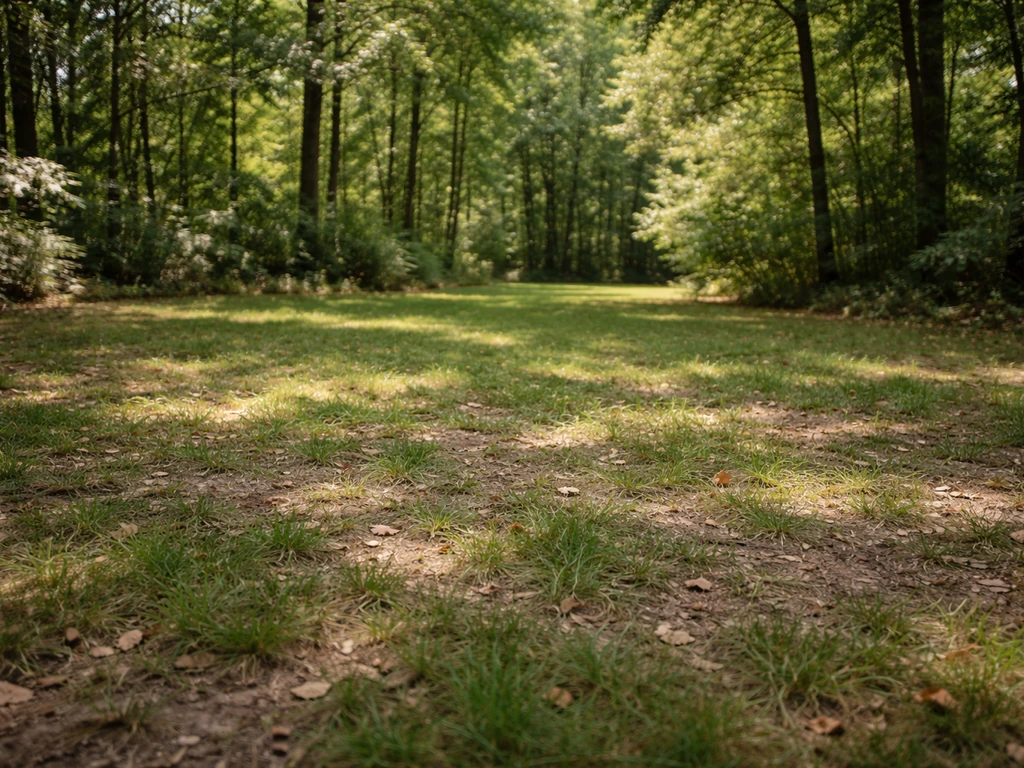
How to Grow Grass in a Wooded Area Step by Step
Step-by-step plan to grow shade grass in wooded areas, from light checks and soil prep to seed, watering, and maintenanc
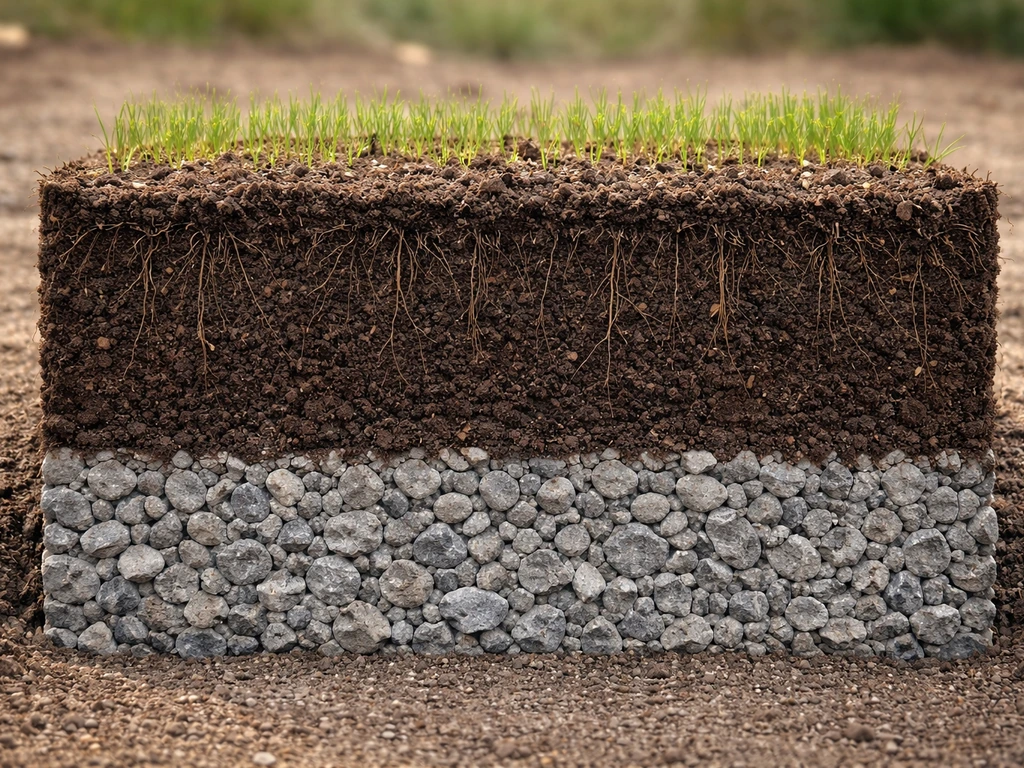
Can You Grow Grass Over Gravel? How to Do It Right
Learn when you can grow grass over gravel and follow a step-by-step method for soil depth, drainage, seeding or sod, and