
You can grow grass in a wooded area, but only if you pick the right grass, do the soil work upfront, and are honest about how much light your site actually gets. If the area gets at least 4 hours of direct sunlight daily, fine fescues are your best shot. Below that threshold, you're fighting a losing battle with grass, and a ground cover will serve you better. For everyone else, here's exactly how to do it.
How to Grow Grass in a Wooded Area Step by Step
Marcus Volkmann
8 Jul 2026
Why grass keeps failing in wooded areas
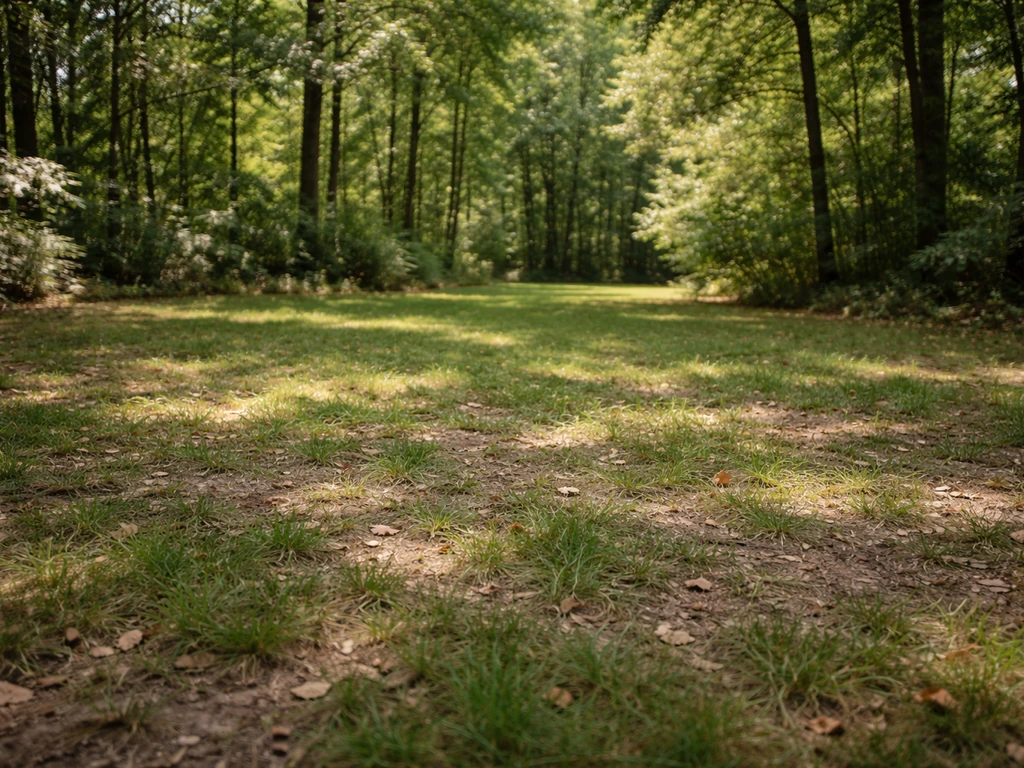
Wooded areas stack multiple problems on top of each other, and that's what makes them so frustrating. Shade from the canopy is the biggest one. Grass needs light to photosynthesize, and when it doesn't get enough, it responds predictably: roots get shallow, shoots thin out, blades grow tall and spindly reaching for light, and the whole plant becomes more vulnerable to disease and foot traffic. Penn State Extension documents all of these symptoms as classic shade stress, and they don't go away just because you re-seed every fall.
Then there's root competition. Tree roots spread far and wide, pulling water and nutrients from the same zone where grass roots want to establish. The grass ends up competing against a deeply established root system it simply can't win against. Add in the leaf litter that blankets everything every fall, the uneven moisture from a canopy that intercepts rainfall, and soil that's often compacted or depleted from years of tree dominance, and you start to understand why bare spots in wooded areas are so persistent. If you've been throwing seed down every spring and getting nothing, this combination is why.
Assess your site before you spend a dollar on seed

Before you buy anything, spend a couple of days actually watching your yard. The single most important number is sunlight hours. Walk the area in the morning, midday, and late afternoon, and note when direct sun hits the ground. If the answer is fewer than 4 hours of sunlight per day, Clemson Extension is blunt about it: the area is too shady for grass to grow well. No amount of soil prep or premium seed will change that unless you modify the canopy itself.
Beyond light, look at drainage. After a rain, does water pool and sit for hours? Compacted woodland soil often has poor infiltration, and wet shade is an even worse environment for grass than dry shade. Check slope and drainage patterns so you know what you're dealing with before you amend anything.
Also look at what's already growing there. Moss is a dead giveaway. Penn State Extension notes that moss establishes where turfgrass is weak or thin, often due to shade and moisture issues. If moss is spreading across your site, the conditions are actively hostile to grass right now. Weeds like roughstalk bluegrass (Poa trivialis) indicate persistent heavy-to-moderate shade and moisture, and they'll outcompete new grass seedlings easily. What's growing there tells you exactly what the site is suited for.
- Count sunlight hours across multiple days (target: at least 4 hours of direct sun)
- Check drainage after rainfall (standing water for more than a few hours signals compaction or poor slope)
- Look for moss, bare soil patches, and weeds as clues about current conditions
- Note the tree species: oaks and beeches create dense canopy and are sensitive to soil disturbance around their roots
- Test soil pH and fertility before amending (a basic soil test saves you from guessing)
The best grasses for wooded and shaded areas
Fine fescues are the clear winner for wooded lawns in cool-season climates. They tolerate more shade than any other common lawn grass, they're low-maintenance, and they perform well in the low-nutrient, dry conditions that often exist under tree canopy. If you want a dense lawn, focus on how to grow grass under a maple tree by matching grass species, light hours, and soil prep to the conditions at your site under tree canopy. UMass Extension confirms that hard fescue, Chewings fescue, and creeping red fescue are the best-adapted species for shaded conditions. Kentucky bluegrass can work in moderate shade if you choose a shade-tolerant cultivar, but very few cultivars hold up under heavy shade.
For heavy tree shade, UMN Extension recommends a practical blend: roughly 40% Chewings fescue, 40% strong creeping red fescue, and 20% hard fescue. This mix gives you different growth habits that complement each other and fill in gaps over time. If you're in the transition zone or farther south, tall fescue is a better option than fine fescues because it handles both shade and heat stress better. Warm-season grasses like St. Augustine (in the South) also have shade-tolerant varieties worth considering, but they still need that 4-hour light minimum.
| Grass Type | Shade Tolerance | Best Climate | Notes |
|---|---|---|---|
| Fine fescue blend (Chewings, creeping red, hard) | High | Cool-season regions | Best all-around choice for wooded areas; low N needs |
| Tall fescue | Moderate-High | Transition zone/South | More heat tolerant than fine fescues; good for denser shade in warmer areas |
| Kentucky bluegrass (shade cultivars) | Moderate | Cool-season regions | Only specific cultivars work; struggles in heavy shade |
| St. Augustine (shade varieties) | Moderate | Warm-season South | Needs 4+ hours; best warm-climate option under trees |
| Zoysia | Low-Moderate | Warm-season | Generally poor in heavy shade; limited woodland use |
One important caveat: if your wooded area includes specific tree types like spruce, evergreens, maples, or cedars, each one creates slightly different conditions (soil acidity, root density, drip zone issues) that can affect which species performs best. If you’re specifically trying to learn how to grow grass under spruce trees, treat it as a shade-and-root-competition problem and tailor your grass choice, soil prep, and seeding timing to the conditions near the spruce canopy. The core rule still holds though: fine fescues first for shade.
Preparing the soil in a wooded area
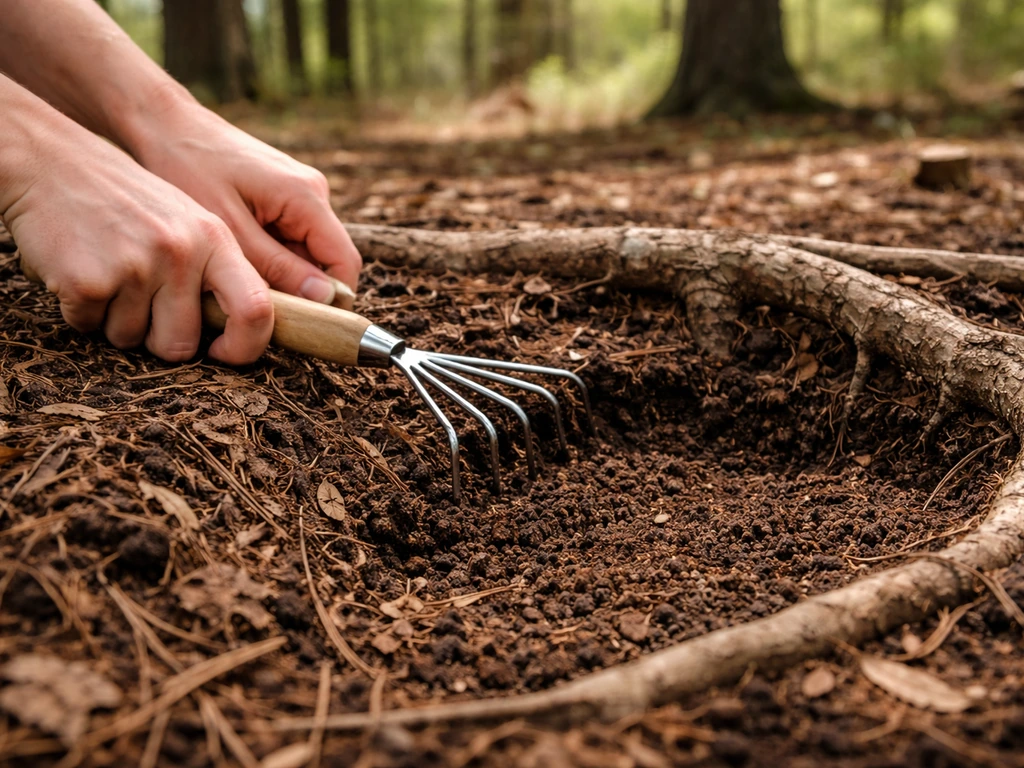
Soil prep is where most people cut corners and then wonder why the seed didn't take. In wooded areas, you're often dealing with three things at once: compaction, leaf litter and thatch, and depleted or unbalanced soil fertility. You need to address all three before you plant anything.
Deal with leaf litter and thatch first
Rake out accumulated leaf litter and any thatch layer before doing anything else. Nebraska Extension warns that leaves that become too deep will smother lawn grass outright. A thin layer of mulched leaves isn't a problem, but a thick mat absolutely is. If you probe the surface and find more than about an inch of thatch, Penn State Extension considers that a threshold for turf problems. Rake or dethatch before seeding, but if your existing turf is thin or stressed, avoid aggressive dethatching that tears up what little grass is there.
Core aerate for compaction
Woodland soil compacts easily from foot traffic, mowing, and even the natural pressure of tree root systems. University of Delaware Extension explains that compaction reduces oxygen in the soil and inhibits decomposition of organic matter. Core aeration, which pulls small plugs of soil out of the ground, is the most effective fix. For heavily compacted areas, run the aerator in multiple directions. One pass isn't enough when compaction is severe. The plugs break down on their own and leave channels for water, air, and root growth.
One important warning: if your wooded area includes large, established oaks or other sensitive tree species, be careful about any soil disturbance near their root zones. Oklahoma State University Extension notes that even low levels of compaction and soil disturbance can harm certain tree species. Aerate lightly near trunk bases and major surface roots, not aggressively.
Amend based on a soil test
Get a soil test before you add anything. UMN Extension and the University of Maryland both emphasize that soil tests give you a precise fertilizer and lime recommendation so you're not guessing. Woodland soil is often acidic, and lime may be needed to bring pH into the range where grass can access nutrients. If the test shows low organic matter, top-dress with about a quarter inch of compost after aerating. That improves moisture retention without smothering the seedbed. Then add a starter fertilizer according to your soil test results, not generically.
When and how to plant: seed vs. sod
Best timing for seeding
For cool-season grasses (fine fescues, Kentucky bluegrass, tall fescue), late summer is the optimal planting window. UMN Extension and Penn State Extension both point to mid-August through mid-September as the sweet spot. Soil is warm enough for germination, air temperatures are cooling, and fall rains help establishment without the brutal heat stress of summer. Spring seeding works but is second-best; you're racing against summer heat and weeds. For warm-season grasses in the South, late spring to early summer is the window.
Seeding technique for wooded areas
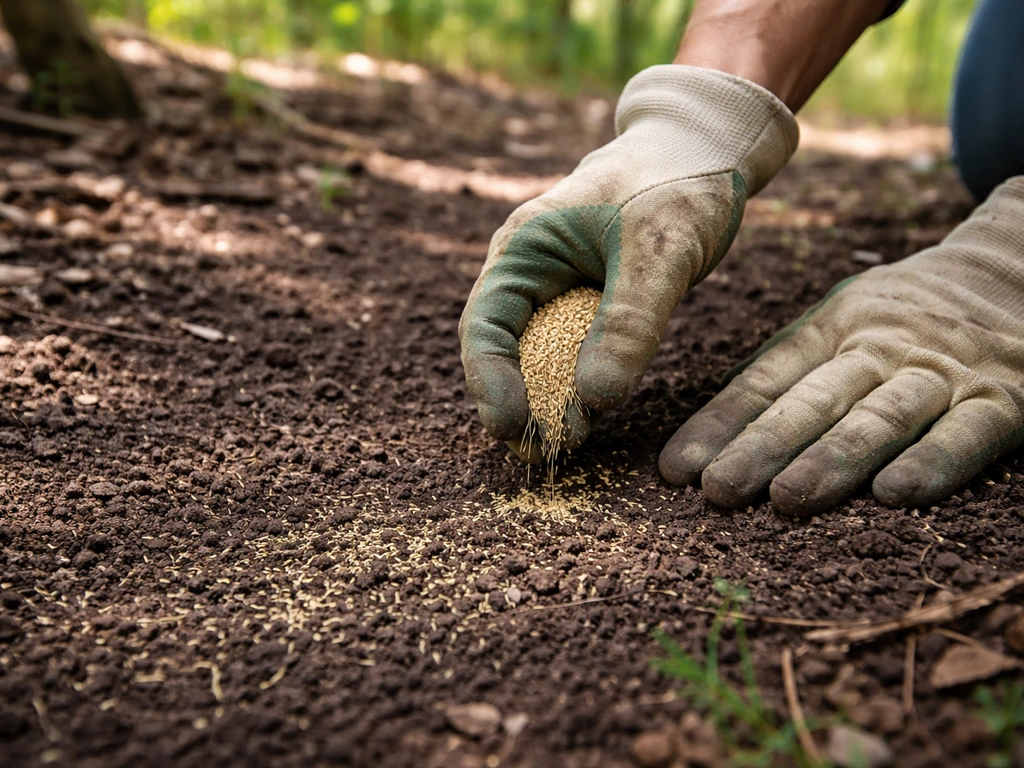
Seed-to-soil contact is everything with fine fescues. After clearing, aerating, and amending, seed at roughly 5 pounds per 1,000 square feet (Purdue's benchmark for fine fescues). Rake lightly after spreading to work seed into the surface, then use a light roller to press seed into soil contact. Purdue Extension specifically recommends this rolling step to improve emergence. A power rake set to cut about an eighth to a quarter inch into the soil is another option for making better seed-to-soil contact in thin or bare areas.
Sod: when it makes sense
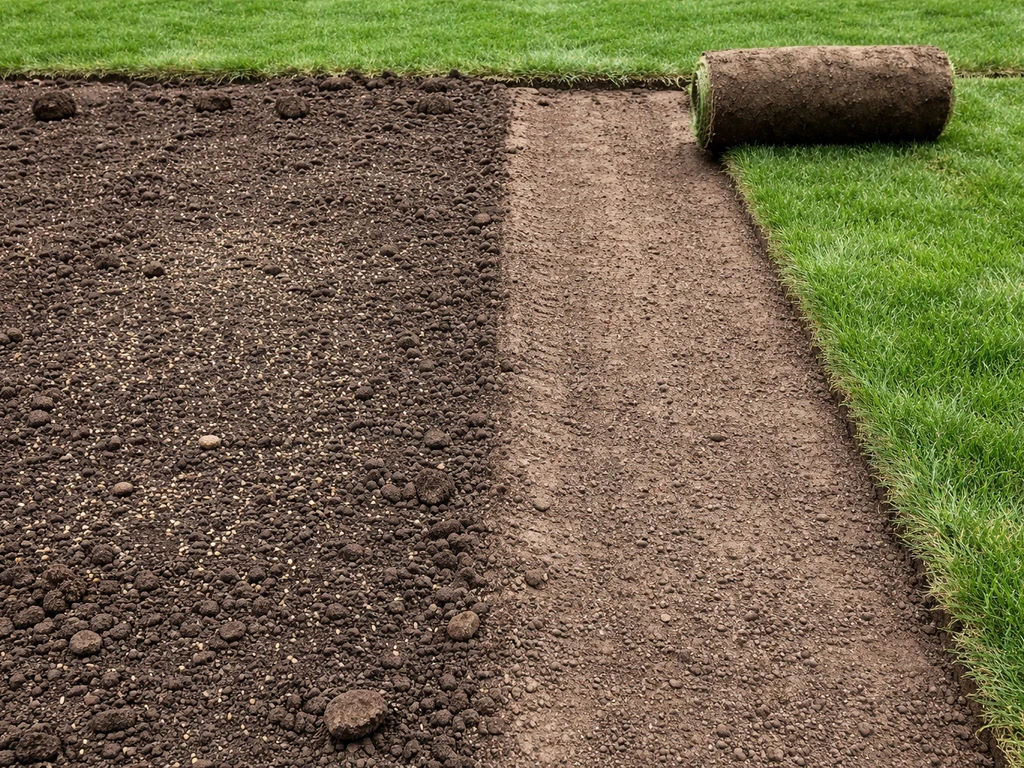
Sod gives you an instant surface and skips the vulnerable germination window. It makes sense if you need quick results or if erosion on slopes is a concern. The downside is that finding shade-tolerant fine fescue sod is harder and more expensive than seed. Sod also needs the same soil prep underneath, so you can't skip the compaction and amendment steps. If you're putting down sod in a wooded area and skipping aeration and amendment, you'll likely see it thin out within a season or two.
Watering, fertilizing, and weed control for shade grass
Watering
Right after seeding, keep the top inch of soil consistently moist. UMN Extension recommends blank" rel="noopener noreferrer">light watering two to three times a day for the first couple of weeks to protect germinating seed. Once the grass is established, shift to deep, infrequent watering: enough water to wet the soil to about 6 inches deep, blank" rel="noopener noreferrer">once a week or less if there's no rainfall. This encourages deep rooting, which shade grass badly needs to compete with tree roots. Avoid watering during the heat of the day, and be aware that dense tree canopy already intercepts rainfall, so your shaded lawn often needs supplemental irrigation even when it looks like it rained enough.
There's a tricky balance here. Clemson Extension notes that infrequent, shallow watering under shade can increase disease risk because roots stay near the surface. You want to water deeply and then let the surface dry, rather than keeping it consistently damp, which breeds fungal problems in low-light conditions.
Fertilizing shade grass
Fine fescues are genuinely low-maintenance and don't need heavy feeding. Overfertilizing with nitrogen actually hurts fine fescues and can invite more aggressive weeds to crowd them out. During establishment, Purdue Extension recommends a light fertilization approach: roughly 0.25 to 1.0 pound of nitrogen per 1,000 square feet over the first 30 to 90 days after seeding, using a starter fertilizer with phosphorus to support root development. After that, let your soil test guide annual applications. UMN Extension reinforces that you should follow lab recommendations rather than guessing. Avoid the temptation to push shade grass with high nitrogen rates the way you would a sunny bluegrass lawn.
Weed control
Weed control in shade grass has some real pitfalls. If you're planning to use a preemergence herbicide, you cannot seed immediately after application, and if you've recently seeded, many preemergents will kill your new grass too. Oklahoma State University Extension emphasizes that preemergence products control weeds at germination, not after, and label timing requirements must be followed precisely. Some common preemergents like benefin and oxadiazon can injure fine fescues specifically, according to Penn State Extension, so always read the label for your actual grass species, not just the general category. After your fine fescue lawn is established, hand-pulling and spot treatments are usually safer than broad preemergent applications over a fine fescue mix.
Keep an eye out for indicator weeds. Penn State Extension notes that certain weeds signal specific site problems: roughstalk bluegrass (Poa trivialis) thriving in your shaded area means you have persistent shade and moisture. Moss spreading where you've seeded means conditions still favor moss over grass. These aren't just cosmetic problems; they're signs that the underlying conditions haven't been fixed enough for grass to hold.
Long-term maintenance to keep shade grass alive
Mow high. This is non-negotiable for shade grass. Fine fescues should be kept at 2.5 to 4 inches, and the University of Maryland Extension recommends holding fine fescues and tall fescues at 3 to 4 inches. Taller grass maintains more leaf area for photosynthesis, which is everything when light is already limited. Cutting shade grass short is one of the fastest ways to kill it.
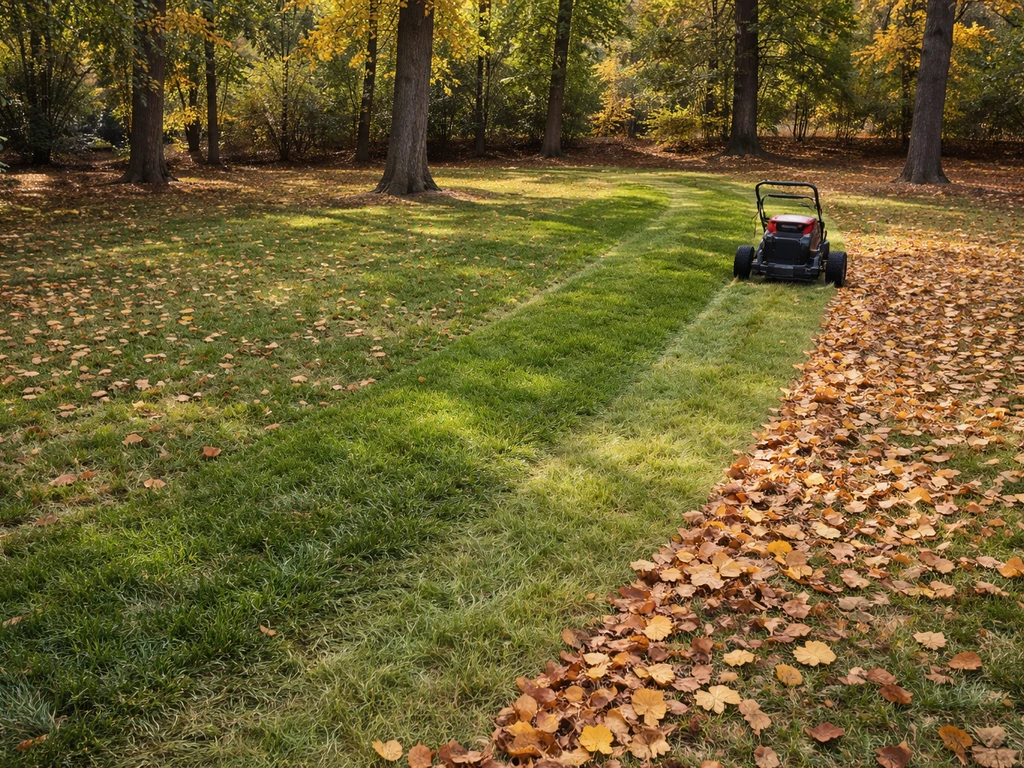
Manage leaves every fall, consistently. Don't let leaves pile up and mat over the grass. A single season of heavy, unmanaged leaf fall can set back a shade lawn significantly, especially if the grass was already thin. Mulching leaves into small pieces with a mower is fine if they're not too deep, but a thick mat needs to be raked and removed. UMN Extension also notes that leaving excessively long clippings on the lawn can shade and smother the grass underneath, so bag or rake if you've let it go too long between mows.
Plan to overseed every year or every other year. Shade grass thins over time, and annual overseeding in late August to mid-September keeps density up and fills in bare spots before moss and weeds take over. Core aerate before overseeding when compaction is an issue, which in a wooded area means regularly. This is an ongoing process, not a one-and-done fix.
When grass just won't take: honest next steps
If you've done the soil prep, chosen the right grass, seeded at the right time, and you're still getting thin, patchy results after two full seasons, the site probably can't support traditional lawn grass. That's not a failure of effort; it's just what happens when a site gets less than 4 hours of sun with dense root competition. At that point, the most practical move is to redesign rather than keep fighting.
Shade-tolerant ground covers are the University of Maryland Extension's recommendation for exactly these spots. Options like pachysandra, liriope, wild ginger, or native ferns fill in woodland areas beautifully, suppress weeds, and require almost no maintenance once established. how to grow grass under cedar trees pachysandra. They're not a consolation prize; they're genuinely the right plant for the right place. You can also consider extending mulched paths or naturalistic wood-chip areas under the densest tree canopy and saving the grass for the edges where light is better.
If you're committed to grass and the light is marginal, the one intervention that can genuinely move the needle is canopy trimming. Removing lower limbs from trees (limbing up) increases light reaching the ground without removing the trees. Even getting from 3 hours to 5 hours of sunlight through strategic pruning can be the difference between a site where fine fescue struggles and one where it actually holds. Get an arborist involved if you're unsure about what can be safely removed, especially around oaks.
The bottom line is that wooded lawn areas demand realistic expectations. You're unlikely to get a dense, carpet-like lawn under heavy tree canopy, and that's okay. A patchy but functional fine fescue lawn that you maintain well is a win. If the site truly can't support grass, switching to a ground cover or naturalistic planting isn't giving up; it's making a smarter decision with your time and money.
FAQ
How can I tell if my wooded area gets enough light without overestimating it?
Do the walk test twice, once in midsummer and once in early fall. Tree leaf density changes a lot season to season, so record the hours of direct sun at several spots, not just the shadiest-looking corner.
Will grass still grow if I only get morning sun but not afternoon sun?
It might, but expect thinner turf than you would with full-day sun. Morning-only light often dries the surface unevenly under canopy, so prioritize fine fescues and plan for more overseeding and more consistent leaf cleanup.
Can I grow grass under trees if I prevent leaf litter from forming?
You can improve success, but you cannot eliminate the other stressors, especially root competition and shade. If you remove leaves weekly in fall, you will reduce smothering, but you still need proper aeration and light-appropriate grass selection.
What soil amendments are safe if I have no soil test yet?
Use compost top-dressing after aeration, but skip lime, gypsum, and high-rate fertilizer until you know pH and nutrient levels. Adding lime blindly can push pH too high for shade-tolerant fescues and reduce nutrient availability.
Is topsoil enough to fix bare spots under a canopy?
Often it creates new problems. Adding thick topsoil can bury existing roots, worsen drainage in spots, and make seed placement inconsistent. Better approach is shallow amendment after aeration (like compost) plus correct seed-to-soil contact.
How do I seed uneven ground where roots and low spots are common?
Prepare a consistent seedbed level by lightly raking and using a power rake or shallow scratch to get contact, then seed and lightly roll. Avoid adding deep fill, which can create water pockets that seedlings can’t survive.
How much water is really needed in shade, and how do I avoid fungus?
Aim to keep the top inch evenly moist for germination, then switch to deep, infrequent watering once established. A practical check is to water, then wait until the top few centimeters start to dry before the next cycle, rather than keeping the surface damp.
Should I use a preemergence herbicide before seeding in a wooded area?
Generally, do not apply preemergence close to seeding. If you do use it, follow label timing based on when you will seed, because many products prevent germination and can also injure newly established fine fescue.
What’s the safest way to weed if I planted fine fescue recently?
Stick to hand removal and targeted spot treatment rather than broad products during establishment. New fine fescue seedlings are sensitive, so “visible weeds now” is not a reliable indicator for whether a herbicide will also harm the turf.
Why does my seeded grass look fine for a few weeks, then disappears?
Common causes are poor seed-to-soil contact, washout under leaf litter, drying of the seedbed, or herbicide/preemergence effects. Rolling after seeding and controlling moisture during the first two to three weeks usually prevents many early failures.
Can I use sod to avoid germination issues in shade?
Sod reduces germination risk, but it does not fix compaction, leaf litter, or root competition. If you skip aeration and soil amendment underneath, it often thins within a season or two, especially under dense tree roots.
How often should I aerate a wooded lawn, and should I core near tree trunks?
If the site is compacted, core aerate before overseeding every year or every other year. Near large trees, aerate lightly and avoid aggressive digging at trunk bases and major surface roots to reduce stress on the tree.
Do I really need to overseed annually in the shade?
If you want density, yes, especially in high-root-competition areas. Expect thinning over time, so plan overseeding in late August through mid-September and core aerate if compaction is ongoing.
What mowing height should I use if my grass mixture includes Kentucky bluegrass?
If you keep the taller end of the recommended range for fine fescue (about 3 to 4 inches), you will usually help shade tolerance. Do not scalping, and avoid frequent short cuts, since stress from low height makes weeds and bare patches more likely.
When should I stop trying to grow grass and switch to a ground cover?
If you have verified less than about 4 hours of direct sun, strong root competition, and patchy results after two full seasons of proper prep and overseeding, the best move is redesign. Switching to ground covers is often cheaper and far more reliable than continued repeated seeding.
Can canopy trimming alone make grass viable?
It can. Getting from roughly 3 hours to around 5 hours of direct sun can change the outcome for fine fescue significantly. Hire an arborist if you are near oaks or large limbs, because pruning rules affect tree health and safety.
Next Articles
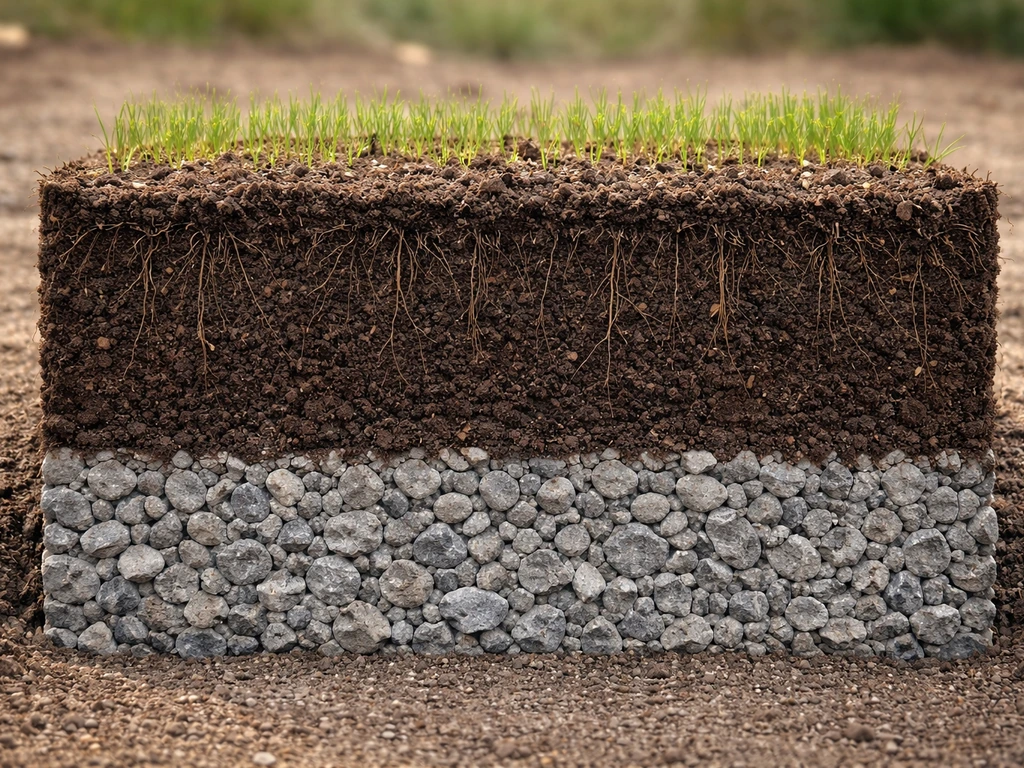
Can You Grow Grass Over Gravel? How to Do It Right
Learn when you can grow grass over gravel and follow a step-by-step method for soil depth, drainage, seeding or sod, and
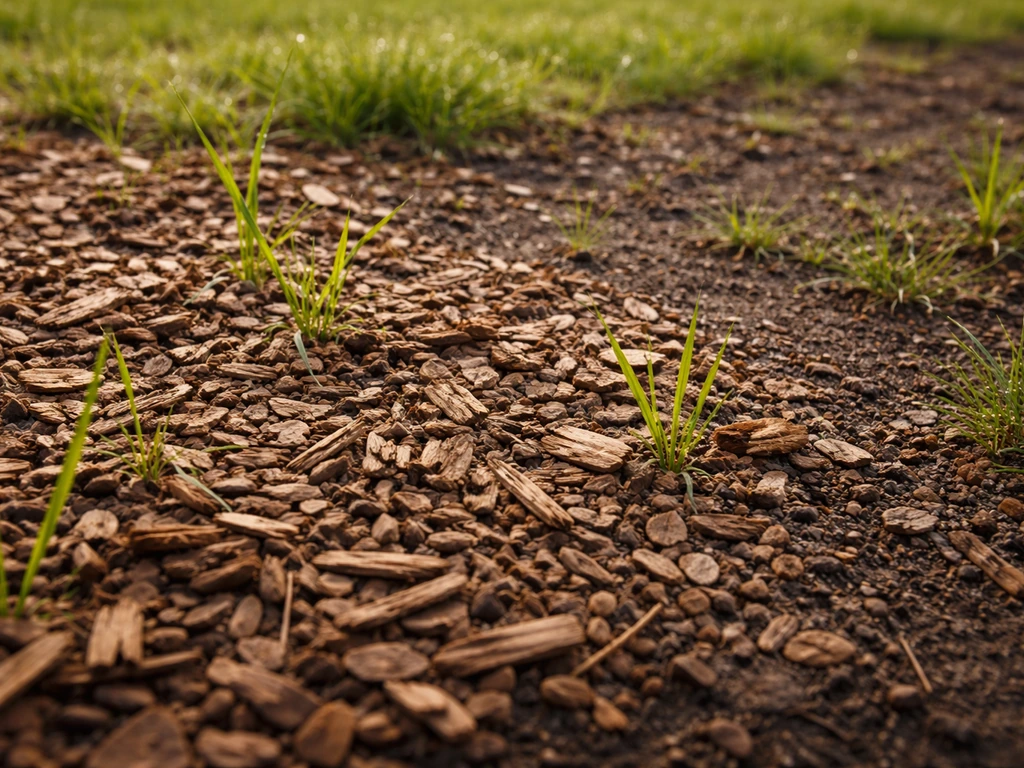
Do Wood Chips Help Grass Grow? When They Work and When Not
Learn when wood chips help grass grow, when they steal nitrogen, and step-by-step how much to apply and seed options.

Will Potting Soil Help Grass Grow? What Works and What Fails
When potting soil helps grass grow, when it fails, and how to prep, apply, seed, water, and troubleshoot bare spots.