Yes, grass can grow on dirt blocks, but only if the soil meets a few basic requirements. Compacted, debris-filled, or contaminated dirt blocks will fight you every step of the way, and in the worst cases grass simply won't establish no matter how much seed you throw at them. The good news is that most dirt blocks can be fixed with the right prep work, and I'll walk you through exactly how to tell if yours are worth working with and what to do about it.
Will Dirt Blocks Grow Grass? How to Test and Fix It
Marcus Volkmann
27 May 2026
What your dirt block actually needs to be
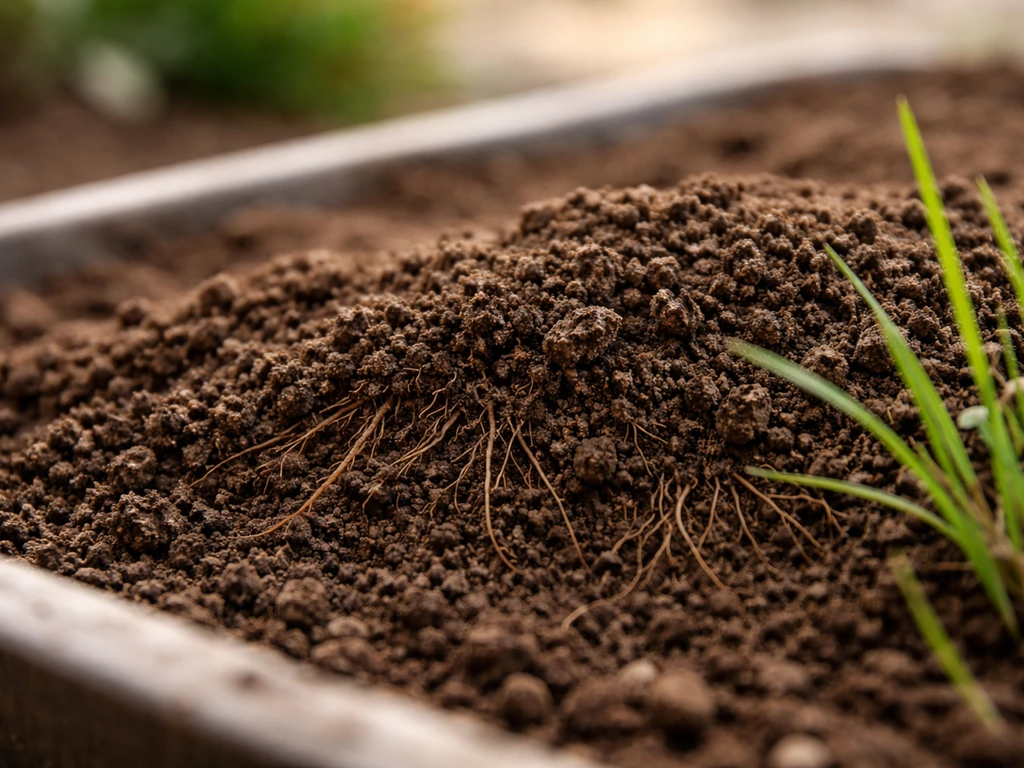
Not all dirt is equal, and 'dirt block' covers a wide range of possibilities. What you really need is something that functions like workable soil, not a clod of hardpan clay, a chunk of fill laced with concrete rubble, or contaminated material dug up from an old construction site. Here's what matters most.
- Soil structure: Grass roots need pore space to breathe. Dense, tightly packed blocks have high bulk density that leaves no room for oxygen or water movement, which directly kills root development.
- Compaction level: A seriously compacted block is essentially a brick. Even when moisture and temperature are perfect, severely compacted soil can't support root growth because oxygen levels drop too low.
- Debris and contamination: Rocks, construction rubble, concrete chunks, wood scraps, and chemical contamination (petroleum, heavy metals, high salt) all create dead zones where grass won't establish. A few small rocks are fine; a block full of demolition debris is not.
- Drainage: Dirt that holds water like a bathtub will drown grass roots. Equally, sand-heavy fill drains so fast the seedbed dries out before germination. You need moderate, consistent drainage.
- pH: Turfgrass needs a pH of roughly 6.0 to 7.5 to thrive. Below that, nutrients lock up in the soil and become unavailable. Kentucky bluegrass specifically prefers 6.5 to 7.2. Unknown fill dirt frequently falls outside this range.
- Organic matter: Bare, sterile fill dirt often has near-zero organic matter, which means poor structure, poor nutrient retention, and hostile conditions for establishing seedlings.
Fill dirt, which comes up a lot in related questions about whether it supports grass growth, is one of the trickiest starting points because it's often subsoil with none of the biological activity or organic matter that topsoil has. The same thinking applies here: if your 'dirt block' is essentially fill, manage your expectations and plan to amend aggressively.
How to tell if your dirt block will support grass
Before you buy a single bag of seed, spend 15 minutes doing a quick field assessment. These tests are low-tech but genuinely useful.
The screwdriver test for compaction
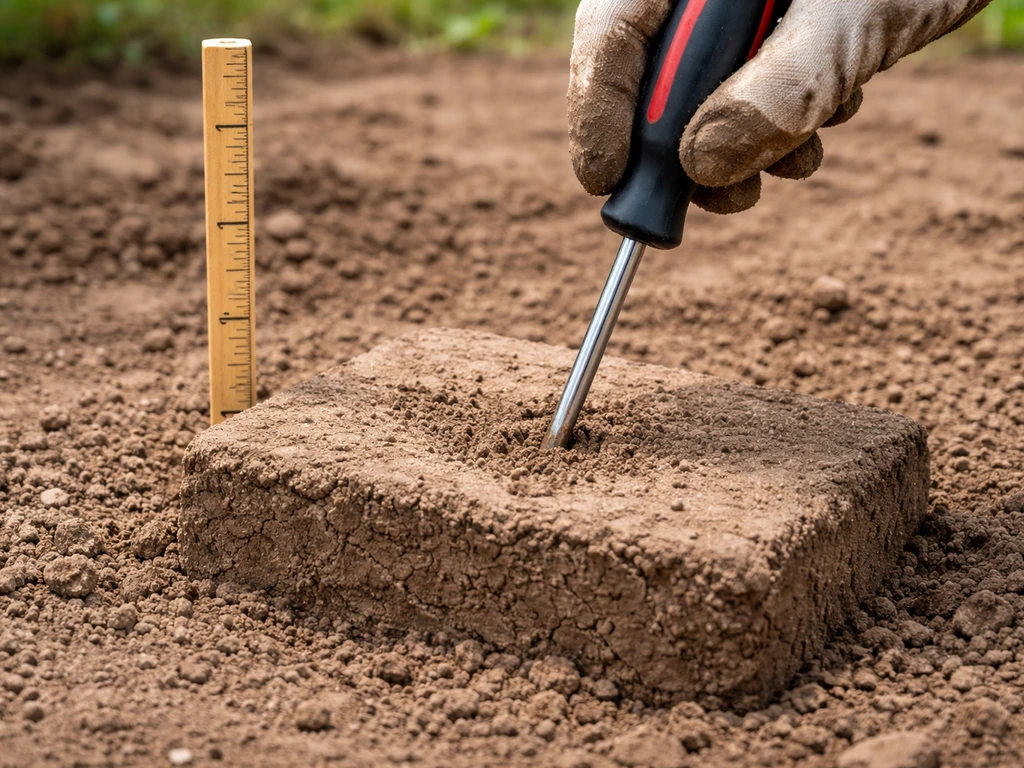
Push a standard screwdriver into the dirt block by hand. If it goes in 6 inches without much effort, compaction is manageable. Penn State Extension notes that soil compaction increases bulk density, reduces soil aeration, and can inhibit root growth and phosphorus uptake compaction is manageable. If you can barely push it in 2 inches, you have a serious compaction problem that needs mechanical intervention before seeding. Trying to grow grass in that without fixing it first is a waste of seed and time.
The jar drainage test
Dig a hole about 12 inches deep in the block, fill it with water, and let it drain completely. Fill it again and measure how much it drops in one hour. Ideally you want 1 to 3 inches per hour. Under half an inch means drainage is dangerously poor. Over 4 inches means it drains so fast you'll fight constant drought stress.
A simple pH test
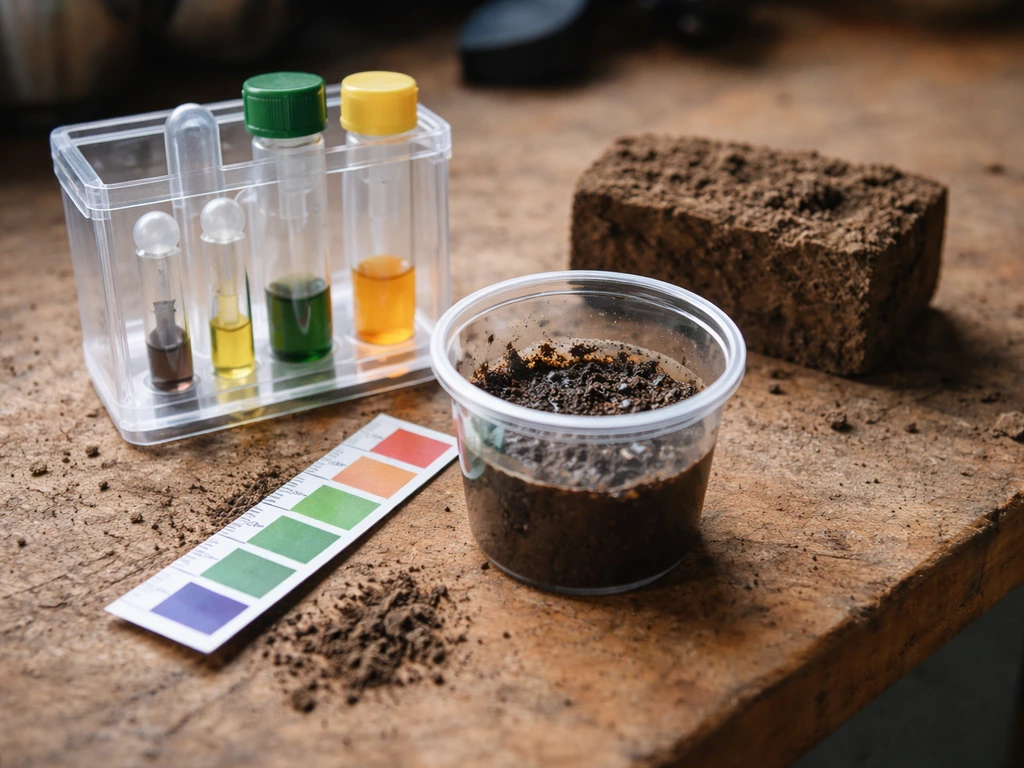
A cheap home soil test kit (under $15 at any hardware store) or a county extension lab test will tell you your pH within a week. If it's between 6.0 and 7.5, you're in the acceptable range for most turfgrasses. Outside that range, you'll need lime (too acidic) or sulfur (too alkaline) before seeding does any good. Skipping this step is one of the top reasons people give up on a lawn project that actually could have worked.
Visual and smell check for contamination
Look for chunks of concrete, asphalt, or construction debris mixed in. Smell for petroleum or chemical odors. Check for unusual discoloration (bright orange, gray-black, or white mineral deposits). Any of these are warning signs. A few pebbles are fine, but significant contamination means you should either excavate and replace the material or cap it with clean topsoil before doing anything else.
Diagnostic checklist at a glance
| Test | Good result | Problem result | Fix needed |
|---|---|---|---|
| Screwdriver depth | 6+ inches by hand | Less than 2–3 inches | Till or aerate deeply |
| Drainage (1-hour drop) | 1–3 inches | Under 0.5 or over 4 inches | Amend with compost or sand/drainage layer |
| pH | 6.0–7.5 | Below 6.0 or above 7.5 | Lime or sulfur application |
| Debris/contamination | Minimal rocks, no odor | Rubble, chemical smell, staining | Remove, excavate, or cap with topsoil |
| Organic matter | Dark color, earthy smell | Pale, sterile, no smell | Add 2–3 inches compost and mix in |
Preparing the dirt block for seeding or sodding
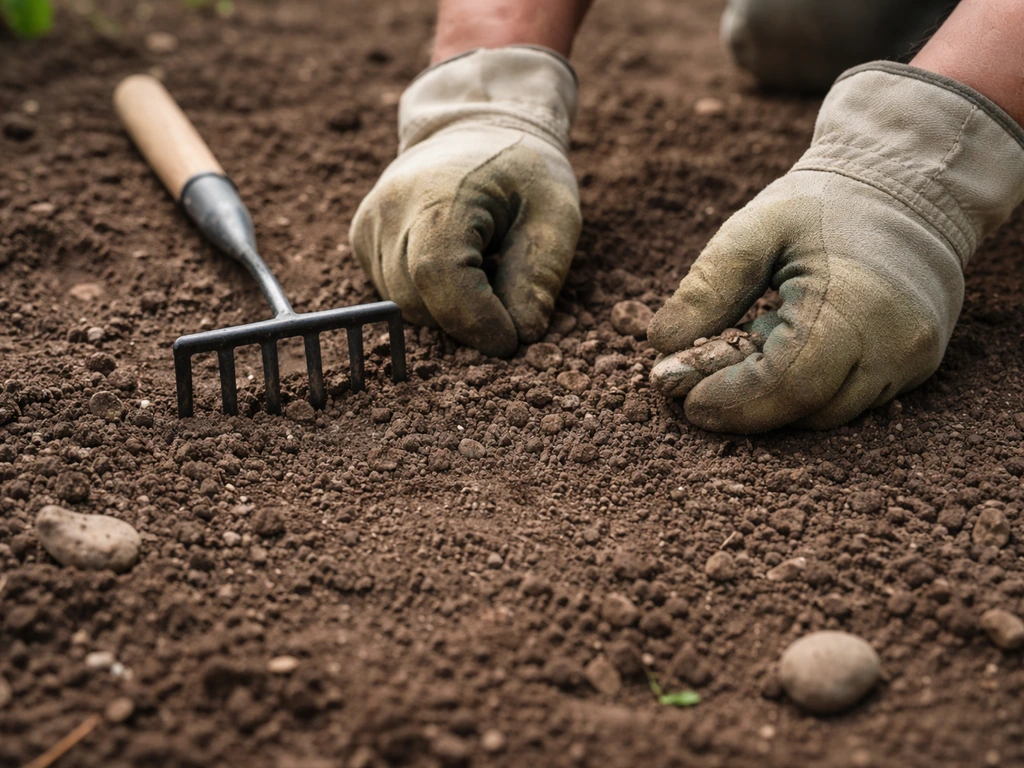
Preparation is where most people cut corners and then blame the grass. Don't skip this part. The goal is to turn that block into something roots can actually penetrate and thrive in.
- Remove all large debris first. Pull out rocks bigger than an inch across, chunks of concrete, wood scraps, or any foreign material you can get your hands on. This is not optional.
- Break up compaction mechanically. For small areas, a garden fork or tiller works. For larger blocks or severe compaction, rent a core aerator or a rototiller. You want to loosen the top 4 to 6 inches at minimum. Grass roots need at least that depth to establish a healthy stand.
- Grade and level the surface. Pitch the surface very slightly away from structures (about a 1% to 2% slope) to shed water. Fill any low spots where water pools. An uneven surface creates wet and dry zones that make uniform germination nearly impossible.
- Pre-moisten the block before seeding. Dry, cracked dirt blocks repel water initially. Water the area lightly a day or two before seeding to bring moisture into the top few inches without making it muddy. This gives seeds immediate contact moisture without washing them away.
- Final raking. After tilling and grading, rake the surface to a smooth, firm finish. Loose, fluffy soil sounds good but it dries out fast. You want firm contact between seed and soil, not a layer of fluff.
Seed, sod, or plugs: what actually works on dirt blocks
The right planting method depends on your timeline, budget, and the condition of the dirt. Here's the honest breakdown.
| Method | Best for | Timeline to coverage | Cost | Dirt block suitability |
|---|---|---|---|---|
| Seed | Large areas, budget-conscious, patient growers | 4–8 weeks to germination, full coverage in one season | Lowest | Works well if soil is properly prepped and watered consistently |
| Sod | Quick results, erosion control, limited watering ability | Instant coverage, roots in 2–3 weeks | Highest | Needs firm, level base with good soil contact — poor on rough blocks |
| Plugs | Warm-season grasses like zoysia and bermuda, patchy areas | Coverage in one full growing season | Moderate | Good if spacing allows and blocks have decent drainage |
Seeding
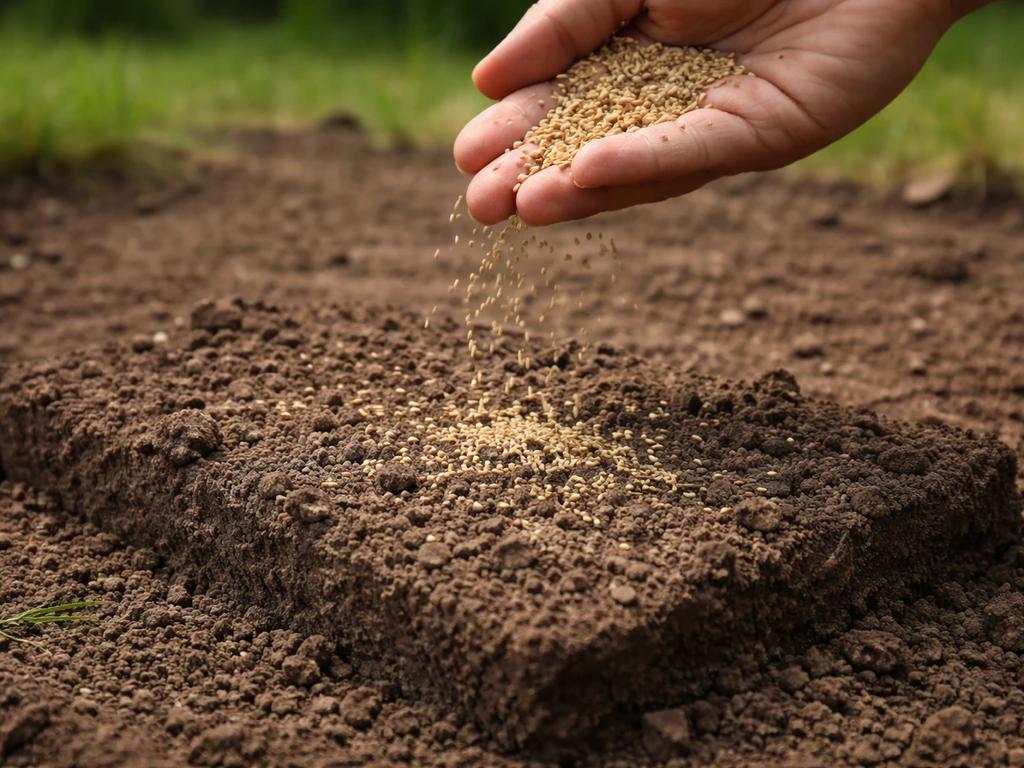
Seeding is the most forgiving method for imperfect dirt blocks because you can work seed into the soil surface and get decent germination even in less-than-ideal conditions, as long as compaction is addressed first. Timing matters a lot: cool-season grasses (fescue, bluegrass, ryegrass) should be seeded in late summer to early fall, or early spring. Warm-season grasses (bermuda, zoysia, centipede) go down in late spring to early summer. Seeding outside these windows on a dirt block is a setup for failure.
Sod
Sod gives you the fastest result and handles erosion on a fresh dirt block better than seed does. The catch is that sod needs to be laid on a smooth, firm, level surface with good soil contact. A rough, chunky dirt block doesn't give sod a stable base, and it will dry out underneath before roots can establish. If you go with sod, invest extra time in leveling and firming the block surface, and plan to water heavily for the first two to three weeks.
Plugs
Plugs are the right call if you're dealing with a warm-season grass that spreads by stolons or rhizomes, like zoysia or bermuda. They're more drought-tolerant than seedlings during establishment, and they'll fill in over a growing season. For a dirt block situation, plugs are a solid middle-ground option if you need something that'll survive a bit of watering inconsistency while the soil stabilizes.
Soil amendments that actually move the needle
If the dirt block is sterile fill or heavily compacted subsoil, amendments aren't optional. Here's what to use and in what order.
- Compost: This is the single best amendment for almost every dirt block problem. Work 2 to 3 inches of finished compost into the top 4 to 6 inches of soil. It improves structure, adds organic matter, improves drainage in clay, and improves moisture retention in sandy fill. Don't skip this.
- Topsoil: If the block is pure fill or compacted subsoil with zero organic matter, adding 2 to 4 inches of quality topsoil on top (after loosening the block) gives seedlings a fighting chance. Make sure the topsoil you buy is actual screened topsoil, not more fill.
- Starter fertilizer: A phosphorus-forward starter fertilizer (look for a product with a high middle number, like 10-20-10) supports root development in new seedlings. Apply at seeding time according to package rates. Don't over-apply; it won't speed things up and can burn seedlings.
- Lime or sulfur for pH correction: If your test came back below 6.0, apply pelletized lime at the rate your test recommends. If it came back above 7.5, use elemental sulfur. pH correction takes 4 to 8 weeks to work fully, so if possible, apply before your target seeding window.
- Organic matter for long-term soil health: Compost does double duty here, but you can also topdress with peat moss mixed into the seedbed to give extra moisture retention in sandy or gravelly blocks.
One thing worth mentioning: the depth of usable soil matters a lot too. Grass roots need at least 4 inches of workable soil, and ideally 6 to 8 inches, to develop fully. If your dirt block is only 2 inches deep over a hard surface, you have a depth problem on top of a quality problem. That's a separate issue worth understanding before you invest heavily in amendments.
Watering, light, and keeping seedlings alive
Even perfect soil prep fails without the right watering approach during germination. This is the phase where most home lawn projects fall apart.
Watering during germination
The seedbed needs to stay consistently moist, not wet, from seeding until germination. That usually means light, frequent watering: two to three times per day in hot or dry weather, once a day in mild weather. You're not trying to soak the soil, you're keeping the top half-inch moist so seeds don't dry out between the soil particles. A single day of dry-out during germination can kill the batch. Once grass is up and about an inch tall, shift to deeper, less frequent watering to encourage roots to go down.
Light requirements
Most turfgrasses need a minimum of 4 to 6 hours of direct sunlight per day. If your dirt block is in deep shade under a tree canopy, standard grass varieties will struggle or fail entirely regardless of soil quality. Shade-tolerant varieties like fine fescues are your best option in lower-light spots, but even they need at least 3 to 4 hours. If the block is under a dense canopy with less than that, grass probably isn't the right answer and you're better off with groundcovers or mulch.
Ongoing maintenance through establishment
- First mowing: Wait until grass reaches about 3 to 4 inches before mowing. Never remove more than one-third of the blade in a single cut. Cutting too short too early stresses young roots in soil that's still consolidating.
- Fertilizer at 6 to 8 weeks: Once seedlings are established, a balanced fertilizer (like 16-6-8 or similar) supports continued growth and root development through the first season.
- Stay off it: Foot traffic on a new stand growing in a dirt block is hard on fragile seedlings and can re-compact the freshly loosened surface. Give it 4 to 6 weeks before regular use.
- Watch for thin spots: It's normal to have uneven germination on a rough dirt block surface. Spot-seed thin areas 4 to 6 weeks after the initial seeding if needed.
Why dirt blocks fail and what to do about it
I've seen a lot of dirt block lawn projects go sideways, and the failures almost always trace back to one of these causes.
| Problem | Signs | Fix |
|---|---|---|
| Compaction not addressed | Seeds germinate but die off quickly, patchy or no germination | Till or core-aerate to 4–6 inches before reseeding |
| Soil drying out | Seedlings appear then brown off fast, surface crusts form | Increase watering frequency; add compost to improve moisture retention |
| Poor drainage | Standing water, yellowing grass, spongy patches | Improve grade, add compost, consider a perforated drain pipe beneath the block |
| pH out of range | Grass won't establish despite correct watering and prep | Test pH and apply lime or sulfur; wait 4–8 weeks before reseeding |
| Weed competition | Bare patches invaded by crabgrass, broadleaf weeds | Hand-pull or spot treat with targeted herbicide; overseed bare spots |
| Contaminated soil | No germination at all, unusual soil color or smell | Excavate and replace, or cap with 4+ inches of clean topsoil |
| Wrong timing | Poor germination, seedlings fail to establish | Reseed during the correct seasonal window for your grass type |
| Thin coverage after germination | Sparse, uneven stand after several weeks | Overseed thin spots, topdress with compost, adjust watering |
One pattern I see repeatedly: people assume that if seeds germinate, the job is done. Germination and establishment are two different things. Seeds can sprout in nearly any moist soil, but if the block is too compacted for roots to penetrate deeper than an inch or two, those seedlings will die as soon as the surface dries out. The root restriction research is clear on this: compacted soil limits both root growth and the uptake of water and nutrients, even when surface conditions look fine. You have to fix compaction before seeding, not after.
The bottom line on dirt blocks and grass
Dirt blocks can absolutely grow grass, but they don't do it on their own. The three things that determine whether you succeed or fail are: whether you've broken up compaction before planting, whether the soil pH and organic matter are in the right range, and whether you can keep consistent moisture through germination. Get those three things right and a dirt block becomes a workable seedbed. Skip any one of them and you'll be reseeding the same spot in three months wondering what went wrong. Run through the diagnostic checklist, do the prep work, and pick the right planting method for your timeline. That's the whole playbook.
FAQ
How much depth of dirt do I really need on top of the block for grass to survive?
Grass roots generally need at least 4 inches of workable soil, ideally 6 to 8 inches. If your dirt layer is thin over hard fill or pavement, amendments may help color and germination but will not fix root restriction long term, so consider excavating and adding a proper soil layer.
What’s the fastest way to tell if compaction is the main problem before I seed?
Do the screwdriver test, then add a “root check” if you already tried seeding. After 2 to 3 weeks, pull a few seedlings, if most roots stop at a shallow layer or look stubby and brittle, compaction is likely blocking deeper growth and you should mechanically loosen or replace rather than keep re-seeding.
If my soil pH test is slightly outside the 6.0 to 7.5 range, can I just seed anyway?
You can try, but expect slow or patchy establishment. Use the test result to drive a correction plan, lime if too acidic or sulfur if too alkaline, and allow time for the product to react. For best results, test again before planting rather than guessing.
Do dirt blocks need fertilizer right away after seeding or laying sod?
For new seed, focus on moisture first and use only a light, starter-type feeding if your soil test supports it. Heavy nitrogen before roots establish can burn seedlings or create algae and crusting. For sod, you can fertilize lightly after installation, but make sure soil contact is solid to prevent drying underneath.
Can I mix compost or topsoil into a dirt block instead of excavating contaminated areas?
If the contamination is light (a few pebbles) you can usually cap and blend with clean topsoil, but if you detect strong chemical odors, petroleum smells, or unusual mineral staining, blending can spread the problem. In that case, excavating and replacing the affected zone is the safer route.
How do I water a dirt block without washing seeds away or creating mud?
Use short, frequent cycles that keep only the top layer slightly moist, not saturated. If you see runoff, switch to a gentler nozzle or finer spray and reduce the volume per cycle. Once seedlings are about 1 inch tall, shift to deeper, less frequent watering to train roots downward.
What if my dirt block is mostly shade, will grass still work?
If the area gets less than about 3 to 4 hours of light daily, grass will struggle even with good soil. Choose shade-tolerant fine fescues if you are near that threshold, otherwise plan for mulch or groundcovers because repeated failures are usually light, not dirt.
Is seeding always better than sod on rough dirt blocks?
Seeding is more forgiving on uneven or slightly imperfect surfaces, but sod is faster and handles erosion better if you can achieve a smooth, firm, level base with good soil contact. If your dirt block is chunky or unstable, sod will dry out underneath and fail, so seed or plugs may be the more reliable choice.
Why do I see germination but the lawn dies shortly after?
That pattern usually means establishment failed due to root restriction or moisture swings, not seed viability. If roots cannot penetrate beyond a shallow compacted layer or the surface dries even for a single stretch, seedlings die and you end up reseeding the same spot.
Can I fix compaction after seeding if my screwdriver test was borderline?
Borderline compaction still matters because seedlings need deeper access quickly. If the surface is already planted, you may be able to improve moisture distribution, but mechanical loosening after seeding often disrupts roots and can reduce survival. The best move is to correct compaction before planting.
How long should I wait before judging a dirt-block grass project a success?
Treat germination and establishment separately. You should reassess within 2 to 3 weeks for early survival and then again after 6 to 8 weeks for rooting and consistent coverage. If most plants lift easily or roots stay shallow during that window, the underlying soil issues are still unresolved.
Next Articles
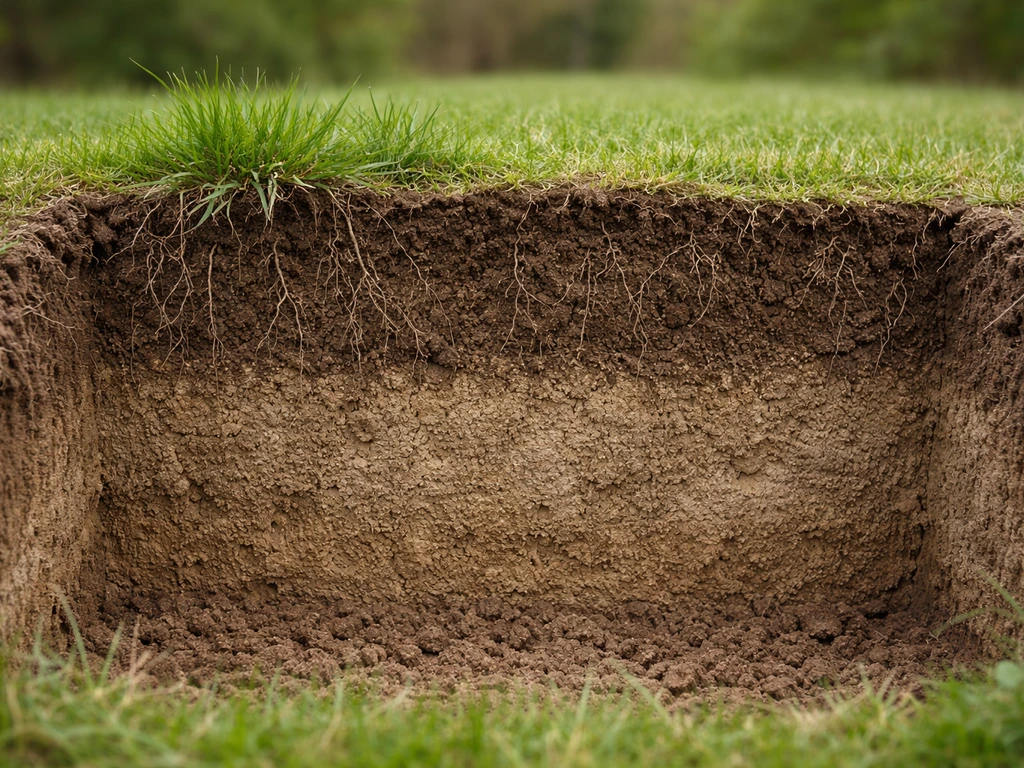
How Deep Does Dirt Need to Be to Grow Grass?
Get grass to root: required soil depth by seed vs sod, grass type, and site factors like shade, slope, and compaction.
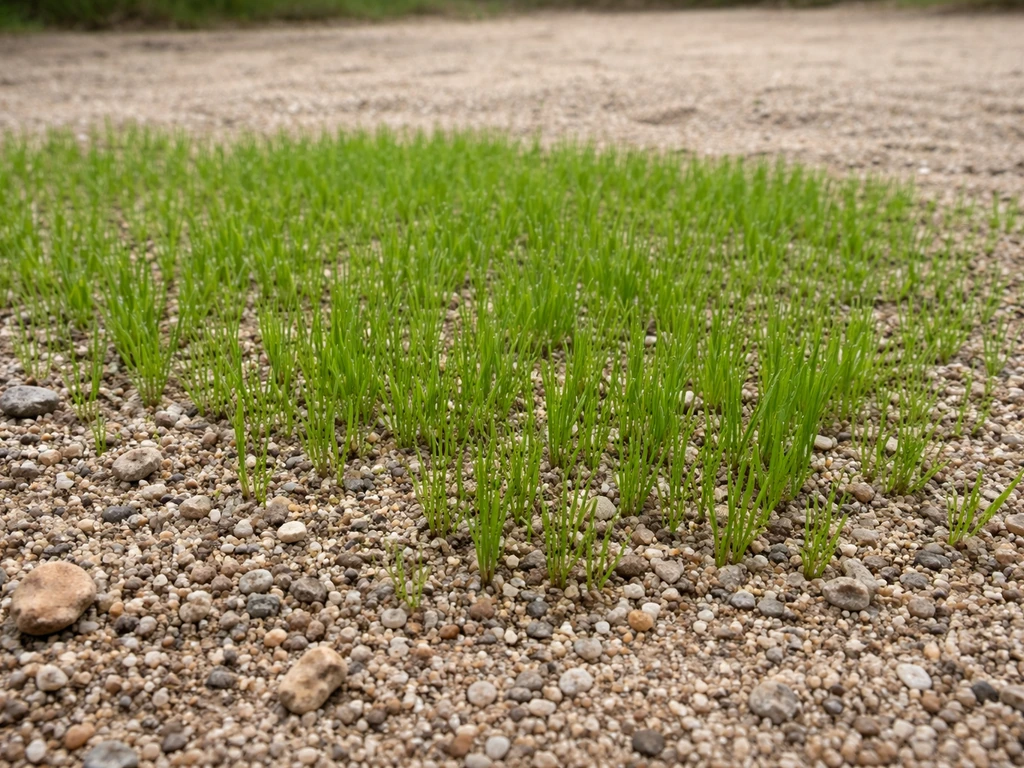
Does Coarse Dirt Grow Grass Yes and What to Do
Yes, coarse dirt can grow grass. Get the soil prep, amendments, watering, and seeding steps that make it succeed.
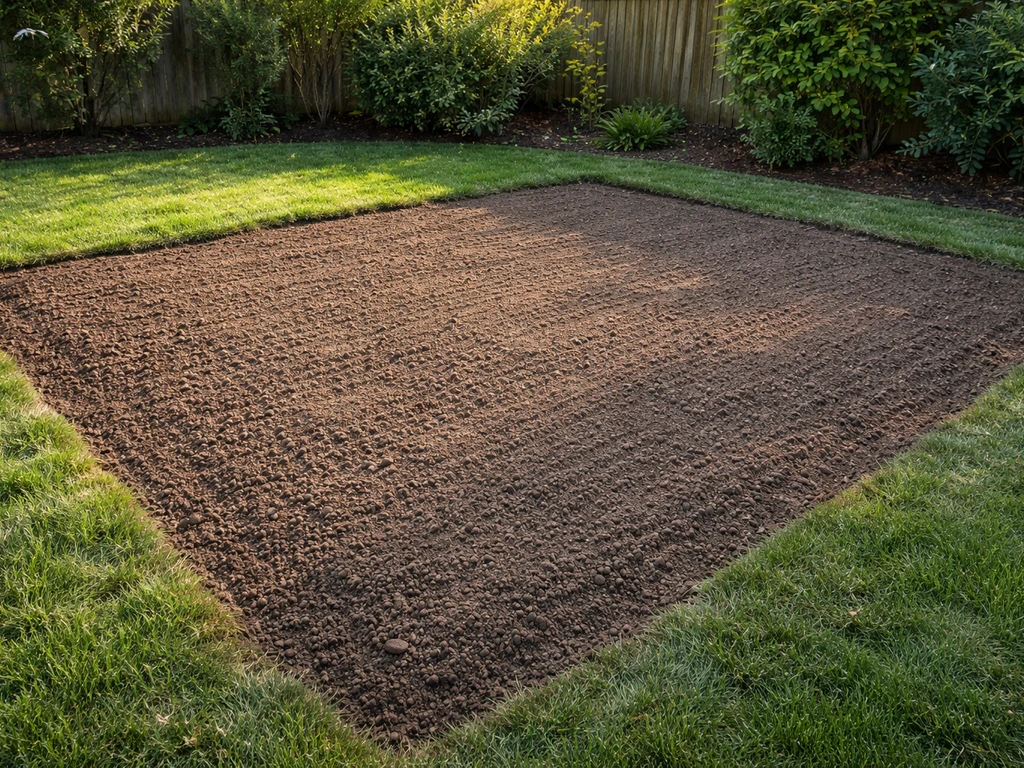
Will Grass Grow in Fill Dirt? Yes, With the Right Prep
Yes, grass can grow in fill dirt if it’s clean, loose, and well-drained. Prep, amend, and choose seed or sod.