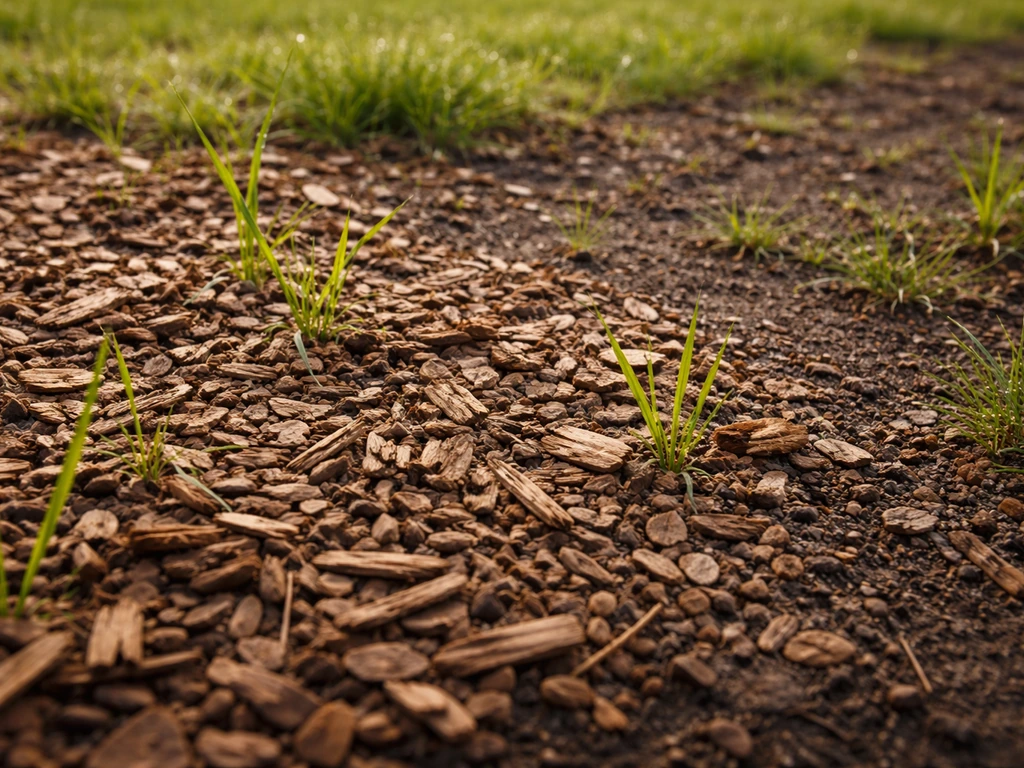
What makes coarse dirt hard for grass in the first place
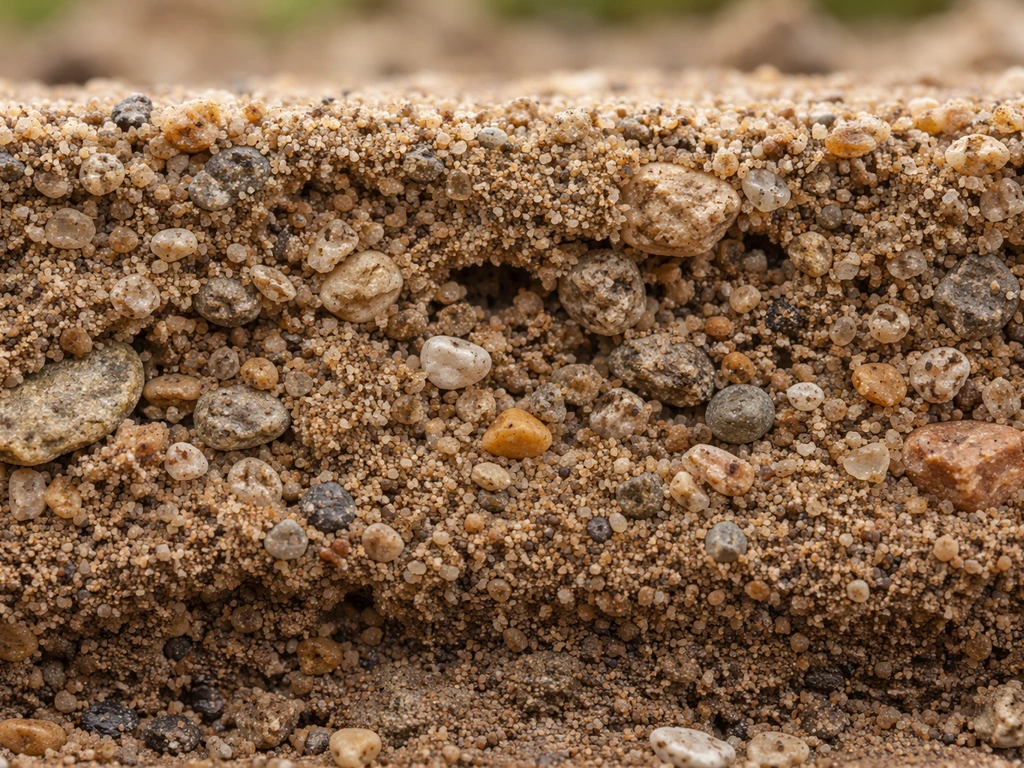
The trouble with coarse dirt isn't that grass hates it, it's that coarse particles create a soil structure that works against the three things grass needs most: consistent moisture, available nutrients, and a rooting zone it can actually penetrate.
Water is the biggest issue. Large soil particles leave large pore spaces between them, so water moves through fast, often before roots can absorb it. This matters most right after seeding, when the top inch of soil has to stay consistently moist for germination to happen. Coarse, sandy soils drain that moisture within hours. On the nutrient side, most of what feeds grass, nitrogen, phosphorus, potassium, is held on the surface of soil particles and in organic matter. Coarse soils have less surface area per volume and almost no organic matter, so they hold fewer nutrients and lose them fast through leaching.
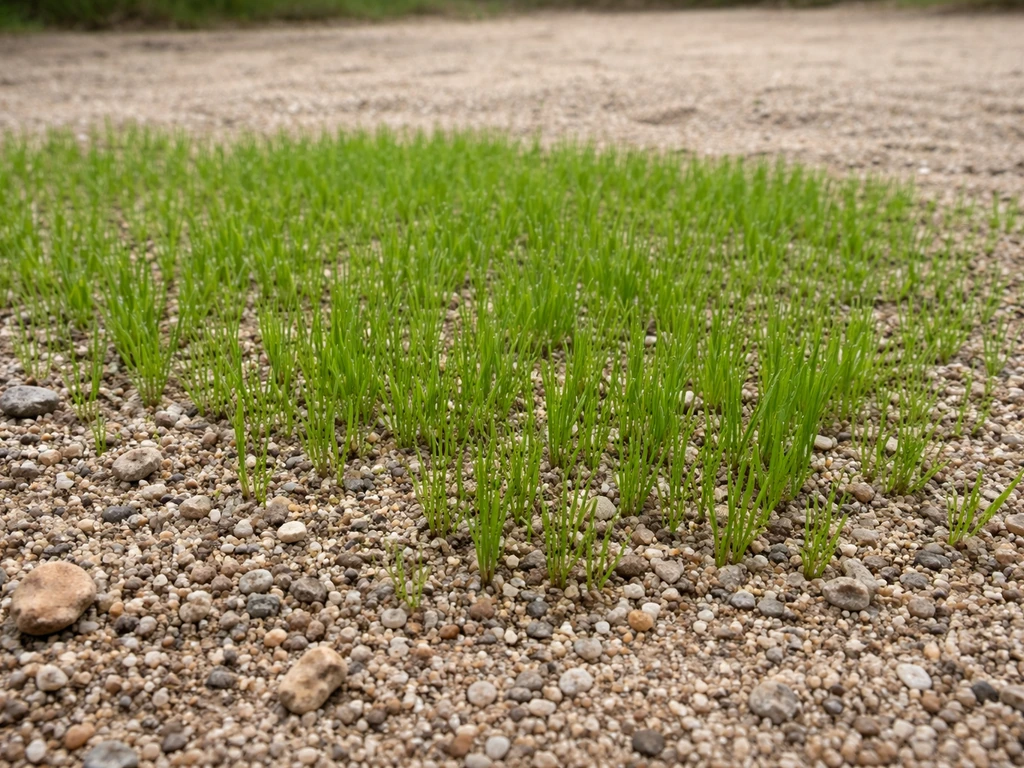
Rooting is the third challenge. Grass roots need loose, well-structured soil to grow down and anchor the plant. Very coarse or gravelly soils can physically block root penetration below a few inches. That limits drought tolerance, because deep roots are what allow grass to find water during dry spells. If you've wondered how deep dirt needs to be to grow grass, the short answer from university extension programs is at least 4 inches of workable root zone, and coarse soils often compress that effective depth considerably.
Grass types that actually handle coarse and gritty soil
Not every grass species is equally forgiving of coarse, fast-draining conditions. Choosing the right one upfront saves a lot of grief later.
For cool-season lawns, tall fescue and fine fescues are the strongest performers on coarse soils. Tall fescue has a deep root system that helps it reach moisture further down the profile, making it more resilient on sandy or gritty ground. Fine fescues, particularly hard and sheep fescue, actually prefer drier soils and don't tolerate constantly wet conditions, which makes them a natural fit for fast-draining coarse dirt. They also handle low-fertility situations better than most cool-season grasses. Tennessee Extension research positions fescues specifically as an option for dry, infertile, sandy, and gravelly sites, including erosion-prone areas.
For warm-season lawns, buffalograss is probably the most drought-tolerant option available and handles coarse soils well once it's established. The catch is that even buffalograss needs supplemental irrigation during initial establishment on very droughty, sandy soils. Bermudagrass is another solid warm-season option for lean, well-drained ground, though it needs full sun. Zoysia is slower to establish but tolerates a range of soil conditions. If you're in a part-shade situation with coarse soil, you're narrowing the field fast, since most shade-tolerant grasses also prefer moisture-retentive soil. Fine fescues handle that combination better than anything else in cool-season climates.
| Grass Type | Season | Coarse Soil Tolerance | Shade Tolerance | Drought Tolerance |
|---|
| Tall Fescue | Cool | Good | Moderate | Good |
| Fine Fescue | Cool | Excellent | Good | Good |
| Buffalograss | Warm | Good | Low | Excellent |
| Bermudagrass | Warm | Good | Low | Very Good |
| Kentucky Bluegrass | Cool | Poor | Low | Moderate |
| Zoysia | Warm | Moderate | Moderate | Good |
Kentucky bluegrass is a popular choice, but it really struggles on coarse, fast-draining soils without consistent irrigation and fertility inputs. It's not the right call here unless you're heavily amending the soil first.
How to prep a seedbed in coarse dirt
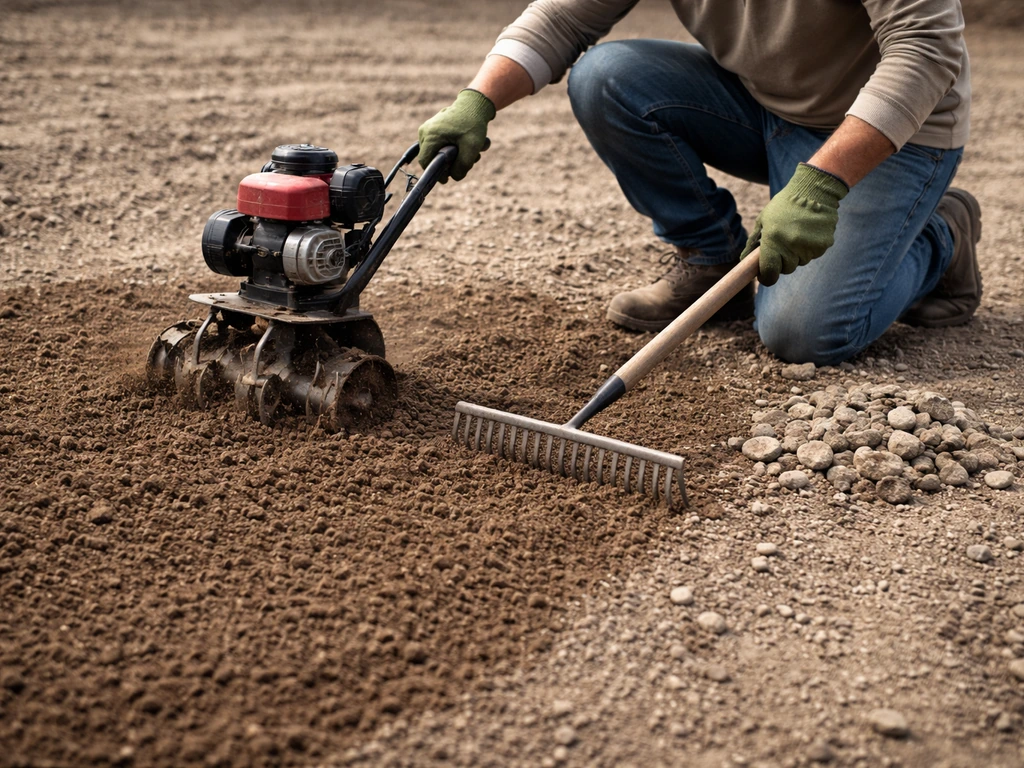
Prep work is where most people cut corners, and it's also where most failed lawns in coarse soil are actually lost. Doing this right makes everything downstream easier.
Test before you do anything else
Get a soil test. Coarse soils are often acidic or nutrient-poor in ways that aren't obvious just by looking at them. A basic soil test from your county extension office costs around $15 to $20 and tells you pH, organic matter percentage, and which nutrients are lacking. You need that information before you start adding amendments, because you can easily waste money fixing the wrong things.
Clear, grade, and loosen
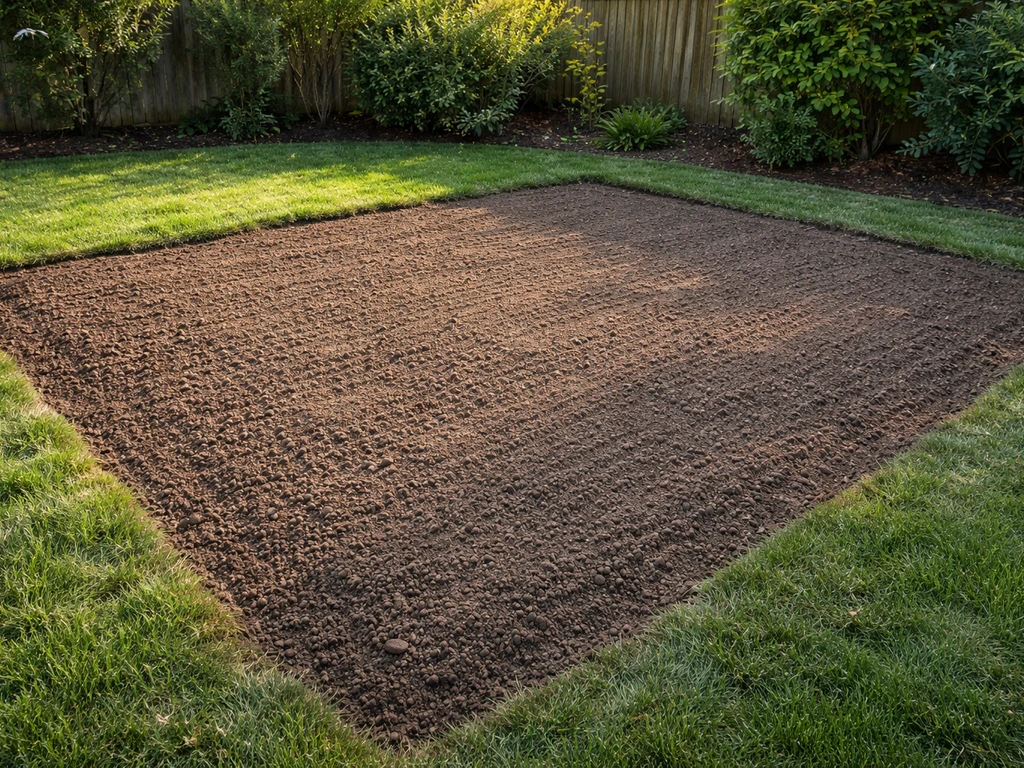
Remove rocks, debris, and any existing dead vegetation. Coarse, gravelly soils often have surface irregularities that cause water to sheet off instead of soaking in, so grading matters more here than on finer soils. You want a gentle slope away from structures (about 1 to 2 percent grade) and no low spots where water will pond. Once cleared and graded, till the top 4 to 6 inches to break up any compaction and loosen the surface. Coarse soils compact differently than clay soils, but they still form crusts and hardpans, especially if they've had any traffic or have been sitting dry for a long time.
Build at least 4 inches of workable root zone
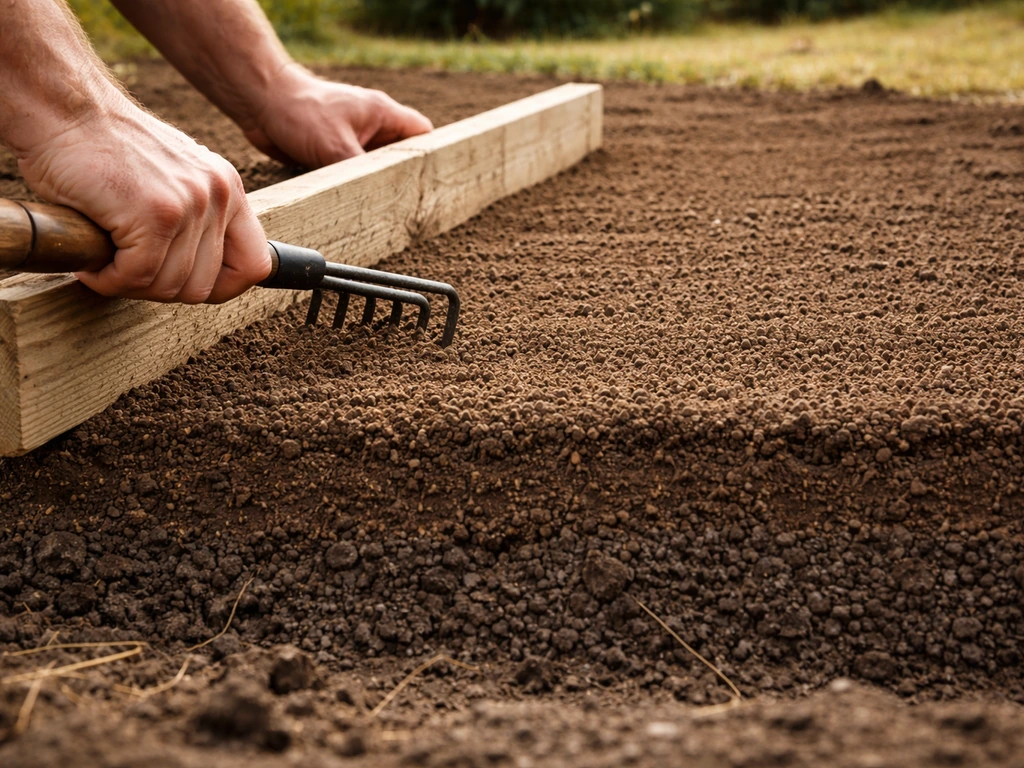
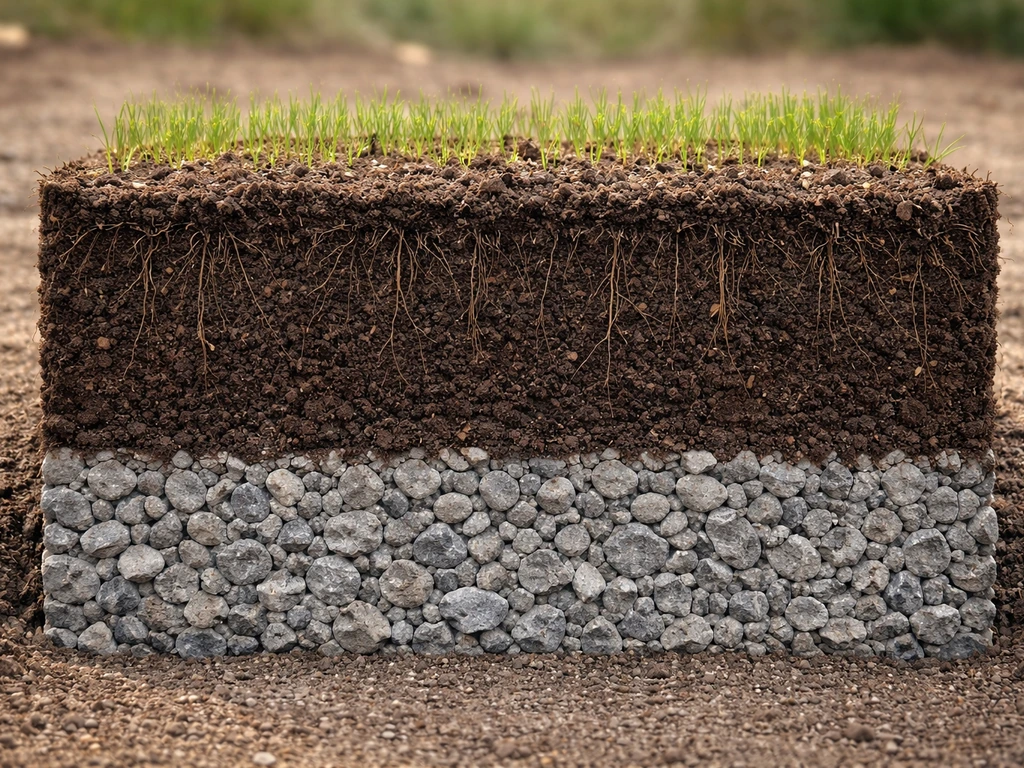
Both Cornell Extension and Michigan State Extension are clear that you need at least 4 inches of topsoil for a lawn to establish properly. If your coarse dirt doesn't meet that depth with reasonable quality, you need to add topsoil or a topsoil-compost blend before seeding. This is non-negotiable if the existing material is more gravel than soil. This same question comes up with fill dirt situations, and the answer is similar: fill dirt isn't great for growing grass on its own, but it can work with the right surface preparation and amendments layered on top.
Amendments that actually fix coarse dirt
The core problem with coarse soil is low water retention and low organic matter. Both of those are fixable, but you need to use the right amendments and apply them correctly.
Compost is your most important tool
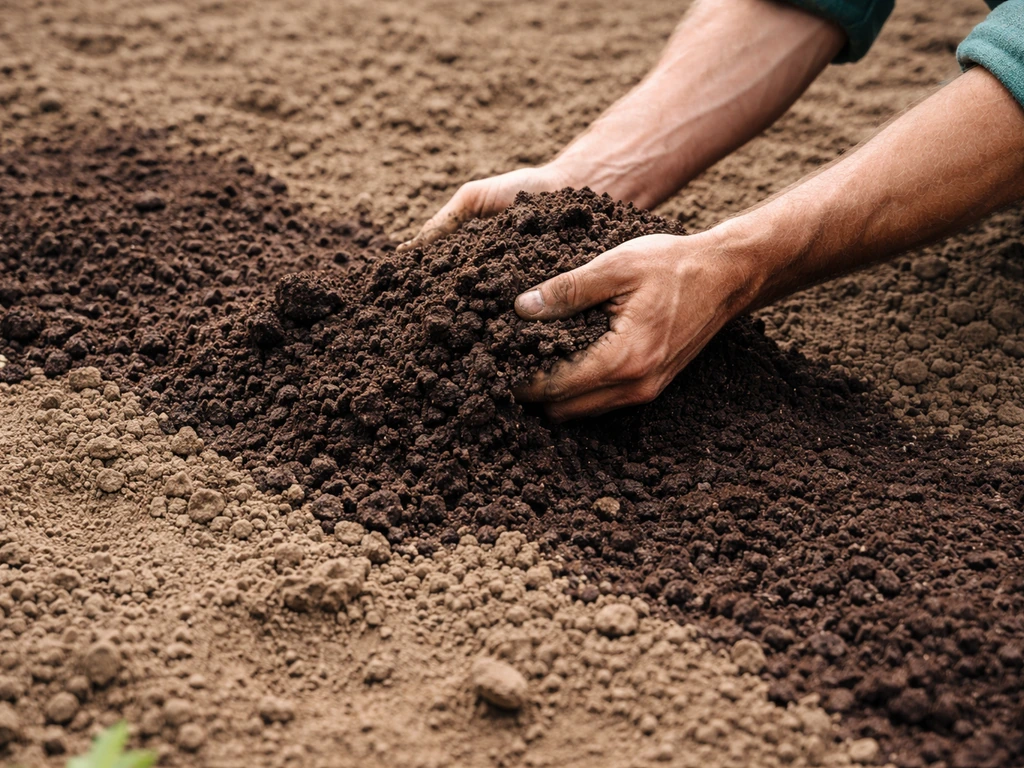
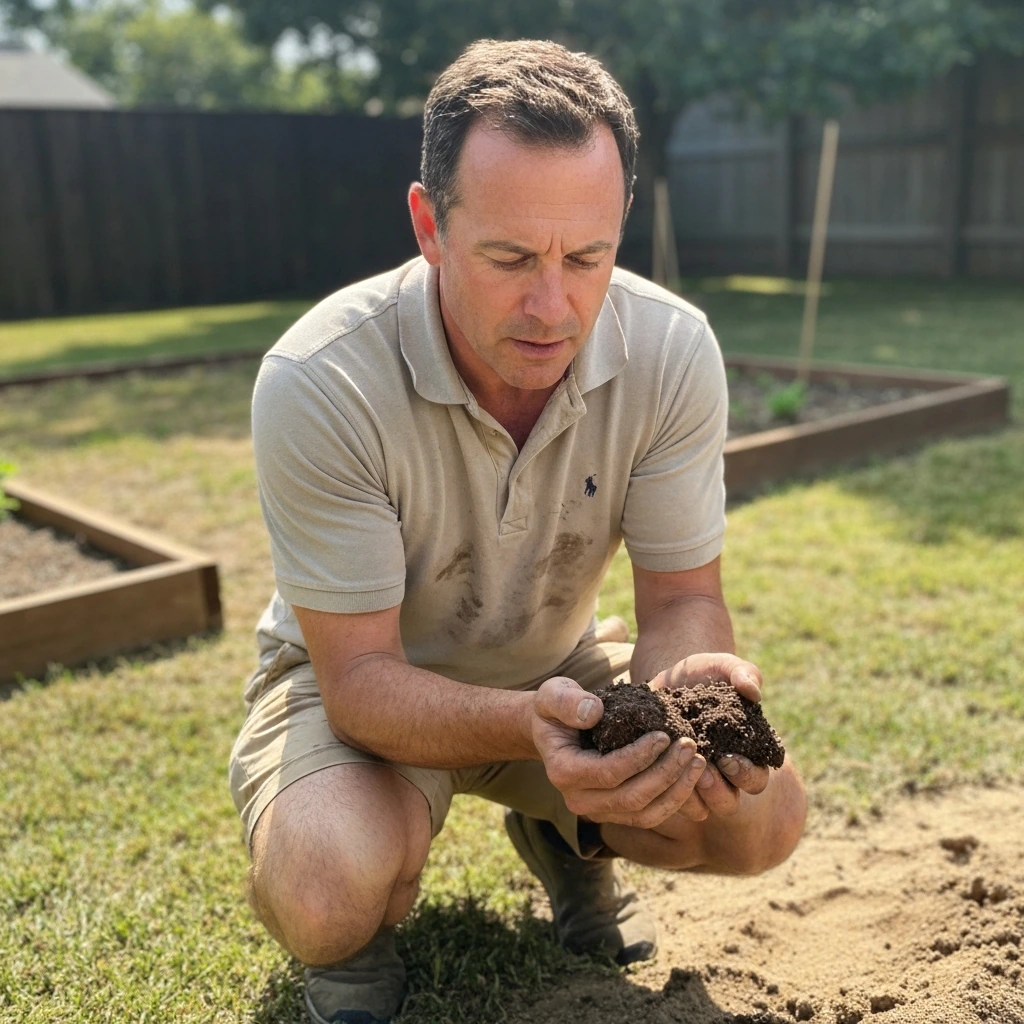
Compost does more for coarse soil than anything else. It adds organic matter, which binds to large soil particles and creates smaller aggregates that hold water and nutrients. Penn State Extension recommends a 2-inch compost layer worked into very sandy or coarse soils low in organic matter, which is a heavier rate than they'd use on normal soil. For established or lightly coarse areas, a quarter-inch topdress application is more typical. Either way, work it in. Don't just lay compost on top of untilled ground and expect it to fix anything.
The numbers on compost are compelling. Utah State University Extension research shows that adding just 1 percent organic matter to soil can increase water storage by roughly 2,000 to 2,500 gallons per 5,000 square feet. In coarse soil, that's the difference between seeds drying out overnight and staying moist through germination.
Mulch, hydrogel, and other water-retention options
Straw mulch is a standard tool for seeded areas, and it's especially useful on coarse soils where surface moisture evaporates fast. Oregon State University Extension says 1/8 to 1/4 inch of mulch is ideal over seed, not a thick blanket. More than that can block germination and create a barrier between seed and soil. Hydrogel (superabsorbent polymer, or SAP) is another option. USU Extension notes it can hold water hundreds of times its own weight, which sounds impressive, but follow manufacturer rates carefully since over-application can actually cause issues.
Starter fertilizer
Coarse soils are typically nutrient-poor, so starter fertilizer is worth including at seeding. Clemson HGIC recommends a light nitrogen application when seedlings reach about 1.5 to 2 inches tall, not at seeding time. Before that, a phosphorus-heavy starter fertilizer applied at soil prep helps root development. Check your soil test results first so you're not throwing fertilizer at a soil that's already high in a given nutrient.
Seeding vs. sodding: timing and method
Both approaches can work on coarse soil, but they have different strengths and timing requirements.
Seeding
For cool-season grasses, the best seeding window is late summer to early fall, when soil temperatures are dropping toward 50 to 65 degrees Fahrenheit, which Penn State Extension identifies as the range for best root growth. Spring seeding works too, but you're racing against summer heat. For warm-season grasses, late spring through early summer is the target. Timing matters more in coarse soil because temperature affects not just germination speed but how long you can maintain surface moisture before the weather turns against you.
After spreading seed, use a light rake to mix it into the top quarter-inch of soil, as Clemson HGIC recommends, then follow with a light roller to ensure seed-to-soil contact. Purdue Extension specifically calls out rolling as an important step for improving germination rates. In coarse soil, seed-to-soil contact is even more critical than normal because large particles create air gaps that leave seeds hanging without moisture. Apply a thin layer of straw mulch, 1/8 to 1/4 inch, immediately after rolling. University of Maryland Extension recommends dividing your seed into two passes over the area, spreading half in one direction and half at a right angle to the first pass, for more even coverage.
Sodding
Sod gives you a head start on coarse soil because the root system is already established and the sod itself holds moisture at the surface. The downside is cost and the fact that sod roots still need to penetrate into your coarse soil. Prepare the seedbed the same way you would for seed, including compost incorporation, and lay sod on moist soil. Press it firmly and keep it consistently watered for the first two to three weeks while roots establish. The seams are the vulnerable spots, keep those especially moist.
Watering coarse soil without wasting it
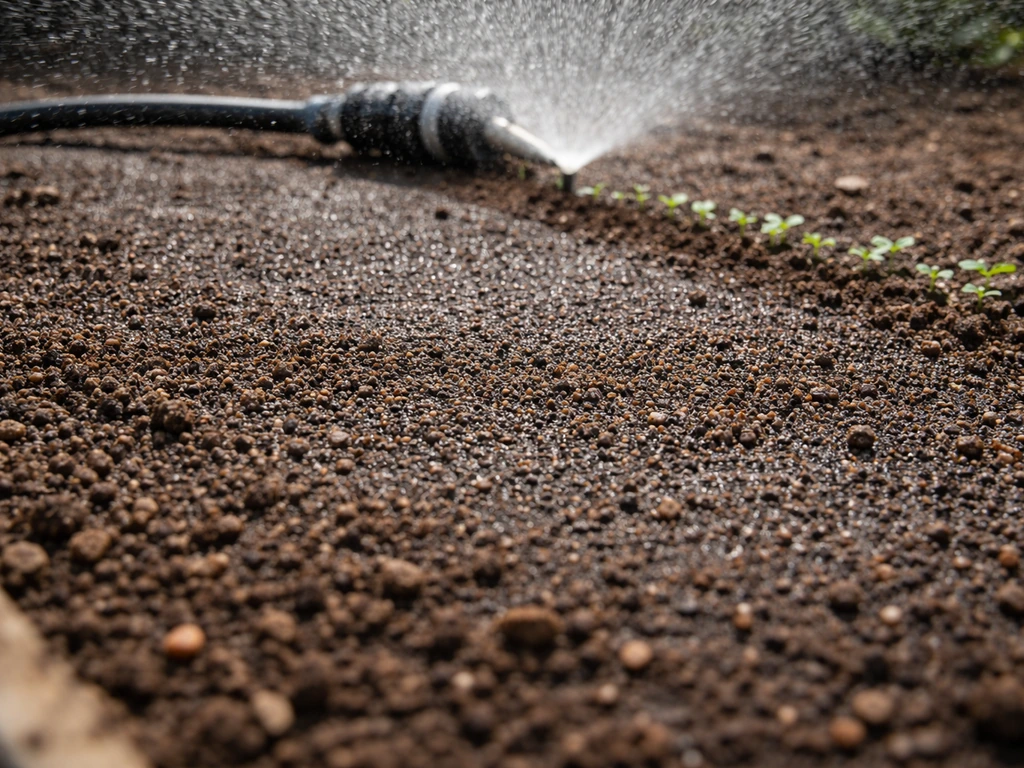
Coarse soil is almost always the hardest situation to water correctly. Water passes through fast, runoff is easy to trigger on any slope, and seeds dry out quickly between cycles. Getting irrigation right is probably the single biggest factor in whether grass establishes in coarse ground.
During germination, the goal is to keep the top half-inch to 1 inch of soil consistently moist. Purdue Extension is explicit about this: irrigate frequently enough to maintain that moist zone without saturating. In coarse soil, that usually means multiple short watering cycles per day, not one long one. Long cycles on sandy or gravelly soil tend to run past the root zone before the surface can absorb it. Ohio State's turfgrass establishment guidance echoes this: light and frequent cycles are what you want during establishment. Once grass is up and mowing begins, you can shift to deeper, less frequent irrigation.
Clemson HGIC gives a useful reference point for established coarse-soil lawns: if your grass is showing drought stress, apply about half an inch of water on coarse or sandy soil, compared to the full inch you'd use on heavier soils. Coarse soil holds less per application, so the math shifts. The goal according to Clemson is to wet the soil to a depth of 2 to 3 inches per session. Check that with a screwdriver or probe after watering. If it slides in easily to 2 or 3 inches, you're in the right range.
On any slope with coarse soil, runoff is a real concern. Cycle irrigation (run for a few minutes, stop, let it soak in, repeat) prevents the surface from getting overwhelmed. This is especially worth doing on newly seeded areas before the surface has any plant cover to slow water movement.
Mowing and ongoing maintenance
Don't mow until seedlings are at least 3 inches tall, and then only take the top third. Coarse soils compact under equipment traffic, so keep foot and mower traffic minimal until the lawn is well established, usually 6 to 8 weeks after germination. Topdressing with compost once a year, in fall for cool-season grasses or early summer for warm-season, is the best long-term investment you can make for coarse soil. It keeps building organic matter and gradually improves water retention every season.
When the dirt is just too coarse to work with
There's a point where coarse material stops being challenging soil and starts being a non-starter. If your site is mostly gravel with very little actual soil, or if the organic matter content is essentially zero and the material is angular rock fragments rather than weathered soil particles, grass is going to struggle no matter what you do.
The threshold question is: can you build 4 inches of workable root zone cost-effectively? If that means importing a lot of topsoil and the area is large, blending is often the smarter call. Till what's there, bring in quality topsoil, mix the two together, and build up to that 4-inch depth. This is similar to the challenge people face with fill dirt, and it's worth understanding whether grass will grow in fill dirt before you make decisions about how much topsoil to bring in and how to layer it.
If the coarse material can't be economically blended or replaced, consider alternatives. Native groundcovers like creeping thyme, sedum, or clover handle poor, fast-draining soils better than grass and need far less water and maintenance. On slopes with coarse, gravelly soil, erosion-control seed mixes with wildflowers or native grasses are often the most realistic option. Some people also pivot to gravel or decomposed granite as a designed ground surface rather than fighting the existing material.
It's also worth considering what's underneath. Some sites have acceptable coarse topsoil but sit on top of dense clay subsoil or compacted fill. In that case, the drainage and rooting problems compound each other. You might be surprised how much the substrate under your growing layer matters. Questions about whether dirt blocks can grow grass underground or in restricted-depth situations point to the same principle: roots need space and oxygen to function, and anything that limits that limits your grass.
If you're dealing with a relatively intact but coarse topsoil layer, the situation is much more manageable. Naturally coarse or loamy-coarse topsoils with some organic matter are very different from raw gravelly fill. People often ask whether dirt blocks will grow grass and while that's a slightly different scenario, the underlying logic applies here too: soil structure and depth determine what's possible, and amendments can shift that threshold significantly.
One question worth asking early on is whether rooted dirt grows grass differently than plain coarse fill. Material that already has some root structure and organic decomposition in it, even from previous vegetation, behaves better than virgin coarse material. If your coarse dirt has remnants of prior plant growth, it has a head start.
Your practical next steps
Here's what to actually do, in order, if you want to grow grass in coarse dirt: Purdue Extension’s AY-20 (PDF) provides spring seeding guidance, including recommended timing and practical establishment notes to improve results.
- Get a soil test to know your pH, organic matter level, and which nutrients are missing.
- Clear the area of debris and rocks, grade for drainage (1 to 2 percent slope away from structures), and till the top 4 to 6 inches.
- Add 2 inches of compost and till it in thoroughly if soil organic matter is low. Add topsoil if you don't have 4 inches of workable depth.
- Choose a grass type suited to your soil and climate: fine fescue or tall fescue for cool-season, buffalograss or bermudagrass for warm-season.
- Seed at the right time (late summer to fall for cool-season, late spring for warm-season), rake seed into the top quarter-inch, roll lightly, and apply a thin straw mulch.
- Water with short, frequent cycles to keep the top inch moist through germination. Shift to deeper, less frequent watering once grass is established.
- Apply a phosphorus-forward starter fertilizer at prep and a light nitrogen application when seedlings hit 1.5 to 2 inches tall.
- Topdress with compost each year to keep building organic matter and long-term water retention.
Coarse dirt is a real obstacle, but it's one of the more solvable problems in lawn establishment. The combination of the right grass variety, proper seedbed depth, compost incorporation, and careful irrigation management handles most cases. The situations that genuinely don't work are the extreme ones: pure gravel, no viable soil depth, or sites where economics make topsoil replacement impractical. For everyone else, the steps above give you a clear path from rough, gritty ground to an established lawn.