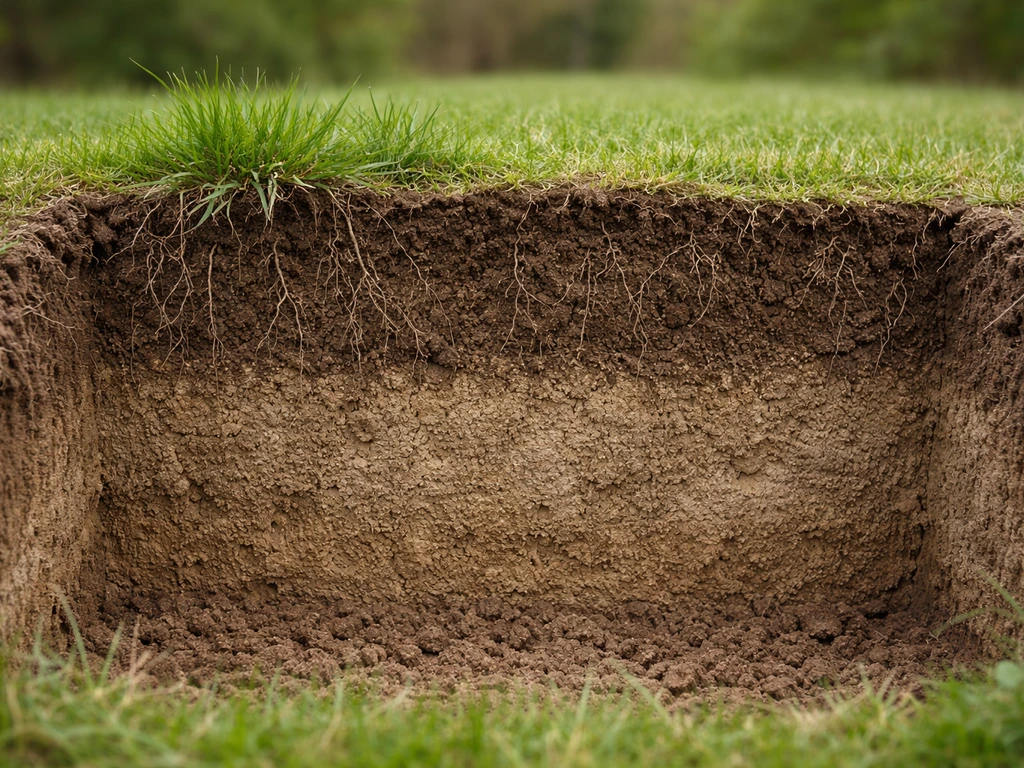
You need at least 4 to 6 inches of good-quality topsoil to grow grass that actually establishes and survives. Coarse dirt often needs to be amended and brought up to a proper topsoil depth before grass can establish grow grass. That's the number backed by Penn State Extension, New Mexico State University, and basically every turfgrass guide worth reading. Less than 4 inches and you're setting yourself up for thin, stressed turf that struggles through summer heat and drought. But that single number only tells part of the story, because the type of grass, your site conditions, and whether you're seeding or laying sod all shift what "enough" really means.
How Deep Does Dirt Need to Be to Grow Grass?
Marcus Volkmann
12 May 2026
The target depth: what you're actually aiming for
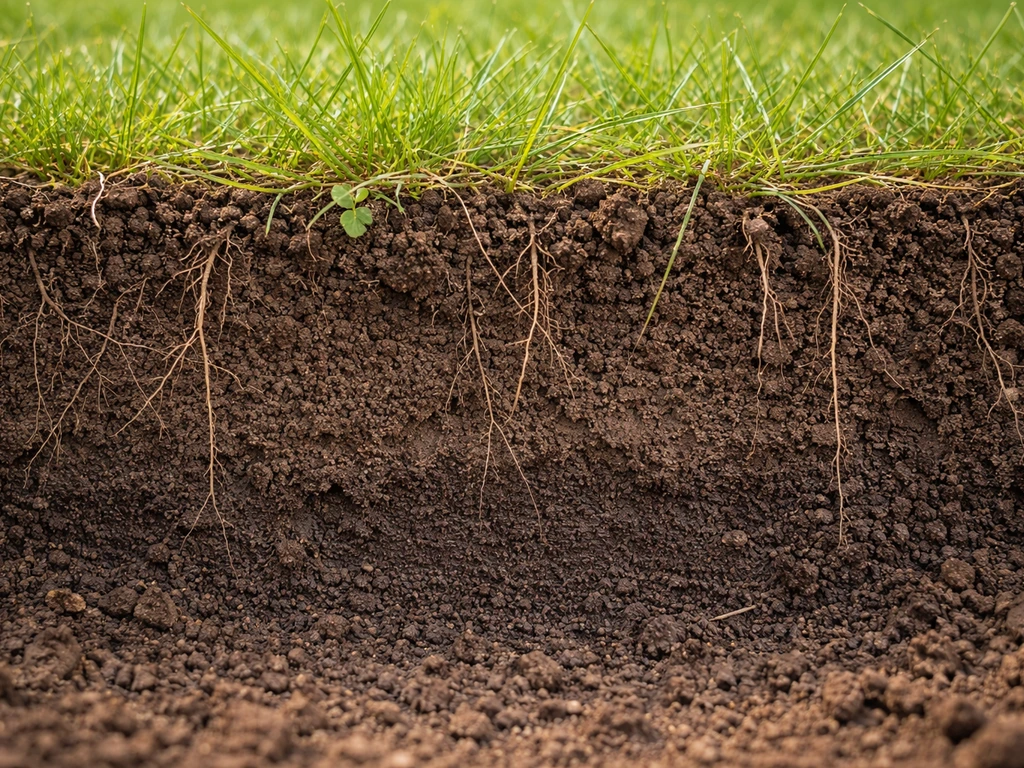
Think of that 4 to 6 inch minimum as your non-negotiable root zone. It's the depth of loose, fertile, workable soil that grass roots can penetrate, pull water from, and anchor into. Penn State is specific: this is the firmed and settled depth, meaning after you've tilled, amended, and let the soil settle before planting. If you measure 6 inches of fluffy freshly tilled soil, you might end up with 4 inches once it compacts down after a few rains, which is still fine. If you're starting with 3 inches or less of decent topsoil over a hardpan or construction fill, you've got a real problem that watering and fertilizing won't fix.
Six inches is the sweet spot for most home lawns. If you can hit 6 inches of quality topsoil consistently across your site, you're in a good position for seeding almost anything. More depth is always better for drought tolerance and long-term root development, but beyond 8 to 10 inches you're chasing diminishing returns for a typical lawn situation.
Depth requirements change depending on what you're planting
Seed vs. sod
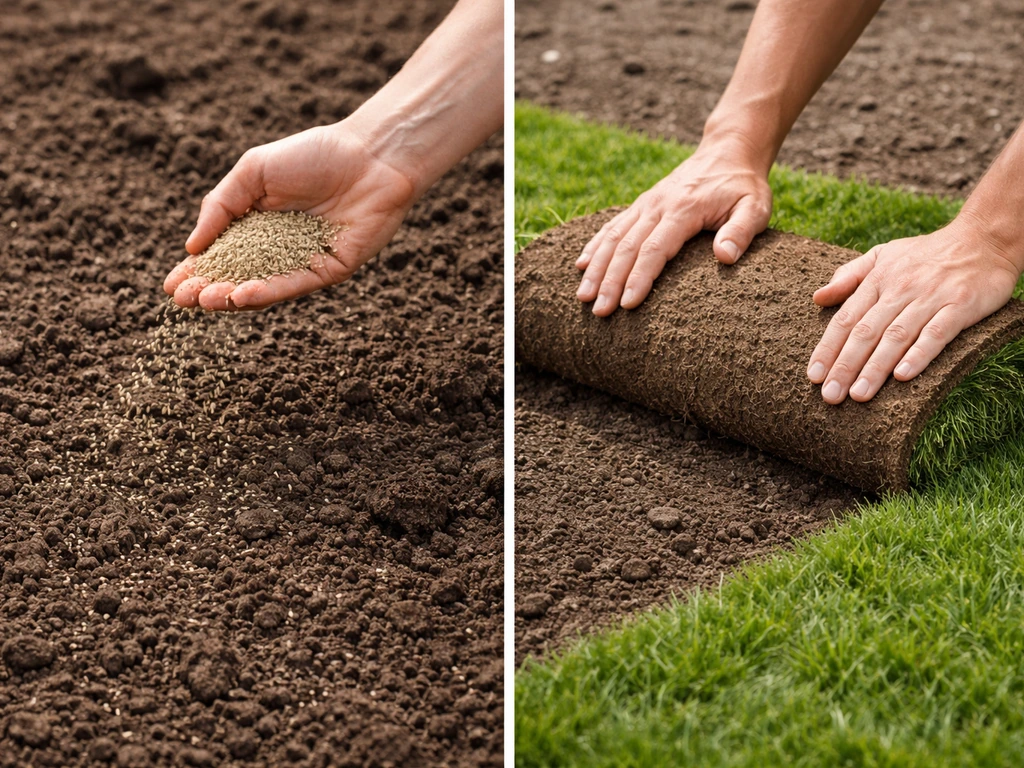
Seeding is more forgiving on depth than sodding, but only slightly. When you seed, the grass establishes from scratch and roots follow available soil wherever it goes. With sod, you're laying down an already-mature root mat that needs to "knit" into the soil beneath it quickly. If the underlying soil is too shallow or too hard, sod roots stay trapped in that thin mat, dry out fast, and the sod dies in patches. Purdue Extension and Iowa State are both clear on this: proper seedbed preparation is just as critical for sod as for seed. For sod, that 4 to 6 inch minimum isn't negotiable, and firming the seedbed so there are no air pockets between the sod and soil is essential for rooting.
Cool-season vs. warm-season grasses
Cool-season grasses like Kentucky bluegrass, tall fescue, and perennial ryegrass typically root between 2 and 6 inches deep according to Penn State Extension. That shallower rooting range means they're more dependent on that top layer of soil quality, and they suffer faster when that top layer dries out or gets compacted. Warm-season grasses like bermudagrass, zoysia, and St. Augustine tend to push deeper root systems when conditions allow, which gives them more drought resilience once established. But both types still need that 4 to 6 inch workable topsoil layer to get started. Warm-season grasses just have more upside if you can give them 8 inches or more.
| Grass Type | Typical Rooting Depth | Minimum Topsoil for Establishment | Notes |
|---|---|---|---|
| Cool-season (fescue, bluegrass, ryegrass) | 2 to 6 inches | 4 to 6 inches | Shallower roots, more dependent on surface soil quality |
| Warm-season (bermuda, zoysia, St. Augustine) | 6 to 12+ inches | 4 to 6 inches minimum | Deeper roots once established; benefits more from extra depth |
| Sod (any type) | Knit-in required | 4 to 6 inches firm, workable | Seedbed prep is critical; no air gaps under sod |
| Seed (any type) | Develops from scratch | 4 inches workable minimum | Slightly more forgiving than sod on depth |
How to actually measure your soil depth
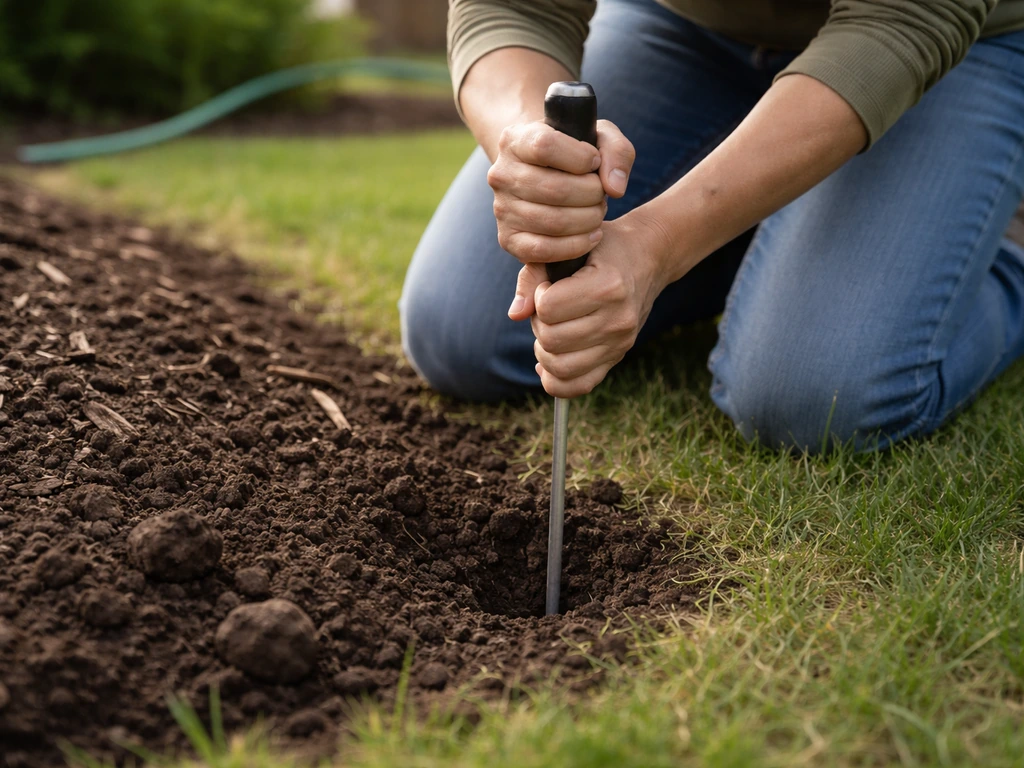
Don't guess. Get a soil probe, a tile probe, or even a long screwdriver and push it into the ground in several spots across your yard. You're feeling for where it stops meeting resistance freely. That stopping point is usually where good topsoil ends and compacted subsoil, clay hardpan, gravel, or construction debris begins. Penn State recommends a soil probe for consistent sampling because it pulls an equal slice from all depths, giving you an honest picture of what's there.
Take at least 8 to 10 readings across the area you want to plant. Soil depth is rarely uniform across a yard, especially on properties that have had construction work. Mark where you find thin spots (under 4 inches) and where depth is adequate. This gives you a real map to work from instead of assuming the whole yard is the same.
- Push a soil probe or screwdriver into the ground until resistance increases noticeably
- Mark the depth at that point with your finger and measure against a ruler
- Repeat in at least 8 to 10 spots across the planting area
- Note areas with under 4 inches as problem zones that need attention
- For a complete picture, collect a soil sample from the 0 to 6 inch range and send it to your local extension lab for nutrient and pH analysis
How site conditions change the depth you actually need
The 4 to 6 inch minimum assumes reasonably good conditions. In the real world, your site conditions can push that requirement up, or make depth less of the issue than you thought.
Shade
Shade is one of those situations where adding more soil depth won't save you. Penn State's research on turf under shaded conditions is pretty clear: shade shortens roots, reduces shoot density, and contributes to poor drainage in those areas. If you have dense tree canopy, the problem isn't depth. It's light. You can have 8 inches of perfect topsoil under a thick maple and still fail to grow lawn grass. Depth is a factor only when combined with adequate sunlight.
Slopes
Slopes increase water runoff and erosion, which means grass on a slope needs better establishment conditions than flat ground. On slopes, you want to be closer to the 6-inch minimum rather than pushing it at 4. Added depth gives roots more to grab onto before they hit hardpan, and better-established roots are what hold the soil in place during heavy rain. For steep slopes, seeding with erosion control blankets is often smarter than sod.
Compacted soil
Compaction is one of the most common reasons grass fails even when topsoil depth looks fine on paper. Mississippi State University Extension explains that compaction increases soil resistance to penetration, making it difficult for roots to grow through the soil. Mississippi State Extension puts it plainly: grass roots cannot penetrate a compressed layer, so the effective root zone is limited to the soil above that compacted band. In other words, if the soil is compacted enough to limit root growth, grass is unlikely to grow from it even if the topsoil depth looks decent does rooted dirt grow grass. Dirt can limit or prevent grass from establishing underground if the soil is too hard, too shallow, or has poor drainage and compaction dirt block grass underground. Utah State Extension adds that construction sites are especially prone to this. If you have 5 inches of decent topsoil sitting on top of construction-compacted fill, your grass is essentially growing in only whatever portion of that topsoil is loose enough to allow roots. Core aeration before planting helps break compaction in mild cases. Severe compaction may require tilling to 6 to 8 inches before you can even add amendments.
Sandy or clay-heavy soils
Pure sand drains so fast that even 6 inches of sandy topsoil may not hold enough moisture for grass to establish without aggressive irrigation. In sandy conditions, you need more organic matter mixed in, and you may find that grass needs that depth plus consistent moisture management to survive. Heavy clay holds water but limits oxygen, which Penn State links directly to poor root growth. In clay-heavy soils, depth matters less than drainage. Six inches of waterlogged clay will fail before 4 inches of well-drained sandy loam.
Fill dirt and problem substrates
If your property has fill dirt brought in during construction or grading, the quality of that fill matters as much as the depth of topsoil above it. If you’re wondering whether fill dirt is good to grow grass, focus on how much real topsoil sits above it and whether the fill provides a workable, root-friendly layer Fill dirt and problem substrates. Fill dirt is typically subsoil with low nutrients and poor structure. Whether grass will grow in fill dirt depends heavily on what's sitting on top of it and how compacted it is. The practical answer is that you still need 4 to 6 inches of real topsoil above any fill layer.
Building soil depth when you don't have enough
If your probe readings show you're working with less than 4 inches of usable topsoil, you have a few practical options to build that up before planting.
Importing topsoil
The most straightforward fix is bringing in quality topsoil to raise the root zone. Order screened topsoil (not fill dirt) from a landscape supplier and spread it to make up the difference. If you have 2 inches of decent native soil and you need 5, add 3 inches of topsoil and till it lightly into what's there to avoid a hard interface line between old and new soil. That interface layer is a real problem: roots can hesitate at the boundary between two very different soil textures, almost like hitting a wall.
Layering and incorporation
When you add topsoil or amendments, always incorporate them rather than just laying them on top. Penn State recommends working compost into the soil to a depth of 4 to 6 inches during establishment, typically using a 1 to 2 inch layer of compost tilled in before seeding. This builds organic matter throughout the root zone, not just at the surface. Compost improves sandy soils by increasing water retention, and helps clay soils by opening up pore space for oxygen and drainage.
Topdressing for gradual improvement
If you're working with an existing thin lawn rather than starting fresh, topdressing with compost is a longer-term strategy. Ohio State and Penn State both specify a 1/4-inch layer of compost applied evenly to the surface, which gets worked in gradually by rain and earthworm activity. You won't add an inch of depth overnight this way, but annual topdressing builds soil quality over time. For an immediate depth problem, though, topdressing alone won't cut it. You need to bring in material and incorporate it.
Amendments for quality, not just quantity
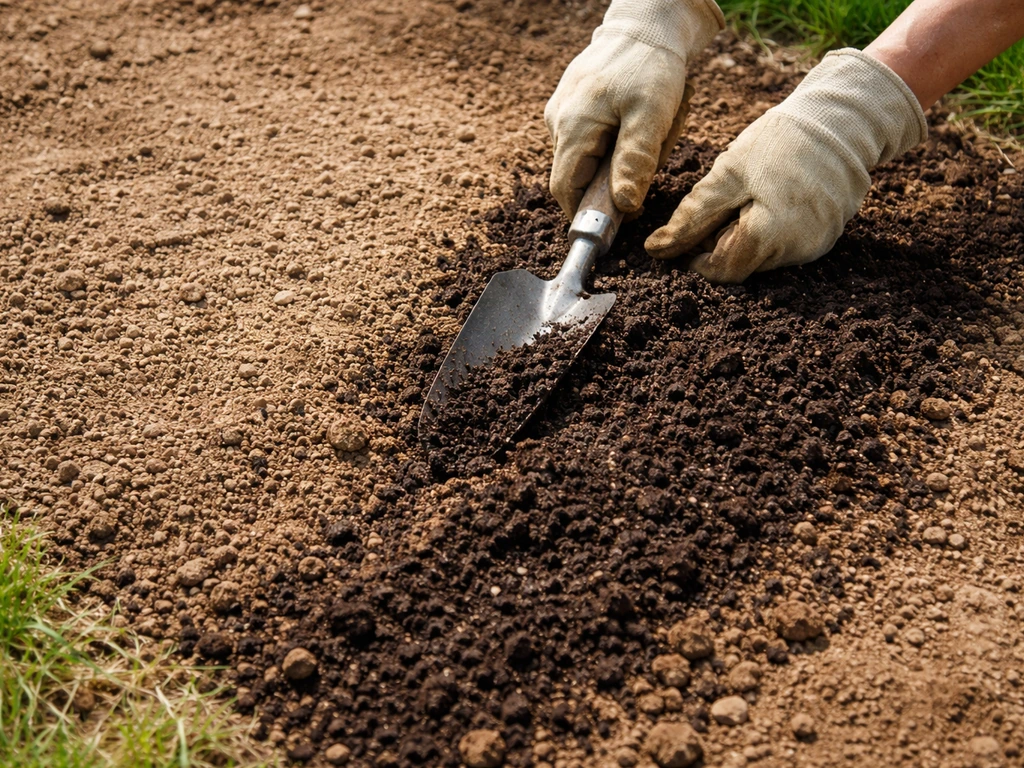
Depth without quality is still a losing situation. Utah State Extension recommends mixing organic matter thoroughly into existing soil to at least 6 inches on salt-affected or problem sites. On any site, get a soil test before you plant so you know the pH, nutrient levels, and organic matter percentage. Lime or sulfur adjustments to hit a pH of 6.0 to 7.0, plus starter fertilizer at planting, will make that 4 to 6 inches of topsoil actually work for you.
When more soil depth isn't the fix
Sometimes you can hit 6 inches of quality topsoil and grass still won't thrive. Here's when depth isn't your real problem and what to do instead.
Dense shade
If you're under a dense tree canopy with less than 3 to 4 hours of direct sun per day, no amount of soil improvement will give you a thick lawn. Consider shade-tolerant groundcovers like pachysandra, creeping jenny, or liriope instead. If you want to keep trying grass, fine fescues are the most shade-tolerant option for cool-season regions, but even they need some light.
Tree root zones
UCR's turfgrass guides specifically warn against covering exposed tree roots with soil. Adding soil over tree roots to gain depth can damage or kill the tree, and grass rarely wins the competition for resources against established tree roots anyway. Mulch rings around trees are a much better long-term solution.
Stump and woody debris areas
Purdue Extension advises against planting grass immediately over a freshly ground stump. Decomposing woody material has a high carbon-to-nitrogen ratio that pulls nitrogen out of the soil, starving grass seedlings. Stump sprouts can also keep coming back for years. Wait a full season, keep the area moist to speed decomposition, and add extra nitrogen before seeding.
Alternatives when grass just won't establish
If you've addressed depth and quality but still can't get grass to take, look at these alternatives before giving up or spending more money on topsoil.
- Plugs: For warm-season grasses like zoysia or buffalo grass, plugs planted 6 to 12 inches apart can fill in over one to two growing seasons with minimal soil prep compared to seed or sod
- Hydroseed: A slurry of seed, mulch, and tackifier sprayed onto the soil establishes faster than broadcast seeding on slopes and problem areas where soil loss is a risk during germination
- Groundcovers: Clover, creeping thyme, or native ground covers often outperform grass in poor-soil or low-light situations and need far less soil depth to thrive
- Mulch or gravel: For areas with persistent drainage problems, shaded tree zones, or high-traffic paths, hardscaping or organic mulch is often the right call rather than continuing to fight grass establishment
The honest bottom line
Four to six inches of quality, workable topsoil is your target. Measure what you have with a probe before you spend a dollar on seed or sod. If you're short, bring in topsoil and incorporate it properly with compost before planting. If your site has compaction, address it with aeration or tilling before you add anything on top. And if you have dense shade, buried debris, or competing tree roots, be honest with yourself: extra soil depth won't overcome those obstacles, and there are better options than fighting a losing battle with grass seed.
FAQ
Can I just add more soil on top instead of removing or tilling it in?
You can, but it often underperforms for establishment because roots and seedbed conditions depend on a loose, workable interface. If you are building depth, mix the new topsoil (and compost, if used) into the top 4 to 6 inches, especially where you currently have a hard boundary or compacted layer. If you only topdress, expect slower results and consider core aeration to help loosen the layer below.
If my yard is uneven, what depth should I aim for across the whole lawn?
Aim for your “non-negotiable” depth (about 4 to 6 inches of usable topsoil) in the thinnest areas, not the average. Map the yard with multiple probe readings, then correct the worst zones first (raising low areas or importing topsoil) so you do not end up with thin, stressed patches that fail during heat or drought.
How do I know whether I actually have “usable” topsoil, not just dirt depth?
Measure both depth and resistance. If the probe or screwdriver hits hardpan, gravel, construction debris, or a compacted band quickly, you effectively have less root-friendly depth than the measured total. Look for a distinct increase in firmness and poor drainage patterns after rain, those are practical signs the usable depth is shorter than you think.
Is 4 inches enough if I’m only planting small areas?
It can be, especially for seeding and for areas you can keep consistently moist until roots establish. But small areas still fail when compaction or poor drainage limits root growth, or when the area is under heavy shade or on a slope with rapid runoff. For patches, it’s usually worth probing again at each patch boundary because conditions change over short distances.
What’s the best approach if my soil depth is between 3 and 4 inches?
Treat it as “short root zone” rather than trying to compensate with extra fertilizer. The practical fix is to add screened topsoil to reach at least 4 inches of workable depth, and incorporate it. If you also see compaction, aerate or till to break the compacted band first, then add the amendment and topsoil so the added layer remains loose where roots will grow.
How long should I wait after adding topsoil before seeding or laying sod?
After spreading and lightly incorporating, let the soil settle and firm before planting, especially if you just filled a low spot. If you plant into very fluffy, uncompacted soil, it can compact after rain and effectively reduce your usable depth. A good rule is to verify with a probe after settling, not just before planting.
Will core aeration alone solve shallow-root problems?
Aeration helps with compaction and improves oxygen and water movement, but it does not create additional topsoil depth. If you truly have less than about 4 inches of workable soil, you will usually need to add topsoil and incorporate it. In mild compaction cases with adequate depth, aeration can make the existing root zone more usable.
Do I need a soil test even if I’m only worried about depth?
Yes, because depth without proper fertility and pH can still lead to weak, slow establishment. At minimum, test pH and nutrients (and consider organic matter). If pH is outside the typical workable range, correcting it plus using starter fertilizer at planting helps ensure grass can actually convert the improved soil volume into growth.
How does slope change what I should do besides adding depth?
On slopes, water runoff and erosion can wash seed, reduce germination, and expose roots before they knit in. Getting closer to the higher end of the target depth (around 6 inches when you can) helps, but you may still need erosion control methods such as blankets for seeding. Sod can also be challenged by slope movement unless the seedbed is prepared and the sod is held firmly.
Is it ever better to plant shade-tolerant groundcovers instead of trying to add soil depth?
Yes, when light is the limiting factor. If you have dense canopy and direct sun is under roughly 3 to 4 hours per day, additional soil depth usually will not produce thick grass because roots and shoots still receive too little light. Switching to shade-tolerant plants and mulching tree roots is often more reliable and safer for established trees.
If I have tree roots, can I cover them to make enough depth for grass?
Avoid covering exposed, active tree roots to manufacture grass depth. Adding soil over major roots can injure the tree, and grass often cannot outcompete the tree for water and nutrients. Instead, keep mulch rings around trees, choose appropriate shade-tolerant groundcovers for the root zone, or consider a design change for that area.
What’s the fastest way to decide whether I should seed or sod given my depth?
Use the depth and the condition below it. If the root-friendly depth and soil firmness are consistent, sod can establish quickly because it starts with a mature root mat, as long as there are no air gaps and the soil beneath is not hard or waterlogged. If your soil is patchy or compacted, seeding plus soil correction (topsoil build-up and loosening the compacted band) often gives you more flexibility than sod that can dry out in thin zones.
Next Articles
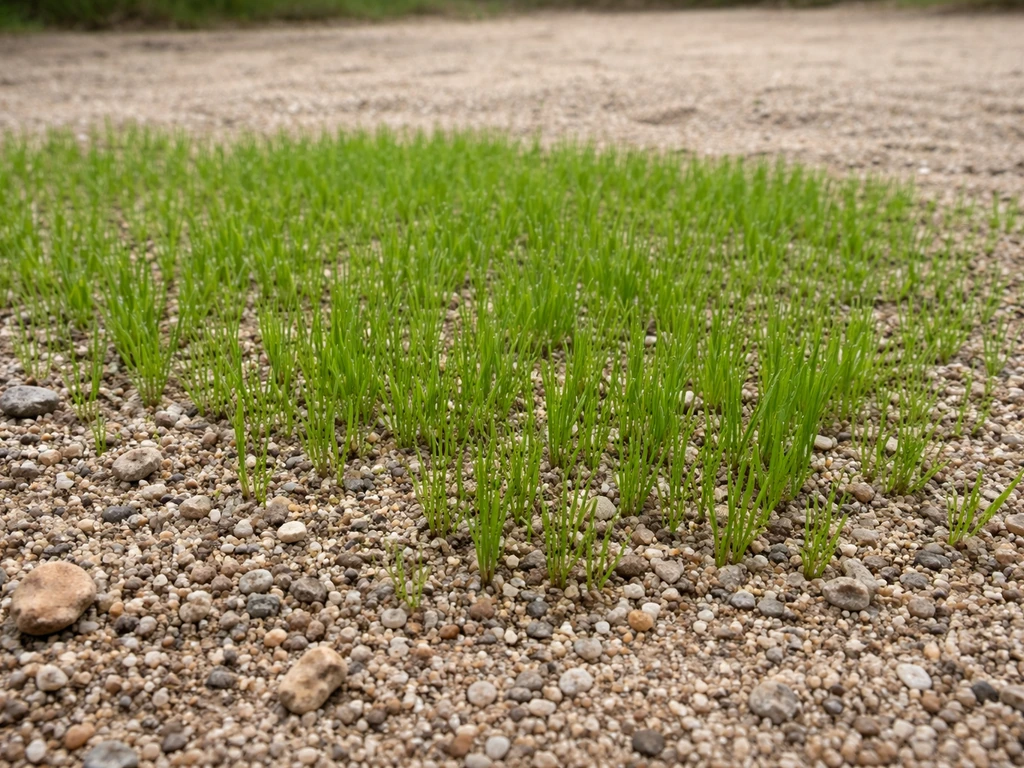
Does Coarse Dirt Grow Grass Yes and What to Do
Yes, coarse dirt can grow grass. Get the soil prep, amendments, watering, and seeding steps that make it succeed.
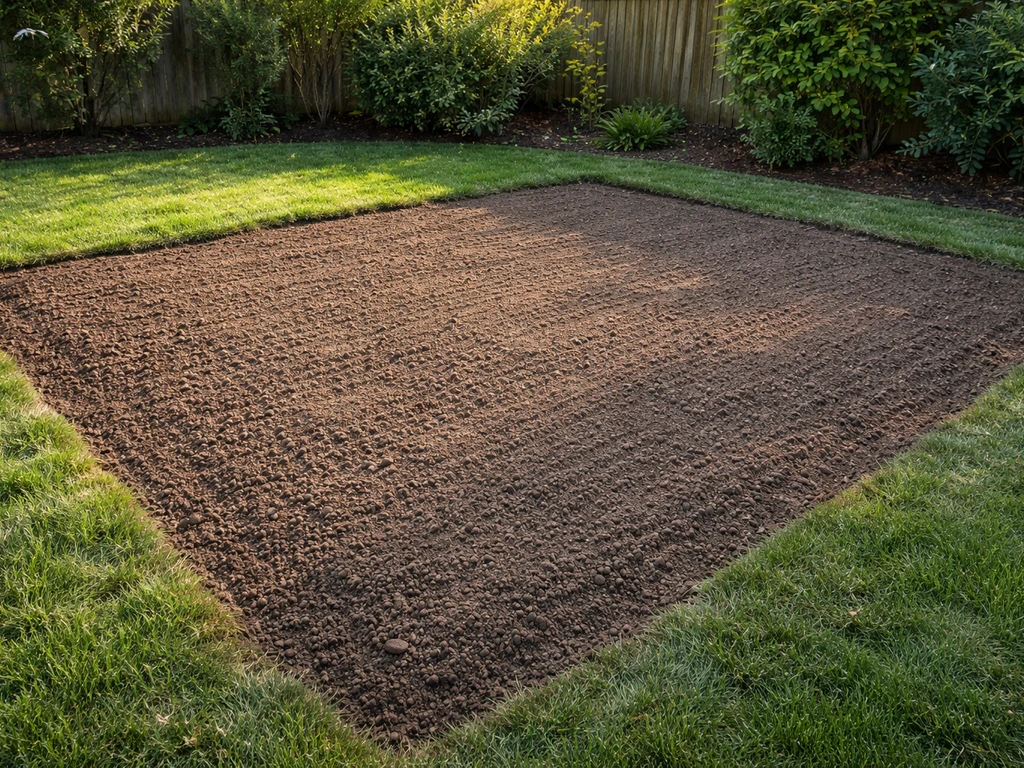
Will Grass Grow in Fill Dirt? Yes, With the Right Prep
Yes, grass can grow in fill dirt if it’s clean, loose, and well-drained. Prep, amend, and choose seed or sod.
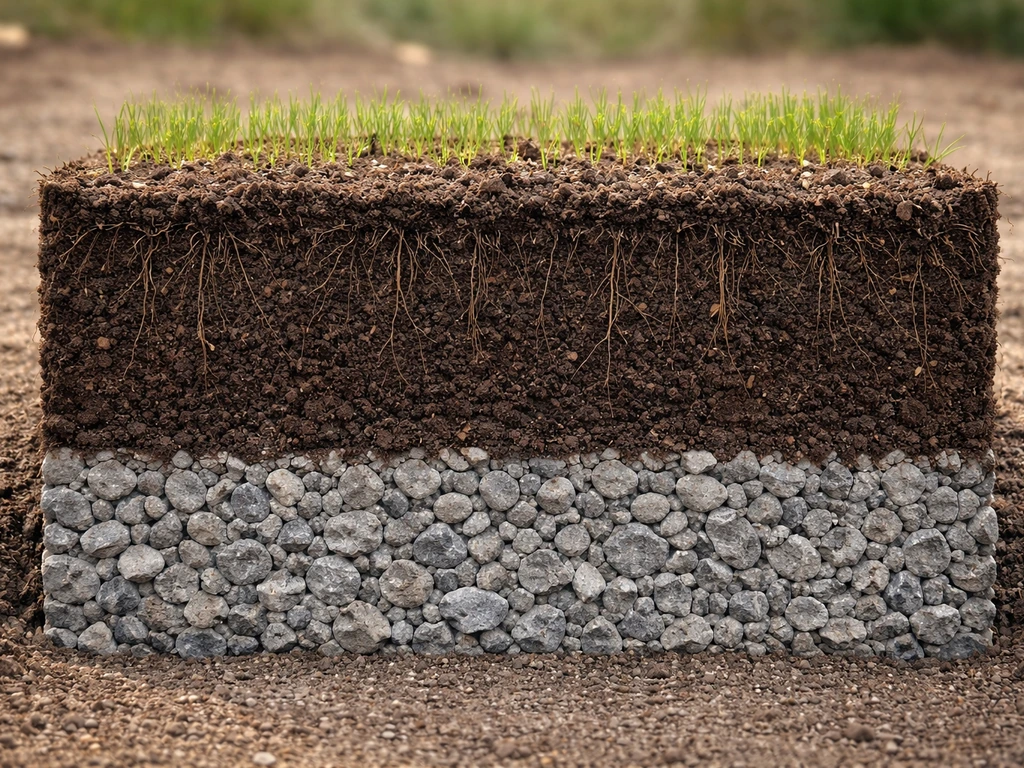
Can You Grow Grass Over Gravel? How to Do It Right
Learn when you can grow grass over gravel and follow a step-by-step method for soil depth, drainage, seeding or sod, and