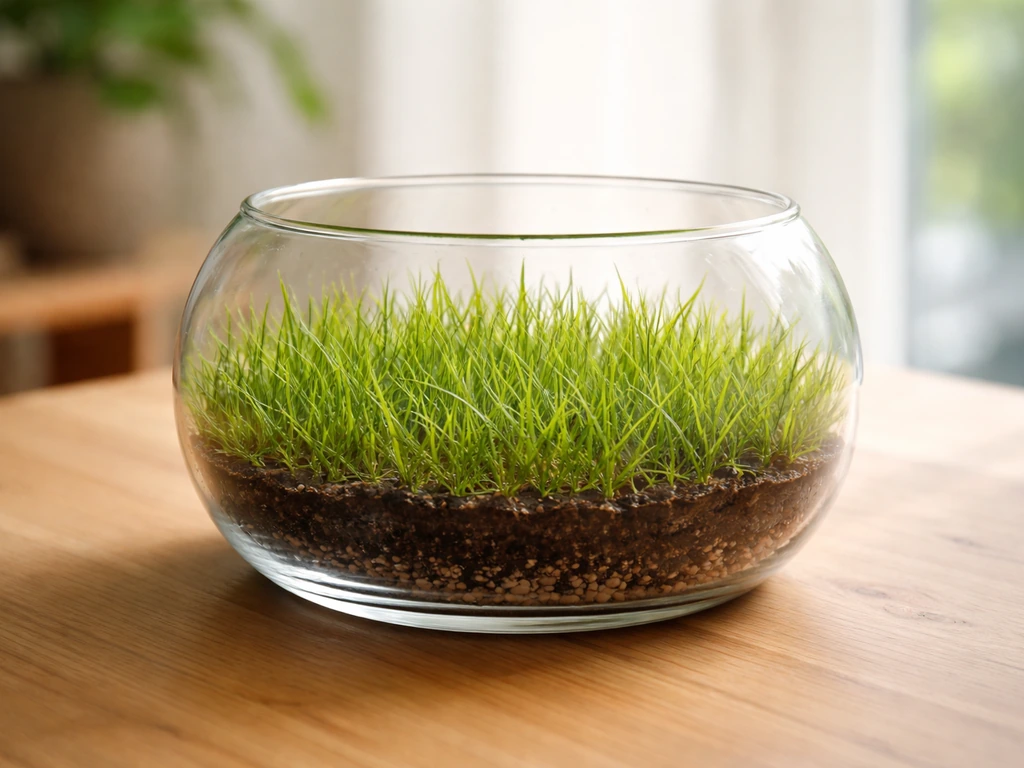
Yes, you can grow grass in a terrarium, but with some real caveats. That said, growing grass upside down is an entirely different setup because you need to keep roots from drying out while gravity works against you grass in a terrarium. True lawn grasses like Kentucky bluegrass will struggle and often fail in a standard enclosed glass container. What actually works is either an open or vented terrarium-style setup with strong supplemental lighting, or swapping to compact grass-like alternatives such as dwarf mondo grass that tolerate lower light and higher humidity without rotting out. If you go in with the right species, the right container, and a handle on moisture control, you can absolutely pull it off.
Can You Grow Grass in a Terrarium? Setup Guide
Marcus Volkmann
28 Jun 2026
Why most lawn grasses fail in terrariums (and what gives them a fighting chance)
The core problem is that common turfgrasses were bred for the outdoors: high light, free air movement, and soil that drains naturally after rain. Stick them in a sealed glass box and every one of those conditions flips. Cool-season grasses like Kentucky bluegrass and fine fescues need soil temperatures in the 60–85°F range for optimal germination, plus a constantly moist (not saturated) seedbed and good oxygen availability at the root zone. In a closed terrarium, the soil can stay waterlogged for days, which cuts off oxygen and kills germinating seeds before they even establish. Then, once the seedlings do get going, the low-light environment inside most homes starves them before they can root properly.
The other killer is humidity. Closed terrariums trap moisture and warmth in a tight microclimate, which is perfect for mold, algae, and moss. Penn State Extension research on moss in lawns identifies exactly the same conditions that doom terrarium grass: shallow soil, poor drainage, heavy shade, excessive moisture, and low-fertility soil. Every one of those is practically guaranteed in a small sealed container. Moss and algae will colonize before your grass seed even germinates if you are not managing ventilation actively.
Open or vented terrariums change the math considerably. When condensation can escape and fresh air can circulate, you sidestep the worst of the humidity and anaerobic soil problems. You still need strong lighting and the right species, but success goes from unlikely to genuinely achievable.
Picking the right grass (or grass-like plant)
Not all grasses are equal in this environment. Among true turfgrasses, fine fescues (creeping red, chewings, hard fescue) are your best realistic option. They establish faster than Kentucky bluegrass, tolerate shade better than most cool-season species, and prefer slightly acidic soil around pH 6.0–6.5, which is easy to hit in a small container. Hard fescue and chewings fescue germinate in roughly 6–14 days under good conditions, compared to Kentucky bluegrass which can take weeks and needs near-perfect conditions to establish at all. Kentucky bluegrass is also the least shade-tolerant cool-season grass and stresses out badly when soil surface temperatures climb above 75°F daily average. Avoid it in terrariums entirely. Bermudagrass, zoysiagrass, and buffalograss are warm-season species that need full sun and should not be used here.
Honestly, for most people, grass-like alternatives are the smarter call. Dwarf mondo grass (Ophiopogon japonicus) is the standout pick. It is an evergreen, low-mounding perennial that handles a wide range of light intensities, tolerates filtered or indirect light well, and forms dense low-growing clumps that stay compact without aggressive trimming. It is also far more forgiving of the humidity levels inside terrariums. If you want something that actually looks lush and green in a glass container long-term, mondo grass will deliver where Kentucky bluegrass will not.
| Species | Light Need | Shade Tolerance | Humidity Tolerance | Terrarium Viability |
|---|---|---|---|---|
| Fine fescue (chewings/hard) | High (supplement required) | Good | Moderate (open container) | Viable with vented setup |
| Kentucky bluegrass | Very high | Poor | Low | Not recommended |
| Bermudagrass / Zoysia | Full sun only | Very poor | Low | Avoid entirely |
| Dwarf mondo grass | Low to filtered | Excellent | High | Best overall choice |
| Liriope / dwarf lilyturf | Low to medium | Very good | High | Good alternative |
Setting up the terrarium correctly from the start
Container choice
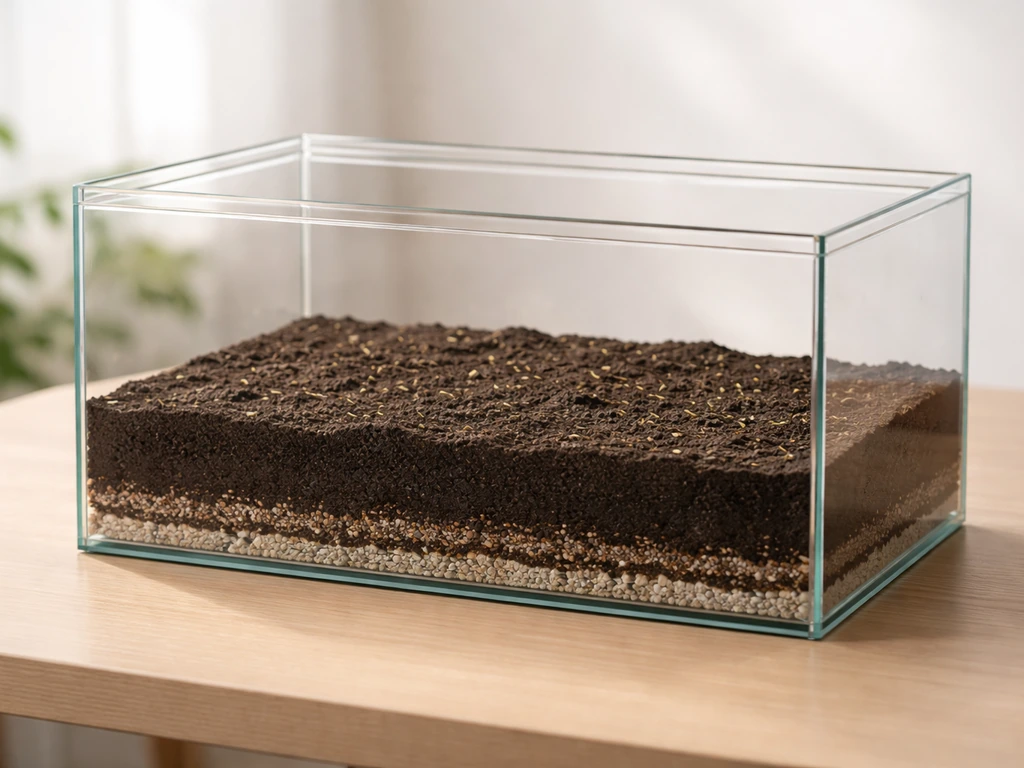
Go with an open-top or vented container for grass. A fully sealed terrarium is fighting you from day one. Wide, shallow containers work better than tall narrow ones because grass roots spread laterally and need decent soil depth, not a thin sliver of substrate at the bottom of a cylinder. If you are wondering whether grass can grow sideways in a terrarium, the answer depends on how much lateral rooting space and light the roots get. Aim for at least 3–4 inches of soil depth minimum; 5–6 inches gives roots real room to establish and helps buffer moisture swings. If you already own a closed-top terrarium, plan to leave the lid cracked open or remove it for an hour daily to manage condensation buildup.
Drainage layer
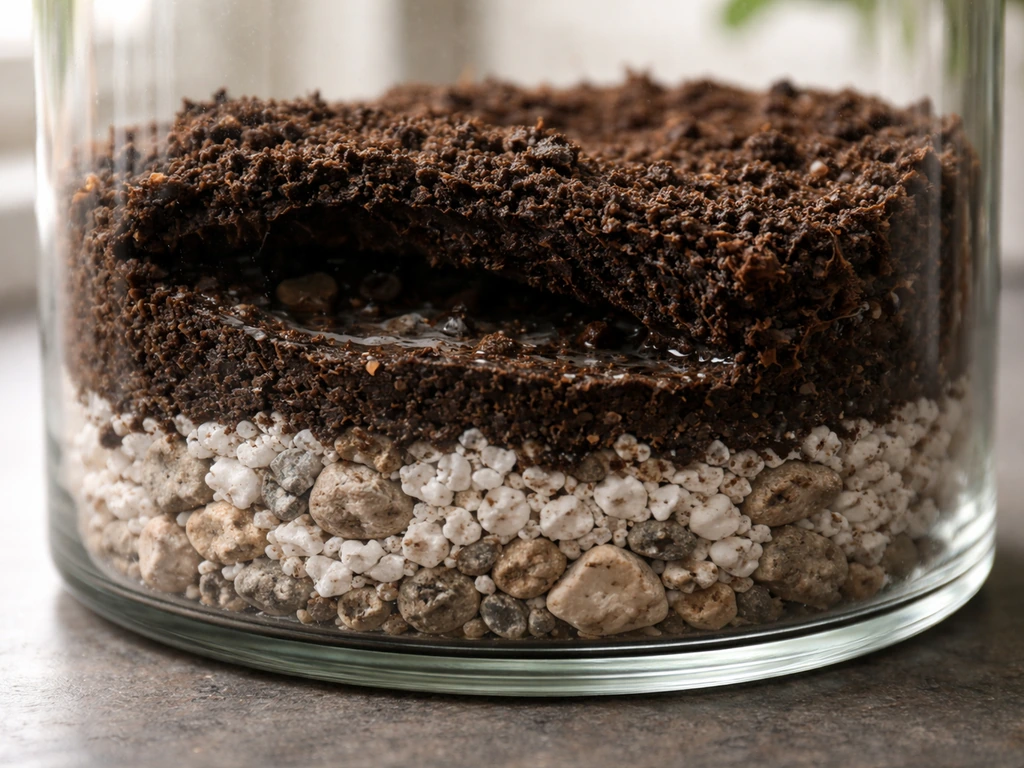
A proper drainage layer is non-negotiable. Without it, excess water sits at the bottom of the container and the soil above it stays saturated. Put down 1–2 inches of coarse perlite, small gravel, or horticultural grit at the base before adding soil. Some growers also add a thin layer of horticultural charcoal on top of the drainage layer to help absorb gases and slow microbial buildup. This is not magic, but it does buy you time before the substrate goes sour.
Lighting setup
Natural light through a window is almost never enough for grass. You can also grow grass under solar panels outdoors, but the shading and spacing still determine whether it will thrive. Even a south-facing windowsill delivers significantly less intensity than outdoor conditions, and most turfgrasses need high light to thrive. Plan on a dedicated grow light. Full-spectrum LED grow lights positioned 6–12 inches above the container, running 14–16 hours per day, will give you the photoperiod and intensity grass actually needs. UMN Extension guidance on indoor plant lighting confirms that most common indoor light levels fall short of what sun-demanding plants require for productive growth. For mondo grass and other shade-tolerant alternatives, you can get away with moderate supplemental light or a well-placed grow bulb, which is another reason they make life easier.
Humidity and airflow
Keep airflow active. For open containers, a small USB fan running intermittently nearby works well to prevent stagnant humid air from sitting over the surface. For semi-closed setups, prop the lid open at an angle. The goal is to prevent condensation from pooling on glass walls and dripping back onto the soil repeatedly, which is what drives fungal problems and algae films. If you notice heavy fogging inside the container, that is your signal to ventilate immediately rather than letting it clear on its own.
Soil and amendments that actually support grass in a small container
Standard potting mix is too water-retentive and nutrient-unbalanced for turfgrass. You want something closer to a well-draining loam. A practical mix is two parts good quality topsoil or loam, one part coarse perlite or grit, and a small amount of compost (no more than 10–15% by volume) to add organic matter without making the mix dense and soggy. This gives you a substrate that drains well enough to stay at field capacity (where excess water has drained off and roots get both moisture and oxygen) rather than staying saturated.
pH matters. Fine fescues perform best at around pH 6.0–6.5. Kentucky bluegrass wants 6.5–7.2. Tall fescue is flexible, tolerating 5.5–6.5. Test your soil mix with a basic pH meter or strips before planting and adjust with a small amount of garden lime to raise pH, or sulfur to lower it. Getting pH wrong in a small container is actually easy to do because you have no buffering from a larger soil volume. Moss thrives in acidic, low-fertility soils, so if your pH drifts too low, moss will move in fast.
Seed-to-soil contact is critical for germination. After you fill the container, firm the surface gently with a flat object. Sow fine fescue seed at roughly 10–20 seeds per square inch, cover lightly (about 1/4 inch deep), and press down again. Shallow, consistent seed placement is the same principle that drives outdoor establishment and it applies just as much in miniature.
Watering and moisture control: how to avoid rot without drying out
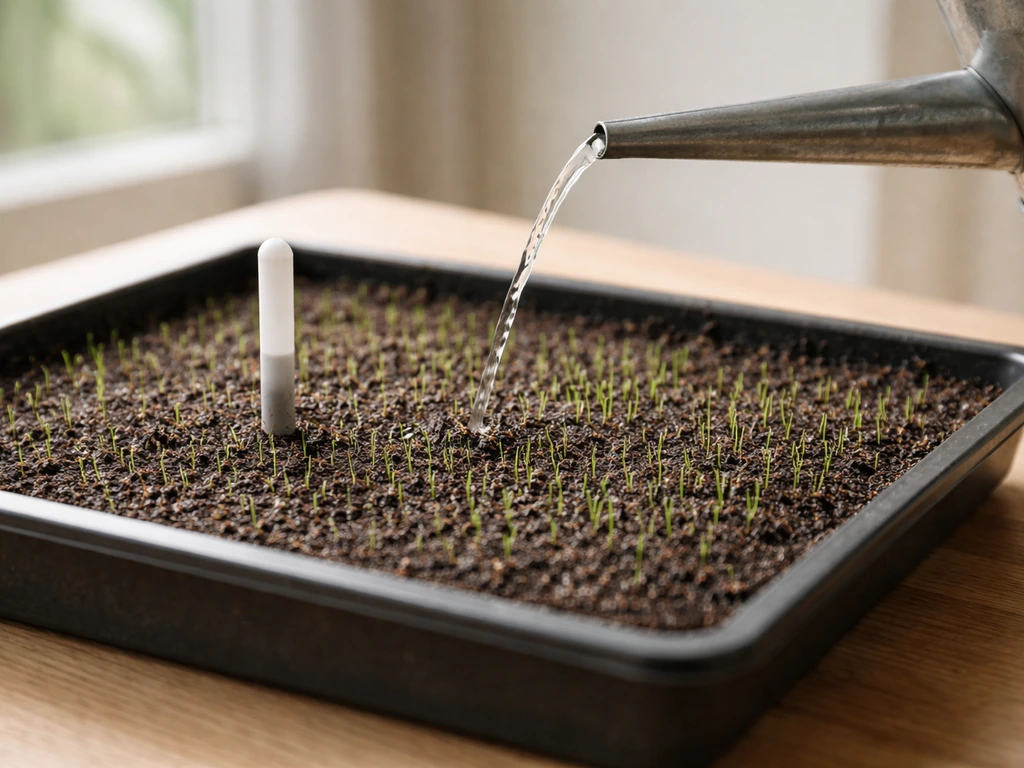
Overwatering is the number one way people kill terrarium grass. The soil should be consistently moist at the seed depth but never sitting in standing water. During germination, mist the surface lightly once or twice a day rather than pouring water in. A spray bottle gives you much better control than any kind of pour. The goal is to keep the top inch of soil from drying out while the drainage layer below handles any excess.
Once grass is established (typically 2–4 weeks after germination for fine fescues), shift to watering when the top 1/2 inch of soil feels dry to the touch. In an open container, this might mean every 2–3 days. In a more enclosed setup, the soil stays moist longer and you may only water once every 5–7 days. Stick your finger into the soil rather than guessing by the surface appearance; the surface can look dry while the layer below is still adequately moist.
- If the soil stays wet for more than 3–4 days after watering: increase ventilation, check that the drainage layer is functioning, and reduce watering frequency immediately.
- If you see water pooling at the bottom of the glass walls: the drainage layer may be saturated; skip watering entirely until the substrate dries down, then reassess how much you are applying.
- If the soil surface cracks or the grass starts browning at tips: you are underwatering; mist the surface and increase frequency slightly, then monitor.
- If white fuzzy mold appears on the soil surface: reduce watering, ventilate the container more aggressively, and remove affected material with a small tool rather than disturbing the roots.
Light and temperature: what you are really trying to replicate
For fine fescues in a terrarium, you are trying to replicate the cool, moderately bright conditions of early spring or fall outdoors. Soil temperatures should stay in the 60–75°F range. Pennsylvania State Extension research on Kentucky bluegrass notes it performs best where average July temperatures do not exceed about 75°F, and root growth for cool-season grasses in general is strongest when soil temps stay between 50–65°F. In a terrarium sitting under grow lights, heat buildup is a real concern. Position lights so they provide intensity without baking the container. LEDs generate less heat than older HID or fluorescent lights, which is another reason to use them.
Air temperature inside the container can spike if it is near a heater or in direct afternoon sun from a window. Keep the terrarium in a room that stays between 60–72°F during the day. Avoid placing it near radiators, heat vents, or west-facing windows that get intense afternoon sun. Consistent temperature matters more than perfect temperature. Swings between cold nights and hot days will stress the grass and promote fungal issues.
For mondo grass and shade-tolerant alternatives, the light and temperature constraints relax considerably. Mondo grass handles filtered light and room temperatures without complaint, which is a big part of why it succeeds where lawn grass struggles. If your growing environment is less than ideal, switching to mondo grass is not giving up; it is making a smarter choice for the conditions you actually have. Can mondo grass grow underwater? In most setups, it is best treated as a terrestrial plant rather than something to keep fully submerged.
Maintenance, realistic limits, and what to do when things go wrong
Trimming and growth rates
Grass in a terrarium will grow slower than outdoors but it will still grow, and it will still need trimming. Fine fescue in a well-lit terrarium might need a trim every 2–4 weeks. Small scissors or bonsai shears work better than any full-sized tool. Target a height of around 2–3 inches, which is in the reasonable range for fine fescue and tall fescue indoors. Do not scalp it down to the soil; cutting off too much at once shocks the plant and opens the surface to algae colonization. Mondo grass needs very little trimming, which is another practical advantage.
Algae, mold, and moss problems
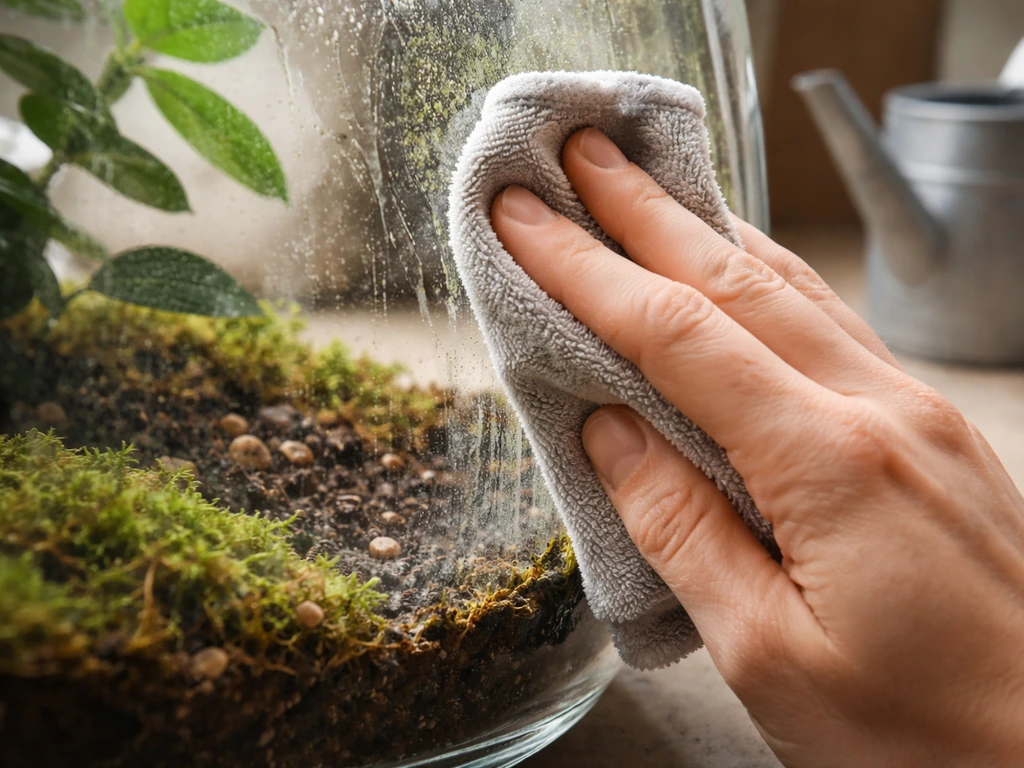
Green algae films on the glass walls are a sign of excess moisture and light hitting wet surfaces. Wipe the inside walls down periodically and reduce watering. Algae on the soil surface usually means the substrate is staying too wet; improve drainage and airflow first. Moss is trickier because it often signals your pH has drifted low, your soil is too shallow or nutrient-poor, and conditions are too shaded and wet. Penn State research on moss in lawns lists exactly these factors as primary drivers. If moss is taking over, check soil pH and adjust upward toward 6.0–6.5, improve lighting, and cut watering back. White or gray fuzzy mold on the surface typically means airflow is too low; ventilate more aggressively and remove the affected patches.
Reseeding and long-term viability
Grass in a terrarium is not a forever plant. Even under good conditions, individual plants will thin out over 6–12 months as older tillers die back and soil nutrient reserves get depleted. Plan to top-dress with a small amount of slow-release granular fertilizer every 2–3 months, and reseed thin patches as needed. Keep your seed stock fresh because old seed loses viability fast. If the whole thing is looking ragged at the 12-month mark, it is completely normal and reasonable to refresh the entire substrate and start again.
When to cut your losses
If you have been at it for 4–6 weeks with proper lighting and moisture management and the grass is still sparse, yellowing, or being outcompeted by moss and algae, the honest answer is that your growing conditions are not meeting what turfgrass actually needs. At that point, switching to dwarf mondo grass or another compact grass-like groundcover is not failure; it is the practical move. Growing grass indoors in any container shares some of the same fundamental constraints discussed when people ask whether grass can grow inside a standard room, and the answer is always the same: the closer you can get to outdoor light and airflow, the better your odds. An open, well-lit terrarium-style container is essentially just a very small, controlled version of that challenge. Respect the constraints and you will get a result you are happy with.
FAQ
Can I grow grass in a fully sealed glass terrarium without opening it?
Yes, but only if you can provide strong, direct grow light and you manage the moisture cycle carefully. If your terrarium is fully sealed, the soil can stay waterlogged and algae forms before roots establish. If you do use a closed container, plan for frequent ventilation (for example, lifting the lid for 30 to 60 minutes daily) and watch for fogging, which is your cue to ventilate immediately.
What’s the easiest way to prevent algae during grass seed germination in a terrarium?
You can, but germination is usually the most failure-prone step. After sowing, keep the seedbed moist at the top inch using misting, not soaking, and aim for a stable temperature (about 60 to 75°F) to avoid slowing sprout emergence. If you see a green film within a week, reduce moisture first (and increase ventilation) before adding fertilizer.
How do I know if my terrarium grass problems are from overwatering versus not enough light?
Signs you are overwatering include persistent condensation on the glass, consistently dark saturated soil below the surface, and algae spreading even if light is strong. Fix it by improving drainage (check that the drainage layer is thick enough and not clogged), watering less often, and using a faster-draining mix (more perlite or grit). Avoid “drying out completely,” since seedlings still need steady moisture at the seed depth.
Should I fertilize terrarium grass, and when is the safest time to start?
With turfgrass, fertilizing is usually slower and lighter than outdoors. A practical approach is to top-dress with a small amount of slow-release fertilizer after the grass is established (around 2 to 4 weeks post-germination), then repeat every 2 to 3 months. If you fertilize too early or too much, you can feed algae and moss, so start conservatively.
How fresh does grass seed need to be for a terrarium?
For grass seed, freshness matters. If your seed is older than about a year, germination rates can drop sharply, which looks like “nothing is growing” even when conditions are right. Store seed cool and dry, and if you do not know age or storage quality, buy fresh seed or do a small germination test first.
What mowing or trimming height should I aim for in terrarium grass?
Skip normal lawn mowing schedules and avoid scalping. For fine fescue, a good target is keeping the canopy around 2 to 3 inches and trimming gradually, only taking small amounts each session. If you cut too low, you expose wet soil and increase the chance of algae takeover.
How deep should I cover grass seed in a terrarium to avoid germination failure?
Choose seed placement based on how your container dries. If the surface dries fast but the soil stays wet below, you may need to slightly increase ventilation and avoid covering seed too deeply. A light cover works best, because deep sowing plus low oxygen in a terrarium increases germination failure.
Can I use a fan to improve airflow for terrarium grass, and where should I place it?
Yes, but it depends on airflow and light. Indoors, you can use a small USB fan on intermittent cycles (for example, a few minutes every hour) to reduce stagnant humid air. If the terrarium is semi-closed, propping the lid for angled airflow can help prevent recurring condensation. Always prioritize ventilation over extra watering.
My terrarium has more moss than grass. What should I adjust first?
It is usually easier to solve moss competition by fixing the pH and the moisture balance rather than pulling moss repeatedly. If moss is expanding, check your soil pH, reduce watering frequency, and increase light. Improving airflow also matters, because moss benefits from persistently damp, low-oxygen surfaces.
If nothing improves after a month, how do I decide whether to troubleshoot further or switch plant types?
If grass is sparse after 4 to 6 weeks, look at the “triad” first: light intensity, soil temperature stability, and drainage or moisture control. Then consider switching species to a compact, shade-tolerant alternative like dwarf mondo grass, since it tolerates indoor terrarium conditions better than cool-season lawn grasses.
Next Articles
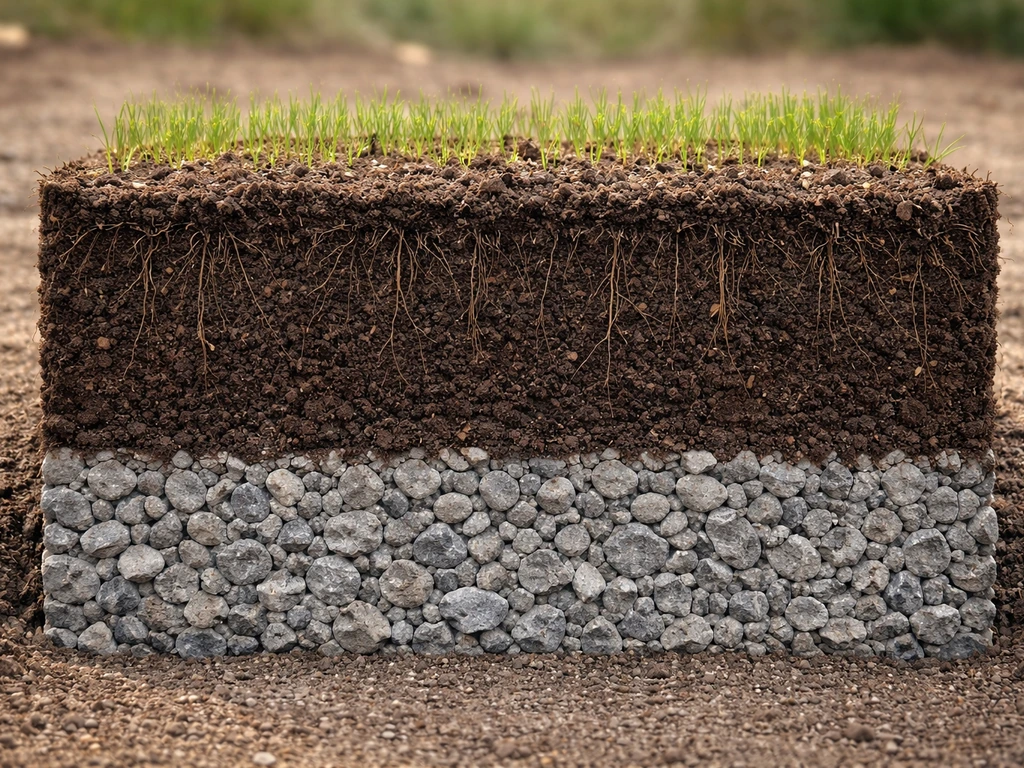
Can You Grow Grass Over Gravel? How to Do It Right
Learn when you can grow grass over gravel and follow a step-by-step method for soil depth, drainage, seeding or sod, and
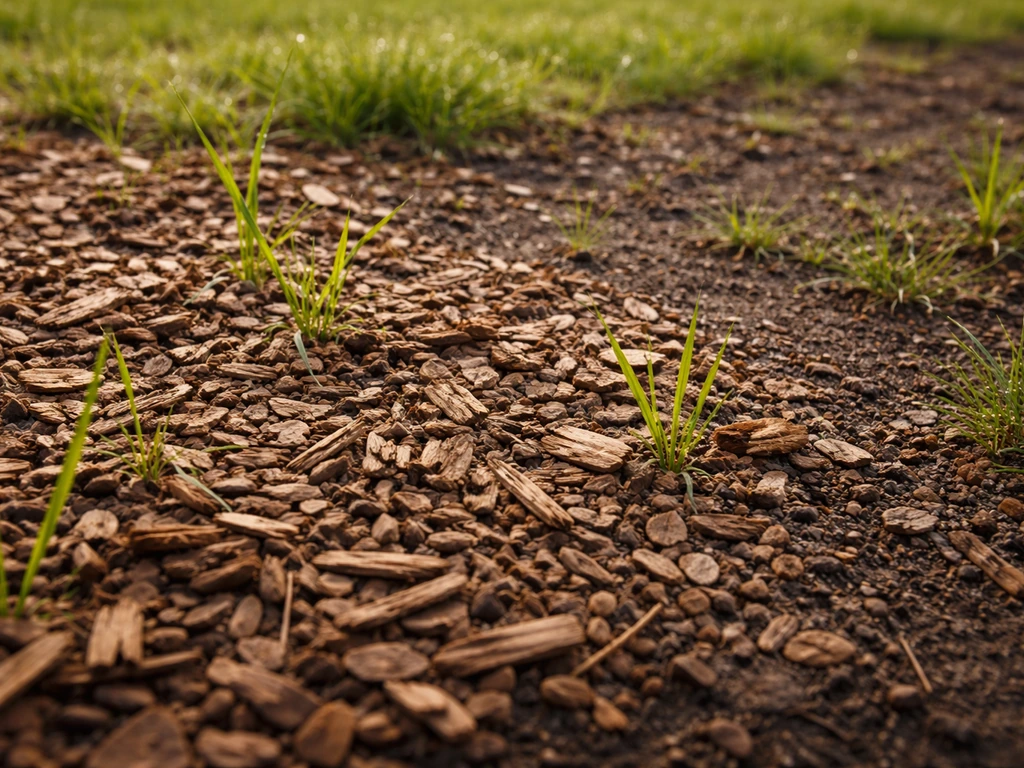
Do Wood Chips Help Grass Grow? When They Work and When Not
Learn when wood chips help grass grow, when they steal nitrogen, and step-by-step how much to apply and seed options.

Will Potting Soil Help Grass Grow? What Works and What Fails
When potting soil helps grass grow, when it fails, and how to prep, apply, seed, water, and troubleshoot bare spots.