Yes, grass can grow inside, but whether it thrives depends almost entirely on how much light you can provide and how well you manage moisture. A sun-drenched enclosed balcony or a south-facing room with supplemental grow lights? Totally doable. A dim basement or a shaded apartment corner? You'll fight a losing battle with most lawn grasses. The good news is that if you pick the right grass type, nail your drainage, and set up even a basic grow-light rig, you can pull off a genuinely satisfying indoor patch of green. Solar panels can reduce the amount of direct sun reaching the ground beneath them, which may change whether grass grows there grass grows under solar panels.
Can Grass Grow Inside? Setup, Light, Soil, and Fixes
Marcus Volkmann
11 Jul 2026
What 'Inside' Actually Means Here
Before getting into the how, it helps to be clear about what kind of 'inside' you're working with, because the viability changes dramatically depending on the space. There are really four scenarios people mean when they ask this question.
- A true indoor room (living room, bedroom, basement): almost no natural light reaches the floor, so you're fully dependent on grow lights.
- An enclosed glass balcony or sunroom: often the best-case scenario indoors, with filtered but real sunlight for several hours a day.
- A basement with egress or standard windows: partial natural light, usually not enough on its own but workable with supplemental lighting.
- A pot, tray, or planter on a bright windowsill: the most common and most achievable setup, even for apartment dwellers.
Each scenario changes your approach. A sunroom doesn't need much artificial lighting. A true interior room needs a proper grow-light setup to even get grass to germinate. A windowsill tray is the easiest starting point if you just want proof of concept. This article covers all of them, but the core principles stay the same: light, drainage, airflow, and the right grass species.
Can Grass Grow Without Much Sunlight?
Grass needs more light than most people expect. It's a full-sun plant at heart. For indoor growing to work, you need to understand what 'enough light' actually means in measurable terms, because 'bright' is relative and usually not bright enough for grass.
The light numbers that matter
Researchers measure useful plant light in PPFD (micromoles of photosynthetically active radiation per square meter per second) and track it as a daily total called DLI (daily light integral). Grass wants a relatively high DLI to stay dense and green. For germination specifically, brief bursts of high-intensity light during the day can kick-start Kentucky bluegrass seeds even in otherwise dim conditions, with studies showing illuminances around 4,000 foot-candles during daily light periods helping germination at around 68°F. The takeaway: intensity matters more than duration during early stages, but once your grass is growing, it needs sustained daily light to stay healthy.
Grow lights that actually work for grass
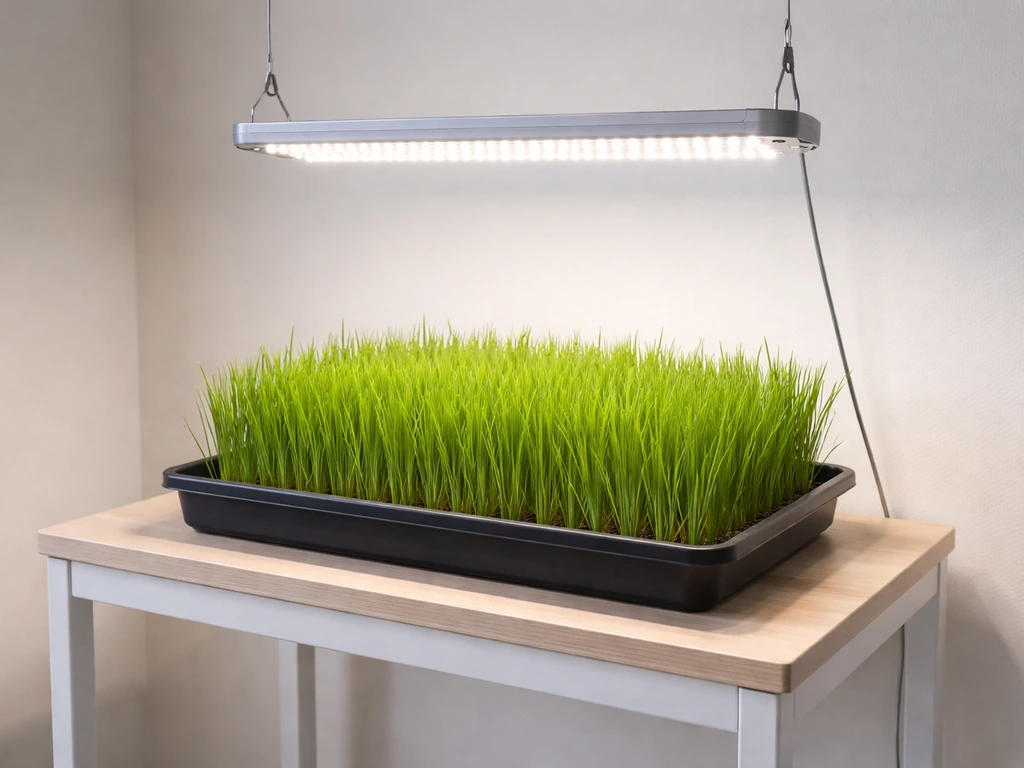
For a true indoor room, you need full-spectrum LED grow lights, not a standard incandescent or weak fluorescent bulb. Mount them 6 to 12 inches above the grass surface and run them 14 to 16 hours per day to simulate a reasonable outdoor day. Broad-spectrum LEDs labeled for 'vegetative growth' work well and run far cooler than older fluorescent setups. If you're growing a small tray, a single good-quality LED panel rated around 45 to 65 watts is enough. Scaling up to a larger flat? You'll need multiple panels and possibly a timer to automate the cycle. Reddit's lawn-growing community consistently reports that single underpowered grow lights are the number-one reason indoor grass attempts fail, so don't cheap out here.
Your best low-light grass options
If your natural light situation is limited, species selection matters enormously. Fine fescues (creeping red fescue, chewings fescue, hard fescue) are the most shade-tolerant cool-season grasses available and your best bet indoors. Penn State Extension also notes that fine fescues are among the most shade-tolerant turf options, and recommends [reducing competition and ensuring adequate soil drainage](https://extension. psu.
edu/growing-turf-under-shaded-conditions) for best performance. Tall fescue is a solid second choice with good shade tolerance. Kentucky bluegrass, despite being many people's default, is the least shade-tolerant of the cool-season grasses and the hardest to make work in low-light indoor conditions. Perennial ryegrass falls in a similar tough spot.
If you're working with limited grow-light capacity or a room that gets indirect window light only, stick with fine fescues.
Soil, Substrate, and Drainage in Containers
This is where most indoor grass attempts silently die. People grab a shallow tray, dump in potting mix, sow seed, water heavily, and then wonder why nothing germinates or why it rots. Indoor containers have no drainage buffer the way outdoor lawns do, so you need to build drainage intentionally.
What to use as your growing medium
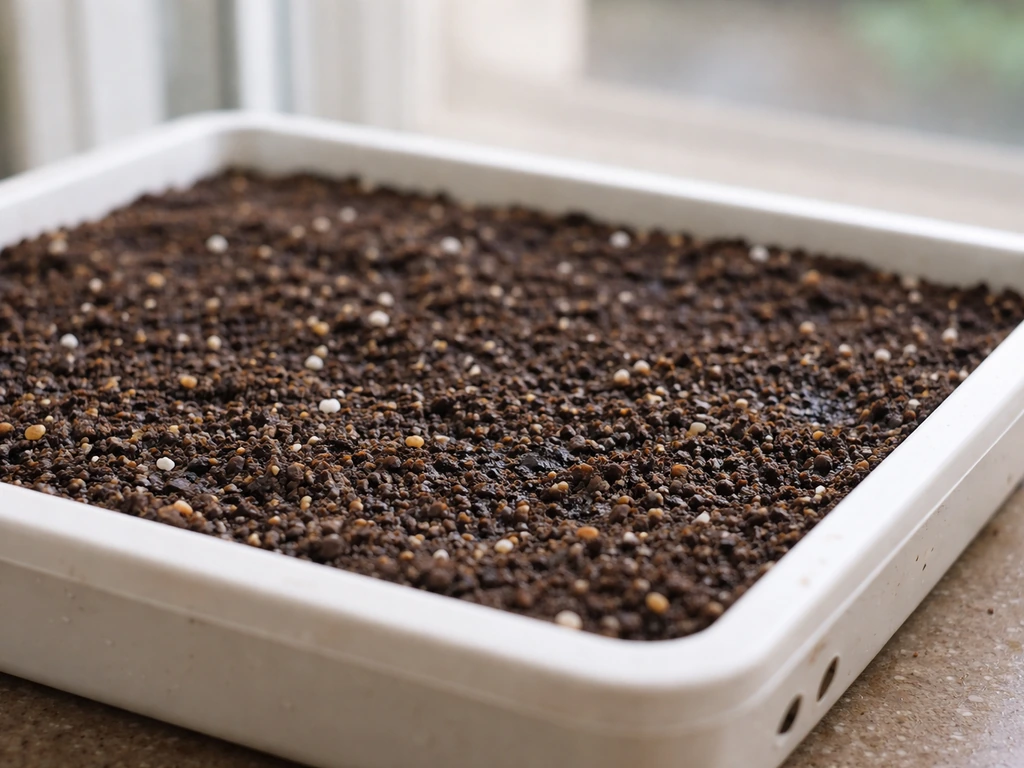
A standard all-purpose potting mix tends to hold too much moisture for grass roots, especially in a sealed tray. The best approach is a blend: roughly 70% quality potting mix or fine-textured topsoil and 30% coarse sand or perlite to open up the structure and improve drainage. This mirrors the sand-heavy mixes used on golf course greens and keeps oxygen available to germinating seeds, which matters because water-saturated media that choke out oxygen will stop germination cold. Avoid heavy garden soil on its own indoors because it compacts quickly in containers and turns into a brick.
Container setup and drainage rules
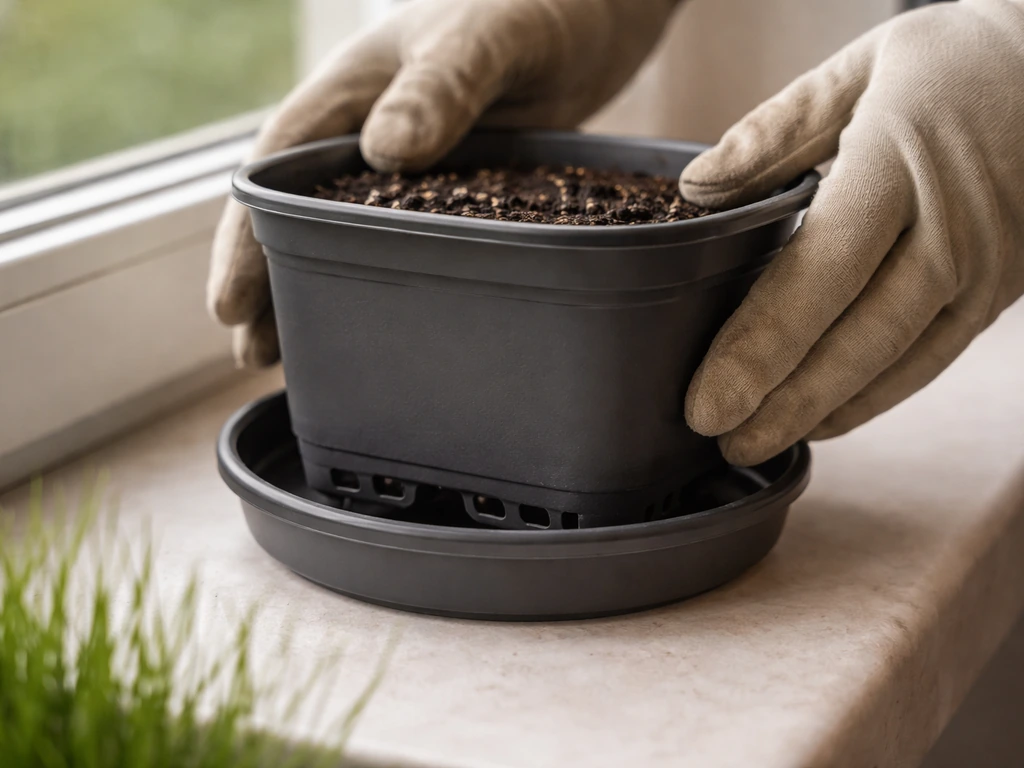
Whatever you're growing in, it needs drainage holes. This is non-negotiable. A tray without drainage will pool water at the root zone, causing root rot before your seedlings even get established. Use a saucer underneath to catch runoff, but empty it within an hour of watering so roots aren't sitting in standing water.
Aim for at least 3 to 4 inches of growing medium depth, which gives grass roots enough room to anchor and access moisture without waterlogging the surface. If you want to try a hydroponic approach, fine-textured grasses like micro ryegrass or wheatgrass work better than traditional lawn species in water-based systems, as most lawn grasses are designed for soil.
If you’re thinking about growing grass in water directly, the hydroponic setup is the closest indoor-style path, although traditional lawn grasses often struggle in water-based systems hydroponic approach.
Temperature, Humidity, Watering, and Airflow
Indoor environments can actually work in your favor for temperature, since most homes stay in the 65 to 75°F range year-round, which falls within the germination sweet spot for cool-season grasses. Kentucky bluegrass, for example, germinates optimally between 59 and 86°F and produces its best root growth when soil temperatures are around 50 to 65°F. Most indoor rooms stay comfortably within that germination window, which is one genuine advantage of growing grass inside.
Humidity: the hidden killer
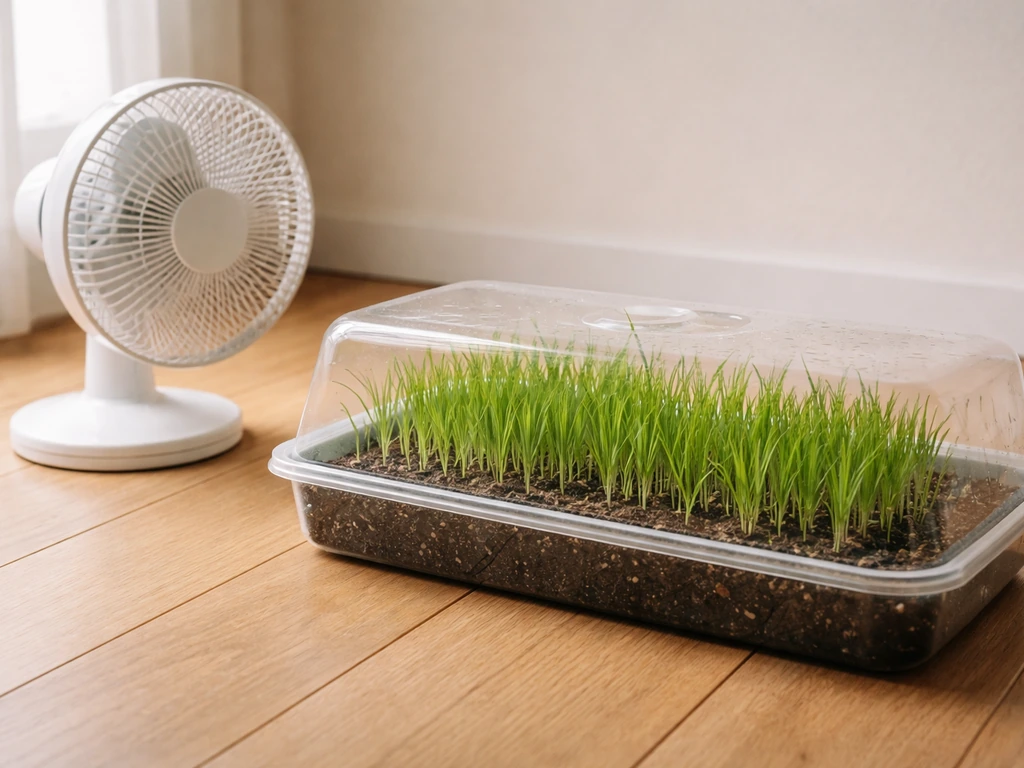
High humidity combined with damp soil is the fast lane to damping-off fungus and mold, both of which will wipe out a tray of seedlings in days. The EPA recommends keeping indoor relative humidity below 60%, ideally between 30% and 50%, to prevent moisture-related problems. For grass growing in containers, staying on the lower end of that range (40 to 50% RH) is ideal. If your home runs humid, a small dehumidifier near your growing area makes a real difference. Overcrowded seeding also traps moisture around young seedlings and raises the risk of damping-off, so resist the urge to seed too thickly.
Airflow and the fan trick
Place a small fan on a low setting nearby, angled to create gentle air movement across the surface of your grass tray. This lowers humidity at the soil surface, reduces fungal risk, and actually strengthens grass stems by simulating outdoor breeze. If you are wondering whether grass grows sideways, the answer depends on light and growth conditions as well as how the blades spread over time does grass grow sideways. Just don't aim a strong direct blast at young seedlings, as that can stress or dry them out too fast. Gentle, indirect circulation is what you're after.
Watering rhythm indoors
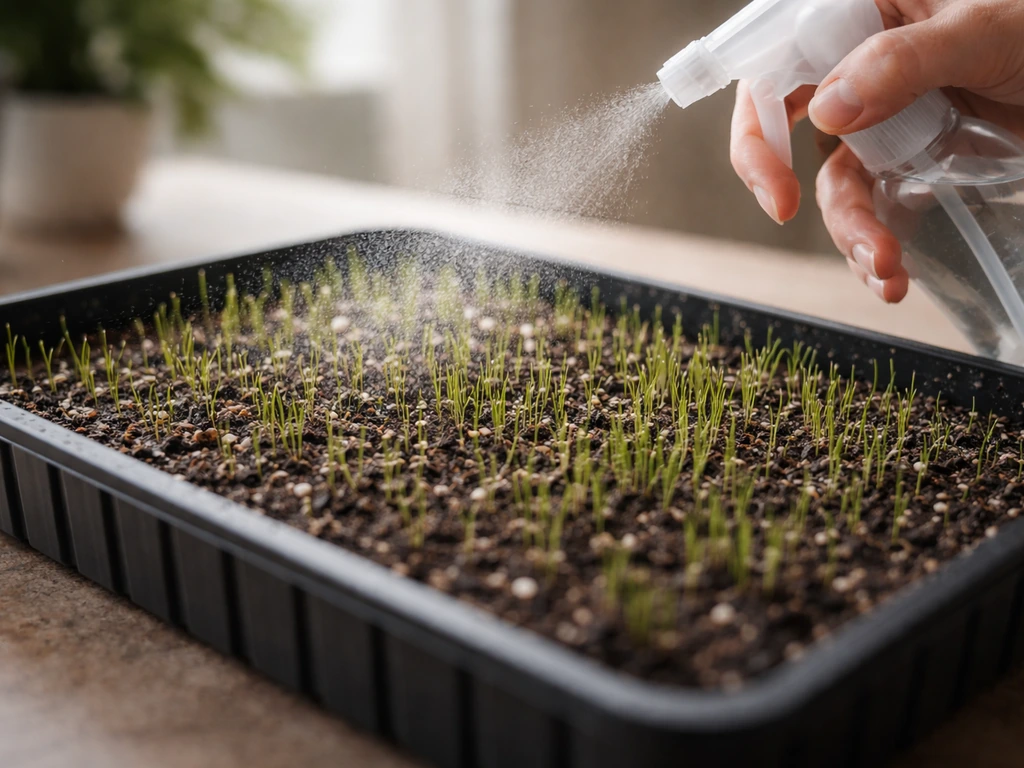
During germination, the goal is to keep the top inch of your growing medium consistently moist, not wet. A light misting two to three times a day usually achieves this in indoor conditions where evaporation is slower than outdoors. Once seedlings reach about 1 to 2 inches tall (typically around week two or three), shift to less frequent but slightly deeper watering. Letting the top of the medium dry slightly between waterings at this stage helps roots grow downward searching for moisture, which builds a stronger plant.
Choosing the Right Grass (or a Better Alternative)
Not every grass species is worth attempting indoors, and for some situations, an alternative ground cover is a smarter call than fighting grass's sun requirements.
| Option | Light Needed | Indoor Viability | Best For |
|---|---|---|---|
| Fine fescue (creeping red, chewings, hard) | Low to moderate | Best choice for low-light indoor setups | Trays, planters, enclosed balconies |
| Tall fescue | Moderate | Good with grow lights or bright sunroom | Larger containers, sunrooms |
| Kentucky bluegrass | High | Difficult indoors, needs strong grow lights | Best avoided for true low-light rooms |
| Perennial ryegrass | Moderate to high | Tricky indoors, similar to KBG challenges | Better outdoors |
| Moss (sheet or cushion moss) | Very low | Excellent for dim rooms with indirect light | Decorative indoor ground cover |
| Micro/cat grass (wheatgrass, oat grass) | Moderate | Very easy indoors, fast-growing | Windowsill trays, pet grass, quick results |
If your space genuinely can't support enough light for fine fescue even with a grow light, consider moss as a true turf-alternative. Sheet moss or cushion moss thrives in low light, handles indoor humidity well, and produces a dense, carpet-like green surface that reads visually like a lawn. It won't handle foot traffic, but for decorative indoor setups it outperforms struggling grass every time.
Similarly, wheatgrass or oat grass (often sold as 'cat grass') is fast-germinating, low-maintenance indoors, and gives you that lush green patch look within a week. It's not a lawn grass, but it photographs well and is basically foolproof. The article on growing grass in a terrarium covers some of these alternative approaches in more detail for confined decorative setups.
If you want to try a small, contained decorative setup like a terrarium, the same approach to light and drainage applies to growing grass in a terrarium grow grass in a terrarium.
How to Set Up Your Indoor Grass Today
Here's the actual step-by-step process to go from nothing to a germinating tray of grass, starting today. This is built around a container or tray setup since that's the most practical approach for true indoor growing. If you’re thinking about whether can grass grow upside down, the same core requirements still apply, especially light, drainage, and airflow.
What you need to buy or gather
- A tray or shallow planter at least 3 to 4 inches deep with drainage holes (a standard nursery flat or window box works well)
- Quality potting mix or fine topsoil (enough to fill to within half an inch of the top)
- Coarse sand or horticultural perlite (mix in at about 30% of total volume)
- Fine fescue seed (look for a label showing good germination percentage, ideally 85% or higher)
- A full-spectrum LED grow light (40 to 65 watts for a standard tray, more for larger areas)
- A light timer set to run 14 to 16 hours per day
- A small oscillating or table fan
- A spray bottle or fine-mist watering can
- A saucer to catch drainage
Planting steps
- Mix your potting medium: combine 70% potting mix with 30% coarse sand or perlite until evenly blended.
- Fill your tray to about half an inch from the rim and lightly firm the surface so it's level, not packed.
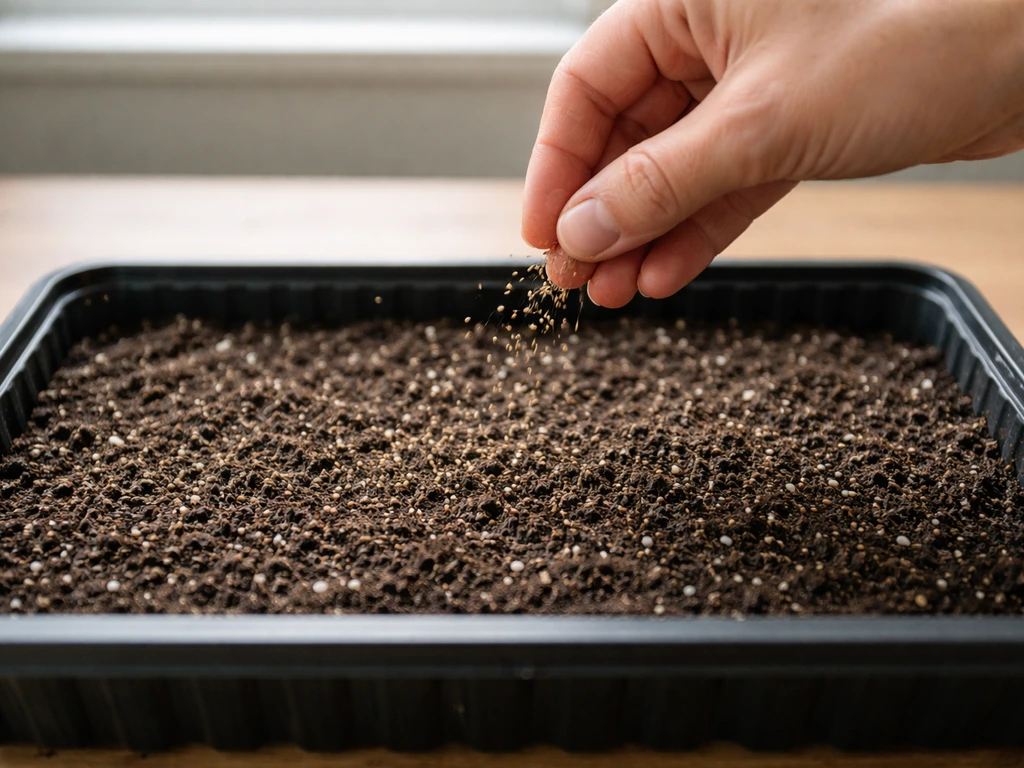
- Scatter seed evenly across the surface at the rate listed on the package. Don't pile it on; thin, even coverage reduces damping-off risk.
- Cover the seed with about 1/8 to 1/4 inch of your growing medium, lightly pressed down. This is the target depth for most turf grasses.
- Mist the surface thoroughly with your spray bottle until the top inch is evenly moist, not dripping.
- Position your grow light 6 to 10 inches above the tray and set the timer for a 14- to 16-hour daily cycle.
- Set up your fan nearby on the lowest setting, aimed to create gentle circulation without blasting the tray directly.
- Place the tray where room temperature stays between 65 and 75°F, away from heating vents or cold drafts.
What to expect week by week
| Week | What's Happening | Your Job |
|---|---|---|
| Week 1 | Seeds absorbing moisture, beginning germination. No visible growth yet for most species. | Mist 2 to 3 times daily to keep top inch moist. Don't disturb the surface. |
| Week 2 | First sprouts emerging, thin green blades visible. Fine fescue typically germinates in 7 to 14 days at 65 to 70°F. | Continue misting. Watch for any mold or damping-off patches. Increase fan airflow if humidity feels high. |
| Week 3 | Seedlings reaching 1 to 2 inches. Coverage filling in. | Shift from misting to light watering. Let the top of the medium dry slightly between waterings. |
| Week 4 and beyond | Grass filling in and establishing. May need first light trim if it exceeds 3 inches. | Water every 2 to 3 days depending on how fast the medium dries. Trim with scissors if needed to encourage density. |
Why Indoor Grass Fails (and How to Fix It Fast)
Most indoor grass problems trace back to just a few root causes. Here's how to identify what's going wrong and correct it without starting over.
Seeds aren't germinating after 10 to 14 days
The most likely culprits are: medium too wet (oxygen-starved seeds won't germinate), temperature too low, or old seed with poor viability. Check that you're not seeing standing water or muddy patches. If the medium smells musty, you've probably got anaerobic conditions at root level. Let it dry slightly, improve drainage, and re-mist rather than pouring water on. If temperature in your room dips below 60°F overnight, move the tray somewhere warmer. If seed has been sitting around for more than a year, buy fresh and check the germination percentage on the label.
Grass is thin, pale, or yellowing
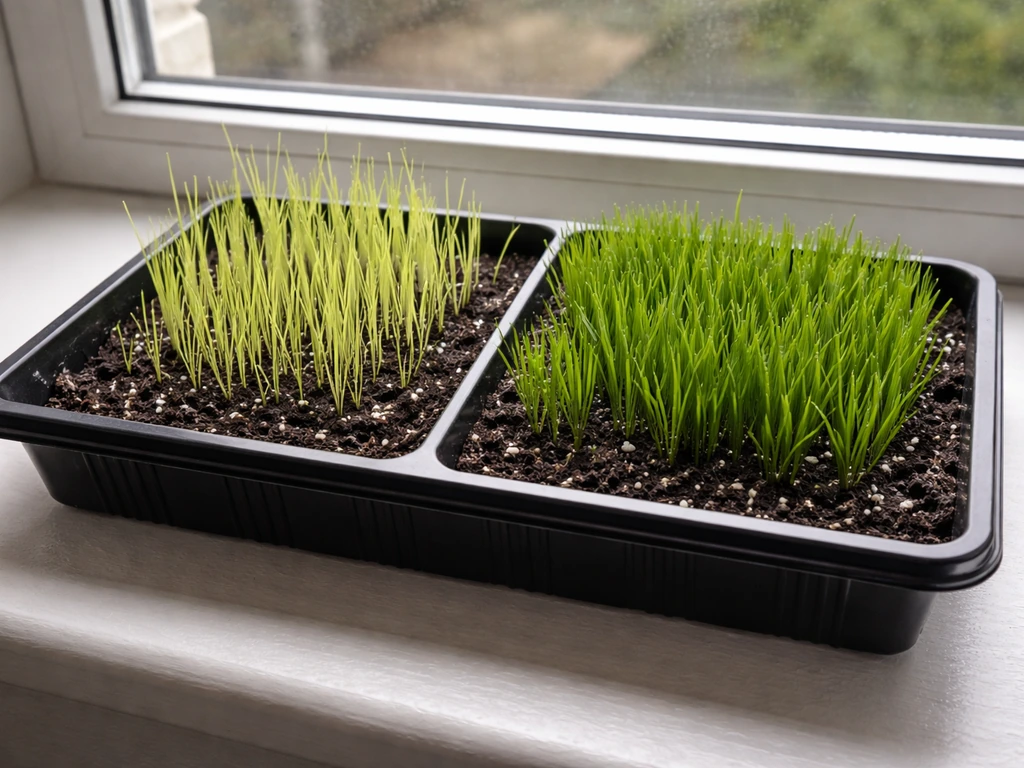
This almost always means not enough light. Pale yellow-green grass is etiolated (stretching for light) and won't recover without more intensity. Move your grow light closer (down to 4 to 6 inches above the canopy), extend the light cycle to 16 hours, or add a second grow panel. If you're relying on a window and nothing else, add supplemental lighting. Yellowing can also mean nutrient deficiency after several weeks, in which case a diluted liquid fertilizer (half the recommended dose) applied once every two weeks can help.
Mold or damping-off (seedlings collapsing at the base)
Damping-off is a fungal disease that collapses seedling stems at the soil line, and it spreads fast in humid, wet, crowded conditions. If you see it, act immediately: increase fan airflow, let the medium surface dry more between waterings, and thin out any overcrowded patches by snipping (not pulling) affected seedlings with clean scissors. Avoid rewatering until the surface is genuinely dry to the touch. In serious cases, a light dusting of cinnamon (a natural antifungal) on the surface has worked for me as a low-chemical first response.
Grass drying out too fast
If your medium is drying out within hours of misting, your grow light or room air is too warm, or the tray is too shallow. Increase medium depth if possible, move the light up a few inches to reduce heat output at the surface, or cover the tray loosely with clear plastic wrap for the first 5 to 7 days to retain moisture during germination (remove it once sprouts appear to restore airflow).
Washout: seed floating or pooling in corners
This happens when people water too hard on an unseeded or newly seeded tray. Switch to a fine-mist spray bottle or a watering can with a rose head, and water gently at the edges rather than directly over the seed bed. If seed has already shifted, gently redistribute while the surface is moist and add a thin additional layer of medium over any bare spots.
Pests indoors
Fungus gnats are the most common indoor grass pest, and they thrive in consistently moist soil. Letting the top of the medium dry between waterings disrupts their life cycle more than any spray. Yellow sticky traps placed near the tray will catch adults. Avoid overwatering and your gnat problem will largely solve itself within a couple of weeks.
FAQ
Can grass grow inside using only a windowsill, without grow lights?
You can, but only if you can match outdoor-style light intensity. In practice, a single tray on a sunny windowsill often fails unless the window gets strong direct sun for most of the day, and even then you may need a timer and supplemental LED to prevent midday dips in light.
What’s the lowest-light indoor setup where grass is still realistic?
Most lawn-style grasses need more daily light than most homes provide, even in bright rooms. If you want a low-light option, fine fescues are usually the best bet, but they still need steady light, not just occasional bright sun.
Is it possible to grow lawn grass inside in water or a water-only setup?
Yes, but you must still control oxygen and surface humidity. Use a well-aerated system (or trays with strong drainage), avoid stagnant water at the roots, and expect traditional lawn grasses to struggle unless the system is specifically designed for that species.
Should I water indoor grass from the bottom to prevent mold?
Watering from below can help prevent fungus, but it does not replace the need for drainage or correct soil mix. Ensure the tray can drain fully afterward, and never leave the pot sitting in a water reservoir for extended periods.
How much seed should I use for an indoor tray so it doesn’t mold or damp-off?
Too much seed density creates a humid pocket at the soil surface and can lead to damping-off. A practical approach is to seed lightly, then thin or re-sow bare spots later rather than trying to get instant full coverage.
If my indoor light is borderline, which grass type is the safest choice?
Switch to fine fescues if your goal is a dense carpet with minimal light. Kentucky bluegrass can work, but it is more likely to stretch and thin indoors if your light measurements are below what it needs for a strong DLI.
My indoor grass is turning pale and leggy, what should I do first?
If blades look pale, thin, or overly tall, you likely have light deficiency. Increase intensity by moving the light closer, extend the photoperiod gradually up to the article’s suggested range, and only adjust fertilizer after the plants have stabilized and you’ve ruled out overwatering.
How do I tell whether I’m watering too much versus too little indoors?
Don’t rely on “top surface looks dry” as your only cue. Stick a finger 1 to 2 inches down, if it’s cool and damp, delay watering, and if it’s dry and light, water gently. Consistent top-inch moisture is key mainly during germination.
Can I use a fan to prevent fungus, and how close should it be?
Yes, but use short, indirect airflow. A strong blast can dry the surface too fast, and a fan that’s too close can stress seedlings. Aim for gentle circulation that keeps the tray from staying wet and closed-in.
If nothing germinates indoors, what are the first troubleshooting checks?
If seedlings fail to emerge, check three things in order: seed age and labeled germination rate, soil temperature (night drops below about 60°F slow germination), and whether the medium is oxygen-starved from being too wet. Correcting one of these without the others often still leaves you with poor results.
Can I patch bare spots indoors instead of starting over?
If you want to cover bare spots later, do it when existing seedlings are about 1 to 2 inches tall. Lightly rough the surface, add a thin additional layer of the same soil mix, and mist gently so the new seeds stay moist without soaking.
If I use cinnamon to prevent damping-off, what else must I change?
Cinnamon may reduce surface fungus, but it won’t fix the root causes (too-wet medium, poor drainage, lack of airflow, overcrowding). If damping-off keeps recurring, thin seedlings, improve drainage/media, and adjust humidity before repeating any antifungal dusting.
Next Articles
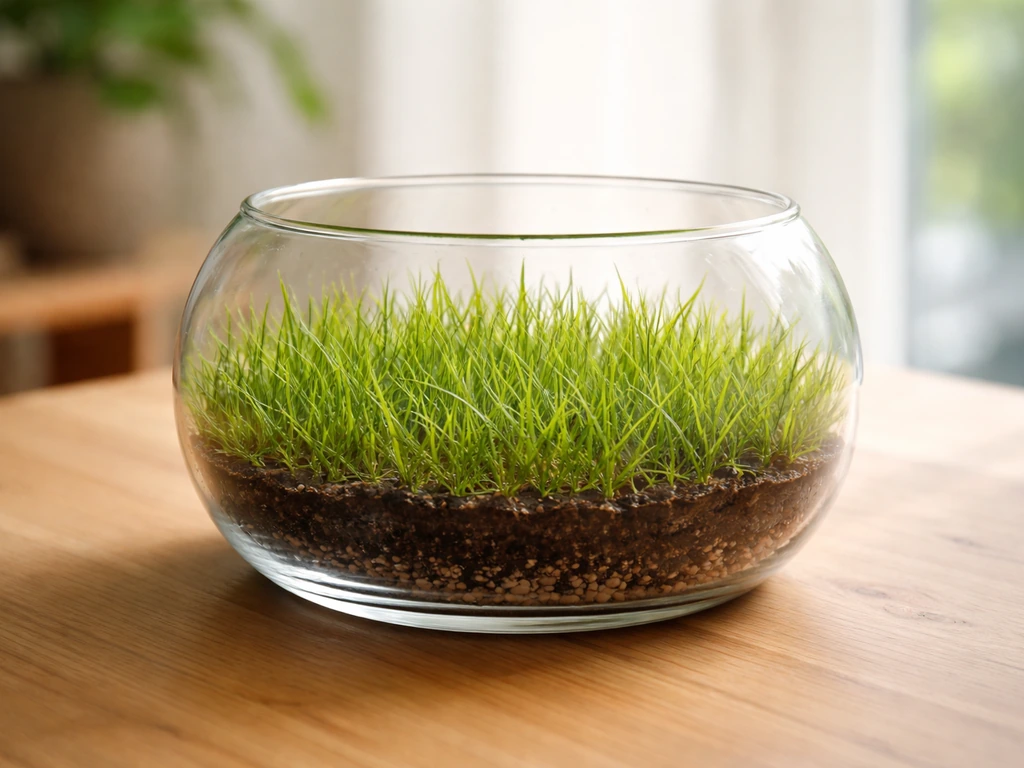
Can You Grow Grass in a Terrarium? Setup Guide
Yes, but only with the right light, soil, drainage, and airflow. Learn step-by-step setup and fixes for terrarium grass.
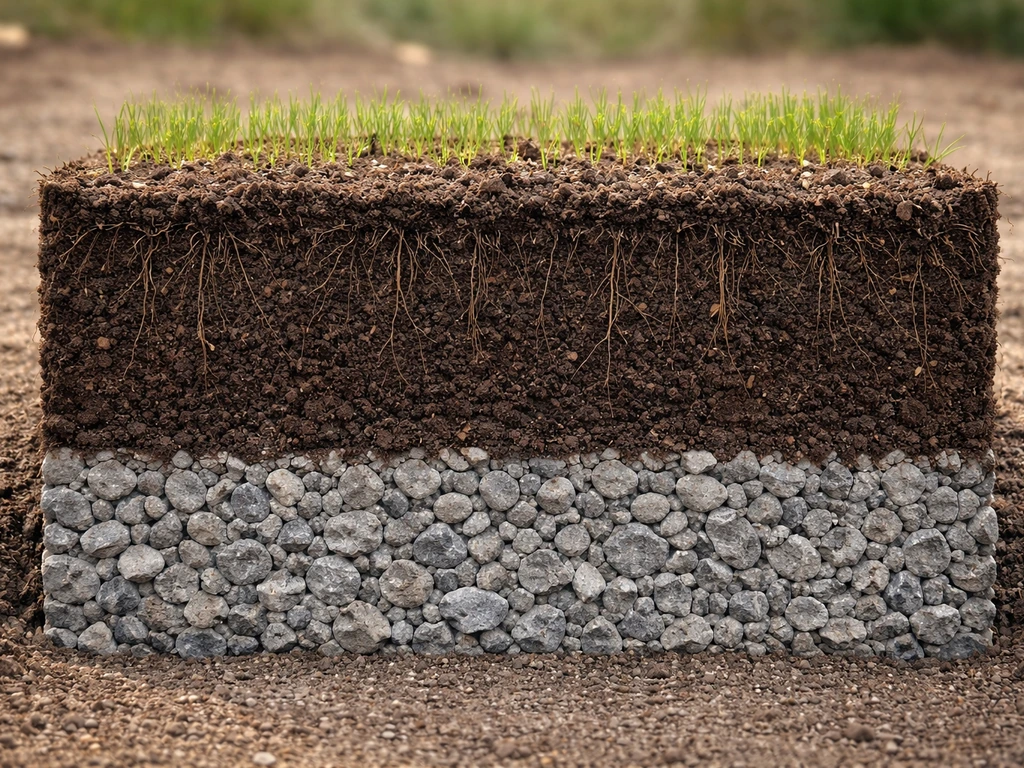
Can You Grow Grass Over Gravel? How to Do It Right
Learn when you can grow grass over gravel and follow a step-by-step method for soil depth, drainage, seeding or sod, and
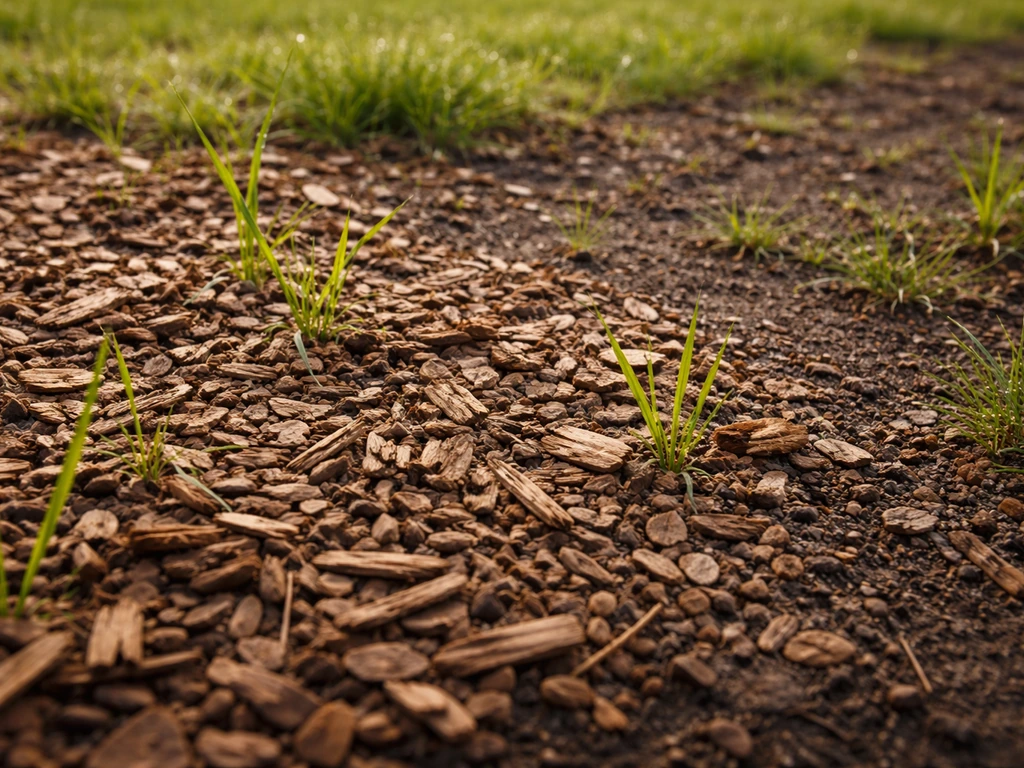
Do Wood Chips Help Grass Grow? When They Work and When Not
Learn when wood chips help grass grow, when they steal nitrogen, and step-by-step how much to apply and seed options.