
Grass fails in the same spots year after year because something at that specific location is working against it, and reseeding without fixing the underlying cause just wastes seed and your time. The real fix starts with reading the pattern: is the bare area circular, irregular, shaded, near a tree, or always wet after rain? Each of those clues points to a different culprit, and once you know what you're actually dealing with, the solution is usually straightforward.
Spots Where Grass Won’t Grow: Diagnose and Fix Fast
Marcus Volkmann
7 Jul 2026
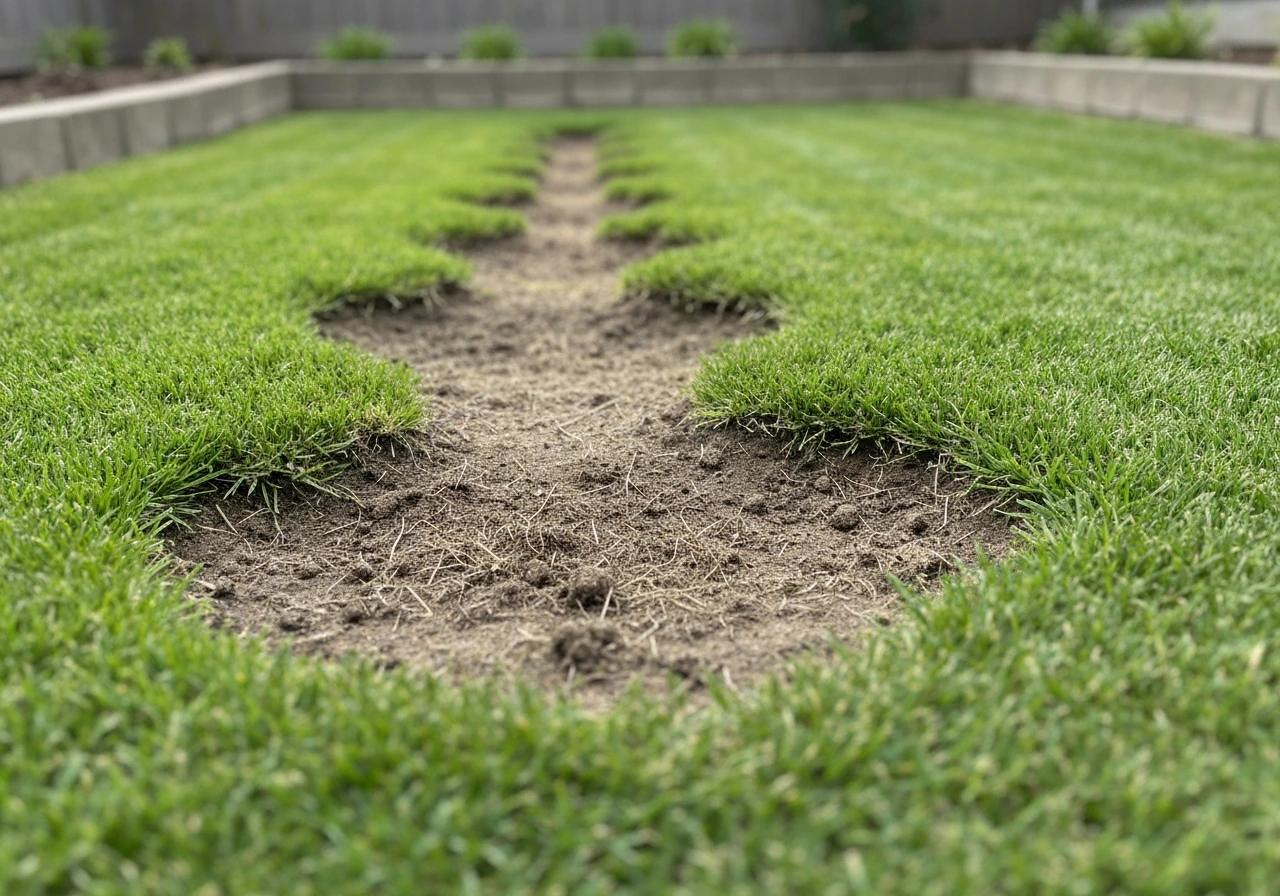
Fast diagnosis: what the spot's shape and location tell you
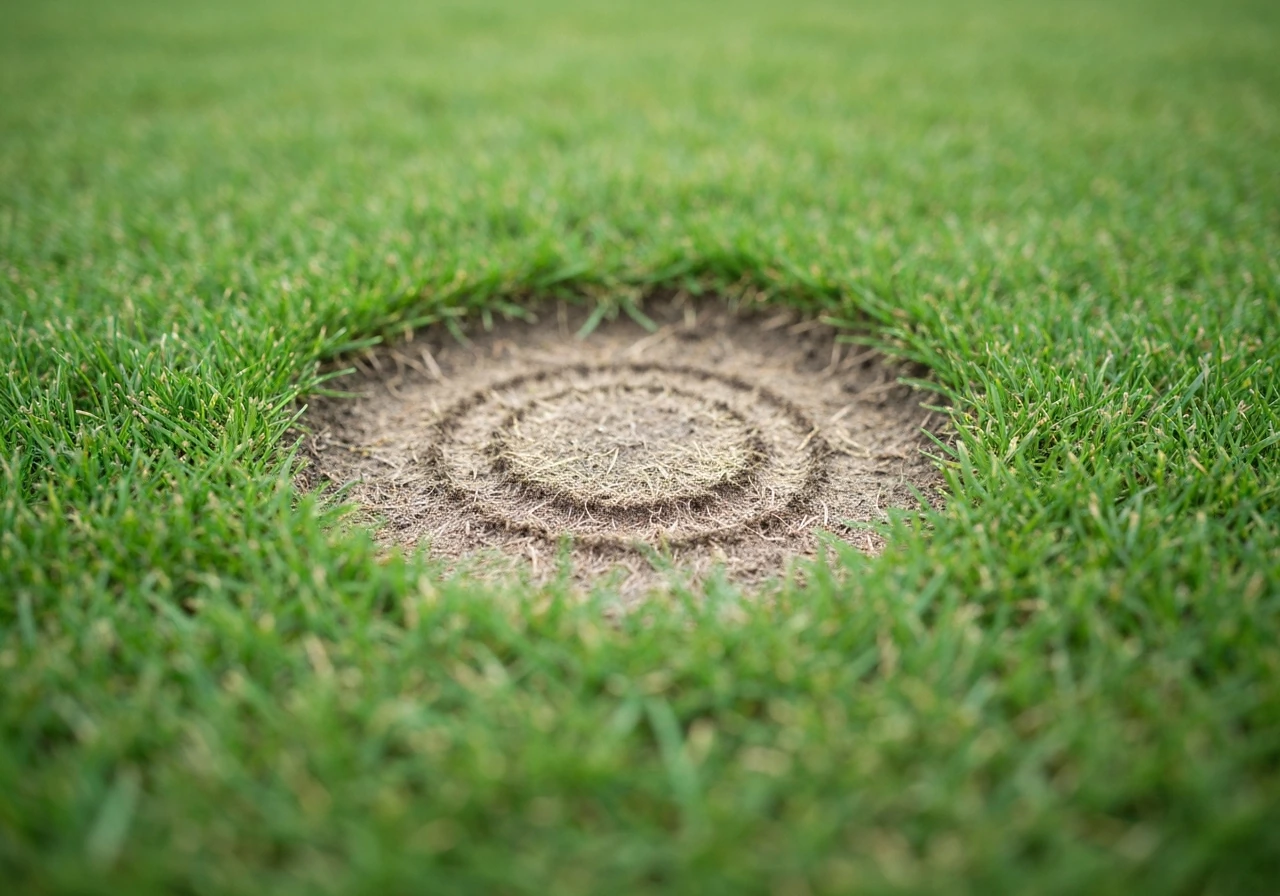
Before you buy anything or dig anything up, spend five minutes looking at the pattern. The shape, size, and placement of a dead or bare spot carries a lot of diagnostic information. A rough circle or partial ring, especially one that moves outward over time, is often a fairy ring caused by soil fungi feeding on buried organic matter like an old stump or decomposed roots. These rings can reach 15 feet or more in diameter and sometimes show a dark green stimulated zone on the outside edge while the center goes thin or brown from drought stress caused by the fungus making the soil temporarily hydrophobic. Smaller sunken circular patches that turn straw-colored are more likely dollar spot disease, sometimes visible with white cottony mycelium early in the morning when dew is still on the lawn. A roughly circular area of light brown thinning grass that sometimes shows a doughnut shape with the center recovering is a classic sign of brown patch or large patch fungal disease, which thrives in cool, wet conditions and is often worsened by too much nitrogen applied in fall or spring.
Beyond circular patterns, look at placement. Spots that line up with a buried object, old construction debris, or a filled-in trench tend to be irregular and elongated. Spots directly under or near tree canopies point to shade and root competition. Spots near downspouts, at the base of slopes, or in low areas suggest drainage problems. Spots along driveways, curbs, or south-facing walls lean toward heat and salt damage. Running through this quick mental checklist before anything else saves a lot of guesswork.
- Circle or ring pattern: fungal activity (fairy ring, dollar spot, brown/large patch)
- Irregular patch near construction or old landscaping: buried debris, rubble, or thin topsoil
- Bare area under or near tree: shade, root competition, or allelopathic chemicals (black walnut, for example)
- Wet, soggy, or slow-draining spot: drainage problem or high clay content
- Dry pocket despite irrigation: compaction, hydrophobic soil, or irrigation head gap
- Strip along pavement or curb: heat, salt, or reflected light stress
- Thin turf in consistent rectangular or arced patterns: irrigation coverage gaps
Light and exposure: shade, sun, and microclimates that kill grass
Most cool-season grasses need at least four to six hours of direct sun daily, and warm-season grasses generally want even more. If a spot gets heavy shade from a tree canopy, a fence, a building, or an overhang for most of the day, the grass there isn't failing because of poor care. It's failing because it's the wrong plant for the conditions. This is one of the most honest things I can tell you: some spots genuinely can't support standard turf, and repeating the same seed in the same dark corner every fall will keep producing the same disappointing results.
Microclimates also matter more than most people realize. A south-facing slope gets intense reflected heat in summer that can cook shallow-rooted grass during drought. A low spot between two structures might stay cool and damp well into spring, making it susceptible to fungal disease. A narrow strip between a driveway and a fence can create a heat tunnel that desiccates turf even when the rest of the lawn looks fine. Walk around the problem area at different times of day and note when and how long it gets direct sun, whether it gets reflected heat from a hard surface, and whether it has any airflow. That observation takes ten minutes and eliminates a lot of wrong assumptions.
Soil and substrate problems: compaction, depth, sand, and buried surprises
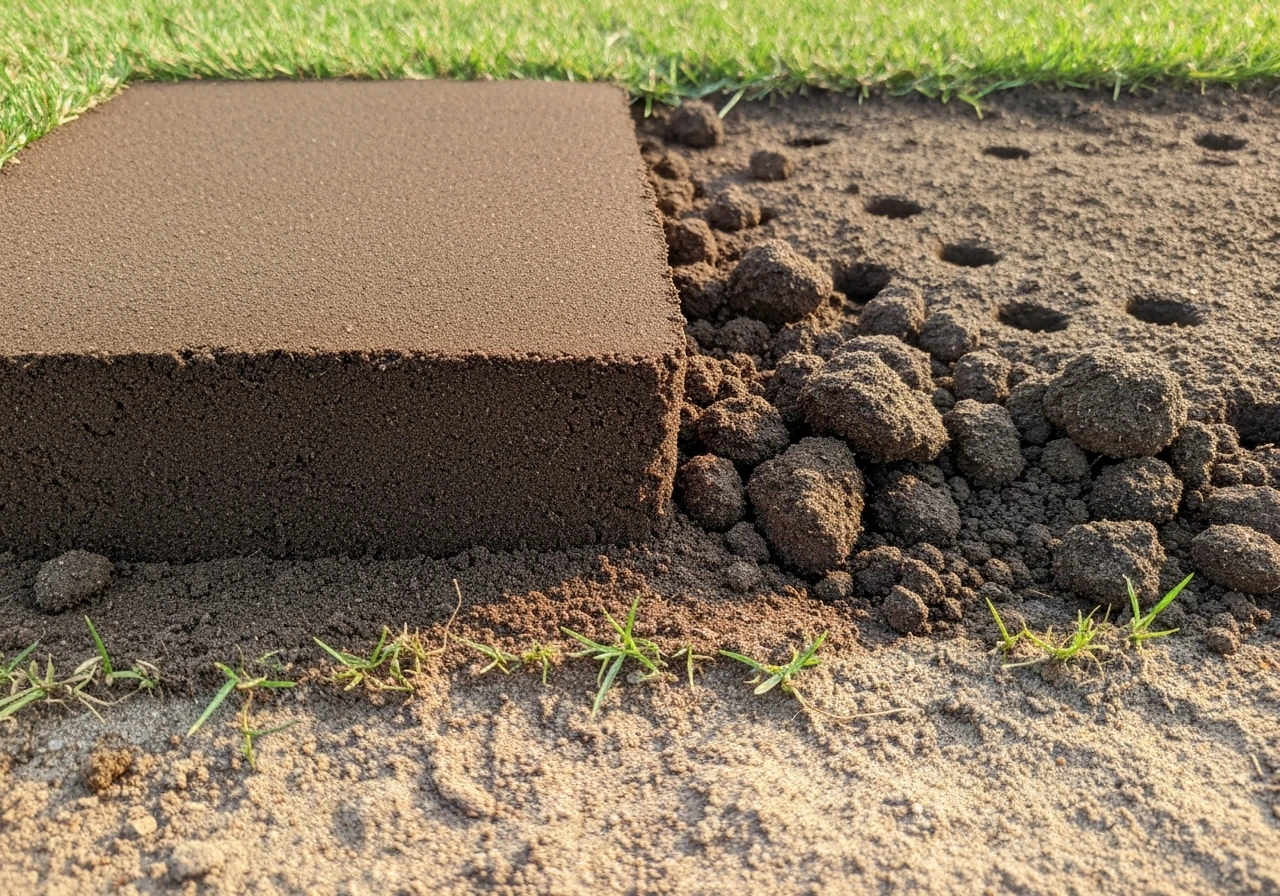
Bad soil is probably the most common reason a specific spot stays bare while the rest of the lawn does fine. Compacted soil has so little pore space that roots can't penetrate, water can't drain, and oxygen can't reach the root zone. You can test for compaction with a simple screwdriver: push a standard screwdriver into moist soil with hand pressure. If it won't go in six inches easily, the soil is compacted. Areas that get heavy foot traffic, are parked on occasionally, or were graded with heavy equipment during construction are prime candidates.
Thin or missing topsoil is another big one, especially in newer construction. Builders often scrape topsoil during grading and either don't replace it adequately or replace it unevenly. In those spots you might be working with two inches of topsoil over clay or fill material, which isn't enough for a healthy root system. Dig a small hole four to six inches deep and look at the soil profile. Good topsoil is dark, crumbly, and has visible organic matter. Pale, dense, or gritty material right below the surface is a red flag.
Sandy substrates are the opposite problem: water and nutrients drain through so fast that grass struggles to get established even when you water regularly. If you grab a handful of moist soil from that spot and it falls apart instead of holding a loose shape, you're dealing with very sandy soil that needs organic matter added before seed will take. Buried construction debris like concrete chunks, gravel fill, lumber scraps, and old asphalt can also create isolated dead zones. These spots often show up as irregular shapes a few feet across. Dig down a foot in the center of a persistent bare spot, and don't be surprised by what you find.
Water and drainage: wet spots, dry pockets, and irrigation blind spots
Water problems kill grass in two completely opposite ways, which is why drainage and irrigation issues are worth looking at together. If you keep seeing patches in lawn where grass won't grow, start by checking whether the issue is drainage related or just a timing mistake before you reseed. Chronically wet or waterlogged spots suffocate roots by displacing oxygen from the soil. If a spot stays wet for more than a day or two after a normal rain, or if you can see standing water, the turf there is dealing with poor drainage, a high water table, or hardpan clay just below the surface. These spots are also where large patch and other fungal diseases concentrate, because the cool, wet conditions are ideal for pathogens.
On the other end, dry pockets form where irrigation heads don't reach evenly, where compaction or thatch is preventing water from penetrating, or where soil has become hydrophobic after a fungal infection (this happens with fairy rings). Do a simple can test: place several tuna cans around your lawn including in the problem area, run your irrigation for a normal cycle, and measure how much water collected in each can. Gaps of more than a quarter inch between the problem spot and the rest of the lawn confirm an irrigation coverage issue. Also check whether water beads up and runs off the bare spot instead of soaking in, which points to hydrophobic soil rather than a lack of water delivery.
Trees, roots, and hardscape: the hidden competition
Tree roots are aggressive, and they will absolutely outcompete turf for water and nutrients in a shared root zone. Large maples, oaks, beeches, and especially surface-rooting trees like silver maples and Norway maples create conditions where grass simply can't compete. The shade from the canopy compounds the problem. Some trees, most notably black walnut, also release allelopathic chemicals (juglone) that are directly toxic to many grass species. If the bare spot sits directly under or just outside a tree's drip line and the soil seems otherwise fine, root competition is almost certainly a major factor.
Hardscape features cause different but equally real problems. Asphalt driveways, dark-colored pavers, concrete retaining walls, and south-facing fences all absorb and radiate heat that can push soil temperatures near their edges well past what grass roots can tolerate in summer. Concrete and masonry also leach lime over time, raising the soil pH along adjacent areas to levels where grass struggles to access nutrients. Runoff from driveways and roads carries salt (from ice melt products), oil, and other contaminants that accumulate along edges and kill turf in strips that look inexplicably worse than the rest of the lawn. If the dead strip lines up exactly with a hard surface, that's your answer.
Nutrients, timing, and lawn care gaps that hit certain spots harder
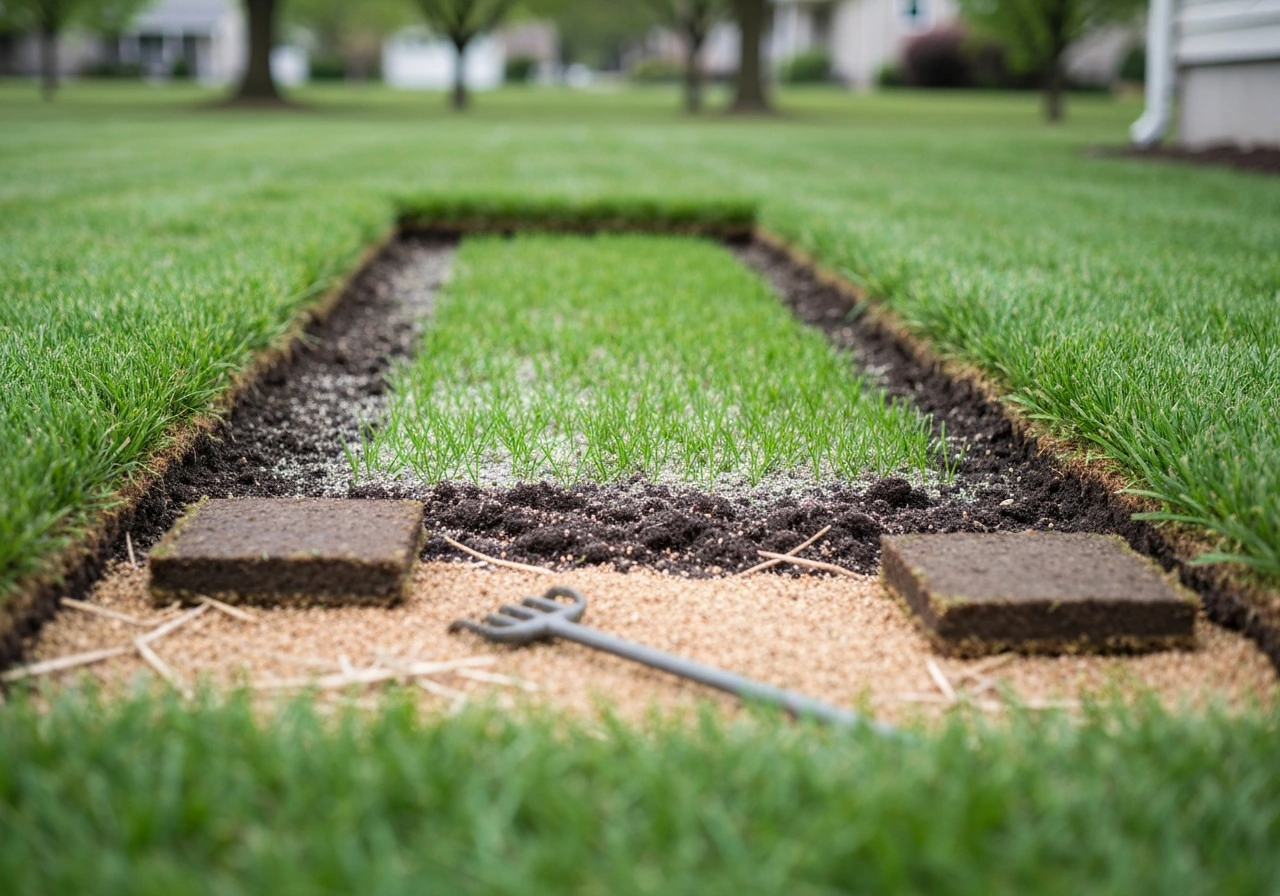
Nutrient deficiencies can look like many other problems, which is why a soil test is one of the highest-value, lowest-cost things you can do. Most county extension offices offer basic soil tests for under $20, and they'll tell you your pH, phosphorus, potassium, and often magnesium and calcium levels along with specific amendment recommendations. Grass in a specific spot might be struggling because the pH in that micro-area is off (common near concrete or where acidic mulch has built up), not because of shade or drainage. You won't know without testing.
Timing mistakes also create what looks like a permanent bare spot when it's really just a seeding or sod installation done at the wrong time. Cool-season grasses (fescue, bluegrass, ryegrass) seed best in late summer to early fall when soil temperatures are between 50 and 65 degrees Fahrenheit. Seeding in July almost guarantees failure in hot climates because seedlings can't survive the heat stress. Warm-season grasses (bermuda, zoysia, centipede) need warm soil above 65 degrees and are best seeded or sodded in late spring to early summer. If you've been throwing seed at a bare spot in April or August and nothing takes, timing may be the entire problem, not the spot itself.
Mowing and irrigation patterns also create localized damage that's easy to overlook. Scalping a slope or bump with mower blades repeatedly removes growing points and weakens turf in exactly the same spot every time. An irrigation head that's aimed slightly wrong, partially clogged, or set to a short arc creates a repeating dry patch in the same location cycle after cycle. These aren't mysterious causes, they're just easy to miss until you look at them directly.
Weeds, pests, and disease concentrated in patches
Sometimes the bare spot isn't where grass died first. It's where something else moved in and outcompeted the turf. Dense patches of crabgrass, nutsedge, or other aggressive weeds can crowd out lawn grass in specific areas where conditions favor the weed (thin turf, bare soil, moisture variations) and then leave a bare patch when the weed dies back seasonally. If you had a thick, weedy patch in summer that's now bare, you're looking at a weed exclusion problem, not a grass-growing problem.
Soil pests like grubs (the larval stage of Japanese beetles and other beetles) feed on grass roots right at the soil surface. The turf in a grub-damaged area will feel spongy and lift like a loose rug because the roots are gone. Pull back a corner of the weak turf and check for white C-shaped grubs in the top two inches of soil. More than five per square foot is considered a damaging population worth treating before reseeding. Chinch bugs, billbugs, and sod webworms cause similar damage in warm-season lawns, often in sunny, dry, stressed areas first.
Fungal diseases are worth distinguishing from each other because the management is different. Dollar spot produces small, sunken, straw-colored circles often with white cottony mycelium visible in the morning. Brown patch and large patch produce larger circular thin areas, sometimes with a doughnut shape as the center recovers, and are strongly associated with excessive nitrogen, overwatering, poor drainage, and excessive thatch. Gray leaf spot produces lesions that can resemble other diseases but produces a gray mold rather than the cottony mycelium of some other fungal patches. Getting the disease right matters because fungicide selection, cultural fixes (nitrogen reduction, drainage improvement), and recovery timing all differ.
Fix plan: matched to the cause, not a generic patch job
Once you've identified what's actually driving the problem, the fix becomes much more targeted. Here's how to match the solution to the cause you diagnosed.
Compaction and poor soil depth
Core aerate the problem area (and ideally the whole lawn) to break up compaction, then top-dress with a half-inch layer of compost worked into the aeration holes. For spots with less than four inches of decent topsoil, you'll need to import topsoil and build the profile up before seeding. Don't try to seed into two inches of clay over fill material and expect results.
Sandy or nutrient-poor soil
Work in three to four inches of compost to a depth of six to eight inches before seeding. Sandy soil needs organic matter to hold both moisture and nutrients long enough for roots to use them. A single surface application won't cut it. You need to incorporate it. Repeat compost top-dressing each fall until the soil structure improves.
Drainage problems
Chronic wet spots may need French drain installation, regrading to redirect surface flow, or a dry creek bed as a functional and attractive alternative. For spots that are just slow to drain due to clay, core aeration plus gypite or coarse sand incorporated into the top several inches can help. Avoid the common mistake of adding fine sand to clay soil without also adding significant organic matter: the combination can create a cement-like texture.
Shade from trees or structures
If the spot gets fewer than four hours of direct sun, switch to the most shade-tolerant grass variety for your region (fine fescues are the best performers in shade for cool-season zones). If it gets fewer than two to three hours, grass almost certainly won't survive long-term regardless of variety. At that point, consider a shade-tolerant groundcover like pachysandra, liriope, hostas, or mulched beds. Limbing up trees to improve light penetration can help, but only if removing lower branches is realistic and won't harm the tree.
Tree root competition
You can try overseeding aggressively with shade-tolerant mixes and feeding more frequently to compensate for root competition, but under aggressive surface-rooting trees, you'll be fighting an uphill battle every season. Mulching the root zone around the tree out to the drip line is often the practical answer, both for the lawn and for the health of the tree. It's not giving up. It's making the right call for the site.
Buried debris and contaminated soil
Dig it out. There's no amendment that makes concrete rubble, old asphalt, or severely contaminated soil hospitable to turf. Once removed, backfill with quality topsoil to the right depth (at least four to six inches) and seed or sod after settling.
Nutrient and pH issues
Apply amendments based on your soil test results, not guesses. If pH is too high (common near concrete), sulfur applications will bring it down gradually. If it's too low (common under conifers or in acidic mulch areas), pelletized lime is your fix. Don't apply fertilizer to a nutrient-deficient spot without knowing the pH first: if the pH is off, the grass can't absorb the nutrients you're adding regardless of how much you put down.
Pests and disease
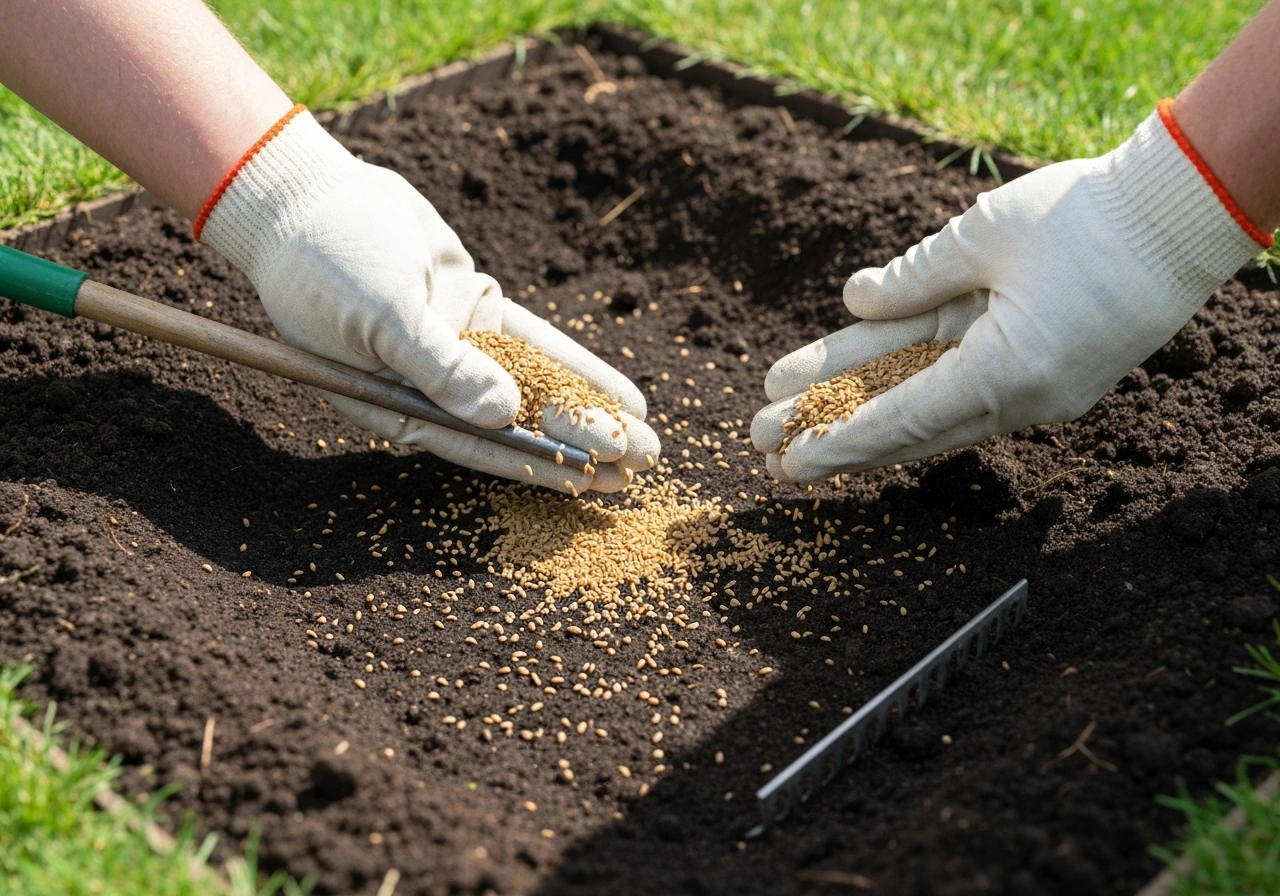
Treat the active infestation or disease before reseeding. Seeding over active grubs or an untreated fungal infection just wastes seed. For grubs, apply an appropriate grub control product in late spring to early summer when grubs are young and feeding near the surface. For fungal diseases, identify the specific pathogen if you can, then use cultural fixes first (reduce nitrogen, improve drainage, reduce irrigation frequency) and fungicide as a secondary tool where the infection is severe.
Reseeding or sodding after the fix
Once you've addressed the underlying cause, seed or sod at the right time for your grass type. Once you fix the underlying cause, you can give the area the right conditions so grass can grow back into the bare spots instead of failing again will grass grow into bare spots. For cool-season grasses, late August through September is the window. For warm-season grasses, late May through June. Seed-to-soil contact matters: rake the area lightly, press seed in with a lawn roller or the back of a rake, and keep the surface consistently moist until germination. Sod gives you faster establishment but needs the same soil preparation underneath to root properly.
When to stop fighting and choose an alternative
Some spots genuinely aren't suitable for turf, and recognizing that early saves money, frustration, and repeated failure. If a spot has fewer than three hours of sun, sits under a dense surface-rooting tree, stays saturated for extended periods, or has chronic salt or chemical contamination you can't remove, grass is not the right plant. Groundcovers, mulched beds, native plantings, gravel, or patio hardscape are all legitimate outcomes that result in a better-looking yard than dead turf you keep replacing. But if you truly need a grass-free surface, you might choose an approach that lets you enjoy the spot where grass won't grow, like a hardscape or gravel solution. This isn't defeatist. It's honest landscaping.
If you've worked through the diagnosis, fixed the underlying problem, and a single spot is still not filling in while the surrounding lawn is healthy, it may also be worth looking at whether the issue is isolated to that one area or if there's a broader pattern forming across the lawn. Spots where grass struggles to grow in one isolated location often have a very specific cause, while multiple patches developing across the lawn tend to point to a systemic issue like widespread compaction, a nutrient imbalance, or a spreading disease. Recognizing the difference shapes the next step considerably.
Realistic next steps starting today
- Walk the problem spot and note the shape, location, and pattern. Take a photo for reference.
- Do the screwdriver test for compaction and dig a small hole to check soil depth and profile.
- Check sun exposure at multiple times of day and measure or estimate hours of direct light.
- Do the can test on your irrigation system to identify coverage gaps.
- Order a soil test from your local extension office or a reputable mail-in lab.
- Look under the turf at the edge of the bare area for grubs or obvious root mat from nearby trees.
- Based on what you find, pick the matching fix from the section above before buying any seed.
- Seed or sod only after the underlying cause is addressed, during the correct seasonal window for your grass type.
- If the spot is under a dense tree canopy, near aggressive surface roots, or consistently waterlogged, plan for a non-turf alternative instead of another seeding attempt.
If you've done all of this and the spot still isn't recovering, that's when it makes sense to call a local extension agent or a certified turfgrass professional. A soil probe, a fungal culture test, or a professional irrigation audit can catch things that a homeowner visual check will miss. Most of the time though, the cause is findable without professional help if you work through the diagnosis systematically rather than jumping straight to seed and fertilizer.
FAQ
Can I just reseed over spots where grass won't grow and expect it to fill in?
Yes, but only after you fix the specific blocker. If the spot stays bare because of drainage failure, compaction, salt, or active grubs or fungi, seed will germinate poorly or die off quickly. In practice, wait to reseed until the problem is corrected and the soil surface is workable, then keep seed consistently moist until germination (or sod will root into the same hostile conditions).
Should I fertilize a bare spot to help grass fill in faster?
Avoid fertilizer “boosting” until you know the pH and whether the spot is shaded or waterlogged. If pH is off, grass cannot take up the nutrients you apply, so you risk extra nitrogen that can worsen some fungal problems and encourage weeds. Use a soil test, then apply amendments targeted to the results.
How can I tell if my bare spot failure is just bad planting timing?
Yes, timing can make a spot look permanently dead when it is not. If you seed or sod outside your grass type’s ideal window for soil temperatures, seedlings either fail to establish or are outcompeted immediately. As a rule of thumb, cool-season seeding is late summer to early fall, and warm-season establishment is late spring to early summer.
How do I diagnose an irrigation problem in spots where grass won't grow?
Look for irrigation coverage problems by checking not only “is it on,” but distribution. A dry strip repeating in the same direction often indicates an angle issue, a partially clogged nozzle, or heads set to too short of an arc. The can test helps, but also watch for drift, overspray onto hardscape, and whether water is running off the spot instead of soaking in.
What if the spot is wet, but grass still won’t grow?
Yes, a spot can be both too wet and not actually receiving enough usable water because runoff or ponding prevents infiltration. If the area stays wet more than a day or two after typical rain, treat it as drainage or soil structure (hardpan, compaction), not a simple watering schedule change. For quick triage, do an infiltration check (how fast water soaks in) before adding more irrigation.
Is it ever a bad idea to add sand or compost to fix a bare spot?
Mixing amendments incorrectly can worsen the problem. A common mistake is adding fine sand on top of clay without adding organic matter, which can create a cement-like texture that repels water and limits root penetration. If you are improving a wet, clay-heavy spot, incorporate organic matter and consider coarse materials only as your soil plan recommends.
When should I stop trying to grow grass and switch to groundcover or mulch?
Sometimes, but you need to match the plant to the micro-site and accept limits. If the spot gets less than about 3 hours of sun long-term or sits under a dense surface-rooting tree, grass rarely competes reliably. In that case, switching to shade-tolerant grasses, mulched beds, or groundcovers (and managing root-zone competition) is usually more successful than repeated seeding.
What does it mean if the dead strip lines up with a driveway or wall?
Yes. If the dead area is along an exact line from a driveway, curb, walkway, or south-facing wall, treat it as heat and contaminant exposure until proven otherwise. Salt from ice melt, oil drips, and leached lime can create a micro-band where turf fails even if the rest of the lawn looks fine, so soil changes may be needed where the contamination sits.
When should I call an extension agent or turf professional instead of continuing to troubleshoot myself?
Professional help is especially worth it if symptoms don’t fit a clear category after your observations, or if multiple spots are spreading. A turf pro can run irrigation audits, check compaction and drainage with better tools, and help identify specific fungal pathogens. Consider calling if you see persistent recurrence after correcting sun, drainage, and planting timing.
Should I reseed right away if I suspect grubs or a fungal disease?
Prioritize treatments before any major reseeding. For grub damage, apply grub control when grubs are young (late spring to early summer) before you plant. For fungal disease, manage the cultural drivers first (nitrogen reduction, less frequent watering, improved drainage), and only then decide on fungicide and whether reseeding should wait until the infection is no longer active.
Next Articles
Where Grass Won’t Grow George Jones: Lyrics and Lawn Fixes
Clarifies George Jones Where Grass Won’t Grow plus step-by-step lawn fixes for shade, poor soil, drainage, and pH.
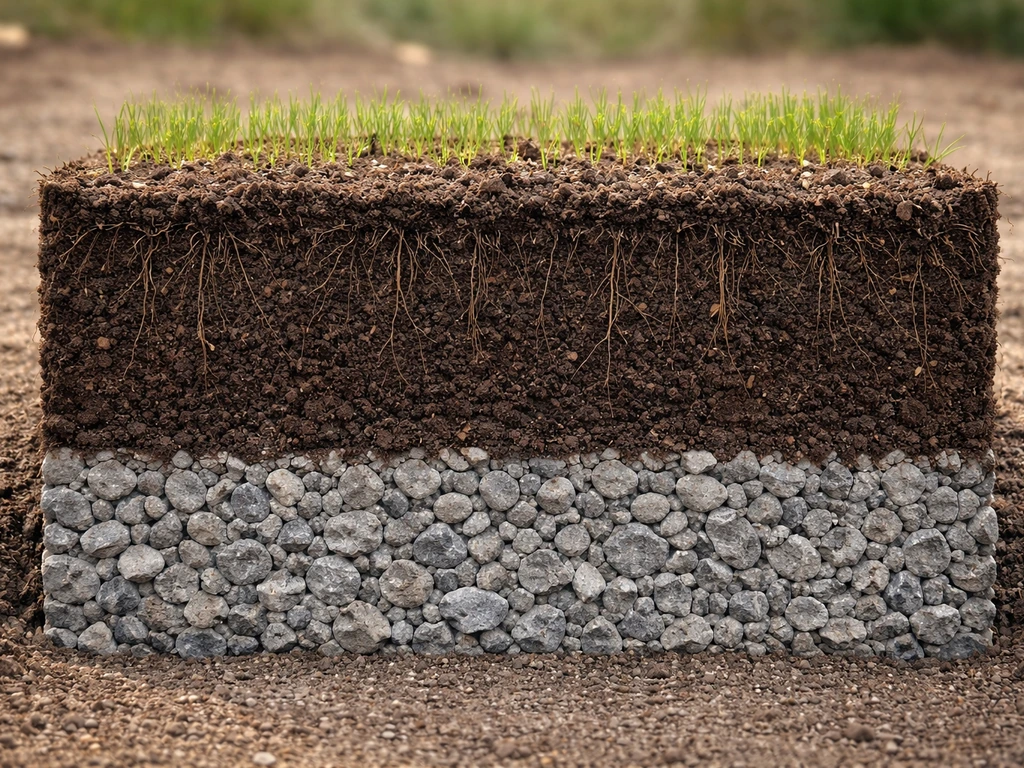
Can You Grow Grass Over Gravel? How to Do It Right
Learn when you can grow grass over gravel and follow a step-by-step method for soil depth, drainage, seeding or sod, and
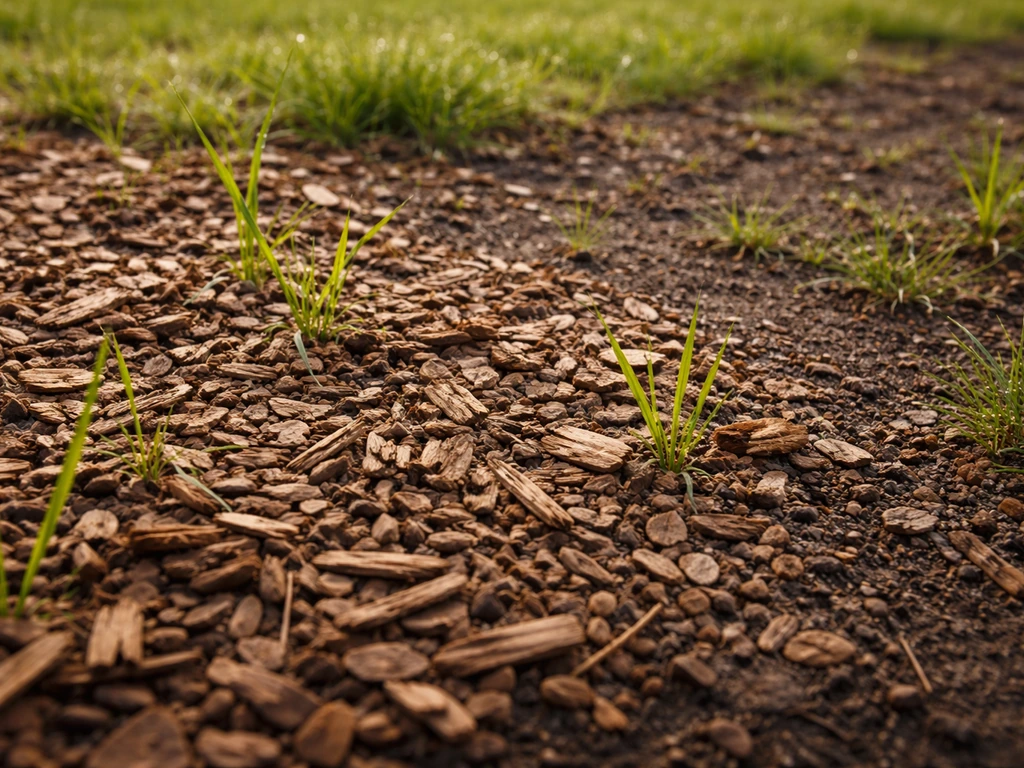
Do Wood Chips Help Grass Grow? When They Work and When Not
Learn when wood chips help grass grow, when they steal nitrogen, and step-by-step how much to apply and seed options.