
Daisies grow in grass because your lawn is giving them an opening. Thin, low-fertility turf with compacted or acidic soil is exactly the habitat that lawn daisies (Bellis perennis) and oxeye daisies (Leucanthemum vulgare) are built for. They are not random visitors, they are filling a gap that weak grass left behind. Fix the soil, raise your mowing height, thicken the turf, and the daisies lose their foothold. Ignore those conditions and they keep coming back no matter how many times you pull them.
Why Do Daisies Grow in Grass: Causes, Fixes & Lawn Care
Marcus Volkmann
22 Jul 2026
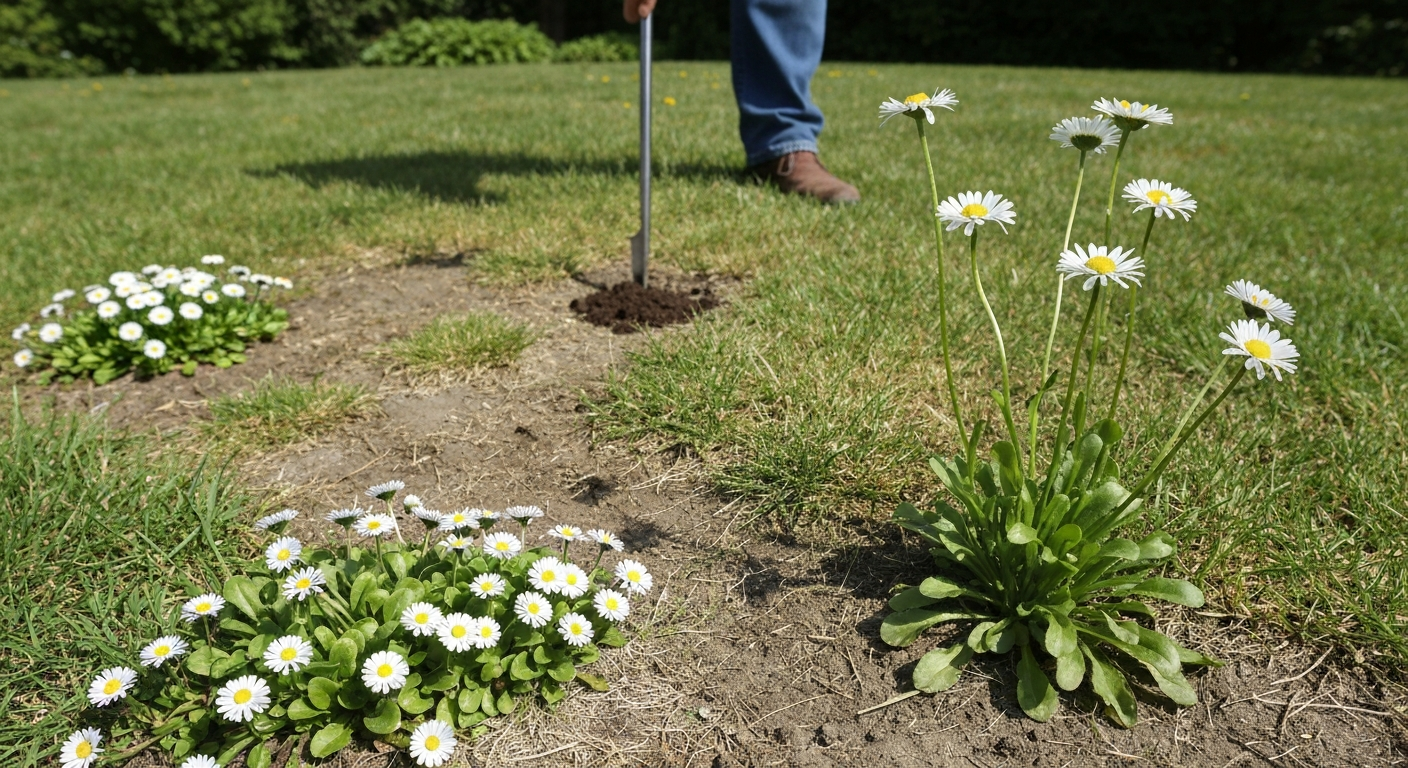
Which daisies are actually in your lawn?
Two species account for most lawn daisy problems in North America and northern Europe. Knowing which one you have matters because they behave differently and respond to controls at different points in the season.
Bellis perennis, the lawn daisy
Bellis perennis (English daisy or lawn daisy) is a low-growing perennial broadleaf weed that sits tight to the soil surface. Its rosette form means it naturally ducks under a standard mowing blade, the flowers bloom so close to the ground that a regular cut barely touches them. It spreads almost entirely by seed, producing around 1,300 seeds per plant, and it flowers from early spring through early summer in temperate climates, sometimes extending further into the season under mild conditions. Published weed‑science and extension compilations list Bellis perennis seed production capacity in the same order of magnitude as many perennial lawn weeds, historically citing ~1,300 seeds per plant for 'daisy' Seed-production tables list Bellis perennis at about 1,300 seeds per plant (see Seed production — ScienceDirect Topics).. Because the flowers open at ground level, seed set can happen even while you're mowing regularly, which is frustrating and worth understanding before you decide on a control strategy.
Leucanthemum vulgare, the oxeye daisy
Leucanthemum vulgare (oxeye daisy) is a taller, more aggressive perennial originally from Europe that now invades lawns, pastures, and roadsides across North America, it is classified as invasive or noxious in many U.S. states. It is a far more prolific seed producer than its smaller cousin, with typical counts of 1,300 to 4,000 seeds per plant and reports of up to 26,000 seeds from a single vigorous plant. The Univ. of Nevada Extension reports oxeye daisy seed production typically 2,000–4,000 seeds per plant and up to 26,000 seeds from a single vigorous plant Identification and Management of Oxeye Daisy — Univ. of Nevada Extension (reports seed production 2,000–4,000 and up to 26,000 seeds per plant). Oxeye daisy follows a biennial-style establishment pattern: year one produces a vegetative rosette, and flowering begins in year two. It is a long-day flowering plant, so it sets seed mainly in late spring through midsummer. This timing matters for mowing control, cutting before buds open reduces seed input significantly, while mowing after flowering can actually scatter seed across the lawn.
Telling daisies apart from clover, dandelions, and daffodil shoots
It is easy to confuse young daisy rosettes with other broadleaf plants pushing up through turf, especially in early spring. Here is a quick visual checklist to confirm you are dealing with daisies before doing anything else.
- Daisy (Bellis perennis): spoon-shaped leaves, rounded with slightly scalloped edges, forming a flat rosette pressed against the soil; white petals with a yellow center disc; plant sits entirely below typical mowing height
- Oxeye daisy (Leucanthemum vulgare): taller rosette with oblong, deeply toothed or lobed leaves; larger white flower heads (up to 5 cm across) on stems that rise well above turf height in year two
- Clover (Trifolium spp.): three-part (trifoliate) leaflets, often with a pale chevron marking; round white or pink flower heads; no disc center; spreads by stolons along the soil surface
- Dandelion (Taraxacum officinale): deeply jagged, backward-pointing lobes on leaves (like lion's teeth); hollow stem; bright yellow flowers that form fluffy white seed heads; produces a thick taproot you can feel when pulling
- Daffodil shoots: strap-like, flat, parallel-veined leaves that emerge as a cluster from a single point; no rosette shape; waxy, blue-green coloring; no broadleaf texture at all
If you are genuinely unsure whether your lawn intruder is a daisy, clover, or dandelion, the leaf edge is usually the fastest tell. Daisies have gently scalloped, broadly oval leaves with no deep lobing. Dandelions have aggressive, backward-pointing teeth. Clover leaflets are obviously compound. Getting this identification right saves you from applying the wrong control at the wrong time.
Every reason daisies get established in grass
Daisies do not invade healthy, dense turf by accident. Every time I see a daisy patch spreading through a lawn, there is at least one, usually two or three, of the following conditions present. Work through this list methodically rather than just pulling plants and hoping for the best.
Soil fertility and nutrition
Low soil fertility is the most consistent background condition behind daisy infestations. Grass needs adequate nitrogen to maintain density and crowd out broadleaf weeds. When fertility drops, through leaching, lack of fertilization, or years of bagging clippings without returning nutrients, turf thins out and daisies move in. They are very efficient at establishing on low-input soils where grass struggles.
Soil pH
Most turfgrasses perform best in the pH range of 6.0 to 7.0, with many extension programs citing 6.5 to 6.8 as optimal. Below that range, nutrient availability drops (especially phosphorus and calcium), and turf weakens. Daisies are more tolerant of acidic conditions than most lawn grasses, so a lawn drifting toward pH 5.5 or below gives them a competitive edge. Lime applications to correct pH are one of the most straightforward cultural fixes if soil tests confirm the problem.
Soil compaction
Compacted soil restricts root growth and reduces gas exchange, which weakens grass before it can crowd anything out. Turf research places the critical compaction threshold at around 2.0 MPa (approximately 290 psi) penetration resistance, above this, root elongation is strongly impeded. Heavy foot traffic, parking on the lawn, or clay-heavy subsoil can easily push well past this threshold. Daisy roots tolerate compaction better than most turfgrasses, so compacted patches are often exactly where you see daisy rosettes first.
Mowing height and frequency
Scalping the lawn by mowing too short is one of the fastest ways to invite broadleaf weeds including daisies. Research summarized by Oregon State University Extension suggests a mowing height of around 2 inches (5 cm) strikes a good balance for cool-season lawn health and weed suppression. Cutting shorter than this stresses grass, reduces leaf area for photosynthesis, and opens the canopy enough for daisy seeds to germinate successfully in the exposed soil. Infrequent mowing is also a problem with oxeye daisy specifically, because letting the plants reach flower stage before cutting means you are potentially scattering thousands of seeds across the lawn with your mower blade.
Sunlight and shade
Daisies prefer open, sunny conditions and are less likely to dominate a heavily shaded lawn. However, partial or dappled shade that still thins turf (by limiting grass photosynthesis) can create the patchy, low-density conditions daisies need to get started. Full sun lawns with other stressors, compaction, low fertility, drought, are the prime targets.
Moisture and drainage
Both erratic irrigation and poor drainage can thin turf. Drought-stressed grass loses density, and bare or near-bare patches from summer drought are prime germination sites for daisy seeds waiting in the soil. Poor drainage keeps soil waterlogged, which suffocates grass roots and again opens thin patches. Both moisture extremes serve daisies well.
Foot traffic and wear
Regular foot traffic concentrates compaction along pathways and play areas. The worn strips and thin patches this creates are textbook daisy habitat. If you notice daisies clustering along paths people walk repeatedly across the lawn, compaction is almost certainly the root cause.
Seed sources and nearby plantings
Oxeye daisy in particular has a persistent seed bank, seeds buried in the soil can remain viable for multiple years. Even if you eliminate all visible plants, buried seeds continue germinating when conditions are right. Nearby wildflower meadows, garden borders, roadsides, and neighboring properties that have daisy populations continuously top up the seed rain landing on your lawn. Once established in a border or verge, a few oxeye daisy plants producing up to 4,000 seeds each can repopulate a lawn every season.
Diagnosing the real cause in your lawn
Pulling daisies without diagnosing why they are there is like mopping the floor with the tap still running. Here is the step-by-step process I use before recommending any treatment.
- Take a soil test: collect a composite sample of at least 10 subsamples from your lawn's root zone, typically at 2 to 3 inches (5 to 8 cm) depth for established turf. Mix them together, let the sample air-dry, and send it to a certified soil testing lab. Ask specifically for turf recommendations. This gives you pH, phosphorus, potassium, and organic matter data in one go.
- Check pH separately if you need quick data: inexpensive home pH meters or test kits give a rough reading within minutes. If pH comes back below 6.0, that alone explains a lot. Cross-reference with the full lab results before liming.
- Run a compaction test: use a soil penetrometer across multiple spots in the lawn, including areas with heavy daisy presence and areas with healthy turf for comparison. Record readings at depths of 0, 2.5, 5, and 10 cm. Readings above 2.0 MPa (290 psi) indicate a compaction problem that needs aerating.
- Map moisture distribution: walk the lawn after rain or irrigation and note where water puddles or drains away quickly. Flag any patches that stay wet more than 30 minutes after rain (drainage problem) or dry out and turn straw-colored first during drought (irrigation deficit). These spots often correlate exactly with daisy patches.
- Review your mowing records: how short are you cutting? How often? If you cannot remember the last time you raised the cutting height or checked the blade, that is a red flag. Check that mowing height is set to at least 2 inches (5 cm). Note whether mowing is happening before or after daisies reach flower stage.
- Inspect seed sources around the perimeter: walk the boundary of your property and neighboring verges. Note any established daisy plants, particularly oxeye daisy, within 30 to 50 meters of your lawn. These are ongoing seed contributors even if you eliminate plants inside the lawn itself.
- Check organic matter: if your soil test reports organic matter well below 5%, the soil structure is likely poor enough to limit turf competitiveness. This is especially common on new-build lawns where topsoil has been stripped or disturbed.
Document everything in a simple notebook or phone note: pH reading, penetrometer values by location, mowing height, and any nearby seed sources. This record becomes the baseline you compare against after any corrective action.
Why the same lawn problems bring in clover and dandelions too
If you have daisies, there is a good chance you also have clover or dandelions, or both. That is not a coincidence, they all exploit the same underlying lawn weaknesses, just with slightly different specializations. Understanding this overlap helps you fix the root problem once rather than tackling each weed species separately forever.
| Cause | Daisies (Bellis/Leucanthemum) | Clover (Trifolium spp.) | Dandelions (Taraxacum officinale) |
|---|---|---|---|
| Low nitrogen / poor fertility | Strong driver — thin turf opens establishment gaps | Very strong driver — clover fixes its own nitrogen, thrives in low-N soil | Moderate — dandelions tolerate poor fertility but not the strongest link |
| Low pH (acidic soil) | Significant — tolerates pH below grass optimum | Moderate — clover prefers slightly acidic to neutral | Less significant — dandelions are pH-tolerant across a wide range |
| Soil compaction | Significant — daisy roots handle compaction well | Moderate — clover stolons spread even in firm soil | Strong driver — taproot penetrates compacted soil effectively |
| Mowing too short | Strong — exposes soil surface for daisy seed germination | Strong — removes grass competitive advantage, favors prostrate clover | Strong — scalping removes grass but dandelion rosettes survive below blade |
| Thin / patchy turf | Core requirement — daisies need open gaps to establish | Moderate — spreads by stolon into thin areas | Strong — seeds germinate in bare patches readily |
| Persistent seed bank | Significant for oxeye daisy (multi-year viability) | Moderate — seed longevity varies by species | Strong — prolific aerial seed dispersal replenishes constantly |
| Nearby seed source | High relevance, especially oxeye daisy from verges/meadows | Moderate — spreads from adjacent clover patches | High — wind-dispersed seed travels from any nearby plants |
The practical takeaway: if your lawn has all three (daisies, clover, and dandelions) the underlying soil and management problems are probably significant and widespread, not isolated. Clover in particular is such a strong indicator of low nitrogen that some turf managers use its presence as a free soil-fertility diagnostic. If you’re wondering “Should I let clover grow in my lawn”, consider that clover signals low nitrogen but also fixes nitrogen and supports pollinators, so a clover-dominant lawn is a legitimate low-input alternative depending on your goals. For more on this, see why does clover grow in grass which explains clover's preference for low‑nitrogen turf. Dandelions showing up alongside daisies in the same compacted pathway area tells you compaction is the dominant driver. For more on cultivating and managing dandelions in turf, see can you grow dandelions in grounded. Read the pattern before you reach for a herbicide.
Can other plants push through turf? Bulbs and daisies in the same lawn
A common question I get from homeowners with naturalised garden borders is whether daffodils and other spring bulbs can actually push up through established grass. For a short, practical answer see the piece titled "can daffodils grow through grass," which explains how bulbs like daffodils emerge through turf and when they are most likely to succeed. The short answer is yes, bulbs like daffodils (Narcissus spp.) are planted below the turf layer and their foliage emerges through the grass in spring without much difficulty, especially in thinner turf. This is different from how daisies spread (by seed from the surface) but the conditions overlap: thin, weak turf is the environment where both daffodil foliage and daisy seedlings find it easiest to establish and persist. In dense, well-managed turf, both struggle more, bulb foliage has more competition from surrounding grass, and daisy seeds find fewer bare germination microsites.
The management tension with bulbs in grass is that you cannot mow the bulb foliage down for six to eight weeks after flowering (the leaves need that time to replenish the bulb for next year). This enforced mowing break over a patch of lawn often encourages daisy seedlings in the same area, because the grass in that zone grows unchecked and thatch builds up, while missed spots create openings. If you are managing naturalised daffodil patches in grass and also battling daisies in the same area, the mowing restriction is likely contributing to your daisy problem in that zone.
Evidence-based management plan
Before doing anything, decide on your actual goal. The management approach differs meaningfully depending on whether you want a clean, daisy-free lawn, a mixed wildflower-tolerant lawn, or a full conversion to an alternative low-maintenance ground cover. Each is a valid choice, but mixing strategies partway through wastes time and money.
Decision framework: remove, tolerate, or convert?
| Goal | Best approach | Timeline | Main effort |
|---|---|---|---|
| Daisy-free traditional lawn | Cultural corrections + mechanical removal + targeted herbicide if needed | 1 to 2 growing seasons | Soil amendment, aeration, overseeding, mowing discipline |
| Mixed lawn — some daisies acceptable | Cultural corrections to prevent spread; tolerate existing plants | Ongoing seasonal management | Mowing timing to prevent seed set; monitor spread |
| Convert to low-maintenance clover or wildflower lawn | Reduce or stop herbicide use; overseed with clover or wildflower mix into existing sward | 1 growing season to establish | Overseeding, reduced mowing frequency, accept mixed appearance |
| Restore heavily infested lawn from scratch | Full renovation — kill back, till or scarify, soil amendment, reseed | One full growing season minimum | Soil testing, amendment, quality seed, establishment irrigation |
Cultural controls (fix the root cause first)
Cultural fixes are the only thing that produces lasting results. Everything else is symptom management. Based on your diagnostic findings, work through these in order of what your soil test and compaction readings flagged.
- Correct pH with lime if soil test shows pH below 6.0: use ground limestone at the rate your lab recommends; retest in 6 to 12 months. Do not lime without a test — overliming causes its own micronutrient problems.
- Topdress with compost if organic matter is below 5%: apply a 6 to 12 mm layer of fine screened compost in autumn or early spring and work it into the surface with a rake or drag mat. This improves soil structure, microbial activity, and moisture retention — all of which benefit grass more than daisies.
- Core aerate compacted areas: run a hollow-tine aerator over compacted zones, especially high-traffic paths and the daisy hotspots identified by your penetrometer mapping. Aerate when soil is moist (not waterlogged) for best core extraction. Follow with topdressing to backfill the cores.
- Raise mowing height to at least 2 inches (5 cm): this single change improves turf density more reliably than almost any other intervention. Higher grass shades the soil surface, reducing the light daisy seeds need to germinate.
- Fertilize based on soil test recommendations: address any nitrogen, phosphorus, or potassium deficits identified in your test. Dense, well-fed grass is the best long-term weed suppressor you have.
- Overseed thin and bare patches immediately after aeration and topdressing: use a grass variety appropriate for your region and light conditions. These bare patches are your highest-risk zones for daisy re-establishment from the seed bank.
- Improve drainage in wet patches: address standing water areas with drainage channels, French drains, or (if slope allows) re-grading. Alternatively, accept these areas are not suitable for turf and consider a different ground cover.
Mowing as a seed-control tool
Timing your mowing around daisy flowering is one of the most underused and cost-free control tactics. For oxeye daisy, mow before flower buds open in late spring. If plants are already flowering, be aware that mowing then scatters seed, consider hand-removing flower heads before mowing that area. For lawn daisy (Bellis perennis), the low bloom height makes mowing-based seed control much harder, so mechanical removal or other methods become more important for this species.
Mechanical removal
For small infestations, hand-pulling or using a daisy grubber tool is practical and effective, especially for Bellis perennis, which does not have a deep taproot. Pull after rain when soil is soft, making sure to get the full rosette and root. Fill the removed area with topsoil and overseed immediately, otherwise the bare patch just becomes the next daisy germination site. Do not leave pulled plants on the lawn surface if they have developing flower heads, seed can still ripen post-pulling.
Herbicide options
Herbicides should come after cultural corrections, not instead of them. A broadleaf selective herbicide containing MCPA, mecoprop-P (MCPP), or triclopyr will control both Bellis perennis and Leucanthemum vulgare in established turf without harming grass. Apply in active growing conditions (spring or early autumn in temperate regions), ideally to young plants before they flower. Always follow label rates and timing guidance. Organic alternatives include spot applications of acetic acid (concentrated horticultural vinegar), though these are non-selective and kill surrounding grass too, use only for spot treatment in isolated patches, followed by reseeding. Do not apply any broadleaf herbicide to newly seeded areas until grass has been mowed at least three to four times.
Restoration steps and monitoring schedule
- Year 1, early spring: soil test, pH check, penetrometer mapping. Order lime, compost, and grass seed based on results.
- Year 1, mid-spring: apply lime if needed, core aerate compacted areas, topdress with compost. Remove any daisy rosettes by hand before they flower. Overseed bare patches.
- Year 1, late spring/early summer: mow at 2 inches (5 cm) or above. If oxeye daisy is present, mow before bud formation or remove flowering heads by hand. Apply broadleaf herbicide if infestation is heavy and cultural measures alone are insufficient.
- Year 1, autumn: second round of aeration and overseeding if turf density is still poor. Apply autumn fertilizer based on soil test recommendations. Check pH again if you applied lime in spring.
- Year 2, spring: reassess daisy presence and density. Compare against your year 1 baseline records. If density is reducing, continue cultural program. If no improvement, revisit diagnosis — there may be an unaddressed seed source or soil issue.
- Ongoing, every season: check mowing height at the start of each season (blade height can drift), retest soil every 2 to 3 years, and inspect perimeter seed sources in late spring before oxeye daisy sets seed.
Lawn vs clover lawn vs mixed wildflower, a quick comparison
| Lawn type | Daisy/weed pressure | Maintenance level | Pollinator value | Appearance expectation | Best for |
|---|---|---|---|---|---|
| Traditional grass lawn (dense, well-managed) | Low — dense turf excludes most broadleaves | High — regular fertilizing, mowing, aeration | Low | Uniform green | Formal gardens, sports use, high foot-traffic areas |
| Mixed lawn (grass + some clover/daisies tolerated) | Moderate — managed but not eliminated | Medium — less fertilizer, less frequent mowing | Moderate | Informal, textured | Relaxed gardens, family lawns, eco-conscious homeowners |
| Clover or wildflower ground cover | High daisy potential unless managed mix used | Low once established — infrequent mowing | High | Naturalistic, meadow-like | Low-maintenance gardens, wildlife-friendly spaces, poor soils |
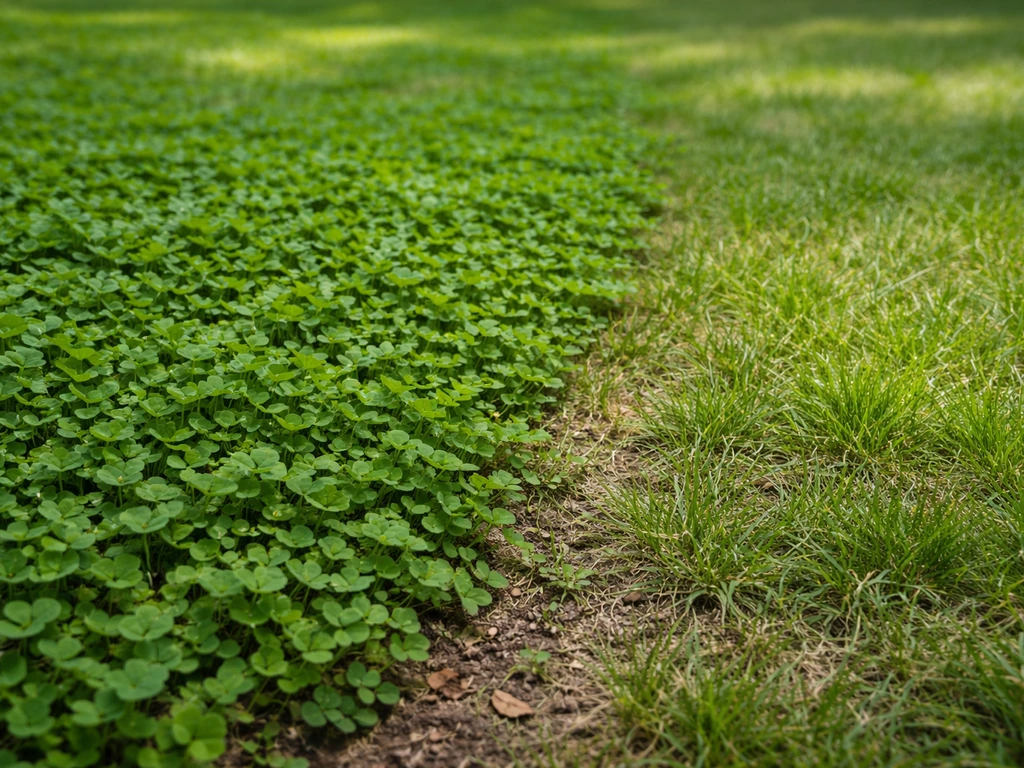
If you are genuinely tired of fighting broadleaf weeds in a struggling lawn and your soil conditions strongly favor them, converting to a clover-dominant or mixed wildflower lawn is a legitimate, evidence-supported alternative rather than a defeat. Clover fixes atmospheric nitrogen (reducing or eliminating the need for synthetic fertilizer), tolerates the same low-fertility and slightly acidic conditions that daisies favor, and provides real pollinator benefit. If you want to know whether clover is easier to grow than grass, see our comparison of clover versus grass care for establishment and maintenance guidance is clover easier to grow than grass. The trade-off is accepting a different aesthetic and losing the option to apply most broadleaf herbicides in that area.
What to realistically expect
In lawns with a large persistent seed bank from established oxeye daisy populations, even a perfect cultural program will not deliver a completely daisy-free lawn in one season. The seed bank can remain viable for multiple years. What you are working toward in year one is reducing new seed input, improving turf density to suppress germination, and addressing the soil conditions that gave daisies their advantage. Measurable improvement, fewer plants, smaller patches, less spread, is realistic within one growing season. Full resolution on a badly infested site can take two to three years of consistent effort. That is not a failure; it is an honest timeline for working with biology rather than against it.
FAQ
Quick answer — why do daisies (lawn/oxeye types) appear in grass?
Concise answer: Daisies (commonly Bellis perennis — English/lawn daisy — and Leucanthemum vulgare — oxeye daisy) appear where turf is thin, stressed or disturbed because they can establish from abundant seed, tolerate close mowing, and exploit low fertility, compaction, poor drainage or irregular irrigation. Healthy, dense turf is the primary long‑term prevention; diagnose soil pH, fertility, compaction and turf density to choose short‑term removal vs long‑term restoration (see extension resources: Penn State, Univ. of Nevada, UC IPM).
Which daisy species are found in lawns and how do I ID them?
Species ID and lifecycle: - Bellis perennis (English/lawn daisy): low, rosette habit, small rounded leaves, single short flower stalks with small white/pink‑tinged petals; perennial, reproduces mostly by seed, often flowers at normal mowing heights (UC IPM, Penn State). - Leucanthemum vulgare (oxeye daisy): taller rosette, larger single‑flower heads with conspicuous yellow center and white petals; perennial that produces very large numbers of seeds (thousands per plant) and can create a persistent soil seed bank (Univ. of Nevada, Invasive Plant Atlas). Lifecycle notes: seedlings germinate mainly in spring, rosette year‑1, flowering and major seed set year‑2 onward; seedbank can persist multiple seasons.
Complete list of environmental and maintenance causes
Causes (complete checklist): - Thin or patchy turf (poor competition). - Low soil fertility (insufficient N or imbalanced nutrients). - Suboptimal soil pH (target turf pH ~6.0–7.0). - Soil compaction restricting root growth. - Shallow/topsoil or low organic matter. - Mowing practices: too low or infrequent mowing; daisies that bloom low can set seed if mowing timing misses buds. - Irregular or inadequate irrigation (stress opens niches). - Excess sunlight in bare patches or conversely shaded stressed zones. - Seed sources: adjacent meadows, lawns, traffic carrying seed, contaminated compost/topsoil. - Past disturbance, construction or thin turf after renovation.
How do I diagnose which causes apply to my lawn?
Diagnostics (actionable steps): 1) Soil test: collect 10+ subsamples to 2–4 in depth, send to a lab for pH and nutrient interpretation (extension protocols). 2) Penetrometer/compaction check: take multiple readings at 0–10 cm; values above ≈2.0 MPa (~290 psi) indicate restrictive compaction for roots (use uniform moisture conditions). 3) Visual turf survey: map thin patches, percent groundcover, moss, bare soil and note shade patterns and drainage. 4) Mowing and irrigation record: check typical mowing height, frequency, and irrigation schedule. 5) Seed source audit: inspect edges, paths, neighbors, compost/soil bags. 6) Sample plant ID: photograph and compare to ID guides (Penn State, UC IPM). Record findings to prioritize fixes.
Evidence‑based step‑by‑step management plan (short summary)
Integrated management plan (prioritized steps): 1) Immediate actions: hand‑pull small infestations when soil moist (remove roots/rosette); mow frequently to prevent seed set (mow before buds open). 2) Cultural restoration (long‑term): test soil → adjust pH and fertility to turf recommendations; core aerate compacted areas; topdress with compost if OM low; overseed thin areas with appropriate turfgrass species at recommended seeding rates and dates; raise mowing height to recommended level (~2–3 in for many cool‑season grasses) and follow frequent mowing. 3) Mechanical/spot control: repeated hoeing, digging for clumps, or use of a sod cutter for heavy patches. 4) Organic and selective chemical options: repeat mowing, spot‑apply approved broadleaf herbicides (read label), or use selective herbicides containing 2,4‑D/quinclorac/MCPA where turf species and local regulations allow; organic options include spot treatments with acetic acid formulations or manual removal (efficacy lower). 5) Timing & follow‑up: remove rosettes/seed heads in spring before flowering; plan major renovation (aeration + overseed or sodding) in optimal season for your grass; expect multi‑year follow‑up to deplete seed bank. (Sources: extension integrated weed management guides; Montana State; Univ. of Nevada.)
Detailed cultural fixes — what, why and when?
Cultural fixes (actionable): - Soil testing and amendments: test first; lime or sulfur to correct pH per lab recommendation; apply fertilizer per turfsoil test and seasonal recommendations (avoid excess N that encourages shallow growth). - Aeration: core aerate annually in compacted lawns (best when turf actively growing). - Topdressing/compost: apply thin compost (1/4–1/2 in) over lawn after aeration to raise OM and seedbed quality. - Overseeding: seed high‑quality turfgrass at recommended rates after aeration/topdressing; keep seedbed moist until establishment. - Mowing: maintain recommended height for species (generally higher helps crowd out broadleaves); follow the “one‑third” rule for blade removal. - Irrigation: water deeply and infrequently to encourage deeper roots. Why: these improve turf density and competition, reducing open niches daisies exploit (extension turf management literature).
Next Articles
Why Do Dandelions Grow in Grass and How to Fix It
Learn why dandelions thrive in grass and get step by step fixes for soil, watering, mowing, and control.
Why Does Clover Grow in Grass? Causes and Fixes
Understand why clover appears in grass and how to diagnose soil, light, compaction, and mowing issues to stop it.
Is Clover Easier to Grow Than Grass? A Practical Test
Find out if clover beats grass for tough lawns, with growth speed, easy establishment tips, and when to choose each.