
Clover grows in your grass because your lawn is giving it an opening. It's not random. Clover is a legume that fixes its own nitrogen from the air, so it doesn't need fertile soil to thrive. When your grass is thin, nutrient-starved, mowed too short, or growing in compacted soil, clover steps in and fills the gap because it can survive conditions that leave turfgrass struggling.
Why Does Clover Grow in Grass? Causes and Fixes
Marcus Volkmann
18 May 2026
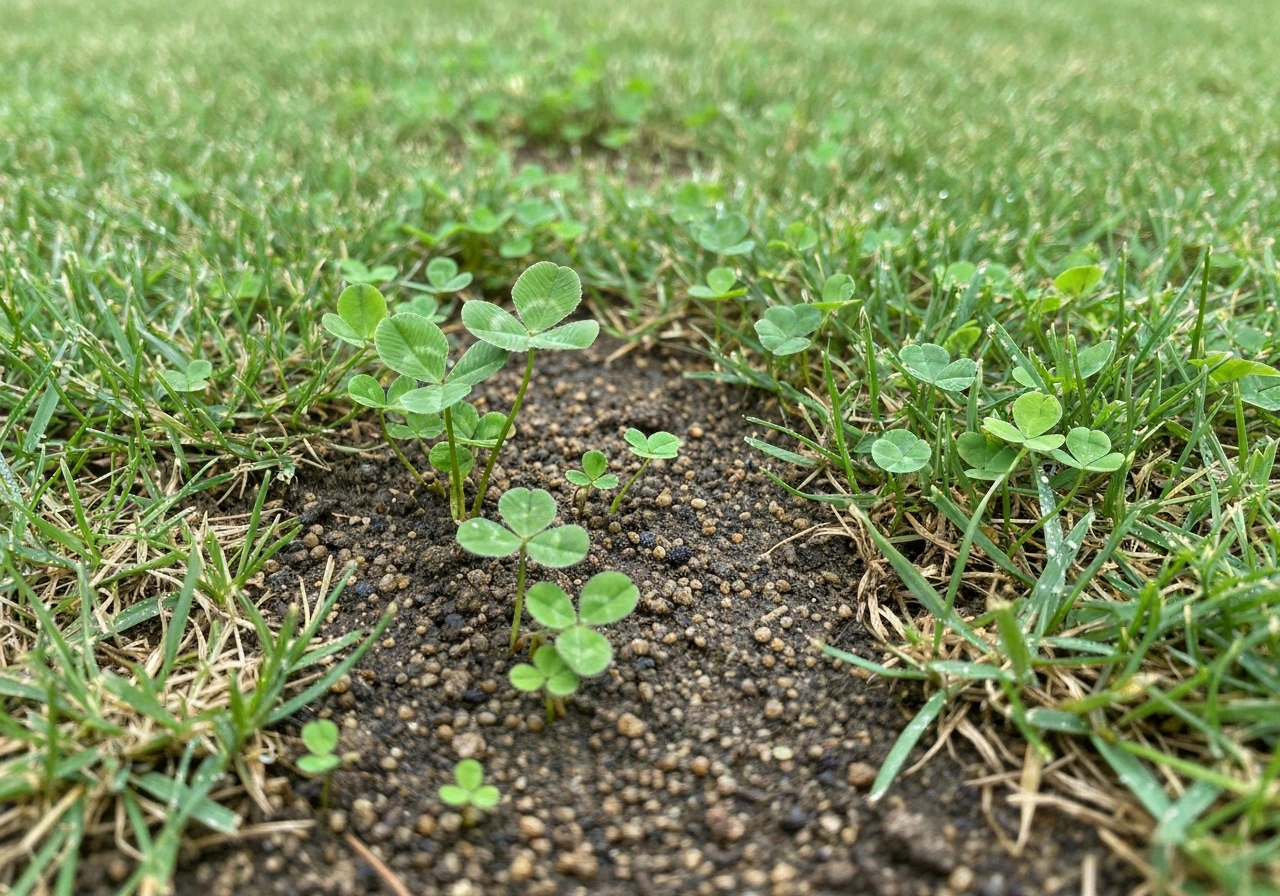
In short, clover is a symptom. Fix the underlying lawn stress, and grass will outcompete it on its own. Even though clover can look easier to grow than grass in stressed lawns, it still grows best when you fix the underlying turf conditions that let it win is clover easier to grow than grass.
How to tell if clover is thriving because your grass is stressed
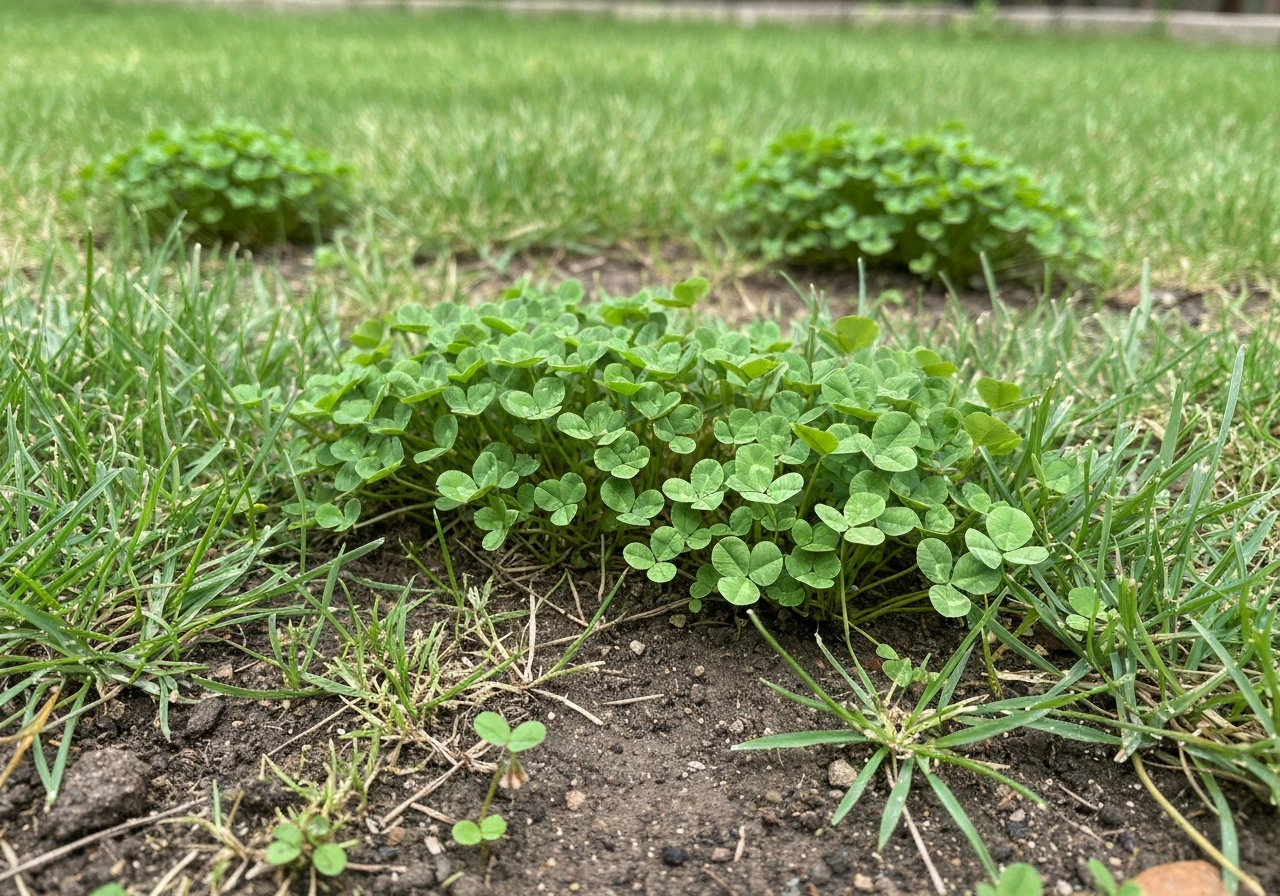
The biggest tell is where the clover clusters. Stressed grass doesn't go down uniformly, so clover tends to show up in patches, and those patches almost always correspond to a specific problem. If you see clover concentrated in one corner of the yard, along a fence line, or in a strip near the driveway, your grass in that zone is weaker than the rest. That patchiness is your first diagnostic clue.
Healthy, dense turfgrass physically crowds out clover. If you are wondering about other plants, like can daffodils grow through grass, the same idea applies: the grass needs to be kept from crowding them out Healthy, dense turfgrass. The canopy closes off light, the roots compete for water, and there's no bare soil for clover seeds to germinate. Purdue's turfgrass research makes this point well: a clover-dominant lawn looks noticeably different from a dense turf lawn because clover doesn't form a tight canopy and bare soil is often visible between plants. If you can see soil through your lawn, clover has the advantage.
Another strong signal is color contrast. Clover stays noticeably greener than surrounding grass during dry or low-nitrogen periods, exactly because it's manufacturing its own nitrogen through root nodules containing Rhizobium bacteria. When your grass goes pale or yellowish between fertilizer applications, and the clover patches stay lush green, that color gap is telling you the grass is nitrogen-limited while the clover is not.
Main causes that make clover take over grass lawns
There's rarely just one cause, but these are the conditions that consistently show up when clover wins. Understanding which ones apply to your yard is what moves you from frustrated to actually fixing it.
Low nitrogen in the soil
This is the big one. Grass needs available soil nitrogen to grow vigorously. Clover doesn't, because it partners with Rhizobium bacteria that pull nitrogen straight from the atmosphere and convert it into a usable form inside root nodules. Michigan State Extension, Penn State Extension, and several other universities all flag clover as a classic indicator weed for low-nitrogen conditions. When nitrogen drops, grass slows down and clover thrives. It's not that clover invaded. It's that your grass lost its competitive edge.
Soil pH problems
Most cool-season turfgrasses prefer a soil pH of 6.0 to 7.0. When pH drifts outside that range, particularly below 6.0, grass struggles to absorb nutrients even when they're present in the soil. Clover, by contrast, can establish at pH levels as low as 5.5 according to Oregon State Extension, and it handles acidic soil better than most turf species. If your lawn's pH is off, you may be feeding your grass but not actually helping it because nutrient uptake is blocked at the root level.
Mowing too short
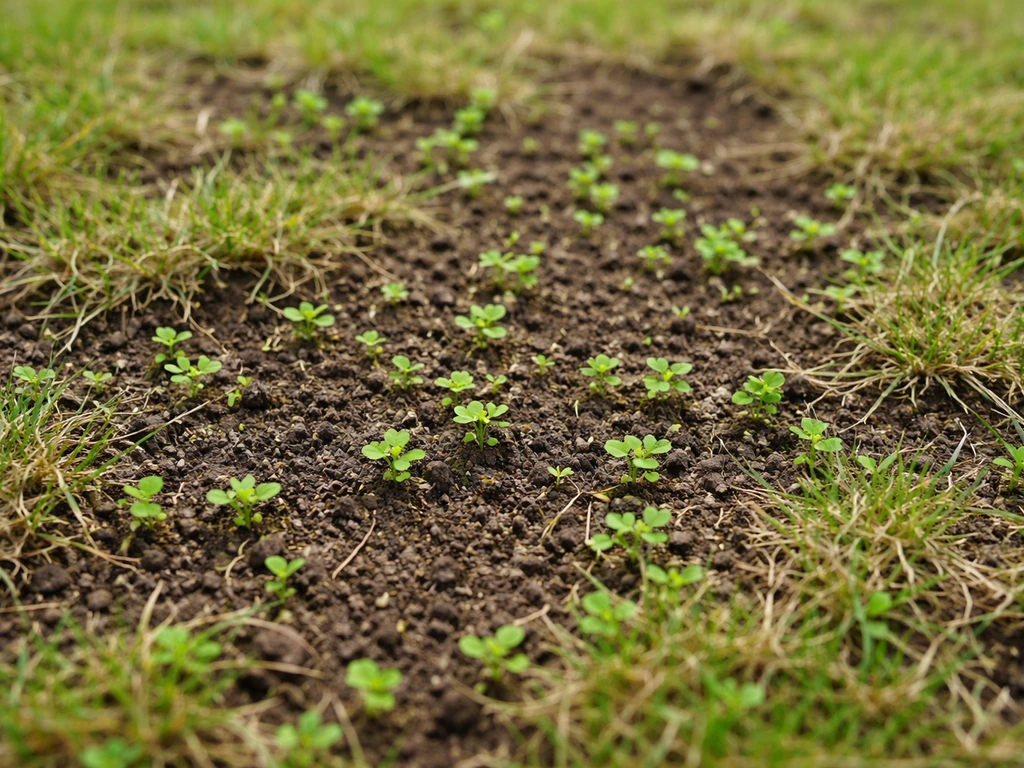
Scalping the lawn is one of the fastest ways to hand clover a victory. Penn State and Michigan State both identify low mowing height as an indicator condition for clover. Clover's growth habit is low and prostrate, meaning it hugs the ground and largely avoids mowing injury. Grass cut too short loses its ability to shade the soil, roots get heat-stressed, and the canopy thins out, all of which open space for clover to spread. Most cool-season grasses should be mowed at 3 to 4 inches for tall fescue and 2.5 to 3.5 inches for Kentucky bluegrass, according to UMD and Purdue Extension data. If you're cutting lower than that, raise the deck.
Thin or bare turf
Any area with bare soil or thin grass is an open invitation for clover seed to germinate and establish. Dandelions follow a similar pattern, taking advantage of open ground and weak turf to establish quickly dandelions in grass. This can come from heavy foot traffic, drought stress, pest damage, disease, or dog urine patches. Once grass density drops below a certain threshold, clover moves in fast. Dense turf is genuinely your best weed barrier, and there's no shortcut around it.
Soil compaction
Compacted soil suffocates turfgrass roots by limiting oxygen and water infiltration. Grass can't grow deep roots in hard, compacted ground, so it stays shallow and weak. Clover's root system is relatively shallow too, but it handles compaction better because it doesn't need the same level of soil fertility to keep growing. High-traffic areas, clay-heavy soils, and spots near driveways or paths are common compaction zones.
Excessive thatch
A thin thatch layer under half an inch is normal and even beneficial. But when thatch builds beyond that, it creates a spongy, poorly draining layer that blocks water, air, and nutrients from reaching roots. Penn State Extension notes that thatch over about an inch will start causing real turf problems, and NDSU Extension puts the healthy ceiling at around half an inch. Localized thatch buildup can create pockets where grass weakens and weeds, including clover, get a foothold.
Quick at-home lawn diagnosis for your yard today
You don't need to wait for lab results to start diagnosing what's going on. Do this walk-through in the next 20 minutes and you'll have a good working theory before you spend a dime.
- Map where the clover is concentrated. Are patches near high-traffic areas (compaction)? Along a fence line or under a tree (shade, root competition)? Spread uniformly (low nitrogen overall)? Isolated spots (past damage or drainage issues)?
- Check your mowing height. If you're not sure, measure the grass blade length after your next mow. Anything under 2.5 inches for most cool-season grasses is too low and is actively helping clover.
- Do the thatch test. Pull a small plug of turf out with a screwdriver or knife. Look at the layer of brownish material between the green blades and the soil. Over half an inch of that spongy material means thatch is a factor.
- Check soil compaction. Push a pencil or screwdriver straight down into the soil. If it meets hard resistance in the top 2 to 3 inches, you've got compaction worth addressing.
- Look for color contrast. Pull a few clover plants and check the roots for small pinkish nodules. Those are the nitrogen-fixing nodules that confirm the clover is thriving partly because it doesn't need soil nitrogen, which strongly suggests your grass is low on it.
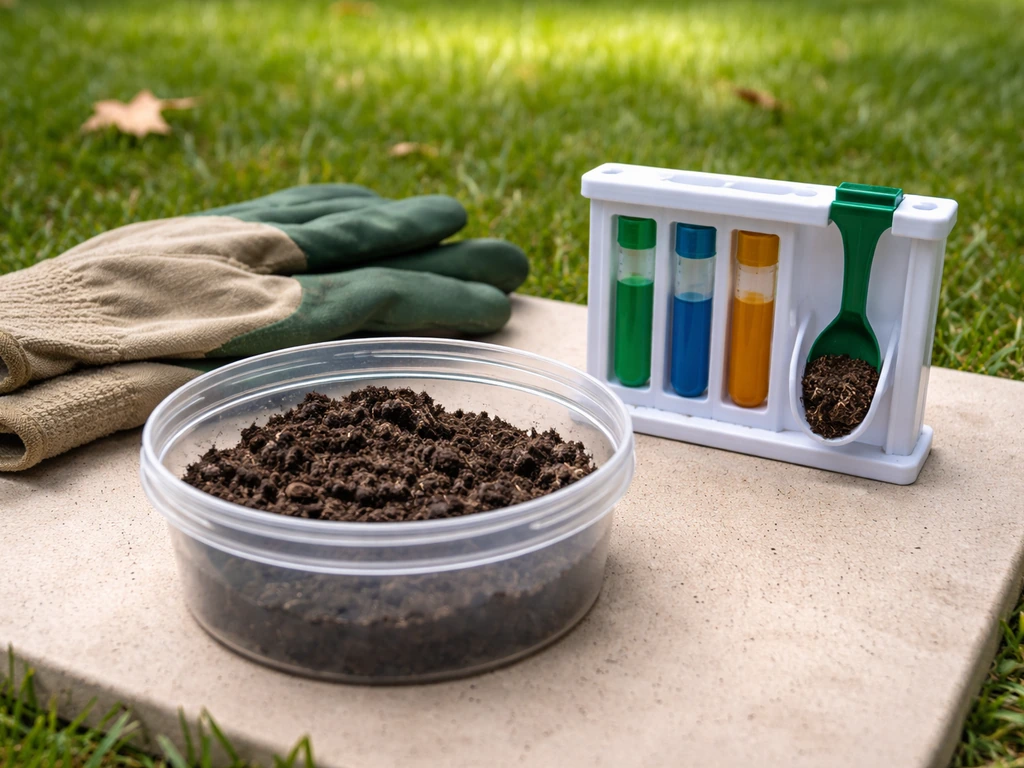
- Order a soil test. This is the step most people skip and then wonder why nothing they try works. Your local cooperative extension office can test for pH and macronutrients for around $15 to $25. You submit a soil sample and get specific amendment recommendations back. No guessing.
How to stop clover: improve turf competitiveness through mowing, water, and density
OSU Extension puts it simply: find out the reasons behind increased weed growth before reaching for an herbicide. That's practical advice. If you spray clover without fixing the conditions that invited it, it comes back within a season. The better play is to make your grass more competitive first, and use targeted herbicide only as a backup.
Raise your mowing height
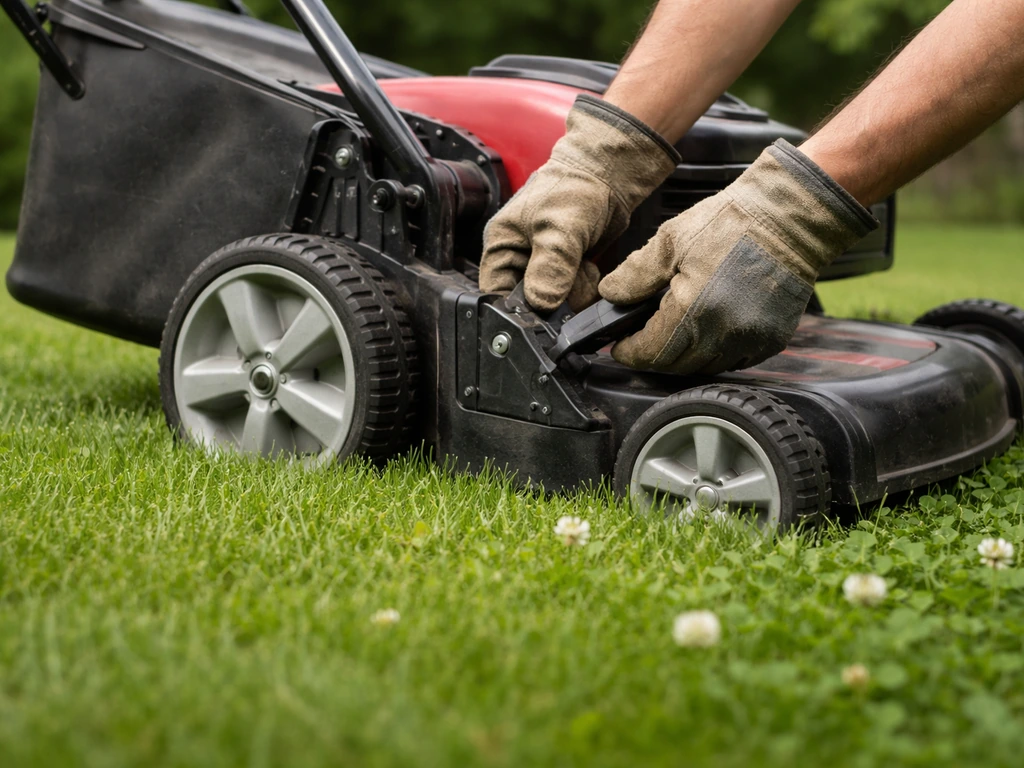
If you're currently cutting below the recommended range for your grass type, raise the deck by half an inch to a full inch right now. Taller grass shades the soil surface, which directly suppresses clover germination and limits the spread of existing plants. University of Missouri Extension specifically recommends increasing mowing height by a half to a full inch when a grass stand is thin, and that applies here too.
| Grass Type | Recommended Mowing Height | Notes |
|---|---|---|
| Tall Fescue | 3.0 to 4.0 inches | UMD guidance; higher end in summer heat |
| Kentucky Bluegrass | 2.5 to 3.5 inches | Purdue/UMD; never below 2 inches |
| Fine Fescue | 2.0 to 3.5 inches | Shade-tolerant; keep toward higher end |
| Bermudagrass (warm-season) | 1.0 to 2.0 inches | Tolerates lower cuts better than cool-season types |
| Zoysia (warm-season) | 1.0 to 2.5 inches | Dense canopy helps suppress weeds when healthy |
Water deeply but less frequently
Shallow, frequent watering encourages shallow grass roots and keeps the soil surface moist, which is ideal for clover. Deep, infrequent irrigation (about 1 inch per week, applied in one or two sessions) trains grass roots to grow deeper, making the turf more drought-tolerant and more competitive overall. Purdue's turfgrass guidance includes adequate irrigation as a key cultural control for reducing clover's advantage in cool-season turf.
Aerate and overseed to thicken turf density
This is the most effective long-term weapon against clover, and most homeowners underdo it or skip it entirely. Core aeration breaks up compaction, improves root-zone oxygen, and creates channels for water and nutrients to reach the root zone. Penn State Extension recommends making six to eight passes with a core aerator for meaningful results, not just one pass. Pair aeration with overseeding and you're filling in thin areas with new grass plants that will close the canopy and deny clover space. Penn State Extension also recommends spring and early fall overseeding after aeration and/or dethatching, because overseeding works best when seed contacts soil and has space to germinate and develop Lawn Management through the Seasons.
For cool-season lawns, the ideal window for aeration and overseeding is late summer to early fall, mid-August through mid-October according to UMD Extension. This timing lets new grass establish before winter without competing with summer annual weeds. If that window has already passed for the current year, early spring is your next option, though fall is generally more reliable for cool-season species.
When herbicide makes sense
If your clover is well established and you want faster knockdown while your cultural fixes take effect, a targeted post-emergent broadleaf herbicide can help. The key detail most people get wrong: plain 2,4-D doesn't control clover effectively. Utah State University's IPM resource notes that 2,4-D alone will only injure clover, not kill it reliably. Kansas State confirms that 2,4-D by itself does not control white clover very well. You want a combination product that includes MCPP and dicamba alongside 2,4-D, sometimes called a trimec-type product. Follow the label exactly for timing and grass species tolerance.
Soil test and amendments: what the clover is actually telling you
Clover is one of the most reliable indicator weeds you can have. Penn State Extension uses it as a textbook example of how weeds reveal soil and management problems. When clover is spreading in your lawn, it's a signal to check nitrogen levels and soil pH before anything else.
Get a soil test first
A soil test takes the guesswork out of what you're amending. Submit a sample to your local cooperative extension lab and you'll get back specific numbers for pH, phosphorus, potassium, and often organic matter content. Penn State Extension explicitly ties the clover indicator to the recommendation to submit a soil test and adjust pH based on lab results. Without those numbers, you risk over-applying lime or fertilizer and creating new problems.
Correct pH if it's off
Most cool-season turfgrasses perform best between pH 6.0 and 7.0. If your soil test shows pH below 6.0, adding lime (calcitic or dolomitic, depending on your magnesium levels) will raise it toward the target range. This does two things: it directly improves nutrient availability for grass, and it makes the soil environment slightly less hospitable for clover, which prefers the more acidic end of the spectrum. Don't apply lime without test results. Adding lime to already-neutral or alkaline soil causes its own set of nutrient lockout problems.
Feed the grass nitrogen
If your test confirms low nitrogen, a properly timed fertilizer application levels the playing field between grass and clover fast. For cool-season lawns, fall is the most effective time to fertilize since it supports root development heading into winter. A moderate spring application is also useful. Avoid heavy summer nitrogen applications on cool-season grasses, as that stresses the turf rather than helping it. The goal is to feed the grass enough that it can outpace clover through sheer vigor, which is what clover has been exploiting the absence of.
Long-term prevention plan to keep clover from returning
Killing clover once is straightforward. Keeping it gone requires the lawn to stay thick and well-nourished year after year. Here's how to build that system.
- Overseed every fall on cool-season lawns. UMD Extension recommends annual autumn overseeding as a standard maintenance practice. Consistent overseeding keeps turf density high, which is your best organic clover barrier.
- Test your soil every 2 to 3 years. Soil pH drifts over time, especially in high-rainfall areas or where acidifying fertilizers are used regularly. Catching a pH shift early costs much less than fixing a full clover takeover.
- Maintain mowing height discipline year-round. This is one of the easiest things to do and one of the most commonly ignored. Keep the deck at the high end of the range for your grass type, especially through summer stress periods.
- Dethatch when the thatch layer exceeds half an inch. OSU Extension sets the threshold at one-third of an inch for cool-season lawns before it starts causing problems. Check annually with the plug method and schedule dethatching before overseeding when needed.
- Aerate compacted areas every 1 to 2 years. High-traffic areas and clay soils compact faster than others. Annual aeration in those spots keeps roots healthy and soil open to water and nutrients.
- Don't underwater in summer. Drought-stressed grass thins out rapidly, and thin turf is clover's entry point. If your area is dry, keep up with supplemental irrigation to maintain turf density through the stress period.
- Be strategic with fertilizer timing. Consistent, correctly timed nitrogen feeding through the growing season keeps grass competitive without overloading it. Follow your soil test recommendations rather than a generic bag schedule.
What to do first if clover is taking over right now
If you're looking at a lawn that's already dominated by clover and want to know where to start today, here's the prioritized order that makes the most difference for the least wasted effort. If you're wondering whether clover is tolerable, you may also want to read should i let clover grow in my lawn to compare keeping it versus fixing the underlying stress. Daisies are common in lawns and fields because grass and other plants leave gaps where sunlight and nutrients reach the ground If you're looking at a lawn that's already dominated by clover. If you're considering other ground-cover weeds, you may also be wondering can you grow dandelions in grounded.
- Raise your mowing height immediately if you're cutting below 3 inches on cool-season grass. This costs nothing and starts helping today.
- Order a soil test from your local cooperative extension office. This tells you whether pH or nitrogen deficiency is the root issue and exactly how much to correct it.
- Apply a trimec-type broadleaf herbicide (2,4-D plus MCPP plus dicamba) if you need faster knockdown. Avoid plain 2,4-D for clover. Follow label timing and restrictions for your grass type.
- Schedule core aeration and overseeding for late summer or early fall. This is the highest-impact long-term fix you can make, and pairing aeration with seeding maximizes both.
- Amend pH and fertilize based on your soil test results. Do this after aeration so amendments move into the root zone effectively.
- Commit to annual overseeding going forward. Clover won't return to a thick, well-fed lawn. Dense turf is the end game.
It's worth knowing that some homeowners actually choose to keep clover because it stays green without nitrogen input and supports pollinators. If that's interesting to you, it's a legitimate choice worth thinking through. But if you want a uniform grass lawn, the steps above will get you there. The clover was never the problem; it was the messenger. Fix what it was pointing to, and it won't find a reason to come back.
FAQ
How can I tell if clover is fixing nitrogen in my lawn or if it is getting replaced by something else?
Look for persistent green clover leaves and little “patches” that stay greener during stress. If the clover is declining without lawn improvement, it is more likely being shaded out or crowded by maturing turf. If it keeps reappearing in the same spots, that usually means the underlying stress (nitrogen limitation, pH, scalping, compaction, or thatch) is still active.
Will pulling clover stop it from coming back?
Hand-pulling helps only when the infestation is small and you can remove the crowns and most roots. If the soil conditions still favor clover, seeds in nearby gaps can refill the area quickly. The more reliable approach is to thicken turf using the mowing, watering, aeration, overseeding, and pH or fertility steps that remove clover’s advantage.
Should I fertilize when I see clover, or could that make it worse?
Fertilize only after a soil test if possible, because clover often signals nitrogen limitation and sometimes pH problems. If nitrogen is genuinely low, a properly timed application can improve grass vigor and reduce clover’s competitiveness. However, heavy summer nitrogen on cool-season lawns can stress turf and still leave you with thin, patchy areas where clover returns.
What if my soil pH is low, but I don’t want to add lime yet?
You can still start with cultural controls that don’t depend on pH changes, like raising mowing height to avoid scalping, deep and infrequent watering, and aeration in compacted areas. Lime works over time, so avoid “rush” applications without test results. Also note that pH adjustment affects nutrient uptake gradually, so clover may not disappear immediately.
How long should I expect before clover decreases after I raise the mower and change watering?
Expect the biggest visual changes after turf density improves, typically over several weeks to a couple of growing seasons. Raising mowing height can quickly reduce ongoing scalping pressure, and deep watering trains grass roots, but clover already in place may take time to be crowded out. If clover remains concentrated in the same zone after a full growth cycle, prioritize aeration, overseeding, and checking pH and nitrogen.
Can clover come back even if I overseed?
Yes, clover can re-enter if overseeding is thin, if you keep mowing too short, or if compaction and thatch still limit grass establishment. For overseeding to outcompete clover, keep new grass protected with correct mowing height, avoid frequent light watering, and consider aerating first so seed contacts soil and roots can grow deeper.
Is there a “safe” mowing height if I am trying to reduce clover but don’t know my grass type?
A practical interim step is to raise your deck to the higher end of your local cool-season targets rather than cutting lower. Since different turf species tolerate different heights, use the one that fits your visible turf (for example, Kentucky bluegrass is commonly mowed a bit lower than tall fescue). If you can’t identify your grass, raising mowing height by about half an inch is a reasonable start while you figure it out.
Does dethatching help clover, or can it make the lawn worse?
Clogged, thick thatch can contribute to localized weakening, which indirectly helps clover. But aggressive dethatching when thatch is already near the normal range can stress grass. The decision aid is to measure: if thatch is beyond the “about half to one inch” concern zone mentioned in extension guidance, targeted dethatching may help, but aeration plus overseeding is often the safer, longer-term first step.
Why is clover worse along sidewalks, driveways, or fence lines?
Those areas often combine heat and traffic stress (compaction), altered irrigation patterns (too frequent or too little), and thinner turf because of soil disturbance. If clover concentrates in the same stripes or corners, treat it as a micro-site problem, then core aerate and overseed those zones rather than assuming the whole yard needs the same fix.
If 2,4-D doesn’t reliably kill clover, what should I look for in a product label?
Choose a broadleaf weed control product that explicitly lists clover (and targets the right species) and includes the “combination” actives discussed in the article (a trimec-type approach often using 2,4-D plus MCPP and dicamba). Always follow label timing and re-entry and confirm your grass species tolerance, since mis-timed applications can injure cool-season turf.
What’s the fastest “diagnostic order” when I’m seeing clover patches?
Start with the highest-impact, most common causes tied to the clover pattern: (1) check mowing height and whether the lawn is scalped, (2) look for patchy thinning that suggests a nitrogen or pH issue, (3) test soil pH and nitrogen via a lab soil test, (4) inspect compaction and thatch in the worst zones, then (5) pair aeration with overseeding in late summer to early fall.
Is it okay to let clover grow if I want pollinators?
Yes, keeping some clover can be a deliberate choice, especially because it can stay green longer without the same nitrogen input and can support pollinators. The key caveat is that a pollinator approach usually accepts a less uniform turf appearance, and it will not follow the same “thicken turf to crowd it out” plan. If you later decide you want a uniform grass lawn, the cultural fixes will still be the foundation.
Next Articles
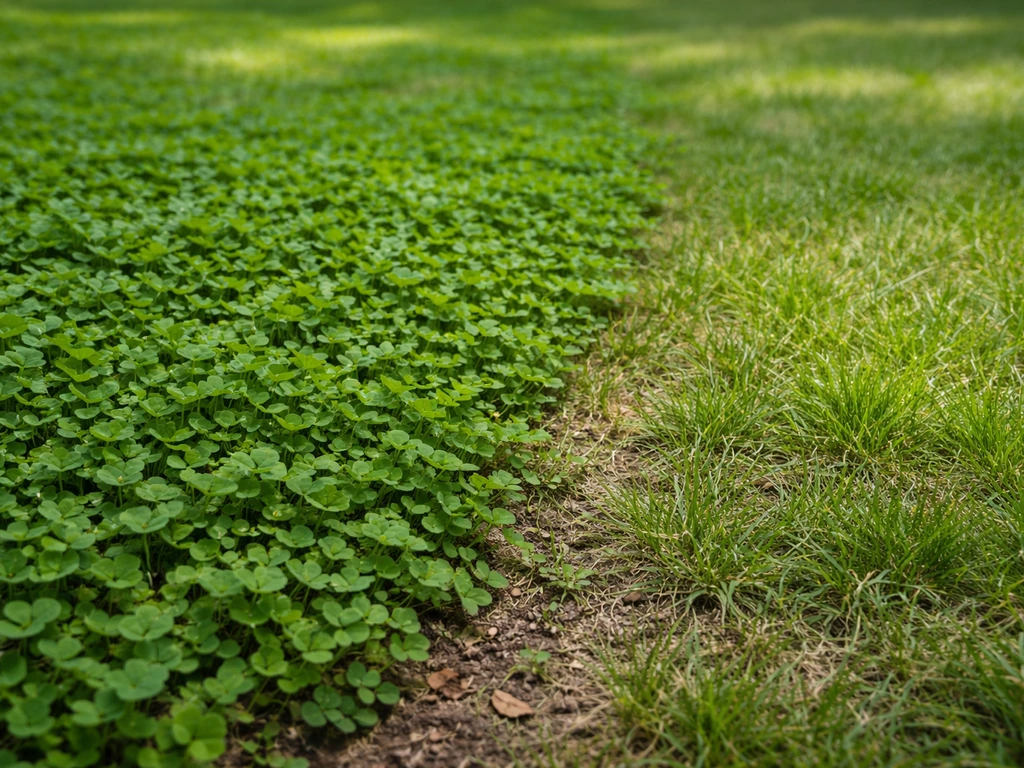
Is Clover Easier to Grow Than Grass? A Practical Test
Find out if clover beats grass for tough lawns, with growth speed, easy establishment tips, and when to choose each.
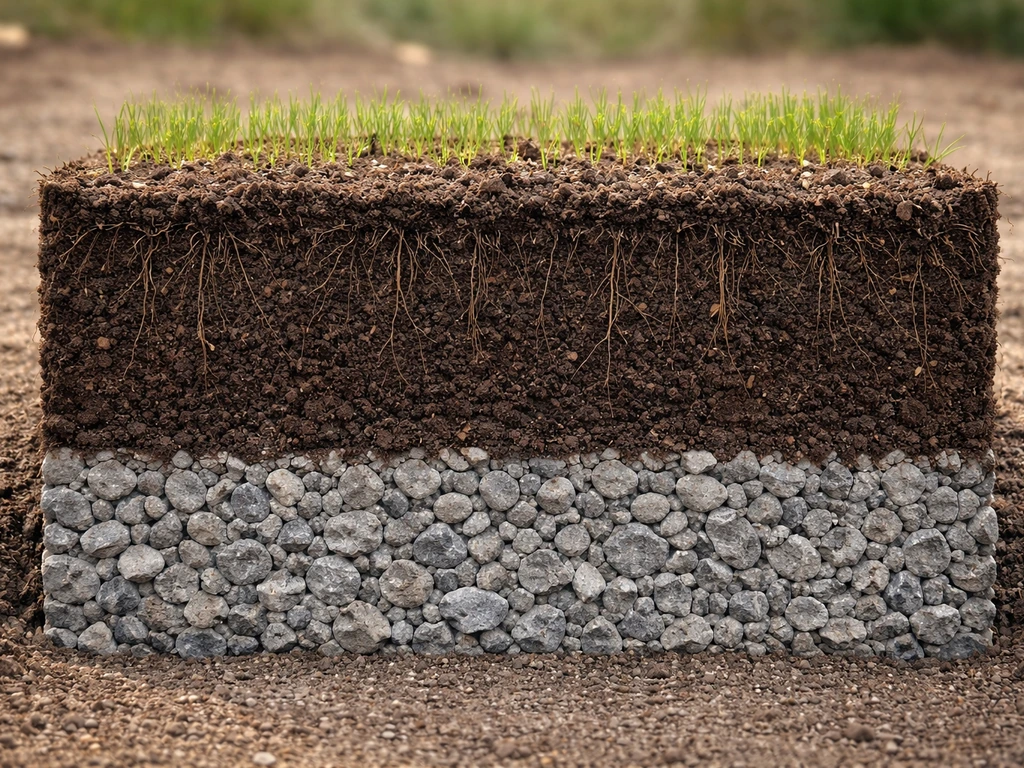
Can You Grow Grass Over Gravel? How to Do It Right
Learn when you can grow grass over gravel and follow a step-by-step method for soil depth, drainage, seeding or sod, and
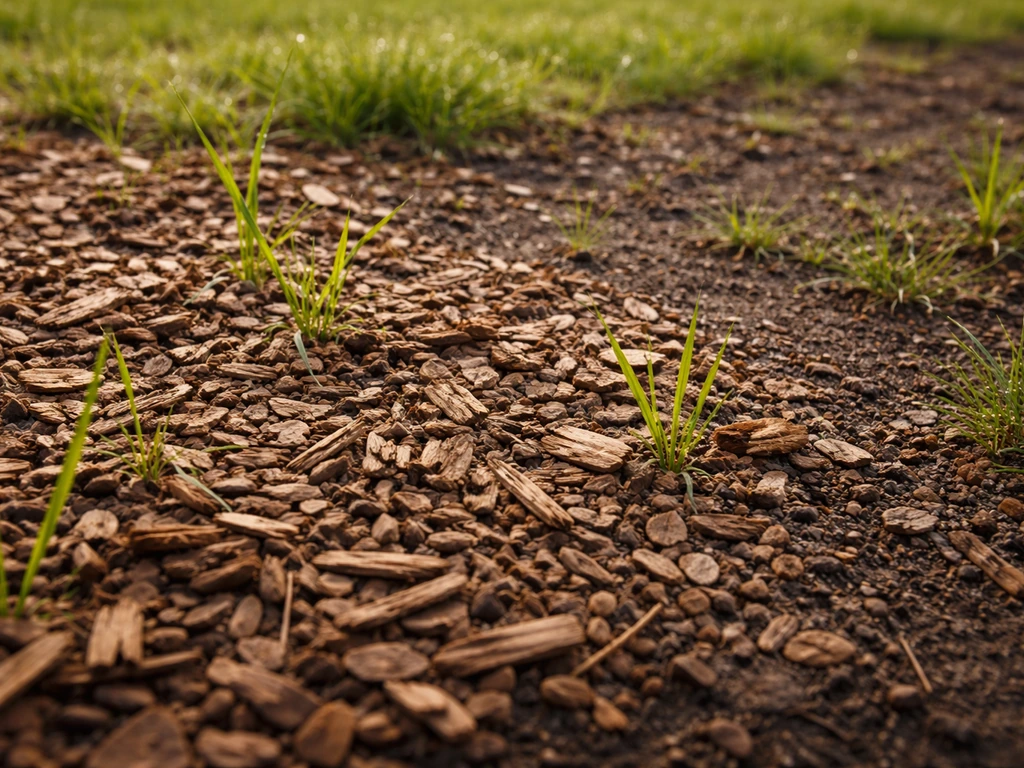
Do Wood Chips Help Grass Grow? When They Work and When Not
Learn when wood chips help grass grow, when they steal nitrogen, and step-by-step how much to apply and seed options.