Yes, you can grow grass by putting topsoil over sand, and it works well when you get the depth right. The minimum you need is 4 inches of good topsoil (firmed and settled, not fluffy and fresh out of the bag), and ideally 6 inches if you want the grass to really dig in and handle summer stress without constant babying. Go thinner than 4 inches and you're gambling, the roots hit dry sand before they're established, the layer dries out fast, and you end up with patchy, struggling turf that never quite makes it.
How Much Topsoil Over Sand to Grow Grass
Marcus Volkmann
5 Apr 2026
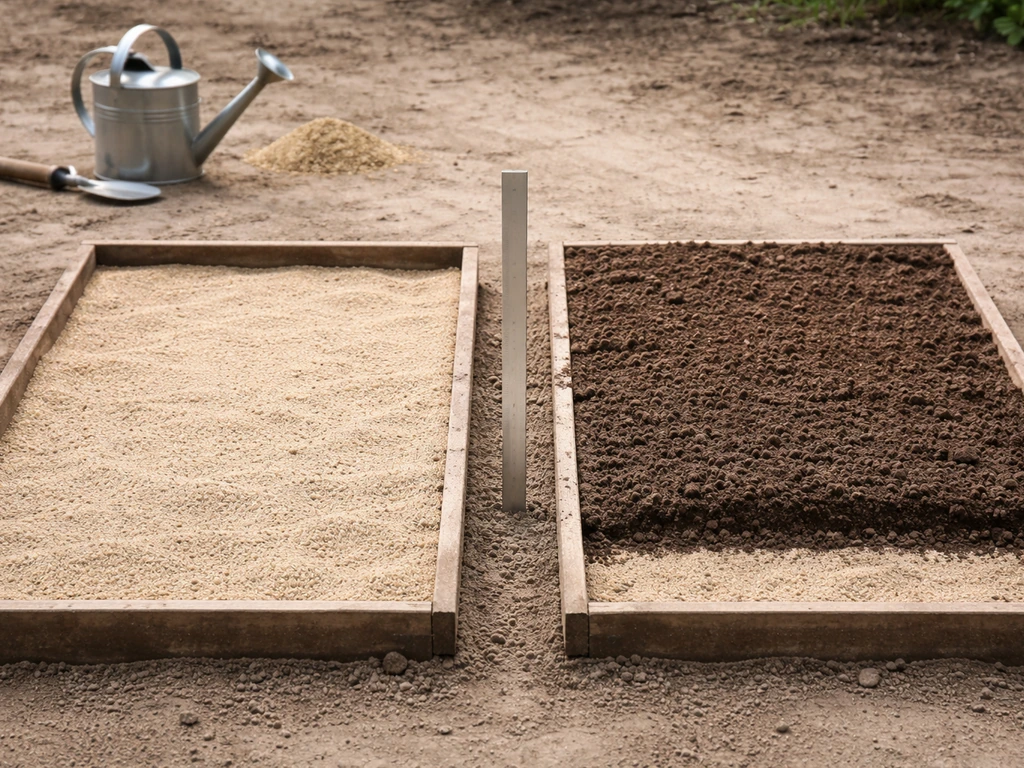
Can you grow grass by putting soil over sand (and rocks)?
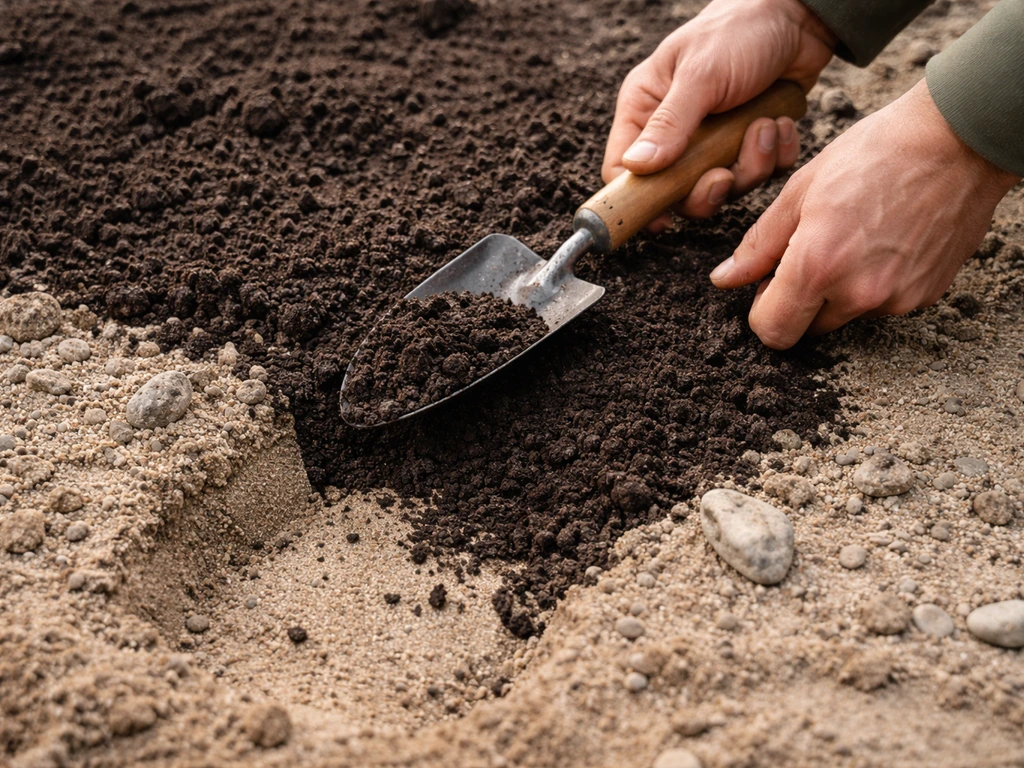
Yes, and people do it all the time. Sand on its own is a terrible growing medium for most grass types, it drains so fast it barely holds moisture, it's almost completely devoid of the nutrients grass needs, and it can't support a healthy root zone without help. But layer enough decent topsoil over it, and you've essentially built a workable growing environment on top of an otherwise useless substrate. The sand underneath actually isn't all bad news, it gives you excellent drainage, which prevents waterlogging. Your job is to give the grass roots enough soil above it to feed, anchor, and survive dry spells.
Rocks are a different issue. A few small rocks mixed into or sitting on top of sand can be removed or buried, but if you're dealing with a solid rock base close to the surface (like caliche in the Southwest, bedrock, or a thick gravel layer), you have a harder problem. In those cases, the only real option is to bring in enough topsoil to create a complete growing environment on top, because roots won't penetrate solid rock. New Mexico State University Extension puts the blank" rel="noopener noreferrer">absolute minimum soil depth for a lawn at 4 inches, but over rock, you want to be on the higher end of that range (6 inches or more) since there's literally nowhere for roots to go if they run out of soil. If you can't achieve that depth over solid rock without major cost or engineering, alternatives like gravel gardens, ground covers, or raised lawn beds may make more sense.
One thing worth understanding before you start: whether you need topsoil to grow grass depends entirely on what's underneath. Over good native soil, you might not need to add any. Over sand or rock, topsoil isn't optional, it's the whole project.
How much topsoil over sand for seeding vs sod
The depth recommendation changes slightly depending on whether you're seeding or laying sod, but the 4-to-6-inch rule holds as your baseline for both. Here's where the difference matters in practice:
Seeding over sand
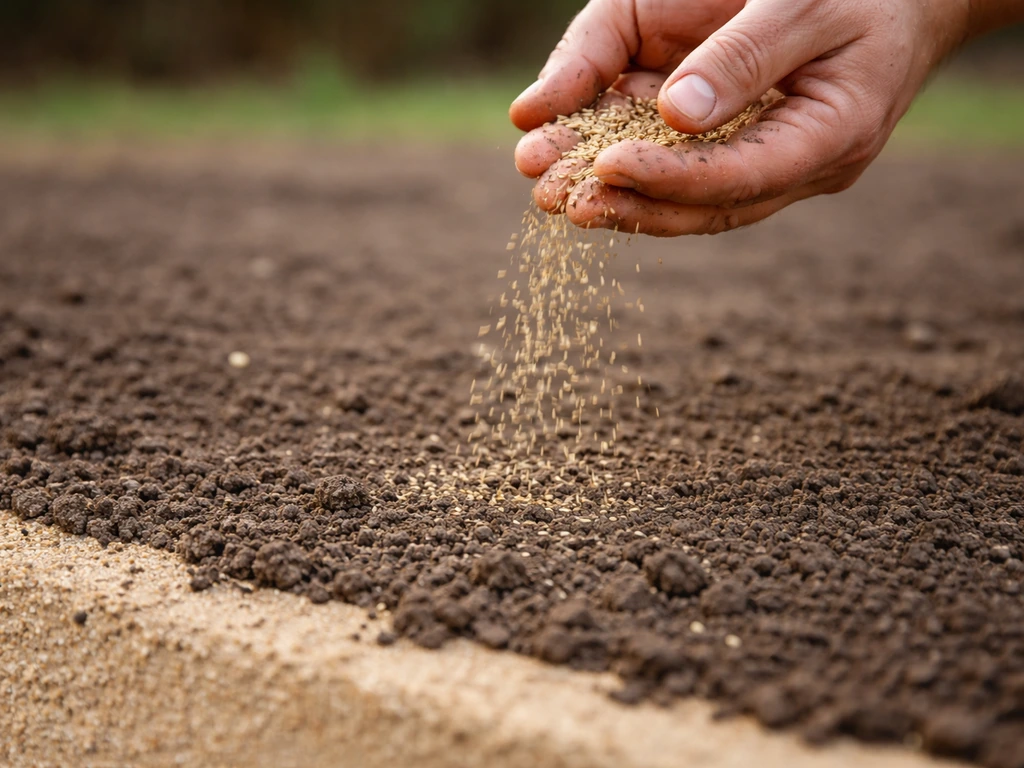
For seeding, you want a minimum of 4 inches of settled topsoil, and 6 inches is better. Seeds germinate in just the top inch or two, but the roots that follow need depth fast, especially in warm weather when the surface dries out quickly. A thin layer over sand is a seed-germination trap: the seeds sprout, hit a moisture cliff a few inches down where the topsoil meets dry sand, and stall out. Aim for 6 inches of good topsoil if you can afford it. Penn State Extension specifically recommends 4 to 6 inches of good-quality topsoil (at firmed, settled depth) for establishing quality turfgrass, and that's solid guidance backed by real root-zone science.
Laying sod over sand
Sod is more forgiving on timing, but just as demanding on soil depth. The sod itself comes with only about an inch of its own root zone and soil attached, which means it's highly perishable if that thin layer dries out before the roots knit into your prepared topsoil below. Your 4-to-6-inch topsoil base needs to be level, firm (not spongy), and moist at installation. The sod roots need to push down into your topsoil layer within the first week or two, so the interface between the sod's existing root mat and your topsoil is critical. Loose, dry topsoil sitting over dry sand is a recipe for sod failure even at the right depth.
| Factor | Seeding | Sod |
|---|---|---|
| Minimum topsoil depth | 4 inches (settled) | 4 inches (settled) |
| Recommended depth | 6 inches | 5–6 inches |
| Surface texture needed | Fine, raked smooth | Firm, level, no air gaps |
| Moisture at installation | Moist but not soggy | Moist — critical for root knitting |
| Time to establishment | 3–8 weeks (germination + rooting) | 2–3 weeks (rooting into topsoil) |
| Risk if depth is too thin | Roots hit dry sand, grass thins out | Sod lifts or dies before rooting |
Prepping the sand (and dealing with rocks) before adding soil
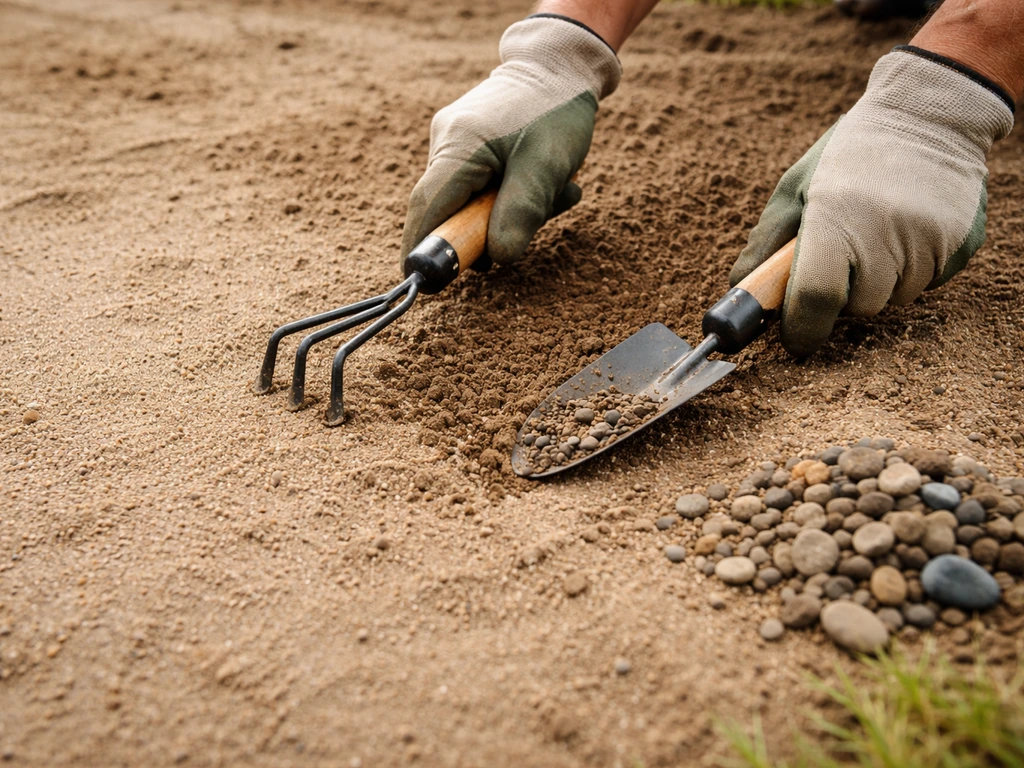
Don't just dump topsoil on top of flat sand and call it prepped. The prep work determines whether that topsoil actually stays put, integrates with the sand below, and gives you a stable base. Here's what the process actually looks like:
- Clear debris and deal with surface rocks. Remove any rocks larger than about 1.5 inches from the area. Small pebbles in sandy soil are fine, but fist-sized rocks and larger create voids under sod or block seed-to-soil contact. If you're working over a deep gravel or rock base, rake it as level as possible before adding soil.
- Grade the area for drainage. Sand drains fast, but you still don't want pooling. Create a slight slope away from any structures — about 1 to 2 percent grade (that's roughly 1 to 2 inches of drop per 10 feet). This matters more when you add topsoil, because topsoil holds more water than sand and can pool if the grade is off.
- Scarify or loosen the top 2 inches of sand. Use a tiller, garden fork, or even a stiff rake to rough up the top layer of sand before you add topsoil. This breaks the sharp interface between sand and soil, helps the two layers integrate at the boundary, and reduces the chance of the topsoil sitting like a cap on top of the sand with no real connection.
- For rock bases: if you're working over solid rock or compacted caliche, level the surface as best you can, then bring in enough topsoil to hit your 4-to-6-inch minimum above the highest point of the rock. You may need edging or landscape borders to keep the soil from washing away at the edges.
- Consider mixing at the interface. For the bottom inch or two of your topsoil layer, mixing it with some of the underlying sand creates a transition zone rather than a hard boundary. This is especially helpful in areas with heavy rain or irrigation, where water moving through the topsoil and hitting sand suddenly can cause erosion or runoff along that interface.
Soil amendments and fertilizing to make the layer work
Plain topsoil over sand gives you the depth grass needs, but it doesn't automatically give you the fertility. Sandy subsoils are notoriously low in organic matter, which means water and nutrients drain right through instead of being held near the roots. University of Florida IFAS notes that Florida sandy subsoils are typically low in organic matter, and adding organic matter such as compost helps improve soil structure and water and nutrient holding capacity. University of Florida IFAS research on sandy Florida soils makes this point clearly: sand-based lawns need organic matter improvements to build any real water- and nutrient-holding capacity, because native sand simply can't do it on its own.
The best amendment to mix into your topsoil before you lay it down (or till into the top few inches) is compost. Aim for a 3-to-4-inch layer of compost tilled into the top 6 inches of your topsoil, or pre-mix roughly 25 to 30 percent compost into the topsoil before spreading. This does three things: increases water retention, adds slow-release nutrients, and improves the physical structure of the soil so roots can actually push through it. If you're sourcing topsoil and compost separately, a 3:1 topsoil-to-compost ratio is a good working mix.
For fertilizing at establishment, use a starter fertilizer with a higher phosphorus content (the middle number on the bag, like a 10-20-10 or similar). Phosphorus drives root development, and that's exactly what you need in the first few weeks. Apply it before seeding or sodding and work it lightly into the top inch of soil. Avoid high-nitrogen fertilizers at establishment, they push leafy top growth at the expense of root depth, which is the opposite of what you need when you're trying to get roots into a topsoil-over-sand setup. Understanding what nutrients grass needs to grow helps you pick the right product at the right time instead of just grabbing whatever's on sale.
If you have any doubt about your soil quality, a basic soil test (available through most cooperative extension offices for under $20) will tell you pH and nutrient levels. Most grasses prefer a pH of 6.0 to 7.0. Sandy soils often trend acidic, and adding topsoil can shift things further. If your pH is off, lime (to raise it) or sulfur (to lower it) should go down before you seed or sod. You can also dig into whether you need loam to grow grass if you're trying to figure out whether to splurge on loamy topsoil versus a more basic mix.
Watering, timing, and mowing during establishment
This is where most DIY projects over sand fail, and it's not because the soil depth was wrong. It's because the watering schedule didn't account for how fast a thin topsoil layer over sand dries out. The sand below wicks moisture away faster than you'd expect, and the topsoil layer can go from moist to bone dry in a day during warm weather. Whether grass needs water to grow isn't really a question, it absolutely does, and in a topsoil-over-sand setup, consistent moisture management during establishment is non-negotiable.
Watering schedule for the first 4 weeks
- Week 1 (seeding) or first 10 days (sod): Water lightly but frequently — two to three times per day if temperatures are above 75°F. The goal is to keep the top 1 to 2 inches consistently moist without flooding. Over sand, flooding just means the water runs through and the surface dries out even faster.
- Weeks 2 to 3: Reduce to once daily, deeper watering. You want to wet the full topsoil depth (4 to 6 inches) to encourage roots to chase moisture downward rather than staying at the surface.
- Week 4 and beyond: Shift to every 2 to 3 days with deep watering. By now roots should be pushing into the topsoil and beginning to anchor. Check by tugging lightly on a few grass plants or a corner of sod — if there's resistance, rooting is happening.
Timing: when to seed or sod over sand
For cool-season grasses (fescue, bluegrass, ryegrass), the best window is early fall, late August through October depending on your climate. Soil temperatures are warm enough for germination but air temperatures are cooling down, which reduces the moisture stress on your thin topsoil layer. Spring is the second-best option. For warm-season grasses (Bermuda, zoysia, St. Augustine), late spring to early summer is your window when soil temperatures are consistently above 65°F. Trying to establish grass in midsummer over a topsoil-over-sand setup is extra hard because of how aggressively the surface dries out.
First mow
Wait until grass from seed reaches about 3.5 to 4 inches before the first mow, then cut to no lower than 2.5 to 3 inches. For sod, wait at least 2 to 3 weeks and check that the roots are actually anchored before running a mower over it, a mower on poorly rooted sod over sand will just lift and roll the sod. Keep mowing height on the higher end during the first full season to reduce stress and encourage deeper rooting.
Troubleshooting common failures and alternatives if it still won't take
If you've laid topsoil, seeded or sodded, and the grass is still failing, the problem usually comes down to a handful of common causes. Knowing what to look for saves you from repeating the same expensive mistake.
Signs you have a depth or drainage problem
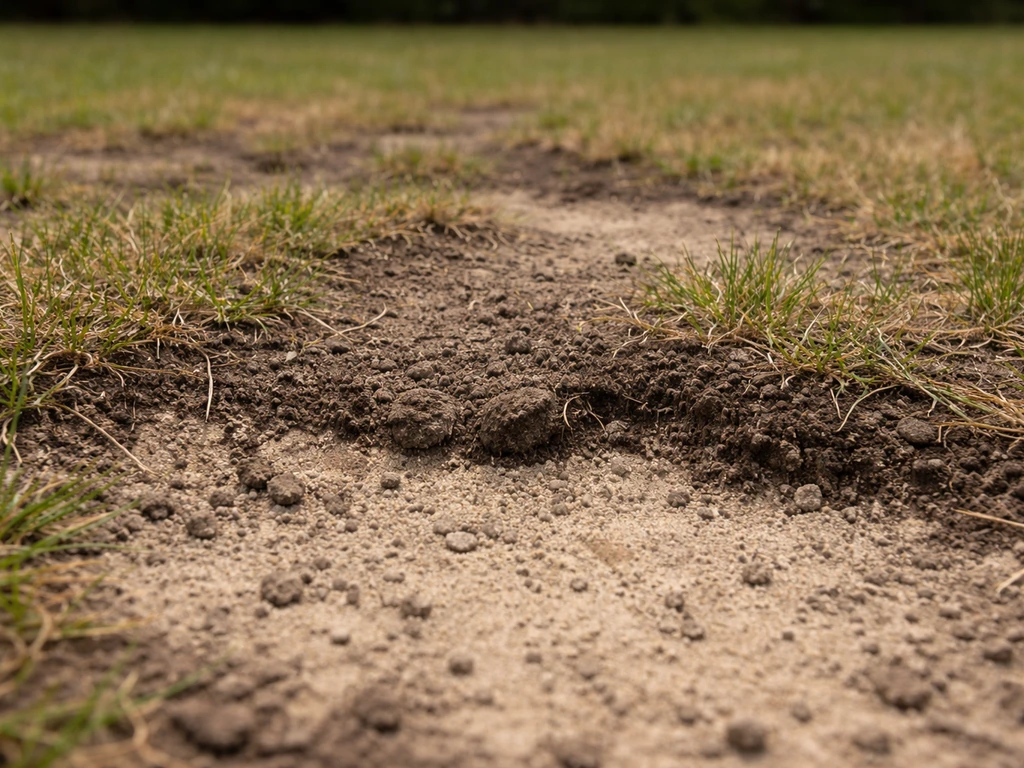
- Grass germinates or greens up initially but thins out and dies in patches within 3 to 6 weeks — classic sign the topsoil layer is too thin and roots are hitting dry sand.
- Sod that lifts at the edges or feels spongy and lifts easily after 2 weeks — roots haven't knitted into the topsoil, usually from insufficient moisture or poor surface contact.
- Pooling water in low spots after rain — you have a grading issue, and the pooled water is suffocating roots.
- Soil washing away along edges or in channels during heavy rain — the topsoil-over-sand interface is eroding; you need edging and possibly erosion control mesh or straw matting.
Fixes in order of simplicity
- Add more topsoil. If your depth was under 4 inches, there's no shortcut — you need more material. Top-dress with additional topsoil and compost mix and reseed.
- Improve the interface. If the topsoil is sitting as a distinct layer over the sand with no integration, till the border zone and mix the two layers together across the bottom inch or two.
- Use erosion control mesh or straw matting. On slopes or areas with rain erosion, biodegradable erosion control fabric holds the topsoil in place while seeds germinate.
- Switch grass varieties. Some grasses genuinely perform better in sandy or modified sandy profiles. Bermuda grass, tall fescue, and zoysia all have deeper, more aggressive root systems compared to Kentucky bluegrass and do better in low-nutrient, fast-draining setups. This is one of the most important parts of understanding what grass needs to grow in a challenging substrate — picking the right species for the conditions is as important as any amendment.
- Consider a soil conditioner or wetting agent. Over sandy substrates, hydrophobic conditions can develop (where the sand repels water instead of absorbing it). A soil wetting agent applied to the surface helps water penetrate evenly rather than running off or channeling.
When to consider alternatives
If you're dealing with solid bedrock close to the surface, a very shallow caliche layer, or an area where bringing in 4 to 6 inches of topsoil isn't practical or affordable, it's worth stepping back and asking whether grass is the right plant for the space. Ground covers like creeping thyme, clover, or sedum grow in much shallower profiles and tolerate sandy, rocky, low-nutrient conditions far better than most turfgrasses. Gravel gardens with drought-tolerant plants are another option that eliminates the rooting depth problem entirely. Understanding how much soil grass needs to grow makes it clear when you're fighting a battle that's not worth the cost and effort.
That said, topsoil over sand is one of the most practical and commonly successful fixes for a challenging lawn substrate. Get your depth to 4 to 6 inches, prep the sand surface first, mix in compost, use a starter fertilizer, keep it consistently moist in the first month, and pick a grass variety suited to fast-draining conditions, and you have a genuinely good shot at a lawn that looks and performs like it's growing in ideal soil. The sand underneath isn't your enemy once you've given the grass enough of a rooting zone to work with.
FAQ
Can I lay topsoil over sand without compacting it, and still get the right depth?
Yes, but only if you build it to the same firmed, settled depth (4 inches minimum, 6 inches ideal). Loose or freshly spread topsoil can settle further after you water, leaving you effectively thinner than planned. Before seeding or sodding, compact or roll the surface lightly so it feels firm, not spongy.
What if I only have enough topsoil to add 2 to 3 inches over sand?
Usually not. If you’re short on depth, focus on getting the topsoil layer thick and amended where grass roots will actually be, then address drainage with a better irrigation plan. A thin, nutrient-free layer will dry quickly and roots stall. If you cannot reach at least 4 inches in the whole area, consider switching to a shallower ground cover or raised bed approach.
Can I just top-dress with compost instead of mixing it into the topsoil?
Spreading compost on top after the fact is less effective than mixing or incorporating it into the topsoil layer. To improve water and nutrient holding where roots grow, use compost as a 25 to 30 percent mix into the topsoil, or till in a 3 to 4 inch compost layer into the top 6 inches before laying sod or seeding.
How should my watering schedule change after the grass sprouts on topsoil over sand?
For seeding, keep the surface consistently moist until germination and early root establishment, then gradually reduce frequency while increasing the amount per cycle so roots push deeper. Over sand, “light and frequent” often fails because the top layer stays wet while the deeper zone remains dry. A good rule is to switch to deeper, less frequent irrigation once the grass is established (after the initial rooting window).
Do I need to adjust pH over sand, and when should I apply lime or sulfur?
Test the soil first, but if you cannot, avoid common guesswork mistakes like applying lime or sulfur without a pH number. Sandy soils can be acidic, and adding topsoil can shift pH. If you do need to adjust, do it before seeding or sodding, then wait for the adjustment period recommended by your soil test results.
What fertilizer mistake causes the most failures when growing grass over sand?
A starter fertilizer with higher phosphorus is best at establishment, and it should be worked lightly into the top inch. If you use too much nitrogen early, you can get fast leaf growth before roots develop, which is especially problematic when the topsoil dries quickly over sand. After establishment, move to a balanced program based on grass type and soil test results.
Does raised beds or soil berms change the topsoil depth I should use over sand?
Yes, but treat it like a different project. Raised beds or wheelbarrow-style berms can work well if you can maintain the same effective root-zone depth (still target 4 to 6 inches of amended soil in the grass root area). The big difference is you control the soil depth and moisture more reliably, which helps with the establishment watering problem.
How do I know my sod has rooted into the topsoil over sand before mowing?
For sod, the key is root contact and early anchoring into your topsoil layer. If the interface stays dry, sod roots won’t knit, and mowing can lift it even if the topsoil depth is correct. Keep the installed sod moist for the first couple of weeks, then test anchoring by gently tugging a corner before mowing.
Will aerating the sand fix the rooting and moisture problems if I only add a thin layer of topsoil?
Yes, but not as a substitute for depth. Aerating can help reduce surface crusting and improve water movement, but over sand the dominant issue is that roots need enough soil volume above the sand and enough organic matter to hold moisture. If you aerate, pair it with compost or organic matter incorporation rather than relying on aeration alone.
How can I tell if bedrock or caliche will make my topsoil plan fail?
If there is rock or caliche close to the surface, roots may stop short even with the correct topsoil thickness at the surface. In that case, you may need more overall depth (often 6 inches or more) or a different solution like ground covers or raised beds. The practical check is whether you can reach at least 4 to 6 inches of workable soil everywhere without hitting an impermeable layer.
Next Articles
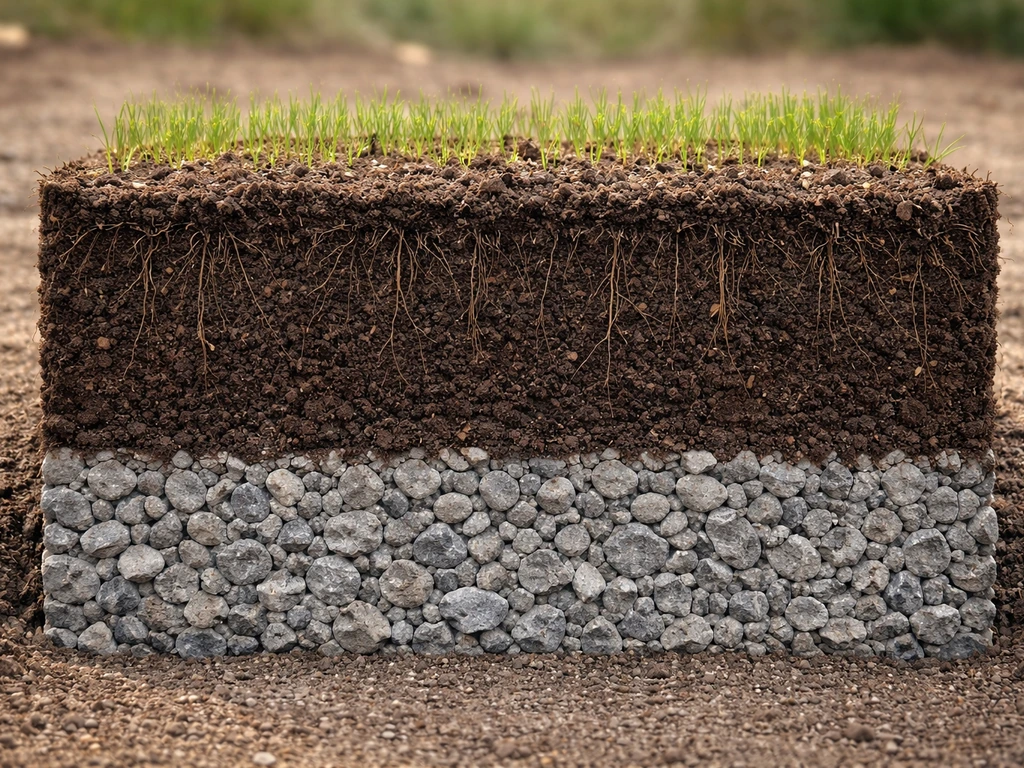
Can You Grow Grass Over Gravel? How to Do It Right
Learn when you can grow grass over gravel and follow a step-by-step method for soil depth, drainage, seeding or sod, and
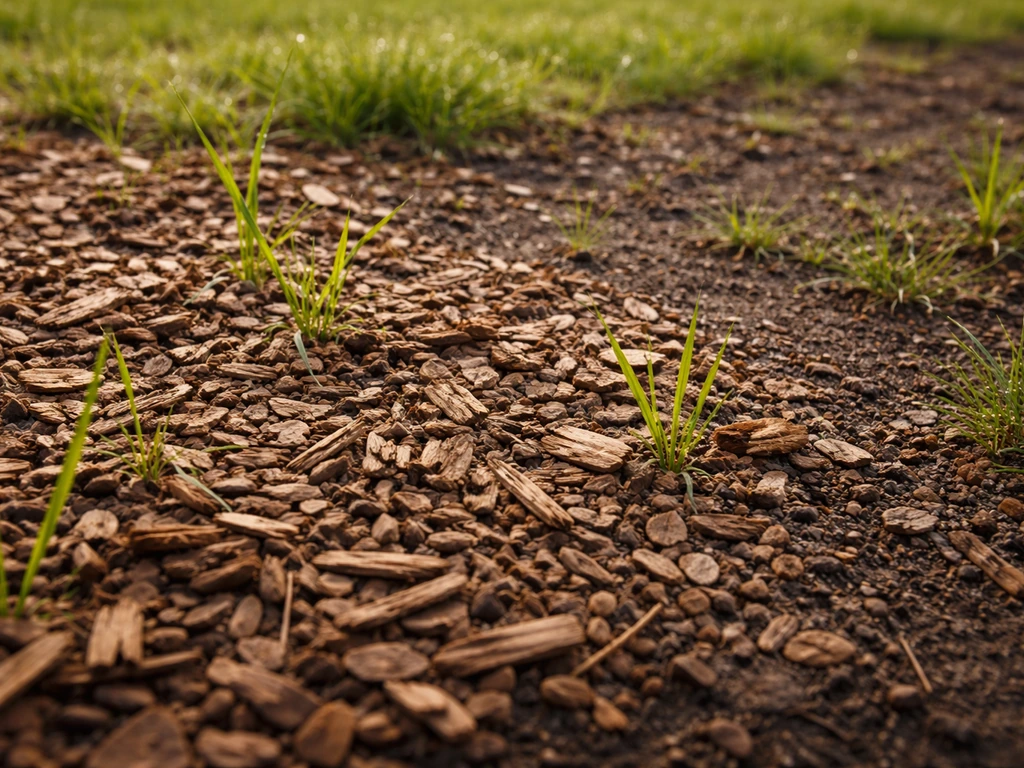
Do Wood Chips Help Grass Grow? When They Work and When Not
Learn when wood chips help grass grow, when they steal nitrogen, and step-by-step how much to apply and seed options.

Will Potting Soil Help Grass Grow? What Works and What Fails
When potting soil helps grass grow, when it fails, and how to prep, apply, seed, water, and troubleshoot bare spots.