For most new lawns, you need at least 4 to 6 inches of quality topsoil. That's the range that gives grass roots enough depth to establish, hold moisture, and access nutrients before they have to push into whatever is below. Go shallower than 4 inches and you'll constantly fight drought stress, thin coverage, and patchy die-off. Go much deeper and you start running into drainage and compaction problems that can be just as frustrating. The depth question is simple. The follow-through is where most people go wrong.
How Much Soil Does Grass Need to Grow? Depth and Amount
Marcus Volkmann
9 Apr 2026
The baseline: how deep does soil need to be for new grass
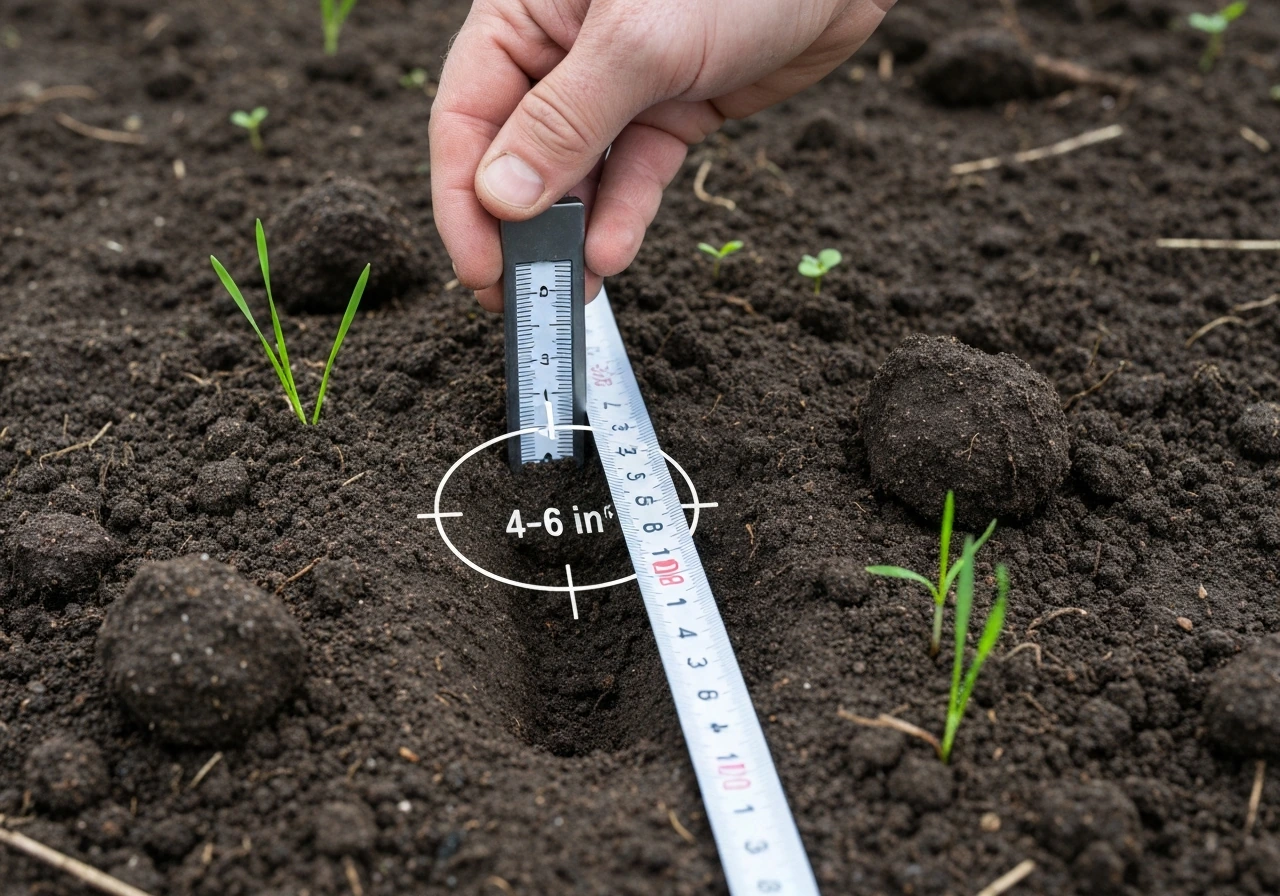
The 4-to-6-inch rule isn't arbitrary. Penn State Extension recommends tilling phosphorus and potassium into the soil to a depth of 4 to 6 inches before lawn establishment because those nutrients don't move down through the soil quickly when surface-applied.
That same tillage depth is what lets roots breathe, water drain, and fertilizer actually reach the zone where grass roots live. Penn State Extension lawn establishment guidance advises that phosphorus and potassium are typically tilled into the soil to a depth of 4 to 6 inches because these nutrients do not move down quickly when applied to the surface fertilizer actually reach the zone where grass roots live.
If you're starting from scratch, aim for 6 inches of workable, quality topsoil as your target. Four inches is the floor, not the goal.
For seeded lawns, keep in mind that soil depth and seed planting depth are two different things. The 4-to-6-inch profile is about the root zone, not how deep you bury the seed. Colorado State University Extension guidance indicates that grass seed coverage is typically around 1/4 to 3/8 inch of soil on top. Good seed-to-soil contact matters far more than thick seed burial, as University of Maryland Extension makes clear: germination depends on that contact, not on seed being buried deep. So when you're laying soil for a seeded lawn, you're building a root-zone environment, then pressing seed into the surface of it.
If you're wondering what else grass needs to grow beyond just the right soil depth, the short answer is that depth is only one piece of a larger puzzle that includes nutrients, water, light, and pH.
Topsoil vs. dirt vs. soil: what's actually worth using
These three words get used interchangeably at garden centers and on contractor invoices, but they are not the same thing. "Dirt" is what you dig out of a hole. It's often subsoil, compacted fill, or construction debris mixed with native clay. It may grow weeds but it won't reliably grow grass. "Soil" is a general term that can mean anything from bagged potting mix to screened native material. "Topsoil" is supposed to mean the biologically active upper layer of earth, but here's the catch: in the United States, there is no federal legal definition for topsoil. Commercially sold topsoil varies enormously in quality.
Utah State University Extension identifies six quality factors that determine whether topsoil will actually perform: pH, texture, organic matter content, soluble salts (measured as electrical conductivity, or EC), coarse fragment content, and nutrient levels. A product can look exactly like rich topsoil and still be useless or actively harmful if it has high salinity or an extreme pH. When buying in bulk, ask suppliers whether their product has been tested. Screened topsoil with particles under 0.75 inches, a pH between 6.0 and 7.0, and at least some organic matter is what you want for lawn establishment.
One more thing worth flagging: if you're sourcing topsoil from a site with any industrial or agricultural history, get it tested for heavy metals. UNH Cooperative Extension recommends lab analysis for lead, arsenic, copper, and cadmium if contamination is suspected. These contaminants can harm plants and people, and no depth of application fixes contaminated soil. If you're unsure whether you actually need topsoil or if alternatives will work, that's worth thinking through before you spend money on a bulk delivery.
How to calculate exactly how much soil to buy
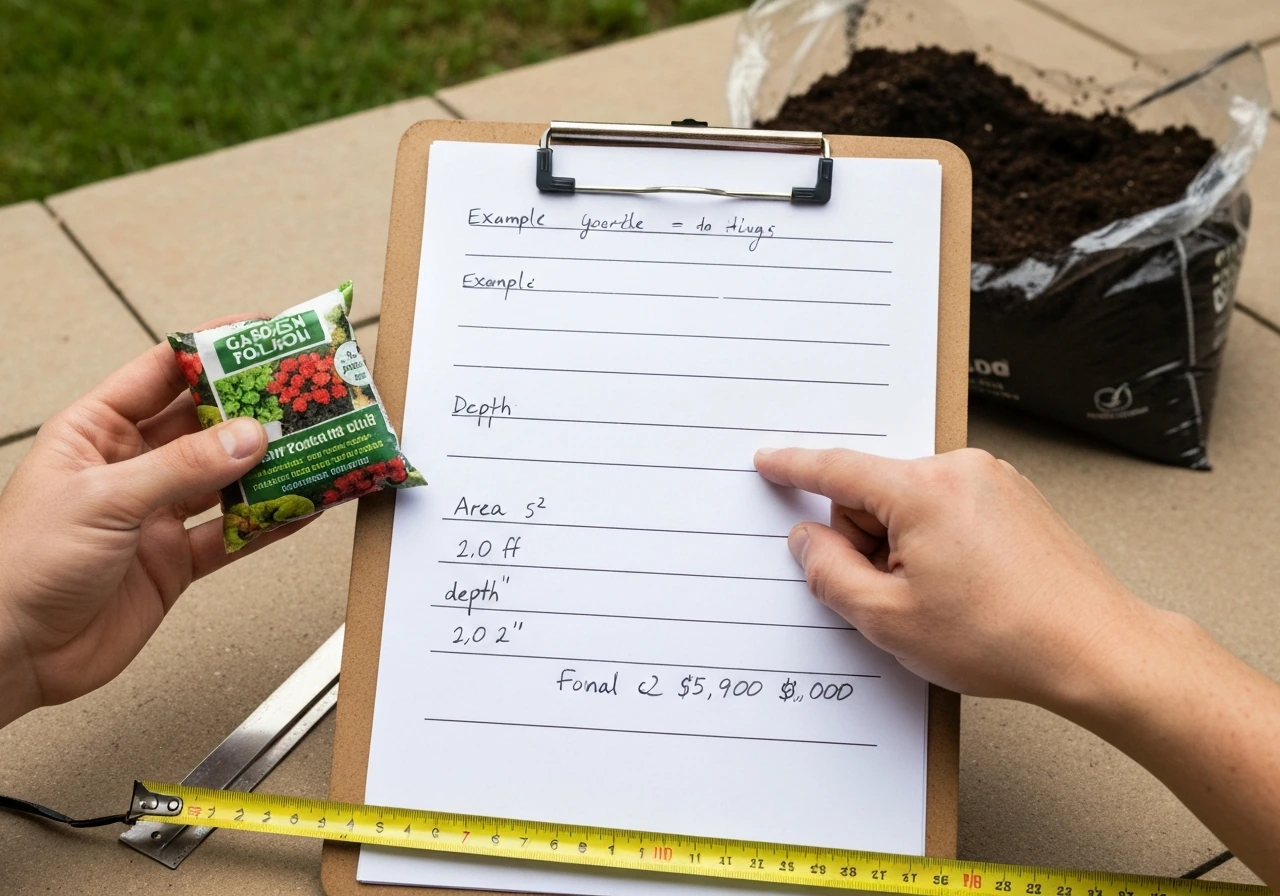
Here's the formula used in practice: multiply your area (length × width in feet) by your desired depth in inches, then divide by 324. That 324 comes from the fact that there are 27 cubic feet in a cubic yard, multiplied by 12 inches per foot. The result is cubic yards.
As a real-world check: Cornell Cooperative Extension's example calculation shows that 5,000 square feet at 3 inches deep requires about 46.3 cubic yards of material. Scale that math for your space and depth target.
| Area (sq ft) | Depth Target | Cubic Yards Needed (approx.) |
|---|---|---|
| 500 | 4 inches | 6.2 |
| 500 | 6 inches | 9.3 |
| 1,000 | 4 inches | 12.3 |
| 1,000 | 6 inches | 18.5 |
| 5,000 | 4 inches | 61.7 |
| 5,000 | 6 inches | 92.6 |
If you're working with a small patch and bags are more practical, Angi's guidance puts a 40-pound bag of topsoil at roughly 0.76 cubic feet of coverage. To convert your cubic yard number to bags: multiply cubic yards by 27 (to get cubic feet), then divide by 0.76. For a 500-square-foot area at 4 inches deep, that's about 6.2 cubic yards, or roughly 220 bags. Bags get expensive fast on anything larger than a small repair. Bulk delivery is almost always cheaper above 2 cubic yards.
Layering topsoil over gravel, sand, or clay
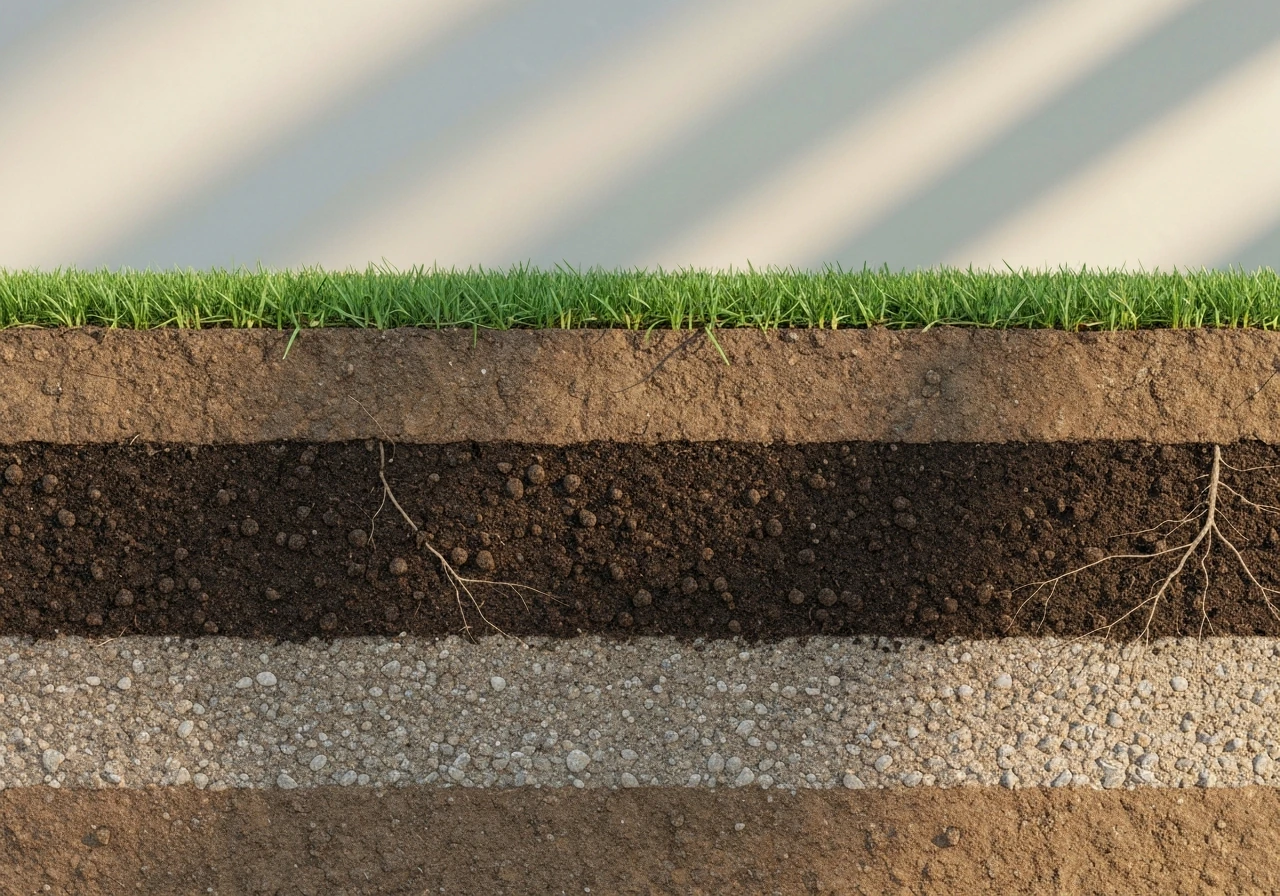
The baseline 4-to-6-inch number assumes you're working with native soil below that's at least somewhat functional. When the substrate beneath is gravel, sand, or heavy clay, the rules change.
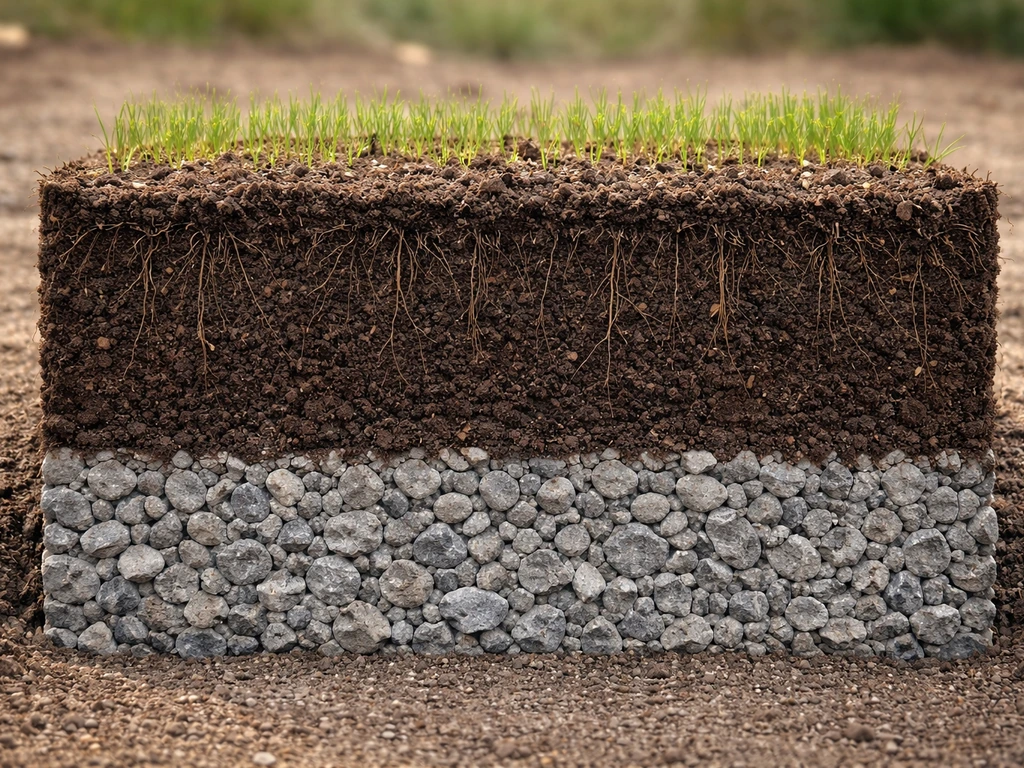
Topsoil over gravel
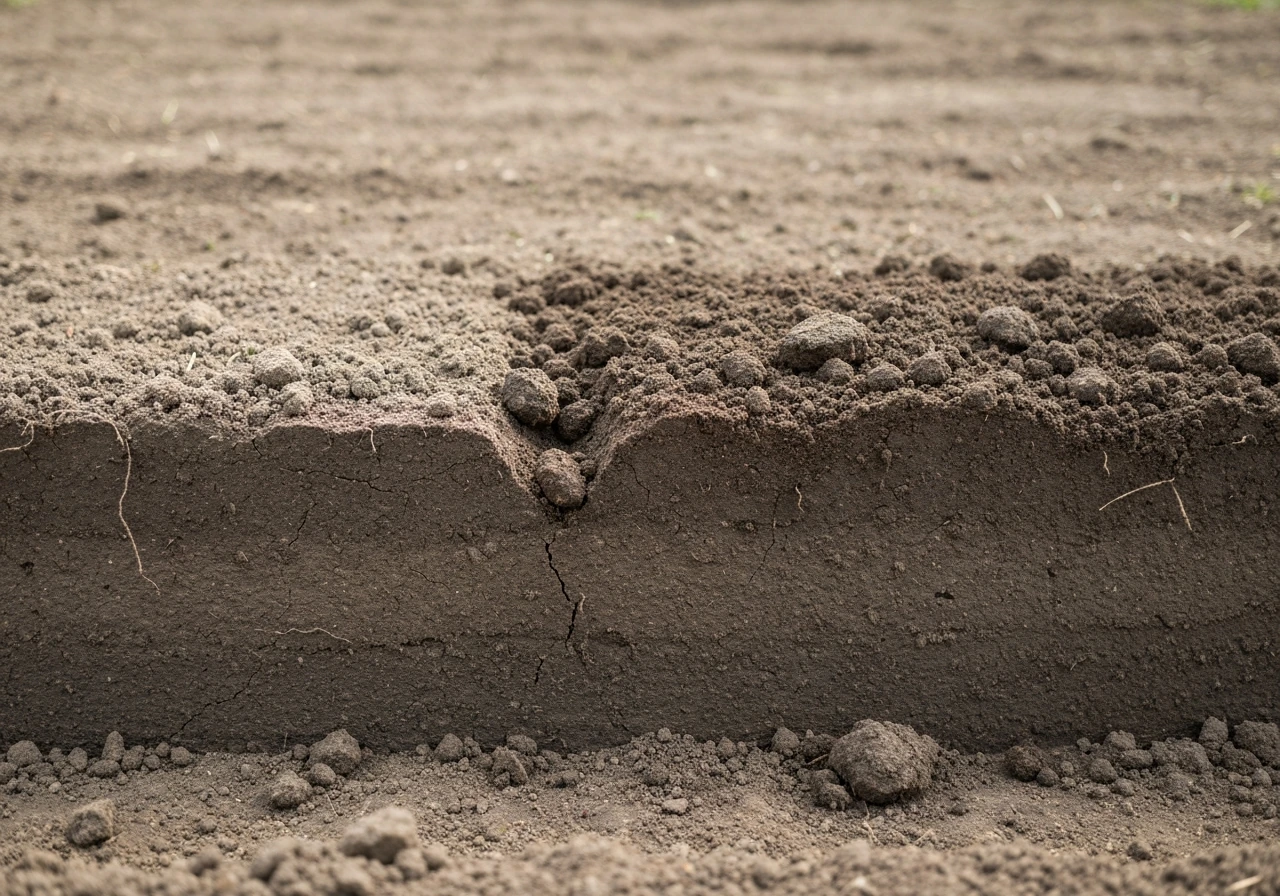
Gravel drains fast, which sounds like a benefit, but it creates a layering problem called a perched water table in reverse: water moves through your topsoil, hits the gravel, and then drains away so quickly that the topsoil above can dry out before roots reach through. University of Alaska Fairbanks Extension specifically addresses this scenario of topsoil over sand or gravel, and the guidance for those situations points toward adding more depth than the standard minimum.
For gravel substrates, aim for at least 6 inches of topsoil, and closer to 8 inches if you want the root system to establish well before it hits the drainage layer. You'll also want to incorporate compost into the topsoil layer since there's no nutrient contribution coming from below. If you're curious about the details of how much topsoil to put over sand to grow grass, the same logic applies there.
Topsoil over clay
Clay is the trickier case. The problem isn't depth so much as the interface between your new topsoil and the clay below. If you just dump topsoil on top of clay without breaking up and mixing the transition zone, you create a drainage barrier. Water sits in the topsoil layer and the roots never penetrate the clay.
University of Tennessee Extension emphasizes loosening to a 6-inch depth as part of preparation, and that applies here. Before adding new topsoil over clay, till or scarify the clay surface to at least 2 to 3 inches deep to break up that hard layer. Then add your topsoil and till the whole profile together at the interface so there's no sharp boundary. You don't need more total depth than standard, but you need a blended transition.
Topsoil over sand
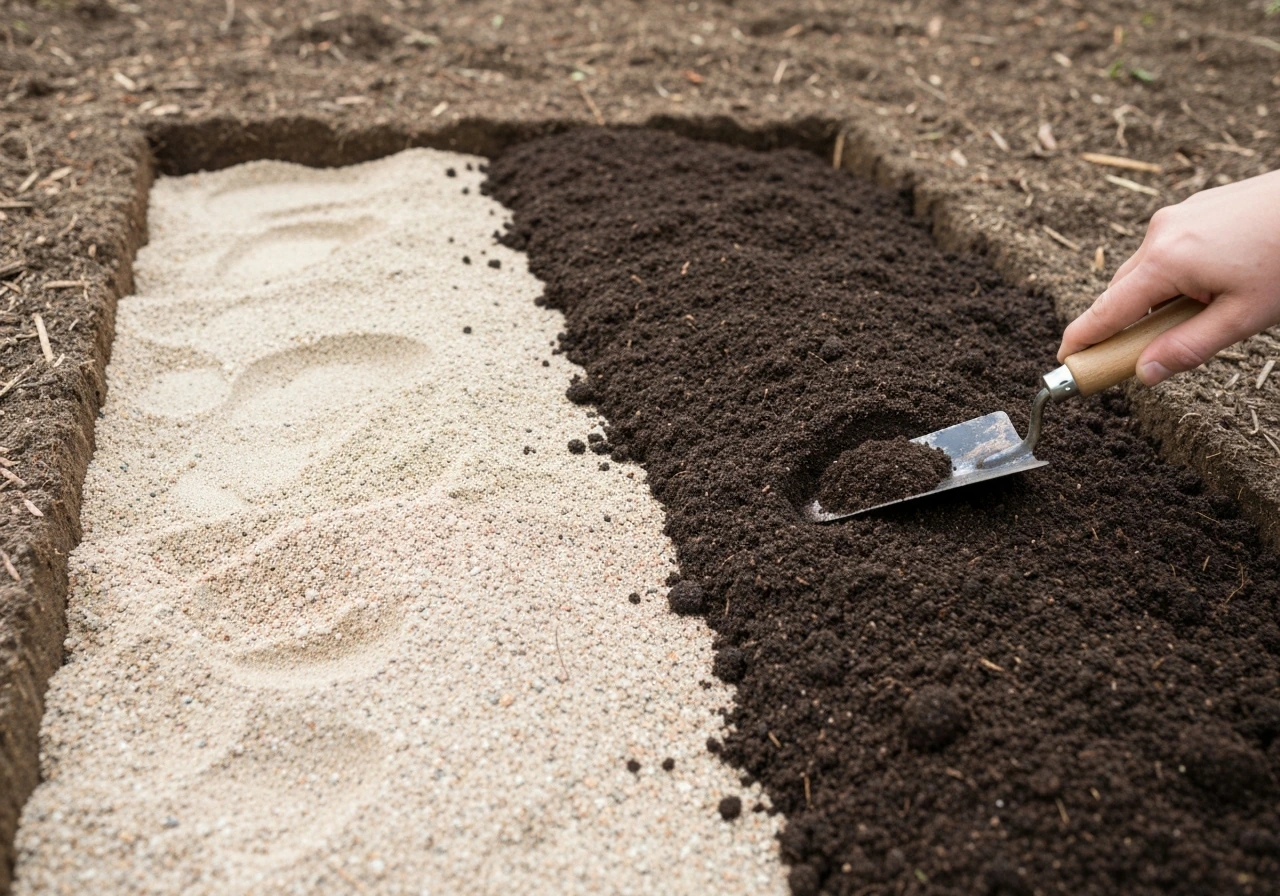
Sand drains fast and holds almost no nutrients. Adding topsoil over sand without addressing the substrate gives you the same interface drainage problem as gravel, but sand also gives roots nothing to work with once they reach it. At minimum, use 6 inches of topsoil with incorporated compost. Utah State University Extension notes that even when you haul in topsoil for turfgrass establishment, it's still beneficial to incorporate compost into it to build organic matter. For sandy substrates, that's not optional, it's essential. Grass on plain topsoil over sand will be chronically hungry and drought-stressed no matter how deep the layer is.
Prep steps before soil goes down
The order of operations matters more than most homeowners expect. Dumping topsoil on unprepared ground is one of the most common reasons new lawns fail in the first summer.
- Test your existing soil before you order anything. Know your pH, nutrient levels, and organic matter content so you're not guessing at amendments. Understanding what nutrients grass actually needs to grow will help you interpret those test results and decide what to add.
- Grade the area for drainage before topsoil goes down. Slope should run away from the house (roughly 1 to 2 percent grade). Low spots collect water and kill grass faster than almost anything else.
- Clear weeds, rocks, and debris. Skip the weed barrier fabric under topsoil for grass, it prevents root penetration into the native substrate and causes more problems than it solves.
- Incorporate amendments into your topsoil layer, not just on top of it. Penn State Extension recommends working 1 to 2 inches of sphagnum peat or compost into the soil with rototilling to a depth of 4 to 6 inches. Phosphorus and potassium should be tilled in at this stage, not applied to the surface later.
- Finish grade after amendments are incorporated. Rake to an even surface and lightly roll or tamp to firm the seedbed without over-compacting. You want footprints to sink about half an inch, not 2 inches and not zero.
If you're seeding rather than sodding, improve seed-to-soil contact by lightly raking the surface after broadcasting seed so seed is covered with roughly 1/4 inch of soil. University of Missouri Extension recommends power raking or vertical slicing before overseeding for the same contact reason. Contact beats depth every time when it comes to germination.
When adding more soil won't fix the problem
This is the section people skip and then wonder why their lawn still looks terrible after spending money on topsoil. More depth is not always the answer. Here are the situations where the soil depth is fine and something else is killing your grass.
Drainage failure
If water pools on your lawn for more than an hour after rain, you have a drainage problem that more topsoil will only make worse by raising the surface while the underlying issue persists. Fix grading, install a French drain, or improve the clay hardpan before adding any more material on top. Penn State Extension notes that sod can deteriorate even after proper installation if drainage isn't addressed.
Compaction
Roots can't push through compacted soil no matter how deep the topsoil above it is. If the native soil below your topsoil layer is compacted by construction traffic, heavy foot use, or equipment, roots will stop at that layer. Core aeration and, in severe cases, deep tillage before adding topsoil are the fixes. Adding 2 more inches of topsoil on top of a compaction problem just raises the floor.
Thatch buildup
Washington State University Extension is clear that thatch accumulation over 1/2 inch at the soil surface blocks air, water, and nutrients from reaching roots. If an existing lawn isn't responding despite adequate soil depth, check the thatch layer before doing anything else. Dethatching and aerating often solve what looks like a soil depth problem.
Shade
No amount of perfect soil fixes a location that gets fewer than 4 hours of sun for most grass species. Shade from trees also means root competition: tree roots will colonize your topsoil layer and outcompete grass for water and nutrients. If shade is the issue, you're better off choosing a shade-tolerant grass variety, reducing tree canopy, or considering ground covers. Throwing more topsoil at a shade problem is a waste of money. Whether your grass is also getting enough water is worth checking before assuming shade is the sole culprit, since shaded areas often have very different moisture dynamics than open sun.
Loam vs. whatever you actually have
Loam (a roughly equal mix of sand, silt, and clay with good organic matter) is the ideal soil texture for lawns. But most people aren't starting with loam. If you're weighing whether to amend what you have or import new material, the question of whether you actually need loam to grow grass is worth understanding, because the answer isn't always yes, and the alternatives are sometimes cheaper and more practical.
Practical next steps
If you're starting a new lawn: target 6 inches of quality topsoil, incorporate compost and starter fertilizer into the top 4 to 6 inches before seeding or sodding, and fix grading and drainage first. If you're laying over gravel or sand, bump that up to 6 to 8 inches and don't skip the compost. If you're laying over clay, focus on blending the interface zone rather than just adding depth.
Calculate your volume using the area × depth ÷ 324 formula, order in bulk above 2 cubic yards, and get your topsoil tested if the source isn't a reputable supplier. Do those things in order and you'll have the soil conditions grass actually needs. Skip the prep and the formula, and you'll be troubleshooting the same patchy lawn again next spring.
FAQ
Can I grow grass with less than 4 inches of soil if I water a lot?
You can sometimes get temporary green-up, but you usually will not get reliable rooting. The bigger issue is that shallow soil forces roots to stay near the surface, so heat, wind, and short watering gaps stress the plants. If you are below 4 inches, fix the substrate first (grade, compaction relief, or drainage) before relying on extra irrigation.
Do I need the same soil depth for sod and for seed?
The depth target is still about the root zone, but sod benefits more from consistent surface firmness and drainage because it has no time to “find” conditions. For seeded lawns you must also focus on seed-to-soil contact (light coverage, not deep burial), while sod mainly needs the root-contact layer to stay moist and evenly graded so edges do not dry out.
What if my yard already has grass, can I just add topsoil on top?
Adding a few inches over an existing lawn often fails when the real problems are compaction, thatch, or poor drainage. A thin topdressing is sometimes useful, but if you see pooling water, foot-packing, or heavy thatch, you usually need core aeration and drainage or dethatching first, then topdress only to fine-tune the surface.
How do I measure how much soil depth I actually have right now?
Measure from the current surface to the first clear boundary where the native material changes (for example, gravel, hardpan clay, or a compacted layer). Use a probe or soil knife in several spots and average the readings, because depth can vary across the lawn after settling or uneven grading.
Should I remove existing subsoil or just build up with topsoil?
In most cases you build up, but only if the layer underneath is functional. If you have a compaction layer, a drainage barrier, or heavy gravel, building only increases the problem or forces roots to stop sooner. For those conditions, loosen or blend the transition zone, and correct drainage before hauling topsoil.
If I have gravel or sand under the soil, is more depth always the answer?
More depth helps, but it is not sufficient on its own. You must also incorporate compost into the topsoil layer so nutrients and water-holding capacity are available before roots hit the fast-draining substrate. For gravel, pushing toward 8 inches gives roots time to establish, then compost supports sustained growth.
What should I do if water pools for more than an hour after rain?
Treat that as a grading or drainage problem first. Raising the surface with more topsoil can worsen water retention by increasing the amount of water the profile has to absorb. Core actions include regrading for slope away from low spots, improving soil infiltration (through aeration and amendments), and adding drainage features like a French drain where needed.
Do I need to till the soil before adding topsoil or planting?
If the goal is to blend the transition between the new topsoil and the existing layer, tilling or scarifying at least the interface depth is usually important. The key caution is not to over-till wet soil (it smears and compacts). For clay, focus on breaking up the hard surface layer and mixing at the boundary rather than simply increasing total depth.
How much compost and starter fertilizer should I mix in?
A common practical approach is to incorporate compost into the top 4 to 6 inches and use a starter fertilizer designed for lawns at label rates. The exact amounts depend on your soil test (especially pH and nutrient needs), because “more” compost is not always better if salinity or nutrient levels are already high.
Is it necessary to test topsoil for heavy metals?
It is not required for every purchase, but it is important if the soil comes from a site with possible contamination (old industrial land, heavily treated agricultural areas, or construction fill). Testing is most worth it when you cannot verify the supplier’s source history, because contamination cannot be solved by increasing depth.
How do I avoid buying too much or too little soil when using the volume formula?
Use area times depth divided by 324, then add a small buffer for uneven ground and soil settling. Also confirm whether you are buying screened topsoil that will spread easily, because coarse fragments and clay-rich material change how efficiently the pile fills low areas. If you are ordering in bulk, measure the actual spread width and depth you intend to achieve after spreading, not just the theoretical depth.
What if my topsoil looks fine but grass still fails to establish?
Check the non-depth causes first: drainage, compaction, thatch thickness, and sunlight. Grass can fail even with adequate depth if roots cannot penetrate the underlying layer, if thatch blocks movement of air and water, or if the area gets too little sun. If you address those items and still struggle, then retest soil quality factors like pH and salinity.
Next Articles
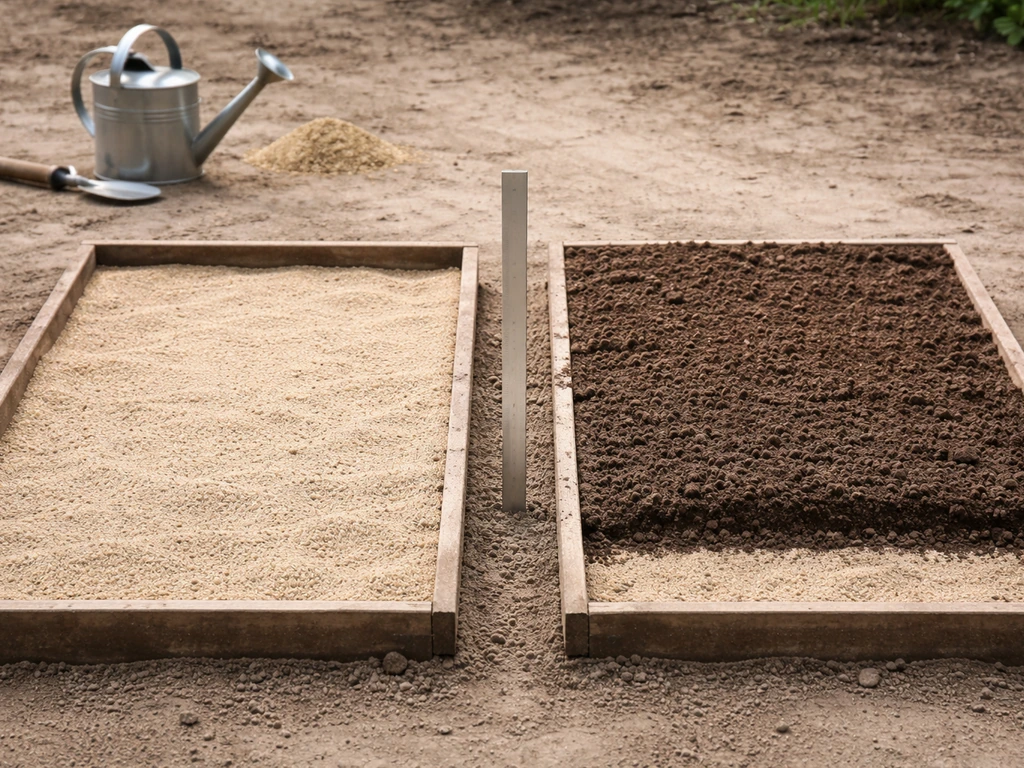
How Much Topsoil Over Sand to Grow Grass
Learn how many inches of topsoil over sand (or rocks) to use for seeding or sod, plus prep steps and fixes.
Can You Grow Grass Over Gravel? How to Do It Right
Learn when you can grow grass over gravel and follow a step-by-step method for soil depth, drainage, seeding or sod, and
Do Wood Chips Help Grass Grow? When They Work and When Not
Learn when wood chips help grass grow, when they steal nitrogen, and step-by-step how much to apply and seed options.