
Title: Analysis of the Poem 'Grass Will Grow' by Jonathan Kariara: Themes, Symbolism, and Meaning Meta description: A full analysis of Jonathan Kariara's poem 'Grass Will Grow', stanza by stanza, with themes, symbolism, form, and practical takeaways for gardeners.
Analysis of the Poem Grass Will Grow: Meaning & Lawn Tips
Marcus Volkmann
19 Jul 2026
TL;DR: What This Analysis Covers
The poem 'Grass Will Grow' was written by Kenyan poet Jonathan Kariara and first published in the 1971 anthology Poems from East Africa, edited by David Cook and David Rubadiri (Heinemann / East African Educational Publishers). It is a short, quietly powerful poem about grief, guilt, and the relentless way nature moves on after human loss. If you landed here looking for a line-by-line breakdown of the poem for school or personal interest, you will find that below, along with context on the author, the poem's central symbols, its structure, and a few related phrases and cultural references that often come up alongside it. For the full annotated text and close reading, see our grass will grow poem analysis. And because this is a grass-growing guide at heart, there is a section at the end translating the poem's central metaphors into real, practical lessons about resilience, soil, and getting things to grow where they seem unwilling to.
Wait, Which 'Grass Will Grow' Are You Looking For?
The phrase 'grass will grow' shows up in several different creative works, and it is worth being upfront about which one this article focuses on before diving into analysis. Here is a quick rundown of the main ones you might have encountered: If you were looking for David Bowie’s song 'How Does the Grass Grow', see our separate piece titled How Does the Grass Grow (Bowie) for its background and interpretation.
- Jonathan Kariara's poem 'Grass Will Grow' (1971) — the canonical literary work this article analyzes in depth, anthologized in Poems from East Africa.
- Romeo D. Matshaba's poem 'When Grass Will Grow' — a distinct poem indexed on PoemHunter, sharing a similar title but a different author, context, and meaning.
- Daniel Kihori's recited/oral piece 'For Grass Will Grow' — a contemporary spoken-word work, separate from Kariara's poem.
- Anselm Kiefer's installation and the 2010 film 'Over Your Cities Grass Will Grow' — directed by Sophie Fiennes, this documentary covers Kiefer's sprawling La Ribaute studio in Barjac, France, and is distributed by Kino Lorber. The title phrase evokes ruin, time, and reclamation by nature, but this is a visual-art project, not a poem.
- David Bowie connection — searches for 'how does the grass grow Bowie' sometimes land near this topic. Comprehensive Bowie discographies do not list a song titled 'Grass Will Grow' as a Bowie recording, so treat any such claim with caution until a specific liner-note or recording source is verified.
- 'As Long as the Grass Shall Grow' — a phrase rooted in North American Indigenous treaty language and popularized as a folk-protest song written by Peter La Farge and recorded by Johnny Cash on his 1964 album Bitter Tears. This is covered in more detail in the related phrases section below.
This article focuses entirely on Jonathan Kariara's 1971 poem. The Kiefer film and the treaty idiom are genuinely interesting cultural parallels, and they are addressed briefly where they add interpretive value.
The Poem's Source and Author
Jonathan Kariara (1935–1993) was a Kenyan poet, editor, and literary figure closely associated with Makerere University in Uganda, the intellectual center of anglophone East African literature in the 1960s. He edited and contributed to two influential East African literary journals, Zuka and Penpoint, and was part of the generation of writers who shaped a distinctly East African literary voice in English. His critical and editorial work arguably had as much impact on the region's literature as his poetry. The Columbia Guide to East African Literature in English Since 1945 situates him firmly within the Makerere tradition.
The authoritative text of 'Grass Will Grow' appears in Poems from East Africa, edited by David Cook and David Rubadiri, first published in 1971 by Heinemann and East African Educational Publishers. See the Poems from East Africa, Google Books bibliographic entry (publisher details) for the 1971 Heinemann / East African Educational Publishers publication details blank" rel="noopener noreferrer">Poems from East Africa — Google Books bibliographic entry (publisher details). Library records on WorldCat and Open Library confirm the publication date and bibliographic details. Because the poem was first published in 1971, it remains under U.S. copyright protection through 2066 under the 95-year term applied to works published between 1923 and 1977. Reproducing the full text without permission from the rights holder (the publisher and/or Kariara's estate) is not advisable. The stanza structure and line-level analysis below are based on the standard anthologized version, and quotes are kept brief and within fair-use conventions for commentary and criticism.
Stanza-by-Stanza Analysis
Stanza One: The Confession of Responsibility
The poem opens with the speaker directly addressing someone who has died, admitting that he did not tend to them as he should have. The tone is confessional from the very first line. Kariara does not ease into guilt; he states it plainly. The use of second-person address ('you') creates an intimate, almost uncomfortable directness, as if the speaker is having a conversation the dead person can no longer answer. This is not abstract mourning. It is specific, personal culpability.
The image of neglect in this opening stanza is both literal and symbolic. The speaker did not tend to something, and now that thing is gone. In the context of the whole poem, this refusal to care becomes the central wound. Kariara keeps the language plain and unadorned, which makes the admission land harder than any ornate elegy would.
Stanza Two: The Indifferent Earth
The second stanza shifts to the earth itself, and specifically to the grass that will grow over the grave. This is where the title lands its full weight. The grass does not mourn. It does not pause. It simply grows, indifferent to the loss that has occurred beneath or beside it. This is one of the poem's most unsettling moves: nature's persistence is not comforting here, it is a kind of erasure. The grave will be covered. Time moves forward whether the speaker is ready or not.
The grass in this stanza functions as a marker of time passing and of the world's refusal to hold still for grief. Kariara uses this image without sentimentality. The grass is not a symbol of hope in this stanza, it is a symbol of continuity that excludes the dead and, in some ways, judges the living who failed them.
Stanza Three: Guilt Persists Where the Grass Grows
The final stanza closes the loop between the speaker's guilt and the poem's central image. Even as the grass grows over the grave, the speaker's sense of responsibility does not diminish with it. The poem resists the easy consolation that time heals. The grass grows, but the guilt remains. This is Kariara's sharpest insight: nature recovers, but the human conscience does not have the same resilience. The poem ends without resolution, which is exactly the point. There is no absolution offered.
Read together, the three stanzas trace a movement from confession, to the indifferent response of the natural world, to the stubborn persistence of human guilt. It is a compact but structurally tight arc.
Themes, Imagery, and What 'Grass' Actually Symbolizes Here
Grief and Guilt as Distinct Emotions
Most elegies center grief: the mourner's sadness at losing someone. Kariara's poem centers guilt instead, which is a less comfortable emotional territory. The speaker does not simply miss the deceased. He blames himself for not doing enough while they were alive. That distinction matters for how we read every image in the poem. The grass growing over the grave is not a healing image for this speaker. It is a reminder of time he wasted and care he withheld.
The Symbolism of Grass: Resilience, Erasure, and Time
Grass as a poetic symbol has a long lineage. Walt Whitman's 'Song of Myself' uses grass as a democratic, regenerative symbol ('I guess it is the handkerchief of the Lord'). Biblical texts use it as a metaphor for human transience: Psalm 103:15 compares man's days to grass, and Isaiah 40:8 pairs 'the grass withers, the flower fades' with the permanence of God's word. In Kariara's poem, grass sits closer to the biblical register than to Whitman's hopeful one. It is a symbol of what outlasts the individual, of the world's capacity to cover over loss and move on.
The Anselm Kiefer connection is worth mentioning here because it uses the same symbolism from a visual-art angle. The film Over Your Cities Grass Will Grow documents Kiefer's La Ribaute installation in southern France, where vast, decaying studio structures are gradually reclaimed by vegetation. The grass growing over Kiefer's abandoned spaces carries the same resonance as Kariara's poem: nature is patient, indifferent, and unstoppable. Both works use grass as a symbol of time's power over human making and human feeling.
Tone: Quiet, Unrelenting, Unresolved
Kariara's tone throughout is restrained. There is no outburst of emotion, no dramatic wailing. The quietness of the poem is part of its power. Grief and guilt are described with the same even, observational tone that one might use to describe the weather. That flatness makes the emotional content more intense, not less. When a poet keeps his voice level while describing something devastating, the reader feels the effort of that control, and that effort is itself expressive.
Form, Meter, and Poetic Devices
The poem is written in free verse, with no regular rhyme scheme or fixed metrical pattern. This is a deliberate choice that suits the subject matter. Guilt and grief do not come in neat, predictable rhythms, and the poem's form reflects that. Kariara uses short, declarative lines that feel like statements being made under duress, each one placed carefully rather than driven by a musical beat.
The most significant formal device is the title's return as a refrain-like image at the center and close of the poem. 'Grass will grow' functions almost like a chorus in a song, something that recurs to remind you of the poem's central, inescapable fact. This repetition gives the poem a cyclical feeling that mirrors the cyclical nature of seasons and growth.
Kariara also uses direct address throughout (speaking to the dead 'you'), which creates a dramatic monologue effect. The reader is positioned as an eavesdropper on a one-sided conversation, which increases intimacy and discomfort in equal measure. The plain diction, the direct address, and the free-verse structure all work together to make the poem feel less like a formal literary exercise and more like an actual confession.
Related Phrases Worth Knowing
'As Long as the Grass Shall Grow'
This phrase has roots in North American Indigenous treaty language, where it was used (often by U.S. and Canadian governments) to promise that land rights would be honored 'as long as the grass shall grow and the rivers run.' The formula appears in multiple treaty texts and is widely cited in histories of Indigenous land rights. The phrase's durability is bitterly ironic, since many of those promises were broken. Peter La Farge wrote a folk-protest song using the phrase directly, and blank" rel="noopener noreferrer">Johnny Cash recorded it on his 1964 album Bitter Tears, bringing the treaty idiom into mainstream popular culture as a vehicle for critiquing broken promises to Native Americans. The phrase as used in the treaty context emphasizes permanence and obligation, which is almost the inverse of how Kariara uses grass: as something that grows on indifferently, owing nothing to anyone.
'Let's Not Wait for the Grass to Grow'
This idiom means roughly 'let's not delay' or 'let's act now before things stagnate or opportunities pass.' It treats slow grass growth as a metaphor for inaction or wasted time, and its meaning is almost directly opposed to the mood of Kariara's poem. Where the poem observes that grass will grow no matter what we do or fail to do, the idiom urges us to move before that slow, inevitable growth makes our decisions for us. You will encounter this phrase in business contexts, motivational writing, and everyday speech. It is worth knowing the difference between the idiom and the poem if you are searching either of these phrases. For a clear explanation of the idiom let's not wait for the grass to grow meaning ('let's not delay'), see the dedicated note on that phrase.
From the Poem to the Yard: What 'Grass Will Grow' Actually Teaches Gardeners
I have spent enough time on lawns and in gardens to know that the poem's central tension, that grass grows where and when it wants to, not necessarily where you want it, is something every homeowner eventually confronts. Kariara's grass is indifferent and unstoppable on a grave. The grass in your yard can feel the same way when it colonizes your flower beds or refuses to grow in the shaded strip by the fence. The poem's metaphors map onto real growing problems more directly than you might expect.
| Poem Metaphor | Gardening Reality | Practical Takeaway |
|---|---|---|
| Grass grows over the grave whether tended or not | Grass spreads aggressively in favorable conditions regardless of your plans | Use edging, barriers, and selective herbicides to control spread where you do not want it |
| Neglect leads to irreversible loss | Bare patches from neglect compact soil and invite weeds; recovery takes much longer than prevention | Overseed thin areas in early fall or spring before weeds establish; amend compacted soil with compost |
| Nature is indifferent to the individual's grief | Grass does not adapt to your schedule; it responds to soil temp, moisture, and season | Time seeding to soil temperatures above 50°F for cool-season grasses and above 65°F for warm-season varieties |
| Grass persists through time and covers what was | Resilient species like tall fescue, buffalo grass, and zoysia recover from drought, heat, and heavy use | Choose species matched to your region's stress conditions, not just aesthetics |
| The speaker's guilt outlasts the natural healing | Even after lawn recovery, underlying soil problems (compaction, pH imbalance, poor drainage) persist unless addressed directly | Test soil pH and nutrient levels before reseeding; fix the substrate first, not just the surface |
| The world moves on; stasis is not an option | Waiting to fix a bare or failing lawn allows compaction and weed seed banks to worsen | Address problems in the correct seasonal window; delay compounds the issue |
Resilience Is Species-Specific
One of the poem's quieter arguments is that grass is tougher than the humans around it. That is actually true of certain species. Tall fescue tolerates shade, drought, and foot traffic better than Kentucky bluegrass. Buffalo grass survives on minimal water in hot, dry climates. Zoysia creeps back from near-death with almost frustrating persistence. If your lawn keeps failing in a particular spot, that is usually a signal to match the species to the actual conditions rather than keep fighting the environment. A shaded area under a tree is not a bluegrass zone, no matter how many times you reseed it.
When Grass Genuinely Won't Grow
Sometimes the honest answer is that grass will not grow in a given spot, and the right move is to stop fighting that fact. Deep shade (less than two hours of direct sun per day), compacted clay that holds water, pure sand with no organic matter, or salt-contaminated soil near roads or beaches: these are conditions where even the most resilient grass species will struggle. In those situations, ground covers like creeping thyme, clover, or moss are not failures. They are practical solutions. The poem's grass grows where it grows. Your job as a gardener is to figure out which plant is the grass for your specific conditions.
Soil Is the Part That Outlasts Everything
In the poem, the grass grows because the earth beneath it supports growth. That is the literal biological truth of every lawn too. Grass is the visible layer, but the soil is the system. Compacted soil, acidic pH (below 6.0 for most grasses), or nutrient-depleted substrate will defeat every seeding effort no matter how good the seed is. Core aeration in fall, compost topdressing, and a soil test before any major overseeding project are the three most consistently useful things I have seen work on struggling lawns. They address the substrate, not just the surface.
FAQ
What are the first essential research questions to establish the canonical identity and bibliographic facts for the poem 'Grass Will Grow'?
Confirm author attribution (Jonathan Kariara), first publication (Poems from East Africa, 1971), exact stanzaing and lineation as printed in the authoritative 1971 edition, and any later authorized reprints. Source types: original anthology scans or facsimiles (Google Books, dokumen.pub), library catalog records (WorldCat, Open Library), and reputable poetry indexes (PoetryExplorer). Verify with tier‑1 bibliographic records when possible.
Which primary textual sources are required to produce a stanza‑by‑stanza and line‑level analysis?
Acquire a high‑quality facsimile or scan of the 1971 Poems from East Africa edition and any authorized reprints to confirm stanza breaks, punctuation and lineation. Source types: digital facsimile (Google Books, archive scans), library holdings (WorldCat/Open Library records), and established online poetry archives that reproduce the same text. These are the authoritative texts for close reading.
What copyright and permissions checks must be completed before publishing full text or long excerpts?
Determine copyright status: 1971 publication remains under copyright (95‑year term in U.S.). Confirm current rights holder (original publisher Heinemann/East African Educational Publishers and/or author's estate). Source types: U.S. Copyright Office guidance on duration, publisher records (Google Books/WorldCat), and direct publisher/rights‑holder contact. Plan to request permission for full poem or extended excerpts.
Which scholarly and contextual sources are needed to situate Kariara and the poem within East African literary history?
Gather critical overviews and reference works that discuss Jonathan Kariara and Makerere/ East African tradition (e.g., The Columbia Guide to East African Literature in English since 1945), plus regional criticism, essays, and biographical profiles (Afrocritik, university journals). Source types: academic reference books, peer‑reviewed articles, reputable literary essays, and critical anthologies.
How should researchers document and disambiguate similarly titled works and variants?
Compile a disambiguation list: other poems with similar titles (e.g., 'When Grass Will Grow' by Romeo D. Matshaba, Daniel Kihori pieces), visual‑art uses (Anselm Kiefer’s Over Your Cities—Grass Will Grow), and possible song references. Source types: poem databases (PoemHunter), music discographies, film/press materials, and artist/gallery pages. For each item record author/artist, date, medium, and a short note on relation/ distinction from Kariara’s poem.
What cultural reference sources are required to document links to Anselm Kiefer and to verify or refute Bowie song claims?
For Kiefer: cite exhibition/film pressbooks (Kino Lorber pressbook for Sophie Fiennes’ Over Your Cities), gallery/institution pages (Gagosian, museum catalogues), and film distribution notes. For Bowie: consult authoritative Bowie discographies and recording lists; absence of a titled song indicates unverified linkage. Source types: gallery/museum press, film pressbooks, official distribution materials, and comprehensive music discographies.
Next Articles
As Long as the Grass Shall Grow: Summary, Themes, Meaning
Summary, themes, meaning of As Long as the Grass Shall Grow plus practical tips to keep grass growing in hard conditions
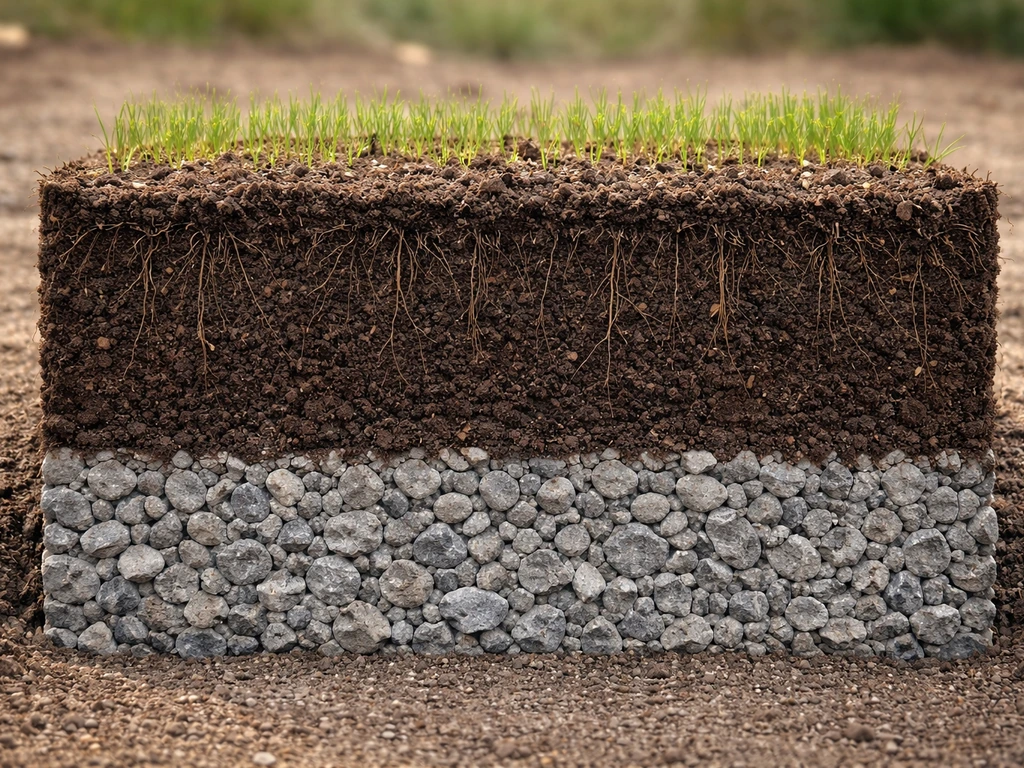
Can You Grow Grass Over Gravel? How to Do It Right
Learn when you can grow grass over gravel and follow a step-by-step method for soil depth, drainage, seeding or sod, and
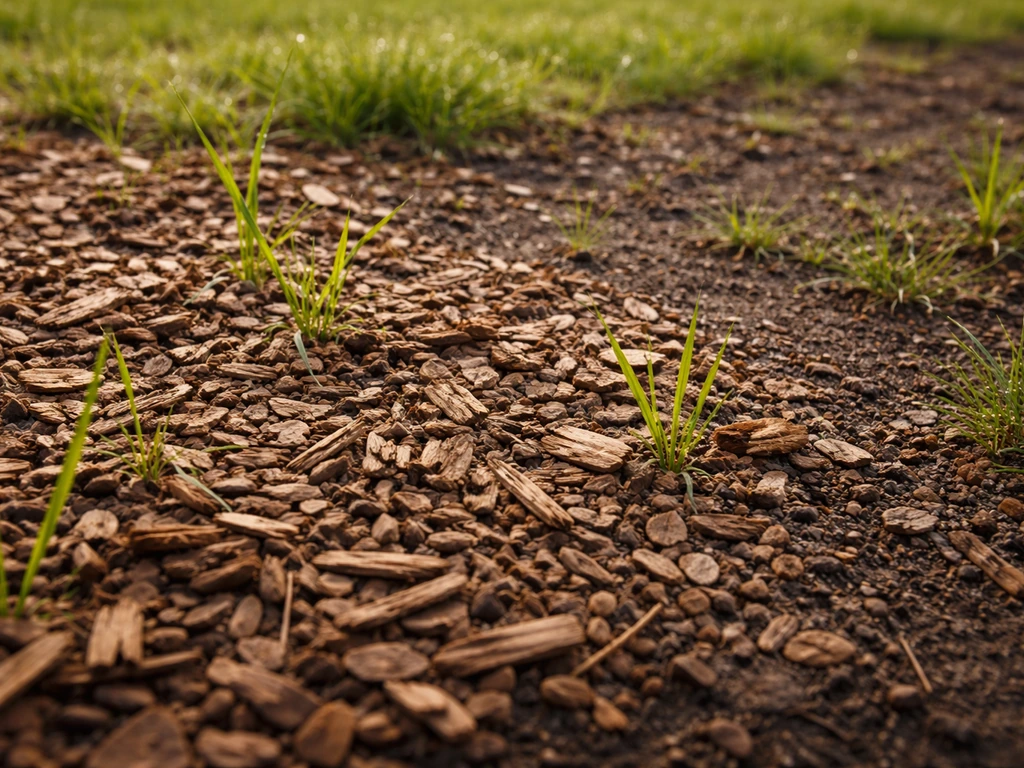
Do Wood Chips Help Grass Grow? When They Work and When Not
Learn when wood chips help grass grow, when they steal nitrogen, and step-by-step how much to apply and seed options.